0
contractor sites graded, one A
Across the whole CRO Index, a single site earned an A. The median landed at a D. The grade gap is a conversion gap.
Right now, someone in Seattle is Googling "plumber near me." We get you showing up first — then turn that click into a booked job.
A written report and a ranked fix list, in about three days.
“Patient, on point, straightforward. Did amazing work. Would 100% recommend.” — Ruben Mederos, HyperTemp HVAC
“Responsive, creative, exceeded expectations. Already seeing greater engagement from our clients.” — George Jeorgy, Jeorgy's Landscape Construction
“Top-tier professionalism, real web design expertise, ideas I hadn't considered. Confidently recommend.” — Aws Nassani, Four Eleven Contracting



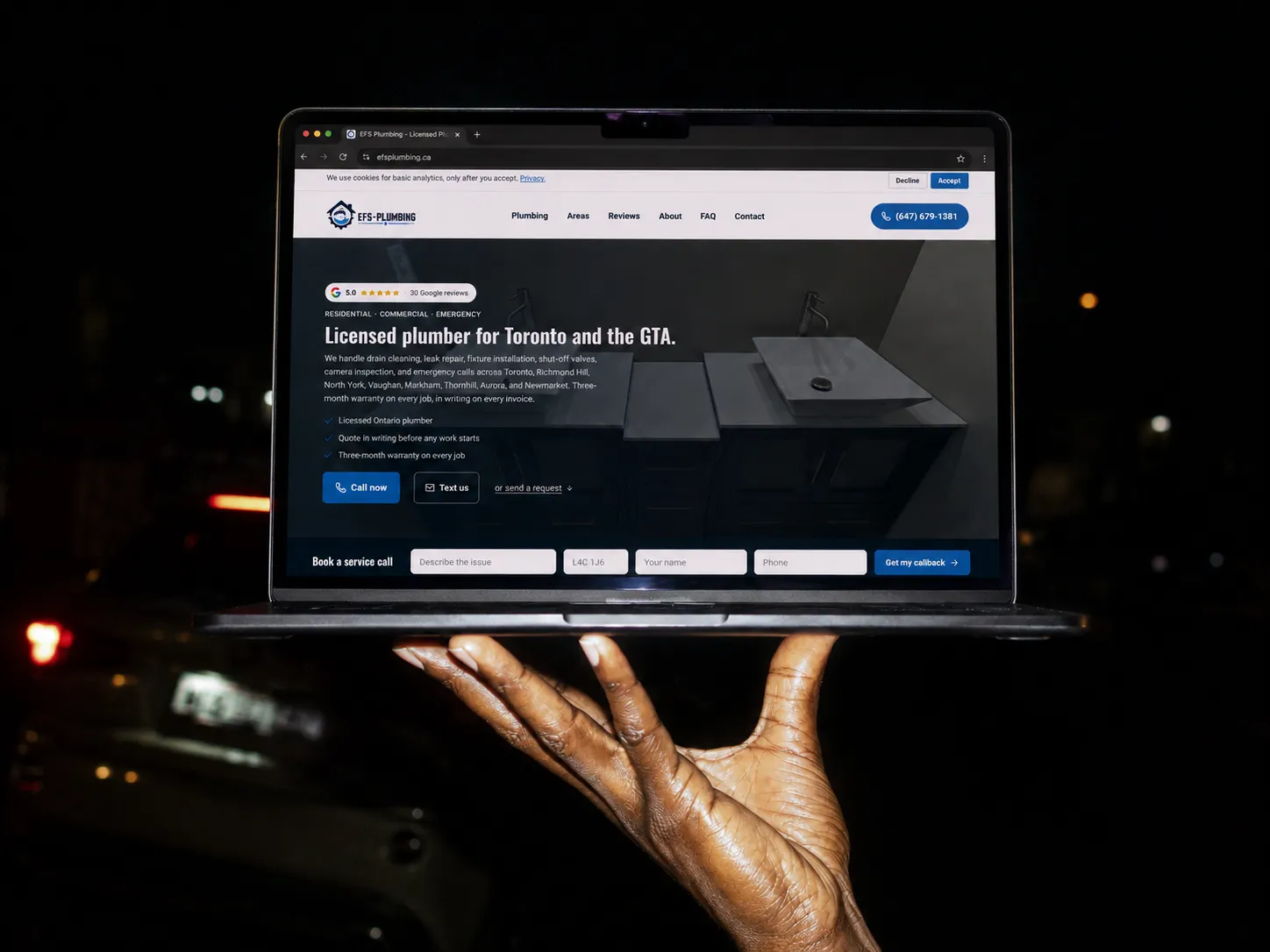
380 contractor sites graded on the public CRO Index
Fervor Contractor CRO Index 2026A grade out of 380 contractor sites
We graded 380 of them against one framework. Exactly one earned an A: Crown Industrial Roofing in Toronto, at 90 out of 100. The rest left money on the table. Here is what separates the top from the bottom.
The local detail
Every angle below comes from how Seattle actually searches, buys, and regulates — built into the page, not bolted on.
This city is not a flat, swappable place.
When you hire someone to do this right, the job breaks into a handful of moving parts.
Water heaters deserve their own section, because they are one of the most searched jobs in any city, and this one is no exception.
You have probably been pitched before.
Plenty of owners pour money into the wrong things.
Search positions build slowly and fall slowly, which works in your favor once you are up there.
You run a good plumbing shop. Your crew shows up, the work holds, and the Google reviews say so. But when a homeowner in Ballard searches "plumber near me" at 9pm with water creeping across the basement floor, your name does not show up. That gap is what plumbing SEO Seattle work closes. So this page walks through what ranking takes here, where the Puget Sound market differs from generic advice, and how a plumbing SEO company should measure the job for a local plumber. No fluff, just the parts that put your phone back in motion.
This city is not a flat, swappable place. And the search behavior here reflects that. A homeowner in a Capitol Hill condo looks for help differently than a family in a 1920s Craftsman over in Wallingford, and your site has to speak to both.
The housing stock drives a lot of it. So much of this town runs on old galvanized supply lines and clay sewer laterals, the kind that crack and invite root intrusion under every mature maple in Ravenna. When those laterals back up, the homeowner is not browsing. They are calling, fast, and they call whoever ranks first. Your service-area pages need to name those neighborhoods and those problems, because Google reads relevance the way a dispatcher reads a callout.
Rain is the other constant. Storms off the Pacific keep sump pumps and basement drainage on people's minds from October through spring, and a dead pump during an atmospheric river becomes a same-day emergency. So the searches climb. Whoever ranks for "sump pump repair West Seattle" or "sewer line Fremont" catches that demand. The rest just watch it go elsewhere.
"Among homeowners who made improvements, 32% upgraded their water heaters, dishwashers, or garbage disposals." - U.S. Census Bureau and U.S. Department of Housing and Urban Development (2024)
So fixture and appliance work is not a side line. It is a steady stream of searches you can rank for, and those Census numbers show how many people are actively doing it.

When you hire someone to do this right, the job breaks into a handful of moving parts. Each one earns its place, and skipping any of them leaves money on the table.
Your Google Business Profile comes first, because the map pack is where most of these searches resolve before anyone scrolls to the blue links. So the profile needs the right primary category, accurate service areas across town and the Eastside, real photos of your trucks and crew, and a steady drip of reviews from recent jobs. Reviews matter more in this trade than almost any other, since a homeowner letting a stranger into the house at night wants proof other neighbors trusted you first.
Then comes the site itself. Your service pages should each target one job and one intent, so a water-heater page does not fight your drain-cleaning page for the same rankings. And your neighborhood pages, the Bellevue page, the Redmond page, the West Seattle page, give Google a reason to show you in each of those areas.
Technical health sits underneath all of it. Page speed, mobile layout, clean schema, and an indexable structure. Because the tech-heavy local audience bounces fast from a slow page, and a basement-flood searcher on a phone will not wait four seconds for your homepage to load.
Local citations and links round it out. Your business name, address, and phone number need to read the same on every directory, whether that is Yelp, the Better Business Bureau, or HomeAdvisor, because Google cross-checks those listings before it trusts you. And a few quality backlinks from real local sources, a neighborhood blog, a supplier, a chamber listing, carry more weight than a hundred junk links ever will. So the work is patient and unglamorous. But it compounds, month over month, in a way that paid clicks never do once you switch the ads off.
"The median homeowner spending on plumbing fixtures upgrades was about $800 (2021-2023 data)." - U.S. Census Bureau and U.S. Department of Housing and Urban Development (2024)
So when you price a fixture page or a promotion, that $800 median gives you a real anchor for what the local homeowner will spend, not a guess.
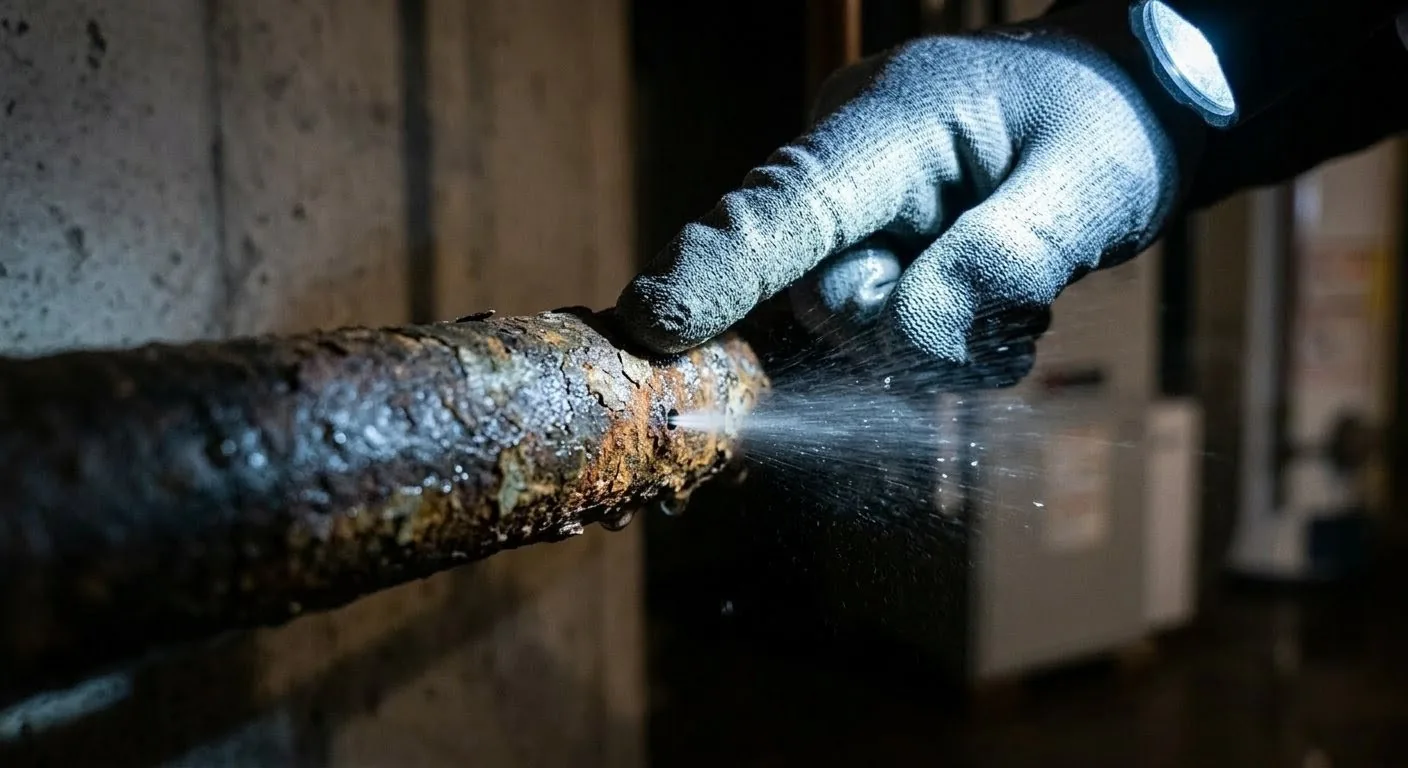
Water heaters deserve their own section, because they are one of the most searched jobs in any city, and this one is no exception. A homeowner with a 12-year-old tank in Magnolia sits one cold shower away from typing "water heater replacement" into their phone.
The fuel mix here shapes the conversation. Plenty of homes still run gas tanks, and a growing slice of owners ask about electric and heat-pump options as the city pushes electrification.
"In U.S. single-family homes (2020), 40% of main water heaters were fueled by natural gas and 31% by electricity." - U.S. Energy Information Administration (EIA) (2020)
So a smart content plan ranks you for both the gas-replacement searches and the fuel-switch questions. You meet the homeowner wherever their head happens to be.
Tankless is the upsell hiding in plain sight. Adoption stays low, which means the person searching "tankless water heater" is curious but unconvinced, and the contractor who ranks with a clear, honest explanation wins that job.
"Only 5.8% of U.S. single-family homes had tankless water heaters in 2020." - U.S. Energy Information Administration (EIA) (2020)
Because so few homes have one, the demand runs mostly upgrade-driven, and a strong page on the topic captures buyers your competitors are ignoring.
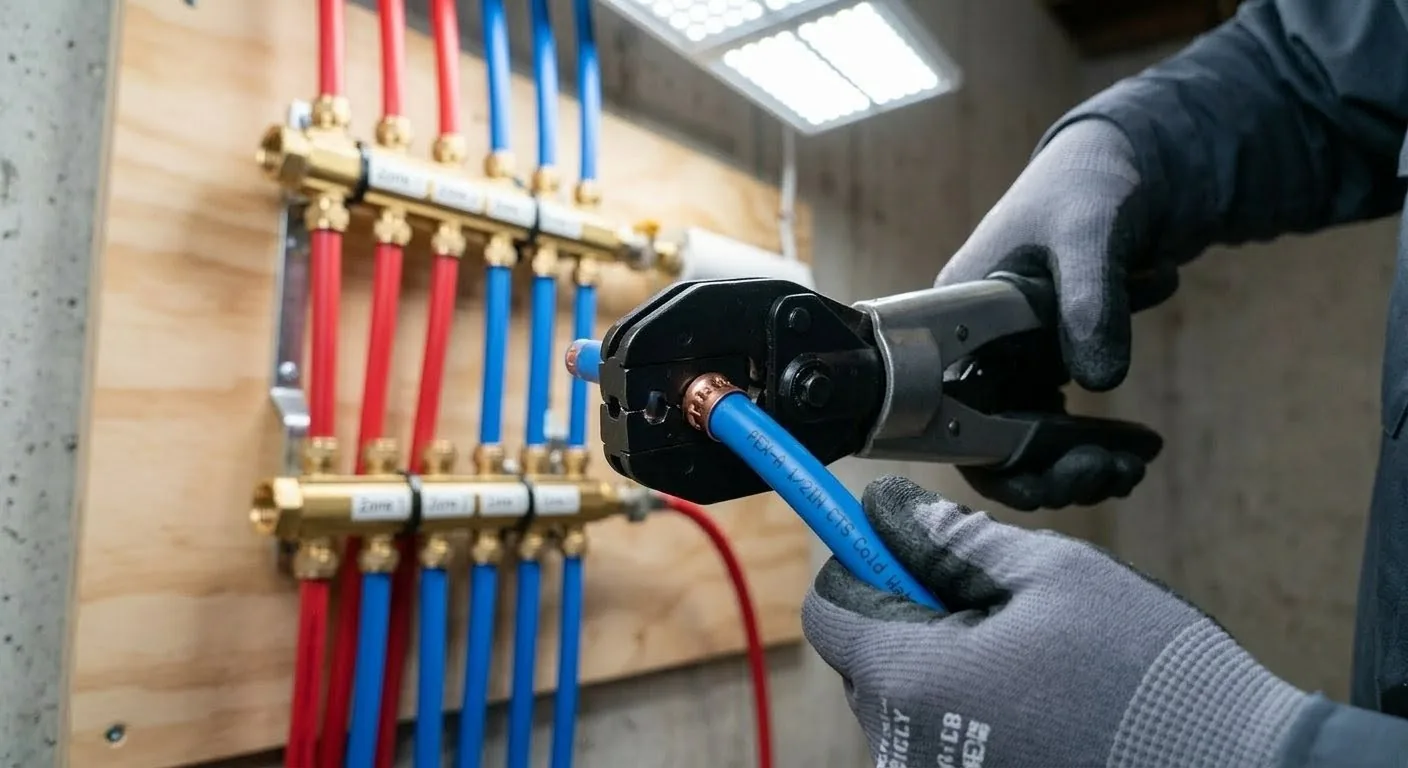
You have probably been pitched before. Maybe an agency promised the top spot, took the retainer, and went quiet by month three. So skepticism is fair, and any plumbing SEO company you keep should expect to prove itself in plain numbers.
The math is not complicated. Your average job runs $450, and your site picks up six extra booked jobs a month from better rankings. That works out to $2,700 a month, every month, from work that used to go to whoever ranked above you. Across a year, the picture gets obvious.
A real agency reports on booked jobs and calls, not impressions and vanity charts. And it hands you ownership of your site, your Google profile, and your content, so you are never trapped if you leave. The best partners treat your business like a system to build, not a subscription to milk.
"Mechanical sentiment contributed to a Current Conditions Index of 71 in 2025" - National Association of Home Builders (2026)
So the broader market stays steady, and a confidence reading like that tells you homeowners keep spending on mechanical work. The demand is there for whoever shows up in search.

Plenty of owners pour money into the wrong things. So it helps to name the leaks before you spend another dollar.
Generic blog posts are the biggest waste. A page titled "5 plumbing tips for homeowners" ranks for nothing and books no jobs, while a tight "sewer line repair Capitol Hill" page pulls real searches. And buying cheap directory links from sketchy sites can drag your rankings down instead of lifting them.
Ignoring mobile is another quiet killer. The local searcher sits on a phone in a flooded basement, and a desktop-only layout loses that job in seconds. Slow load times do the same damage, just more quietly.
Then there is the click-to-call problem. Your phone number has to sit right at the top of the page, tappable, with no hunting through a contact form first. Because a homeowner standing in two inches of water on a Saturday will tap the first number they see, and if that number belongs to the shop above you, the job is already gone. So a buried phone number quietly hands your competitor a paying customer, week after week, and nobody ever tells you it happened.
There is also a supply-chain reality worth planning around.
"Mechanical equipment remains difficult to source for remodelers in 2025" - National Association of Home Builders (2025)
So when parts run tight, the contractor who ranks and communicates lead times clearly keeps the customer's trust, even when the install slips a week.
Search positions build slowly and fall slowly, which works in your favor once you are up there. And the market backdrop stays favorable for plumbing work through the coming seasons.
"1.9% easing of mechanical renovation growth projected for Q3 2026" - Harvard Joint Center for Housing Studies (2025)
Even with a slight easing like that, the renovation pipeline stays healthy, and the aging housing here keeps feeding demand regardless of the broader cycle.
The deeper need runs under all of it.
"Mechanical system retrofits part of the $149B housing deficiency market" - Harvard Joint Center for Housing Studies (2025)
So the homes run old, the systems run tired, and somebody has to fix them. Your job is to be the name that ranks when the search happens, and a good partner positions you for exactly that across Ballard, Fremont, and the Eastside alike.
If you want to see where your current site leaks calls, the Fervor Site Inspection maps it out. And our plumbing web design and local SEO for plumbers work hand in hand with the ranking strategy above.

Plumbing shops here tend to see early movement in three to four months and meaningful ranking gains by six to nine. Because this market runs competitive yet winnable, the timeline depends on your starting point, your review volume, and how clean your site is technically. The neighborhoods you target matter too, since a Bellevue ranking climbs differently than a dense Capitol Hill one.
It usually is, and the math tends to favor it. Even a handful of extra booked jobs a month from better rankings can cover the work several times over, because job values run high and the local market stays active. So a focused plan beats a scattershot one, and you do not need a giant budget to win specific neighborhoods.
Both have a place, though they do different jobs. Ads buy you instant visibility while search builds the lasting rankings that keep paying after you stop spending. So many owners here run ads for emergencies and invest in rankings for the long game, and the two reinforce each other rather than compete.
Plumbing searches skew toward urgency and trust more than most trades. A flooded basement near Green Lake or a backed-up sewer in Fremont turns a casual searcher into an immediate caller, so speed, reviews, and clear service-area targeting carry extra weight. That urgency is exactly why ranking in the map pack matters so much for a plumber here.
The evidence
 Read the full report →
 0
contractor sites graded, one A
Across the whole CRO Index, a single site earned an A. The median landed at a D. The grade gap is a conversion gap.
0
contractor sites across the State of the Industry research
Roofing, remodeling, and HVAC, scored page by page against one framework.
Two ways to start
Tell us where you are. We point you at the right next step — no sales call to get there.
Client review
“Nay did an amazing job, you know. He was really patient. He got the work done the way I told him and he was just on point with the website. Pretty straightforward process. No going around the bush. He just did amazing work and I would 100% recommend.”
How Fervor can help
Monthly SEO, content, and CRO. Fixed deliverables. No credits, no rollover. The compound growth engine.
Complete website system built to convert storm leads, planned projects, and research-phase homeowners into booked jobs.
Identify and patch the top conversion killers on your existing site. No full rebuild needed.
GBP optimization, citation building, and review system foundation. The infrastructure that gets you into the Map Pack.
One conversion-built landing page for the referrals, paid clicks, and cold-call leads you send. They land on a page built to book them, not your generic homepage.
Your move
Tell us where you are. We point you at the right next step — no sales call to get there.
Keep going