0
contractor sites graded, one A
Across the whole CRO Index, a single site earned an A. The median landed at a D. The grade gap is a conversion gap.
You're getting clicks. They're just not calling. We rebuild your site around the one job that matters: turning a visitor into a booked job.
Starts with a Site Inspection, so you see the plan before any build begins.
“Patient, on point, straightforward. Did amazing work. Would 100% recommend.” — Ruben Mederos, HyperTemp HVAC
“Responsive, creative, exceeded expectations. Already seeing greater engagement from our clients.” — George Jeorgy, Jeorgy's Landscape Construction
“Top-tier professionalism, real web design expertise, ideas I hadn't considered. Confidently recommend.” — Aws Nassani, Four Eleven Contracting



380 contractor sites graded on the public CRO Index
Fervor Contractor CRO Index 2026A grade out of 380 contractor sites
We graded 380 of them against one framework. Exactly one earned an A: Crown Industrial Roofing in Toronto, at 90 out of 100. The rest left money on the table. Here is what separates the top from the bottom.
The local detail
Every angle below is built into the page, not bolted on after.
You already know how a plumbing job starts now.
The best plumbing websites aren’t the prettiest ones, and that surprises people.
You don’t need to invent demand.
You’ve probably been burned before.
Your customers are on their phones while they stand in a flooding basement with water around their ankles.
You might be wondering whether now’s even the right time to invest in this.
A site doesn’t work alone.
The simplest thing you can do today takes two minutes.
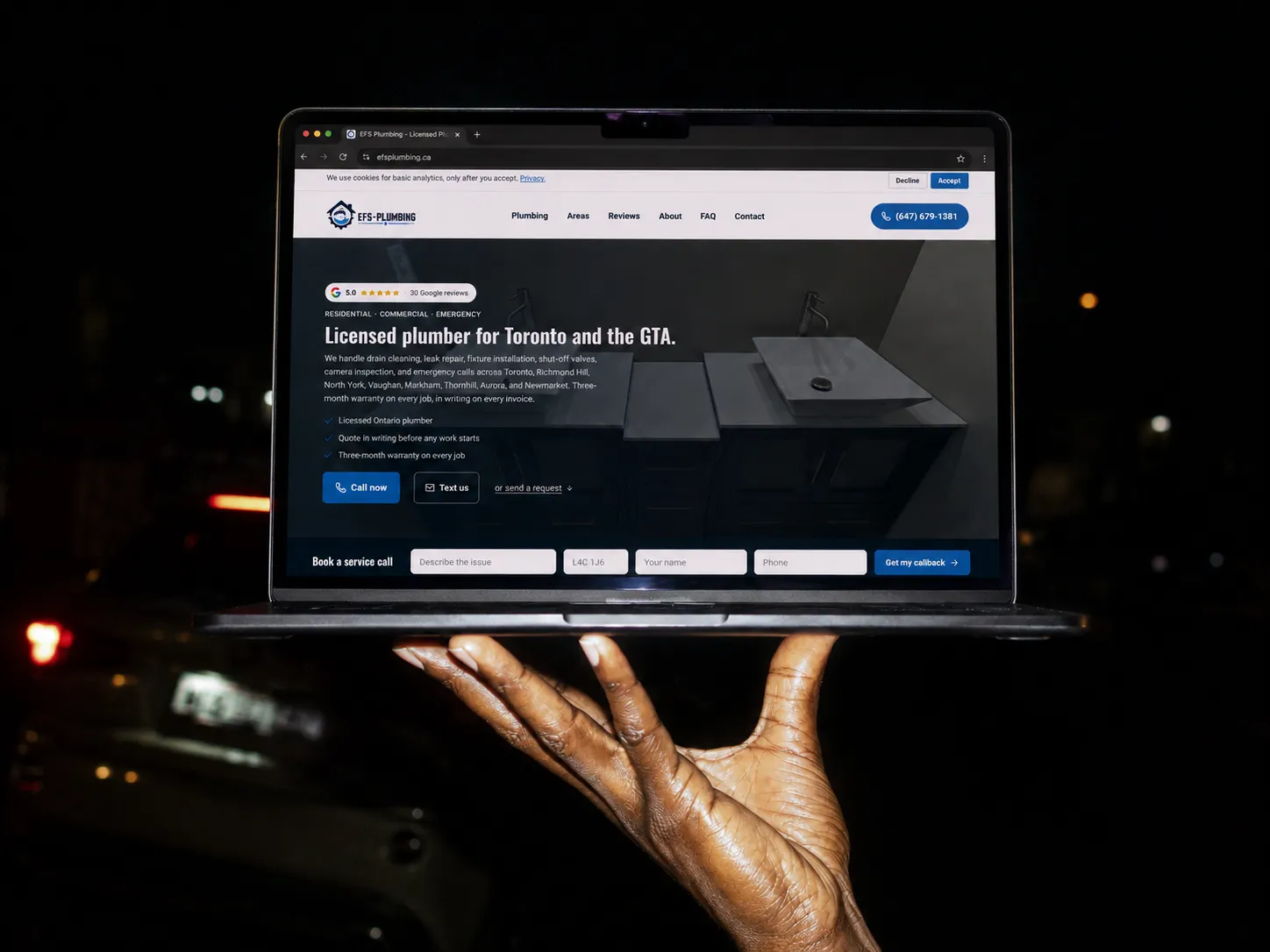
Your phone should ring more than it does. So most plumbers never look closely at the one thing that decides it: the website. Good plumbing website design works the burst-pipe call at 11pm when nobody's in the office, which is a long way from being a digital brochure. And if you've been comparing the best plumbing websites in your market against your own, you already feel the gap. You just haven't named it yet. This page names it, and walks you through what to fix.
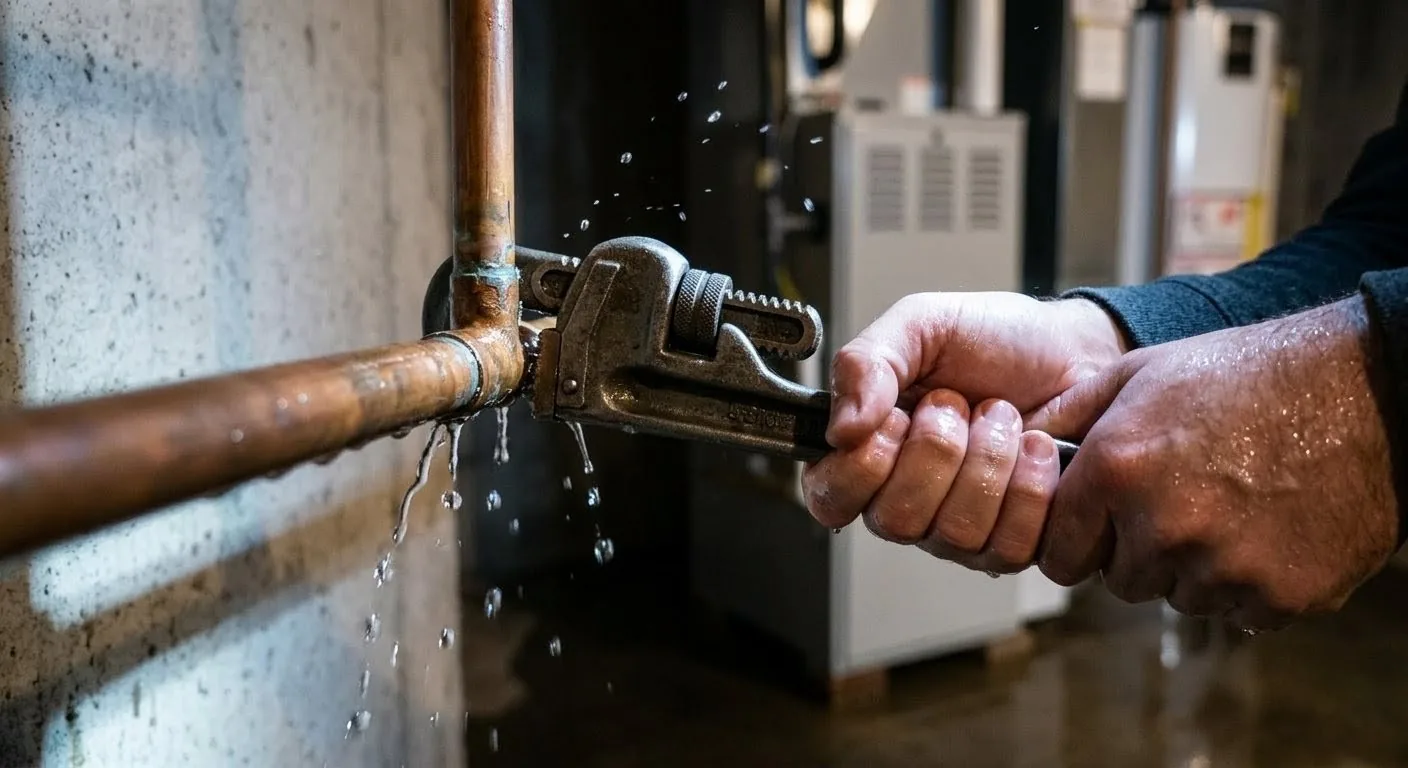
You already know how a plumbing job starts now. A water heater quits. A toilet won't stop running. Somebody Googles "plumber near me" at the worst possible moment, and they're staring at three or four sites trying to decide who to trust with their house.
That decision happens in about ten seconds. And you weren't in the room for it.
So your site is doing the work your best office person used to do. It answers the "are you legit" question. It shows the trucks, the badges, the reviews. It either makes the booking easy or it makes the visitor hit the back button and call the shop above you in the results. Most plumbers think of the website as a thing they paid for once and forgot. But that website is a crew member. It works nights, weekends, and holidays without overtime.
The demand is there, by the way. Homeowners are spending real money on the exact work you do.
"Among homeowners who made improvements, 32% upgraded their water heaters, dishwashers, or garbage disposals." - U.S. Census Bureau and U.S. Department of Housing and Urban Development (2024)
Nearly a third of improving homeowners touched the stuff that lives in your wheelhouse. So the people are out there searching. The only question is whether your site catches them or hands them to a competitor.
The best plumbing websites aren't the prettiest ones, and that surprises people. They're the ones built around how a panicked homeowner actually behaves.
You can test this with a few of them right now. So you open three plumbing sites in your area and time how long it takes to find the phone number. On the good ones, the number shows up instantly. It sits top right, big, and tappable on a phone. On the bad ones, you're scrolling past a stock photo of a smiling family before you find anything you can act on.
The best plumbing websites do a handful of things on purpose:
And they load fast. Because a slow site on a phone with one bar of signal is a dead site.
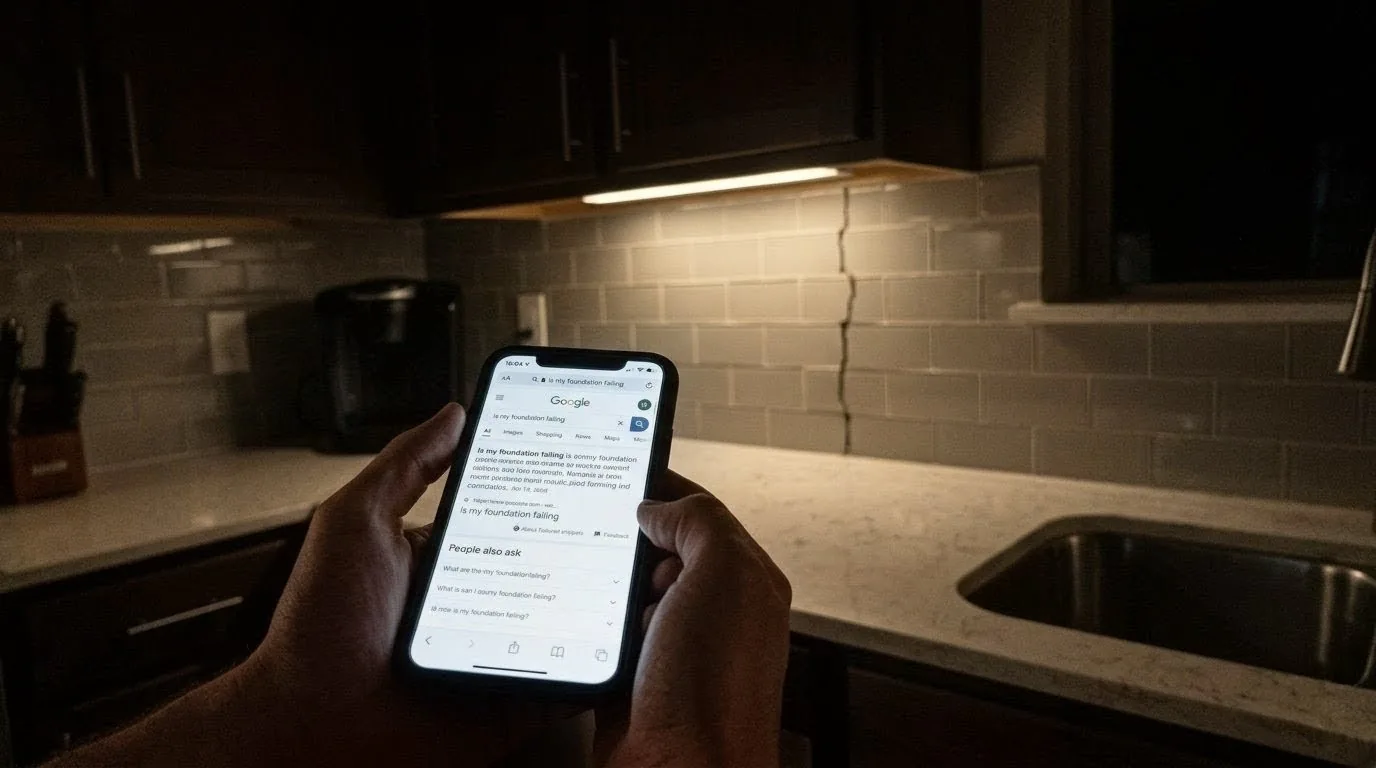
But the biggest thing the best plumbing websites get right is trust speed, meaning how fast a stranger can decide you're the safe choice. Every photo of a real truck, every real review, every named technician shaves seconds off that decision. And in a market where four plumbers are one tap apart, seconds win jobs.
You don't need to invent demand. You need to meet it on the page. You can start by looking at where the money goes.
"The median homeowner spending on plumbing fixtures upgrades was about $800 (2021 to 2023 data)." - U.S. Census Bureau and U.S. Department of Housing and Urban Development (2024)
Eight hundred dollars is a typical fixture upgrade. That's a faucet, a disposal, a toilet swap. Bread-and-butter tickets. And your site should have a clear service page for each one, so when somebody searches the specific job, you're the answer instead of a generic "plumbing services" blob.
Water heaters are their own opportunity, and most plumbing sites whiff on them.
"In U.S. single-family homes (2020), 40% of main water heaters were fueled by natural gas and 31% by electricity." - U.S. Energy Information Administration (EIA) (2020)
Most homes run gas or electric tanks. Which means a chunk of your market is sitting on aging equipment that's going to fail. So a page that explains repair versus replace, fuel options, and what a swap involves does two things. It ranks. And it pre-sells the bigger ticket before you ever pick up the phone.
Tankless is the upsell hiding in plain sight.
"Only 5.8% of U.S. single-family homes had tankless water heaters in 2020." - U.S. Energy Information Administration (EIA) (2020)
Under six percent of homes have gone tankless. That's not a saturated market. That's a wide-open one. And the plumbers who explain the benefits clearly on their site, instead of waiting until they're already in the basement, are the ones converting those conversations into installs.
Money is the real question here, because you're comparing agencies and you want to know what's fair.
Plumbing web design services cost varies for a reason that isn't always obvious. You're not paying for the pages themselves. You're paying for what the pages do. A five-page template anyone can buy is cheap because it does almost nothing. A site engineered to load fast, rank for your services, and convert a phone visitor under pressure costs more because it took real work to build.
So when you're weighing those quotes across two or three agencies, line up what's inside each one. You want the blunt questions answered. Is the copy written for your trade, or is it filler? Are the service pages built to rank, or is it one "Services" page with a list? Is mobile the priority, or an afterthought? Most cheap quotes come in low because they skip exactly the things that make a site earn.
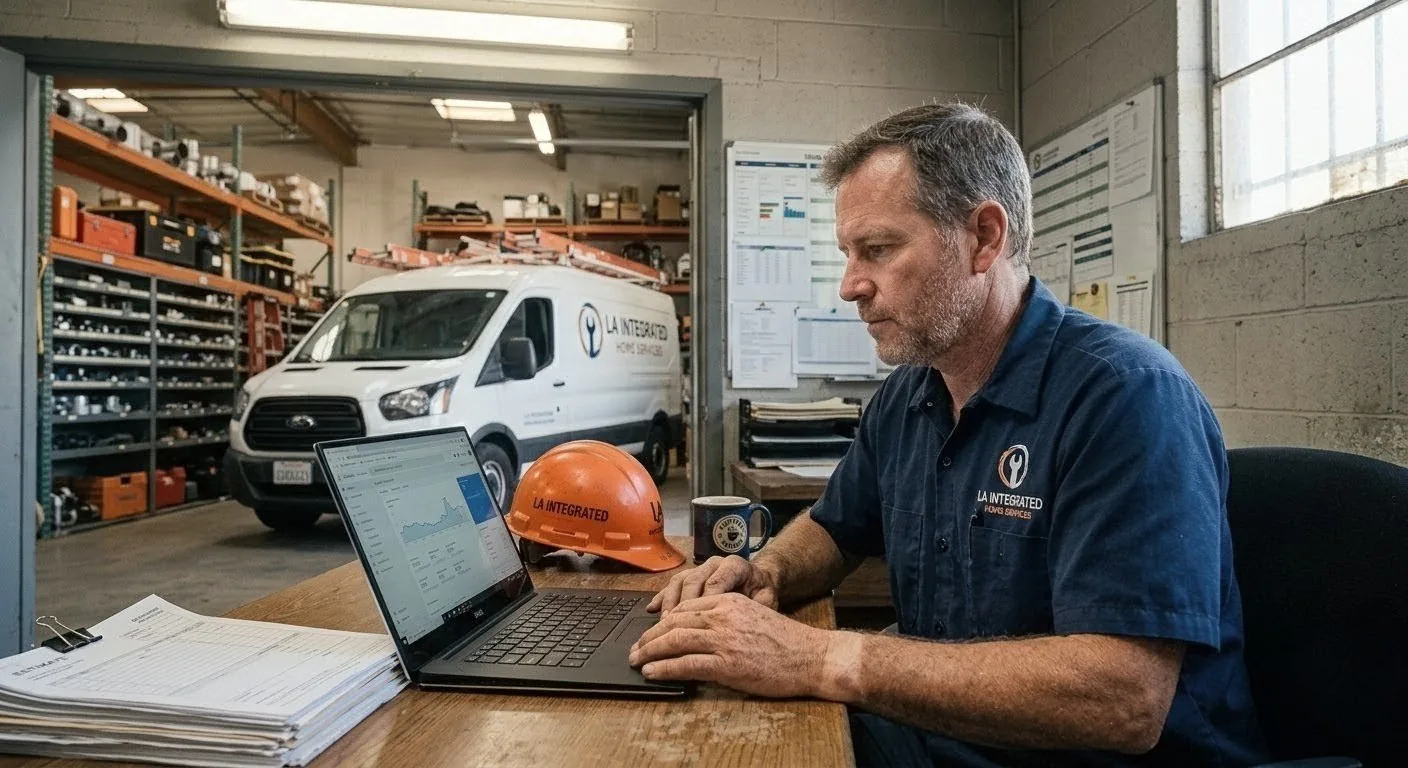
Here's the napkin math that should drive the decision. Your average job is worth a few hundred dollars, and a water heater install runs a few thousand. If a better site books you even one extra job a week, run that out over a year. The plumbing website cost stops being an expense and starts being the cheapest crew member you've got. That's the lens to judge a quote through, where the question shifts from what it costs to what it returns.
You've probably been burned before. A lot of plumbers have. You paid an agency, they launched something, then they vanished and the phone didn't ring any more than it used to.
You should read the quote like you'd read a bid you were giving a homeowner. The plumbing website cost should map to deliverables you can point at. Vague line items are where the trouble hides.
A fair plumbing website cost breakdown usually covers a few real things:
And ask what happens after launch. That's the gap most quotes hide. A low price that leaves you stranded after launch isn't cheap. It's expensive in slow motion, one missed lead at a time.
What you don't want to do is shop on price alone. Because the cheapest quote almost always means a template, no real copy, and no plan for getting found. You'll pay twice. Once for the site that doesn't work, and again for the one that replaces it.
Your customers are on their phones while they stand in a flooding basement with water around their ankles. That's the context your site has to win in.
So if your site looks fine on your office monitor but the phone number's hard to tap on a screen, you're losing the exact moment that matters most. The button has to be big. The page has to load before they get impatient. And the form, if you use one, has to be short enough to finish one-handed.
This is where a lot of older plumbing sites quietly fail. They were built for desktop years ago, and they technically "work" on mobile, but every interaction takes one tap too many. And one tap too many at 11pm with a leak is enough to send that homeowner to the next plumber in the list.
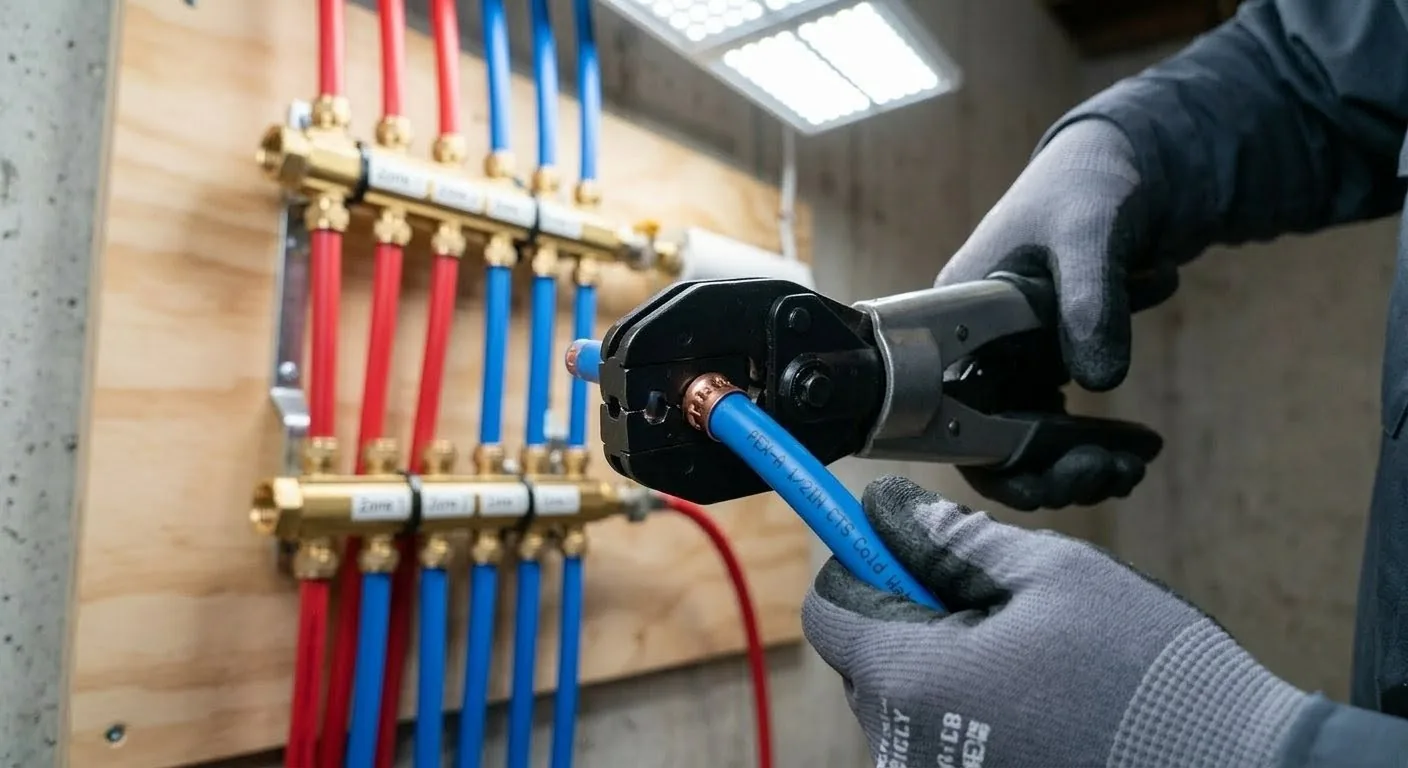
You might be wondering whether now's even the right time to invest in this. And that's a fair question. The remodeling and mechanical market isn't booming, but it isn't falling off either.
"1.9% easing of mechanical renovation growth projected for Q3 2026" - Harvard Joint Center for Housing Studies (2025)
That's a slight easing, and it's nowhere near a cliff. So demand stays steady, which means the work doesn't dry up, but it also doesn't get handed to you. You have to win it. And the supply side is still tight.
"Mechanical equipment remains difficult to source for remodelers in 2025" - National Association of Home Builders (2025)
When equipment is hard to get, the plumber who books the job early wins. And the booking starts on the website. Sentiment is holding up too.
"Mechanical sentiment contributed to a Current Conditions Index of 71 in 2025" - National Association of Home Builders (2026)
A reading of 71 says the people in your trade feel decent about conditions. So this isn't a bunker year. It's a year where the gap between a good site and a bad one decides who grows. And the long-game opportunity is enormous.
"Mechanical system retrofits part of the $149B housing deficiency market" - Harvard Joint Center for Housing Studies (2025)
A hundred and forty-nine billion in housing deficiencies, with mechanical retrofits as a real slice. That's aging pipes, failing heaters, and outdated systems across millions of homes. The demand isn't the problem. Being the plumber those homeowners find and trust first, that's the whole game.
A site doesn't work alone. It's the hub everything else points to. You can think of your website as the place every other channel lands.
Your ads run people here. Your truck wraps bring people here. Your Google profile sends people here. And if the page they land on is slow or confusing, you paid to send a lead somewhere that loses them. That's the leak most plumbers never check.
Once the site converts, the next move is getting more of the right people to it. That's where ranking for your services matters, and you can dig into how plumbing SEO brings in steady local searches as the next piece. If your bottleneck is volume rather than conversion, look at the systems that turn clicks into booked plumbing leads. And for the bigger picture of how it all connects, the full plumber marketing playbook ties the channels together.
For everything that lives under your trade, start at the plumbing services hub. And if you run more than one trade, the contractor marketing hub covers the rest.
The simplest thing you can do today takes two minutes. Pull up your own site on your phone, the way a homeowner with a leak would.
Time how long it takes to find and tap the phone number. You count the steps it takes to book a job. And you check whether your reviews and your real trucks show up, or whether it's stock photos and filler. Then open the best plumbing websites in your market and do the same. The gap you find is the gap that's costing you booked work right now.
That gap is fixable. And good plumbing website design is the fix, built as a rebuild around how your customers decide rather than a redesign for the sake of looking modern. So if what you saw on your phone made you wince a little, that's the signal. Your site can be the crew member that never misses a call. Right now, it might be the one quietly letting them go.
The evidence
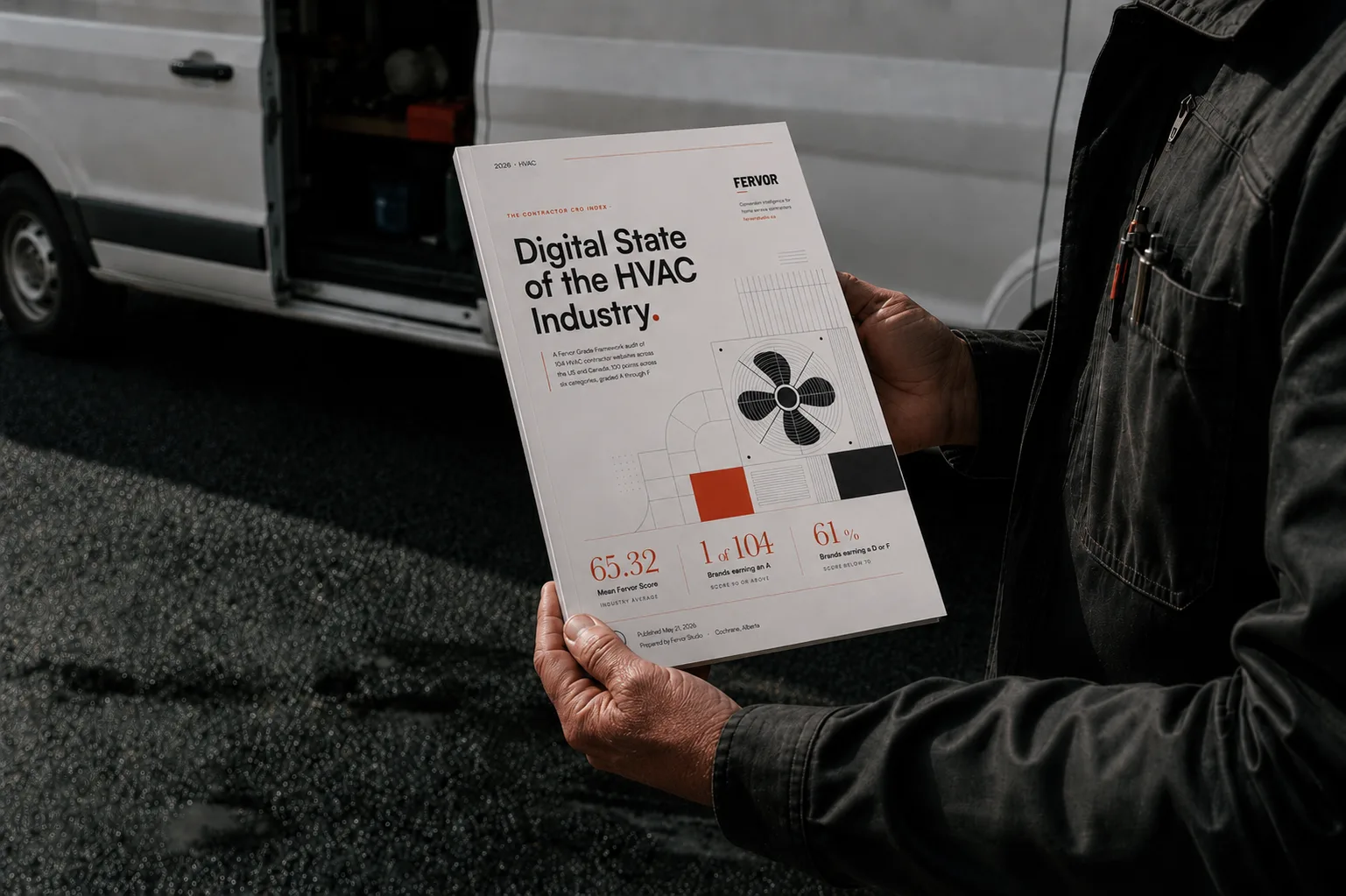 Read the full report →
 0
contractor sites graded, one A
Across the whole CRO Index, a single site earned an A. The median landed at a D. The grade gap is a conversion gap.
0
contractor sites across the State of the Industry research
Roofing, remodeling, and HVAC, scored page by page against one framework.
Two ways to start
Tell us where you are. We point you at the right next step — no sales call to get there.
Client review
“Nay did an amazing job, you know. He was really patient. He got the work done the way I told him and he was just on point with the website. Pretty straightforward process. No going around the bush. He just did amazing work and I would 100% recommend.”
How Fervor can help
Complete website system built to convert storm leads, planned projects, and research-phase homeowners into booked jobs.
Identify and patch the top conversion killers on your existing site. No full rebuild needed.
Monthly SEO, content, and CRO. Fixed deliverables. No credits, no rollover. The compound growth engine.
GBP optimization, citation building, and review system foundation. The infrastructure that gets you into the Map Pack.
One conversion-built landing page for the referrals, paid clicks, and cold-call leads you send. They land on a page built to book them, not your generic homepage.
Your move
Tell us where you are. We point you at the right next step — no sales call to get there.
Keep going