0
contractor sites graded, one A
Across the whole CRO Index, a single site earned an A. The median landed at a D. The grade gap is a conversion gap.
Right now, someone in Burnaby is Googling "plumber near me." We get you showing up first — then turn that click into a booked job.
A written report and a ranked fix list, in about three days.
“Patient, on point, straightforward. Did amazing work. Would 100% recommend.” — Ruben Mederos, HyperTemp HVAC
“Responsive, creative, exceeded expectations. Already seeing greater engagement from our clients.” — George Jeorgy, Jeorgy's Landscape Construction
“Top-tier professionalism, real web design expertise, ideas I hadn't considered. Confidently recommend.” — Aws Nassani, Four Eleven Contracting



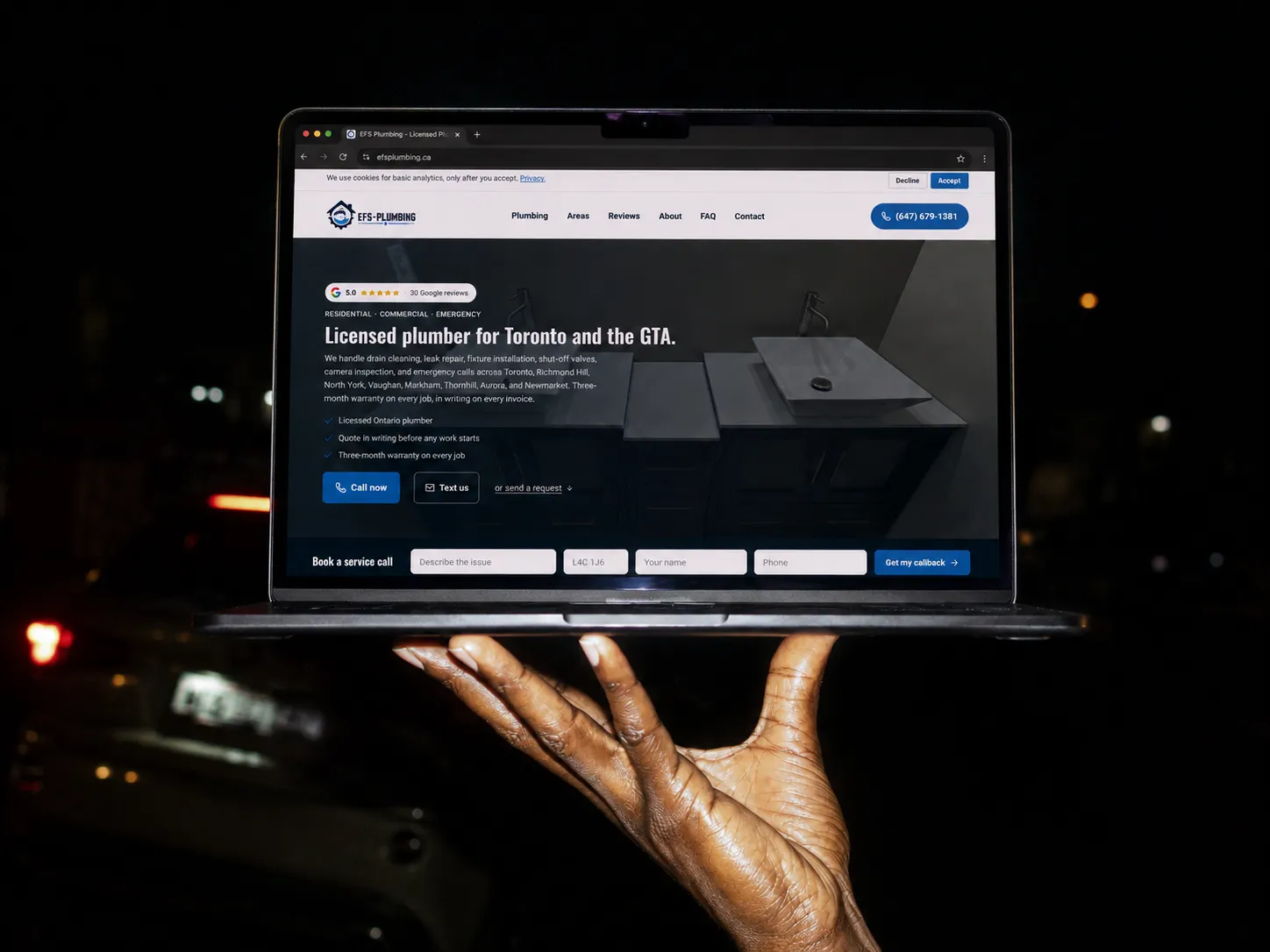
380 contractor sites graded on the public CRO Index
Fervor Contractor CRO Index 2026A grade out of 380 contractor sites
We graded 380 of them against one framework. Exactly one earned an A: Crown Industrial Roofing in Toronto, at 90 out of 100. The rest left money on the table. Here is what separates the top from the bottom.
The local detail
Every angle below comes from how Burnaby actually searches, buys, and regulates — built into the page, not bolted on.
Burnaby is not a generic market, and the search patterns make that obvious the moment you look.
People hear "search optimization" and picture a single dial that somebody turns.
The map pack is the prize worth chasing.
The leak shows up in plain numbers, because contractors think in jobs, not impressions.
A real plumbing SEO agency opens with what your shop can deliver and where, long before it talks rankings.
You are likely comparing two or three providers right now, and the real differences stay hidden until you know where to look.
Search is patient money.
You already run a solid plumbing shop somewhere across Burnaby. Your crews stay busy enough, your reviews read honest, and your work holds up under pressure. But when a homeowner in Metrotown types "plumber near me" at 7am with water creeping across a condo floor, your name sits nowhere near the top. That gap is what plumbing SEO Burnaby fixes, and it's a different job than buying ads or renting HomeStars leads. So this page walks through how local search works in this city, what a broken setup quietly costs you, and how a real local plumbing SEO company builds the system that gets you found.
Burnaby is not a generic market, and the search patterns make that obvious the moment you look. The city stacks high-rise condo towers around Metrotown, Brentwood, and Lougheed against older single-family blocks on the hillsides, and those two worlds search in completely different words. So a tower homeowner hunting for a shared-stack leak fix and a Capitol Hill owner facing a flooded crawlspace both need you, yet they type almost nothing in common.
And the hills shape demand in a way flat cities never deal with. The slopes around Capitol Hill, Deer Lake, and the SFU ridge send water downhill fast, which means sump pumps, perimeter drains, and basement flooding climb hard through the wet stretch from October into March. Because that runoff is predictable, your demand curve rises and falls with the weather, and it peaks exactly when the drains back up.
"Among homeowners who made improvements, 32% upgraded their water heaters, dishwashers, or garbage disposals." - U.S. Census Bureau and U.S. Department of Housing and Urban Development (2024)
Since that upgrade activity stays steady, your service pages need to name fixtures and appliances directly, not bury them in vague categories. A Brentwood condo owner swapping a dishwasher searches with different language than an Edmonds homeowner planning a full bathroom redo, and your content should meet each one where they are.

People hear "search optimization" and picture a single dial that somebody turns. The reality is closer to four moving parts that have to pull together. And on the local side, your Google Business Profile carries the heaviest weight by a wide margin. It feeds the map pack, which is the three-result block that sits above the regular links when a homeowner looks for a plumber in Metrotown or near Lougheed.
That profile only ranks when it's fed correctly. So your categories, your service area covering Burnaby out toward New Westminster and Coquitlam, your hours, your photos, and a steady trickle of reviews from real BC customers all push you up or hold you down. A profile that claims Surrey while your trucks only reach as far as Burnaby Heights confuses the algorithm and the homeowner at the same time, and that confusion costs you the ranking.
"The median homeowner spending on plumbing fixtures upgrades was about $800 (2021-2023 data)." - U.S. Census Bureau and U.S. Department of Housing and Urban Development (2024)
That benchmark matters because it tells you where homeowner budgets sit, and your content should land right there. A fixture-upgrade page that lists honest price ranges and ties them to specific Burnaby neighbourhoods reads as helpful, and Google rewards pages that answer the real question instead of dancing around it.
The map pack is the prize worth chasing. Three plumbers get shown, everyone else scrolls out of sight, and the homeowner with a flooded basement near Deer Lake almost never digs past those three results. So ranking there is the single most valuable move in any local search plan you build for the city, and it deserves the bulk of your attention.
And proximity drives a large share of who shows up. A homeowner near Metrotown sees different results than one near SFU, because Google weighs how close each shop sits to the person searching. You can't pick up your building and move it, but you can build neighbourhood pages, earn reviews that mention Brentwood or Edmonds by name, and tighten your profile so you own the radius your trucks can realistically cover.
"In U.S. single-family homes (2020), 40% of main water heaters were fueled by natural gas and 31% by electricity." - U.S. Energy Information Administration (EIA) (2020)
Natural gas dominance shapes what your water-heater content should cover. So a Burnaby page that addresses gas-to-electric conversions, venting, FortisBC realities, and the hard-water scaling that wears tanks out early will pull searches that a thin "we fix water heaters" line never reaches.

The leak shows up in plain numbers, because contractors think in jobs, not impressions. Your average booked job might run $650, blending drain calls with the occasional water-heater swap. And your site might quietly pull 400 visitors a month who are searching for a plumber across your Burnaby service area.
If only 2% of those visitors call and book, that works out to 8 jobs, or roughly $5,200 a month. But a site stuck on page two might convert a quarter of that, because most of the ready-to-call traffic never lands on you in the first place. So the gap is real money, and it amounts to about $3,900 a month walking to the plumber who showed up in the map pack instead of you.
"Only 5.8% of U.S. single-family homes had tankless water heaters in 2020." - U.S. Energy Information Administration (EIA) (2020)
Low tankless adoption is a content opportunity hiding in plain sight. Because so few homes have made the switch, a Burnaby page explaining tankless trade-offs in tight Metrotown condos and space-starved older homes can capture a high-intent searcher your competitors keep ignoring.
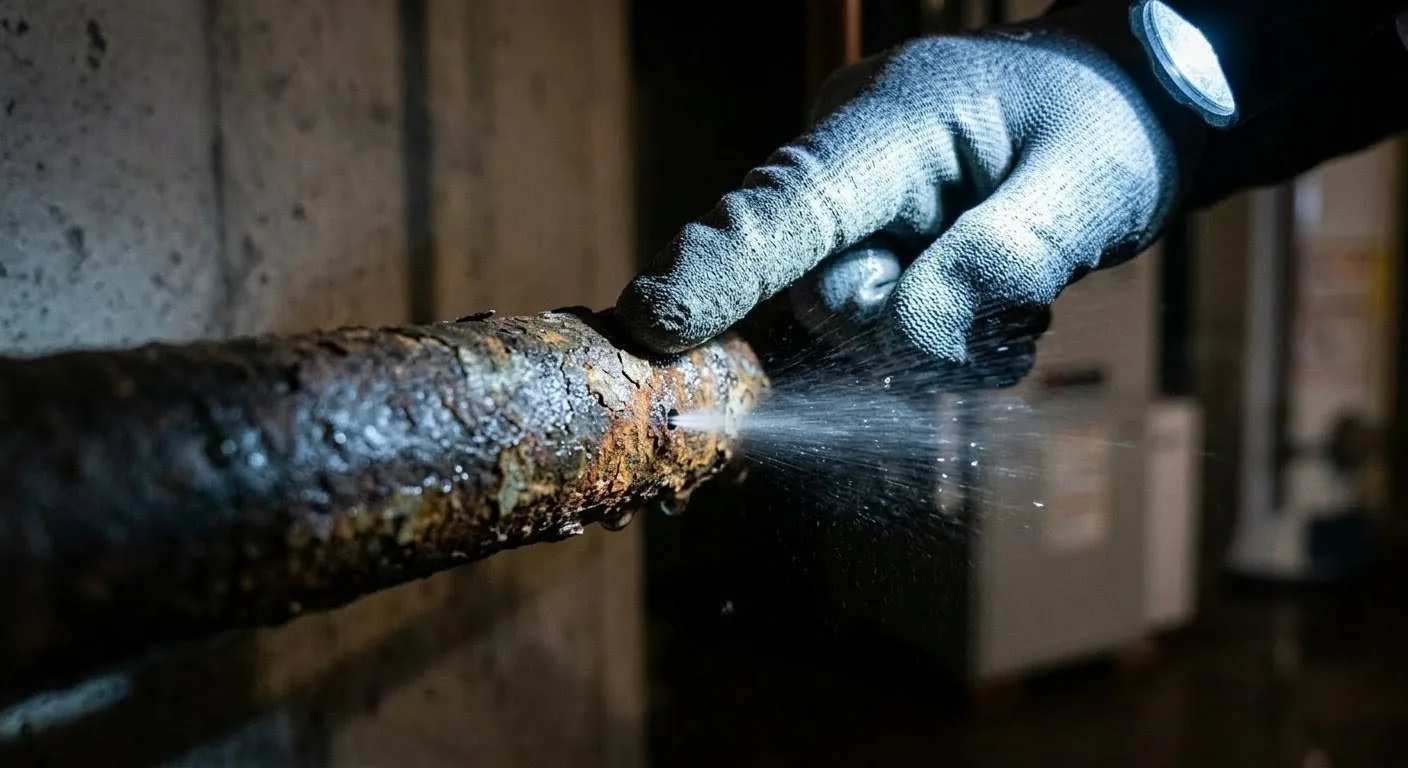
A real plumbing SEO agency opens with what your shop can deliver and where, long before it talks rankings. So the build starts with a profile audit, a content map tied to the Burnaby service areas you cover, and a review system your office manager can run without a marketing degree.
And the content layer carries more weight than most shops expect. You need a strong page for each core service, and each one should anchor to Burnaby neighbourhoods you genuinely cover. A drain page that talks about the older sewer laterals under Burnaby Heights will outrank a generic one every time, because it answers the search behind the search.
"1.9% easing of mechanical renovation growth projected for Q3 2026" - Harvard Joint Center for Housing Studies (2025)
A small slowdown like that still leaves plenty of work on the table. It just shifts the work toward the shops that get found, while the quiet ones feel the pinch first. So the case for ranking gets stronger when the broader market softens, since every booked job counts for more.
"Mechanical equipment remains difficult to source for remodelers in 2025" - National Association of Home Builders (2025)
Supply constraints change the conversation on your site. So a content plan that addresses lead times, sourcing for water heaters and fixtures, realistic install windows, and honest scheduling builds trust with homeowners who have already been burned by a no-show plumber.
The technical side rounds the whole thing out. Your site has to load fast on a phone, because that flooded-basement homeowner is searching one-handed while the water rises. And your pages need clean structure, real schema, and internal links that pass authority to the services that book the most work.

You are likely comparing two or three providers right now, and the real differences stay hidden until you know where to look. So ask each one to show you a booked-jobs report. A rankings screenshot looks impressive on a slide, yet it tells you almost nothing about whether your phone rang. Booked jobs are the number that pays the crew.
And ask who owns the work when the relationship ends. A strong local provider hands you the domain, the content, and the Google Business Profile login, all of it in your name. A provider that keeps those assets has quietly built a cage, and you will feel the bars the day you try to leave.
"Mechanical sentiment contributed to a Current Conditions Index of 71 in 2025" - National Association of Home Builders (2026)
That sentiment reading points to homeowners who are still spending. So the demand is there across Burnaby, which means the providers worth your money are the ones who can prove they turn that demand into calls, week after week, and not just once for a slide deck.
Search is patient money. It compounds, and a page you rank today keeps booking jobs for years with light upkeep. Ads stop the second your card stops, but a strong organic listing keeps earning while you sleep. So the smart play is to treat ranking as the foundation, then layer paid search on top during your slow stretch.
And the two channels feed each other. A homeowner who sees your ad, then sees your name again in the Burnaby map pack, trusts you more than a stranger. Because repetition reads as stability, and stability is exactly what a homeowner wants when they are about to let someone into the house to fix a burst pipe behind a finished wall.
"Mechanical system retrofits part of the $149B housing deficiency market" - Harvard Joint Center for Housing Studies (2025)
That retrofit market is enormous, and a lot of it lives in Burnaby's aging housing stock. So a plan built around repipes, water-heater upgrades, and hillside drainage retrofits taps a demand pool that only grows as the city's 1970s and 1980s homes keep getting older.
If you want to see where your own site leaks today, a free Site Inspection from Fervor Studio maps the exact points where ready-to-call homeowners drop off. And if you are ready to rebuild the foundation, our plumbing web design gives the searches somewhere worth landing, while local SEO for plumbers gets you found across the city in the first place.
Local rankings move slower than ads, but they stick around far longer. So most Burnaby shops see profile and map-pack movement within two to three months, with service-page rankings climbing across months four through nine. And the early wins usually come from the Google Business Profile, since it responds faster than organic pages. A flooded-basement search near Deer Lake can start finding you well before your full content library matures.
You should build pages for the areas you genuinely serve, not every postal code on the map. So a shop covering Metrotown, Brentwood, and Capitol Hill earns more from three strong, specific pages than from twenty thin ones. And Google now penalizes doorway pages that only swap the place name, which means each page has to carry real local detail to rank at all.
HomeStars and the other platforms rent you leads, and they rent the same lead to your competitors at the same time. But your own ranking is an asset you keep for good. So the move is to win the map pack and your service pages first, then treat the platforms as a backstop during slow weeks. A good provider should aim to shrink your platform dependence over time, never deepen it.
Pricing ranges widely, and the cheap end usually means a shared template with little real local work behind it. So expect a serious local provider to scope the job around your service areas, your competition, and the size of your review gap against the shops already sitting in the map pack. And the figure worth watching sits past the headline monthly fee. Your cost per booked job is the only number that tells you whether the spend is paying you back.
The evidence
 Read the full report →
 0
contractor sites graded, one A
Across the whole CRO Index, a single site earned an A. The median landed at a D. The grade gap is a conversion gap.
0
contractor sites across the State of the Industry research
Roofing, remodeling, and HVAC, scored page by page against one framework.
Two ways to start
Tell us where you are. We point you at the right next step — no sales call to get there.
Client review
“Nay did an amazing job, you know. He was really patient. He got the work done the way I told him and he was just on point with the website. Pretty straightforward process. No going around the bush. He just did amazing work and I would 100% recommend.”
How Fervor can help
Monthly SEO, content, and CRO. Fixed deliverables. No credits, no rollover. The compound growth engine.
Complete website system built to convert storm leads, planned projects, and research-phase homeowners into booked jobs.
Identify and patch the top conversion killers on your existing site. No full rebuild needed.
GBP optimization, citation building, and review system foundation. The infrastructure that gets you into the Map Pack.
One conversion-built landing page for the referrals, paid clicks, and cold-call leads you send. They land on a page built to book them, not your generic homepage.
Your move
Tell us where you are. We point you at the right next step — no sales call to get there.
Keep going