0
contractor sites graded, one A
Across the whole CRO Index, a single site earned an A. The median landed at a D. The grade gap is a conversion gap.
Right now, someone in Los Angeles is Googling "HVAC near me." We get you showing up first — then turn that click into a booked job.
A written report and a ranked fix list, in about three days.
“Patient, on point, straightforward. Did amazing work. Would 100% recommend.” — Ruben Mederos, HyperTemp HVAC
“Responsive, creative, exceeded expectations. Already seeing greater engagement from our clients.” — George Jeorgy, Jeorgy's Landscape Construction
“Top-tier professionalism, real web design expertise, ideas I hadn't considered. Confidently recommend.” — Aws Nassani, Four Eleven Contracting




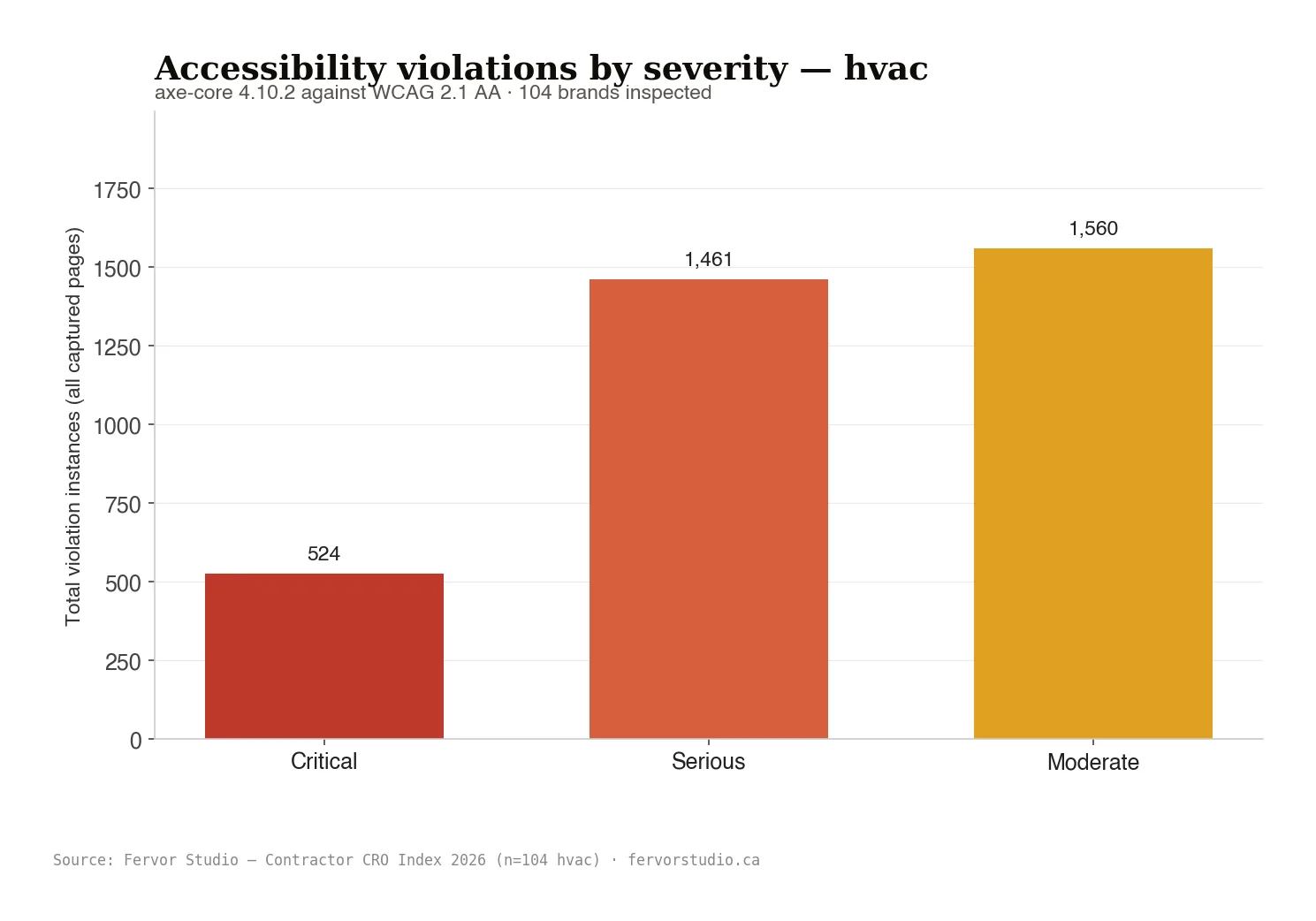
64.4% of HVAC sites we tested fail a critical accessibility check
Digital State of the HVAC Industry 2026A grade out of 380 contractor sites
We graded 380 of them against one framework. Exactly one earned an A: Crown Industrial Roofing in Toronto, at 90 out of 100. The rest left money on the table. Here is what separates the top from the bottom.
The local detail
Every angle below comes from how Los Angeles actually searches, buys, and regulates — built into the page, not bolted on.
Start with the September that explains this market.
When that searcher types "AC repair near me," most of what she sees isn’t websites — it’s the map: three businesses, their stars, their review counts, their photos.
The profile is the franchise asset of Los Angeles HVAC SEO, so build it deliberately.
Here’s where hvac contractor seo los angeles separates from the template work.
Heat domes and the long cooling season (May–October).
Review velocity decides hvac seo los angeles pack rankings and LA buying decisions at once, and velocity beats volume: forty reviews that stopped last spring read…
Now the differentiation hiding in plain sight.
You've probably paid for SEO before. And if you run a shop anywhere from the Valley to the South Bay, odds are the last agency treated Los Angeles like one city: one homepage, one service area, one strategy for a county that is actually 88 incorporated cities spread across 4,750 square miles. So now you're wondering whether HVAC SEO Los Angeles is a real discipline or a template with the city name swapped in. Fair question. This page lays out what it takes here specifically: a Google Business Profile built for sprawl, service pages for the ADU mini-split wave nobody else is chasing, LADWP rebate fluency while the money is live, and the review engine that decides who wins when the next heat dome lands.
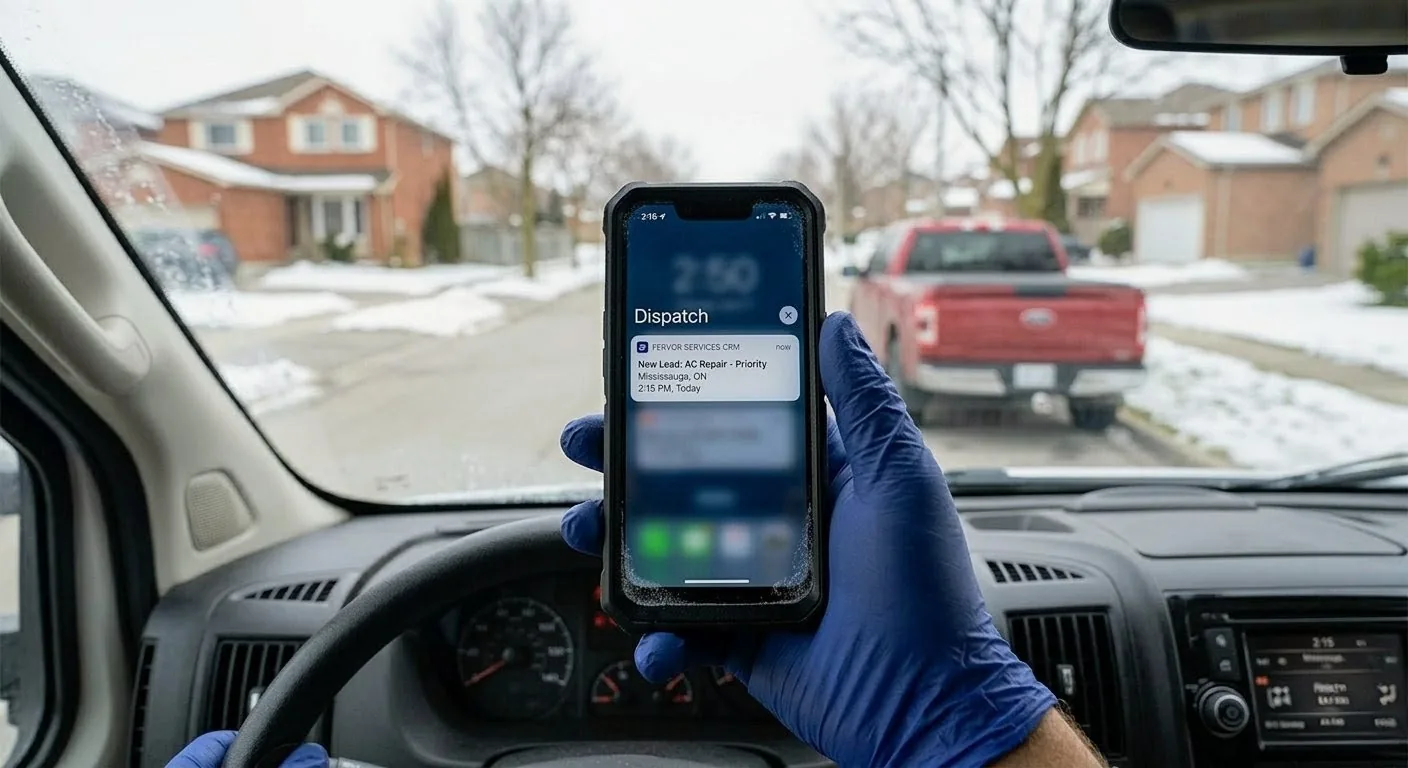
Start with the September that explains this market. When the 2020 heat dome pushed downtown to 121°F and Woodland Hills to 119°F, every aging AC unit in the county hit its limit in the same week. And here's the LA-specific twist: roughly 20% of LA households have no air conditioning at all, a higher no-AC share than much hotter Riverside, because the coastal climate let older housing skip it for decades. Every heat event converts a slice of that no-AC stock into first-time install demand, on top of the failure wave.
And the demand has a new legal floor under it. LA County now requires landlords to keep rental units at a maximum of 82°F. Landlords were always required to provide heat, never cooling, and that flip points a rental-retrofit wave at whoever those property owners find first. Where do they look? The same place the panicking Sherman Oaks homeowner looks at 9pm: the map, the reviews, the first three results. So search visibility is the dispatch queue in this market, and HVAC SEO Los Angeles is the discipline of holding your place in it before the temperature decides the winners. The shop Google trusts gets the heat dome; everyone else gets the leftovers.
"25% of homeowners say trusting contractors is their top challenge when planning home improvements." — Houzz Inc. (2024)
And a quarter of your market starts from distrust. So the visibility work and the trust work are the same work, and the Local Pack is where both get graded in seconds.
When that searcher types "AC repair near me," most of what she sees isn't websites — it's the map: three businesses, their stars, their review counts, their photos. The Local Pack concentrates the decision, and it runs on Google Business Profile signals, review signals, and proximity. Which is exactly the problem in a county shaped like this one: Google draws pack radii around the searcher, so Calabasas, Koreatown, and Long Beach each render a different three-pack. A shop with one profile pinned to one warehouse competes in precisely one of them.
So Los Angeles HVAC SEO starts with an honest map of where your trucks actually roll, then matches the profile's service areas to it by quadrant: the Valley (Encino, Sherman Oaks, Studio City, Woodland Hills, running 10–15°F hotter than the coast), the inner-city older stock (Echo Park, Silver Lake, Highland Park, Boyle Heights, Koreatown), the South Bay and the Glendale–Pasadena–Burbank corridor, and the Westside premium belt from Brentwood to Malibu. Each quadrant is its own demand profile and, practically, its own market. The agencies selling hvac marketing los angeles packages flatten all of it into one homepage, and then the rankings stop at the end of the block the office sits on.
The profile is the franchise asset of Los Angeles HVAC SEO, so build it deliberately. Primary category: HVAC Contractor, the dual heating-and-cooling category, because the same heat pumps the rebates fund also carry the mild-winter heating load, and the category ranks you for both buckets. Secondaries from your actual ticket mix: Air Conditioning Contractor, Air Conditioning Repair Service, Heating Contractor.
And the service-area list deserves real care here. Google allows up to twenty service-area entries. Name the cities and neighborhoods you genuinely serve, by quadrant, instead of "Greater Los Angeles." Put your C-20 license number in the business description, because California requires it for any HVAC work over $500 and the homeowners who check are the ones with budgets. Photos on a cadence: two uploads a month of real local jobs (a mini-split head in an Echo Park ADU, a coastal-grade condenser swap in Manhattan Beach, an attic air handler in Tarzana) keeps the listing visibly alive and unmistakably local. Then seed the Q&A field with what your dispatcher answers daily: do you service my area, do you handle LADWP rebate paperwork, can you do a same-day AC visit in the Valley.
But the LA-specific layer most profiles miss entirely: this is a Yelp-heavy market. Yelp carries more weight in Los Angeles contractor search than in almost any other US metro, and Nextdoor runs hyper-active by neighborhood. Your review engine has to feed three platforms here, not one. That's a process problem, covered below, not a motivation problem.
Here's where hvac contractor seo los angeles separates from the template work. Google matches queries to pages, not to businesses, so one "Our Services" page listing nine offerings ranks for none of them. The build-out this market wants:
The ADU mini-split page first, because it's the closest thing to uncontested demand in the county. California's ADU laws plus the city's streamlined permitting turned every backyard cottage into a ductless job (a 600-square-foot unit can't take ductwork), and almost nobody has built the page that explains the LADBS permit path, the equipment choice, and the real installed cost. The shop that owns that query owns a category that didn't exist ten years ago.
Then the heat pump conversion page with the rebate math done honestly: LADWP's Consumer Rebate Program is live at up to $2,500 per ton for qualifying heat pumps (7.7 HSPF2 and 15.2 SEER2 minimums, installs after November 2025, AHRI cert and permit required), while the state's TECH Clean California single-family money is effectively dead, fully reserved since late 2025 with new requests waitlisted. That contrast is the most bookable paragraph in LA HVAC right now: the shop that tells homeowners which money is real and which page is quoting a dead program becomes the name the searcher trusts to sort it out. That clarity is what books the consultation. Then the IAQ and smoke-filtration page (LA–Long Beach ranks worst in the nation for ozone, and wildfire smoke season is now an annual demand event), the coastal-corrosion page for the five-mile salt-air belt from Malibu to Long Beach, and the same-day emergency AC page that leads the whole site every summer.
"Mechanical system retrofits part of the $149B housing deficiency market." — Harvard Joint Center for Housing Studies (2025)
"Professional mechanical projects represent bulk of the 84.1% pro-spend share" — Harvard Joint Center for Housing Studies (2025)
Homeowners hand mechanical work to professionals at a rate most trades envy. The demand defaults to you, if you're findable. The retrofit demand is structural, national, and funded. The only question is which local shop's pages are positioned in front of it.
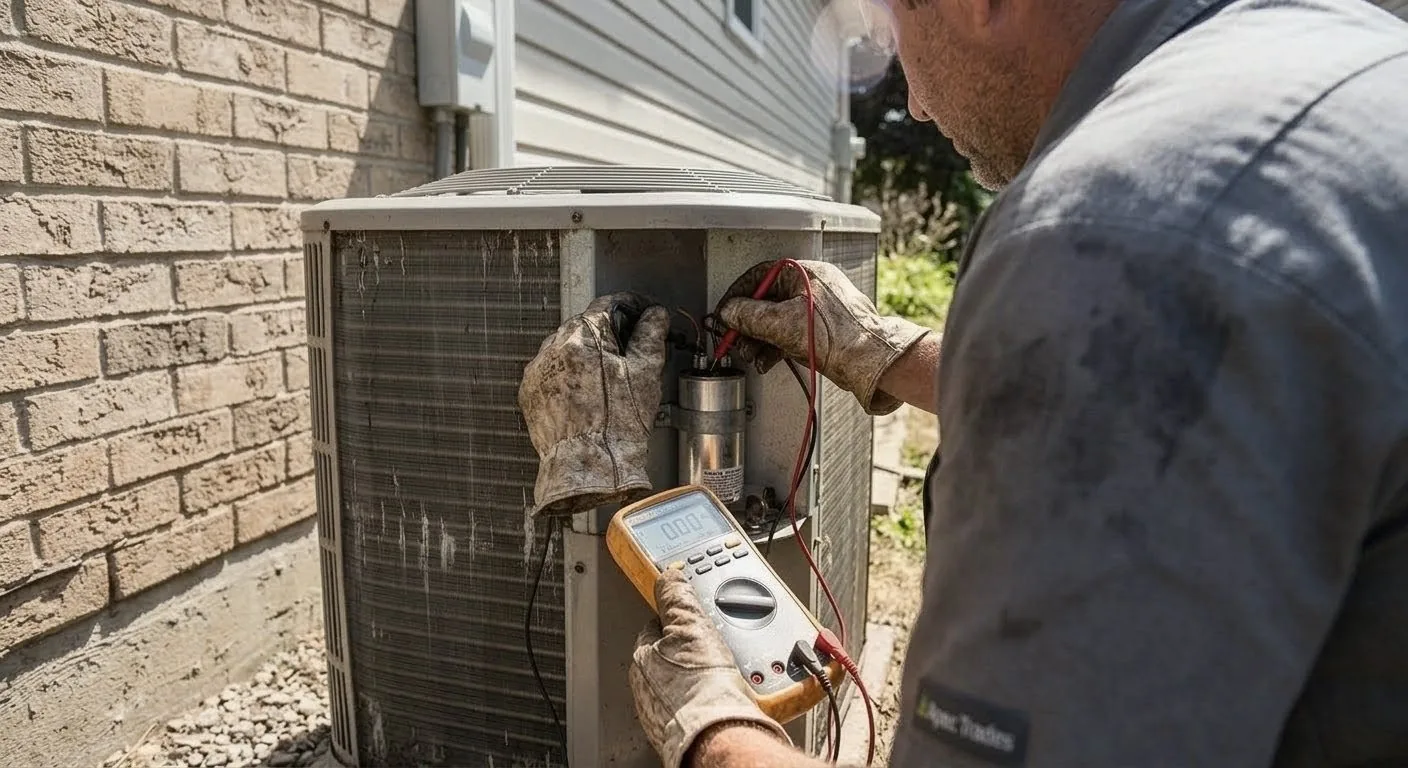
Heat domes and the long cooling season (May–October). The emergency mode. The Valley fails first and hardest (it runs 10–15°F hotter than the coast), and the no-AC older stock converts to first-time installs with every event. Your emergency pages and the profile's same-day signals carry this season.
Smoke and smog season (September–November). The IAQ mode. Wildfire events push purifier, MERV-13+, and filtration demand metro-wide, and the worst-ozone-in-America baseline keeps a year-round floor under it. A filtration page published before the season owns it; one published during is fighting for scraps.
The mild-winter shoulder (December–February). The electrification mode. Heat pump conversions, dual-fuel installs for the Westside premium stock, and the ADU build-outs that run year-round. This is when the LADWP rebate content earns hardest, because nobody's panicking and everybody's comparing.
So publish against the calendar: rebate and conversion content in late fall, filtration before September, emergency-readiness before May. The page that's indexed and aging when the wave breaks collects it; the page published mid-wave watches from the second page of results. And in a market with three distinct waves a year, that's three deadlines your content calendar either makes or donates to whoever did. And one more timing note that flatters this trade nationally:
"1.9% easing of mechanical renovation growth projected for Q3 2026." — Harvard Joint Center for Housing Studies (2026)
But growth is plateauing, not growing fast enough to lift everyone. In a flattening market, search position is a zero-sum fight — which is the honest argument for doing this work now rather than after a competitor does.
Review velocity decides hvac seo los angeles pack rankings and LA buying decisions at once, and velocity beats volume: forty reviews that stopped last spring read worse than twenty-five with three from this week, because the timestamp is the proof of life. Make the ask operational: automated after every closed ticket, timed for the evening, rotated across Google and Yelp since this market reads both. Respond to everything, especially the rare three-star, because the response is content: it's the only place a stranger can watch you handle a problem before hiring you to handle hers.
"Mechanical equipment remains difficult to source for remodelers in 2025." — National Association of Home Builders (2025)
And supply friction like that is exactly the kind of expectation-setting your review responses and FAQ content can absorb honestly. The shop that explains a lead time wins more trust than the one that pretends it away. And round out the citation layer with the directories that actually matter here: Yelp first, Nextdoor claimed by neighborhood, and IHACI (the California-specific HVAC association almost every agency misses) for the credibility link the national templates never have.
Now the differentiation hiding in plain sight. More than half of LA County speaks a language other than English at home, and the HVAC demand in Koreatown, Boyle Heights, East LA, and the San Gabriel Valley searches the way it speaks. "Aire acondicionado reparación" is a real query with real volume in this county, and almost no contractor site answers it. So a Spanish-language emergency page and a Spanish review-response habit aren't diversity gestures here. They're hvac local seo los angeles tactics with less competition than any English keyword on this page. The same logic runs for Korean in Koreatown and Mandarin in the SGV: one well-built page per language per core service, written by a speaker rather than a plugin, each one fishing in a pond your competitors haven't found.
And while we're on what agencies skip, the anti-pattern list for HVAC SEO Los Angeles is consistent enough to publish. The one-homepage sprawl flatten, a single page claiming "greater Los Angeles" that ranks nowhere outside its own zip code. The dead-rebate page, still quoting TECH single-family money that's been reserved out since 2025, converting angry calls. The stock-photo profile that hasn't seen a real LA job since it was claimed. And the review wall that stopped cold eight months ago, reading like a business that left. Every one of those is a competitor you pass by simply not doing it. That's the quiet math of HVAC SEO in Los Angeles: in a county this fragmented, discipline compounds faster than budget.
The sequence behind hvac seo company los angeles engagements at Fervor is the same one behind every market, tuned to this county. First the free Site Inspection: your current site run through the same 100-point framework behind the State of the HVAC Industry report, scored category by category, findings handed over whether or not you hire us. If the real problem is the build or the capture layer, we say so and route you to the cheaper fix first — HVAC web design in Los Angeles for the bones, HVAC website conversion in Los Angeles for the leaks.
Then the The Local Pick: $2,497 one-time, about 14 days. The profile rebuilt for sprawl: categories, quadrant-honest service areas, photo cadence, Q&A seeding, the Yelp and Nextdoor layer, citation cleanup, and call tracking so every change is measurable against your dispatch board. It's priced so the payback math works at a single recovered installation.
The ongoing engagement (the ADU and rebate-fluent service pages, quadrant content, review velocity across platforms, monthly reconciliation against actual booked jobs) runs under Performance Partner at $1,497 to $3,997 per month, month to month, every asset registered to you from day one. No long contracts; the reporting is what should keep you.
The broader system lives at the HVAC marketing hub, under mechanical contractors, starting from the contractor hub.
The The Local Pick moves profile signals within weeks. Service-area corrections and review velocity show in the pack first. The content layer compounds over a season: an ADU page or rebate explainer published this quarter earns its rankings ahead of the next heat event, not during it. And the calendar is the honest frame: LA demand arrives in waves (heat domes, smoke season, the electrification shoulder), so the campaign's job is to be positioned before each wave breaks. A shop that starts in winter owns pages by summer; a shop that starts during the heat dome is buying ads at the top of the market.
Functionally, yes. Google draws the Local Pack around the searcher, so Woodland Hills, Koreatown, and Long Beach each see different results, and your service-area settings, your review geography, and your neighborhood content decide which packs you appear in. That doesn't mean 88 microsites; it means one profile configured honestly by quadrant, service pages that name the communities you actually roll trucks to, and photos that prove it. The sprawl is the moat once you've mapped it, because most competitors never do.
Yes — with discipline. LADWP's heat pump rebate is live and specific (up to $2,500 per ton with published efficiency minimums), and homeowners search for exactly that math. But TECH Clean California's single-family money is fully reserved, and pages still quoting it are converting angry calls, not booked ones. The rule: publish the live numbers with their conditions, name the dead programs as dead, and date the page. Rebate honesty is the cheapest differentiation in this market because so few shops maintain it.
It means a second buyer just walked into your market. LA County's maximum-temperature requirement makes landlords responsible for cooling the way they've always been responsible for heat, and a property owner with three aging fourplexes in Koreatown searches differently than a homeowner: portfolio pricing, scheduling around tenants, paperwork they can forward to a property manager. A landlord-retrofit page that speaks that language (multi-unit pricing logic, mini-split options for buildings that never had ducts, the rebate stack per unit) captures a demand stream the emergency-AC template never will. And because the rule is new, the SERP for it is nearly empty; early pages get the bookmark and the backlinks while competitors are still quoting residential-only services.
In this metro, yes — LA is one of the few markets where Yelp weight in contractor search rivals Google's pack. That doesn't mean buying Yelp ads; it means claiming the profile, feeding it the same review velocity you feed Google, and responding there with the same care. Add Nextdoor by neighborhood and the IHACI membership link, and you've got the citation triangle most LA competitors never finish.
The evidence
 Read the full report →
 0
contractor sites graded, one A
Across the whole CRO Index, a single site earned an A. The median landed at a D. The grade gap is a conversion gap.
0 %
of HVAC sites fail a critical accessibility check
Scored against WCAG 2.1 AA with axe-core. A page that blocks a screen reader also blocks a paying customer.
Fervor HVAC State of the Industry, 2026
0 %
miss Google's mobile load-speed bar
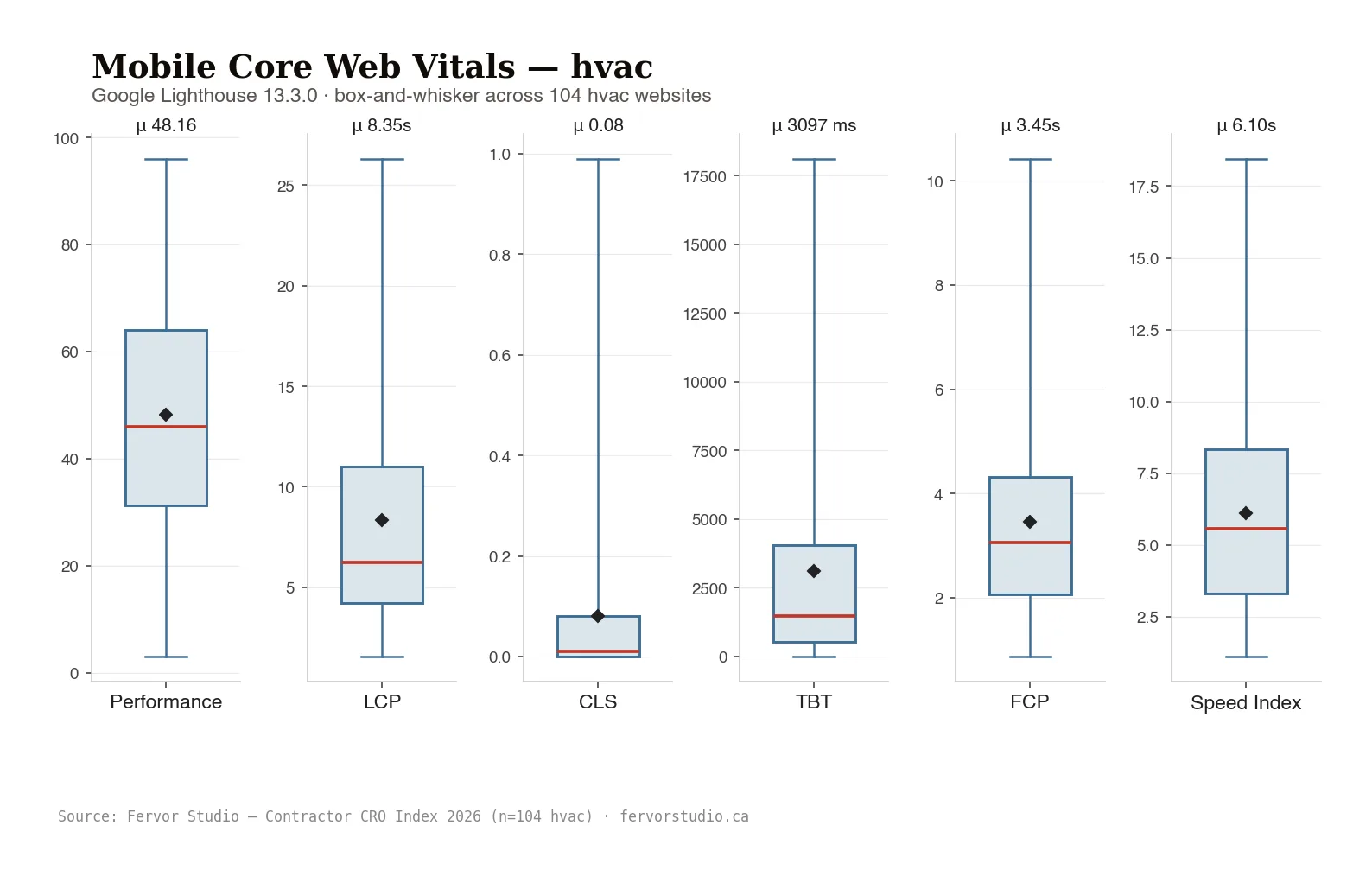
Median mobile load lands at 6.24 seconds. Most of your traffic is on a phone, and most of them are gone before the hero paints.
Fervor HVAC State of the Industry, 2026
0 /100
is the average HVAC grade
That is a D. The sites booking the work are not the ones with the biggest crews. They are the ones a few points higher on the things homeowners feel.
Two ways to start
Tell us where you are. We point you at the right next step — no sales call to get there.
Client review
“Nay did an amazing job, you know. He was really patient. He got the work done the way I told him and he was just on point with the website. Pretty straightforward process. No going around the bush. He just did amazing work and I would 100% recommend.”
How Fervor can help
Monthly SEO, content, and CRO. Fixed deliverables. No credits, no rollover. The compound growth engine.
Complete website system built to convert storm leads, planned projects, and research-phase homeowners into booked jobs.
Identify and patch the top conversion killers on your existing site. No full rebuild needed.
GBP optimization, citation building, and review system foundation. The infrastructure that gets you into the Map Pack.
One conversion-built landing page for the referrals, paid clicks, and cold-call leads you send. They land on a page built to book them, not your generic homepage.
Your move
Tell us where you are. We point you at the right next step — no sales call to get there.
Keep going