
You have already paid a roofing marketing agency or two. Maybe three. The first one promised first-page rankings and disappeared after the second invoice. The second one ran Google Ads at a cost-per-call that made every booked roof a wash. And the third one (the one that "specializes in roofing marketing") sent you a monthly report with traffic graphs going up and a phone that rings less than it did before they started.
So here you are, reading another agency page, again. And this one needs to read different from the start.
Most marketing for roofing contractors is sold as packages. Entry, Competitive, Aggressive. Web design plus SEO plus a bit of Facebook. But the packages are not the actual problem. The problem is that none of them start from the math, your CAC, your LTV, your payback period, broken down by job type and channel. Without that, every dollar you spend on digital marketing for roofers is a guess. And guesses get expensive in a market where a single bad month of cost-per-lead can erase a quarter of margin on a $1.5M roofing book.

Why most roofing marketing fails
The most common shape of roofing marketing failure in 2026 is what the industry calls vendor sprawl. You hired one shop for the website, another for SEO, a third for Google Ads, a fourth for Facebook. None of them sees the booked jobs from the others. Your call tracking lives in one tool, your CRM in another, your ad accounts in a third. And nobody owns the number that matters, booked roof replacement revenue per dollar of ad spend. So you end up paying for activity (keywords ranked, impressions served, blog posts published) instead of paying for outcomes. The activity reports look great. The booked-roof number does not.
The second pattern is even more common. Most roofing marketing agencies position their clients as one more provider in a crowded local SERP. They write copy that sounds like every other roofing marketing agency on page one of Google: "we know roofers," "results-driven," "transparent reporting." But your buyer (a homeowner staring at a hail-pocked roof or a property manager comparing four bids on a flat-roof TPO replacement) does not pick by who sounds most roofer-y. They pick by who answers their question fastest and most credibly. And the data on whether roofing sites are even structured to do that is unambiguous.
#“49.2% of roofing contractor websites earn a Fervor Grade of D or F — 64 of 130 Site Inspected brands scored below 70.”
— Fervor Studio — Contractor CRO Index Primary research
That is the foundation. Nearly half the roofing trade ships a website that, under one mechanical rubric, fails. And then layers paid spend on top of it. So every dollar of paid spend is dragging a leaky funnel uphill. That is why the math never works.
The third pattern is harder to see but lethal at scale. Most roofing marketing agencies report on the wrong number. They send you traffic reports, keyword reports, impression reports, click reports. The reports look professional. None of them measure what your business actually buys with marketing dollars: roofs sold. So you have no way to know which campaign earned its keep and which one was a tax on the others. And without that signal, you cannot reallocate. You cannot kill the loser. You cannot double down on the winner. You just keep paying, and hope.
#“Among roofing contractors who publicly state their founding year (43.1% of Site Inspected brands), the mean tenure is 44.9 years and the median is 40.5 years.”
— Fervor Studio — Contractor CRO Index Primary research
And read the trade-tenure data carefully. The roofing market is dominated by long-established operators with deep brand reputation. So differentiation cannot come from "we are a roofer." It has to come from a marketing system that surfaces a clearer value proposition, faster response time, better conversion infrastructure, and tighter attribution than every long-tenured competitor on the local SERP. The good news is that the rest of this page covers exactly where those competitors are weak. The real gap is not "we need more leads." The real gap is distinctness, paired with a system that turns distinctness into booked work. The roofing companies winning their markets right now are not the ones spending the most. They are the ones whose marketing system is most tightly wired to their CRM, their dispatch, and their review velocity.
The math: CAC, LTV, and payback for roofers

Before you spend another dollar on roofing marketing, three numbers need to live on the wall behind your desk. Customer acquisition cost. Lifetime value. Payback period. Without them, every channel decision is a coin flip, and every contractor in your local Google Pack is racing you to the bottom of the cost curve.
Here is the rough shape across the trade, broken by job type. A residential asphalt-shingle reroof in the United States runs an average ticket of $8,000 to $25,000, with insurance-paid storm-restoration jobs frequently coming in at the higher end. So a healthy roofing CAC sits at $400 to $900 per booked job for retail replacements and $600 to $1,400 per booked job for storm restoration (where the close rate is higher but the qualification work is heavier). A metal-roofing install runs $20,000 to $50,000 on a typical residential job, which gives more CAC headroom but a longer sales cycle. And commercial flat-roof TPO work runs $15,000 to $80,000+ per project, with even longer lead times and a different qualification path.
These ticket ranges are not invented. They reflect industry-standard reroof pricing visible across major roofing CRMs and the U.S. Census reroof spend data.
Spending
"In 2024, 22% of renovating homeowners undertook roofing upgrades, with a median spend of $13,000, 8% higher than 2023."
— Houzz Inc. (2025)
So the median roofing project is a $13,000 job. The math on a $400 CAC against a $13,000 job is straightforward, 3 percent cost of acquisition is a healthy roofing economics floor and gives the operator room to invest in materials, crew, and warranty without choking margin. The math on a $1,200 CAC against the same $13,000 job is a 9 percent cost of acquisition, workable but tight. And the math on a $3,000 CAC against a $13,000 job is broken. Most roofing marketing in 2026 is broken in exactly that direction, and the operator typically does not know it until cash flow collapses.
Spending
"From 2021-2023, homeowners spent $93.5 billion on roofing across 8.3 million projects, per American Housing Survey-based estimates."
— U.S. Census Bureau and U.S. Department of Housing and Urban Development (2024)
The trade is huge. The buyer is real. The problem is not demand. The problem is whether your roofing marketing system attaches itself to that demand at a CAC the business can afford.
Lifetime value for a roofing company is shaped differently than for HVAC or plumbing. A residential reroof is a once-in-15-to-30-years purchase for most homeowners, so the LTV from the original homeowner is largely the job itself plus warranty work and the occasional repair. But the real LTV unlock for a roofing company is the second-order revenue, the referrals from that one happy customer in a neighborhood. A well-installed roof is visible from the street for a decade. A roof sign on the front lawn during the install is visible from every car driving by. And a review velocity system that turns that one happy customer into eight neighbors googling your name 18 months later is what compounds LTV. Storm-damaged housing stock, particularly in hail-prone metros, keeps demand structurally tight and elevates the LTV ceiling for any roofer running a real referral and review-velocity loop.
Payback period for roofing marketing should land inside the first booked job for paid channels and inside the first quarter for owned channels. If your Google Ads spend is paying back in 4 months instead of 4 weeks, the spend is wrong, or the funnel is wrong, or both. If your SEO content is taking 18 months to pay back, the content is wrong, or the keyword targeting is wrong, or the landing pages it points at are not converting. Every channel has a payback signature. The job of a real roofing marketing system is to track each one and prune ruthlessly.
Comparison
"The construction industry spends approximately 1% of revenue on marketing, dramatically below the cross-industry average of 7.7% (Gartner 2025 CMO Spend Survey). This gap represents both an industry norm and a competitive opportunity for contractors willing to invest more strategically."
— CMO Survey / Gartner (2025)
So a $2M roofing company spending 1 percent of revenue ($20K per year, ~$1,700 per month) on marketing is at the industry baseline, which is to say invisible. Spending 5 percent ($100K per year, ~$8,300 per month) is the realistic competitive floor in most U.S. and Canadian metros for retail residential roofing. Spending 8 to 10 percent is the level at which compounding starts. And in storm-restoration markets during peak hail season, sustained spending of 10 to 12 percent of revenue for 8 to 12 weeks is what wins the season. The companies that flatline at 1 percent get outflanked every storm and lose share that does not come back.
What a real roofing marketing system does
A real roofing marketing system is not a stack of channels. It is a closed loop. Click on a Local Services Ad becomes a phone call into a CallRail dynamic number which routes to your dispatcher, the lead is captured in your CRM with the source channel, keyword, and landing page already attached, the inspection is booked inside 24 hours, the estimate is sent inside 72 hours, the close happens, the install runs, the review request fires through NiceJob the day the job closes, and the booked revenue gets attributed back to the original channel the next time you review attribution. So every link in that chain is measurable. Every break in the chain costs jobs.
The seven pieces that have to be present and connected for a roofing marketing system to compound are these. A converting website, with a phone in the persistent header and an inline form on the hero that does not require a click to find. A Google Business Profile fully built and actively maintained with weekly photo cadence. A Local Services Ads account with the Google Guarantee badge and reviews directly imported. A Google Ads search campaign per primary service (reroof, storm damage, metal roofing, commercial flat-roof TPO) with negative keywords actively pruned. A Meta Ads campaign running retargeting plus financing-led acquisition with creative refreshed every 30 days. A CallRail account with dynamic-number-insertion on every landing page and routing to your CRM. And a NiceJob account triggering review requests inside 60 minutes of every closed job. Each piece costs money. The compounding only starts when all seven talk to each other.
#“Only 12.3% of roofing contractor websites embed an inline contact / quote form on the hero section — a friction-free above-the-fold capture path (16 of 130 Site Inspected brands).”
— Fervor Studio — Contractor CRO Index Primary research
Read that finding closely. Six out of ten roofing sites ship without an inline hero form. So six out of ten roofing buyers hit the page, scan for the easiest path to a quote, and find a click-through to a contact page (which loses about 40 percent of mobile visitors per industry funnel norms). And then the roofing owner wonders why the paid spend is not converting. The spend is not the problem. The page is the problem.
#“Only 64.6% of roofing contractor websites display a phone number in the persistent site header — the single highest-leverage lead-capture surface above the fold (84 of 130 Site Inspected brands).”
— Fervor Studio — Contractor CRO Index Primary research
And read this one twice. Just over half the roofing trade ships a website with a phone number visible in the persistent header. So roughly half the roofing trade is asking buyers to scroll, hunt, or tap menus to find the phone number on a phone-call-driven trade. The conversion math on hidden phone numbers is consistent across industries and is brutal for roofing specifically, where the average buyer is comparing two or three companies in the first 60 seconds of landing on each site.
Beyond the seven pieces, the system needs three operating disciplines to compound. Weekly attribution review (not monthly, not quarterly, weekly), where the booked-jobs-per-dollar number gets reviewed channel by channel. A 30-day creative refresh cadence on every paid channel, because ad creative fatigues fast in roofing and the operators who refresh win the auction. And a one-page weekly scorecard that the owner actually reads, where the metrics that matter (booked jobs, average ticket, channel attribution, cost per booked job) sit on the same page as last week's numbers and last month's numbers. So nothing surprises. Trends emerge. Channel rebalancing happens before cash flow signals it.
#“The single largest top-vs-bottom-quartile gap among roofing contractor websites is in Lead Capture — top-quartile brands score 17.0 vs. 14.4 for bottom-quartile (2.6 points, 12.9% of category maximum).”
— Fervor Studio — Contractor CRO Index Primary research
That 2.6-point Lead Capture gap between top-quartile and bottom-quartile roofing brands maps directly to operating discipline. Top-quartile brands have weekly attribution review, NiceJob automation, and dispatch tied to source attribution. Bottom-quartile brands have monthly reports they barely read. So a roofing marketing program with weekly attribution review beats a higher-spend program with quarterly check-ins on roughly the same paid budget. The frequency is the multiplier, not the spend.
The roofing marketing agency landscape

"Roofing marketing agency" is one of the most loaded phrases in this trade because it gets used by four very different types of vendor, and most roofing owners do not know which kind they are talking to until 6 months in. So this is a quick taxonomy, written without diplomacy because the differences cost money.
Type one is the generalist digital marketing agency that took on a few roofing accounts and now markets itself as a roofing marketing agency. These agencies typically run a templated SEO and PPC program designed for any local service business, dropped onto a roofing landing page with the trade name swapped in. The Local Pack work is usually shallow, the GAF and CertainTeed positioning is missing, the storm-season pacing is generic, and the CRM integration is bolted on rather than designed in. So you pay a roofing premium for generalist work.
Type two is the franchise-style roofing marketing agency that runs the same playbook across hundreds of roofing companies, each with a slightly different logo. The work is competent on the basics (Google Ads, Local Services, basic SEO) but the strategic differentiation is minimal because the playbook is shared. So two roofing companies in the same metro running the same agency end up running essentially the same campaigns against each other.
Type three is the in-house marketer plus freelancers model, where the roofing owner hires a marketing manager (usually $75K to $120K) and contracts SEO, PPC, content, and design out. This model can work well for $5M+ roofing companies with enough volume to justify the fixed overhead. For $1.5M-$3M roofing companies it usually does not, because the marketing manager spends 60 percent of their time managing freelancers instead of strategically directing them.
Type four is the senior generalist with deep roofing operator knowledge, working with a small number of roofing clients in non-competing markets, treating each engagement as bespoke. This model is rarer and harder to find. It is also where the best results come from, because the strategy is custom to the operator, the trade-specific knowledge is real, and the attribution is wired to the operator's CRM and books rather than to a templated dashboard.
Fervor Studio is closer to type four than the other three. So when this page calls Fervor a roofing marketing agency, that is the framing. Senior strategist plus operator-level trade knowledge plus bespoke integration with your CRM, your call tracking, your review velocity, and your dispatch, not a templated package. That is also why Booked by Design runs $8,500 to $12,000 for roofing instead of $1,500 a month forever, the engagement is structured to ship a system you own, not a retainer you rent.
One more piece of the landscape worth naming. Storm-restoration roofing in particular attracts a class of marketing vendor that promises "exclusive storm leads" or "$50 per qualified roof" through shared-data platforms or door-knocker call lists. These vendors exist because the storm-restoration economics in the right week can absorb very high CAC. But the lead quality, the exclusivity, and the close rate rarely match the pitch. So the safer pattern is to run owned-channel Local Services and Google Ads through the same hail season, with the rented-lead platforms as a tactical supplement during peak rather than as the core pipeline.
Digital marketing for roofers, channel by channel

Digital marketing for roofers really splits into five channels that stack. They do not replace each other. They each carry weight in a different part of the buyer's path.
1. Google Local Services Ads with the Google Guarantee badge
Local Services Ads sit above the regular search ads, pay per qualified lead instead of per click, and carry the green Google Guarantee badge that lifts conversion rates by roughly 20 to 30 percent over comparable Google Ads search placements. Roofing is eligible in the United States and the program rolled out for Canadian roofers in late 2024. So if you are running roofing marketing in 2026 and you are not on Local Services Ads, you are leaving the highest-intent paid channel on the table.
The setup that produces consistent results is not the default Google flow. It includes a fully completed business profile, verified license and insurance documents matched against your state or provincial registry, the Google Guarantee badge active, reviews directly imported from your existing Google Business Profile and supplemented through NiceJob, and a weekly bid cadence that responds to season and to local auction pressure. So Local Services Ads is a high-touch channel done well, not a set-and-forget channel.
2. Regular Google Ads search campaigns
For queries Local Services does not cover (storm-specific searches like "hail damage roof inspection," geographic-specific searches like "roof replacement Mississauga," or product-specific searches like "metal roof installer near me"), regular Google Ads search campaigns carry the rest. The setup that works is one campaign per primary service (residential reroof, storm restoration, metal roofing, commercial flat-roof TPO), one ad group per geographic cluster, and aggressive negative keyword management to keep Performance Max from burning budget on tire-kicker queries.
Every campaign points at a landing page with a phone in the persistent header, an inline form above the fold, the GAF and CertainTeed badges (if applicable) visible in the trust strip, and a CallRail dynamic-number for source attribution. So when the lead lands in your CRM, the channel, the keyword, and the landing page are already attached. No guessing.
3. Meta Ads on Facebook and Instagram
Search ads catch buyers in the moment of need. Meta catches them before. So Meta wins on three plays for roofing. Storm-response retargeting in the 14 days following a hail event in your service area, because every homeowner with a damaged roof is suddenly inside the consideration set. Financing-led acquisition with a clear offer ("no payments for 12 months on a full reroof, OAC"), because financing converts price-sensitive homeowners who would otherwise sit on the bid for 90 days. And brand recall in dense suburban postal-code clusters where word-of-mouth compounds, because once your name is in three neighborhood Facebook groups, the next reroof on the street is yours.
The creative that wins on Meta for roofing is not polished agency reels. It is crew-on-site shots, before/after timelapses, owner-on-camera explaining what makes a roof fail at 12 years, and short interviews with happy homeowners on the porch the day the job closed. CPMs in U.S. and Canadian residential roofing markets run roughly $9 to $20 depending on creative quality and audience tightness. Cost-per-qualified-lead from Meta lands $40 to $120 for retail residential reroof and $60 to $180 for higher-ticket metal or commercial work.
4. Organic SEO and Google Business Profile
SEO and Google Business Profile compound the longest and have the lowest cost-per-lead at scale, but they take months to build. The right structure for a roofing site is one trade hub page for residential reroof, one for storm restoration, one for metal roofing, one for commercial flat-roof TPO, and one per primary service area (city, then neighborhood inside the largest cities). So the site has a content footprint that maps onto what people actually search.
The Google Business Profile work is half the Local Pack equation per the Whitespark 2026 Local Search Ranking Factors study, which puts Google Business Profile signals as the single heaviest category for Local Pack rankings, followed by review signals and on-page signals. Eight of the top 10 Local Pack signals come directly from Google Business Profile. So a roofing company that runs Google Business Profile lightly is leaving most of its Local Pack potential on the table.
5. Review velocity through NiceJob and equivalents
Reviews do not just feed the Local Pack. They lower CAC across every paid channel. A roofing company with 250 Google reviews at 4.8 stars converts a Local Services Ad click 2 to 3 times harder than the same roofing company with 40 reviews at 4.5 stars. Same ad spend, more booked jobs. So the review pipeline is non-optional.
NiceJob automates the post-job request (text and email, polite follow-ups, a one-tap path to your Google Business Profile). The trigger should fire inside 60 minutes of the job marked complete in your CRM, because response rates drop off a cliff after 24 hours. And the review pipeline should hit Google primary, HomeStars secondary (in Canada), and BBB tertiary, because the citation graph rewards review velocity across multiple platforms simultaneously.
6. AI-search positioning (GEO and AEO) as the 2026 layer
Generative engine optimization (GEO) and answer engine optimization (AEO) are the newest layers in the roofing marketing stack, and they matter sooner than most operators expect. ChatGPT, Claude, Google's AI Overviews, and Perplexity now field a meaningful share of "find me a roofer in X city" and "what does a reroof cost in Y zip" queries. The structured-data work that earns rich SERP features (Organization, LocalBusiness, Service, Offer, FAQPage schema, with a properly-built AggregateRating) also feeds the AI-Overview citation graph, and the brand-mention pattern across BBB, HomeStars, GAF and CertainTeed locator directories, local press coverage, and well-built sub-trade pages on your own site is what an AI Overview model uses to decide whose name to surface. So an operator running a generic roofing site with a thin schema graph is invisible in the AI search layer, even if Google's classic SERP still ranks the page well. The GEO layer is also where the brand storytelling work pays back, because the AI models reward sites with clear founder narrative, named team profiles, and consistent voice across the page footprint.
Roofing contractor marketing channels worth running
Beyond the digital five above, roofing contractor marketing has a set of trade-specific channels that compound at different rates and serve different parts of the buyer base. Naming them honestly matters because the wrong channel mix for the wrong roofing book wastes a quarter of marketing budget.
Door-to-door canvassing after a storm
Storm-response canvassing remains the highest-conversion outbound channel in residential roofing, especially for storm-restoration shops. The pattern is well known. A hail event hits a defined area. Canvassers walk the streets inside 72 hours offering a roof inspection. The close rate on a properly trained canvassing crew in an undamaged-looking but actually-damaged neighborhood is meaningful, and the math (even at $200 to $400 cost per door) works because the average ticket on an insurance-paid storm reroof clears $15K. So canvassing belongs in the roofing marketing mix for storm-leaning books, but it needs the same attribution rigor as the digital channels (canvasser name on the lead, neighborhood on the lead, paired with the digital ad spend in the same area, so the operator can see which combination converts).
And the digital side of storm response is broken across the trade. The storm-damaged homeowner googling at 9pm on a Tuesday lands on roofing sites that look indistinguishable on emergency posture, and picks the one that picks up the phone. The fix is mechanical: a 24/7 dispatch line in the persistent header during storm season, an emergency-response banner above the hero, and a storm-damage page indexed for the emergency-keyword cluster.
Insurance adjuster relationships
For storm-restoration roofing, the insurance adjuster relationship is half the business. Adjusters who trust your work refer claims your way. Adjusters who do not trust your work do not. The marketing work here is not paid media. It is operator-level discipline around proper claim documentation, supplement filing, work scope alignment, and post-job follow-up that gives adjusters a reason to refer you. So this is a marketing channel even though it does not look like one on the marketing budget line.
#“35.4% of roofing contractor websites publicly lean into insurance claims help mentioned positioning (46 of 130 Site Inspected brands).”
— Fervor Studio — Contractor CRO Index Primary research
And on the marketing-asset side, just over a third of roofing brands mention insurance-claim help anywhere on the site. So two-thirds of the trade is invisible to the insurance-claim buyer at the moment of search. A dedicated insurance-claims page indexed for the carrier-name searches (State Farm hail claim roof, Allstate storm damage roof, Travelers wind claim) plus a one-page claim-help PDF a homeowner can download and walk into the adjuster meeting with is the kind of asset that turns the adjuster relationship from individual rapport into a marketing system.
Manufacturer co-op marketing
GAF, CertainTeed, Owens Corning, IKO, and Malarkey all run co-op marketing programs where qualified contractor partners (GAF Master Elite, CertainTeed SELECT ShingleMaster, Owens Corning Platinum Preferred) get partial reimbursement on Google Ads spend, Facebook spend, and print spend that features the manufacturer's branding correctly. The reimbursement rates and qualifying criteria change year over year, but the rough shape is 25 to 50 percent of qualified ad spend reimbursed against quarterly co-op caps. So co-op marketing is essentially free upside if you are already credentialed, and the qualifying paperwork pays for itself inside one campaign.
The trap with co-op is treating it as the strategy. The reimbursement is real, but the requirement to feature manufacturer branding correctly can dilute your own brand recognition. So the right pattern is to use co-op to fund campaigns you would already be running, not to design campaigns around the co-op program.
#“19.2% of roofing contractor websites surface license number on site as a visible trust signal (25 of 130 Site Inspected brands).”
— Fervor Studio — Contractor CRO Index Primary research
The contractor license number is the cheapest trust signal a roofer can ship, and only one in five roofing sites surfaces it visibly. The differentiation comes from how the license number is paired with the rest of the trust strip and from whether the operator's GAF Master Elite, CertainTeed SELECT, or other manufacturer credential is surfaced with the actual customer-facing benefits explained rather than as a logo dump in the footer.
#“71.5% of roofing contractor websites surface google reviews surfaced as a visible trust signal (93 of 130 Site Inspected brands).”
— Fervor Studio — Contractor CRO Index Primary research
Most of the trade does surface Google reviews on the site, but the implementation is usually a generic carousel two scrolls below the fold rather than a tightly integrated trust block in the first scroll with recent dated reviews tied to specific service areas. The breakout from "yet another roofer review carousel" comes from layering real proof signals the trade sample is mostly missing: a named local before/after gallery, the contractor license number, a named insurance-carrier list for the storm-restoration buyer, and a financing partner badge that handles the price objection in the same first scroll.
Local sponsorships and community presence
Sponsoring a local sports team, a community fundraiser, or a neighborhood association meeting carries marketing weight in roofing that it does not carry in most trades. The reason is geographic concentration of work. A neighborhood association that knows your roofing crew installed seven roofs on their street in the last summer is a neighborhood association that surfaces your name when the next homeowner asks about roof replacement. So local sponsorships are essentially paid word-of-mouth amplification, and they work disproportionately well for residential roofing in older inner-suburban neighborhoods.
Direct mail to past customers and lookalike neighborhoods
Direct mail is dead for new-customer acquisition in most trades. It is not dead for roofing, specifically for two use cases. First, an annual postcard to every past roof you have installed reminding the homeowner of the warranty status, the next inspection window, and any roof repair work available, which generates a meaningful low-single-digit response rate and a strong cross-sell of skylights, attic insulation, gutter replacements, and solar-prep work. Second, a targeted postcard run to the 200 closest homes to every job you complete, with a before/after of the job you just finished and a quote-request CTA. The latter clears the math on $0.80 per mailer when the average job is $13K.
Referral programs and structured word-of-mouth
Referral revenue is the most under-instrumented channel in roofing. Most $1.5M-$5M operators get a meaningful share of booked jobs from word-of-mouth and have no system to amplify it. A real referral program for a roofing company has four pieces. First, an explicit ask inside the post-job follow-up sequence (NiceJob can fire it the same week as the review request). Second, a structured incentive that does not erode margin (a tiered Visa gift card by job size, or a manufacturer-funded swag bundle like a GAF Roofs for Troops kit). Third, a yard sign program with a QR code that lets the curious neighbor scan and book an inspection on their phone before the install crew has packed up. Fourth, a quarterly referral leaderboard inside the CRM so the dispatch and sales team see which past customers are generating the most pipeline. The compounding shows up in CAC, which keeps trending down as the share of referral-sourced jobs grows.
Email marketing for roofers
Email marketing is the most cost-efficient nurture channel for roofing buyers in the long consideration window (residential reroof, metal install, commercial flat-roof TPO), and almost nobody in the trade runs it well. The pattern that works has three sequences. A post-inspection nurture sequence (5 emails over 30 days) for the homeowner who got the estimate but has not signed yet, walking through financing, warranty, manufacturer credentials, and recent local installs. A storm-response sequence that fires automatically the day after a National Weather Service-confirmed hail event in your service area, with claim-help content and an inspection-booking CTA. And a past-customer reactivation sequence that surfaces gutter, skylight, attic insulation, and ventilation upsell opportunities to the homeowners whose roof you replaced 3 to 8 years ago. Email also doubles as the delivery mechanism for the brand storytelling work that turns a generic roofing company into a known local name (case studies, founder-on-camera Q&A, before/after journals), which is the supporting layer to every paid-channel CTR over time.
Roofing lead generation systems that actually compound

Roofing lead generation, as a phrase, has been hijacked by the shared-lead platforms (Angi, HomeAdvisor, Networx, Modernize, Roofgnome's defunct cousins) to mean "we sell you leads at a price." That is one definition. The honest definition is broader. Roofing lead generation is the system that turns a stranger searching for "roof replacement near me" into a signed contract on a roof job, traceable from query to invoice. And the systems that compound look very different from the systems that churn.
The compounding systems share four properties. First, they are owned, not rented. The leads are coming through your website, your Google Business Profile, your Local Services Ads account, your Facebook page. If you stop paying for any individual channel, the others still produce. Second, they are attributable. Every lead carries a source channel, a source keyword, and a source landing page from the moment it lands in your CRM. Third, they integrate with the CRM the operator already runs. JobNimbus, AccuLynx, Roofr, ServiceTitan, Housecall Pro, or Jobber. Not a separate "lead management" tool that creates a second data silo. Fourth, they trigger review velocity automatically on close, because the review flywheel is what lowers CAC across every other channel over time.
#“Only 33.8% of roofing contractor websites offer online scheduling or self-serve booking (44 of 130 Site Inspected brands).”
— Fervor Studio — Contractor CRO Index Primary research
The scheduling gap is enormous. Self-serve booking is a quiet conversion multiplier for roofing buyers who are ready to book at 10pm on a Sunday and bounce on every site that asks them to wait for a callback. The operators who add an online scheduler (Calendly, SimplyBook, or a roofing-CRM-native one inside JobNimbus or AccuLynx) typically see a meaningful step-change in booked-inspection conversion rate inside the first month.
#“Only 31.5% of roofing contractor websites surface a chat widget for visitor questions (41 of 130 Site Inspected brands).”
— Fervor Studio — Contractor CRO Index Primary research
Chat is the second underdeveloped channel. Where it works, it is the chat widget routed to a real human (or a properly-trained AI handoff that escalates to dispatch) and not the default "Hi, how can I help?" bot that auto-greets and gets ignored. The roofing companies winning the trade with chat are routing it through Podium, Hatch, or the chat-on-Google-Business-Profile path and treating it as a real lead source with its own attribution tag inside the CRM.
Most of the roofing trade leads with a Free Quote or Free Estimate CTA on the site, which is the right pattern for residential roofing because the buyer's first ask is "how much will this cost." But the meaningful minority that do not are leaving the dominant intent on the table. Worse, many that do lead with the CTA hide the form behind a click-through, which costs a substantial share of the captured leads (per Baymard Institute checkout-funnel research, every extra step costs roughly a quarter of mobile visitors).
And financing matters more in roofing than in most trades because the average ticket clears five figures and many homeowners have not budgeted for the project before the roof starts leaking. Roofing companies that surface financing prominently in the lead-capture path (a "Finance your roof" tile in the navigation, financing language in the Google Ads copy, a financing calculator on the landing page) convert more leads than those that do not, because the price objection is handled in advance. A large share of the roofing trade does not surface financing at all on the site.
The systems that churn share four opposing properties. They are rented, so the leads stop when payment stops. They are unattributable, so the operator cannot tell which channel produced the booked job. They sit outside the CRM, creating a second data silo and a manual transcription step that loses data and adds friction. And they have no review-velocity loop, so reviews accumulate ad-hoc rather than on a steady cadence. Most third-party lead-generation services for roofing have all four of these properties. That is why they look cheap in the first 90 days and end up expensive at 18 months.
Building an owned roofing lead generation pipeline
The infrastructure for an owned roofing lead generation pipeline is straightforward but rarely all assembled in one place. Five components, wired together.
One, a converting site with phone in header, inline hero form, financing CTA, GAF or CertainTeed credentials visible, before/after gallery in the first scroll, and CallRail dynamic-number-insertion on every landing page. Two, a fully built Google Business Profile with weekly photo cadence, Q&A populated, services list complete, and reviews flowing in through NiceJob. Three, Local Services Ads with the Google Guarantee badge active and verified license documents on file. Four, a Google Ads search campaign per primary service, each pointing at a tightly-themed landing page. Five, a Meta Ads campaign running storm-response retargeting and financing-led acquisition.
That stack, properly built and connected to a roofing CRM with attribution, generates 3 to 8 qualified roofing leads per $1,000 of paid spend in most U.S. and Canadian residential markets. The same spend on rented-lead platforms typically generates 1 to 3 qualified leads, because the lead pool is shared, the close rate is lower, and the attribution is opaque.
Roofing marketing budgets by company size and stage
Most roofing owners ask the wrong budget question first. The wrong question is "what should I spend." The right question is "what should I spend, on which channels, at which stage of the company, to hit my booked-revenue goal." So this section answers the second question with concrete dollar ranges by company size and growth stage. The ranges below are not aspirational. They are what works in the U.S. and Canadian residential and commercial roofing markets in 2026 for owners who measure booked-jobs-per-dollar weekly and adjust on the signal.
Stage 1, the $500K to $1.5M roofing company
At $500K to $1.5M, the operator is usually still selling most jobs personally, the crew is small, and the marketing budget is tight but the operational leverage on every booked job is high. The realistic marketing spend sits at 7 to 10 percent of revenue (so $35K to $150K annual, $3K to $12K monthly). The channel mix at this stage leans heavily on Local Services Ads (highest intent, lowest setup friction), Google Business Profile (free apart from the photo cadence work), NiceJob review acquisition (small monthly fee, large compounding effect), and a converting site (one-time build, multi-year asset). Paid Google Ads search and Meta come in after the first three channels are humming, because they amplify a working funnel rather than fix a broken one.
The trap at this stage is paying a templated SEO retainer at $1,500 to $3,000 per month before the website actually converts. The math never works. Spend the same dollars on the website rebuild first, run Local Services Ads against the new site, build review velocity, and only then layer in SEO. The compounding starts faster, the cash flow stays healthier, and the operator builds the attribution rigor that will matter at the next stage.
Stage 2, the $1.5M to $3M roofing company
At $1.5M to $3M, the operator is no longer selling most jobs personally, the sales process is starting to formalize, and the marketing budget has enough scale to run all five core digital channels concurrently. Realistic spend sits at 6 to 9 percent of revenue (so $90K to $270K annual, $7.5K to $22.5K monthly). The channel mix expands. Local Services Ads stays. Google Business Profile work intensifies (weekly photo cadence, monthly post cadence, Q&A populated and updated). Google Ads search opens with one campaign per primary service. Meta Ads opens with storm-response retargeting and financing-led acquisition. SEO content production starts in earnest with one major service page or location page per month.
The trap at this stage is vendor sprawl. Three or four agencies, each running one channel, none of them seeing the booked-job number. The fix is a single accountable provider (or an in-house marketing manager paired with one strategic contractor) who owns the attribution loop end-to-end and reports booked-jobs-per-dollar weekly across every channel.
Stage 3, the $3M to $5M roofing company
At $3M to $5M, the operator has a sales team, dispatch is formalized, and the marketing budget can drive meaningful market share. Realistic spend sits at 5 to 8 percent of revenue (so $150K to $400K annual, $12.5K to $33K monthly). The channel mix matures. All five digital channels run continuously. SEO content production scales to weekly publishing on tightly-scoped topic and neighborhood pages. Local sponsorships and community presence start to carry real weight. Manufacturer co-op programs (GAF Master Elite, CertainTeed SELECT, Owens Corning Platinum Preferred) start paying back meaningfully because the spend is large enough that the reimbursement clears six figures.
The trap at this stage is the in-house hire that does not actually scale the marketing system. A $90K marketing manager who spends 60 percent of the time managing freelancers and 20 percent on reporting is not a marketing manager, that is a $90K project manager. The fix is to hire for the seat that produces leverage (typically a paid-media specialist with a roofing background, or a content lead who can ship five pieces a month) and contract out the rest.
Stage 4, the $5M and up roofing company
At $5M and above, the operator is running a real marketing organization. Realistic spend sits at 5 to 7 percent of revenue (so $250K+ annual, $20K+ monthly). The channel mix is fully built out. The infrastructure is enterprise-grade. ServiceTitan or AccuLynx for CRM. CallRail or CallTrackingMetrics for attribution. NiceJob or Birdeye for reviews at scale. A multi-state Google Business Profile graph. Local Services Ads running in every metro. Paid social with creative refreshed every 14 days. SEO content production at 10+ pieces a month. Manufacturer co-op programs filed quarterly. PR and earned media starting to carry brand weight.
The trap at this stage is losing the attribution discipline that got the company to $5M. The bigger the company, the easier it is to bury bad channels in the line items because no single channel is large enough to feel like a problem. The fix is the same weekly attribution review that ran the company at $1.5M, just with more rows in the spreadsheet.
Common roofing marketing mistakes that cost real money
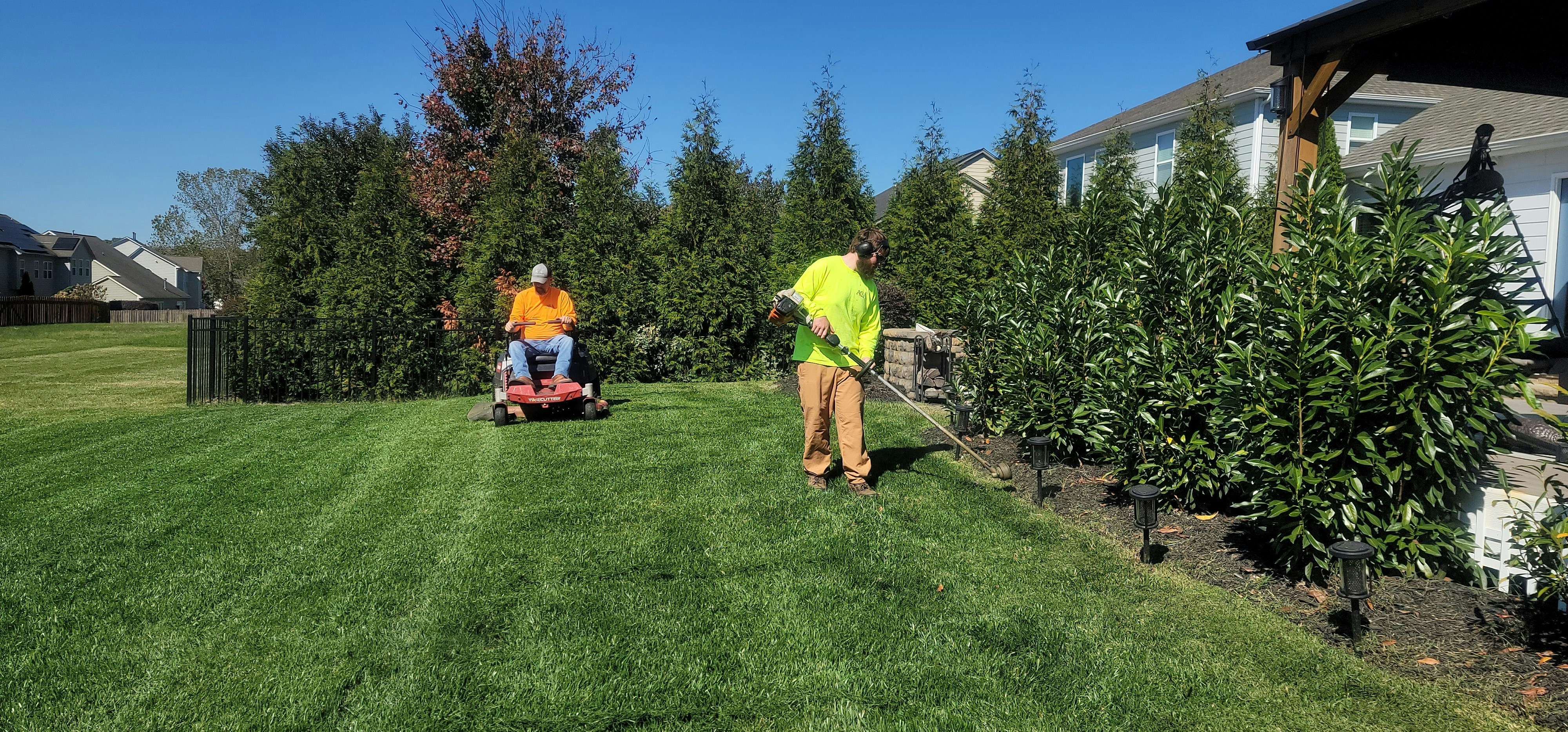
Some mistakes in roofing marketing are theoretical. Most are mechanical. The list below covers the seven most expensive errors Fervor sees across the roofing trade sample, with the dollar magnitude of each one priced for a $2M roofing company running 5 percent of revenue ($8K per month) on marketing.
Mistake 1, paying for SEO before the website converts
A roofing site converting under 1 percent on mobile is not an SEO problem. So pointing more traffic at it produces more lost calls, not more booked jobs. SEO retainers of $1,500 to $3,500 per month against an underperforming site burn $20K to $40K annually that should have gone to the rebuild first. The fix is the Site Inspection, the rebuild, then SEO. Order matters.
Mistake 2, running Google Ads without negative keywords
Default Performance Max settings on Google Ads will spend roofing budget on tire-kicker queries ("how to repair my own roof shingles," "DIY roof inspection checklist," "roofing apprenticeship near me") that have zero buying intent. Without an actively managed negative keyword list, 25 to 40 percent of Google Ads spend in roofing burns on non-buyer queries. At $4K per month on Google Ads, that is $12K to $19K per year of pure waste.
Mistake 3, no inline form on the hero
The roofing buyer who lands on a homepage and sees a "Get a Free Estimate" button instead of an inline form has to click, scroll, and decide before filling anything in. Each step costs roughly 20 to 30 percent of mobile visitors. So a click-through CTA versus an inline hero form costs 40 to 60 percent of the leads that would otherwise have converted. On a roofing site getting 4,000 monthly visitors at a baseline 2 percent conversion, that is 32 to 48 lost leads per month, or 384 to 576 lost leads per year. At a 30 percent close rate and $13K average ticket, the dollar cost runs into seven figures annually. This is the single most expensive structural mistake in roofing marketing in 2026.
Mistake 4, hiding the phone number behind a menu
Roofing is a phone-call-dominated trade. Buyers in the moment of need (storm damage, active leak, urgent inspection request) want to dial, not type. So a phone number tucked into a hamburger menu instead of pinned in the persistent header costs 20 to 35 percent of phone-call conversions. Half the roofing trade ships this way. The fix is one CSS change. The dollar return is immediate and large.
Mistake 5, no review velocity automation
Manual review requests after a job produce 5 to 15 percent response rates. Automated NiceJob requests fired inside 60 minutes of the job marked complete in the CRM produce 25 to 45 percent response rates. That difference (roughly 3x the review velocity) compounds into Local Pack ranking, into Local Services Ad conversion, into every paid channel's CPL over time. The cost of NiceJob runs $75 to $200 per month depending on volume. The cost of not running it is invisible but adds up to thousands of dollars per month in lost compounding within 12 months.
Mistake 6, treating ad accounts as the agency's property
When the Google Ads account, the Meta Business Manager, the Google Business Profile, and the CallRail account are owned by the agency rather than the operator, the operator's leverage is zero. The day the relationship ends, every learning, every audience, every conversion history walks out the door. Rebuilding from scratch with a new vendor takes 90 to 180 days and a measurable revenue dip. The fix is non-negotiable on day one of the engagement. Every account is owned by the operator. Every login is in the operator's password manager. If a vendor refuses, that is the answer.
Mistake 7, monthly reporting instead of weekly attribution review
Monthly reports show what happened. Weekly attribution reviews show what is happening. The difference is the speed at which the operator can defund a losing channel and double down on a winning one. A channel that produces zero booked jobs in week one but consumes 30 percent of the paid spend should be paused in week two, not waited on until end-of-month. Most roofing marketing programs in 2026 run on monthly cycles. The operators who switch to weekly cycles outperform their previous baselines by 20 to 40 percent inside one quarter, without spending more.
The evidence: 130 roofing sites graded under one rubric
Fervor Studio publishes the State of the Roofing Industry 2026, a benchmark report drawn from 130 roofing contractor websites Site Inspected under the Fervor Grade™ rubric (100 points across six categories, with axe-core 4.10.2 for WCAG 2.1 AA accessibility and Google Lighthouse 13.3.0 for Core Web Vitals). The numbers below all come from that report. They are mechanical and reproducible.
#“Roofing contractor websites earn a mean Fervor Score of 67.8/100 on the Fervor Grade Framework — a D (Probation, 60–69) on standard school grading.”
— Fervor Studio — Contractor CRO Index Primary research
So the mean roofing website in the trade sample is a D. Not a C. Not a B. A D. Which means that the median roofing buyer landing on the median roofing site in 2026 lands on a website that, by a mechanical rubric covering first impression, trust signals, lead capture, mobile experience, content and SEO, and accessibility, fails to do its job.
#“85.4% of roofing contractor websites earn a C (Conditional) Fervor Grade or worse — 111 of 130 Site Inspected brands fall short of a Passing (B, 80+) conversion experience.”
— Fervor Studio — Contractor CRO Index Primary research
Eighty-five percent of the trade sample sits at C or worse. So if your roofing competitors are at C, you can step up to a B with a Booked by Design rebuild and a Local Dominance Setup follow-on and outpace 85 percent of the field on the structural conversion lever alone. The compounding from there is what wins markets.
#“44.6% of roofing contractor websites publicly lean into storm damage / restoration messaging positioning (58 of 130 Site Inspected brands).”
— Fervor Studio — Contractor CRO Index Primary research
The positioning side of the trade sample is more competitive. Just under half of roofing brands lean into storm-damage and restoration messaging visibly, which means storm-restoration is a contested positioning space, not an empty one. The breakout comes from how the storm-restoration buyer is treated once they land. A dedicated storm-damage page with the carrier list, the claim-help workflow indexed for the emergency-keyword cluster, named adjuster-facing documentation, and a 24/7 dispatch line in the persistent header beats a competitor running the same "we handle storm damage" claim without the supporting infrastructure.
#“Median mobile Largest Contentful Paint (LCP) across roofing contractor websites is 7.88 seconds — 3.2× Google's 2.5-second "Good" threshold for Core Web Vitals.”
— Fervor Studio — Contractor CRO Index Primary research
And read that one twice. Median mobile Largest Contentful Paint across the roofing trade sample is 7.88 seconds. Google's "Good" threshold is 2.5 seconds. So the median roofing site loads more than three times slower than the threshold Google rewards in Page Experience. The conversion penalty on a 7-second mobile LCP is severe. The Local Pack ranking penalty is also severe. So most roofing companies are paying twice for slow sites, in lost conversions and in lower Local Pack visibility.
#“82.3% of roofing contractor websites earn a "Poor" mobile LCP rating against Google's Core Web Vitals thresholds (LCP > 4.0s).”
— Fervor Studio — Contractor CRO Index Primary research
Eight in ten roofing sites land in Google's "Poor" mobile LCP band. So the median is not an outlier. The entire trade is structurally slow on mobile, which is the device most roofing buyers are using when they search. The roofing companies that fix this in 2026 will be in the small minority that Google rewards in Local Pack and that buyers actually convert on.
#“30.8% of roofing contractor websites carry at least one Critical-severity accessibility violation under WCAG 2.1 AA (axe-core 4.10.2 default-state scan, overlays excluded).”
— Fervor Studio — Contractor CRO Index Primary research
Nearly a third of the roofing trade carries at least one Critical-severity WCAG 2.1 AA violation under axe-core. That is not a theoretical concern. Critical-severity violations make sites unusable for visitors using screen readers, and they expose the operator to ADA litigation risk that has accelerated sharply in U.S. courts over the last 5 years. Roofing is not a heavily-targeted vertical for serial ADA litigation yet, but the case law is moving and the cost of remediation post-suit is far higher than the cost of fixing the violations now.
The full benchmark report covers category-by-category performance, the conversion infrastructure gaps trade-wide, the accessibility violation breakdown, and the brands that earn the highest Fervor Grade™. It is the most rigorous public benchmark of roofing website conversion readiness in the trade in 2026.
How to evaluate a roofing marketing provider

If you are evaluating a roofing marketing agency in 2026 (whether Fervor, one of the franchise-style shops, a generalist agency, or a senior-strategist boutique), the questions below separate the substantive providers from the polished sales decks. Ask all of them. The answers tell you most of what you need to know before signing.
The 12 questions every roofing owner should ask
One. Who owns the website on day one of launch, and is that ownership in writing? If the answer is "we transfer it after the contract ends," that is a rented asset, not an owned one, and the day you leave you lose the SEO history. Two. Who owns the Google Ads account, the Meta Business Manager, the Google Business Profile, the CallRail account, the NiceJob account, and the citation directory logins, and are all of those handed over on day one? Same logic. Three. What is the contract length, and what happens to the assets if the engagement ends? Any answer longer than month-to-month after the initial build is a yellow flag. Four. Which roofing CRM does the system integrate with on day one (JobNimbus, AccuLynx, Roofr, ServiceTitan, Housecall Pro, Jobber), and how is channel attribution wired into the CRM? "We use HubSpot" is the wrong answer for a roofing operator.
Five. How frequently is attribution reviewed (weekly, monthly, quarterly), and what report do you receive that pairs booked jobs with the spend that produced them? "We send a monthly report" is reporting, not optimization. Six. What is the creative refresh cadence on paid channels, and who produces the creative? If the answer is "we use the templates," the creative will fatigue inside 60 days and CAC will climb. Seven. What is the response time on a question, a tweak, a campaign issue? 24 hours, 48 hours, or worse? Eight. How are negative keywords managed on Google Ads, and who owns the keyword list? If the answer is "Performance Max handles it," the budget will burn on tire-kicker queries.
Nine. What is the strategy for storm-season pacing if your market is storm-prone? If they have not heard the question before, they have not run roofing in storm markets. Ten. Which manufacturer co-op programs (GAF, CertainTeed, Owens Corning, IKO, Malarkey) do they file co-op claims through on your behalf, and who keeps the documentation? Co-op left unclaimed is money on the table. Eleven. What roofing-specific Local Pack signals do they manage (manufacturer credentials visible in Google Business Profile, before/after photo cadence, neighborhood-tagged photos, Q&A populated with roofing-specific questions)? Twelve. What is the policy on review acquisition, and how do they integrate with NiceJob or equivalent? If the answer is "the customer just writes the review when they feel like it," there is no review velocity flywheel, which is the single highest-leverage Local Pack lever after the Google Business Profile itself.
The right answers do not require the provider to be Fervor specifically. The right answers require any provider you hire to operate with the rigor those questions imply. Most providers do not. The ones that do are worth two to three times the price of the ones that do not.
How Fervor builds roofing marketing
Five steps, in order, no skipping. No proprietary discovery process. No mystery.
Step 1. Site Inspection
The starting point for every Fervor roofing engagement is a hands-on Site Inspection. Your current roofing site gets scored across the same six categories that produce the 130-brand benchmark in the State of the Roofing Industry 2026 report. You see exactly where your phone-in-header, hero form, financing CTA, GAF credential surfacing, before/after gallery, mobile LCP, accessibility compliance, and Local Pack signals land relative to the trade. The first several Site Inspections each week run at no cost. The rest are paid. Either way, the deliverable is yours regardless of what happens next, and most roofing owners walk away with the diagnostic and a 90-day fix list whether they engage Fervor for the build or not.
Step 2. Roofing-specific discovery
We study your local market in your specific metro. Who is ranking in your service area? What does their conversion path look like? What seasonal content exists? What is missing? We look at your CRM data (JobNimbus, AccuLynx, Roofr, ServiceTitan, Housecall Pro, or Jobber) to understand your actual job mix, average ticket, close rates by source, and seasonal patterns. Because a roofing site built for a shop that leans heavily on storm-restoration work looks structurally different from one built for a shop that leans on retail residential reroof.
Step 3. Content architecture and SEO strategy
The site structure, the page hierarchy, every word of copy. All written before any design work begins. Every service page, every neighborhood page, every storm-response landing page is mapped to actual search demand in your specific market. Roofing SEO is not bolted on after the site looks pretty. It is the foundation the entire site gets built on, with the trade-specific keyword research woven into the navigation, the headings, the body copy, and the schema markup.
Step 4. Design and development
Mobile-first. Sub-2-second mobile LCP target on the home and primary service pages. Inline hero forms with the phone visible in the persistent header. The financing CTA in the navigation. The GAF or CertainTeed credentials in the trust strip. The before/after gallery in the first scroll. CallRail dynamic-number-insertion installed and routed to your CRM. NiceJob review automation wired to your dispatch close-out trigger. Every CTA tested with the thumb-zone rule on actual phones.
Step 5. Launch, handoff, and what is next
Your site launches with all tracking in place, all logins transferred to you, and documentation for routine updates. You own the domain, the content, the hosting, the Google Business Profile, the Google Ads account, the Meta Business Manager, the CallRail account, the NiceJob account, and every directory citation. If you ever leave Fervor, you take everything. There is no long-term contract. Performance Partner picks up where the build leaves off if you want the compounding growth that comes from ongoing seasonal content, GBP management, paid channel optimization, and weekly attribution review.
Pricing
Booked by Design for roofing runs $8,500 to $12,000, 30 to 60 days, full site rebuild including service pages, neighborhood pages, GBP setup, schema stack, review system installation, and CRM integration. Local Dominance Setup runs $2,497 one-time, around 14 days, when your existing roofing site works but your local presence is invisible. Performance Partner runs $997 to $2,497 per month, ongoing, covering quarterly content additions, GBP photo and post management, NiceJob review acquisition automation, citation maintenance, paid channel optimization, and monthly call-volume reporting tied to revenue.
Renovation growth is moderate, not collapsing. Which means the roofing companies that build proper marketing infrastructure now keep eating share through the next 18 months while competitors keep paying for activity instead of outcomes. The math compounds in one direction and evaporates in the other, depending on whether the system is owned or rented.
Spending
"Disaster repairs (roofing-intensive) reached $24 billion annual volume in 2025"
— Harvard Joint Center for Housing Studies (2025)
So the storm-restoration side of the roofing trade is at record volume, the retail residential side is steady, and the commercial flat-roof side keeps growing on the back of aging mid-market buildings. The roofing companies that win this stretch will not be the ones with the most marketing spend. They will be the ones whose marketing systems are most tightly wired to attribute booked roofs to the channels that produced them.
Frequently asked questions
How much should a roofing company spend on marketing?
A healthy roofing marketing budget sits at 6 to 10 percent of revenue for $1.5M-$5M roofing companies, and many storm-heavy markets push closer to 10 to 12 percent during peak season. The construction industry as a whole averages roughly 1 percent of revenue on marketing per the Gartner 2025 CMO Spend Survey, while the cross-industry average is 7.7 percent, so most roofing owners sit far below the realistic competitive floor. But the dollar amount is the second decision. The first is whether you can attribute booked roof replacements back to the channel that produced them. Without CallRail, a CRM like JobNimbus or AccuLynx, and a weekly attribution review, every channel claims credit and none of them deserve it.
What is the best marketing channel for roofing contractors?
For most $1.5M-$5M roofing companies the highest-intent channel is Google Local Services Ads with the Google Guarantee badge. LSAs run pay-per-lead instead of pay-per-click, sit above the regular search ads, and the green Google Guarantee badge does heavy lifting on conversion. Below that, regular Google Ads search captures queries LSAs do not cover (roof replacement, hail damage estimate, metal roof installer, specific neighborhood searches). Meta Ads on Facebook and Instagram win on storm-response retargeting and financing-led offers. Organic SEO and Google Business Profile compound the longest and have the lowest cost-per-lead at scale, but they take months to build. The right mix runs all four concurrently with shared attribution.
What is the difference between a roofing marketing agency and a generalist agency?
A roofing marketing agency, in the real sense of the phrase, understands the seasonality of insurance claims, the difference between storm-restoration and retail-replacement buyer behavior, the GAF and CertainTeed credentialing landscape, the storm-chasing complaints that hurt your local Trust signals, and the way a roofing CRM like JobNimbus, AccuLynx, Roofr, or ServiceTitan attributes a booked job back to a marketing channel. A generalist agency typically does not. So the test is not whether the agency name includes the word "roofing." The test is whether they can talk through hail-season ad pacing, GAF Master Elite landing-page treatment, and CallRail-to-CRM attribution without prompting.
How long does roofing marketing take to show real booked jobs?
Local Services Ads and Google Ads typically produce booked roofing jobs inside the first 14 to 30 days when the landing pages, call tracking, and CRM intake are wired correctly on day one. Meta Ads usually start producing leads inside the first 7 to 14 days but the booked-to-lead ratio takes longer to stabilize. Organic SEO and Google Business Profile work compounds in months, not days, with Local Pack movement typically visible inside 30 to 60 days and full SERP positioning for primary terms taking 4 to 9 months. So a real roofing marketing program is measured in booked jobs per quarter, not in rank changes on day 30.
Should a roofing company use HomeAdvisor, Angi, or Networx for leads?
Shared-lead platforms like Angi (formerly HomeAdvisor) and Networx have a place in some roofing books of business, especially early on when owned-channel infrastructure is thin. But three things go wrong at scale. First, every lead is sold to three or four roofers simultaneously, so close rates run 8 to 15 percent versus 35 to 50 percent on owned-channel leads. Second, the cost-per-booked-job typically lands two to three times higher than well-run Google Ads or Local Services Ads. Third, you build no compounding asset. The day you stop paying, the leads stop. So shared-lead platforms are rented pipeline, not owned pipeline, and the long-term math always favors building owned channels alongside them.
Do I own the website and ad accounts at the end of a roofing marketing engagement?
You should. With Fervor Studio, the website, the Google Ads account, the Meta Business Manager, the Google Business Profile, the CallRail account, the NiceJob account, and the citation directory logins all transfer to you on day one of launch. If you ever leave, you take everything. Most roofing marketing agencies in the United States and Canada do not work this way, and the cost of switching out of a rented-asset relationship can run into the tens of thousands of dollars in lost ranking history, lost review velocity, lost ad account learning, and lost CRM data. Read every roofing marketing contract for the word "ownership" before signing.
How do I track which marketing channel produced a booked roof replacement?
CallRail dynamic-number-insertion tags every landing page with a unique trackable phone number per channel, so the call shows up in your CRM tagged by the source. Your CRM (JobNimbus, AccuLynx, Roofr, ServiceTitan, or Jobber) then records channel, keyword, and landing page on the deal record. A weekly attribution review pairs booked revenue with the spend that produced it, by channel and by trade segment. Without those three pieces wired together, you are guessing. With them, you can defund a channel that is not pulling its weight inside 30 days instead of inside 6 months.
Is roofing SEO worth it given how slow it is to compound?
For most $1.5M-$5M roofing owners, roofing SEO is the single highest-leverage long-term investment in the marketing stack, but only after the website is converting and the Google Business Profile is fully built. SEO that points traffic at a roofing site converting under 1 percent is just slower-cost-per-call than paid. SEO that points traffic at a roofing site converting at 5 to 8 percent compounds faster than any paid channel, because the cost per booked job approaches zero as the content matures. So the right sequence is conversion first, Local Pack second, content SEO third, and link earning fourth.
What roofing CRM works best with a marketing system?
JobNimbus is the most common roofing-native choice for residential roofers in the $1M-$5M range, with strong CallRail and QuickBooks integrations and a workflow built around the roofing sales process. AccuLynx is the heavier-feature option preferred by larger storm-restoration shops. Roofr is the newer entrant strongest on estimate-to-proposal workflows. ServiceTitan is the enterprise choice for $5M+ roofing companies that also run service work. Housecall Pro and Jobber are generalist field-service CRMs that work for smaller roofing books. The marketing system has to integrate with whichever CRM you run, because attribution lives in the CRM, not in the ad platforms.
Related roofing resources
If you found this useful, the sibling guides below go deeper on the parts of the roofing marketing system that get their own treatment.
- Roofing website design, the structural conversion layer that paid spend points at.
- Roofing trade guide, the canonical hub for Fervor's full roofing work.
- State of the Roofing Industry 2026, the 130-site benchmark report this page draws evidence from.
- Request a Site Inspection, the diagnostic that frames every Fervor roofing engagement.
- Contractor CRO Index, the full database of contractor websites scored under the Fervor Grade™ rubric.
And three specific brand teardowns from the Contractor CRO Index that show the patterns discussed on this page in real roofing websites in the wild.
- Mr. Roof teardown, a $200M+ residential reroof operator whose site exhibits the mobile-LCP and lead-capture friction patterns discussed in the evidence section.
- Erie Home teardown, a national metal-roofing brand showing the financing-CTA and trust-strip patterns done well.
- The full 130-brand State of the Roofing Industry 2026 page, where every brand's individual report links out from the leaderboard.
