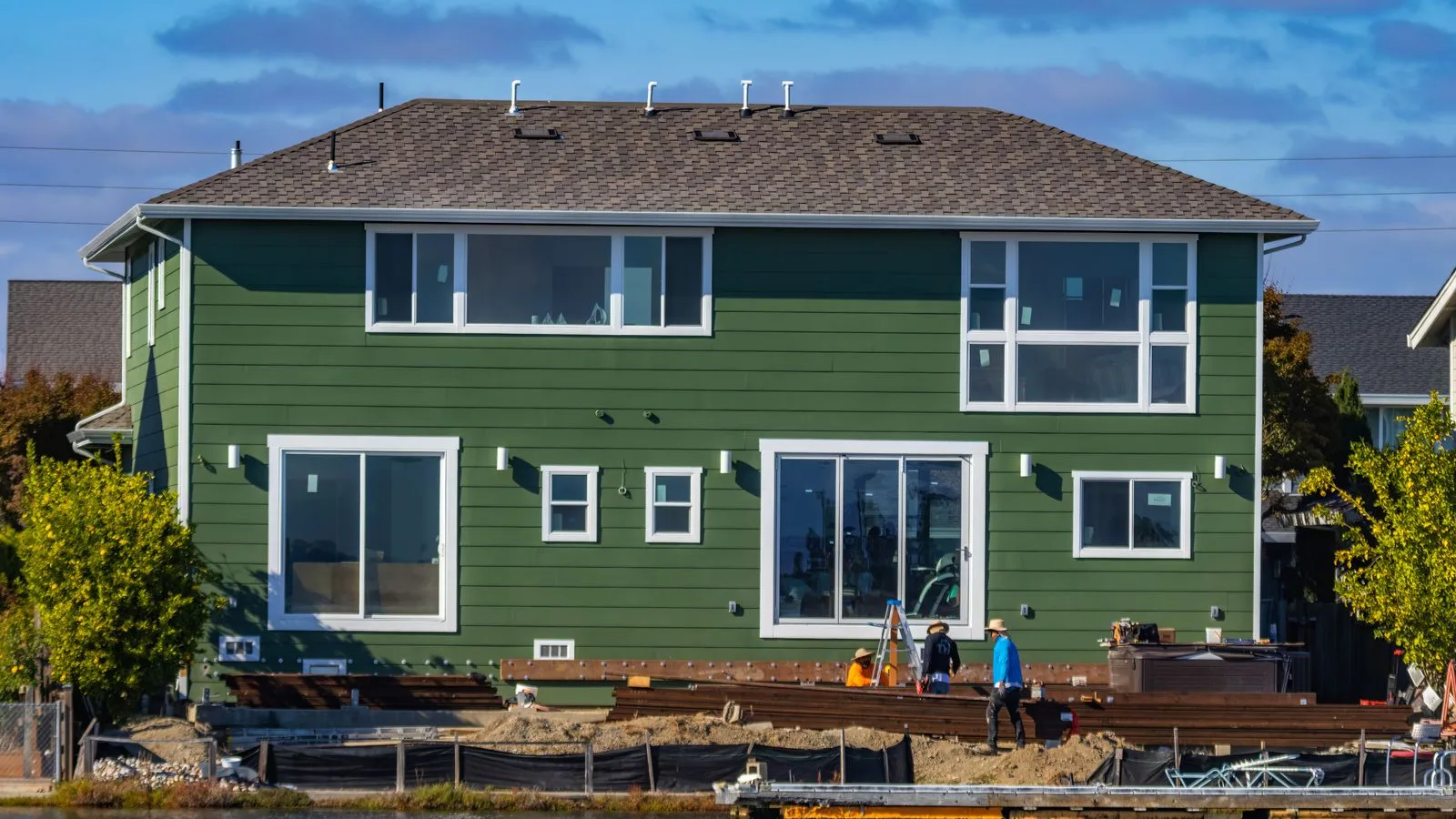
Ray is fifty-two. He has been running a general contracting company in Charlotte, North Carolina for twenty-two years. Started framing on a crew in NoDa, got his GC license before he turned thirty-three, built a portfolio of custom homes from Myers Park to SouthPark to Lake Norman one finished kitchen at a time. His company has eighteen full-time employees and a waiting list of subcontractors who want to work with him. NC general contractor license? Class A, current. BBB accredited with an A+ rating? Fifteen years straight. Houzz featured pro? Three years running.
His project managers run tight schedules. They don't leave the site looking like a tornado came through. They send the homeowner a real-time progress photo at the end of every workday. That kind of operation.
Then the corporate relocations into Charlotte hit a new high in early spring. Bank of America consolidations. Truist headquarters expansions. Honeywell footprints stretching across the metro. Twelve thousand new high-income residents in three months, every one of them looking at houses that need updates, additions, or full custom builds. Realtors hand out builder names like business cards. Search volume on "Charlotte custom home builder" doubles month over month.
Ray's website gets thirty-one form submissions that quarter.
A four-year-old firm in Davidson has been open since 2022. Newer license. Crew of nine, mostly subs. No Houzz badge. But their website? Three hundred and ninety form submissions in the same ninety days. They booked $4.6 million in new contracts before Memorial Day weekend.
It wasn't experience. It wasn't reputation. It wasn't skill. It was the website.
Ray's site was the WordPress portfolio his marketing assistant set up in 2019, last redesigned in 2021. Loaded in 6.8 seconds on cellular. The hero was a slow-rotating slideshow of project photos with no service-area cue, no phone number above the fold on mobile, and a contact form with eleven fields including budget tier, timeline, and "How did you hear about us?" The Davidson firm had a 1.4-second mobile load, click-to-call sticky-pinned to the header, three-field forms, LocalBusiness and Service schema on every page, and Microsoft Clarity heatmaps showing exactly which CTAs were getting tapped (and which weren't).
Ray's site wasn't broken in any way he could see. It was broken in the ways search engines see, the way thumbs feel, the way 50-millisecond first impressions land. And in a metro where the Charlotte boom was rewriting every contractor's quarterly forecast, Ray watched the wave roll past his website without leaving a wake.
A website isn't a brochure. A website isn't decoration. Both are conversion architecture, and conversion architecture is the part you don't see until it's costing you.

What It Actually Solves
So contractor web design is the discipline of building a service-business website that turns search-driven visitors into booked jobs. The job isn't to win awards. It's to do five specific things, in order. Load fast. Make the call obvious. Earn trust before the visitor scrolls. Capture the lead even when the visitor isn't ready to call yet. And hand the booked call cleanly into your CRM so the marketing-spend math closes.
Plenty of agencies treat the website as a brochure. Beautiful imagery, polished copy, a "Contact Us" form on a tucked-away page, and a phone number rendered as a non-tappable image on mobile. That structure works for a print mailer. It loses to the firm across town treating the website as a conversion machine instead.
And before any of the trade-specific layers (roofing photo galleries, HVAC service-area maps, plumbing emergency-call banners, deck portfolios, kitchen-and-bath before/after sliders) the foundation has to be right. Speed, mobile, forms, proof, attribution. (Trade-specific touches matter, but they're decoration on a foundation. Get the foundation wrong and the trade-specific work has nothing to stand on.) Contractor website design done right is the foundation work. Everything else is paint.
The 50-Millisecond First Impression
And one number deserves to live on the inside of every brief.
"Users form a visual judgment about a website's design within 50 milliseconds (0.05 seconds)."
— Lindgaard, Fernandes, Dudek & Brown (2006)
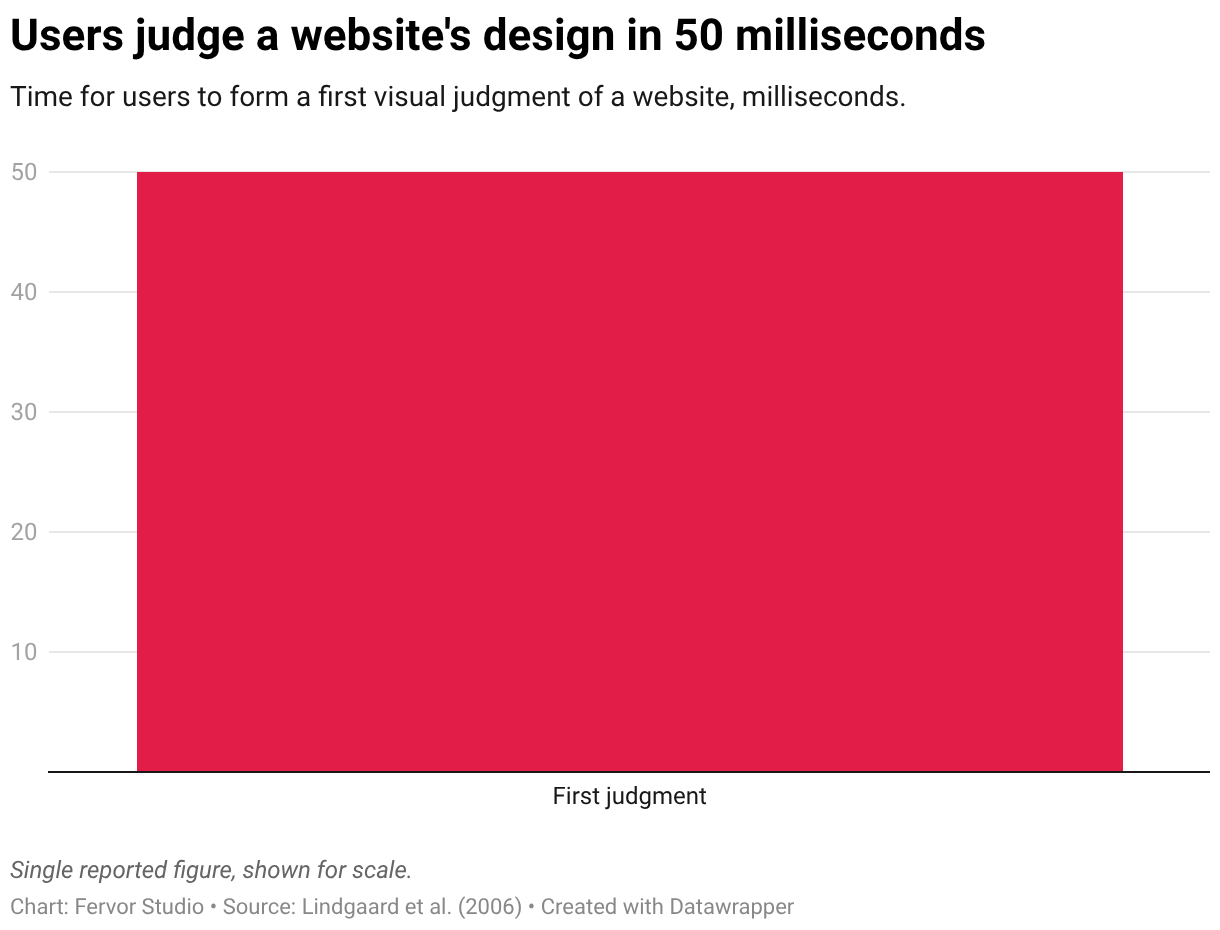
Fifty milliseconds. Faster than a blink. The Lindgaard study and the dozen replications since found that the snap judgment people form in that first instant correlates strongly with their assessments fifteen seconds later. So whatever your homepage signals in the first half-second is, in practice, what the visitor decides about your business. The visual equivalent of curb appeal.
Which means a few specific things matter more than they sound like they should. The above-the-fold area on a phone has to load and render before the visitor's thumb is even back on the screen. The hero needs to communicate trade specificity (roofing, HVAC, plumbing, custom homes, whatever you do) without the visitor having to read a single word. And the visual hierarchy has to put the phone number, the service-area cue, and one piece of social proof in the same instant. Not three sentences in. Not "scroll for more." Now.
Plenty of agency portfolios fail this test because they lead with a generic stock photo of a hard hat and a tagline that could belong to any agency in any trade. So the 50-millisecond verdict from the visitor is "another one." And the visitor is gone before the page even finishes loading.
The fix isn't novel. It's a hero that shows YOU on a real job, a phone number tappable above the fold, a one-line trust signal (license number, BBB rating, "20 years in [your city]"), and a single primary CTA visible without scrolling. Boring as architecture. Devastating as conversion. We graded 380 contractor sites on exactly those four things from the homeowner's chair, and wrote up the ones that pass in the best home improvement websites.

Page Speed and Revenue Math
The two stats that should govern every contractor web design decision aren't aesthetic. They're load-time stats.
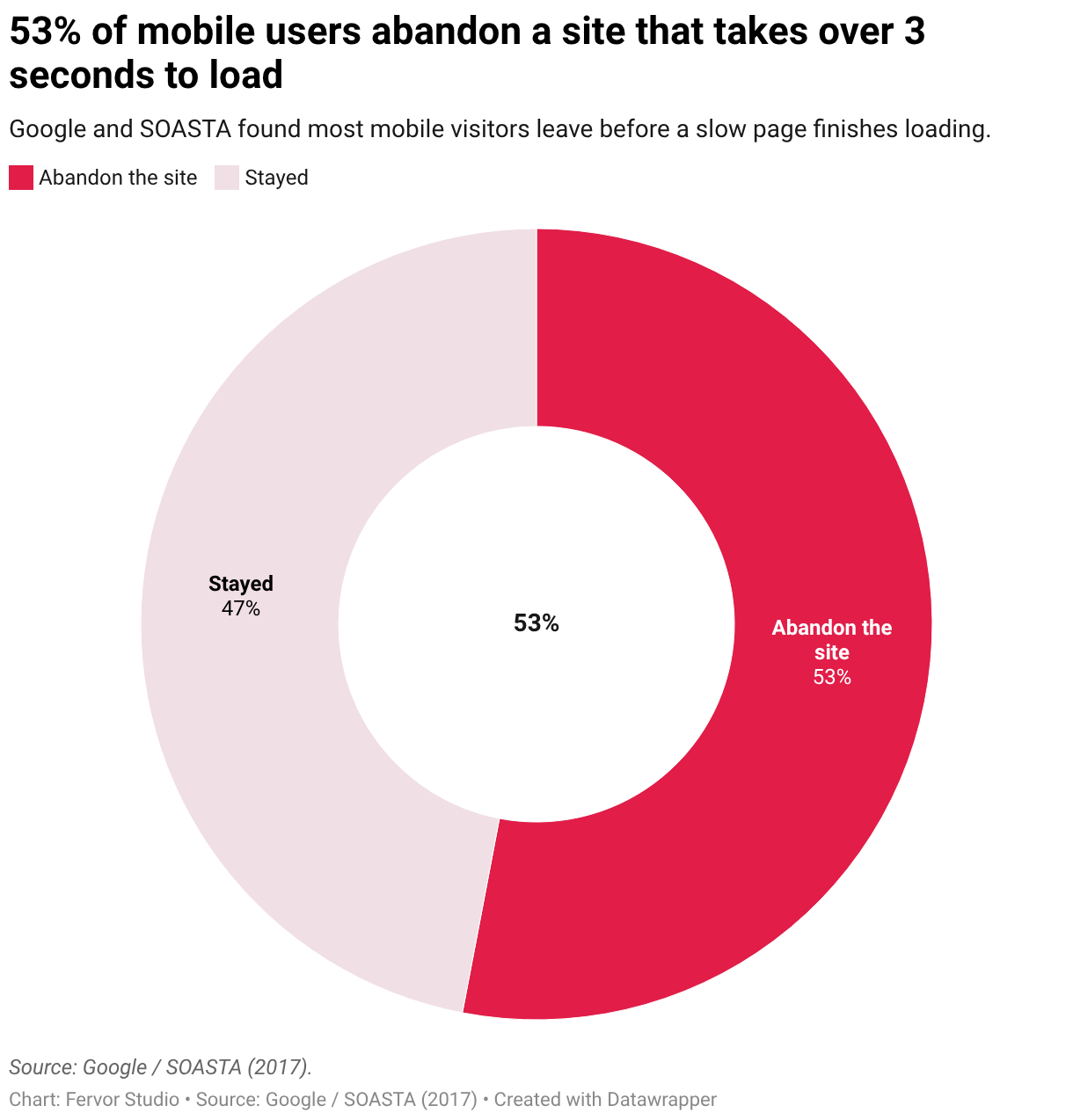
"53% of mobile users abandon sites that take longer than 3 seconds to load."
— Google / SOASTA (2017)
So a site loading at 5 seconds on cellular isn't slow. It's broken. More than half the visitors are gone before the hero image finishes painting. Those visitors don't come back later. They click the next result. (And the contractor across town who optimized for 1.7 seconds is converting them into booked estimates.)
Compounding effect
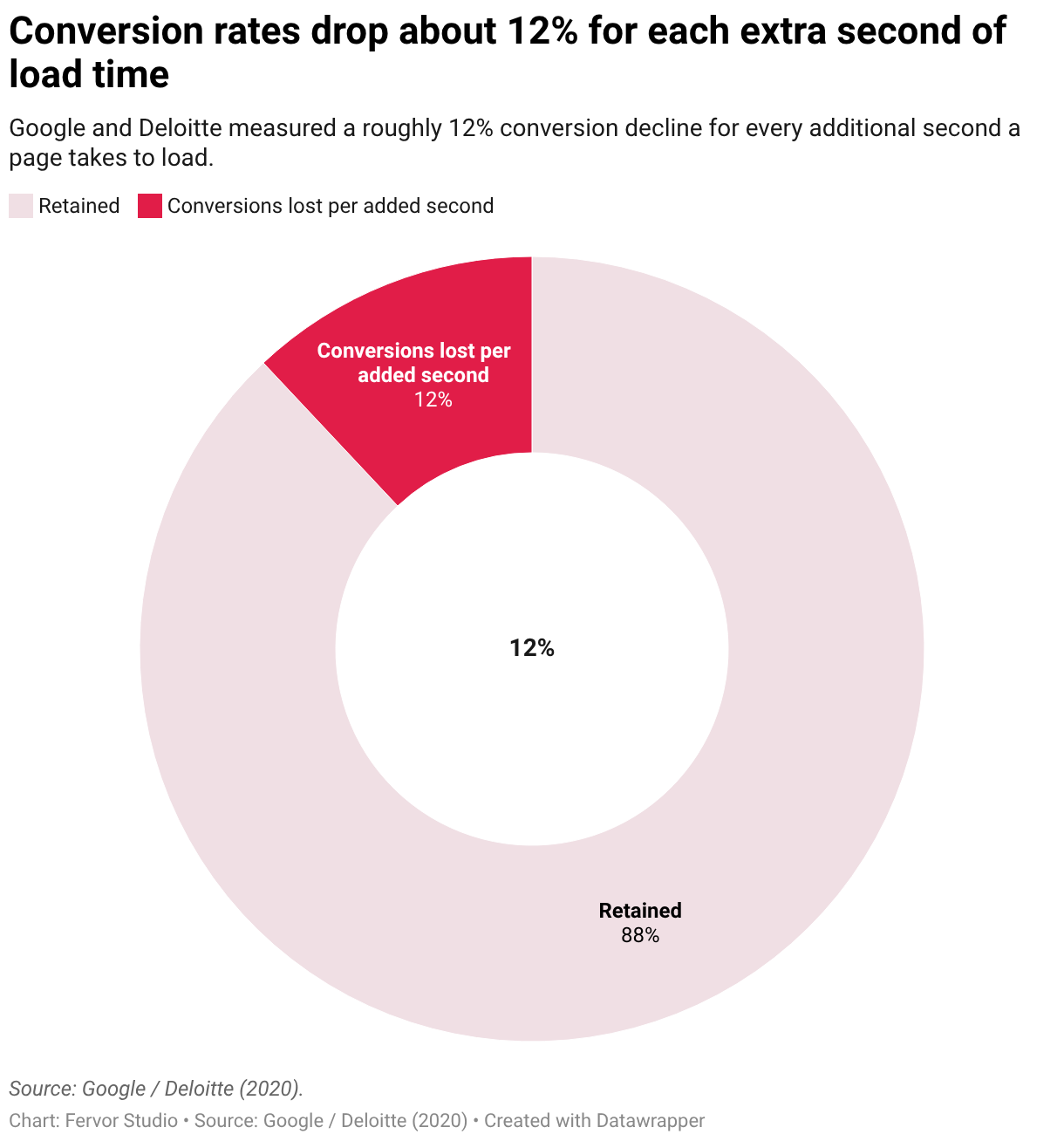
"Conversion rates drop approximately 12% for each additional second of page load time."
— Google / Deloitte (2020)
Twelve percent per second, compounding. So a site loading in 4 seconds versus 2 seconds is leaving roughly a quarter of its conversion potential on the table, even before the rest of the funnel kicks in. The fixes are usually unglamorous. Image compression. Lazy-loading below the fold. Eliminating JavaScript bundles that ship with most off-the-shelf templates. Picking a host that doesn't share resources with three hundred other tenants. None of that work shows up in a portfolio screenshot. All of it shows up in the booked-job report.
And the speed work has a multiplier on the rest of the marketing stack. A 12% conversion lift from page speed multiplies the ROI of every Google Ads dollar, every SEO ranking, every Local Services Ads booking. Speed is the input that compounds across channels. Most contractor website design ignores it.

Core Web Vitals (LCP, INP, CLS)
Google made the abstract speed conversation specific in 2020 with Core Web Vitals: three measurable metrics that go into ranking signals and that any owner can check in 60 seconds at pagespeed.web.dev.
Largest Contentful Paint (LCP) is how fast the largest visible element renders. Target: under 2.5 seconds. Most contractor sites land at 4-6 seconds because the hero image is uncompressed and lazy-loading isn't configured. Interaction to Next Paint (INP, replaced FID in March 2024) is responsiveness, or how fast the site reacts when the visitor taps. Target: under 200 milliseconds. Cumulative Layout Shift (CLS) measures how much the layout jumps around as elements load. Target: under 0.1. Most templated sites fail CLS because ad scripts and font swaps push content around mid-render, which is the digital equivalent of having the floor move when a customer walks in.
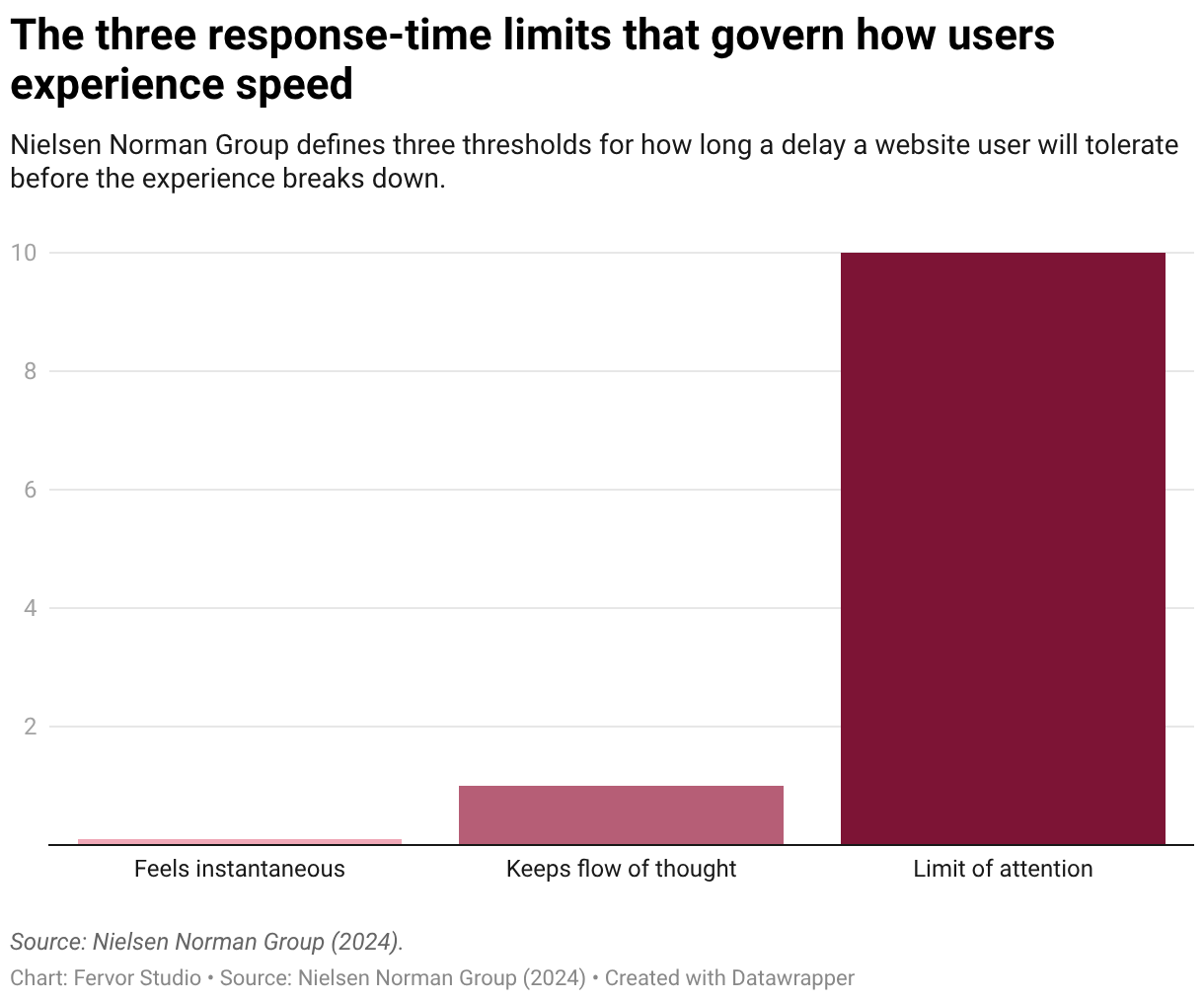
"Three critical response time thresholds: 0.1 seconds feels instantaneous (direct manipulation). 1.0 second keeps user's flow of thought uninterrupted. 10 seconds is the limit before user attention drifts."
— Nielsen Norman Group (2024)
Those thresholds are why Core Web Vitals matter beyond Google's ranking math. Sites under 1 second feel like they're tracking the visitor's intent. Sites over 3 seconds feel broken. The visitor doesn't think "this site is slow." They think "this company is slow," and the inference jumps from the website to the operation behind it.
And the case study work supports the math.
Comparison
"Swappie: Improving Core Web Vitals cut load time by 23% and increased mobile revenue by 42%."
— Google Web.dev (Swappie case study) (2021)
42% mobile revenue lift from speed alone. Not a campaign. Not a redesign. Speed alone. So the highest-ROI work in contractor web design often isn't visible in a screenshot. It lives in the network panel.
Mobile-First Architecture
The majority of contractor web traffic is mobile. The actual percentage varies by trade. Emergency service trades see 75% or higher mobile. Project trades like custom home builders skew slightly lower at 55-65%. But in every case the mobile experience is the primary experience. So a build that's "responsive" in the sense that it shrinks down on a phone isn't enough. It has to be designed for the phone first, with the desktop layout as the secondary case.
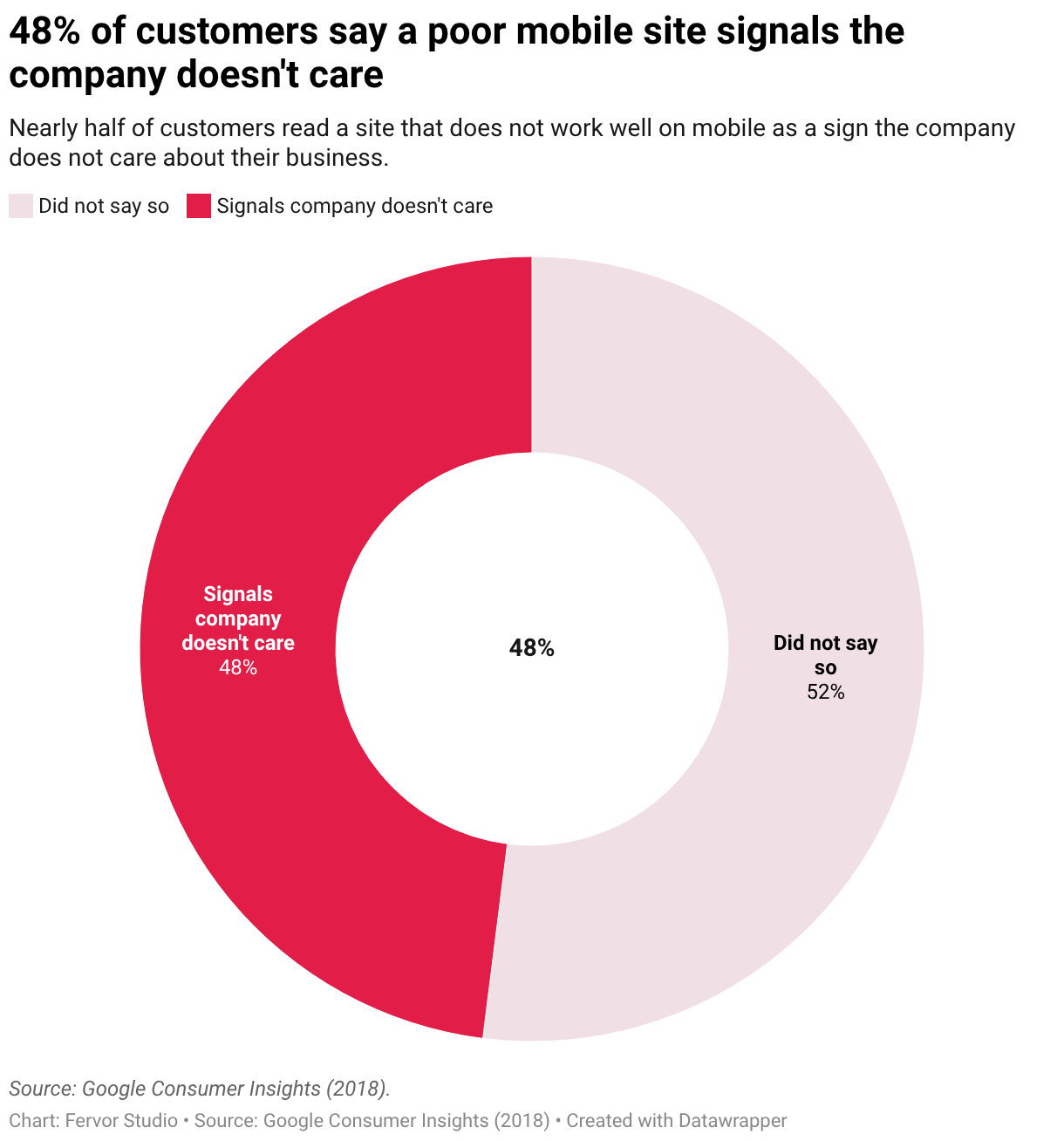
"48% of customers say that if a site does not work well on mobile, it signals the company does not care about their business."
— Google Consumer Insights (2018)
Half your visitors. Reading the broken mobile experience as a statement about your operational care. So the click-to-call button has to be a real button (not a tiny image), persistent across every page (not buried in the footer), and tappable with the thumb of the hand the visitor is also holding the phone with. The forms have to use mobile-appropriate input types: type="tel" for phone fields, type="email" for email, and autocomplete attributes set so the right keyboard pops up. The load weight has to assume cellular, not fiber.
One specific failure pattern shows up across most contractor sites. Hamburger-menu navigation on mobile because it looks clean. But the hamburger hides the trade-specific service pages, which are usually the only pages a search visitor cares about. So the visitor lands, sees a logo and a menu icon, and bounces. A flat top-of-page navigation showing 3-4 trade services performs measurably better in basically every test we've run, even though it looks less "designed" in a portfolio screenshot.

Forms, Fields, and the Abandonment Math
The form is the secondary conversion path on most contractor sites. (Phone is primary; we'll get there.) But the form rules matter, because every contractor in research mode who isn't ready to call yet is touching one.
The math is simple: shorter forms get filled out, longer forms don't. Three to five fields, max. Name. Phone. Postal code or service address. A one-line "what's going on" field. Email is sometimes worth asking for. Project budget, timeline, "how did you hear about us," desired start date, square footage. Those are killers. They drop completion rates without paying back in qualification value, and the agency that asks for them is selling its own convenience over your conversion rate.
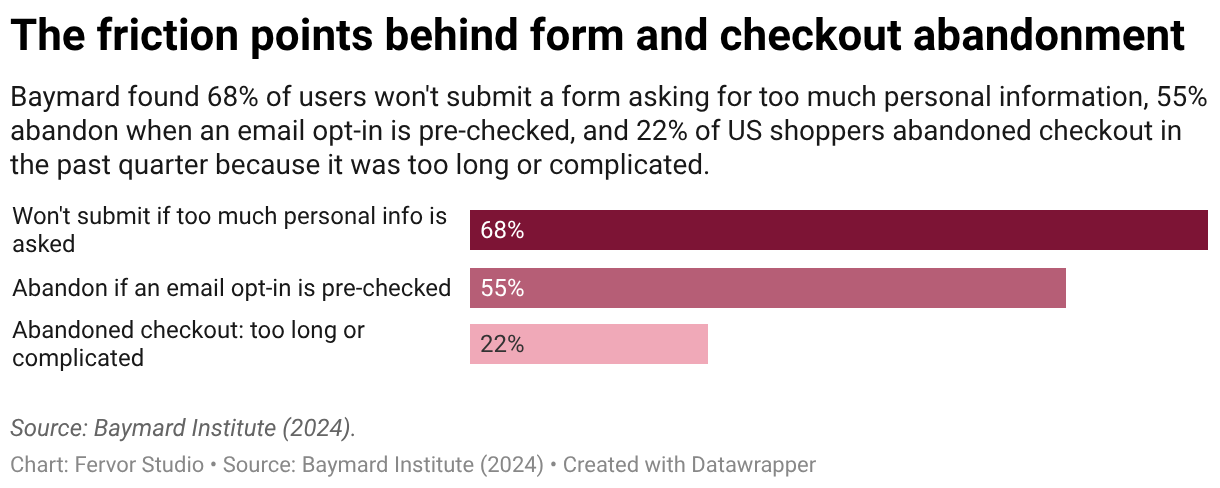
"55% of users would abandon a form if it included an automatic email subscription opt-in."
— Baymard Institute (2024)
55% abandon for a single dark pattern. So the form is one of the highest-stakes surfaces on the entire build. Every additional field is a tax on completion. Every pre-checked opt-in is half the form abandoned. Every "Submit" button labeled vaguely is conversion lost to ambiguity.
The CTAs need to vary by intent, too. The visitor on a "burst pipe" search needs a "Call Now — 24/7" button. The visitor on a "kitchen remodel cost" search needs a "Get a Free Estimate" form path that leads with the lowest-friction option. Same site, different visitors, different conversion mechanics. Most templates treat every CTA the same, and that uniformity is the gap.

Phone-First Conversion Hierarchy
Here's the structural truth that every conversion-focused build comes back to.
Revenue multiplier
"Phone calls convert to 10-15x more revenue than web leads for home services businesses. Callers convert 30% faster than web leads. Caller retention rate is 28% higher than web lead retention rate."
— BIA/Kelsey + Forrester (via Invoca) (2025)
Ten to fifteen times. So a build optimizing for form submissions while burying the phone number is mathematically wrong. The hierarchy is phone first, form second. The phone number lives in the header on every page, click-to-call on mobile, prominent on desktop. The form is the fallback for visitors in research mode who aren't ready to commit to a call yet.
And the phone has to be answered. (See Home Services Marketing for the full breakdown of why 41% of weekend calls go unanswered and what to do about it.) The website generates the call. The call-answer infrastructure (auto-attendant, business hours routing, after-hours service like Unitel Voice) catches it. Both halves have to work, or the website spend is amplifying a leaky bucket.
The other piece most contractor sites miss is call attribution. CallRail dynamic-number-insertion swaps in a tracked number per visitor source (Google Ads, organic, Local Services, Meta, direct), so when the call comes in, you know which channel paid for it. Without that, every paid dollar is a guess. With it, the build closes the loop from click to ringing phone to booked job in your CRM.

Schema and Structured Data
Schema markup is the invisible layer that tells search engines exactly what your business is, where it's located, what services it offers, your hours, your service area, and your reviews. It's how you earn rich results in search: the star ratings under the listing, the service list, the FAQ dropdowns, the breadcrumbs above the link. Sites with schema get more real estate in SERPs than sites without. More real estate means more clicks, even before the visitor reaches the page.
Plenty of contractor sites have zero schema. Google is left to guess what each page is about based on the body text alone, and Google's guesses aren't always right, especially when service pages are thin on detail or contact information is buried in a footer that's the same across every page.
The schema types that matter for residential service trades are specific. LocalBusiness (or HomeAndConstructionBusiness, the more precise sub-type) for the company itself, with NAP, service area, and hours. Service schema on each service page, naming what the service is and what trade it falls under. Review and AggregateRating tied to the LocalBusiness, populated from real Google reviews. FAQ schema on pages with question-and-answer sections, which earns the dropdown directly inside the search result. BreadcrumbList for navigation. Each one is another signal that the site is relevant, trustworthy, and deserving of a prominent position.
The work isn't dramatic. It's twenty lines of JSON-LD on each page, validated through schema.org's validator, then verified in Google's Rich Results Test. The lift in click-through rate is consistent across every Fervor build that adds it.

Hosting, Stack, Day-One Ownership
So the hosting and stack questions sound technical. They're business questions in disguise.
If your contractor website design agency hosts the site on their proprietary platform, builds it on a builder-locked CMS, and won't hand over admin access on day one, you don't own your website. You're renting it. And the day you decide to leave the agency, the site goes with them. That's the platform-lock pattern that's standard at large home-services-only agencies, and it's why many contractors find themselves quoted $30,000 to "rebuild from scratch" when they want to move marketing partners. They didn't lose the site. They never owned it. So it's worth knowing which firms do that before you get on a call with one, which is why we noted the platform-lock position for every shop in our ranking of the contractor web design agencies.
Day-one ownership means the domain is in your registrar account. The site lives on your hosting (Cloudflare, Vercel, Netlify, or a comparable tier-one host). The CMS is something you can self-edit (Storyblok, Sanity, WordPress with a clean theme, or a flat-file Astro build). The Google Analytics, Google Search Console, Google Business Profile, and ad accounts are all in your name. The agency runs the work; you own every asset the work produces.
And the stack matters for performance. Static-site builds (Astro, Next.js with SSG, Hugo) outperform WordPress with five plugins on every Core Web Vital, every time. The trade-off is editing flow. WordPress is friendlier for non-technical owners. But the gap is closing fast as headless CMS options improve. For most contractors, an Astro build with a headless CMS hits the speed bar without sacrificing the editing flow.
The non-negotiable: whatever the stack, the asset ownership is yours from day one. Anything less is a liability dressed up as a relationship.

What Fervor Actually Builds
Fervor sells contractor web design two ways, and they're separate services. A custom website is priced per page: $497 for the first page and $400 for each one after that. Booked by Design™ is the full rebuild, with its own tracking, review-generation, and keyword-planning work, and it runs $7,497 to $19,997 depending on your trade, over 30 to 60 days. The Booked by Design build sequence is fixed.
Weeks 1-2: research and conversion architecture. Top-3 SERP analysis for the trade and metro. CAC math by service line. Competitor teardowns. Wireframes prioritized for click-to-call and the three-to-five-field form. Schema plan. Hosting and CMS decision. Weeks 3-5: design and copy. Hero variants tested on real homeowners. Service pages written to keyword targets. Trust signals woven through (license numbers, BBB ratings, named recent jobs, real photos from real sites). Weeks 6-8: build, QA, and launch. Core Web Vitals tested and tuned. Schema validated. CallRail integrated. CRM handoff plumbed in. Microsoft Clarity heatmaps installed. Then a 30-day measurement window confirms the conversion math before the engagement closes.
The other Fervor offers map onto specific layers. The Site Inspection (free) is the diagnostic for owners who want a read on whether the current site is leaking before committing to a rebuild. Leak Plug Sprint (from $4,997, 30 days) fixes the highest-impact conversion gap on an existing site without rebuilding it from scratch. The Local Pick ($2,497 one-time) installs the Google Business Profile, citation, and Map Pack infrastructure that the website will eventually feed. Performance Partner™ (from $1,497 a month) runs ongoing optimization on the conversion architecture, page speed, and CRO experiments after the initial build is shipped. And the Local SEO Diagnostic ($497 one-time) reads your Google listing and your map rankings, so you can tell whether the problem is that nobody's finding you or that the people who do land on your site never call.
None of that is novel as a stack. The novel part is what Fervor doesn't sell. No platform lock-in. No proprietary CMS your business is hostage to. No "we'll keep the domain registered for you" that turns into a hostage situation in year three. Day-one asset ownership. Every time.
If you want a quick read on whether your current contractor website is leaking, the free Site Inspection scores it across six categories and tells you where in the funnel the gap lives. Twenty seconds to submit. The report lands in your inbox.
Back to the contractor master guide · Home Services Marketing · Mechanical Contractors · Remodelers & Builders
Reviewed by the people we built sites for
Real feedback from real builds, straight from our Google Business Profile.
5.0 / 5 across 5 Google reviews.
Fervor Studios did an incredible job creating our website. From the design to the functionality, everything was handled professionally and exceeded our expectations. The team was responsive, creative, and made the entire process smooth from start to finish. They truly brought our vision to life and delivered a modern, high-quality website that we're proud to showcase. We're already seeing greater engagement from our clients and look forward to working with Fervor Studios again. Highly recommend Fervor Studios to anyone looking for top-tier web design and development services!
Working with Ney was a pleasure. He was attentive, he listened to each and every one of my 100+ revision requests (it wasn't actually that much). He created a beautiful page that has served me well for a year. He did everything as asked/expected/on time and I would love to work with him again.