0
contractor sites graded, one A
Across the whole CRO Index, a single site earned an A. The median landed at a D. The grade gap is a conversion gap.
You're getting clicks in St Louis. They're just not calling. We rebuild your site around the one job that matters: turning a visitor into a booked job.
Starts with a Site Inspection, so you see the plan before any build begins.
“Patient, on point, straightforward. Did amazing work. Would 100% recommend.” — Ruben Mederos, HyperTemp HVAC
“Responsive, creative, exceeded expectations. Already seeing greater engagement from our clients.” — George Jeorgy, Jeorgy's Landscape Construction
“Top-tier professionalism, real web design expertise, ideas I hadn't considered. Confidently recommend.” — Aws Nassani, Four Eleven Contracting



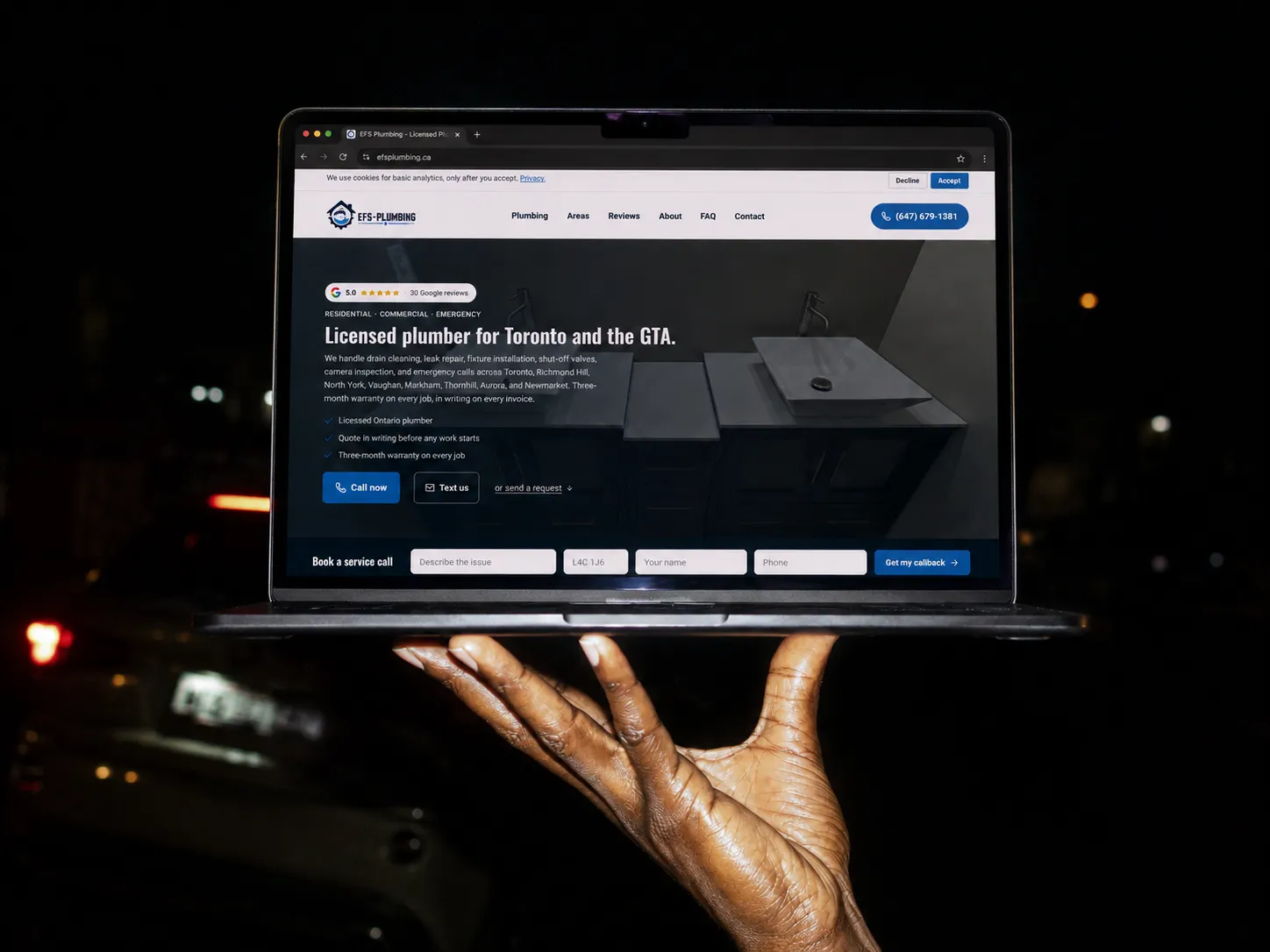
380 contractor sites graded on the public CRO Index
Fervor Contractor CRO Index 2026A grade out of 380 contractor sites
We graded 380 of them against one framework. Exactly one earned an A: Crown Industrial Roofing in Toronto, at 90 out of 100. The rest left money on the table. Here is what separates the top from the bottom.
The local detail
Every angle below comes from how St Louis actually searches, buys, and regulates — built into the page, not bolted on.
You probably built your current site on a desktop, and you review it there too.
A homeowner choosing between you and three other plumbers decides in seconds, and trust does most of that work.
The region is not one market.
A pretty site that does not book jobs is a brochure.
Local housing stock is old, and that shapes the work.
If you are running a shop with a handful of crews and you have stepped out of the field, you already know your website is not pulling its weight.
Your next customer is standing on a wet basement floor in Soulard. A clay lateral backed up after a heavy rain, sewage is creeping toward the furnace, and they are thumbing through Google on a phone they almost dropped. That is the moment your website earns the call or loses it. The plumbing web design St. Louis plumbers depend on is built for that exact thirty seconds. So a good build starts with the phone, not the homepage hero. It loads fast on a cracked screen out in Florissant, puts a call button under the thumb, and proves you are licensed before anyone asks. Most of this has nothing to do with how the site looks on your laptop.
You probably built your current site on a desktop, and you review it there too. But the homeowner with a flooding basement is on a phone, every time. The bulk of plumbing emergency searches come from mobile, so a desktop-first build is already fighting the wrong battle.
Mobile-first means the small screen gets designed first, and the desktop version inherits from it. Your call button sits in a sticky bar that never scrolls away. Your service area shows up in the first screen, not buried three taps deep. And your photos load as compressed files so a homeowner on a weak signal in Dogtown is not staring at a spinner while a competitor's page already loaded.
A site that takes five seconds to load on mobile loses roughly half its visitors before the content appears. So every second you shave off the load is a homeowner who stays long enough to call. A build that performs keeps the homepage light. Big background videos go. Bloated page builders go. The hero image gets sized for a phone, and the call button renders before anything heavy loads. Your customers do not care about a parallax animation. They care that the number is tappable while water keeps rising.
The highest-value element on a plumber's site is the tap-to-call button, and it belongs everywhere. A sticky header bar keeps it visible through every scroll. The hero repeats it. Each service page repeats it. So wherever a Clayton homeowner lands, the call is one thumb-tap away.
And the number matters too. You want a real, local number homeowners recognize, not an 800 line that reads like a call center across the country. A 314 or 636 area code tells a Webster Groves homeowner you are local.

A homeowner choosing between you and three other plumbers decides in seconds, and trust does most of that work. So the right build stacks proof where the eye lands first. Your Missouri license number goes in the header and footer, spelled out. Your Google star rating sits near the top, because a 4.8 with 200 reviews closes more Ladue jobs than any slogan. And real photos of your own crew beat stock images of models in clean uniforms every time.
The water heater and fixture market across the metro runs steady, and homeowners shopping it want reassurance before they spend.
"Among homeowners who made improvements, 32% upgraded their water heaters, dishwashers, or garbage disposals." - U.S. Census Bureau and U.S. Department of Housing and Urban Development (2024)
So when a Central West End homeowner in a century-old brick four-family weighs a water heater swap, your site needs to show you have done it on homes like theirs. A gallery of finished local jobs convinces more than a paragraph of adjectives.
"The median homeowner spending on plumbing fixtures upgrades was about $800 (2021-2023 data)." - U.S. Census Bureau and U.S. Department of Housing and Urban Development (2024)
Because at that price point, homeowners compare. Your trust signals tip a Kirkwood homeowner from "get three quotes" to "call this one."
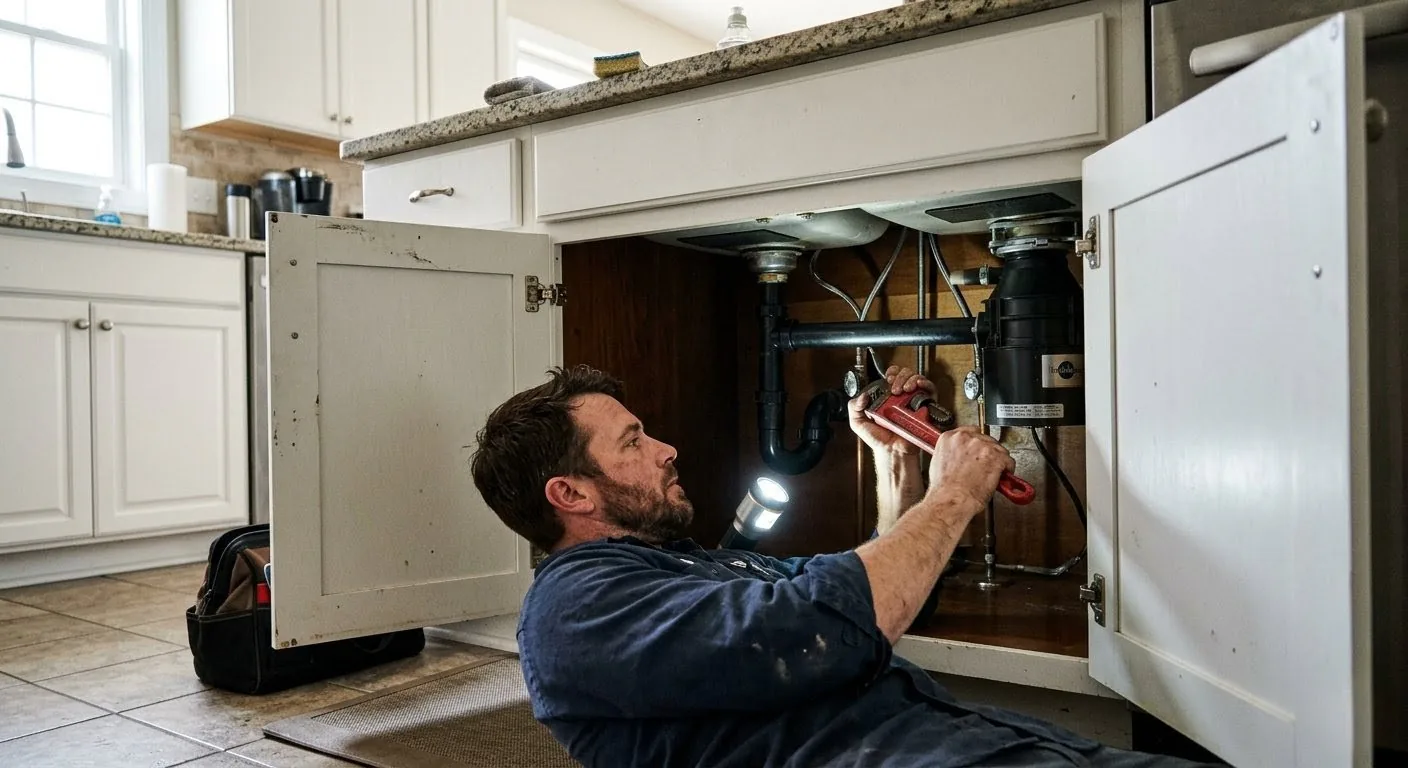
The region is not one market. It covers the city, the county, and St. Charles, and a homeowner in Chesterfield does not think they are searching the same area as someone in South City. So the plumbing web design services St. Louis plumbers invest in have to map your coverage clearly, or you bleed jobs to whoever ranks for the exact suburb. Clear service-area pages solve this. A page for Clayton, a page for Webster Groves, a page for St. Charles, each naming the neighborhoods and ZIPs you cover. When a Ballwin homeowner searches "plumber near me," a page that names Ballwin converts far better than a homepage listing "the whole area."
"In U.S. single-family homes (2020), 40% of main water heaters were fueled by natural gas and 31% by electricity." - U.S. Energy Information Administration (EIA) (2020)
That gas-versus-electric split matters for how you present water-heater work, because an older Tower Grove flat and a newer O'Fallon build need different conversations.
Lumping every service onto one page confuses both Google and the homeowner. A drain-cleaning page, a sewer-lateral page, a water-heater page, a lead-line replacement page, each earns its own URL and headline. So a homeowner searching "sewer lateral repair" near Bevo Mill lands on a page about exactly that.
"Only 5.8% of U.S. single-family homes had tankless water heaters in 2020." - U.S. Energy Information Administration (EIA) (2020)
Tankless is still a niche upgrade, so a dedicated tankless page positions you for the higher-ticket homeowners actively researching it.
A pretty site that does not book jobs is a brochure. The build you want treats every page as a path to one of two actions: a tap-to-call or a booking. For an emergency lateral backup, that path is the call button. For a planned water-heater swap, an online booking step works better, because the homeowner is researching at 9 p.m. and does not want to wait for business hours.
The fastest way to lose a planned job is a long contact form. A name, a phone, an address, and the type of job, that is enough. Every extra field drops your completion rate. So a Florissant homeowner who wants a Saturday install should pick a slot in under a minute.
"Mechanical equipment remains difficult to source for remodelers in 2025" - National Association of Home Builders (2025)
Because equipment is tight, the plumber who makes booking effortless captures the homeowner who is ready now. And a booking widget that syncs to your schedule beats a form that sits in an inbox you barely check.
The napkin math on your own numbers tells the story. Your average service call might be worth $325, and a water-heater replacement runs around $2,100. If your site is slow enough to lose half its mobile visitors, those lost visitors were real tickets that walked to whoever loaded faster. So holding onto even five more mobile visitors a week, at your close rate, pays for the build fast.
"1.9% easing of mechanical renovation growth projected for Q3 2026" - Harvard Joint Center for Housing Studies (2025)
Even with growth easing, the homeowners who do spend will pick the plumber whose site made the next step obvious. And that is a design decision, not a market condition.

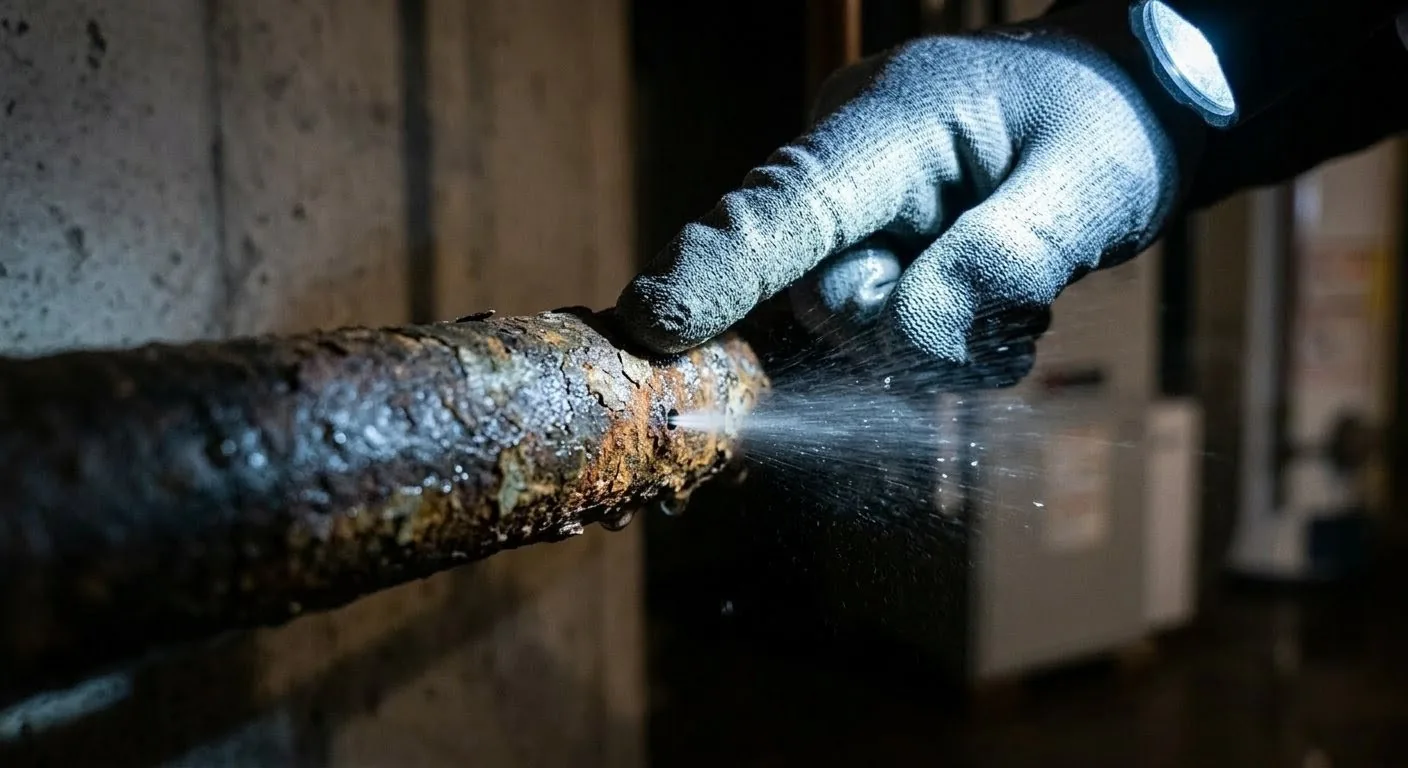
Local housing stock is old, and that shapes the work. Brick homes in Tower Grove, Soulard, and Benton Park sit over clay sewer laterals that crack and root-clog, and many homes built before the lead ban still run water through a lead service line. So your calls are not generic. The plumbing web design agency St. Louis plumbers trust builds the site around that, because the city's pipes write your service menu for you.
Then there is winter. When a hard freeze splits an exposed line in an unheated Affton crawlspace, phones ring for days, and your site gets hammered with panic traffic. So it has to stay fast under load, surface emergency messaging at the top, and keep the call button working through the chaos.
The lateral problem is real money, and homeowners searching it want a plumber who clearly does that work. A sewer-lateral page, a lead service line replacement page, and a frozen-pipe page, each ready and indexed, tell a Bevo Mill homeowner you handle their exact situation.
"Mechanical system retrofits part of the $149B housing deficiency market" - Harvard Joint Center for Housing Studies (2025)
So there is steady retrofit work under the older neighborhoods, and a page that speaks the homeowner's exact problem back to them beats a homepage listing ten services in a row.
"Mechanical sentiment contributed to a Current Conditions Index of 71 in 2025" - National Association of Home Builders (2026)
Demand sentiment stayed strong through 2025, and emergency calls spike hard whenever the weather turns. And the plumber whose site absorbs that spike books the overflow competitors drop.
If you are running a shop with a handful of crews and you have stepped out of the field, you already know your website is not pulling its weight. Plumbing web design St. Louis for plumbers at your stage comes down to a system that turns searches into scheduled trucks, well past a logo refresh. Older homes in South City and Webster Groves need laterals, lead-line swaps, and repipes, while newer St. Charles County builds need warranty and fixture work. So there is real, ongoing work, and a build that owns its speed, its trust signals, and its booking path converts that demand instead of admiring it.
You do not need an agency to spot the gaps. You can pull your site up on a phone, on cellular, and time the load. You can try to tap a number in three seconds, and you can look for your license and reviews near the top. So if any of those fail, you have found where jobs leak out.
If you want a second set of eyes, our Site Inspection walks your site the way a homeowner would and shows you where calls drop off. And if your problem is ranking, not converting, our guides to plumbing SEO and local SEO for plumbers cover how homeowners find you.
It depends on whether you need a refresh or a full rebuild, but think in job-value math. If a water-heater install runs around $2,100 and your site books one extra a month it currently loses, the build pays back quickly. So the better question is what a slow, hard-to-call site costs you right now.
Because the homeowner with a backed-up lateral or a split line is on a phone, not a laptop. The bulk of plumbing emergency searches happen on mobile, and the caller decides in seconds. So a site that loads slowly or hides the call button loses your highest-intent jobs.
Your phone number as a tap-to-call button, your Missouri license, your Google rating, and a clear line about the areas you cover. So a Clayton homeowner sees in one screen that you are licensed, trusted, and local. Everything else can wait.
You do, if you want suburb searches to find you. A homeowner out in Ballwin or O'Fallon searches by their own town, and a page that names it converts better than a homepage listing "the whole area." So service-area pages for the suburbs you serve keep those searches from bouncing.
It should stay fast under a traffic spike and surface emergency messaging right away. An emergency banner, a frozen-pipe page, a sewer-lateral page, and a call button that never disappears, all ready before the weather turns.
The evidence
 Read the full report →
 0
contractor sites graded, one A
Across the whole CRO Index, a single site earned an A. The median landed at a D. The grade gap is a conversion gap.
0
contractor sites across the State of the Industry research
Roofing, remodeling, and HVAC, scored page by page against one framework.
Two ways to start
Tell us where you are. We point you at the right next step — no sales call to get there.
Client review
“Nay did an amazing job, you know. He was really patient. He got the work done the way I told him and he was just on point with the website. Pretty straightforward process. No going around the bush. He just did amazing work and I would 100% recommend.”
How Fervor can help
Complete website system built to convert storm leads, planned projects, and research-phase homeowners into booked jobs.
Identify and patch the top conversion killers on your existing site. No full rebuild needed.
Monthly SEO, content, and CRO. Fixed deliverables. No credits, no rollover. The compound growth engine.
GBP optimization, citation building, and review system foundation. The infrastructure that gets you into the Map Pack.
One conversion-built landing page for the referrals, paid clicks, and cold-call leads you send. They land on a page built to book them, not your generic homepage.
Your move
Tell us where you are. We point you at the right next step — no sales call to get there.
Keep going