0
contractor sites graded, one A
Across the whole CRO Index, a single site earned an A. The median landed at a D. The grade gap is a conversion gap.
You're getting clicks in San Francisco. They're just not calling. We rebuild your site around the one job that matters: turning a visitor into a booked job.
Starts with a Site Inspection, so you see the plan before any build begins.
“Patient, on point, straightforward. Did amazing work. Would 100% recommend.” — Ruben Mederos, HyperTemp HVAC
“Responsive, creative, exceeded expectations. Already seeing greater engagement from our clients.” — George Jeorgy, Jeorgy's Landscape Construction
“Top-tier professionalism, real web design expertise, ideas I hadn't considered. Confidently recommend.” — Aws Nassani, Four Eleven Contracting



380 contractor sites graded on the public CRO Index
Fervor Contractor CRO Index 2026A grade out of 380 contractor sites
We graded 380 of them against one framework. Exactly one earned an A: Crown Industrial Roofing in Toronto, at 90 out of 100. The rest left money on the table. Here is what separates the top from the bottom.
The local detail
Every angle below comes from how San Francisco actually searches, buys, and regulates — built into the page, not bolted on.
Strip the jargon out of "web design" and it comes down to one thing.
Page speed is the part shop owners skip and the part that costs them the most.
A homeowner about to let a stranger into their Pacific Heights home is nervous, and your site either calms that nerve or feeds it.
This city hands your site jobs that a flat suburb never deals with, and a smart web design agency builds the pages around them instead of dropping in a template.
You have probably paid for a pretty site before and watched the phone stay quiet.
The best work stays tied to your real jobs and your real city instead of chasing a slick look.
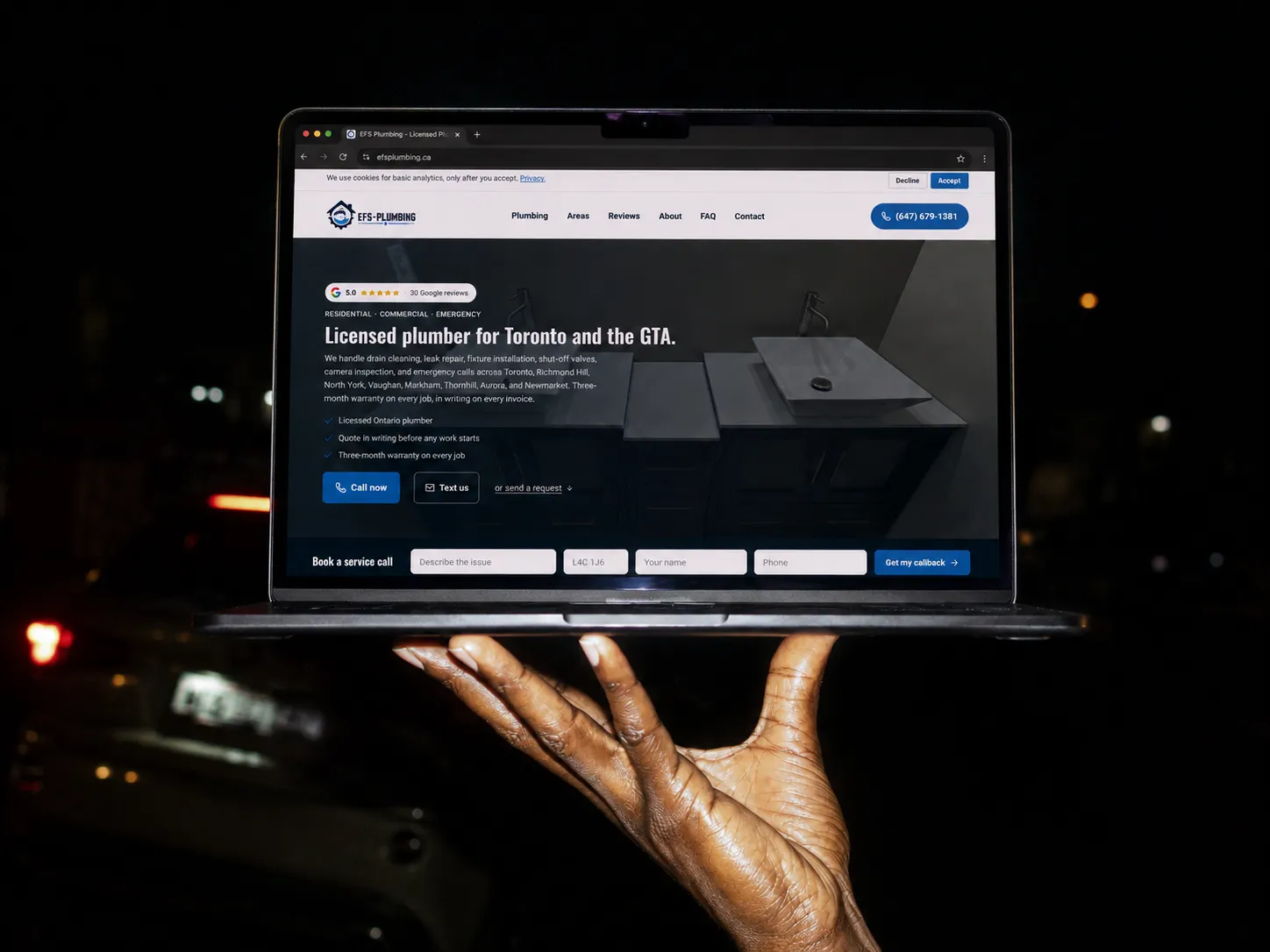
You run a plumbing shop somewhere across this city, maybe a yard near Bayview or a unit close to the Mission, and your site was built years ago by someone's nephew. It loads slow. The phone number hides at the bottom. So when a homeowner in Noe Valley lands on it with a flooded kitchen, they bounce before the page even finishes. That is the whole problem plumbing web design in San Francisco solves, and it has almost nothing to do with how good your plumbing is. The right build puts a tap-to-call button under their thumb in two seconds, shows them a real photo of your crew, and turns that panicked search into a booked call.
Strip the jargon out of "web design" and it comes down to one thing. A homeowner with a broken water heater is standing in their kitchen holding a phone, and your site has about four seconds to earn the call before they hit back and dial the next shop. Everything else is detail.
The city makes that window tighter than most markets. People here compare plumbers the way they compare anything, fast and on a screen, and they expect the site to feel as polished as the apps they use all day. A clunky template reads as "this shop is sloppy" before they have read a single word.
And the work starts on the phone, since that is where these searches live. Over two-thirds happen on a handset, often outdoors or in a panic, so the layout gets designed for a thumb first. Your hero, your call button, your service list all have to land on a five-inch screen before they land anywhere else.
That is the opening. Because the shop with the cleaner, faster site catches the homeowner your competitor's slow site already lost.

"Among homeowners who made improvements, 32% upgraded their water heaters, dishwashers, or garbage disposals." - U.S. Census Bureau and U.S. Department of Housing and Urban Development (2024)
That number tells you the demand is real. Roughly a third of improvement spending touches the exact systems you service, so homeowners are landing on plumbing sites all day. The question is whether yours holds them or loses them.
Page speed is the part shop owners skip and the part that costs them the most. A homeowner on a phone in the Sunset waits maybe three seconds before frustration kicks in. So if your site takes five to paint, half of them are already gone, and you never knew they came.
This is where a real plumbing web design company San Francisco owners trust earns its keep. The build gets stripped to what matters: compressed images, no bloated page builder, a layout that renders the call button first and the rest later. The goal is a page that feels instant on a five-year-old phone over a weak signal.
The single highest-value element on a plumber's site is a phone number a homeowner can tap without thinking. So it sits in the header, sticks to the bottom of the screen as they scroll, and shows up again at the end of every service section. A homeowner should never have to hunt for how to reach you.
Plenty of homeowners would rather book online than play phone tag, especially the younger SoMa crowd. A simple booking flow that captures the address, the problem, and a callback window turns a 9pm search into a job on tomorrow's schedule, no live answer required.
"Mechanical sentiment contributed to a Current Conditions Index of 71 in 2025" - National Association of Home Builders (2026)
So demand for your work is holding steady. The visitors already exist, so the whole contest is whether your site converts them. A fast, tap-to-call layout is how you win it.
A homeowner about to let a stranger into their Pacific Heights home is nervous, and your site either calms that nerve or feeds it. So the design has to prove you are real, licensed, and not going to wreck their floors. Generic stock photos do the opposite.
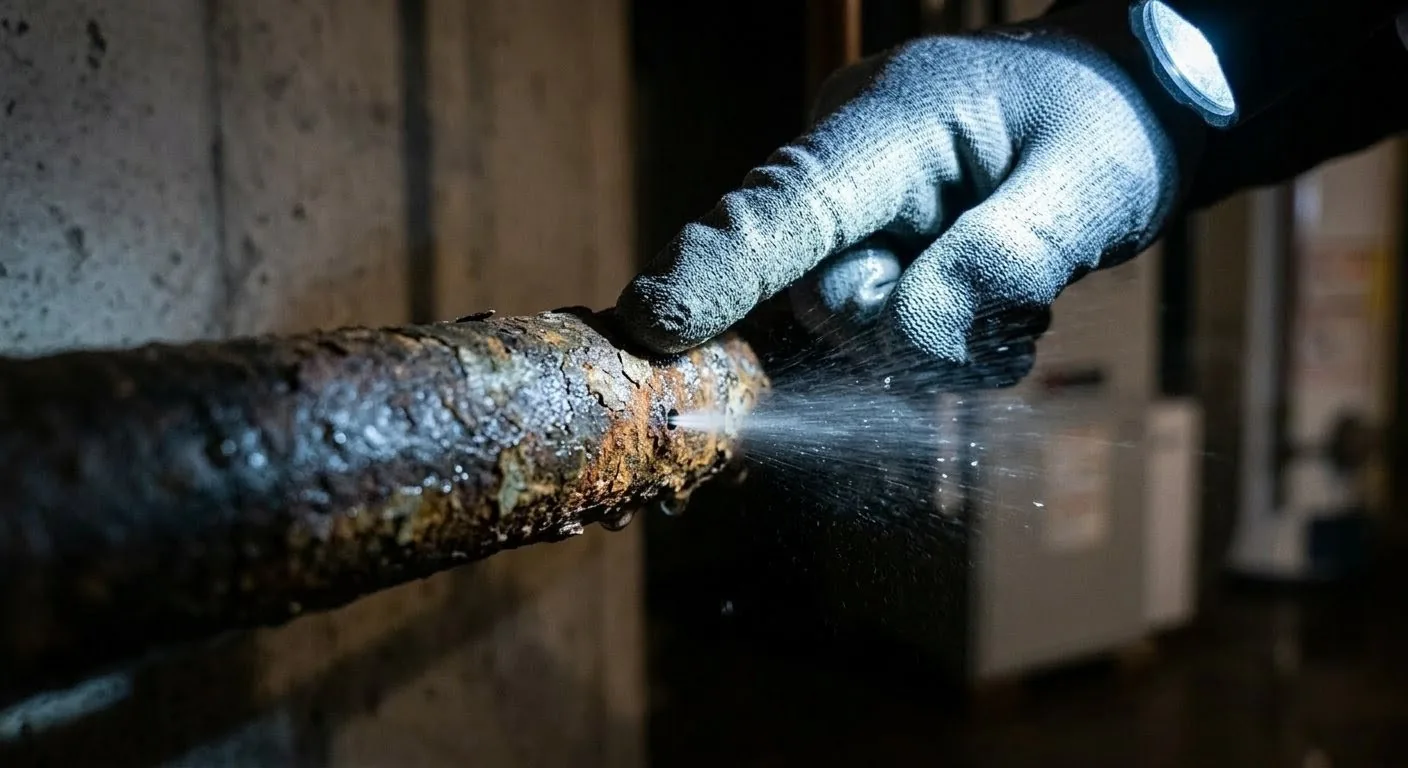
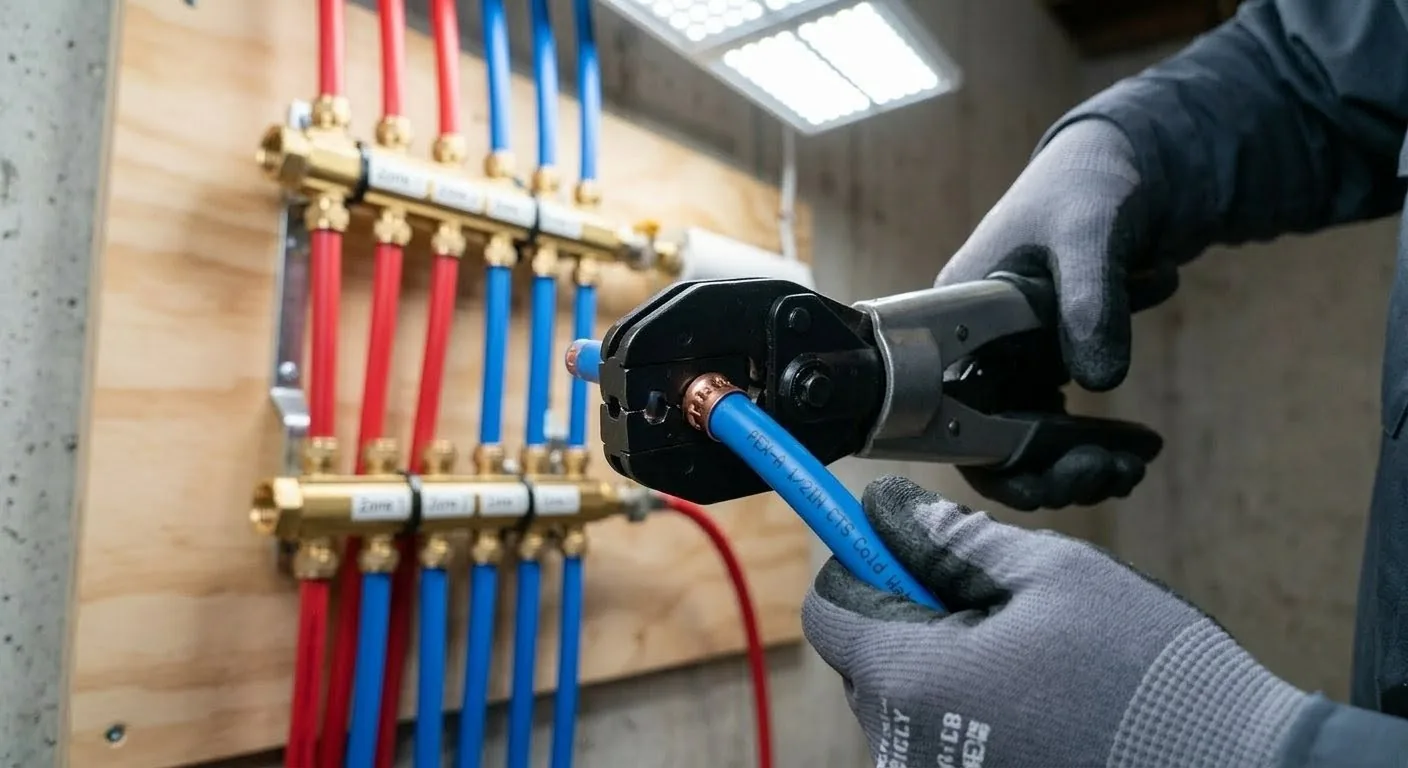
A picture of your actual van outside an Edwardian in Noe Valley, your tech crimping PEX under a sink, your name on the truck, all of it signals a real local shop. Homeowners here can spot a stock photo instantly, and it quietly tells them you are hiding something.
Your C-36 license number, your review score, and a logo bar of recognizable brands you install belong above the fold, not buried on an "about" page. A homeowner scrolling three plumbers picks the one showing 200 reviews and a license over the one showing neither, nearly every time.
A homeowner searching their exact problem wants a page that names it back. So good plumbing web design services give you a page for sewer-lateral inspection, one for galvanized repipes, one for water-heater swaps, each speaking to the specific fear that drove the search.
"The median homeowner spending on plumbing fixtures upgrades was about $800 (2021 to 2023 data)." - U.S. Census Bureau and U.S. Department of Housing and Urban Development (2024)
So the spread of job values shows up right there. An $800 fixture swap is fine, but the repipe and the lateral replacement are the jobs worth designing your whole site to capture, and those buyers need the most reassurance before they call.
This city hands your site jobs that a flat suburb never deals with, and a smart web design agency builds the pages around them instead of dropping in a template. Earthquake-stressed pipes, old housing, and a code quirk most plumbers ignore all turn into pages worth having.
The city ties a sewer-lateral inspection to many home sales, which sends a very specific, very anxious homeowner your way. They are under contract, on a deadline, and not price-shopping. So a clear page that walks through the city's lateral requirement, with the practical steps and a booking button, catches a high-intent visitor your competitors leave hanging.
The city sits on active faults, and ground movement stresses pipes in ways most markets never see. A foundation shifts a fraction of an inch and a copper line under the slab springs a pinhole leak months later. So a page on slab-leak detection, written plainly, meets a worried homeowner exactly where they are.
Most homes here still run gas water heaters, which opens a clear conversation about electric and tankless options as homeowners weigh efficiency and rebates.
"In U.S. single-family homes (2020), 40% of main water heaters were fueled by natural gas and 31% by electricity." - U.S. Energy Information Administration (EIA) (2020)
So fuel-switching questions are climbing, and a page that lays out the tradeoffs plainly catches the homeowner early in that decision.
"Only 5.8% of U.S. single-family homes had tankless water heaters in 2020." - U.S. Energy Information Administration (EIA) (2020)
So tankless adoption stays low, which means a homeowner researching it is open to whichever shop explains it best. That explanation lives on a page your template-built competitor does not have.
You have probably paid for a pretty site before and watched the phone stay quiet. So the only scoreboard that counts is booked calls, and any plumbing web design in San Francisco for plumbers worth paying for ties back to that number. And the math is not complicated.
Your average service call might run $600 while a repipe runs closer to $9,000. If a faster, clearer site turns ten more of your existing visitors into calls each month and you close half, the value against the build cost is obvious. So the design should track calls and form fills, and you should see which neighbourhoods are sending the work.
"Mechanical equipment remains difficult to source for remodelers in 2025" - National Association of Home Builders (2025)
So when equipment lead times stretch, the shops with a site that converts capture the jobs that do book. And the broader market is holding rather than sliding, so the demand your site catches is durable.
"1.9% easing of mechanical renovation growth projected for Q3 2026" - Harvard Joint Center for Housing Studies (2025)
So even with growth easing a touch, the work is there for the shop whose site earns the call. Here is what a converting build looks like next to the one you probably have now.
| What you get | A typical template site | The right web design build |
|---|---|---|
| Load speed | Five seconds on a phone | Under two seconds on a phone |
| Call button | Buried at the bottom | Sticky tap-to-call, always visible |
| Photos | Generic stock | Real crew on real SF jobs |
| Ownership | Agency keeps the assets | You own the site, content, and accounts |
And ownership is where plenty of shops get trapped. The right partner builds everything in your name, so the site, content, and your accounts stay yours if you ever walk away.
The best work stays tied to your real jobs and your real city instead of chasing a slick look. So the build that wins maps every page to a problem you really fix and a neighbourhood you genuinely serve, then proves itself in calls.
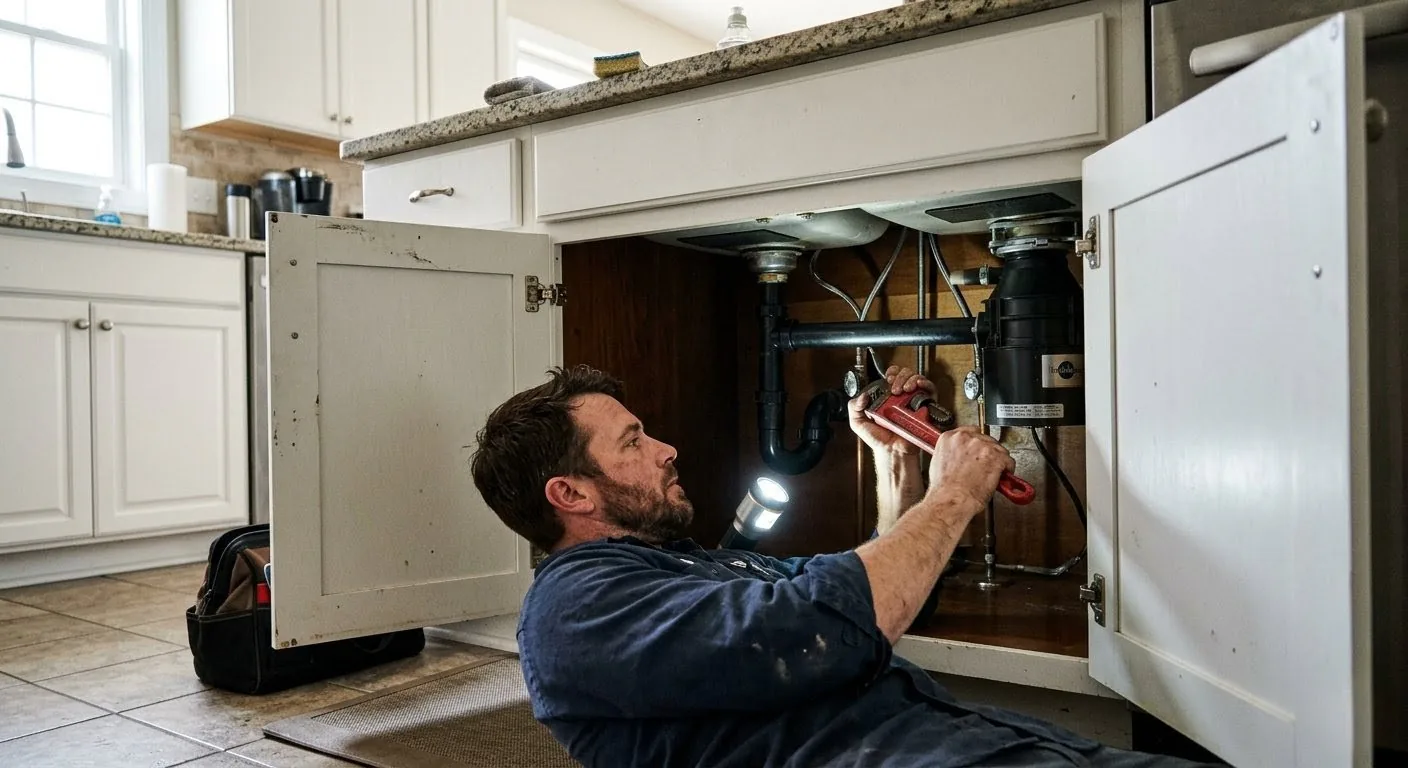
Your pages should map to the work that pays, whether that is emergency drain clearing, a full repipe, or a lateral replacement. Those are the visitors with money behind them and the most reason to hesitate.
A site that names the Mission, the Sunset, Noe Valley, and reaches into East Bay markets like Oakland and Berkeley reads as a real local shop. So a homeowner anywhere across that footprint feels like they found someone who works their block.
You keep the domain, the content, and the accounts, so the equity compounds for your shop rather than the agency's.
"Mechanical system retrofits part of the $149B housing deficiency market" - Harvard Joint Center for Housing Studies (2025)
So the underlying demand is enormous, and a site tuned to the city is how you turn a slice of it into steady booked work. And if you want to see where your current site is leaking calls before committing to anything, a free Site Inspection shows you exactly where homeowners drop off, while the Lead Leak Calculator ballparks the revenue slipping away to a slow page. For the search side of the same machine, the plumbing SEO guide covers how homeowners find you, and the local SEO for plumbers guide goes deep on the map pack behind every click.
A focused build usually runs a few weeks, since the heavy lifting is the layout, the service pages, and the photo shoot. And the timeline depends on how fast you get real job photos and your license details over, so a prepared shop moves quicker than one starting cold.
Because almost every emergency search happens on a phone, often outdoors and in a hurry. A homeowner in Pacific Heights waits about three seconds before bouncing, so a site that paints fast and drops a tap-to-call button under their thumb catches the call your slow site was losing.
The housing and the code reality. Your site is selling galvanized repipes, cast-iron drain failures, earthquake-related slab leaks, and the city's sewer-lateral inspection tied to home sales, so the service pages and trust signals get built around buyers most cities never see.
You should, and any partner worth hiring builds everything in your name. So the domain, the content, and your accounts stay yours, and the site keeps working for your shop no matter who you work with down the road.
The evidence
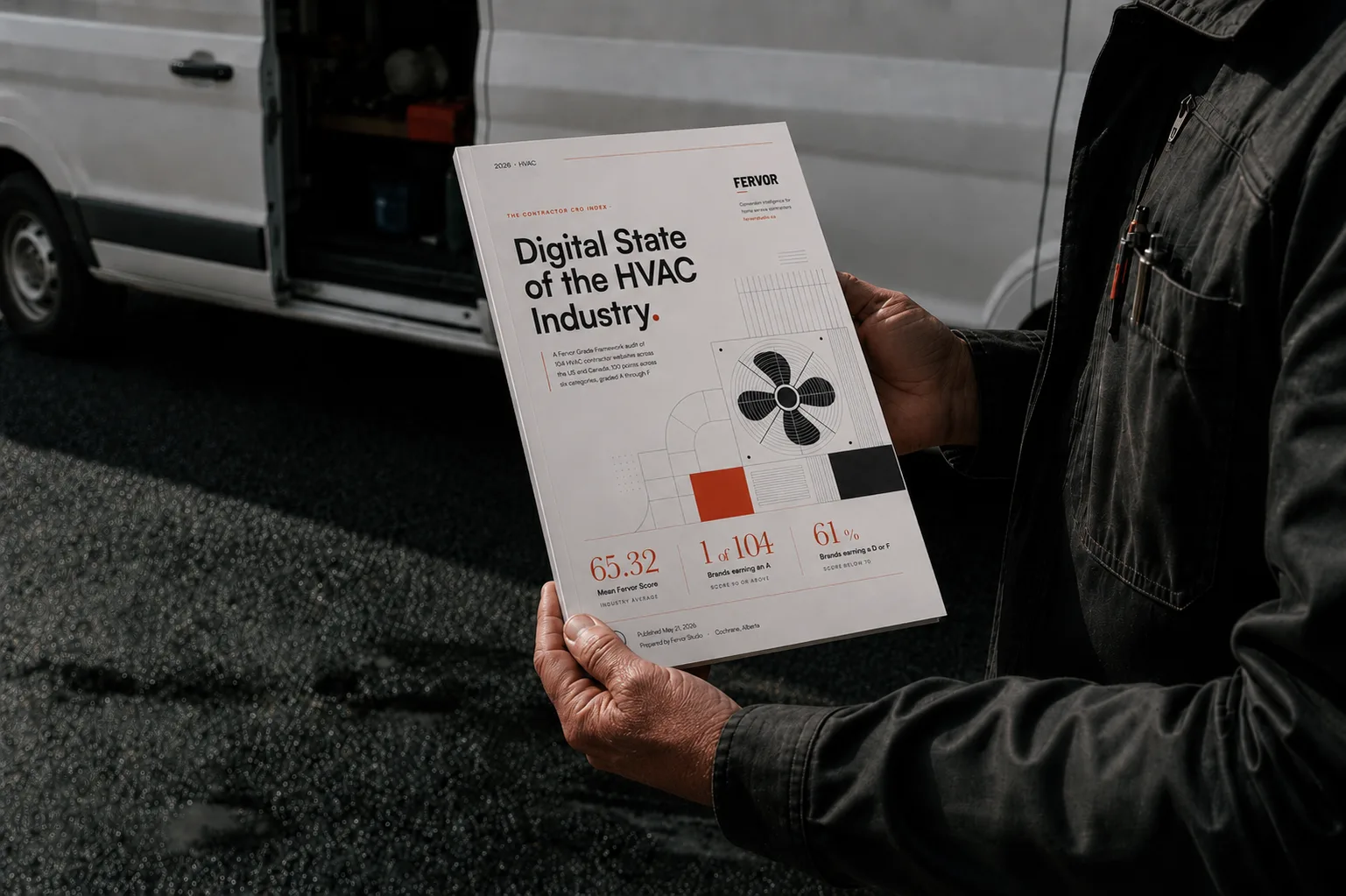 Read the full report →
 0
contractor sites graded, one A
Across the whole CRO Index, a single site earned an A. The median landed at a D. The grade gap is a conversion gap.
0
contractor sites across the State of the Industry research
Roofing, remodeling, and HVAC, scored page by page against one framework.
Two ways to start
Tell us where you are. We point you at the right next step — no sales call to get there.
Client review
“Nay did an amazing job, you know. He was really patient. He got the work done the way I told him and he was just on point with the website. Pretty straightforward process. No going around the bush. He just did amazing work and I would 100% recommend.”
How Fervor can help
Complete website system built to convert storm leads, planned projects, and research-phase homeowners into booked jobs.
Identify and patch the top conversion killers on your existing site. No full rebuild needed.
Monthly SEO, content, and CRO. Fixed deliverables. No credits, no rollover. The compound growth engine.
GBP optimization, citation building, and review system foundation. The infrastructure that gets you into the Map Pack.
One conversion-built landing page for the referrals, paid clicks, and cold-call leads you send. They land on a page built to book them, not your generic homepage.
Your move
Tell us where you are. We point you at the right next step — no sales call to get there.
Keep going