0
contractor sites graded, one A
Across the whole CRO Index, a single site earned an A. The median landed at a D. The grade gap is a conversion gap.
You're getting clicks in New York. They're just not calling. We rebuild your site around the one job that matters: turning a visitor into a booked job.
Starts with a Site Inspection, so you see the plan before any build begins.
“Patient, on point, straightforward. Did amazing work. Would 100% recommend.” — Ruben Mederos, HyperTemp HVAC
“Responsive, creative, exceeded expectations. Already seeing greater engagement from our clients.” — George Jeorgy, Jeorgy's Landscape Construction
“Top-tier professionalism, real web design expertise, ideas I hadn't considered. Confidently recommend.” — Aws Nassani, Four Eleven Contracting



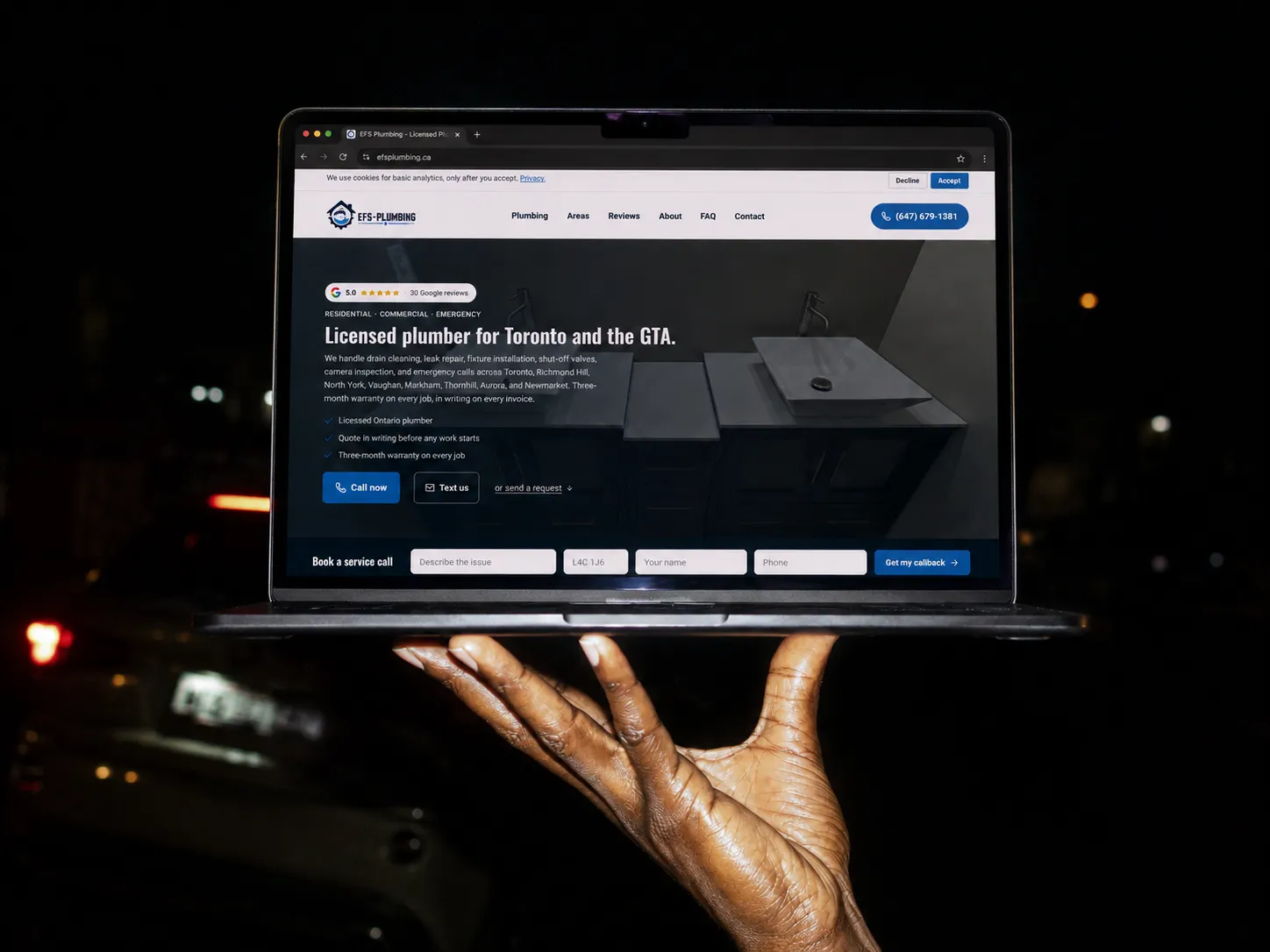
380 contractor sites graded on the public CRO Index
Fervor Contractor CRO Index 2026A grade out of 380 contractor sites
We graded 380 of them against one framework. Exactly one earned an A: Crown Industrial Roofing in Toronto, at 90 out of 100. The rest left money on the table. Here is what separates the top from the bottom.
The local detail
Every angle below comes from how New York actually searches, buys, and regulates — built into the page, not bolted on.
Your inbound traffic here arrives mostly on a phone, often on a spotty connection between subway stops.
The click-to-call moment is where most plumbing sites quietly bleed jobs.
New Yorkers are skeptical by reflex, and a co-op board even more so.
A plumbing web design company New York owners hire should build service pages around the jobs this city really generates.
The best plumbing web design New York for plumbers gets built lean from the start.
Plumbing demand in this market stays resilient even when the wider remodel market softens.
You have been burned before, or you know a plumber who has.
Your next customer is standing in a Park Slope kitchen with water spreading across the floor, holding a phone with one bar of service. So the question your site has to answer in two seconds is simple. Can this plumber get here, and can I trust them with my prewar pipes? Good plumbing web design New York homeowners trust makes that answer obvious before the page even finishes loading. And that is the whole game. A slow site, a buried phone number, or a missing license badge sends that flooded-kitchen caller straight to the competitor whose page loaded first.
Your inbound traffic here arrives mostly on a phone, often on a spotty connection between subway stops. So your site has to load fast, render a tap-to-call button above the fold, and stay readable on a five-inch screen held in one wet hand.
You can learn a lot from how a Queens homeowner searches. They type "plumber near me Astoria," they glance at three results, and they tap the one that loads instantly with a phone number right there. Nobody scrolls during a flood. The plumber whose site takes six seconds to paint already lost.
A burst supply line in a Riverdale co-op won't wait for your hero video to buffer. Your page needs its core content visible in under two seconds on a mid-range Android, which means lean images, no autoplay clips, and a layout that doesn't shift while it loads.
Your whole first screen should be designed for a thumb. The call button sits low and wide where a thumb naturally rests. Your service area, your license number, and a single short form belong within easy reach, not three taps deep.

The click-to-call moment is where most plumbing sites quietly bleed jobs. So treat it like the most important button you own. On a phone, the number should dial with one tap, no copy-paste, no "open in app" friction. Because a homeowner in Washington Heights with a flooding bathroom won't fight your interface.
Booking is the second path, and it matters more for non-emergency work. A co-op board scheduling a Saturday riser inspection in the Bronx wants a form they can finish in under a minute. The form should hold a name, a phone number, an address or ZIP, and the problem, and nothing else. The marketing questions can wait. You can ask the rest when you call back.
"Among homeowners who made improvements, 32% upgraded their water heaters, dishwashers, or garbage disposals." - U.S. Census Bureau and U.S. Department of Housing and Urban Development (2024)
That upgrade demand is steady booking work, and it rarely comes through a panicked phone call. It comes through a calm visitor comparing two or three plumbers on a Tuesday night. Your booking flow has to win that comparison.
Emergency visitors want the phone. Planned-work visitors want the form. So give both a clear home on every page, and never make the planned-work homeowner hunt for a way to book that isn't a phone call at 9pm.
New Yorkers are skeptical by reflex, and a co-op board even more so. So the proof a buyer needs has to sit above the fold, not buried on an "About" page nobody reads.
Your New York City Master Plumber license number belongs right at the top. That single line separates you from the unlicensed handyman who flooded someone's basement last winter. And it's non-negotiable for legal work in this city anyway, so you might as well show it proudly.
Your real photos will outperform stock every time. A homeowner trusts a picture of your actual van on a Brooklyn street, your crew in a Harlem boiler room, or your hands on a corroded riser. These read as real to someone who has been burned before.
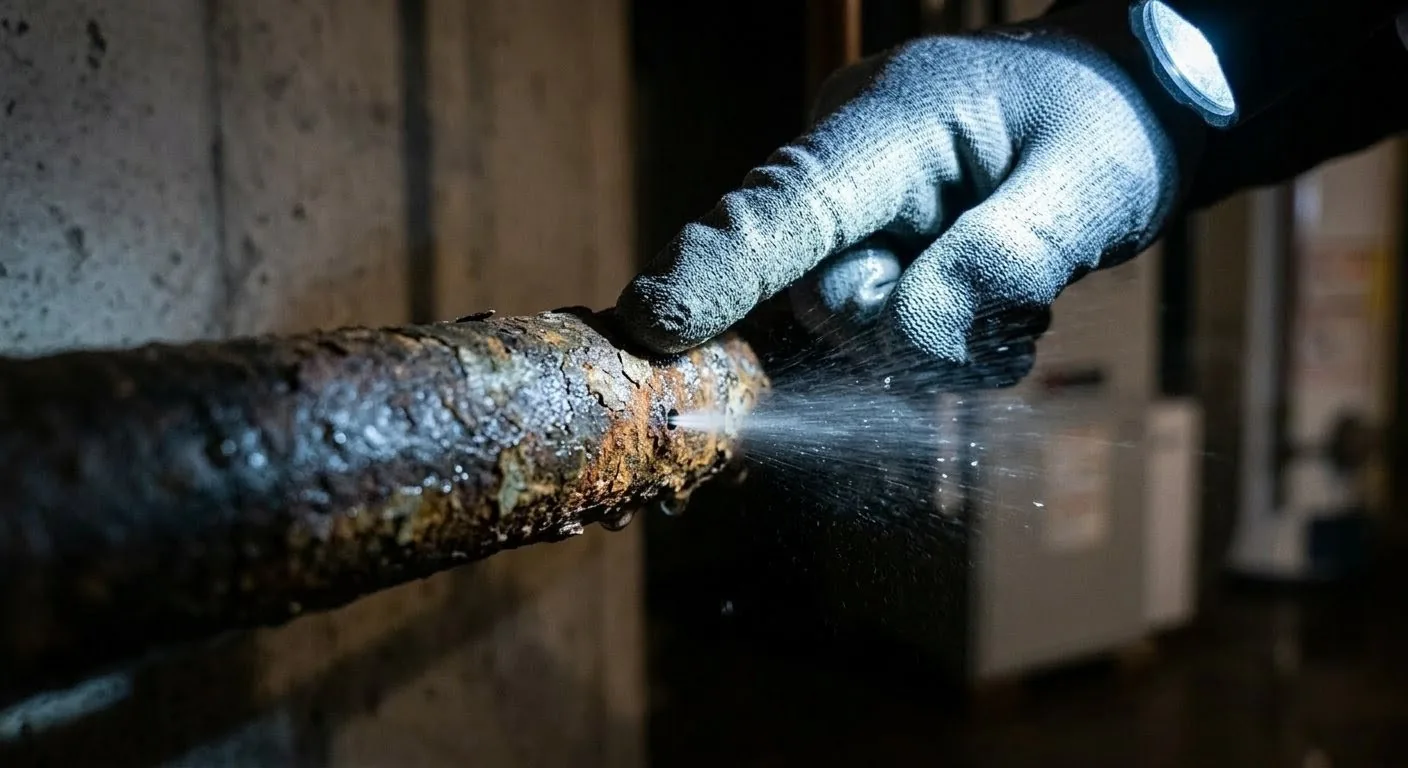
Your Google reviews belong next to your call button, not in a separate tab. A homeowner deciding between you and one other plumber wants the star rating in the same glance as the phone number. So you should design for that glance.
Your site should spell out that you are licensed, bonded, and insured for work across Manhattan, Brooklyn, Queens, the Bronx, and Staten Island. Co-op and condo boards will ask for a certificate of insurance, so you want to mention that you provide one. That small line removes a real objection before it starts.
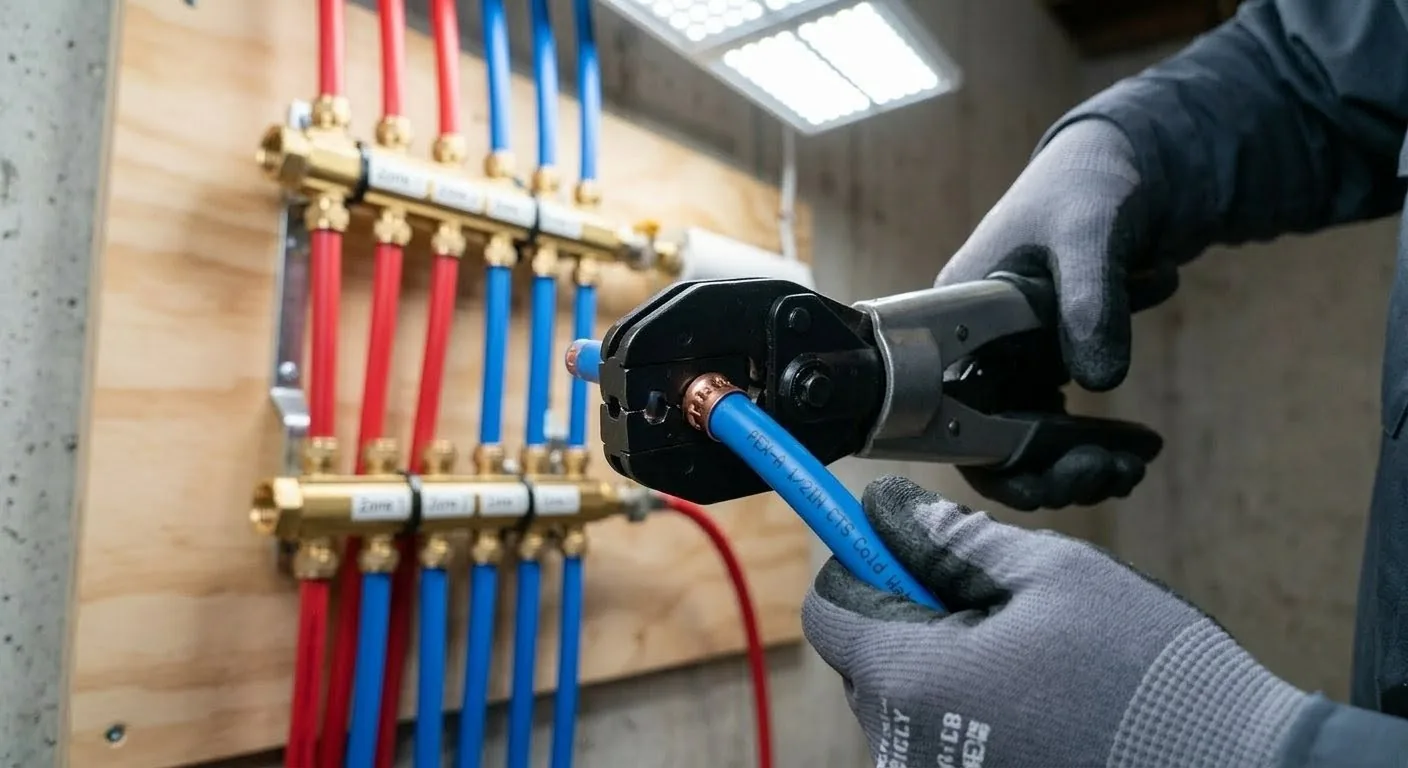
A plumbing web design company New York owners hire should build service pages around the jobs this city really generates. Prewar buildings mean old cast-iron stacks, galvanized supply lines, and steam-heat quirks you won't find in a suburban tract home.
So write a page for water heater replacement, because that demand is real and it converts.
"In U.S. single-family homes (2020), 40% of main water heaters were fueled by natural gas and 31% by electricity." - U.S. Energy Information Administration (EIA) (2020)
"Only 5.8% of U.S. single-family homes had tankless water heaters in 2020." - U.S. Energy Information Administration (EIA) (2020)
That low tankless number is an opening. A dedicated tankless conversion page, written for a Staten Island homeowner tired of running out of hot water, teaches and sells at the same time. And it ranks, because almost nobody local writes it well.
Homeowners want a sense of price before they call, even a rough one.
"The median homeowner spending on plumbing fixtures upgrades was about $800 (2021-2023 data)." - U.S. Census Bureau and U.S. Department of Housing and Urban Development (2024)
Context like that, framed honestly, builds trust. You're not posting a binding quote. You're showing a homeowner you understand the work and the budget, which makes the call easier to place.
Your service area page should name the neighborhoods you actually serve, including Park Slope, Astoria, Riverdale, the Upper West Side, Bay Ridge, and Forest Hills. A homeowner scanning for their own block trusts a plumber who names it over one who says "all five boroughs" and nothing more.
The best plumbing web design New York for plumbers gets built lean from the start. So compress every image, defer anything that doesn't need to load first, and host on infrastructure that serves a Manhattan visitor and a Staten Island visitor with the same speed.
A heavy page punishes you twice. It loses the impatient emergency caller, and it drags your search visibility down, because slow sites rank worse. Because Google watches how fast your page becomes usable on a phone, and so do your visitors.
"Mechanical equipment remains difficult to source for remodelers in 2025" - National Association of Home Builders (2025)
When parts are hard to source and timelines stretch, a clear site that sets expectations keeps homeowners patient. So your project pages should explain lead times plainly, which cuts down the angry follow-up calls your office takes.
Your build should use small image files, system fonts where you can, and no bloated page builder dragging a megabyte of unused code behind it. A site that loads in under two seconds was designed that way on day one.
Plumbing demand in this market stays resilient even when the wider remodel market softens.
"1.9% easing of mechanical renovation growth projected for Q3 2026" - Harvard Joint Center for Housing Studies (2025)
A small projected easing still leaves enormous volume on the table, especially in a city with this much aging housing stock. So your site's job is to capture the share that is already searching, not to manufacture new demand.
"Mechanical sentiment contributed to a Current Conditions Index of 71 in 2025" - National Association of Home Builders (2026)
Sentiment above the breakeven mark means homeowners and boards are still spending on mechanical work. And the aging infrastructure under this city keeps the pipeline full whether sentiment ticks up or down.
"Mechanical system retrofits part of the $149B housing deficiency market" - Harvard Joint Center for Housing Studies (2025)
A deficiency market that large, sitting under buildings that average a century old, is steady work for any contractor whose site can capture it. So the plumbing web design agency New York owners pick should treat the website as the front door to that demand, not a brochure that sits there.

You can run the numbers your own way. If your average booked job runs $700, and a sharper site books four more jobs a month than your old one, that is $2,800 a month. That works out to roughly $33,000 a year, from a website that finally answers the phone for you. So the build pays for itself fast, and everything after that is profit you were already leaving on the floor.
You have been burned before, or you know a plumber who has. So evaluate any web design vendor in this city on a few hard checks, not on a slick sales call.
Your first question should be who owns the site when the relationship ends. You should own the domain, the content, and the hosting, full stop. A partner who keeps your assets hostage is a partner you will regret.
You should also see a live plumbing site they built, loaded on your own phone. Pull it up right there in the meeting and watch the timer. If it crawls on your iPhone in their conference room, it will crawl for your Brooklyn customers too.
You want to know how they handle tap-to-call tracking, so you can see which pages drive calls. You want a shipping timeline in business days, not vague seasons. And you want a straight answer about what happens after launch, because the agencies that vanish after the invoice are the ones plumbers complain about most.
You can also start by understanding where your current site leaks jobs. Our team breaks that down in plain terms on the plumbing SEO guide and the companion piece on local SEO for plumbers, and you can see how the whole system fits together on the contractor marketing hub.
The site homeowners trust is one that loads fast, proves your license, shows real reviews, and makes the call effortless. When you get those right, your phone does the work your old site could not. So the next flooded-kitchen search in Park Slope ends with your number, not the other plumber's.
The evidence
 Read the full report →
 0
contractor sites graded, one A
Across the whole CRO Index, a single site earned an A. The median landed at a D. The grade gap is a conversion gap.
0
contractor sites across the State of the Industry research
Roofing, remodeling, and HVAC, scored page by page against one framework.
Two ways to start
Tell us where you are. We point you at the right next step — no sales call to get there.
Client review
“Nay did an amazing job, you know. He was really patient. He got the work done the way I told him and he was just on point with the website. Pretty straightforward process. No going around the bush. He just did amazing work and I would 100% recommend.”
How Fervor can help
Complete website system built to convert storm leads, planned projects, and research-phase homeowners into booked jobs.
Identify and patch the top conversion killers on your existing site. No full rebuild needed.
Monthly SEO, content, and CRO. Fixed deliverables. No credits, no rollover. The compound growth engine.
GBP optimization, citation building, and review system foundation. The infrastructure that gets you into the Map Pack.
One conversion-built landing page for the referrals, paid clicks, and cold-call leads you send. They land on a page built to book them, not your generic homepage.
Your move
Tell us where you are. We point you at the right next step — no sales call to get there.
Keep going