0
contractor sites graded, one A
Across the whole CRO Index, a single site earned an A. The median landed at a D. The grade gap is a conversion gap.
You're getting clicks in Los Angeles. They're just not calling. We rebuild your site around the one job that matters: turning a visitor into a booked job.
Starts with a Site Inspection, so you see the plan before any build begins.
“Patient, on point, straightforward. Did amazing work. Would 100% recommend.” — Ruben Mederos, HyperTemp HVAC
“Responsive, creative, exceeded expectations. Already seeing greater engagement from our clients.” — George Jeorgy, Jeorgy's Landscape Construction
“Top-tier professionalism, real web design expertise, ideas I hadn't considered. Confidently recommend.” — Aws Nassani, Four Eleven Contracting



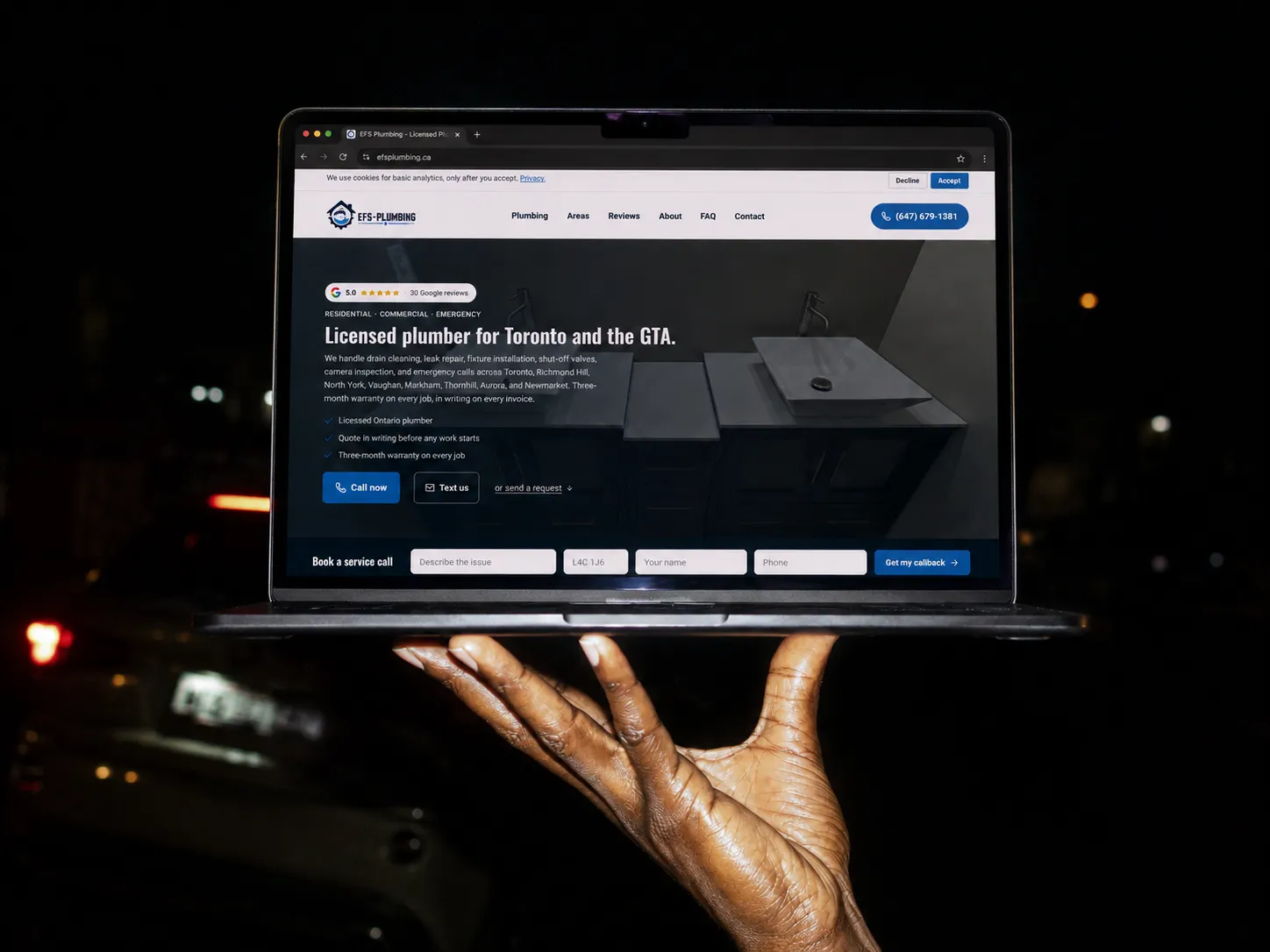
380 contractor sites graded on the public CRO Index
Fervor Contractor CRO Index 2026A grade out of 380 contractor sites
We graded 380 of them against one framework. Exactly one earned an A: Crown Industrial Roofing in Toronto, at 90 out of 100. The rest left money on the table. Here is what separates the top from the bottom.
The local detail
Every angle below comes from how Los Angeles actually searches, buys, and regulates — built into the page, not bolted on.
Almost every plumbing search in this city happens on a phone.
There is one thing plumbing sites get wrong over and over.
A homeowner letting a stranger into their house during an emergency is nervous, and rightly so.
Once the homepage earns the call, your service pages do the rest of the work.
You have been burned before.
There is a real line between a site that books jobs and the pretty brochure that wasted your money last time.
You are running crews, writing estimates, and answering the phone.
You run a plumbing shop somewhere across this sprawl, maybe out of a yard in the Valley or a unit near Glendale, and your website was built years ago by a cousin or a cheap template service. So when a homeowner in Santa Monica finds you on their phone at 9pm, they squint at tiny text, hunt for your number, and bail. That is the gap good plumbing web design Los Angeles closes. The right build puts a fast, clean site in front of that homeowner with a tap-to-call button right there, so they dial you instead of the next shop down the list. That is the whole game, and it happens on a four-inch screen.
Almost every plumbing search in this city happens on a phone. Somebody in Echo Park is standing in a flooded kitchen, water creeping toward the cabinets, and they are thumbing through Google one-handed while holding a towel with the other. They are not on a laptop. They are not patient.
So your site has to load before that homeowner gives up. A page that takes five seconds on a cell connection in a Pasadena dead zone is a page nobody sees. And the layout has to work thumb-first, with a number they can tap without pinching and zooming.
LA makes this harder than most markets. Your service area stretches from the coast to the foothills, and a homeowner in Brentwood and one in Highland Park live in different worlds even though you serve both. Your site has to feel local to each of them, not like one flat "we cover Los Angeles" banner that says nothing.
And this is an image-conscious town. People here notice a dated site the way they notice a dented truck. A clean, current design signals a shop that runs clean, current jobs. A clunky one signals the opposite before you say a word.

A homeowner waits two seconds, maybe three, then hits back. Your site has to render fast on a phone, not just on the office desktop where it looks fine.
Big tap targets, readable text, and a call button that sits within thumb reach. If they have to zoom to find your number, you already lost the call.
Naming the Westside, the Valley, and Pasadena tells a homeowner you actually work their streets. Generic copy reads like a national chain nobody trusts.
A current, tidy site signals a current, tidy shop. In a market this style-aware, the look does quiet sales work before the homeowner reads a single line.
There is one thing plumbing sites get wrong over and over. They bury the phone number in a header that scrolls away, or they hide it behind a "Contact" tab that takes two taps to reach. And every extra tap costs you calls.
A homeowner in a panic over a slab leak does not want a form, a chatbot, or a maze. They want to press one button and hear a human. So the site keeps a sticky tap-to-call bar pinned to the bottom of the screen, visible the whole time they scroll. One thumb, one tap, a ringing phone.
"Among homeowners who made improvements, 32% upgraded their water heaters, dishwashers, or garbage disposals." - U.S. Census Bureau and U.S. Department of Housing and Urban Development (2024)
That number tells you something useful. A third of improvement spending touches the exact systems you service, so the calls are out there. Your site either catches them at the tap or hands them to whoever made calling easier.
The number rides along as the homeowner scrolls. It never disappears into a collapsed menu they have to dig for.
Not every job is a 2am burst pipe. A homeowner planning a water-heater swap in Encino wants to book a Tuesday slot without a phone call, so a short form catches that work too.
Plenty of homeowners under forty would rather text than talk. A click-to-text option meets them where they already live, and it captures the call you would otherwise miss.

A homeowner letting a stranger into their house during an emergency is nervous, and rightly so. So your site has about ten seconds to prove you are real, licensed, and not going to make the flood worse.
The fastest trust signal is your reviews, near the top, with the count visible. And an LA homeowner scrolling three plumbers picks the one with 240 reviews over the one with nine almost every time. After that comes proof you are legitimate: your California State License Board number, your insurance, and a face. People here want to see the person who is coming over.
"The median homeowner spending on plumbing fixtures upgrades was about $800 (2021 to 2023 data)." - U.S. Census Bureau and U.S. Department of Housing and Urban Development (2024)
So an $800 fixture job is a fine day, but the homeowner only books it if your site cleared their nerves first. Trust is what turns a visitor into a caller, and it has to load above the fold.
Real reviews with the total visible do more selling than any headline you could write. Bury them and you waste your best asset.
Your CSLB number and proof of insurance, right where a cautious homeowner looks. It answers the question they are too polite to ask.
A picture of your crew under a Glendale sink beats a stock photo of a smiling model every time. Homeowners trust a site that looks lived-in over one full of polished filler.
Naming Culver City, Eagle Rock, and Studio City tells a homeowner you cover their street by name. Vague coverage makes them wonder if you will even pick up.
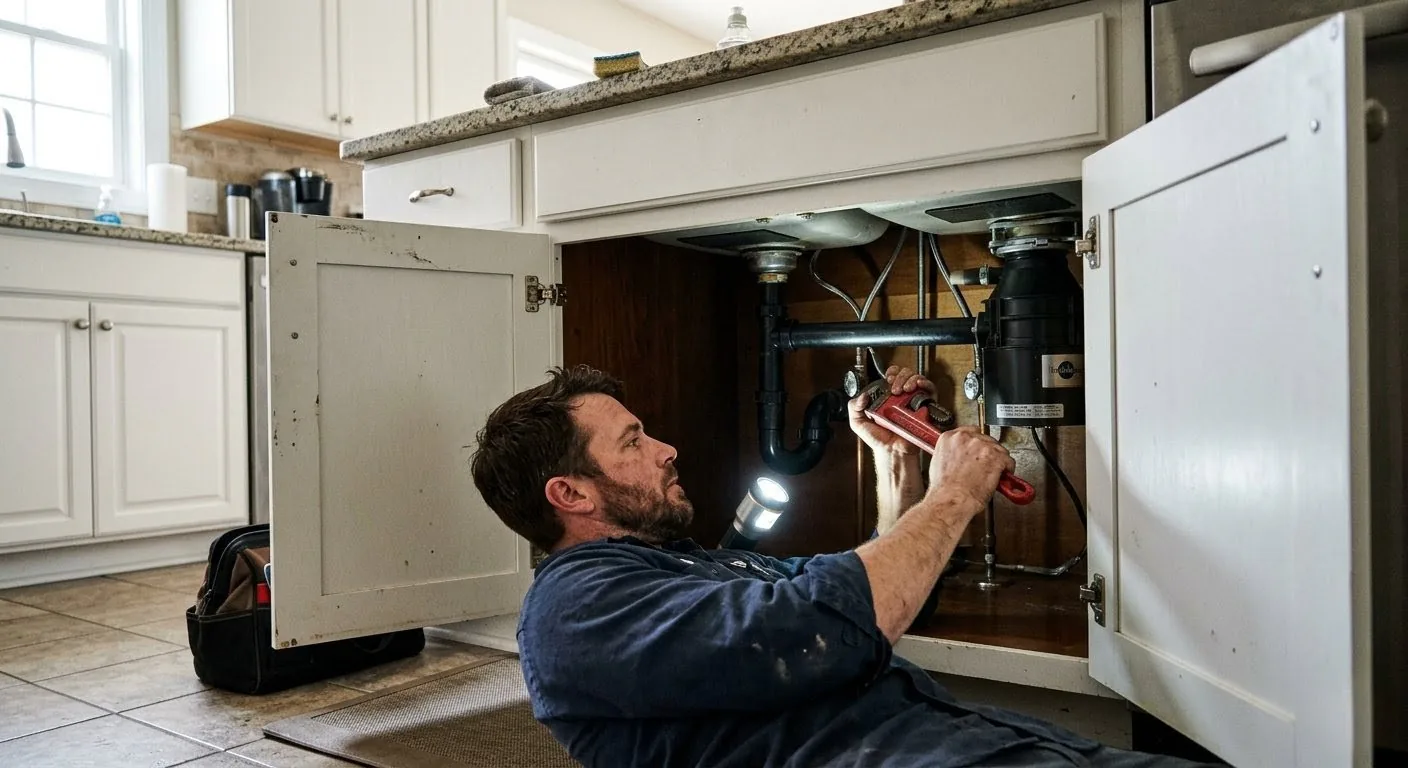
Once the homepage earns the call, your service pages do the rest of the work. And the mistake nearly every plumbing shop makes is one "Services" page that lists everything in a wall of text nobody reads.
A homeowner with a slab leak does not browse a menu. They land, they want to know you handle exactly their problem, and they want the call button. So the fix is separate, focused pages. Slab leak detection gets its own page. Sewer-lateral replacement gets another. Repiping a mid-century home gets a third. Each one speaks to that specific homeowner and ends with a way to reach you.
"In U.S. single-family homes (2020), 40% of main water heaters were fueled by natural gas and 31% by electricity." - U.S. Energy Information Administration (EIA) (2020)
That split matters for your pages. Plenty of LA homes run gas heaters that owners now want to swap, so a clear page on electric and heat-pump conversions catches a homeowner already weighing the switch.
"Only 5.8% of U.S. single-family homes had tankless water heaters in 2020." - U.S. Energy Information Administration (EIA) (2020)
And tankless is wide open. Almost nobody has one yet, and LA's hard water pushes homeowners toward it, so a dedicated tankless page in Studio City catches a high-ticket job your competitors never show. This is where strong plumbing web design services Los Angeles owners invest in really pay off.
Slab leaks, repipes, and sewer laterals each get their own page built around what that homeowner needs to see and tap.
Pages for the Westside, the Valley, and Pasadena, each speaking to that area's older housing and code reality, read like you know the streets.
A homeowner deciding on a repipe wants a sense of scope before they call. Job photos and a plain explanation of what the work involves move them toward the button.
You have been burned before. Some agency built you a pretty site, charged for a year of "management," and your phone never rang any more than it had. So when you weigh a plumbing web design company Los Angeles options against each other, the only thing that matters is whether the site books more jobs.
The math is not complicated. So picture your site getting 800 visits a month while only 12 of those people call. That is a 1.5% conversion. A site built to load fast, surface the number, and clear trust fast can push that to 4% or 5% without a single extra visitor. So the same 800 visits become 32 to 40 calls. If you close half, and your average job runs $450 with a repipe near $9,000, you can run the numbers yourself. That jump is paid for in a couple of jobs.
"Mechanical system retrofits part of the $149B housing deficiency market" - Harvard Joint Center for Housing Studies (2025)
That figure is the backdrop for why this demand holds. Older homes across the country, and LA has a huge share of them, carry deferred plumbing work that eventually becomes a search, a tap, and a job.
"Mechanical sentiment contributed to a Current Conditions Index of 71 in 2025" - National Association of Home Builders (2026)
And remodeling sentiment staying strong means the project work behind your bigger jobs is not falling off, so the homeowners planning kitchen and bath updates keep generating the calls a sharp site converts.
Tracked calls show which pages turn into real conversations. A report full of bounce rates and impressions hides what pays your crew.
The number that matters is how many visitors became callers. Reporting should start there and work backward to the page that did it.
You own the site, the domain, the content, and the booking setup. An agency that holds those hostage is the trap you already know.
There is a real line between a site that books jobs and the pretty brochure that wasted your money last time. It runs through one question. Does the shop building your site understand plumbing in this specific city, or are they dropping your logo into the same template they sold a dentist in Ohio?
The best plumbing web design Los Angeles work is built around your actual jobs, your actual neighbourhoods, and the actual way an anxious LA homeowner decides on a phone. That is the difference between a vendor and a partner. A good plumbing web design agency owners trust here starts with your calls, not a theme they bought.
"1.9% easing of mechanical renovation growth projected for Q3 2026" - Harvard Joint Center for Housing Studies (2025)
That modest cooling is worth knowing. Growth slowing slightly means the cheap paid leads dry up first, and the shops with a site that converts on its own hold their ground while competitors leaning on ads feel the squeeze.
"Mechanical equipment remains difficult to source for remodelers in 2025" - National Association of Home Builders (2025)
And supply constraints like that shape your content. When equipment is hard to source, the homeowner who plans ahead wins, so a page that explains the timeline positions you as the shop that knows the terrain.
| What you are comparing | Generic template site | Plumbing web design built for LA |
|---|---|---|
| Mobile speed | Loads slow, looks fine on desktop | Sub-two-second load on a phone |
| Call to action | Number buried in a menu | Sticky tap-to-call, always visible |
| Service pages | One catch-all "Services" page | A page per job, built per neighbourhood |
| Trust signals | Stock photos, no license shown | Real LA job photos, CSLB number, reviews up top |
| Reporting | Page views and bounce rate | Tracked calls and booked jobs |
| Ownership | Agency keeps the assets | You own the site, domain, and booking |
The site reflects what you really sell, whether that is slab leaks, repipes, or sewer laterals, instead of a layout built for nobody in particular.
The Valley searches differently than the Westside. The pages, photos, and copy reflect that.
Every asset stays yours. That single rule rules out most of the vendors who burned you.
You are running crews, writing estimates, and answering the phone. So any version of this that demands hours of your week is dead on arrival, and you know it. Good plumbing web design Los Angeles for plumbers is built so the work happens around you, not on top of you.
The setup is front-loaded. There is one intake where the build team learns your jobs, your neighbourhoods, and your numbers. After that, the design, the pages, the call setup, and the speed work get built without you babysitting them. And the reporting comes to you in plain language, tied to calls and jobs, so you can read it in five minutes between truck rolls.
Worth naming the timeline too, because contractors get burned by agencies that vanish after launch. A focused build tends to go live in weeks, not the open-ended months other shops quote you. The mobile speed, the sticky call button, and the trust signals start working the day the site ships. Your neighbourhood and service pages keep getting added after that, compounding as more homeowners find them. And because the assets are yours, the site you build keeps paying even if you ever walk away. That ownership is the whole point. You end up owning a storefront on the phone that stays put, the same way you own your trucks and your tools.
If you want to see where your current site is leaking calls before committing to anything, start with a free Site Inspection. It shows you exactly where homeowners drop off. And if you want to ballpark the revenue you are losing to a weak site, the Lead Leak Calculator does that math for you.
For the bigger picture on how the pieces fit, the plumbing SEO guide covers getting found in the first place, and the local SEO for plumbers guide goes deep on the map pack that feeds your traffic.
It starts with one focused conversation about your jobs and your service area. After that, the build runs without eating your week.
You get calls and booked jobs in plain language. There is no dashboard archaeology required to make sense of it.
A free Site Inspection shows your current leaks. The calculator shows the dollars. Then you decide.
The evidence
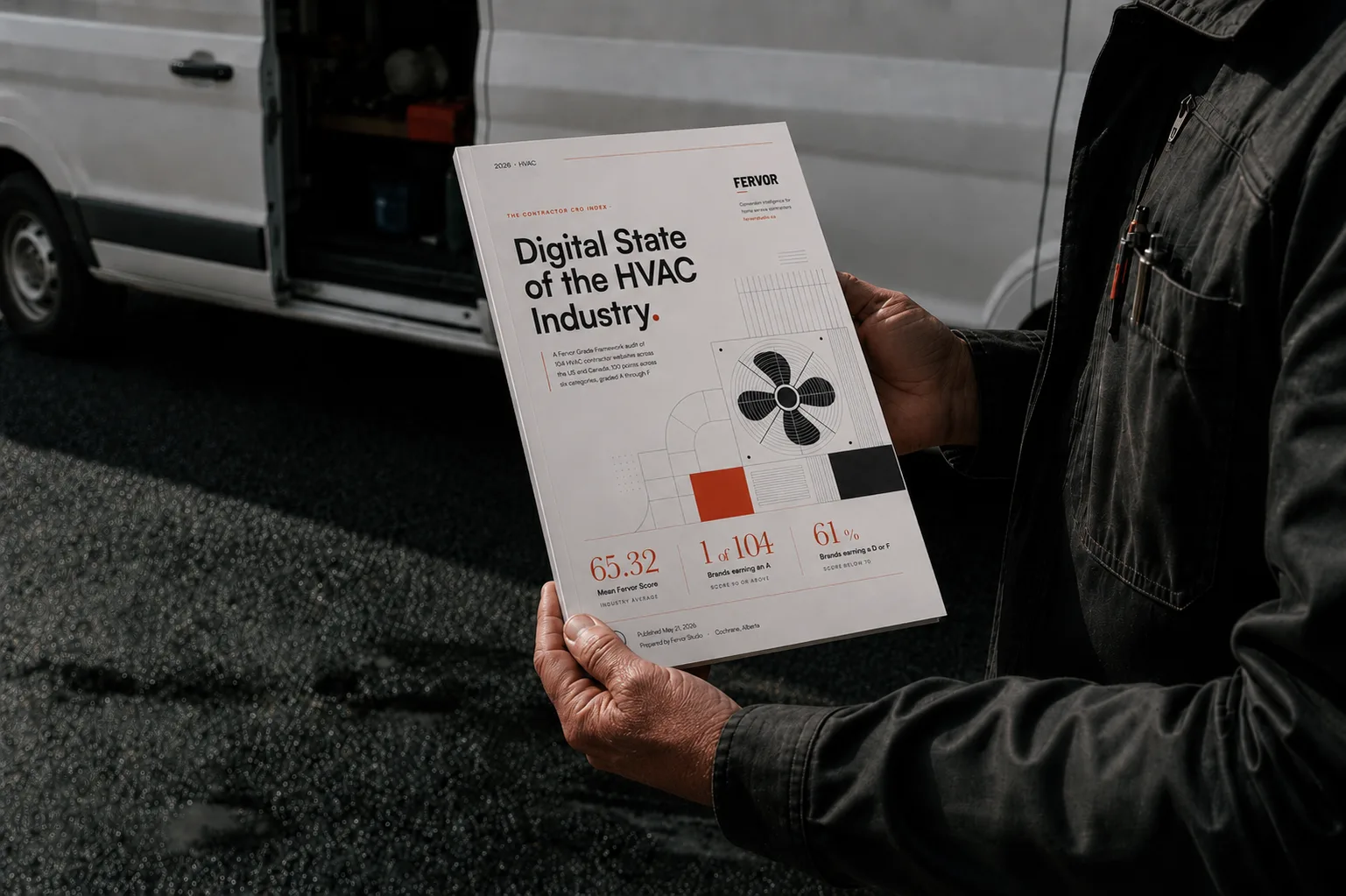 Read the full report →
 0
contractor sites graded, one A
Across the whole CRO Index, a single site earned an A. The median landed at a D. The grade gap is a conversion gap.
0
contractor sites across the State of the Industry research
Roofing, remodeling, and HVAC, scored page by page against one framework.
Two ways to start
Tell us where you are. We point you at the right next step — no sales call to get there.
Client review
“Nay did an amazing job, you know. He was really patient. He got the work done the way I told him and he was just on point with the website. Pretty straightforward process. No going around the bush. He just did amazing work and I would 100% recommend.”
How Fervor can help
Complete website system built to convert storm leads, planned projects, and research-phase homeowners into booked jobs.
Identify and patch the top conversion killers on your existing site. No full rebuild needed.
Monthly SEO, content, and CRO. Fixed deliverables. No credits, no rollover. The compound growth engine.
GBP optimization, citation building, and review system foundation. The infrastructure that gets you into the Map Pack.
One conversion-built landing page for the referrals, paid clicks, and cold-call leads you send. They land on a page built to book them, not your generic homepage.
Your move
Tell us where you are. We point you at the right next step — no sales call to get there.
Keep going