0
contractor sites graded, one A
Across the whole CRO Index, a single site earned an A. The median landed at a D. The grade gap is a conversion gap.
You're getting clicks in Kansas City. They're just not calling. We rebuild your site around the one job that matters: turning a visitor into a booked job.
Starts with a Site Inspection, so you see the plan before any build begins.
“Patient, on point, straightforward. Did amazing work. Would 100% recommend.” — Ruben Mederos, HyperTemp HVAC
“Responsive, creative, exceeded expectations. Already seeing greater engagement from our clients.” — George Jeorgy, Jeorgy's Landscape Construction
“Top-tier professionalism, real web design expertise, ideas I hadn't considered. Confidently recommend.” — Aws Nassani, Four Eleven Contracting



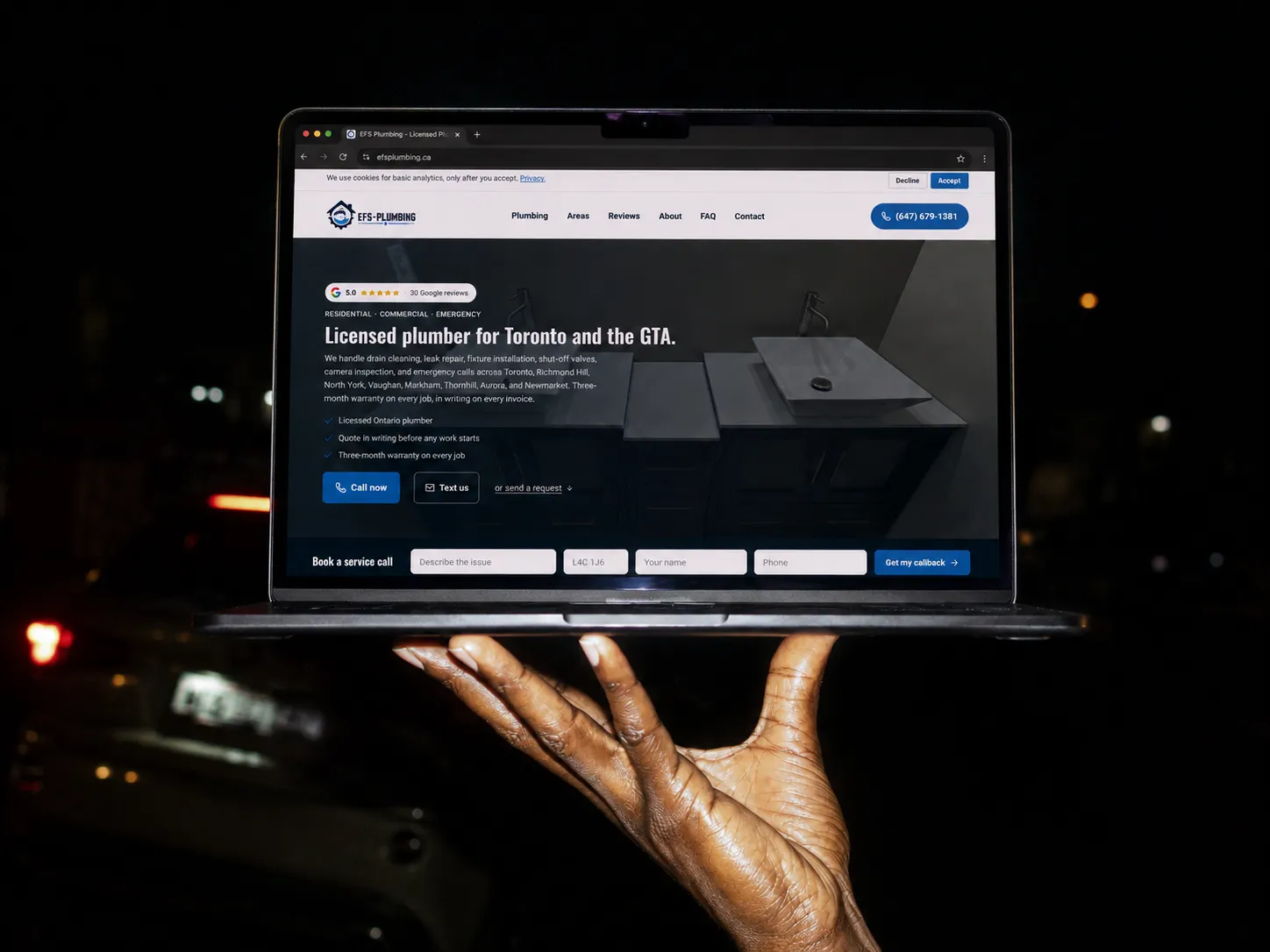
380 contractor sites graded on the public CRO Index
Fervor Contractor CRO Index 2026A grade out of 380 contractor sites
We graded 380 of them against one framework. Exactly one earned an A: Crown Industrial Roofing in Toronto, at 90 out of 100. The rest left money on the table. Here is what separates the top from the bottom.
The local detail
Every angle below comes from how Kansas City actually searches, buys, and regulates — built into the page, not bolted on.
This metro is not a generic market, and a generic template will not book jobs in it.
So you are vetting vendors, and you are right to be careful.
Here is the wrinkle every out-of-town designer misses.
You can tour a dozen plumber sites across the metro and the winners share a homepage pattern.
The Midwest winter is your busiest week of the year, and a site that crashes the morning the temperature drops to nine degrees costs more than the build itself.
You run a real plumbing shop across the metro, with a couple of trucks, a crew or two, and a calendar that swings hard between a freeze-week January and a thin August stretch. And the homeowner who used to dial a sticker on the fridge now stands in a wet basement and picks the first plumber whose site loads and shows a real click-to-call button. So this page is about plumbing web design Kansas City, specifically, for the owner weighing a vendor against the last one that built a slow template site and disappeared. We will walk the mobile experience, the two-state trust signals, and the dollar math behind the build.
This metro is not a generic market, and a generic template will not book jobs in it. The way a homeowner in Brookside picks a plumber on a phone in a flooded basement at 9pm is not the way they pick a contractor for a Saturday remodel. So any site worth paying for starts with the phone, not the desktop mock-up.
Your buyer is standing in water, holding a phone with the flashlight still on, and tapping the first three plumber results on the Google map. So the site that opens in under two seconds, drops a sticky call button in the thumb zone, and shows your Missouri or Kansas phone number above the fold wins the call. A vendor who hands you a desktop-first template with a hero carousel and four-megabyte slider photos has built you a brochure for a tradeshow you are not at. Your homepage should answer three questions before the first scroll, which are what you do, where you work, and how to reach you right now.
A mobile build that loads in under two seconds on a 4G connection out by Lee's Summit will outbook a prettier site that takes six. Because the homeowner with a backed-up main does not wait for your loader animation. So the build avoids hero video, drops the heavy slider, compresses photos to webp, and serves the click-to-call in HTML before any script runs.
"Among homeowners who made improvements, 32% upgraded their water heaters, dishwashers, or garbage disposals." - U.S. Census Bureau and U.S. Department of Housing and Urban Development (2024)
Nearly a third of improving homeowners touch the exact fixtures you install. So the site needs a dedicated water heater page, a fixture-upgrade page, and a clear path from each to a booked estimate. A flat services-blob page hides that work under a single button and loses the click.

So you are vetting vendors, and you are right to be careful. You have heard the pitches before, and you can spot a slide deck full of stock photos at fifty feet. Good plumbing web design services Kansas City plumbers can trust start with the booking experience, because the homepage is judged on whether it turns a Westport homeowner into a calendar slot.
Your homepage gets one sticky click-to-call in the thumb zone, a clear service-area block naming the metro by neighborhood, and a real photo of your truck and crew above the form. Your service pages get one page per money job, including drain cleaning, water heater replacement, cast-iron and galvanized line repair, sump pumps, and emergency frozen-pipe service, each with its own H1, photo set, and booking form. And your trust block gets your Missouri and Kansas license numbers, your years in business, and the Google review average pulled live from the Business Profile rather than retyped as a brag.
Your form asks for the address first, the problem second, and the contact details last, because the homeowner is happiest naming the leak before naming themselves. So it stays four fields long, opens the phone keypad for the phone number, and ships a confirmation text the moment they submit. And the form lives on every service page and the bottom of the homepage. A site with the form buried on a contact page loses the booking the moment the visitor has to tap an extra menu.
"The median homeowner spending on plumbing fixtures upgrades was about $800 (2021 to 2023 data)." - U.S. Census Bureau and U.S. Department of Housing and Urban Development (2024)
So an $800 median ticket is real money, and the page that wins the click for a fixture upgrade earns a job worth roughly twenty hours of phone work. The math is why the build is worth doing properly.

Here is the wrinkle every out-of-town designer misses. The metro straddles Missouri and Kansas, so a homeowner in Independence and one in Overland Park live twenty minutes apart in two different states, with different counties, different permit rules, and different license numbers on your card. Your site has to draw a service area across that line without confusing the visitor about whether you cover their address.
A vendor that knows the metro builds one site with two service-area sections, one for the Missouri side and one for Johnson County, and lists the neighborhoods locals name themselves. So the Missouri side names Brookside, Waldo, Hyde Park, Westport, the Plaza, Northland, and Independence. And the Kansas side names Overland Park, Olathe, Leawood, Lenexa, Mission, and Prairie Village. A homeowner in Mission has to see Mission on the page, or they bounce back to the map and try the next result.
Your Missouri master plumber license sits in the footer, beside the Kansas license, beside the BBB seal, beside the years in business. Because a homeowner in Leawood paying for a water heater install reads that footer once before they call, and the absence of a license number reads as a flag. So the site that surfaces both license numbers, both state seals, and an honest service-area map earns the call from the homeowner who would otherwise have dialed the next plumber on the list.
"In U.S. single-family homes (2020), 40% of main water heaters were fueled by natural gas and 31% by electricity." - U.S. Energy Information Administration (EIA) (2020)
So most of the heaters you replace across the metro are gas, and a chunk are electric. Your water heater page should split those by photo, by install timeline, and by gas-line permit note, because the homeowner reading it wants to know the install matches their utility before they call.
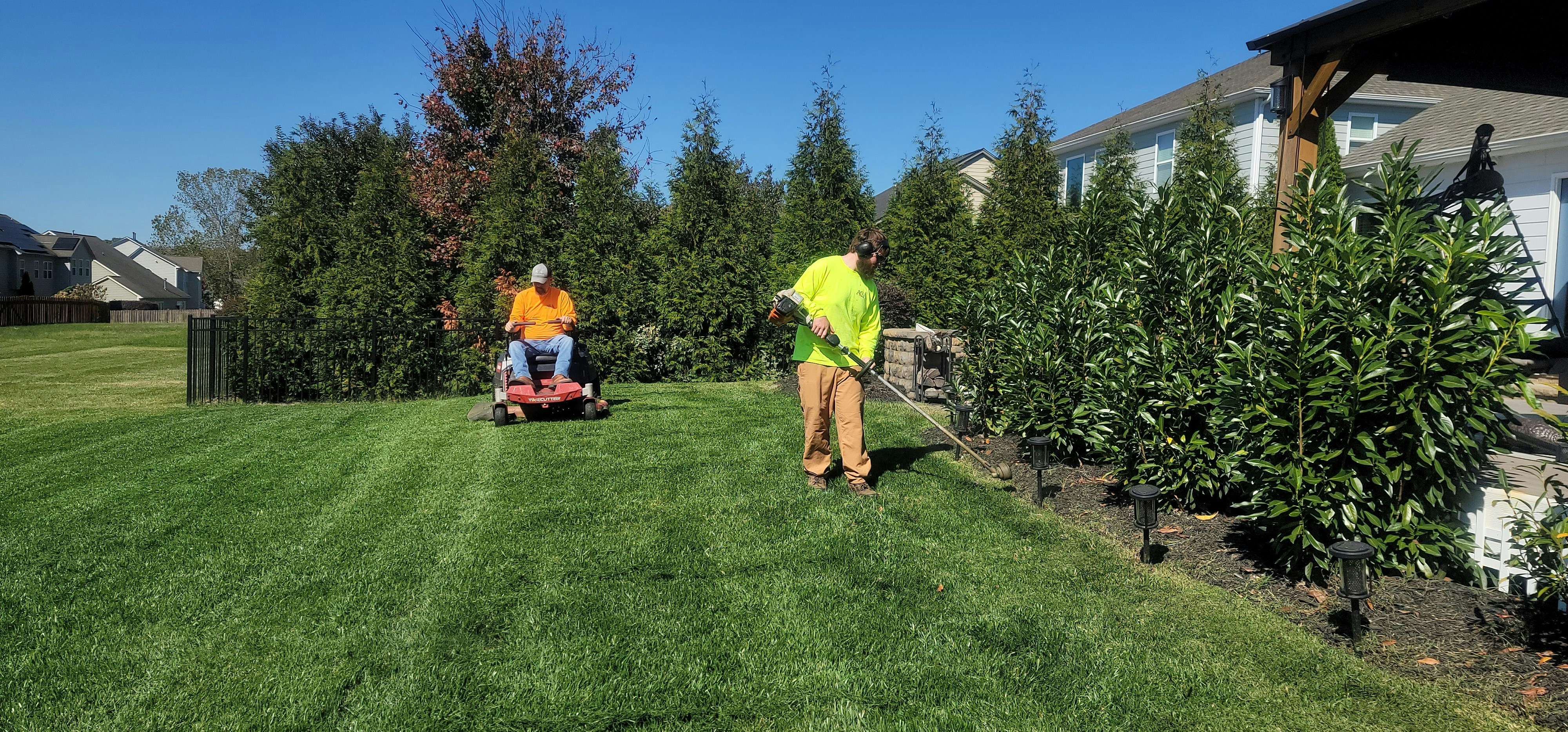
You can tour a dozen plumber sites across the metro and the winners share a homepage pattern. So the homeowner does not have to hunt for the proof, because the proof sits in the first scroll.
A homepage of stock plumber photos reads as a template site, and the Brookside homeowner clicks back to the map. So the build uses photos of your actual trucks parked on the street, your actual crew on a service call, and your actual cast-iron repair in a Waldo crawlspace. And the gallery names the neighborhood in the alt text, because a real photo set is the cheapest trust signal you have.
Your homepage carries the Google review average and the star count, lifted live from the Business Profile through a small embed rather than retyped as a brag. Because a homeowner in Lee's Summit can sniff a fake review block in two seconds, and the live embed proves the count is real. So the build also surfaces the most recent five reviews on a rotating block, each with the reviewer's first name and the neighborhood they wrote from.
"Only 5.8% of U.S. single-family homes had tankless water heaters in 2020." - U.S. Energy Information Administration (EIA) (2020)
Tankless is still rare across the metro, which is your opening. A dedicated tankless page that walks the install difference, the gas-line note, and the rebate path will outbook a generic water heater page for the homeowner doing the upgrade research.
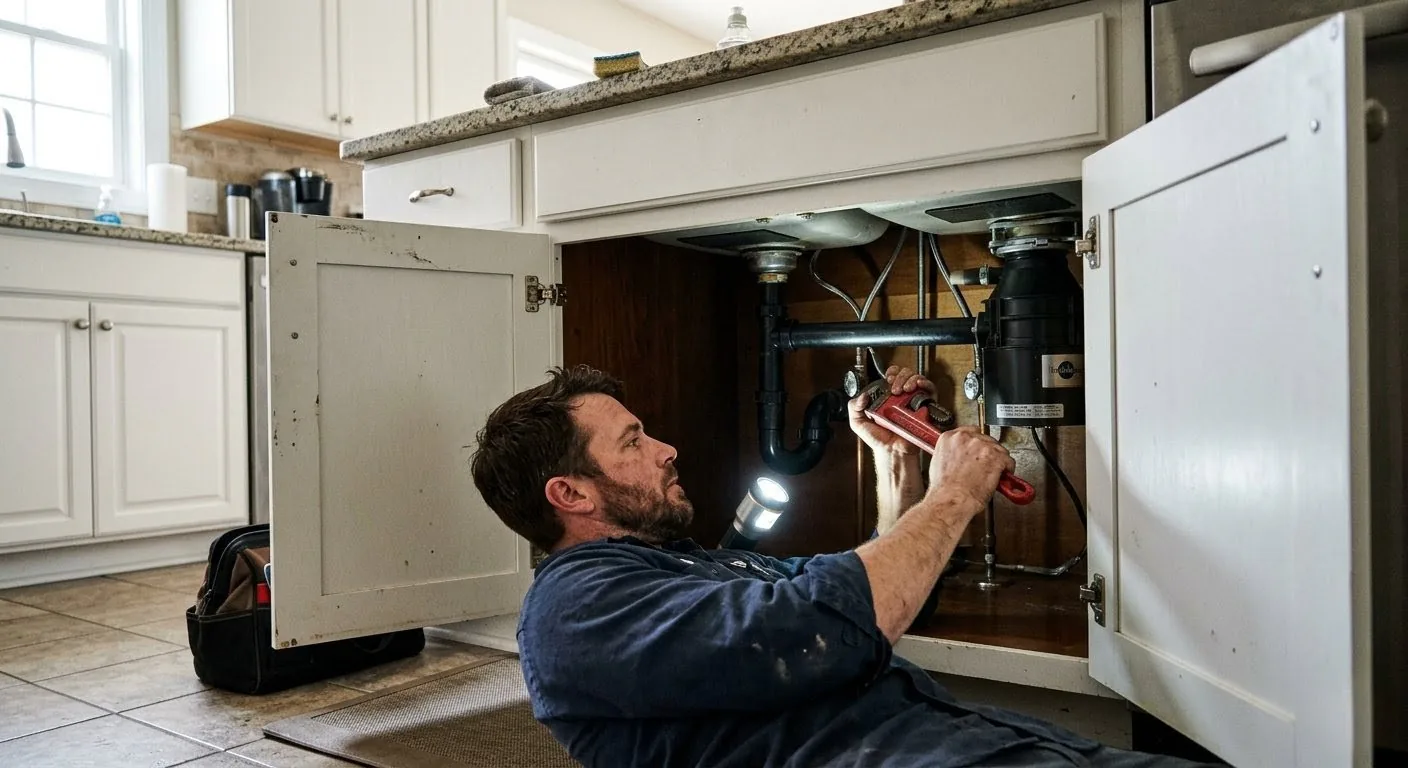
The Midwest winter is your busiest week of the year, and a site that crashes the morning the temperature drops to nine degrees costs more than the build itself. So an agency that knows the metro load-tests the site against the freeze-week traffic spike before the first cold front.
The homeowner whose pipes burst at 7am does not have time to dig through your blog. So the site keeps a permanent frozen-pipe service page, with a one-tap call button, the average response time, the after-hours rate, and a short list of what to do while they wait. And the page stays live in July, indexed and ready, because the search volume spikes the first cold morning and the page that has been ranking since spring catches that wave.
You also keep a permanent basement-backup page, a sump-pump replacement page, and a sewer-line repair page, each named for the storm-season demand the metro creates. Because the homeowner standing in three inches of basement water after a Westport thunderstorm types "basement backup plumber" and clicks whichever page surfaces with a real call button. So the site that holds all three permanent pages, each crawled and ranked, beats the one that scrambled to publish them after the storm.
"1.9% easing of mechanical renovation growth projected for Q3 2026" - Harvard Joint Center for Housing Studies (2025)
Growth is still real but tighter than last year, so the site that converts the visitors you already pay for earns more than one that just hopes for a bigger top of funnel. The build pays for itself on conversion, not on traffic.
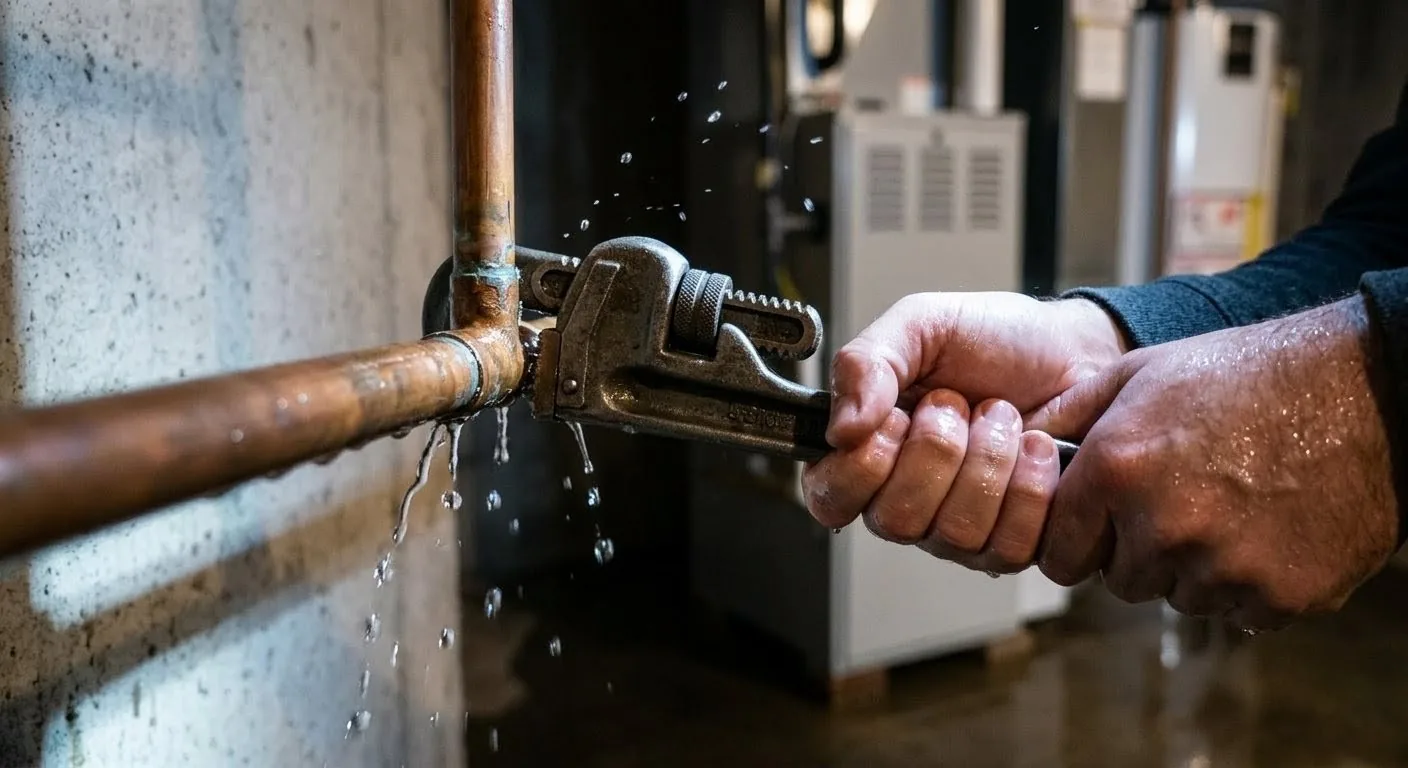
So the question every owner asks last is the dollar question, which is whether the build pays back. The honest answer depends on your average ticket and your close rate, but the math is not mysterious. The best plumbing web design Kansas City projects pay for themselves on a couple of extra booked jobs a month.
A site that earns ten extra booked jobs a month against an $800 median ticket adds $8,000 a month in tracked revenue. So a one-time build in the $9,997 to $12,997 range pays back inside the first six weeks, and the ongoing returns belong to the shop owner. A vendor who sells you a $399-a-month template hosting plan on a site you do not own is leasing you the storefront. You should own the storefront.
The domain is in your name, the code lives in a repo you own, and the Google Business Profile, hosting account, and review platform are tied to your email. Because a site you do not control is a site the vendor can hold hostage the day you switch providers. So the contract you sign should list every credential and transfer them on day one, and the off-boarding clause should be plain English rather than buried in legalese.
"Mechanical sentiment contributed to a Current Conditions Index of 71 in 2025" - National Association of Home Builders (2026)
So contractor sentiment is still strong heading into the year, and the shops investing in conversion potential are the ones taking share. The agency that has worked plumbing web design Kansas City for plumbers across the metro should walk you through the build pay-back math before you sign.
"Mechanical equipment remains difficult to source for remodelers in 2025" - National Association of Home Builders (2025)
Parts are still tight, so your site should set realistic install timelines on every service page and avoid promising next-day on jobs that cannot ship that fast.
"Mechanical system retrofits part of the $149B housing deficiency market" - Harvard Joint Center for Housing Studies (2025)
So the retrofit market is enormous, and a heavy slice sits in the century-old housing across the Missouri-side neighborhoods you already serve.
For the broader engine behind the build, see plumbing SEO and local SEO for plumbers. For the full contractor playbook, the home services hub walks the rest.
The evidence
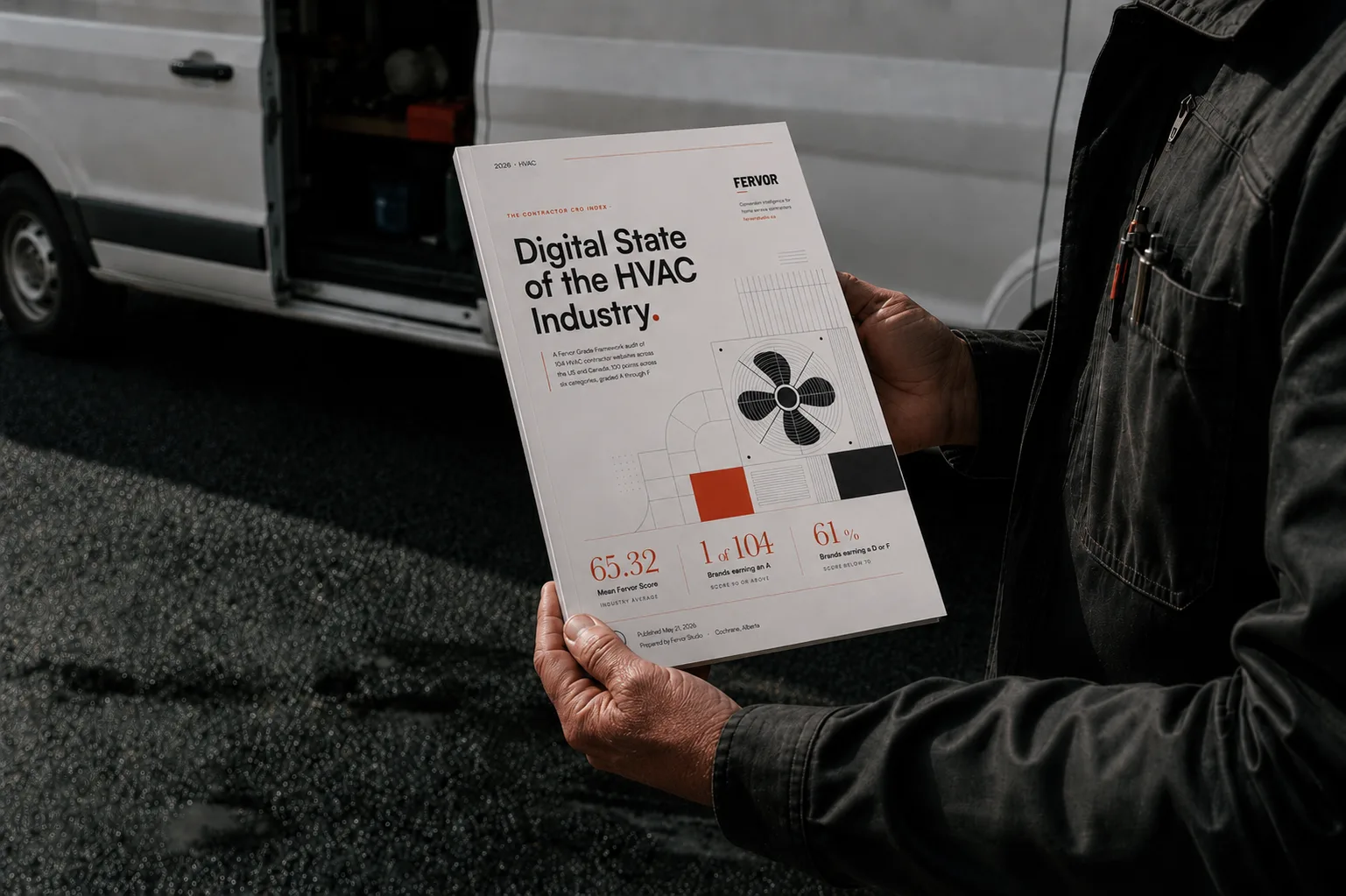 Read the full report →
 0
contractor sites graded, one A
Across the whole CRO Index, a single site earned an A. The median landed at a D. The grade gap is a conversion gap.
0
contractor sites across the State of the Industry research
Roofing, remodeling, and HVAC, scored page by page against one framework.
Two ways to start
Tell us where you are. We point you at the right next step — no sales call to get there.
Client review
“Nay did an amazing job, you know. He was really patient. He got the work done the way I told him and he was just on point with the website. Pretty straightforward process. No going around the bush. He just did amazing work and I would 100% recommend.”
How Fervor can help
Complete website system built to convert storm leads, planned projects, and research-phase homeowners into booked jobs.
Identify and patch the top conversion killers on your existing site. No full rebuild needed.
Monthly SEO, content, and CRO. Fixed deliverables. No credits, no rollover. The compound growth engine.
GBP optimization, citation building, and review system foundation. The infrastructure that gets you into the Map Pack.
One conversion-built landing page for the referrals, paid clicks, and cold-call leads you send. They land on a page built to book them, not your generic homepage.
Your move
Tell us where you are. We point you at the right next step — no sales call to get there.
Keep going