0
contractor sites graded, one A
Across the whole CRO Index, a single site earned an A. The median landed at a D. The grade gap is a conversion gap.
You're getting clicks in Houston. They're just not calling. We rebuild your site around the one job that matters: turning a visitor into a booked job.
Starts with a Site Inspection, so you see the plan before any build begins.
“Patient, on point, straightforward. Did amazing work. Would 100% recommend.” — Ruben Mederos, HyperTemp HVAC
“Responsive, creative, exceeded expectations. Already seeing greater engagement from our clients.” — George Jeorgy, Jeorgy's Landscape Construction
“Top-tier professionalism, real web design expertise, ideas I hadn't considered. Confidently recommend.” — Aws Nassani, Four Eleven Contracting



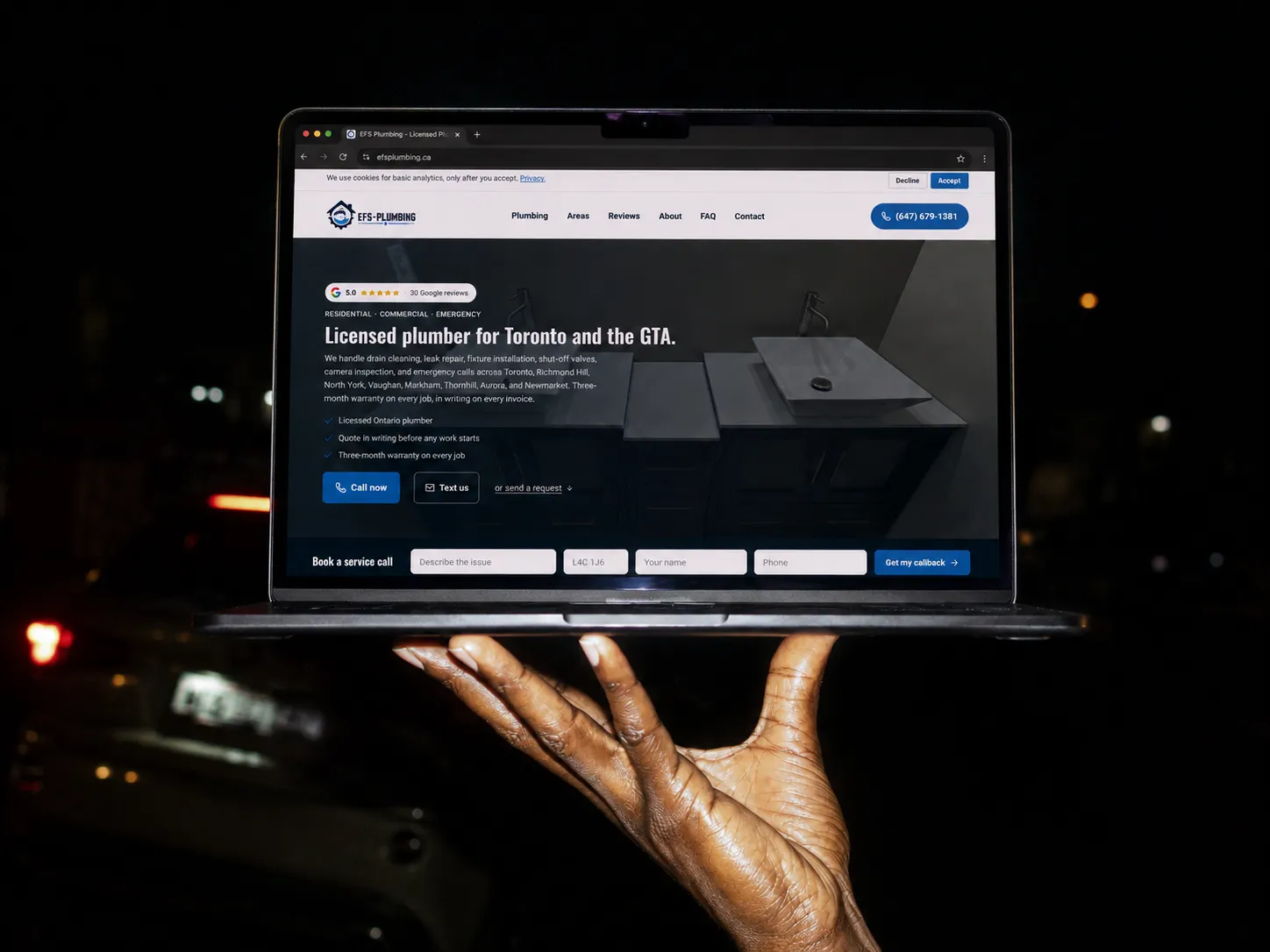
380 contractor sites graded on the public CRO Index
Fervor Contractor CRO Index 2026A grade out of 380 contractor sites
We graded 380 of them against one framework. Exactly one earned an A: Crown Industrial Roofing in Toronto, at 90 out of 100. The rest left money on the table. Here is what separates the top from the bottom.
The local detail
Every angle below comes from how Houston actually searches, buys, and regulates — built into the page, not bolted on.
Houston homeowners search on their phones, and they search under stress.
Speed is not a vanity metric for your shop.
This is where most plumbing sites quietly leak money.
A homeowner in Sugar Land is about to let a stranger into their house to cut into a wall.
One flat "we do plumbing" page ranks nowhere and books little.
Houston floods, and it floods hard.
So you are weighing the cost of a real site against the agency that took a retainer and vanished.
So what separates a site that books from a site that just sits there?
You run a real shop in this city, and you already know the call comes at the worst possible hour. A homeowner in Bellaire hears water running with every tap shut off, and they grab their phone at 11 at night to find a plumber right now. So your website has about three seconds to load, show a number, and let them tap it. That is the whole game, and it is what good plumbing web design in Houston is built to win. Because a Houston plumbing web design that makes a panicked homeowner pinch, zoom, and hunt for your number is a site that quietly hands the job to the shop down the road.
Houston homeowners search on their phones, and they search under stress. Nobody opens a laptop when a supply line burst under the kitchen sink. So if your site looks fine on the desktop you built it on but cramps on a six-inch screen, you are losing the exact buyer you most want to catch.
And mobile-first is not a style choice here. It is the order you build in. You design for the small screen first, then scale up, because that is where the slab-leak call and the storm-backup call happen. The number sits at the top. The tap target is big enough for a thumb. The hero text answers one question fast: do you fix this, and how soon can you get here.
"Among homeowners who made improvements, 32% upgraded their water heaters, dishwashers, or garbage disposals." - U.S. Census Bureau and U.S. Department of Housing and Urban Development (2024)
So nearly a third of improving homeowners touch the exact appliances you install, and a lot of them start that journey on a phone. Your site has to greet that visitor with a clean, fast, thumb-friendly path to a booked job. And when it does not, the visit is just a bounce that cost you nothing to earn and everything to lose.

Speed is not a vanity metric for your shop. It is the moment a stressed homeowner decides whether you look reliable or look broken. A site that takes five seconds to paint on a phone over a spotty signal in a flooded Meyerland neighborhood tells that homeowner you might not show up either. So you lose them before they ever see your reviews.
And the fixes are not mysterious. Compressed images instead of giant uploads. A clean code base instead of a bloated theme stacked with plugins. Fonts and scripts that load without blocking the screen. Because every second you shave off the load is a homeowner who waits long enough to see your call button.
Here is the part owners underrate. The same speed that keeps a panicked buyer from bouncing also helps you show up at all, since Google leans on mobile load times when it decides which sites to surface for a local search. So the site that loads in under two seconds earns the visit and keeps it. That is two wins from one build choice, and it is the cheapest one you will make.
"The median homeowner spending on plumbing fixtures upgrades was about $800 (2021 to 2023 data)." - U.S. Census Bureau and U.S. Department of Housing and Urban Development (2024)
So an 800-dollar fixture job is the baseline ticket your fast site should be catching, and Houston's hard water keeps that work coming. The minerals in the metro supply chew through fixtures and water heater anodes faster than soft-water cities ever see. And the plumber whose pages load fast enough to explain that damage in plain language is the one who earns the quote.
This is where most plumbing sites quietly leak money. A homeowner lands, they want to call, and the number is buried in a header that scrolls away or hidden three taps deep. So you need a sticky call bar that follows the screen, a number that dials with one tap, and a booking option for the buyer who would rather schedule than talk.
And the booking form is where you either earn the lead or lose it. A 12-field form asking for the homeowner's life story is a form nobody finishes at midnight. So you cut it to the bone: name, phone, address, and what broke. That is enough to call them back and book the truck. Because every extra field is another reason for a tired, frustrated homeowner to close the tab.
"Mechanical equipment remains difficult to source for remodelers in 2025." - National Association of Home Builders (2025)
So when equipment runs tight, the shop that books the homeowner first wins the install, because the one who waits gets stuck behind a backorder. And a booking flow that takes ten seconds, not ten minutes, is how you get to that homeowner before a competitor returns the call. Your site is the difference between a scheduled job and a missed one.
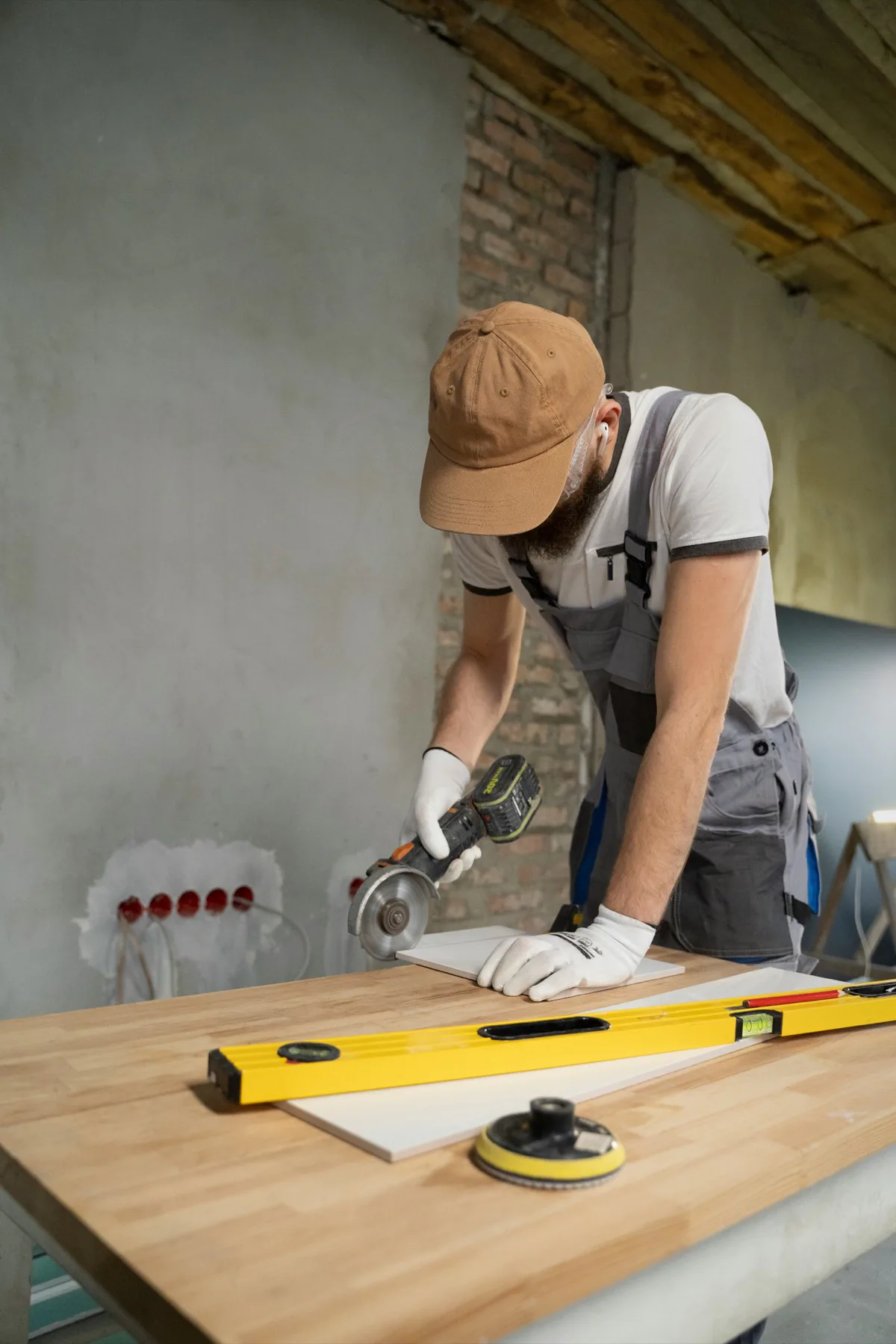
A homeowner in Sugar Land is about to let a stranger into their house to cut into a wall. So before they call, they scan your site for proof you are real, licensed, and not the horror story their neighbor warned them about. And the trust signals that calm that nerve are concrete, not decorative.
Your Texas Master Plumber license number belongs right on the page, because a real license number signals a real shop. Your Google reviews belong near the top, with the star count and a few recent quotes from named Houston neighborhoods. Photos of your own trucks and crews beat stock images every time, since a homeowner can tell the difference between a real Cypress plumber and a smiling model holding a wrench. And a simple service-area map showing you cover the Inner Loop out to Katy tells them you will really drive to them.
"Mechanical sentiment contributed to a Current Conditions Index of 71 in 2025." - National Association of Home Builders (2026)
So homeowner appetite for the bigger plumbing projects holds steady, and the shop whose site reads as trustworthy is the one that captures the repipe and the water heater upgrade, not just the drain snake. Because trust is what turns a 450-dollar service call into a 2,800-dollar install. Your site either earns that trust in the first ten seconds or it does not.
One flat "we do plumbing" page ranks nowhere and books little. So the structure that wins gives each money job its own clear, scannable page written for the homeowner searching that exact problem. A Heights homeowner with old cast iron is not searching for the same thing as a Katy homeowner whose 20-year-old water heater finally quit.
And the build is straightforward once you commit to it. Slab leak detection gets its own page. Sewer line repair gets one. Water heater replacement, repiping, drain cleaning, and backwater-valve installs each earn a page that explains the job, shows a photo, names the neighborhoods you serve, and ends with the same one-tap call. Because a homeowner who lands on a page about their exact problem feels understood, and a homeowner who feels understood picks up the phone.
"In U.S. single-family homes (2020), 40% of main water heaters were fueled by natural gas and 31% by electricity." - U.S. Energy Information Administration (EIA) (2020)
So Texas leans gas, given the state's energy mix, and a large share of your highest-value water heater work lives in gas swaps and the conversations around them. When a Pearland homeowner wonders whether to stay with gas or move to a heat pump unit, the service page that answers in plain terms is the one that gets the appointment. And that page only works if it loads fast and calls easily on the phone they are holding.
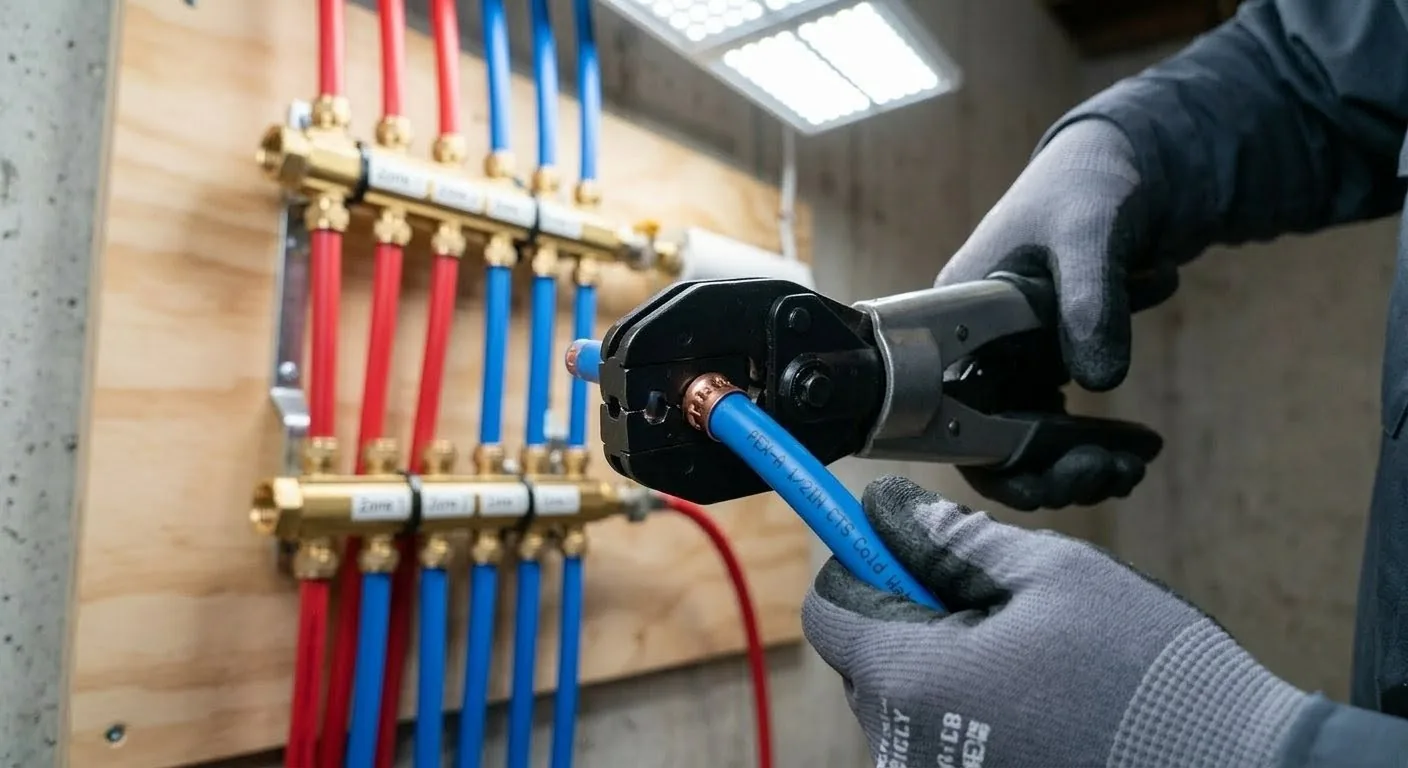
Houston floods, and it floods hard. The aftermath of Hurricane Harvey put sewer backups, sump pump failures, and drainage repair on the search map for years, and every major storm since reruns that spike. So your site has to be ready for the surge before the forecast turns, instead of scrambling after the water is already in the street.
And storm demand is brutally local and brutally time-sensitive. A homeowner in a flood-prone pocket of Braeswood watching their floor drain reverse is not comparing five quotes. They are calling the first crew whose site loads, shows reviews, and dials with one tap. So the web design that pays off in a flood market is the unglamorous kind: a drainage page that already exists, a service-area section that names your flood-zone neighborhoods, and a call button that never scrolls away.
"Mechanical system retrofits part of the $149B housing deficiency market." - Harvard Joint Center for Housing Studies (2025)
So that deficiency figure is the macro picture behind your storm calendar. A huge share of the country's aging housing needs mechanical and plumbing retrofit work, and Houston's older inner-loop stock carries more than its share. And a good plumbing web design company in Houston builds your site so that structural demand reaches your trucks before a national lead-broker skims the call.
So you are weighing the cost of a real site against the agency that took a retainer and vanished. And you are right to be picky, because you have heard "guaranteed number one rankings" before and you know it is the line every scammer opens with. The plumbing web design services Houston plumbers can trust look boring on the surface and ruthless underneath.
The math is the only part that matters to you here. Your site might get 800 visitors a month, and right now three of them call because the number is hard to find and the page is slow. A site built mobile-first, fast, and easy to call might lift that to fifteen or twenty calls from the same traffic. Your average plumbing ticket runs around 450 dollars, and a water heater or repipe lands closer to 2,800. So even a handful of extra booked jobs a month clears the cost of the build several times over inside a single quarter.
"Only 5.8% of U.S. single-family homes had tankless water heaters in 2020." - U.S. Energy Information Administration (EIA) (2020)
So tankless adoption sits low across the country, which tells you the ceiling on that upsell is high. A Houston shop whose site explains tankless clearly captures a job most competitors are not even bidding on. And you can read how we structure the ranking side of all this on our plumbing SEO breakdown.

So what separates a site that books from a site that just sits there? The best plumbing web design Houston plumbers run treats the homeowner's phone as the whole stage. Every choice serves the panicked buyer on a small screen at a bad hour, and nothing on the page exists to impress another web designer.
And the difference shows up in the boring details. The call button never disappears. The booking form is short enough to finish one-handed. The reviews and license number sit where a skeptical homeowner can see them without scrolling. The service pages load in under two seconds even on a flood-zone signal. Because a site that nails those four things outbooks a flashier site that fumbles any one of them.
"1.9% easing of mechanical renovation growth projected for Q3 2026." - Harvard Joint Center for Housing Studies (2025)
So that slight easing ahead is a planning cue, not a warning. You invest in the site now, while the competition for a Houston homeowner's first tap is softer, and you hold that position into the leaner stretch. Because the shop whose site converts best going into a slowdown keeps its trucks moving while others scramble for leads. For the broader picture of how the website and the rankings fit together, our contractor marketing hub lays out the full system, and our local SEO for plumbers page covers the map-pack side.
You want it under two seconds on a mobile connection, because a stressed homeowner on a flooded street will not wait longer than that. So you compress every image, strip the bloated plugins, and stop scripts from blocking the screen. And the payoff is double, since the same speed that keeps the buyer also helps Google surface you for the local search in the first place.
It is the click-to-call button that follows the screen and dials with one tap. A homeowner in Bellaire with a burst line wants to call you in two seconds, not hunt for a number. So if you fix only one thing on your site this month, make the call button impossible to miss and impossible to lose while scrolling.
Yes, for the jobs you most want to book. A homeowner searching slab leak detection trusts a page that names the problem, shows a Houston photo, and explains the fix far more than a generic catch-all. So you build dedicated pages for slab leaks, sewer repair, water heaters, and repiping, rather than diluting one flat page across every job you run.
Walk from anyone guaranteeing number one rankings, locking you into a long contract, or refusing to let you own your domain, content, and hosting. Those are the exact traps that burned the last contractor who signed too fast. So you insist on full asset ownership, plain reporting tied to booked calls, and no lock-in before you sign anything.
The evidence
 Read the full report →
 0
contractor sites graded, one A
Across the whole CRO Index, a single site earned an A. The median landed at a D. The grade gap is a conversion gap.
0
contractor sites across the State of the Industry research
Roofing, remodeling, and HVAC, scored page by page against one framework.
Two ways to start
Tell us where you are. We point you at the right next step — no sales call to get there.
Client review
“Nay did an amazing job, you know. He was really patient. He got the work done the way I told him and he was just on point with the website. Pretty straightforward process. No going around the bush. He just did amazing work and I would 100% recommend.”
How Fervor can help
Complete website system built to convert storm leads, planned projects, and research-phase homeowners into booked jobs.
Identify and patch the top conversion killers on your existing site. No full rebuild needed.
Monthly SEO, content, and CRO. Fixed deliverables. No credits, no rollover. The compound growth engine.
GBP optimization, citation building, and review system foundation. The infrastructure that gets you into the Map Pack.
One conversion-built landing page for the referrals, paid clicks, and cold-call leads you send. They land on a page built to book them, not your generic homepage.
Your move
Tell us where you are. We point you at the right next step — no sales call to get there.
Keep going