0
contractor sites graded, one A
Across the whole CRO Index, a single site earned an A. The median landed at a D. The grade gap is a conversion gap.
You're getting clicks in Hamilton. They're just not calling. We rebuild your site around the one job that matters: turning a visitor into a booked job.
Starts with a Site Inspection, so you see the plan before any build begins.
“Patient, on point, straightforward. Did amazing work. Would 100% recommend.” — Ruben Mederos, HyperTemp HVAC
“Responsive, creative, exceeded expectations. Already seeing greater engagement from our clients.” — George Jeorgy, Jeorgy's Landscape Construction
“Top-tier professionalism, real web design expertise, ideas I hadn't considered. Confidently recommend.” — Aws Nassani, Four Eleven Contracting



380 contractor sites graded on the public CRO Index
Fervor Contractor CRO Index 2026A grade out of 380 contractor sites
We graded 380 of them against one framework. Exactly one earned an A: Crown Industrial Roofing in Toronto, at 90 out of 100. The rest left money on the table. Here is what separates the top from the bottom.
The local detail
Every angle below comes from how Hamilton actually searches, buys, and regulates — built into the page, not bolted on.
A homeowner on the Mountain at midnight is not browsing.
This city is not a generic North American market, and a template a Toronto agency reuses for every plumber from Markham down to Burlington reads false on a…
A serious site runs as a connected set of pieces that feed each other, well past a pretty homepage and a contact form.
A homeowner in panic does not wait three seconds for a hero video to load.
Hamilton homeowners have been burned before.
An agency report is usually a wall of charts a plumber owner will not read twice.
The investment only makes sense if the math works, so let us run it on a napkin.
You do not need to rebuild everything at once, and you should not try.
When a supply line lets go in a Westdale century home at 11 PM, the homeowner does not read your About page. They glance at your phone number, decide in three seconds whether you look real, and either tap the call button or scroll to the next result. Plumbing web design Hamilton is the work of winning that three-second moment, on a phone, on the worst night of someone's week. And right now, most plumber sites in this city lose it before the page finishes loading. So this page shows you what a converting site for Hamilton plumbing web design looks like.

A homeowner on the Mountain at midnight is not browsing. They are panicked, soaked, and holding a phone. So your site has roughly the time it takes for a kettle to whistle to prove three things: you are real, you are local, and you can be on the porch tonight. Miss any of those, and the next tap goes to the shop in Ancaster.
Real means a face, a truck, a licence number visible without a scroll. Local means a Hamilton phone number at the top, not a 1-800 line that screams franchise call centre. Tonight means a click-to-call button thick enough for a wet thumb and a service-area line that names Westdale, Dundas, and Stoney Creek. And every one of those signals lives above the fold on a five-inch screen.
"Among homeowners who made improvements, 32% upgraded their water heaters, dishwashers, or garbage disposals." - U.S. Census Bureau and U.S. Department of Housing and Urban Development (2024)
That number tells you which pages do the heavy lifting. Water heater pages, drain pages, and fixture upgrade pages carry steady traffic across every season, and the homeowner reading them is comparing two or three shops at once. So the page that wins is the one that answers the next question before they type it.
This city is not a generic North American market, and a template a Toronto agency reuses for every plumber from Markham down to Burlington reads false on a Hamilton screen. Buyers here can tell. Hamilton grew up as a steel town, and a huge share of homes near the core and the lower city date to that era, with galvanized and even lead pipe running through walls never insulated for a modern winter.
So a homeowner in the lower city is researching repipes and frozen-line repair, not new construction rough-ins. Your service pages should know that. A Westdale page that names galvanized supply lines and the kind of basement they sit under will outperform a generic services menu every time.
Then the escarpment gets involved. Spring melt and heavy storms push runoff off the Mountain, and basements in low-lying neighbourhoods take it on. Sump pumps fail, drains back up, and the phone rings. Your site should be ready for both spikes before the weather hits.
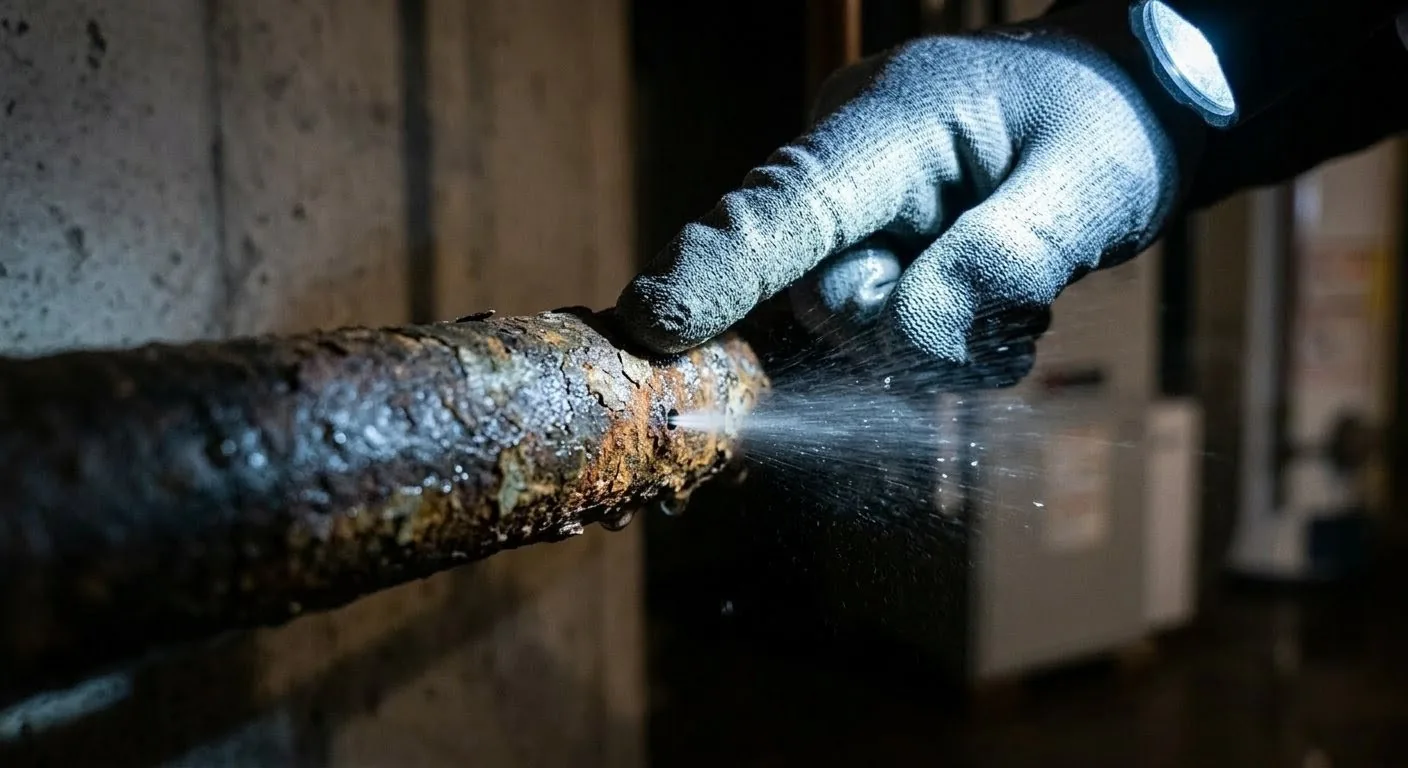
"In U.S. single-family homes (2020), 40% of main water heaters were fueled by natural gas and 31% by electricity." - U.S. Energy Information Administration (EIA) (2020)
Around here, the typical home still runs a gas tank, so a buyer weighing a swap researches for weeks. And the site that wins the call is the one that answers their gas-versus-electric question on a real service page, not in a tucked-away blog post.
A serious site runs as a connected set of pieces that feed each other, well past a pretty homepage and a contact form. So skipping any one of these quietly bleeds calls you should have booked from your own traffic.
Over three quarters of plumbing searches in this city come from a phone, often a wet one. So the hero of your site is the phone view, full stop. The headline names the trade and the city, the click-to-call button sits inside the thumb zone, and the service-area line is visible before the homeowner scrolls.
Your phone number is the most important pixel on the entire site. The header tap target is at least 48 pixels tall, the colour separates from every nearby element, and the link is a real tel: link that opens the dialer with one tap. Because a homeowner standing in two inches of water is not going to copy a number into a notes app.
One homepage cannot speak to every corner of the city, and a "service areas" footer list does nothing for trust. So you need pages built around the jobs that pay, like water heater installation, drain cleaning, and emergency burst-pipe repair, and versions that name Ancaster, Dundas, the Mountain, and Stoney Creek directly.
A homeowner skimming a phone in a flooded basement needs proof in the first five seconds. So your licence number, insurance status, real photos of your trucks and crew, and a star average from HomeStars and Google all stack near the top.
The contact form is where most plumber sites silently fail. Eight fields, a captcha, and a dropdown with twenty options will lose the homeowner before they finish typing their postal code. So the form on your site asks three things at most: name, phone, and what is wrong.

A homeowner in panic does not wait three seconds for a hero video to load. They tap back and hit the next listing, and you never see them. So page speed is not a vanity number for a Lighthouse report. It is the floor every other piece of design has to stand on.
The drag almost always comes from the same handful of mistakes. The hero is a massive uncompressed JPEG instead of a properly sized WebP. The site loads four chat widgets, a heat-map tracker, and a popup library before the phone number even renders.
A site that loads in under two seconds on a mid-range Android in a basement on weak LTE gets the tap that a four-second site loses. And the homeowner never knows why one shop felt faster. They just dialled the one that loaded.
"The median homeowner spending on plumbing fixtures upgrades was about $800 (2021 to 2023 data)." - U.S. Census Bureau and U.S. Department of Housing and Urban Development (2024)
That fixture-upgrade ticket is where a slow site quietly leaks money. A homeowner researching a faucet swap scrolls three or four shops, and a slow page knocks you out of that consideration set before they see your reviews.
"Only 5.8% of U.S. single-family homes had tankless water heaters in 2020." - U.S. Energy Information Administration (EIA) (2020)
Tankless adoption is still low, which means demand is climbing and most homeowners are still learning what the swap involves. So a site with a real tankless explainer page, a clear price band, and a comparison with traditional tanks captures buyers in the slow research stage.
Hamilton homeowners have been burned before. Door-knockers, franchise call centres, and weekend specialists have all rolled through this city, and a generic-looking website triggers the same suspicion as a generic-looking truck. So the site that converts is the site that proves it is local, licensed, and accountable inside the first scroll.
Real photos are the strongest move you have. A homeowner who sees your truck in a real Hamilton driveway, your technician in a named uniform, and a real before-and-after from a Dundas basement is no longer making a leap of faith. So a one-day photo shoot pays back over years of higher-converting traffic.
Reviews are the second leg. A homeowner reads two or three reviews before they call, and the sites that win pull live ratings from HomeStars and Google onto the page, not a screenshot taped under a testimonials heading.
The third leg is licensing and insurance. Ontario plumbers carry a certificate, and showing that number near the trust stack settles the question before they ask.
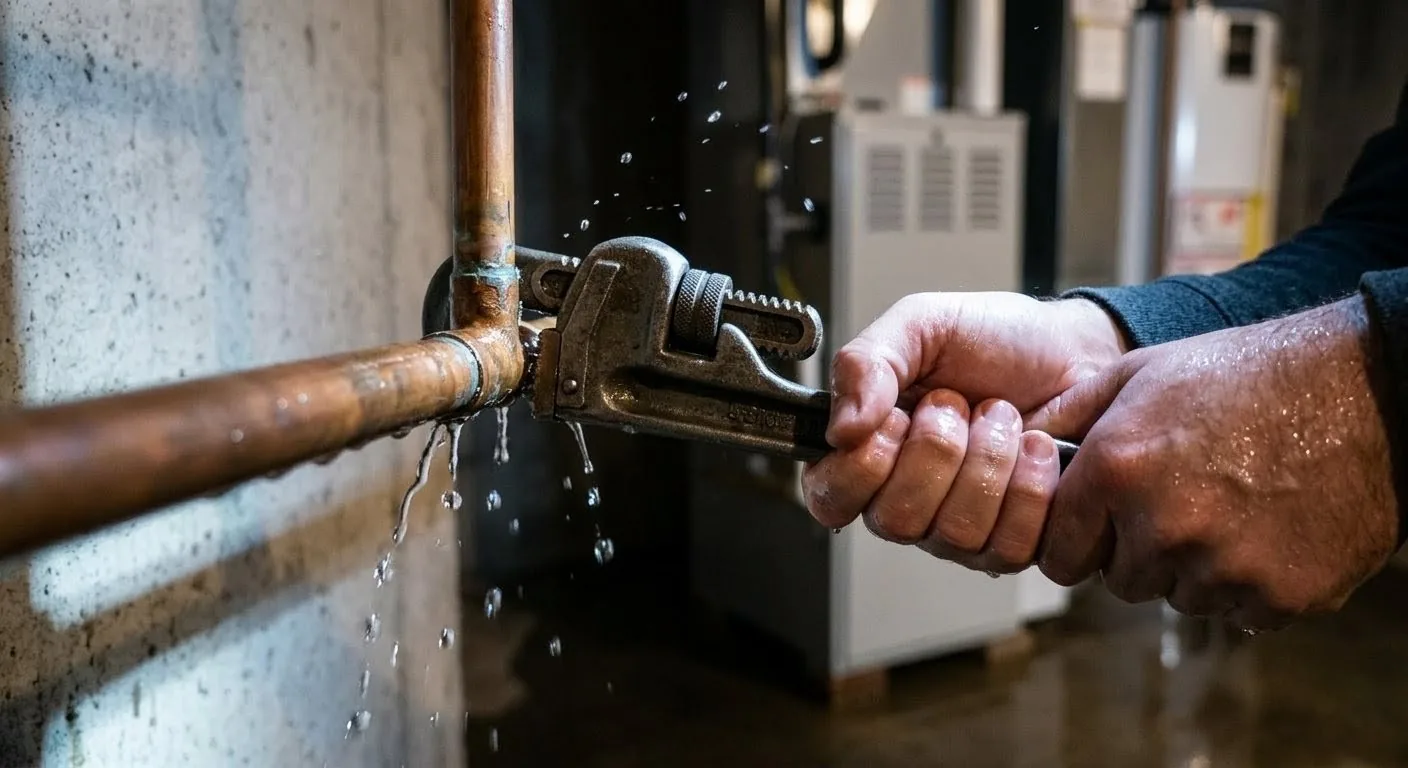
"Mechanical equipment remains difficult to source for remodelers in 2025" - National Association of Home Builders (2025)
Supply pressure on mechanical equipment means lead times stretch, and homeowners plan ahead by researching weeks before they buy. So a site with patient, education-stage content captures those buyers while competitors wait for the phone.
An agency report is usually a wall of charts a plumber owner will not read twice. Impressions, sessions, page views, bounce rate, and acronyms that never tie back to a single ringing phone. So when you weigh a partner, you are right to be skeptical of any report that does not lead with calls and booked jobs.
A real partner reports on the metrics you already track in your head. Calls per week, booked jobs out of those calls, the dollar value of the work, and the cost per booked job. Because a chart of page views does not pay your apprentice on Friday.
The second filter is ownership. When the relationship ends, you should walk away with everything: your domain, your hosting, your site files, your Google accounts, your photos. So ask the ownership question early, and watch how fast they answer it.
"Mechanical sentiment contributed to a Current Conditions Index of 71 in 2025" - National Association of Home Builders (2026)
Healthy market sentiment means homeowners keep spending, and that spending almost always starts on a phone. So the sites that track tap-to-call catch demand instead of guessing at it.
The investment only makes sense if the math works, so let us run it on a napkin. Your average residential ticket is worth roughly six hundred dollars, and a converting site lifts your phone volume by ten extra calls a month from the traffic you already have. If you close half, that is five jobs, or three thousand dollars in new monthly revenue from visitors you were not catching before.
Bigger tickets shift the math further. A water heater replacement or a full repipe in an old lower-city home runs well past a service call, and those jobs almost always start with a homeowner researching on a phone. So when your site converts that research-stage visitor, you are capturing the jobs that fund your slow months.

"Mechanical system retrofits part of the $149B housing deficiency market" - Harvard Joint Center for Housing Studies (2025)
A market that large means demand for plumbing work is not going anywhere, and a big share of it routes through a phone screen. So the plumbers whose sites convert that traffic capture a steady stream of it.
"1.9% easing of mechanical renovation growth projected for Q3 2026" - Harvard Joint Center for Housing Studies (2025)
Even with growth cooling a little, the homeowners who spend are pickier and more research-driven. So the conversion potential of a site that answers their questions before they pick up the phone matters more, not less.
You do not need to rebuild everything at once, and you should not try. The smartest move is to find the biggest leak first, then plug it. For most shops in the city, that leak is either a mobile site that takes four seconds to load on weak LTE or a contact form that asks for so much information the homeowner gives up. So you start there, prove the lift in real calls, and build from the win.
A Site Inspection lays out where your current site leaks calls. You can also pair your design work with plumbing SEO and local SEO for plumbers, because a converting page still has to be the page the homeowner finds.
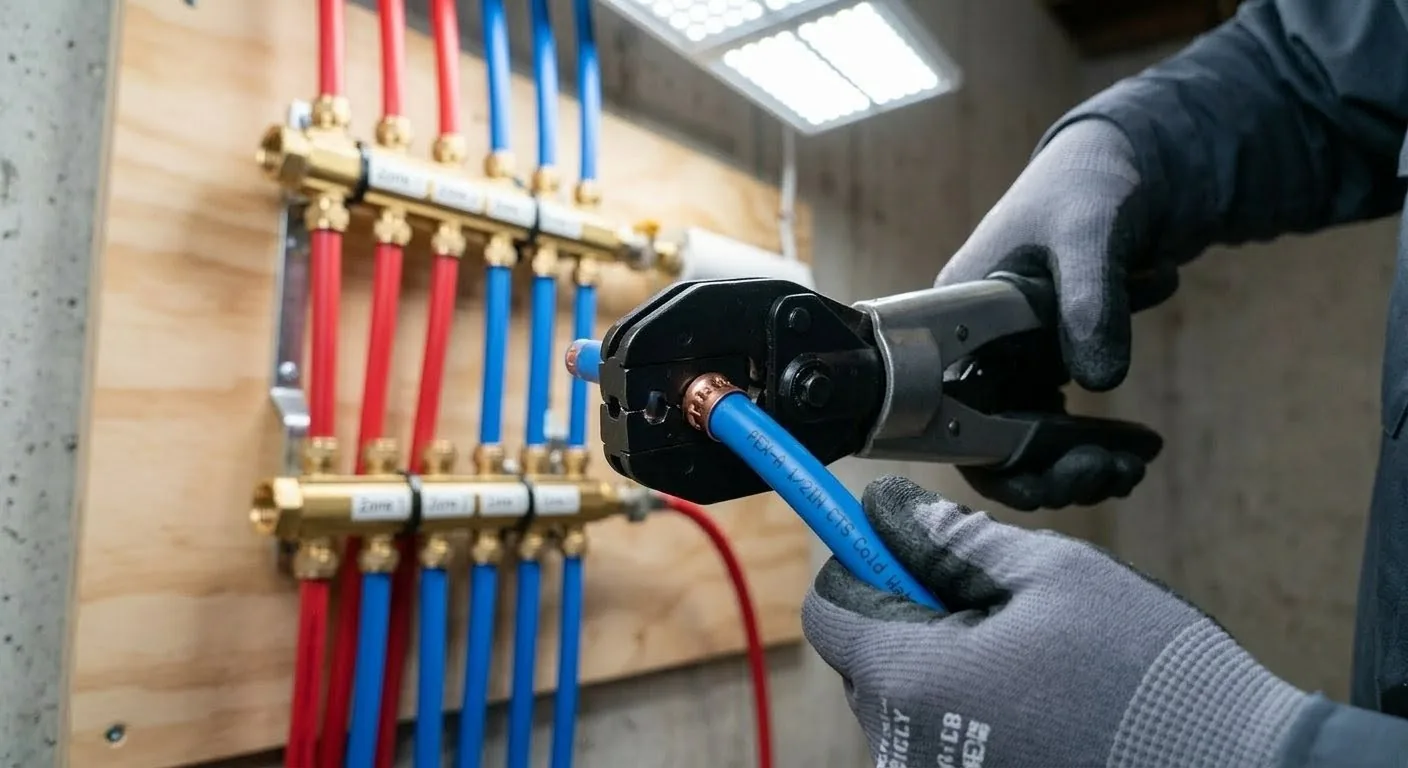
Fervor builds your site as something you own outright, measured in booked calls across Westdale, Dundas, Ancaster, and Stoney Creek. You keep the domain, the files, and the accounts. And the reporting names calls, jobs, and dollars, not impressions. When you are ready to see the gap between where your site is and where it could be, the Site Inspection shows you in plain numbers.
The evidence
 Read the full report →
 0
contractor sites graded, one A
Across the whole CRO Index, a single site earned an A. The median landed at a D. The grade gap is a conversion gap.
0
contractor sites across the State of the Industry research
Roofing, remodeling, and HVAC, scored page by page against one framework.
Two ways to start
Tell us where you are. We point you at the right next step — no sales call to get there.
Client review
“Nay did an amazing job, you know. He was really patient. He got the work done the way I told him and he was just on point with the website. Pretty straightforward process. No going around the bush. He just did amazing work and I would 100% recommend.”
How Fervor can help
Complete website system built to convert storm leads, planned projects, and research-phase homeowners into booked jobs.
Identify and patch the top conversion killers on your existing site. No full rebuild needed.
Monthly SEO, content, and CRO. Fixed deliverables. No credits, no rollover. The compound growth engine.
GBP optimization, citation building, and review system foundation. The infrastructure that gets you into the Map Pack.
One conversion-built landing page for the referrals, paid clicks, and cold-call leads you send. They land on a page built to book them, not your generic homepage.
Your move
Tell us where you are. We point you at the right next step — no sales call to get there.
Keep going