0
contractor sites graded, one A
Across the whole CRO Index, a single site earned an A. The median landed at a D. The grade gap is a conversion gap.
You're getting clicks in Denver. They're just not calling. We rebuild your site around the one job that matters: turning a visitor into a booked job.
Starts with a Site Inspection, so you see the plan before any build begins.
“Patient, on point, straightforward. Did amazing work. Would 100% recommend.” — Ruben Mederos, HyperTemp HVAC
“Responsive, creative, exceeded expectations. Already seeing greater engagement from our clients.” — George Jeorgy, Jeorgy's Landscape Construction
“Top-tier professionalism, real web design expertise, ideas I hadn't considered. Confidently recommend.” — Aws Nassani, Four Eleven Contracting



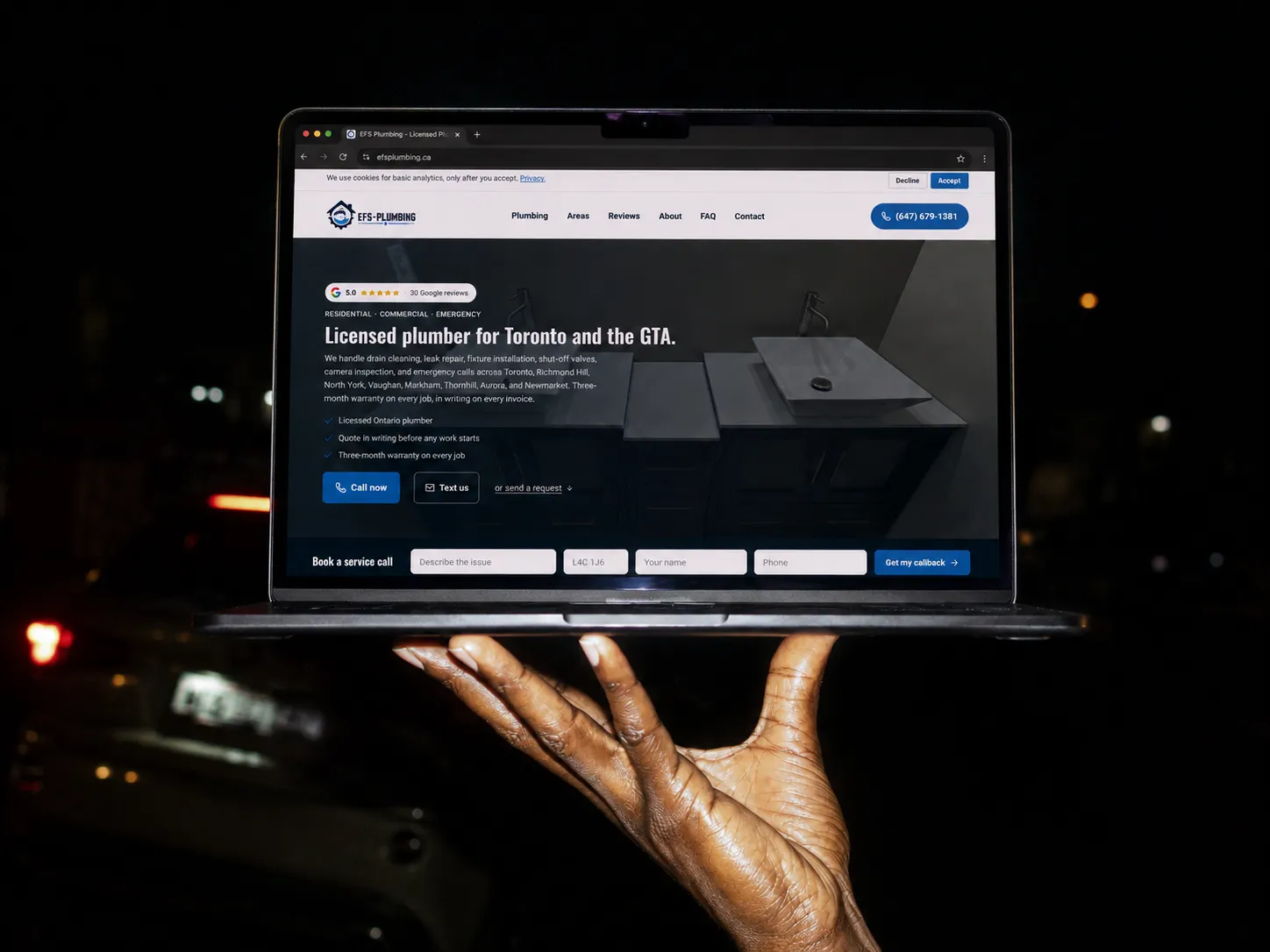
380 contractor sites graded on the public CRO Index
Fervor Contractor CRO Index 2026A grade out of 380 contractor sites
We graded 380 of them against one framework. Exactly one earned an A: Crown Industrial Roofing in Toronto, at 90 out of 100. The rest left money on the table. Here is what separates the top from the bottom.
The local detail
Every angle below comes from how Denver actually searches, buys, and regulates — built into the page, not bolted on.
Denver isn’t a generic market, and a stock template won’t convert in it.
So you’re looking at a plumbing web design company Denver owners keep recommending, and you want to know what separates a real build from a pretty brochure.
This is the part a lot of owners underrate.
Yes, and it isn’t close.
And this is where a lot of contractors hesitate, so let’s run the numbers the way you’d run them on a job-site notepad.
So timing matters more than owners assume.
You run a real shop. Four to ten people, two or three trucks, a schedule that goes from slammed in a January cold snap to thinner once the patios reopen. And in that swing, the homeowner who used to call a referral now thumbs through Google on a cracked phone screen at midnight, picks one plumber, and never scrolls to the second. So this page is about plumbing web design Denver at the level that matters, the website itself, written for the owner already comparing two or three agencies and tired of the last one. We'll cover the mobile-first build, the tap-to-call, the trust signals, and why the first five seconds decide the call.
Denver isn't a generic market, and a stock template won't convert in it. The weather sets the pace. A hard freeze rolls down the Front Range, an unheated crawlspace in Lakewood drops below zero overnight, and a supply line splits the moment the afternoon thaw hits. The homeowner standing in a flooded Wash Park basement isn't reading your About page. They're on a phone, water still running, and they want your number big, your reviews visible, and a button that dials you without a pinch-to-zoom.
So the build has to respect that panic. Your phone number sits above the fold, tappable, on every single page. The hero answers the search they typed, "burst pipe plumber Denver," in the homeowner's own words, not "comprehensive plumbing solutions." And the page paints in under two seconds on a mid-tier Android over a spotty signal, because a slow load on a wet floor sends them straight back to the search results and the shop below you.
"Among homeowners who made improvements, 32% upgraded their water heaters, dishwashers, or garbage disposals." - U.S. Census Bureau and U.S. Department of Housing and Urban Development (2024)
Nearly a third of improving homeowners touch the exact appliances you install. And those buyers aren't all mid-emergency. Plenty are researching a water heater swap on the couch, which means your site has to win the calm shopper and the panicked one with the same layout.

So you're looking at a plumbing web design company Denver owners keep recommending, and you want to know what separates a real build from a pretty brochure. It comes down to a handful of things that the homeowner feels even when they can't name them.
The site has to be mobile-first, not mobile-friendly. Those aren't the same thing. A mobile-friendly site is a desktop layout that shrinks; a mobile-first one is designed for the thumb before the mouse. Tap targets stay large, the call button never scrolls away, and forms ask for three fields, not twelve.
Speed is the piece most agencies quietly fake. Stock-heavy templates load slow, and a Denver homeowner on a freezing morning won't wait. Real plumbing web design services Denver plumbers can trust strip the bloat, compress every image, and hit a sub-two-second paint on mobile.
Then come the trust signals, which is where most contractor sites quietly fail. Your real Google review count needs to show as an actual number, not a vague "5-star service" claim. Your Colorado license and bond belong right there too, stated plainly. And photos of your own crew and trucks in front of a recognizable Denver street matter more than owners think, because a homeowner in the Highlands can tell stock from real in a glance, and stock reads as hiding something.
And the service pages have to map to the jobs that pay. So frozen pipe repair, water heater replacement, sewer line repair, repiping, and drain cleaning each get a dedicated page written for the homeowner searching that exact problem, instead of one flat catch-all that speaks to nobody.

This is the part a lot of owners underrate. A homeowner mid-emergency isn't filling out a contact form and waiting for an email reply. They're tapping a phone number, and if that number is a tiny grey link buried in the footer, you just lost the call to the shop whose button filled the screen.
So the booking experience is the conversion engine, and it has to work two ways. The emergency caller gets a fat, sticky call button that follows them down every page. The planner, the one pricing a repipe for next month, gets a short booking form that takes thirty seconds and lands in your inbox before they've closed the tab. Both paths stay one tap from anywhere on the site.
"The median homeowner spending on plumbing fixtures upgrades was about $800 (2021 to 2023 data)." - U.S. Census Bureau and U.S. Department of Housing and Urban Development (2024)
That eight-hundred-dollar median is a real fixture job, and Denver's famously hard water pushes plenty of homeowners toward it. The minerals in the metro's supply scale up fixtures and chew through water heater anodes faster than soft-water cities deal with, so the upgrade conversation comes up constantly. And the shop whose service page explains hard-water damage in plain homeowner language, then puts a booking button right under it, earns that quote. You can see how the ranking side connects on our local SEO for plumbers page.

Yes, and it isn't close. The homeowner who finds you in a crisis is almost always on a phone, and the one researching a calmer job usually starts there too. So if your site looks sharp on a 27-inch monitor and falls apart on a six-inch screen, you built it for the wrong person.
The strongest build starts every layout from the phone and works up, which flips how the whole thing gets designed. The headline has to land in one thumb-length of screen. The call button has to thumb-reach from the bottom. The photos have to load before the homeowner gives up. And the copy has to answer the search in the first sentence, because a Denver buyer on a cold morning reads the top of the page and nothing else if the top doesn't grab them.
So when you're judging a plumbing web design agency Denver plumbers keep hiring, pull out your own phone in the meeting and load their last three builds on it. If any of them pinch, lag, or hide the number, you have your answer before they finish the pitch.
"In U.S. single-family homes (2020), 40% of main water heaters were fueled by natural gas and 31% by electricity." - U.S. Energy Information Administration (EIA) (2020)
Gas leads across the country, and Colorado is no exception, so a large share of your highest-value water heater work lives in gas swaps and the venting questions around them. The mile-high altitude changes how those units vent and pull combustion air, and a homeowner who reads on your site that you handle high-altitude installs trusts your quote more than the shop that says nothing.
And this is where a lot of contractors hesitate, so let's run the numbers the way you'd run them on a job-site notepad. The site is a cost only until it books work, and the math is not complicated.
Your average plumbing ticket runs around 450 dollars, and a strong water heater or repipe job lands closer to 2,800. Here's the scenario: your current website pulls in twenty visitors a day from search, and two of them call. A mobile-first rebuild with a sticky call button and real reviews lifts that to five calls a day without a single extra visitor, just by converting the traffic you already pay for. So three more calls a day, even at a modest close rate, is a stack of booked jobs the old site was quietly handing away.
"Only 5.8% of U.S. single-family homes had tankless water heaters in 2020." - U.S. Energy Information Administration (EIA) (2020)
Tankless adoption sits low across the country, so a page that explains the upside in plain terms captures a high-ticket job most of your competitors aren't even bidding. And that's the quiet power of good plumbing web design Denver for plumbers: it squeezes more booked jobs out of the clicks you've already paid for, rather than chasing fresh ones. You can read how we structure the pages themselves on our plumbing SEO breakdown.
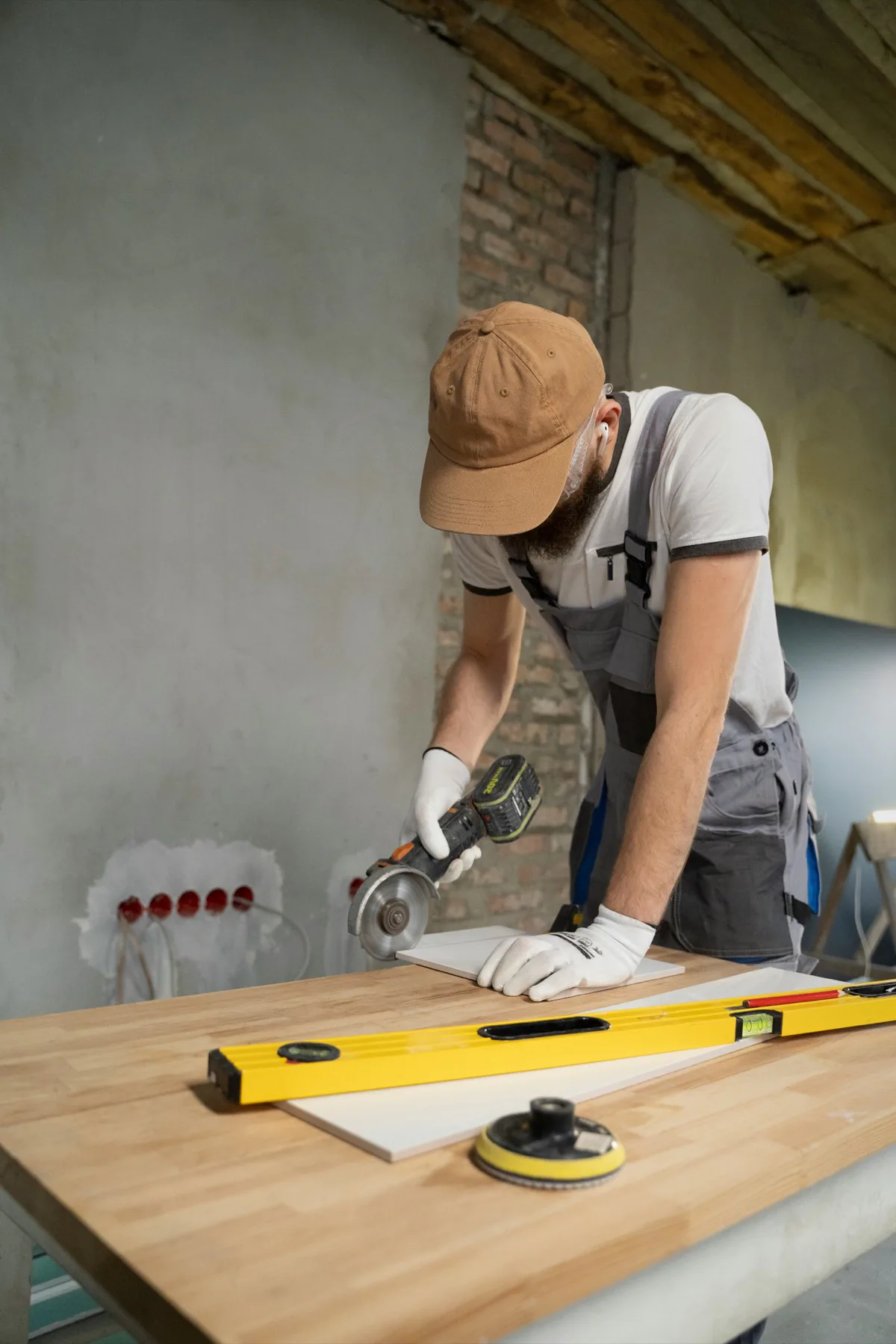
So timing matters more than owners assume. The mechanical market sets the backdrop for how busy your calendar runs, and reading the national signals helps you decide when to put money into the site.
"Mechanical sentiment contributed to a Current Conditions Index of 71 in 2025." - National Association of Home Builders (2026)
A reading of 71 points to remodelers still feeling steady demand, and mechanical trades like yours ride that sentiment closely. So homeowner appetite for repipes and water heater upgrades holds up even as the headlines wobble, and steady demand is exactly when a converting site compounds in your favour.
"Mechanical equipment remains difficult to source for remodelers in 2025." - National Association of Home Builders (2025)
Supply constraints on mechanical equipment mean the plumber who books the job early wins the install, because the homeowner who waits gets stuck behind a backorder. So a site that converts a search into a scheduled job on the first visit beats a competitor still playing phone tag.
"Mechanical system retrofits part of the $149B housing deficiency market." - Harvard Joint Center for Housing Studies (2025)
That deficiency figure is the macro picture behind your repair calendar. A huge share of the country's aging housing needs mechanical retrofit work, and Denver's older inner-city stock in Capitol Hill and Baker carries more than its share. So the demand is structural, and your website's job is connecting it to your trucks instead of a national lead-broker.
"1.9% easing of mechanical renovation growth projected for Q3 2026." - Harvard Joint Center for Housing Studies (2025)
That slight easing ahead reads as a planning cue. So you build the site now, while the market is steady, and you head into the leaner stretch with a website that already converts. Because the shop with the better site keeps its trucks moving when demand softens and others scramble. For the full system behind it, our contractor marketing hub lays out how the pieces fit.
A focused mobile-first rebuild usually goes live in roughly four to six weeks, because the heavy lift is the service pages and the trust content, not the code. So you can have a converting site ready before the next freeze season instead of limping through it on the old one.
A converting site is built around the Denver homeowner's panic and the Denver homeowner's research. It loads fast on a phone, puts a tappable number above the fold, shows real review counts and your Colorado license, and answers the exact emergency in plain words. A generic template does none of that and bounces the buyer back to search.
If the old site loads slow on mobile, hides your number, or leans on stock photos, a rebuild usually pays back faster than patching it. So ask a partner the local owners trust to load your current site on a phone and show you where the calls leak out, then decide.
The evidence
 Read the full report →
 0
contractor sites graded, one A
Across the whole CRO Index, a single site earned an A. The median landed at a D. The grade gap is a conversion gap.
0
contractor sites across the State of the Industry research
Roofing, remodeling, and HVAC, scored page by page against one framework.
Two ways to start
Tell us where you are. We point you at the right next step — no sales call to get there.
Client review
“Nay did an amazing job, you know. He was really patient. He got the work done the way I told him and he was just on point with the website. Pretty straightforward process. No going around the bush. He just did amazing work and I would 100% recommend.”
How Fervor can help
Complete website system built to convert storm leads, planned projects, and research-phase homeowners into booked jobs.
Identify and patch the top conversion killers on your existing site. No full rebuild needed.
Monthly SEO, content, and CRO. Fixed deliverables. No credits, no rollover. The compound growth engine.
GBP optimization, citation building, and review system foundation. The infrastructure that gets you into the Map Pack.
One conversion-built landing page for the referrals, paid clicks, and cold-call leads you send. They land on a page built to book them, not your generic homepage.
Your move
Tell us where you are. We point you at the right next step — no sales call to get there.
Keep going