0
contractor sites graded, one A
Across the whole CRO Index, a single site earned an A. The median landed at a D. The grade gap is a conversion gap.
You already get traffic in Winnipeg. Most of it leaves without calling. We find the leaks and plug them, so the visitors you've got start booking jobs.
Starts with a Site Inspection, so you see the leaks before any fix begins.
“Attentive, listened to every revision request, delivered on time. Would work with him again.” — Hamza Najam
“Patient, on point, straightforward. Did amazing work. Would 100% recommend.” — Ruben Mederos, HyperTemp HVAC
“Responsive, creative, exceeded expectations. Already seeing greater engagement from our clients.” — George Jeorgy, Jeorgy's Landscape Construction
“Top-tier professionalism, real web design expertise, ideas I hadn't considered. Confidently recommend.” — Aws Nassani, Four Eleven Contracting




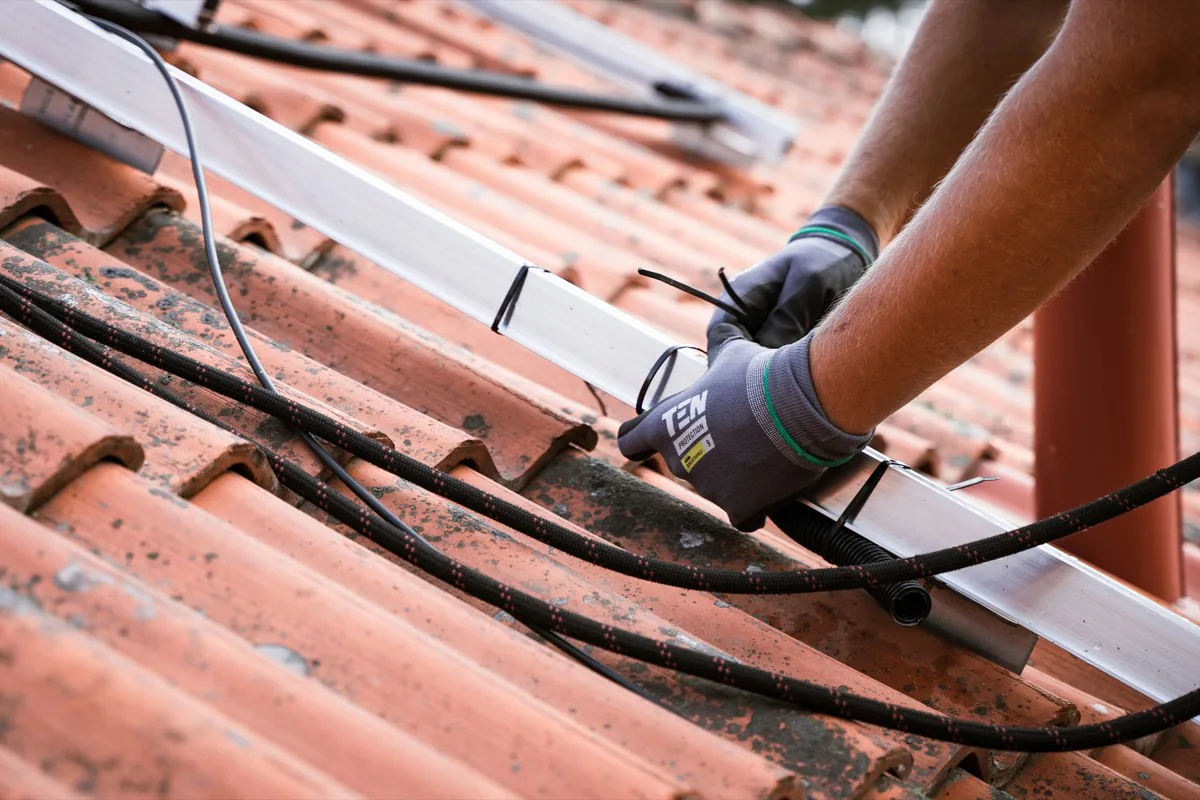
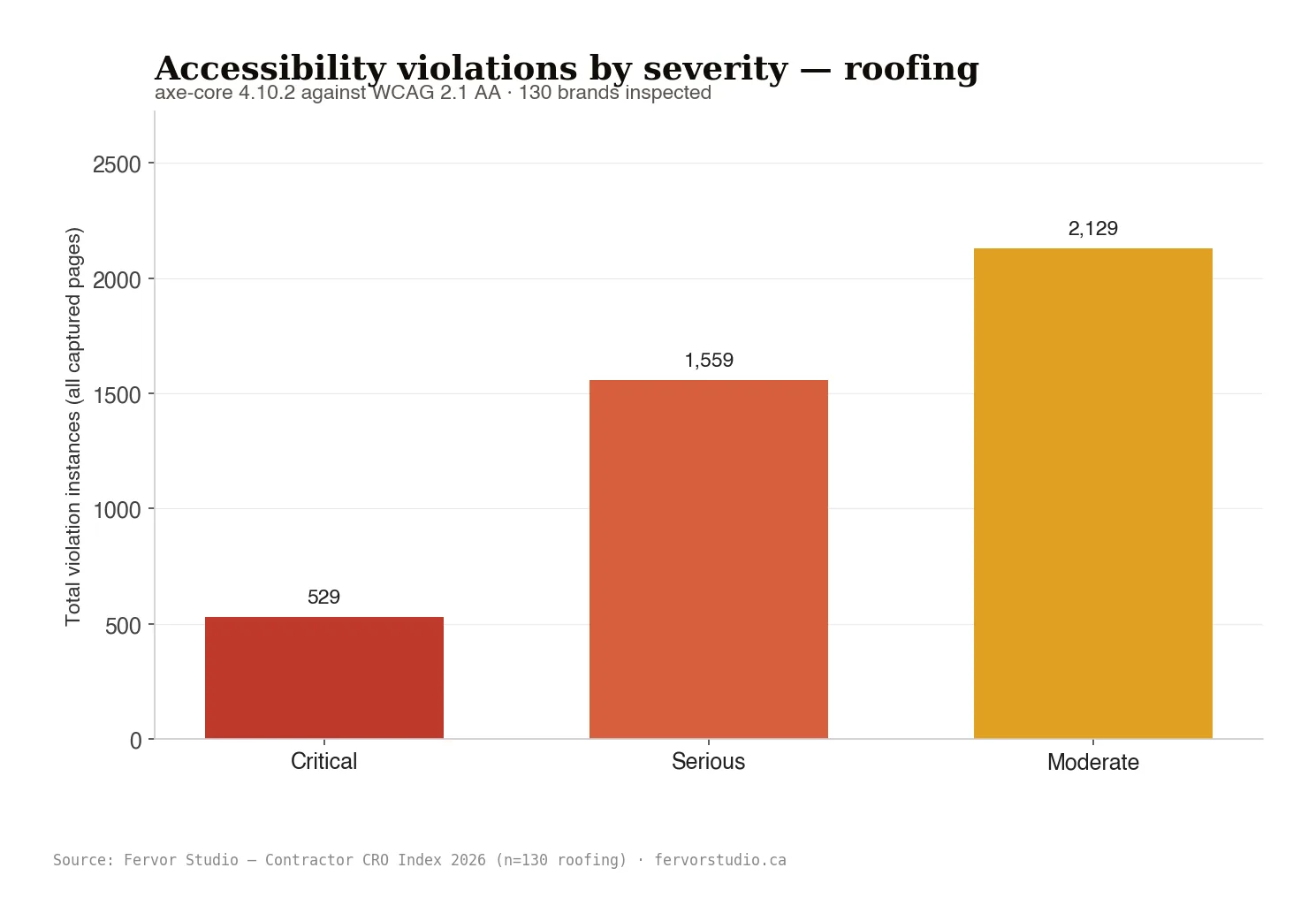
60.8% of roofing sites we tested fail a critical accessibility check
Digital State of the Roofing Industry 2026A grade out of 380 contractor sites
We graded 380 of them against one framework. Exactly one earned an A: Crown Industrial Roofing in Toronto, at 90 out of 100. The rest left money on the table. Here is what separates the top from the bottom.
The local detail
Every angle below comes from how Winnipeg actually searches, buys, and regulates — built into the page, not bolted on.
Your homepage was built for everyone.
Picture a homeowner in Transcona holding their phone after clicking your ad.
Here’s where most roofing sites bleed leads.
You don’t run one ad.
So the homeowner pressed the button.
So you turned on Google Ads, and the clicks are coming in. But the calls aren't. You're paying four or five dollars a click for a homeowner in River Heights with a cracked roof, and that person lands on your homepage, sees a menu of twelve services, scrolls past your gallery, and leaves. A roofing landing page Winnipeg owners point their ad spend at fixes exactly that gap. It's one screen built to do one thing: get a worried homeowner to book an estimate before they back out and call the next shop in the search results.
And the math here isn't small. If you're spending $3,000 a month on ads and converting 4% of clicks into leads, doubling that conversion rate doesn't cost you another dollar in ad budget. It just means twice the booked estimates from the spend you already approved.
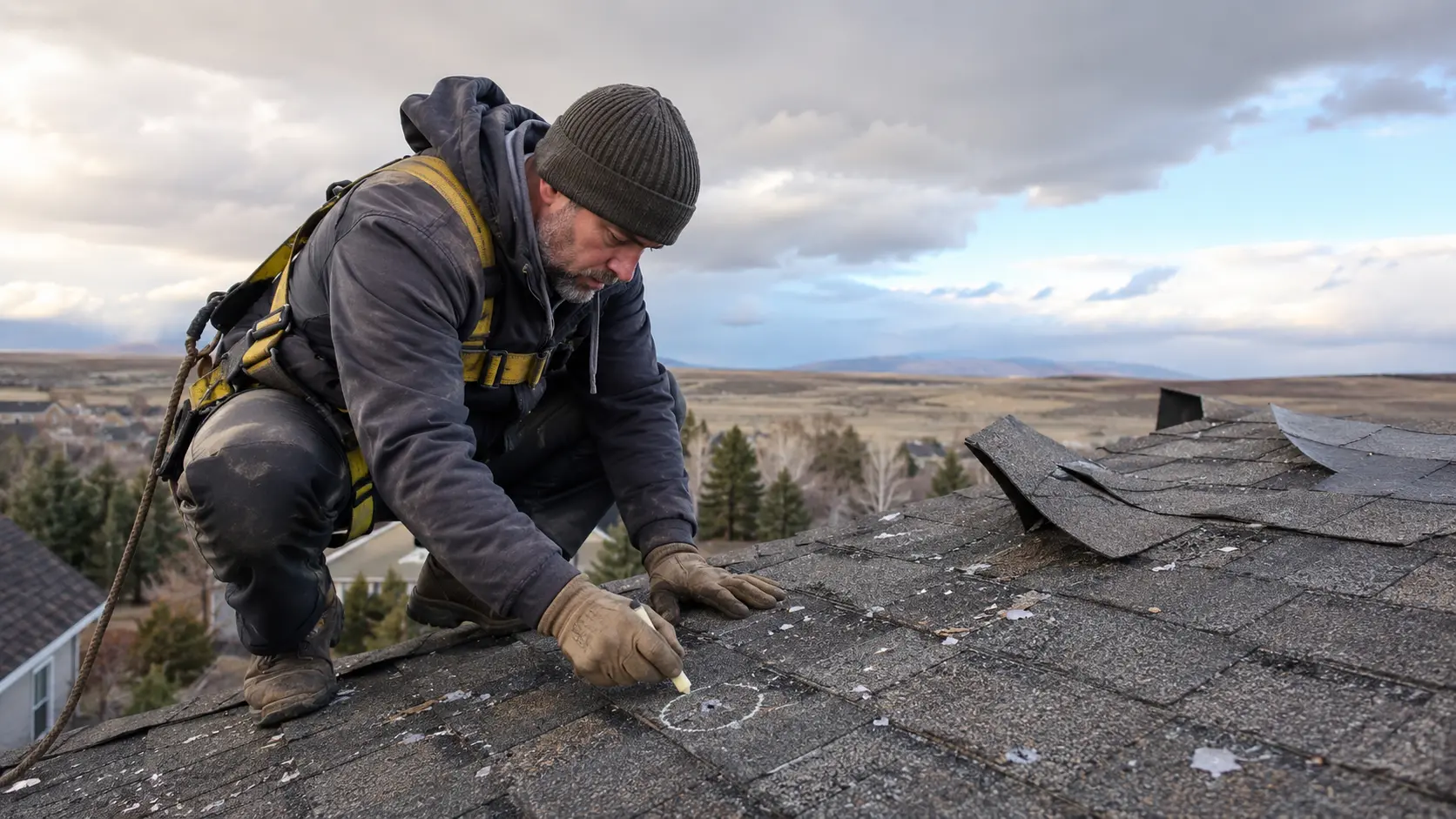
Your homepage was built for everyone. The homeowner researching metal roofs in Tuxedo, the property manager comparing warranties, the person who Googled your business name after a referral. So it hedges. It says a little about everything and pushes hard on nothing.
But a paid ad click is different. That person typed "emergency roof repair" at 9pm because water is dripping into their kitchen in St. Vital. They don't want your story. They want to know you'll show up, and they want a button to press right now.
"79% of test users always skimmed any new page they came across; only 16% read word-by-word. Web pages must employ scannable text with highlighted keywords, meaningful subheadings, one idea per paragraph, and the inverted pyramid style." — Nielsen Norman Group (2024)
So when your homepage makes that scanner work to find the one thing they came for, you lose them. And you paid for that visit.
So much of your wasted spend stays invisible. You see the clicks in the dashboard, but you don't see the homeowner in East Kildonan who bounced in eight seconds because your hero image loaded slowly and the phone number sat below the fold. A dedicated page strips out the twelve-item menu and leaves the one ask.
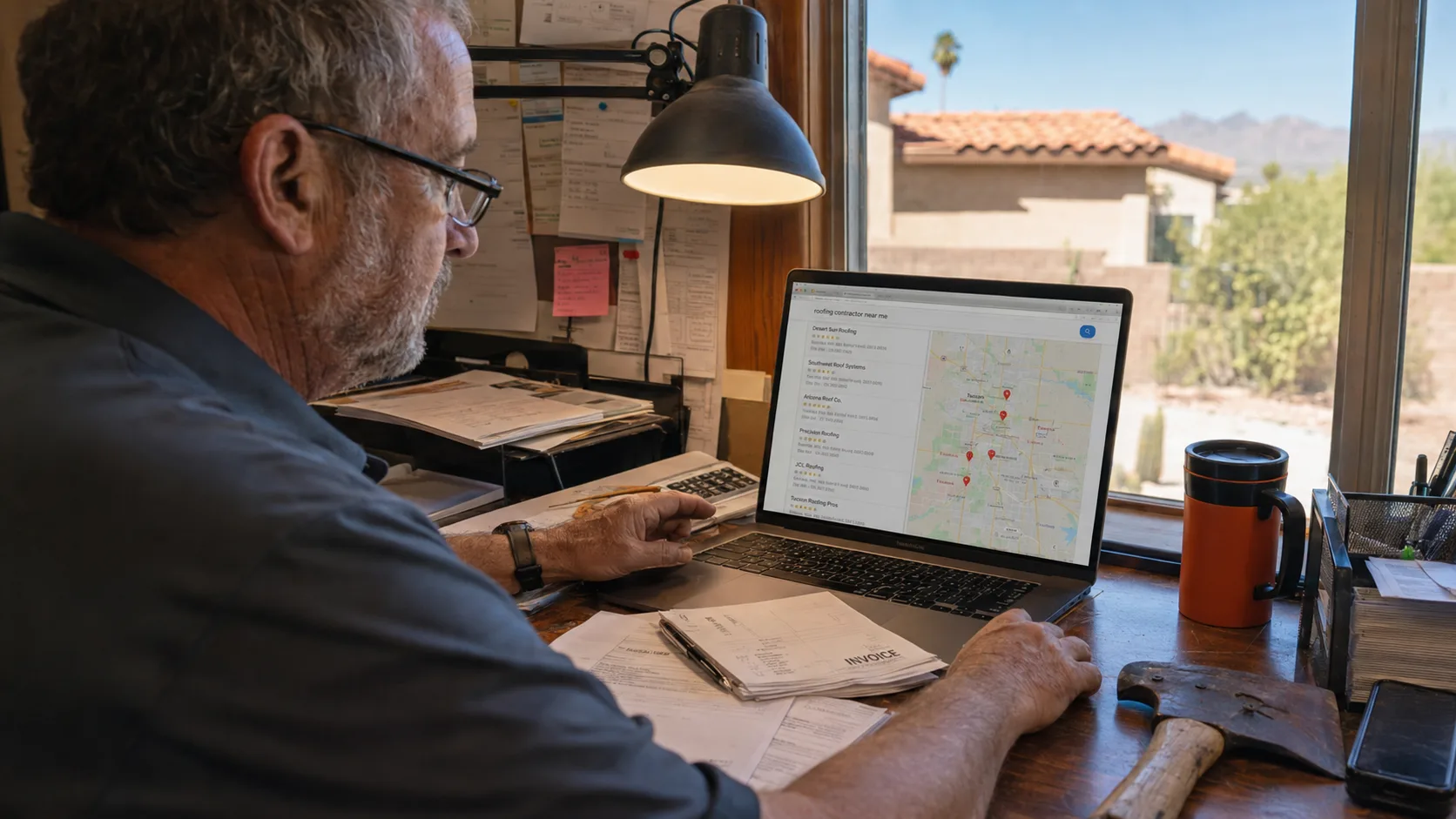
Picture a homeowner in Transcona holding their phone after clicking your ad. The first screen they see, before any scrolling, has to carry the whole pitch. Three things have to be there.
First, a headline that matches the ad and the worry. If your ad said "Storm Damage Roof Repair in Winnipeg," the headline says that back to them. When the words match, the homeowner relaxes. They're in the right place. When they don't match, the homeowner doubts, and a doubting visitor leaves.
"Promotional language imposes a measurable cognitive burden. Users who read 'internationally recognized attractions' think 'no, it's not' — and that skeptical reaction slows them down and distracts from using the site. Objective language improved measured usability by 27%." — Nielsen Norman Group (2024)
So skip "Winnipeg's premier roofing experts." Say "We'll inspect your roof and quote it in 24 hours." That's a promise a worried homeowner can check.
Second, a call button that follows the homeowner everywhere. On mobile, it sticks to the bottom of the screen as they scroll. They never have to hunt for it. And it says "Call now" or "Book my estimate," not the vague "Contact us" that every site uses.
"97% of roofing customers expect a callback within one week. More than 50% expect a callback within two days." — Roofing Contractor Magazine (2024)
So a homeowner who has to dig for your number is already half gone. And in Winnipeg's tight summer roofing window, where freeze-thaw cycles crack shingles fast and the busy season runs short, a buried button costs you real jobs.
Third, proof sitting right next to the button. Not buried on an "About" page. A photo of your crew on a Charleswood reroof, three Google reviews with the stars showing, your warranty in plain words. The homeowner reads the proof and presses the button in the same glance. Because trust and the ask have to live together.
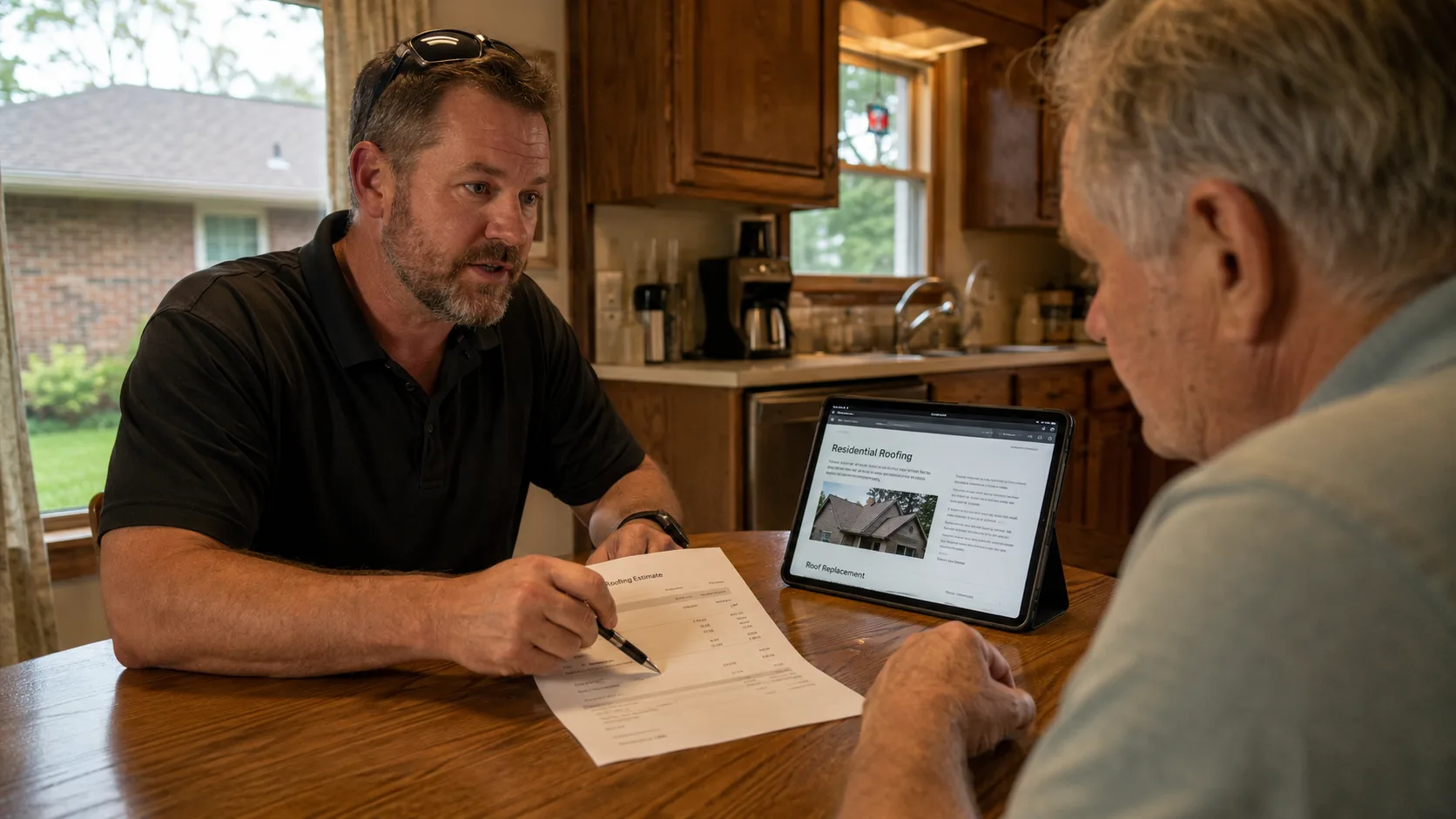
Here's where most roofing sites bleed leads. The form. A homeowner in Fort Garry is ready to book, they tap the first field, and they see eleven boxes asking for email, preferred contact time, roof age, square footage, and how they heard about you. So they close the tab. You lost a $4,000 reroof to a form you copied from a template.
Cut it to four fields. Name. Phone. Address. And what's wrong. That's everything you need to call them back and quote the job. Every extra field you add drops your completion rate, and on a roofing landing page that drop comes straight out of your booked estimates.
"32% of Canadian homeowners renovating their homes in the past three years did so to address a safety or maintenance issue." — Canada Mortgage and Housing Corporation (CMHC) (2025)
So a third of these homeowners are anxious about a real problem. They want it handled, not interrogated. And the address field does double duty: it tells you whether the job is in Winnipeg before you spend time on the callback.
And the "what's wrong" box matters more than it looks. A free-text line lets the homeowner say "shingles blew off in last week's storm" in their own words. You read it, you know the urgency, and you call back with the right question first. A rigid dropdown can't capture that.
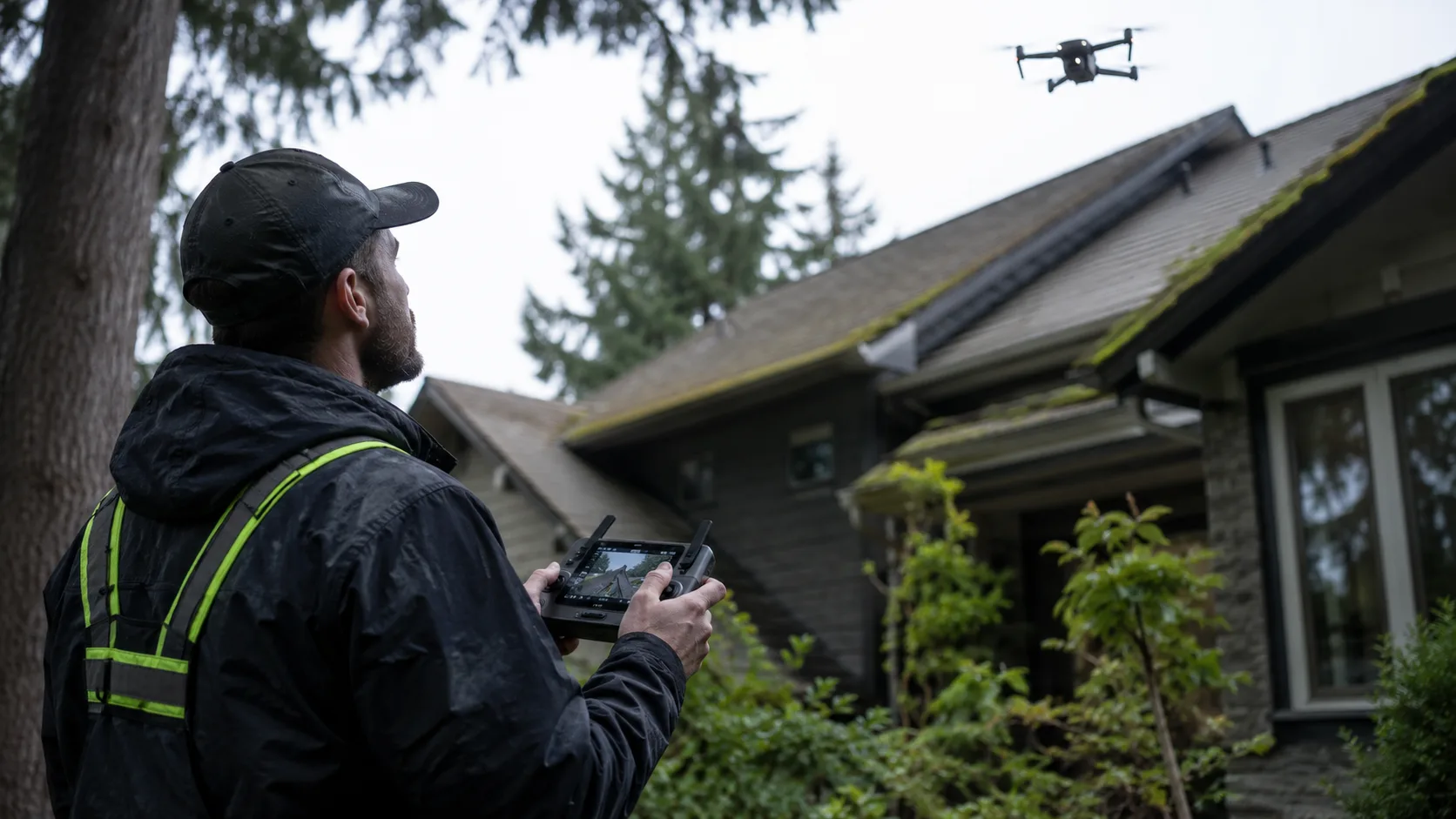
You don't run one ad. You run a storm-repair ad, a full-replacement ad, maybe an energy-efficiency ad. So you shouldn't run one landing page either. Each offer needs its own page, because the homeowner's worry is different each time.
The storm and emergency page leads with speed. "Roof leaking? We'll be there today." The headline answers the panic in Old St. Boniface where a hailstorm just stripped a roof. And the button says "Get emergency help now."
"Canadian homeowners paid 8.4% more for maintenance and repairs (including roofing) in April 2023 than in April 2022." — Statistics Canada (2023)
So with repair costs up over 8% year over year, a homeowner facing emergency damage is price-sensitive and scared at once. Your page has to calm both.
The full-replacement page is slower and more careful. This homeowner in Linden Woods knows their 20-year roof is done. They want options, warranty terms, and a clear quote process. So that page can carry more detail, a financing line, and photos of finished reroofs.
"74% of Canadian first-time homebuyers plan to renovate their home within the next five years." — Canada Mortgage and Housing Corporation (CMHC) (2025)
So when most new buyers plan a renovation soon, a replacement page that explains your process patiently wins the homeowner who's planning ahead.
And the energy-efficiency page speaks to a different motive entirely. This homeowner wants a warmer house and a lower hydro bill through a Winnipeg winter.
"28% of Canadian homeowners cited making their home more energy-efficient as a reason to renovate." — Canada Mortgage and Housing Corporation (CMHC) (2025)
So with over a quarter of homeowners renovating for efficiency, an attic-insulation-plus-roof page can pull a lead your storm ad never would.
So the homeowner pressed the button. The form came through. Now the clock starts, and it moves fast. A lead that sits in your inbox for two hours is usually a lead that already called somebody else.
"38% of Canadian homeowners who pursued energy-efficient upgrades in 2024 improved their home's insulation." — Canada Mortgage and Housing Corporation (CMHC) (2024)
So whether the homeowner came for insulation or a reroof, the one who hears back first usually books the estimate. Set the page to text you the moment a form lands. Call back in five minutes, not five hours. And if you're on a roof in Garden City when it comes in, an auto-text that says "Got your request, calling you within the hour" holds the homeowner long enough for you to climb down.
The napkin math is plain. If you book 40% of leads you reach in five minutes and only 10% of leads you reach the next day, speed alone can quadruple your booked jobs from the same form fills.
And speed doesn't stop at the first call. So a Winnipeg roofing landing page that wins also wires up a simple text-back the moment a homeowner doesn't pick up. You miss the call from a roof in Wolseley, the homeowner gets a text within a minute, and the conversation stays warm. A page that captures the lead but drops the follow-up still leaks. So treat the seconds after submit as part of the page, not a separate job. A homeowner who hears back fast books the estimate, and one $4,000 reroof a month from faster follow-up pays for the whole ad budget twice over.
We don't start with a redesign pitch. We start by looking. We ran an inspection of roofing websites across the trade, grading each one on the things that really move estimates: how fast the page loads, whether the call button hides, how many fields the form demands, and whether the proof sits beside the ask.
So before you spend another dollar on ads pointed at a page that leaks, you can see exactly where yours leaks first. The free Site Inspection shows you the gaps on your current site, with the fixes ranked by what each one is worth in booked estimates. No sales call. No pitch. Just the page graded the way a worried homeowner in Winnipeg really judges it.
And once you can see the gaps, the math gets simple. Plug the form leak, unhide the button, match the headline to the ad, and you can double the estimates from ad spend you already pay for. That's the whole point of a page built to convert.
The evidence
 Read the full report →
 0
contractor sites graded, one A
Across the whole CRO Index, a single site earned an A. The median landed at a D. The grade gap is a conversion gap.
0 %
of roofing sites fail a critical accessibility check
Scored against WCAG 2.1 AA with axe-core. A page that blocks a screen reader also blocks a paying customer.
Fervor Roofing State of the Industry, 2026
0 %
miss Google's mobile load-speed bar
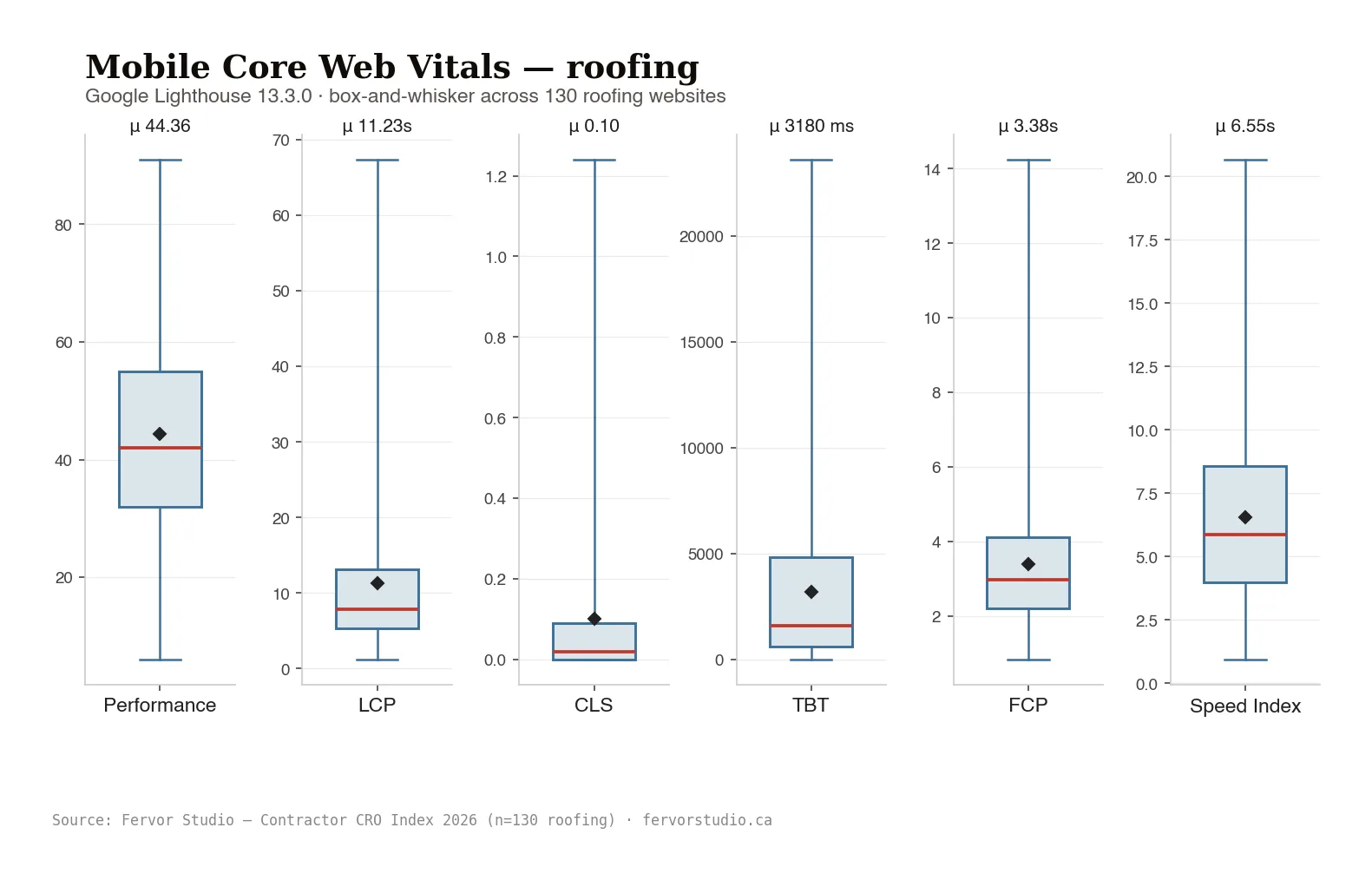
Median mobile load lands at 7.88 seconds. Most of your traffic is on a phone, and most of them are gone before the hero paints.
Fervor Roofing State of the Industry, 2026
0 /100
is the average roofing grade
That is a D. The sites booking the work are not the ones with the biggest crews. They are the ones a few points higher on the things homeowners feel.
Two ways to start
Tell us where you are. We point you at the right next step — no sales call to get there.
Client review
“Nay did an amazing job, you know. He was really patient. He got the work done the way I told him and he was just on point with the website. Pretty straightforward process. No going around the bush. He just did amazing work and I would 100% recommend.”
How Fervor can help
Identify and patch the top conversion killers on your existing site. No full rebuild needed.
Monthly SEO, content, and CRO. Fixed deliverables. No credits, no rollover. The compound growth engine.
Complete website system built to convert storm leads, planned projects, and research-phase homeowners into booked jobs.
GBP optimization, citation building, and review system foundation. The infrastructure that gets you into the Map Pack.
One conversion-built landing page for the referrals, paid clicks, and cold-call leads you send. They land on a page built to book them, not your generic homepage.
Your move
Tell us where you are. We point you at the right next step — no sales call to get there.
Keep going