0
contractor sites graded, one A
Across the whole CRO Index, a single site earned an A. The median landed at a D. The grade gap is a conversion gap.
You already get traffic in Toronto. Most of it leaves without calling. We find the leaks and plug them, so the visitors you've got start booking jobs.
Starts with a Site Inspection, so you see the leaks before any fix begins.
“Attentive, listened to every revision request, delivered on time. Would work with him again.” — Hamza Najam
“Patient, on point, straightforward. Did amazing work. Would 100% recommend.” — Ruben Mederos, HyperTemp HVAC
“Responsive, creative, exceeded expectations. Already seeing greater engagement from our clients.” — George Jeorgy, Jeorgy's Landscape Construction
“Top-tier professionalism, real web design expertise, ideas I hadn't considered. Confidently recommend.” — Aws Nassani, Four Eleven Contracting




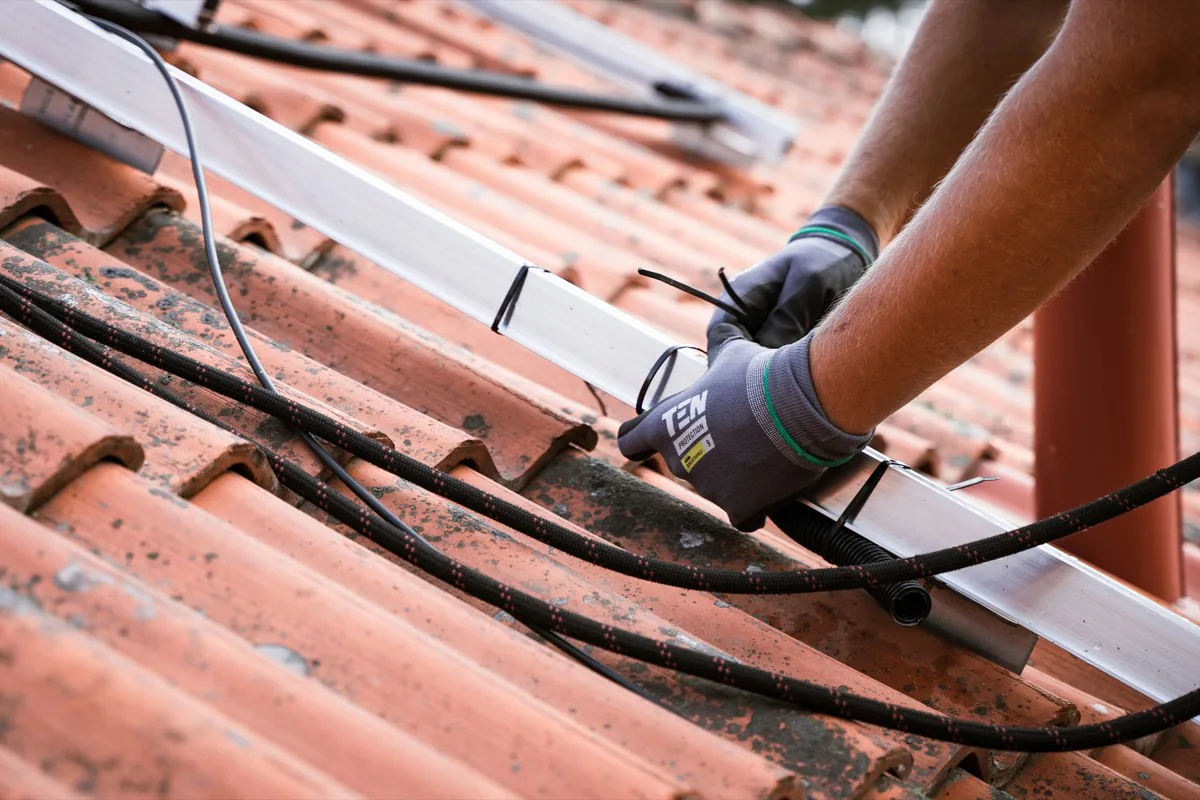
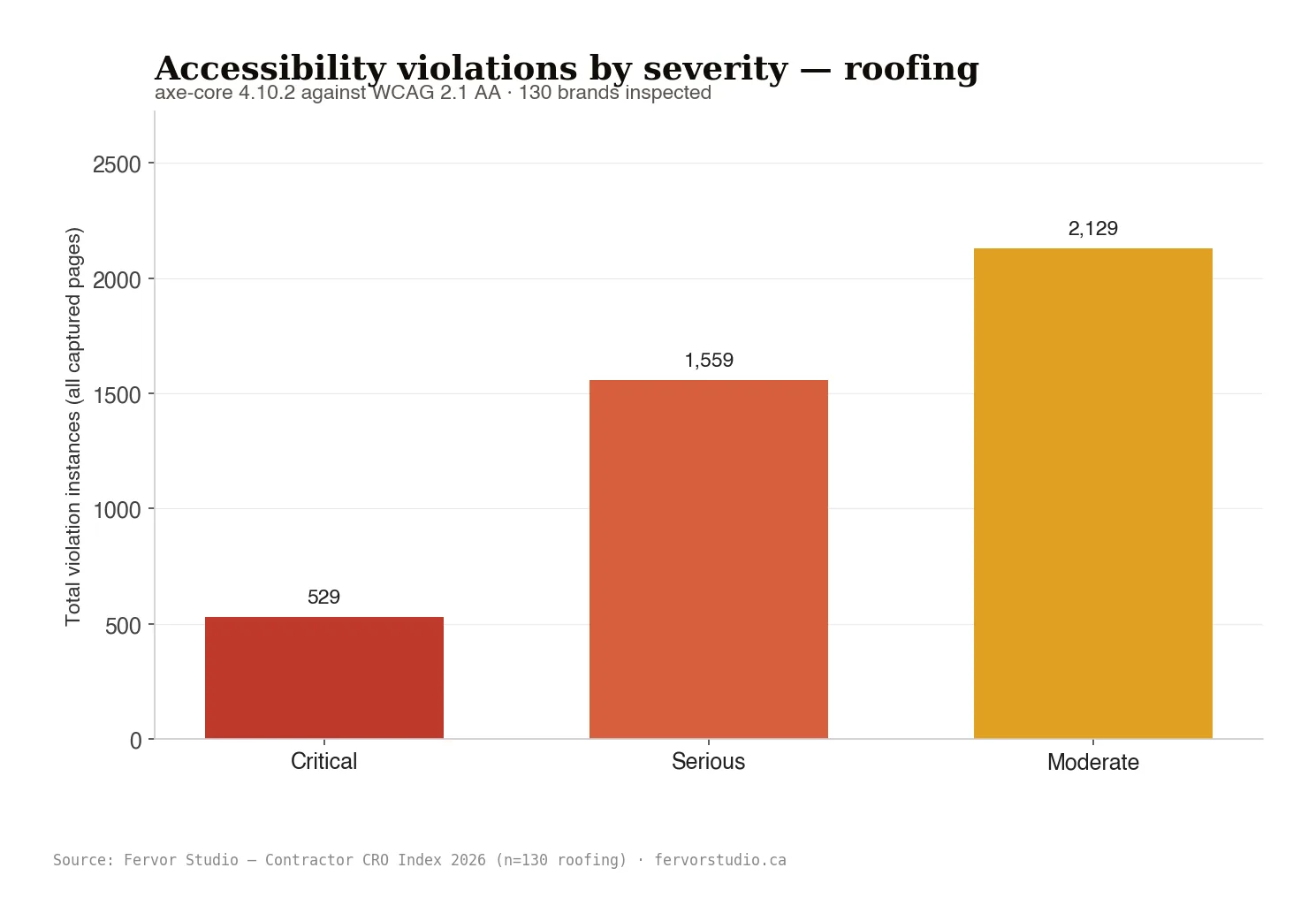
60.8% of roofing sites we tested fail a critical accessibility check
Digital State of the Roofing Industry 2026A grade out of 380 contractor sites
We graded 380 of them against one framework. Exactly one earned an A: Crown Industrial Roofing in Toronto, at 90 out of 100. The rest left money on the table. Here is what separates the top from the bottom.
The local detail
Every angle below comes from how Toronto actually searches, buys, and regulates — built into the page, not bolted on.
Your homepage has a job.
A homeowner decides whether to stay or leave in the first screen, before any scrolling.
So here is the single biggest leak on most Toronto roofing pages.
You do not run one ad.
So the form is filled.
So let me lay it out the way you would on a napkin.
You pay $9 a click for a roofing landing page in Toronto, then send that click to your homepage. So the homeowner lands on a site built for ten different jobs, scrolls past your gutter gallery, hunts for a phone number, and leaves. And that click cost you money whether or not it turned into a booked estimate. On a typical Google Ads day in Etobicoke or Scarborough, you might burn through forty clicks before lunch. So that is the leak. Your roofing landing page in Toronto was never the homepage, and the homepage shows it.

Your homepage has a job. It tells the whole story of your shop, links to every service, shows your truck wrap, lists the neighbourhoods you cover from Leaside to the Beaches. So it does eight things at once, which means it does none of them well for a homeowner who clicked an ad about a leaking roof at 11pm.
But a paid click is a different animal. The person searched "roof repair Toronto," saw your ad, and clicked because they have one specific problem right now. So your homepage greets them with a menu when they wanted a door.
"97% of roofing customers expect a callback within one week. More than 50% expect a callback within two days." — Roofing Contractor Magazine (2024)
So if more than half want a callback inside two days, a homepage that buries your number behind a menu is already losing them. And every bounce on paid traffic is money you spent, gone.
So build a separate page for the ad. Match the page to the search. Someone who clicked an ad for storm damage in North York should not land on the same page as someone planning a full reroof in Riverdale. And each page does one job, makes one ask, and gets out of the way.
When you split your Toronto traffic across a homepage built for everyone, your cost per booked estimate climbs. So say you spend $2,000 a month on Google Ads. At a 4% homepage conversion rate, that is roughly twelve leads. But the same spend at 9% on a focused page is twenty-seven leads. Same budget, and more than double the work for your crew.
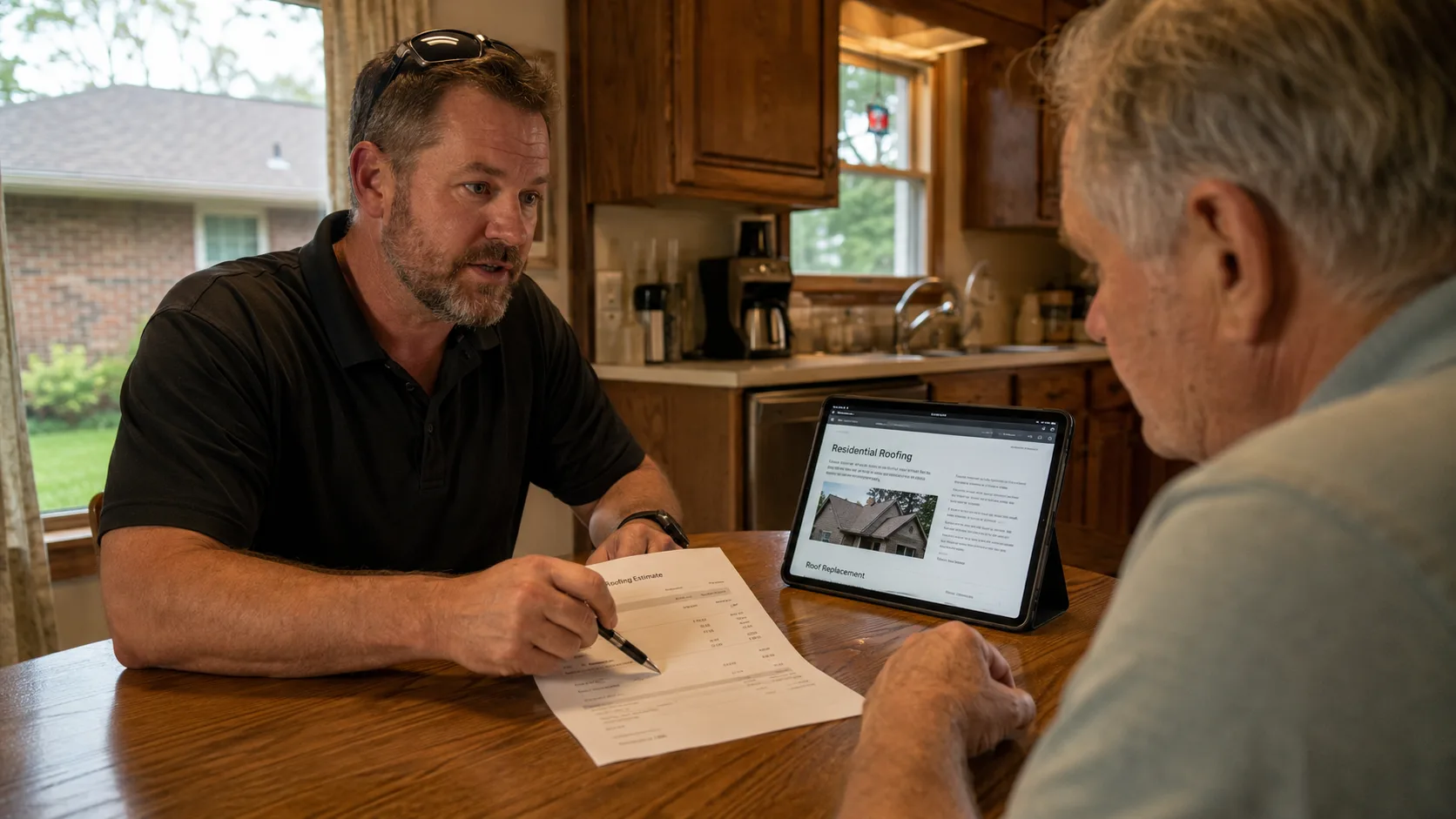
A homeowner decides whether to stay or leave in the first screen, before any scrolling. So everything that matters has to live above the fold on a phone, because most of your paid clicks come in on mobile across Toronto.
And three things have to be there. A headline that matches the ad and names the worry. A call button that never hides. Proof sitting right beside the ask, not buried three screens down. So a focused roofing landing page in Toronto puts all three in the first screen.
So if your ad said "Emergency Roof Repair in Toronto," the headline says that back, word for word. The homeowner needs to know in half a second they are in the right place. And the headline names the worry too. "Water coming through your ceiling in East York? We can be there today." That is the worry, named, with a place attached.
"Among renovating homeowners, 44% add or redo a roof as part of their exterior projects." — Houzz Inc. (2024)
So with nearly half of exterior projects touching the roof, the homeowner who clicked your ad is rarely a tire-kicker. And they want to see the worry they searched for, named back, in plain words.
So your phone number should be a tap-to-call button stuck to the top of the screen and repeated at the bottom. It follows the homeowner down the page. Because half your callers are standing in a wet hallway in Mimico looking for a human, not a contact form. And put a review count, a Google star rating, and a line about being insured right next to that button. The proof and the ask share the same screen. So the homeowner sees "4.9 stars, 212 reviews, fully insured" the same moment they see the button to call you.
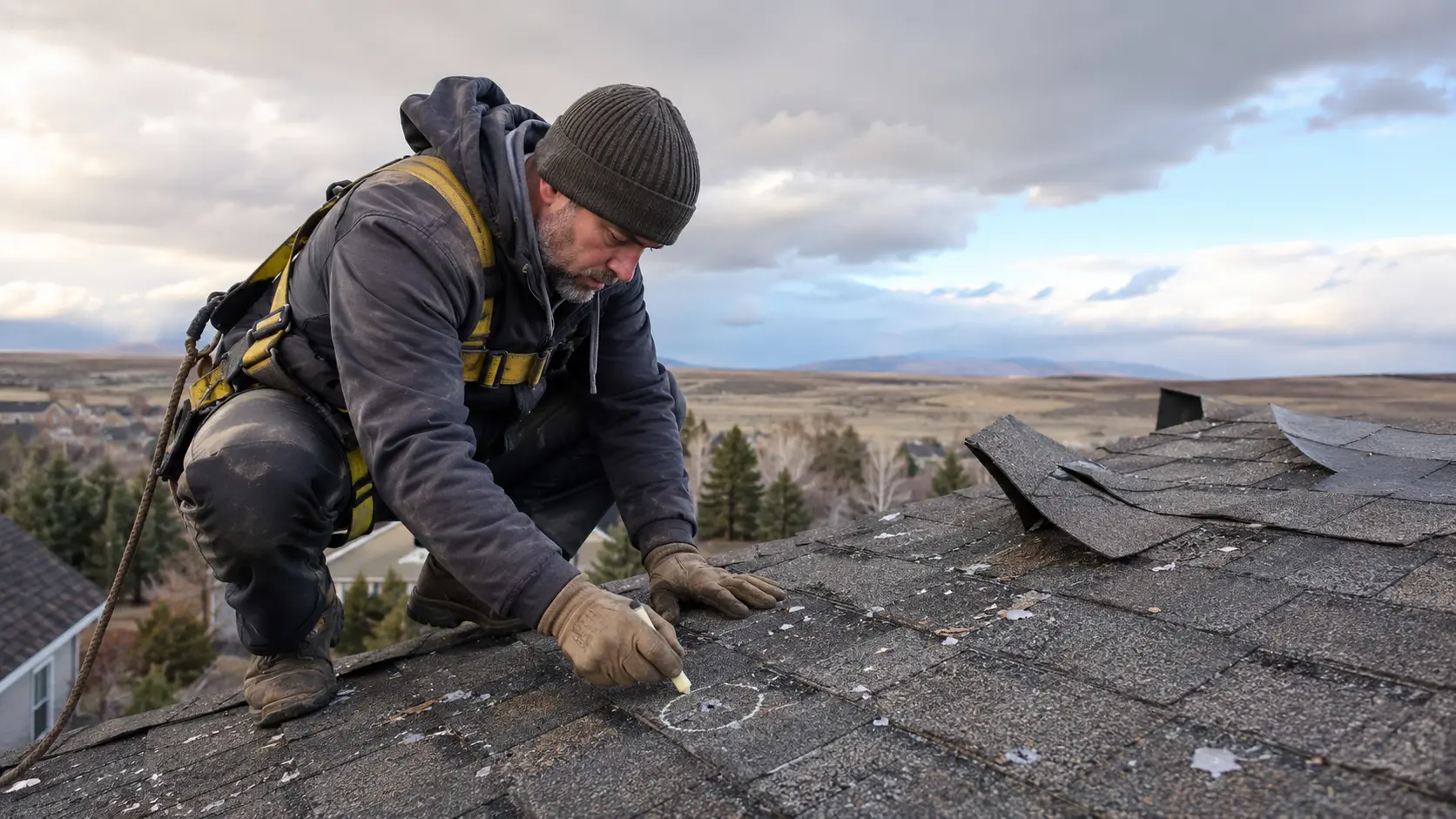
So here is the single biggest leak on most Toronto roofing pages. The form. Every field you add is another reason for the homeowner to quit before they hit submit. And contractors love long forms, because more fields feels like better leads. But it is the opposite.
So cut the form to four fields. Name. Phone. Address. What is wrong. That is enough to call them back and book the estimate. And everything else you ask after you have them on the phone.
So every dropdown, every "how did you hear about us," every optional comment box costs you submissions. Say your page gets 300 visitors a week from ads in High Park and the Annex. A fourteen-field form might convert 3% of them. But a four-field form might convert 8%. So that is the difference between nine leads and twenty-four, on the same ad spend.
And skip the email field. Get the address instead. A roofer needs to see the roof, and the address lets you pull it up on satellite before you even call back. So the homeowner would rather give you a street in Don Mills than type out an email on a cracked phone screen in the rain. Next to the button, tell them what happens when they tap it. "We call you back within the hour, not next week." That one line dissolves the fear that they are about to get spammed, because they have filled out forms before and heard nothing back.
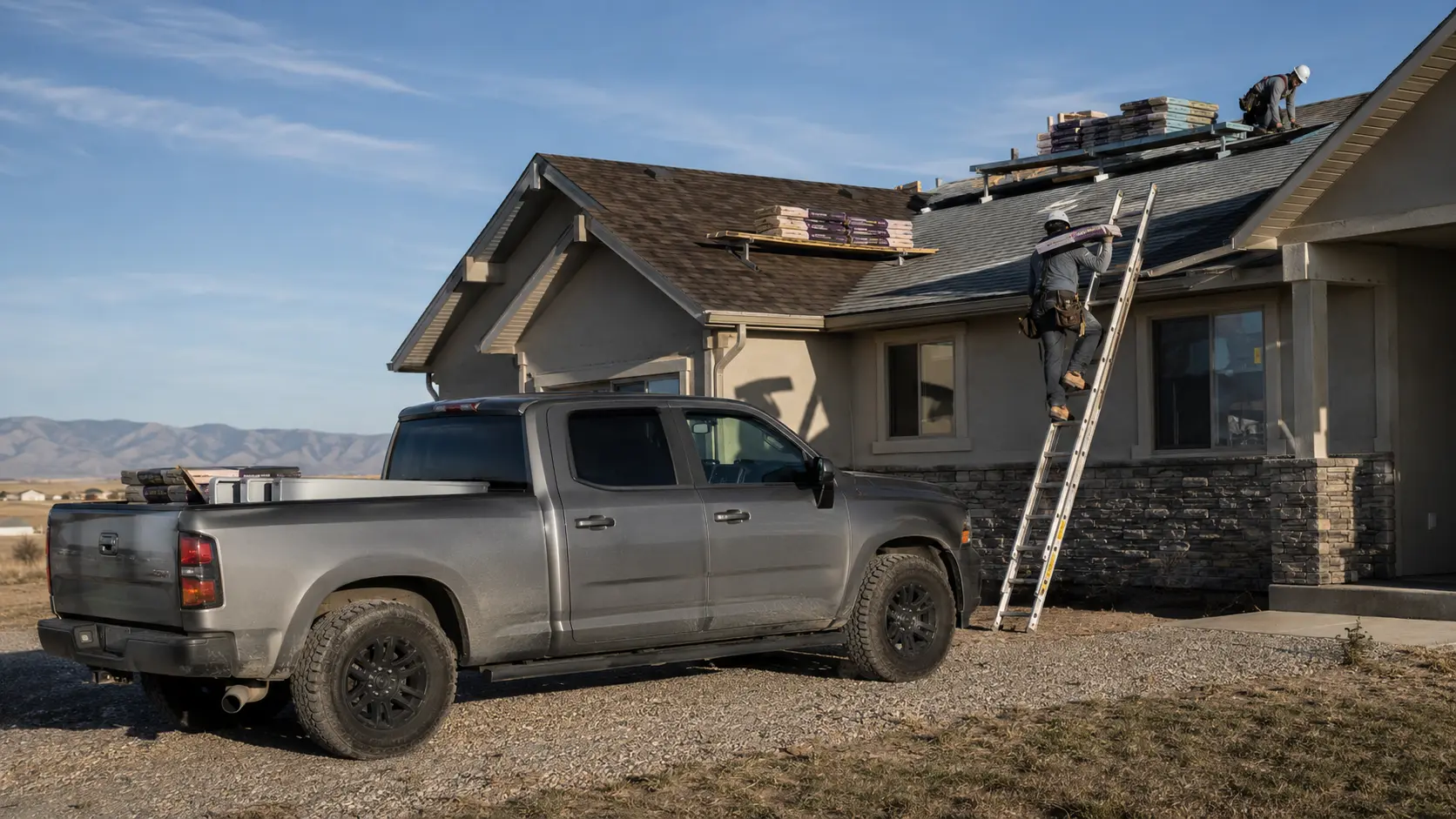
You do not run one ad. You run several. Storm and emergency, full replacement, energy efficiency. So you need a page for each, because the homeowner behind each search is in a completely different headspace.
"Among homeowners undertaking a roofing project, 63% choose asphalt roofing material (dimensional shingles 34%, three-tab shingles 19%, luxury shingles 10%), while 14% choose metal and 11% choose synthetic material or rubber." — Houzz Inc. (2024)
So when nearly two in three pick asphalt, your replacement page should lead with the shingle line your Toronto crew installs most, not the metal option one in seven want. And the page meets the homeowner where the demand really sits.
So after a wind event rips shingles off roofs across Toronto, the emergency page leads with "today." A photo of your truck. A tap-to-call button. No talk of warranties or material choices yet. And the person in Weston with a tarp on their roof wants to know you can show up, not that you offer fifty-year synthetic.
"In hail-prone states, average roof lifespan is 15 years vs 22 years in milder western states; 38% of U.S. homes have roofs in moderate to poor condition (Roofing Contractor) with 60% higher loss costs" — Verisk Analytics (2025)
So when nearly four in ten roofs sit in moderate to poor shape, a storm just exposes what was already failing. And your emergency page should promise a fast callback and mean it.
A reroof is a planned $13,000 decision in Toronto, not a panic. So that page can breathe a little. Show the material options, the crew, the warranty, a few before-and-afters from Bloor West Village.
"In 2024, 22% of renovating homeowners undertook roofing upgrades, with a median spend of $13,000." — Houzz Inc. (2025)
"The median spend on roofing upgrades in 2024 was 8% higher than in 2023 (median $13,000 in 2024)." — Houzz Inc. (2025)
So with that median climbing 8% in a year, the homeowner planning the spend is comparing three quotes hard. And the replacement page sells trust and clarity over speed.
And plenty of Toronto homeowners reach the reroof decision and stall on how to pay for it. So the page that names the funding path early keeps them moving.
"Among homeowners who renovated in 2024, 84% used cash from savings and 29% used a credit card to fund renovation projects (multiple funding sources allowed)." — Houzz Inc. (2025)
So when most pay from savings but nearly a third reach for a card, a line about financing options on the replacement page in Forest Hill removes a silent reason to bounce. And it does that without a single hard-sell word.
So the form is filled. The lead is in. And now the clock that decides whether you win the job has already started, and most roofers lose it in the first hour. Because the lead sat in an inbox while the crew was on a roof in Agincourt.
A lead that submits at 2pm and hears from you at 6pm is a cold lead. So they filled out three other roofing forms while waiting on yours. And the first roofer to call usually books the estimate, full stop.
So the second the form submits, an automatic text goes out. "Got your message about the leak on Glebemount Avenue. Calling you in ten minutes." And that text buys you the slot in their head before a competitor reaches them. A Toronto roof takes the worst of it too. Freeze-thaw cycles all winter pry at flashing, ice dams back water up under the shingles, and every January thaw turns a small leak into a ceiling stain. So when that homeowner finally calls, the damage is already spreading, and slow follow-up means it spreads on your competitor's watch instead of yours.
So let me lay it out the way you would on a napkin. You spend $3,000 a month on roofing ads in Toronto. At a 4% conversion rate, that is twelve booked estimates. And you close one in three, so four jobs. At a $4,000 average reroof, that is $16,000.
Now double the conversion rate to 8%, same spend, same close rate. So twenty-four estimates, eight jobs, $32,000. You did not spend a dollar more on ads. But you stopped the page from leaking.
"From 2021–2023, homeowners spent $93.5B on roofing across 8.3 million projects (AHS-based estimates)." — U.S. Census Bureau and U.S. Department of Housing and Urban Development (2024)
So with that much money moving through roofing, the Toronto market behind your ads is not the problem. And every wasted click in Parkdale is a slice of that spend you handed to the page instead of your crew. So the fix is the page, not a bigger budget.
So we did an inspection of roofing websites across the trade, and the pattern was the same shop after shop. Great crews, real reviews, twenty years on Toronto roofs, paying for clicks that landed on a homepage built to do everything and convert nothing.
So we start by looking at where your traffic really goes and where it leaks. We map each ad to the page it should hit, cut the form to the four fields that book an estimate, pin the call button, and put the proof beside the ask. And then we wire up the text-back so the lead hears from you in minutes, not hours.
And you can see the whole thing for yourself first. We offer a free Site Inspection of your current setup, no sales call attached. So we pull up your page, count the form fields, time the follow-up gap, and show you exactly where the clicks you already paid for are slipping through. Then you decide what to do with that. No pitch, no pressure, just the numbers on your own roof.
The evidence
 Read the full report →
 0
contractor sites graded, one A
Across the whole CRO Index, a single site earned an A. The median landed at a D. The grade gap is a conversion gap.
0 %
of roofing sites fail a critical accessibility check
Scored against WCAG 2.1 AA with axe-core. A page that blocks a screen reader also blocks a paying customer.
Fervor Roofing State of the Industry, 2026
0 %
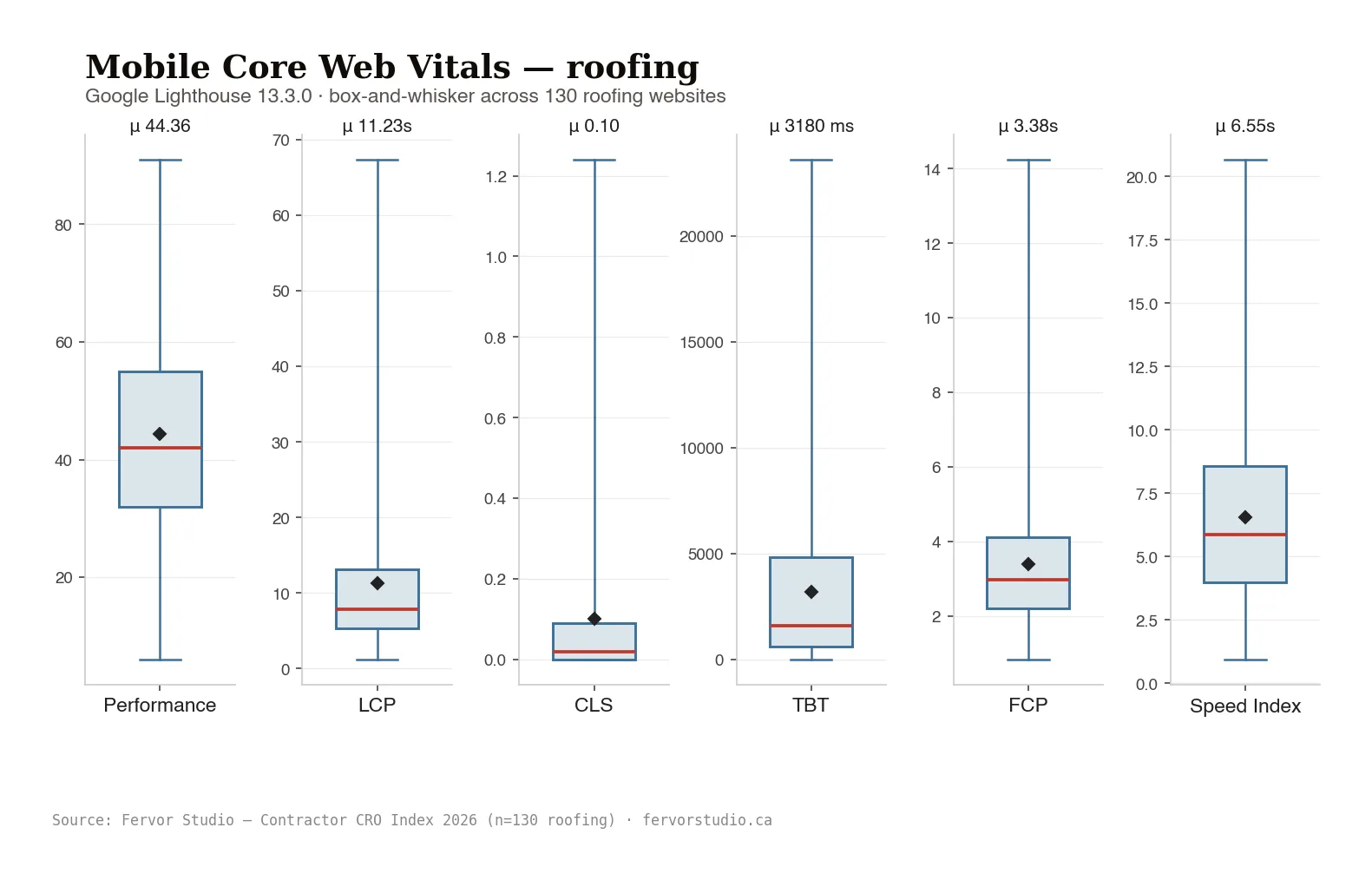
miss Google's mobile load-speed bar
Median mobile load lands at 7.88 seconds. Most of your traffic is on a phone, and most of them are gone before the hero paints.
Fervor Roofing State of the Industry, 2026
0 /100
is the average roofing grade
That is a D. The sites booking the work are not the ones with the biggest crews. They are the ones a few points higher on the things homeowners feel.
Two ways to start
Tell us where you are. We point you at the right next step — no sales call to get there.
Client review
“Nay did an amazing job, you know. He was really patient. He got the work done the way I told him and he was just on point with the website. Pretty straightforward process. No going around the bush. He just did amazing work and I would 100% recommend.”
How Fervor can help
Identify and patch the top conversion killers on your existing site. No full rebuild needed.
Monthly SEO, content, and CRO. Fixed deliverables. No credits, no rollover. The compound growth engine.
Complete website system built to convert storm leads, planned projects, and research-phase homeowners into booked jobs.
GBP optimization, citation building, and review system foundation. The infrastructure that gets you into the Map Pack.
One conversion-built landing page for the referrals, paid clicks, and cold-call leads you send. They land on a page built to book them, not your generic homepage.
Your move
Tell us where you are. We point you at the right next step — no sales call to get there.
Keep going