0
contractor sites graded, one A
Across the whole CRO Index, a single site earned an A. The median landed at a D. The grade gap is a conversion gap.
You're getting clicks in New Orleans. They're just not calling. We rebuild your site around the one job that matters: turning a visitor into a booked job.
Starts with a Site Inspection, so you see the plan before any build begins.
“Patient, on point, straightforward. Did amazing work. Would 100% recommend.” — Ruben Mederos, HyperTemp HVAC
“Responsive, creative, exceeded expectations. Already seeing greater engagement from our clients.” — George Jeorgy, Jeorgy's Landscape Construction
“Top-tier professionalism, real web design expertise, ideas I hadn't considered. Confidently recommend.” — Aws Nassani, Four Eleven Contracting



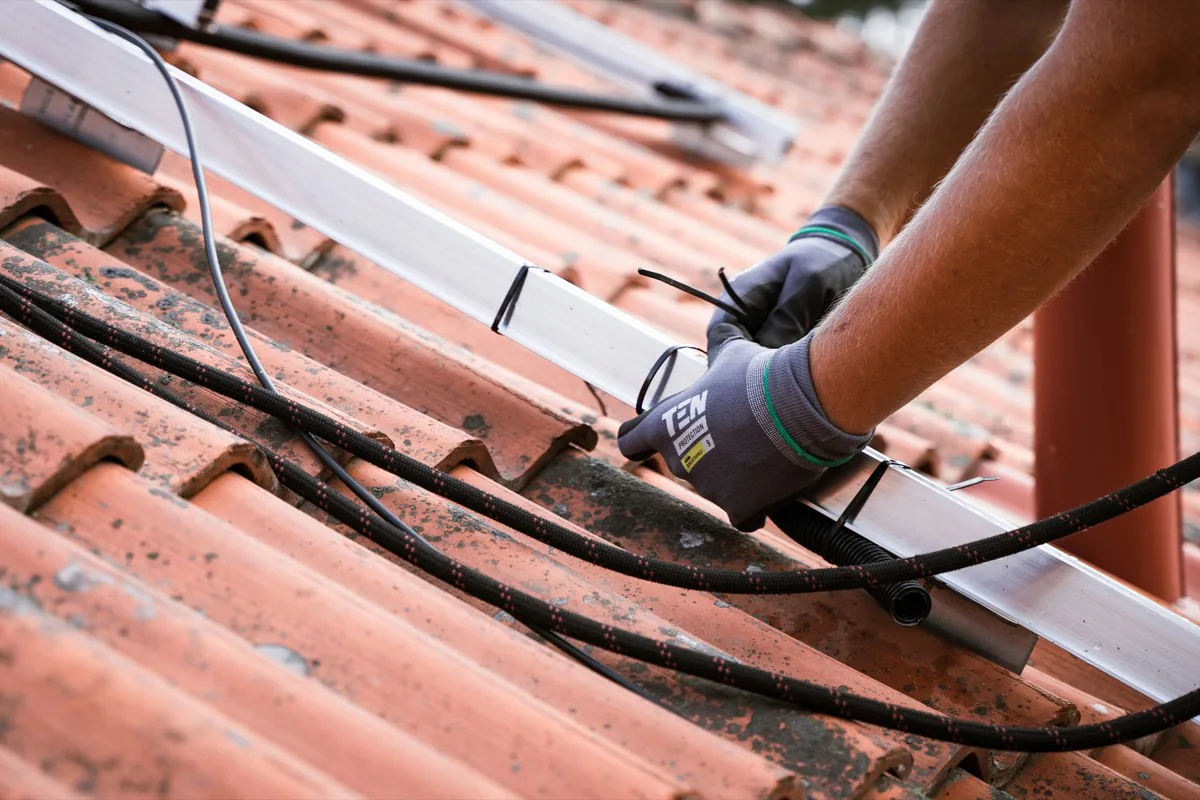
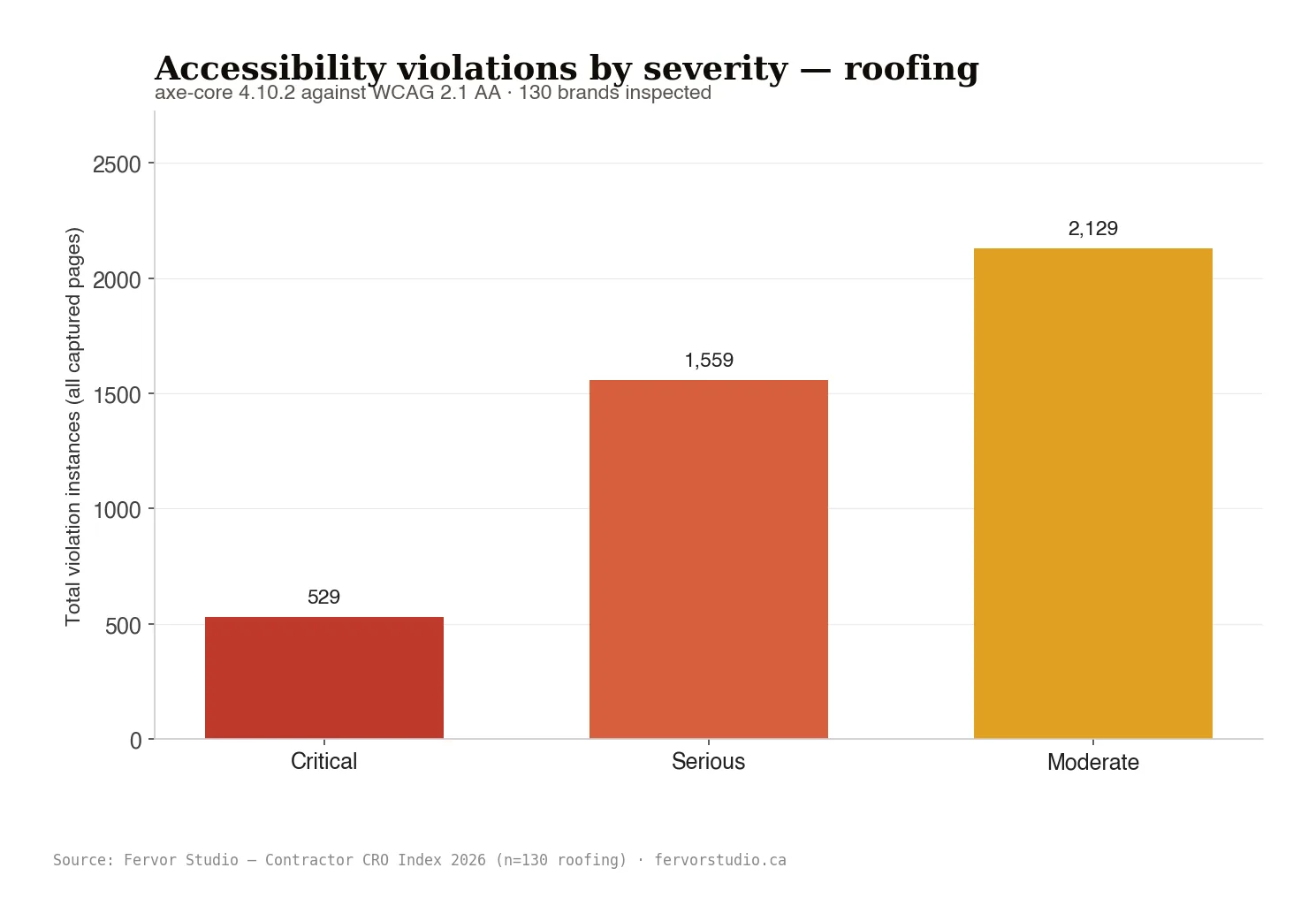
60.8% of roofing sites we tested fail a critical accessibility check
Digital State of the Roofing Industry 2026A grade out of 380 contractor sites
We graded 380 of them against one framework. Exactly one earned an A: Crown Industrial Roofing in Toronto, at 90 out of 100. The rest left money on the table. Here is what separates the top from the bottom.
The local detail
Every angle below comes from how New Orleans actually searches, buys, and regulates — built into the page, not bolted on.
Here’s the thing about a roofing website in this town.
The single most important pixel on a roofing site is the phone number, and it has to be a tap-to-call link, not an image, sitting above the fold on mobile.
People in a panic don’t trust strangers.
Now the question every owner asks.
Here’s the mistake that costs the most.
So a squall line rolls through Gentilly at 4 p.m., and by 4:20 a woman on Elysian Fields is standing in her driveway watching a shingle bundle peel off her neighbor's roof. She pulls out her phone. She thumb-types four words. And roofing web design new orleans owners either win that moment or lose it in the next eight seconds, because she's not waiting around. Your site loads, or she taps the next result. There's no third option when the sky just did that to her block.
And that's the whole game. So it comes down to one panicked search, one driveway, one shot to turn fear into a booked estimate before she bounces.
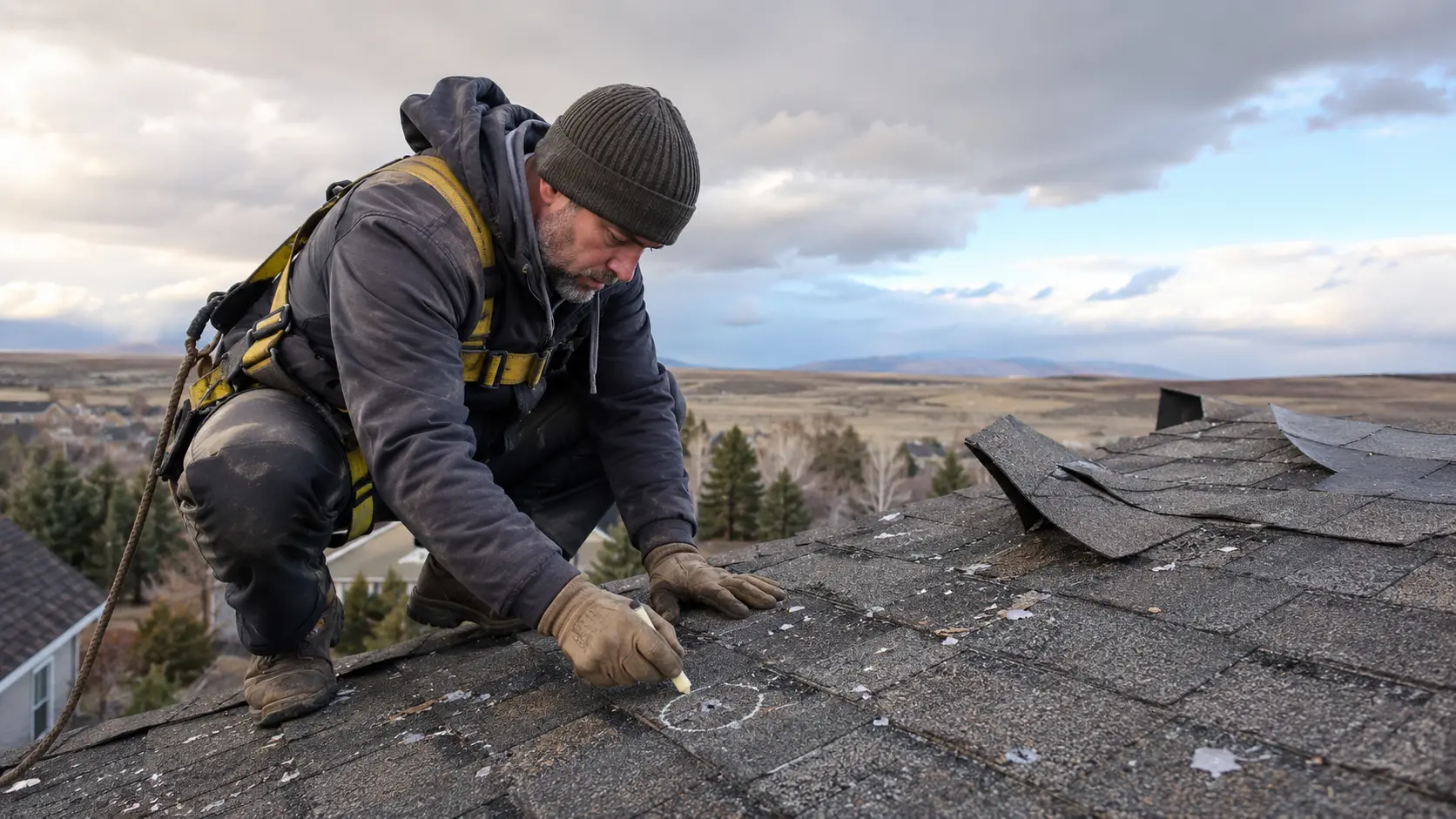
Here's the thing about a roofing website in this town. It has exactly one job during a weather event, and it's not to look pretty in your portfolio. And it's to catch the homeowner mid-panic and hold her long enough to call you.
But most contractor sites treat the homepage like a brochure. Big hero photo, a slow carousel, an "About Our Family" paragraph above anything she can act on. And she's not reading your origin story while water's coming through her ceiling in Broadmoor.
"97% of roofing customers expect a callback within one week. More than 50% expect a callback within two days." — Roofing Contractor Magazine (2024)
So if half of them want a human voice inside 48 hours, every minute your page makes them wait is a minute the shop in Metairie with the faster site is already on the phone. And the loss math is simple. So say a storm drives 40 searches to local roofers in a week and you average a $9,000 reroof. Lose ten of those to a sluggish page and that's $90,000 walking to a competitor, in seven days, while your trucks sit idle.
And it's not that your work is the problem. You're the one who's been on Uptown roofs for fifteen years. The problem is the site treats a 4 p.m. emergency the same as a Tuesday curiosity click. And storm traffic is a different animal. So it's fast, scared, and mobile, and it judges you in the first screen.
When she lands, she wants three things she can see without scrolling: that you're local, that you answer fast, and that you've fixed a roof like hers before. So give her that above the fold and she stays. But bury it under a slideshow and she's gone to the next tab.
Now picture where she's standing. Not at a desk. In a driveway in Lakeview, on cell data, maybe one bar because the storm knocked a tower sideways. Your site has to load there, fast, on a cracked iPhone in bright sun.
So the design has to be mobile-first in the real sense. Not "it shrinks down okay." Built for the thumb first, the desktop second. And a four-second load on a weak LTE signal is the bar. So every second past that and you bleed people. Google's own data has pegged bounce climbing sharply between one and five seconds, and a driveway in the rain is the worst-case version of that.
"In hail-prone states, average roof lifespan is 15 years vs 22 years in milder western states; 38% of U.S. homes have roofs in moderate to poor condition (Roofing Contractor) with 60% higher loss costs" — Verisk Analytics (2025)
And down here the roofs take a beating. Gulf humidity, summer hail, and the slow rot that comes with 90% July afternoons mean a lot of Orleans Parish roofs are already in that "moderate to poor" bucket before the next storm even hits. So the volume of panicked searches per storm is higher here than in milder markets. Your page has to be ready for the surge, not crawling through it.
But here's where shops sabotage themselves. They load the homepage with a 4 MB hero video, three web fonts, a chat widget, and a stock-photo slider. On office wifi it feels snappy. In a Mid-City driveway on one bar it's a white screen for eight seconds, and eight seconds is forever to a scared homeowner.
So go do this right now. Open your site on your phone, turn off wifi, stand outside. Count the seconds to the first button you can tap. If it's past four, you already know what's happening every storm.
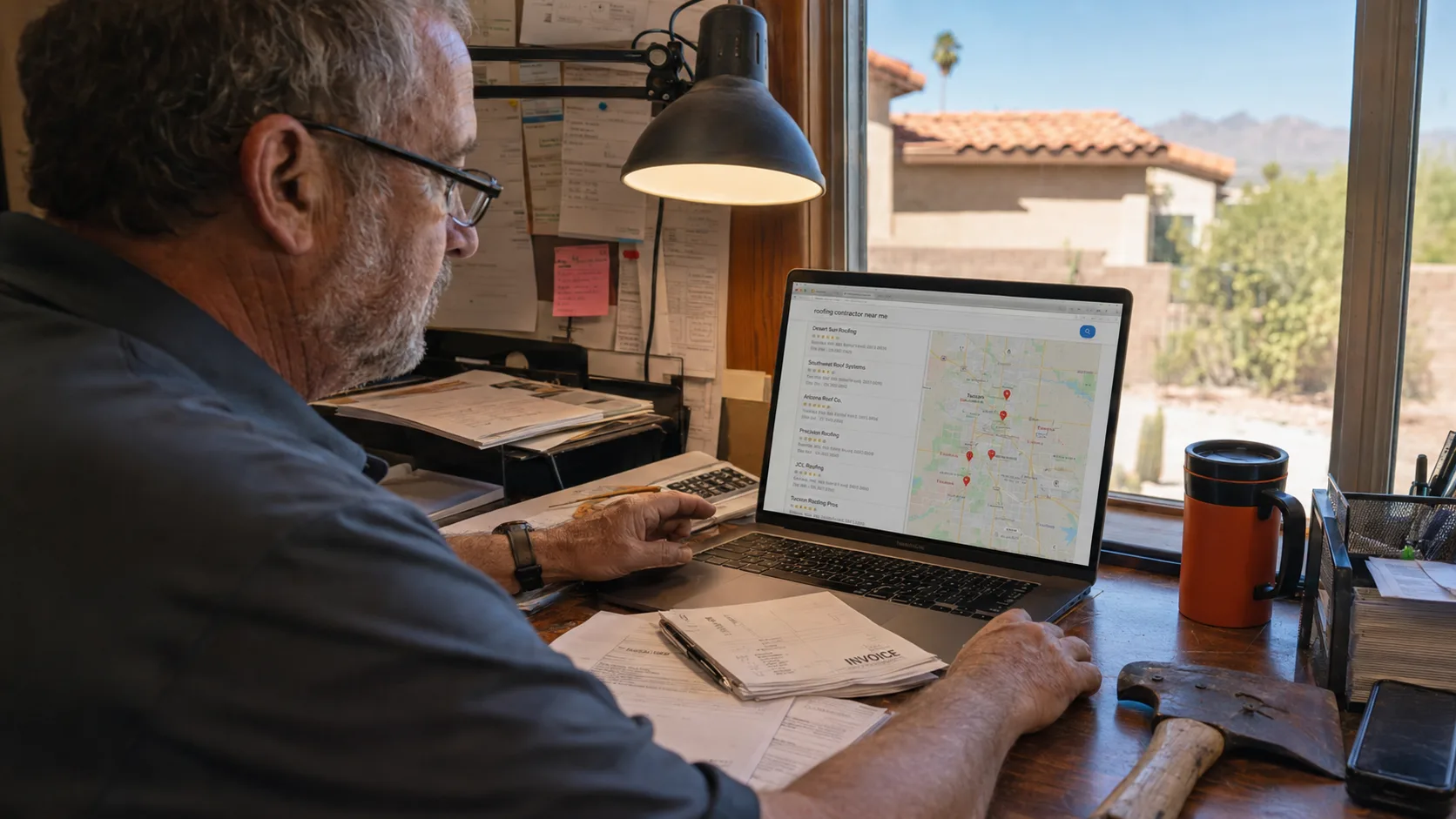
The single most important pixel on a roofing site is the phone number, and it has to be a tap-to-call link, not an image, sitting above the fold on mobile. She shouldn't have to pinch, scroll, or hunt. So thumb lands, phone rings.
"Among renovating homeowners, 44% add or redo a roof as part of their exterior projects." — Houzz Inc. (2024)
And nearly half of exterior projects pull in a roof, so the person who calls about a leak today often signs for gutters and fascia too. So that first call is worth more than the leak. And miss it and you miss the whole job.
But a lot of sites bury the number in a footer or hide it behind a "Contact" tab. So she taps around, gets frustrated, and dials the next shop. One tappable number near the top, repeated again after the proof, is worth more than any animation you could add.
And for the after-hours leak, the people who won't call at 10 p.m., you need a form. A short one. Name, phone, address, what's wrong. Four fields. Every extra field you add drops completion, and an eleven-field form with "How did you hear about us?" and "Preferred contact method" is a form she abandons. Ask less, book more.
So pair the two. Big call button for the panicked, short form for the after-hours, and a one-line promise of when you'll respond. Tell her she'll hear back within two hours and you've answered the question every Verisk and Houzz number says she's silently asking.
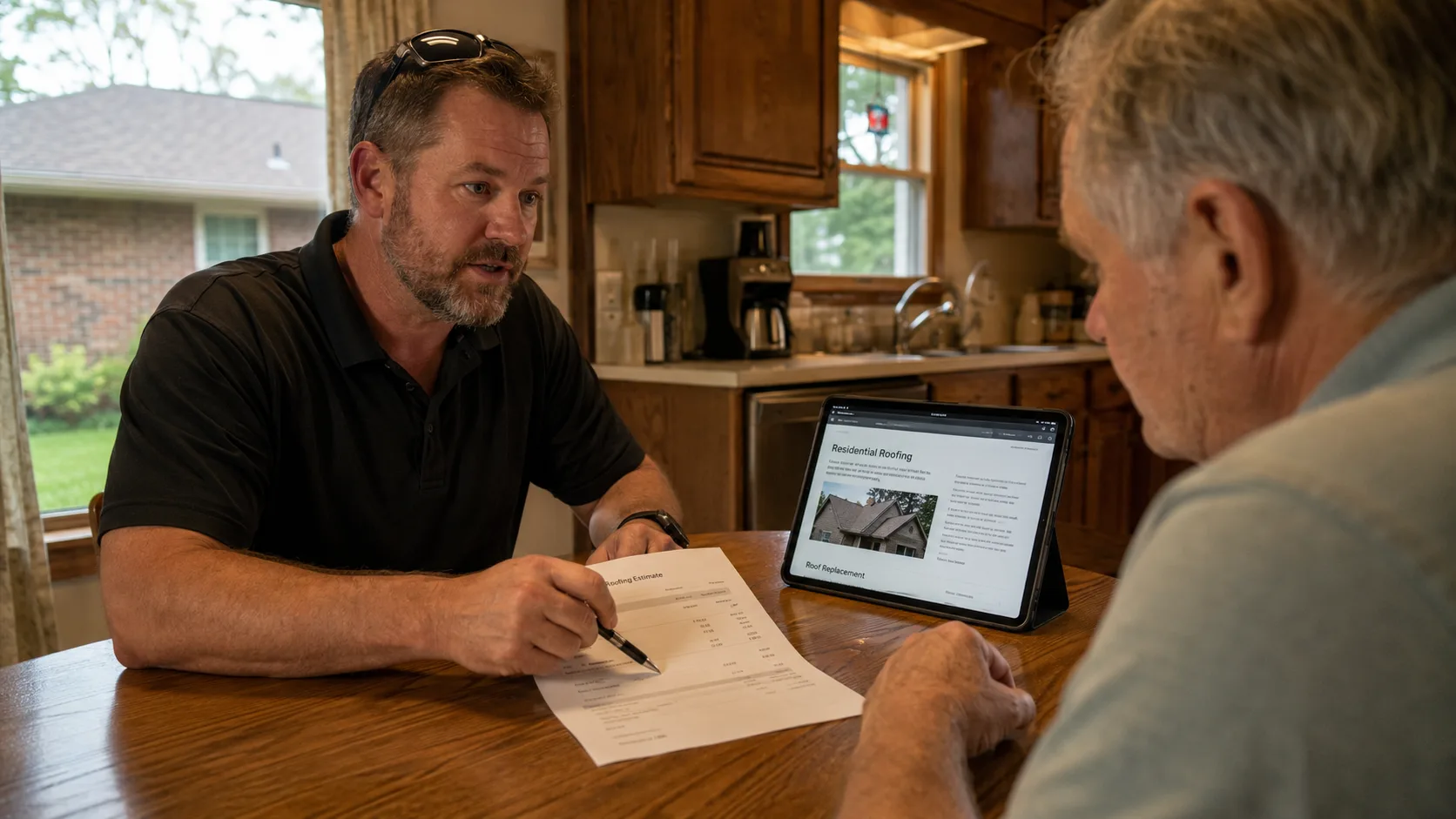
People in a panic don't trust strangers. So the reviews and the real-roof photos can't live on a separate "Gallery" page she'll never click. They sit right next to the phone button, where her eye already is.
"In 2024, 22% of renovating homeowners undertook roofing upgrades, with a median spend of $13,000." — Houzz Inc. (2025)
And when the median roof job runs around $13,000, she's not handing that to whoever shows up first. She's handing it to whoever feels safest. So three real photos of a tear-off you did in Algiers, a five-star count she can tap to read, and a license number in plain sight do more than a paragraph of adjectives ever could.
But skip the stock photo of a generic suburban house that's clearly not from here. Show your crew on a real New Orleans roof, the kind with the low slope and the standing-seam metal half the historic blocks run. She recognizes her own street. That recognition is trust, and trust is the booking.
So make the review count clickable, link it straight to your Google profile, and let her read the bad ones too. A perfect five with no detail reads fake. Forty-seven reviews averaging 4.8 with a few specifics about a Bywater reroof reads like a real shop she can call.
"Among homeowners undertaking a roofing project, 63% choose asphalt roofing material (dimensional shingles 34%, three-tab shingles 19%, luxury shingles 10%), while 14% choose metal and 11% choose synthetic material or rubber." — Houzz Inc. (2024)
And since most of her neighbors land on asphalt shingles, your proof should match. Show the dimensional-shingle jobs front and center, keep a metal and a synthetic example for the homeowner who wants to spend up, and let the photos answer "can you do my kind of roof" before she even asks.
Now the question every owner asks. Do you grab a $40-a-month template builder or pay for a custom build? And it's a fair question, because the cheap one looks fine on the demo.
"From 2021–2023, homeowners spent $93.5B on roofing across 8.3 million projects (AHS-based estimates)." — U.S. Census Bureau and U.S. Department of Housing and Urban Development (2024)
But look at the size of the pie. Tens of billions a year flow through this trade, and the shops capturing it are the ones whose sites load fast and convert. A template gives you a building you don't own and can't tune. When you need to shave two seconds off the load or move the call button up, you're stuck with what the platform allows.
So the template is slow because it ships generic code for a thousand businesses, it locks your photos and copy inside their system, and it can't be hand-tuned for that four-second driveway load. You save $5,000 up front and lose three jobs a storm. That math turns ugly fast.
And a custom build is the opposite. It's yours, it's tuned for speed, and the call button goes exactly where the thumb lands. You're not renting a storefront on someone else's lot. For a shop doing $9,000 jobs, one extra booked roof a month covers the difference in weeks, not years.
"Among homeowners who renovated in 2024, 84% used cash from savings and 29% used a credit card to fund renovation projects (multiple funding sources allowed)." — Houzz Inc. (2025)
And most of these people pay from savings, which means they research hard before they spend. A polished, fast, trustworthy site is what survives that research. A template that screams "I bought this for forty bucks" doesn't.
Here's the mistake that costs the most. A shop pays one vendor to build a pretty site, then a second vendor to "do SEO" later. So you get a beautiful page nobody can find, or a page that ranks but can't convert the click once it lands.
"The median spend on roofing upgrades in 2024 was 8% higher than in 2023 (median $13,000 in 2024)." — Houzz Inc. (2025)
And with jobs getting more expensive year over year, the cost of being invisible climbs with them. Every storm where you rank on page two of the local map is a storm where Kenner and Chalmette shops eat your lunch. Ranking and converting are the same build. The site structure, the page speed, the local schema, the neighborhood pages for Carrollton and Marigny, all of it has to be designed together from day one.
But split it and you get gaps. The designer doesn't build the location pages the SEO needs. The SEO bolts keywords onto a slow page that still won't convert. So you pay twice and still lose the storm search. One team, one plan, built so the thing that ranks is the same thing that books.
So treat it as one project. The fast mobile build, the click-to-call, the proof, and the local ranking signals are one system, designed to do both jobs at once. That's the only version that catches the driveway search and turns it into a roof on the truck schedule.
We started by looking. Before we wrote a line of code or pitched a single shop, we ran an inspection of roofing websites across the trade, counting load times, form fields, and missing call buttons on real contractor sites.
And the pattern was everywhere. Slow homepages, buried numbers, forms with too many fields, proof hidden three clicks deep. The same leaks, shop after shop, all of them losing the exact storm search that should've been easy money.
So that's where we start with you. Not a sales call. A free Site Inspection of your current site, where we open it on a phone, time the load, count the steps to a booking, and show you exactly where the storm leads are slipping out. You'll see the gaps yourself, on your own screen, no commitment to anything.
You keep the report either way. If you want us to build the site that plugs those leaks, we'll talk. If you just want to know what's broken before the next squall line hits Lakeview, that's reason enough to look.
The evidence
 Read the full report →
 0
contractor sites graded, one A
Across the whole CRO Index, a single site earned an A. The median landed at a D. The grade gap is a conversion gap.
0 %
of roofing sites fail a critical accessibility check
Scored against WCAG 2.1 AA with axe-core. A page that blocks a screen reader also blocks a paying customer.
Fervor Roofing State of the Industry, 2026
0 %
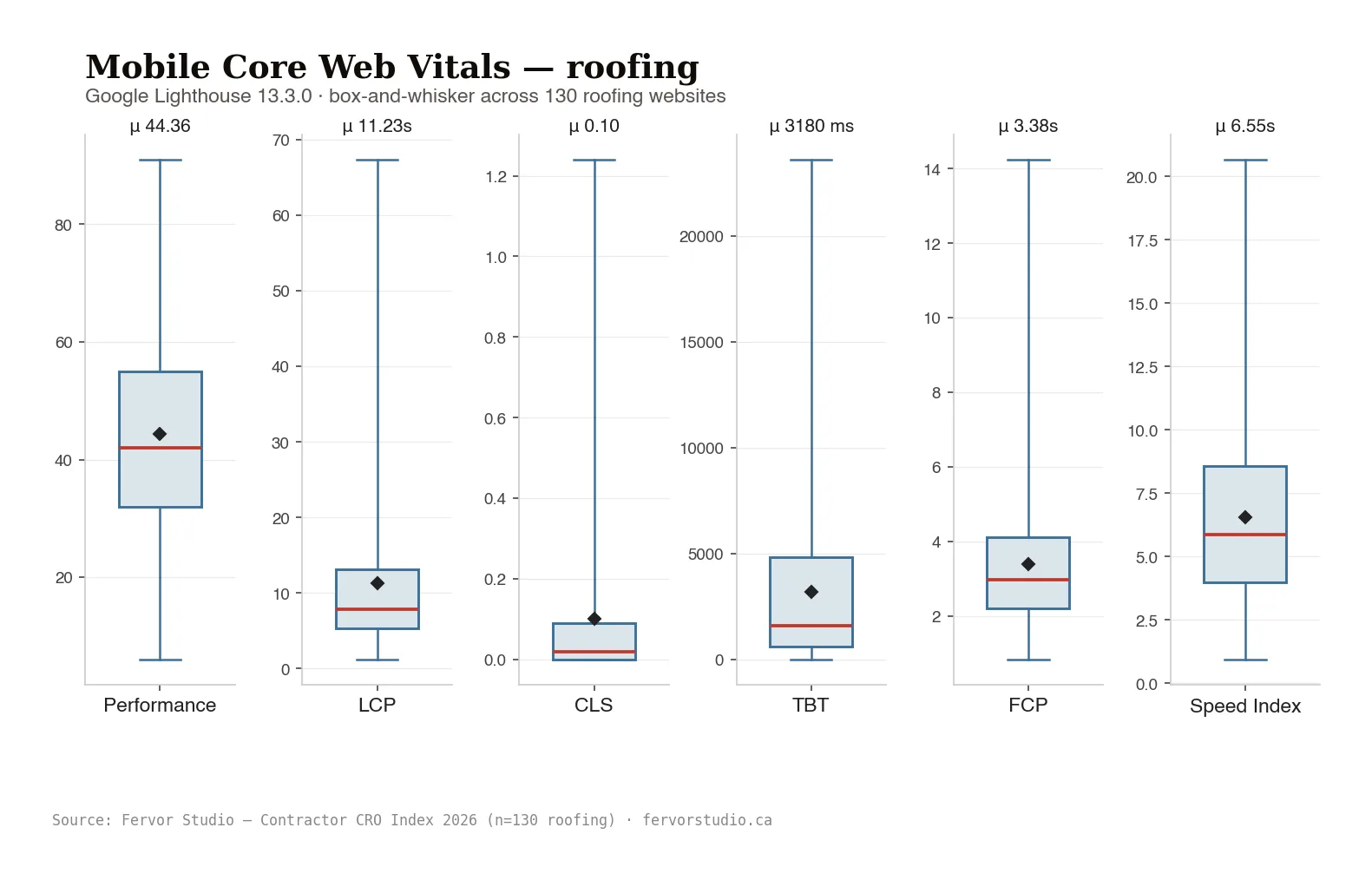
miss Google's mobile load-speed bar
Median mobile load lands at 7.88 seconds. Most of your traffic is on a phone, and most of them are gone before the hero paints.
Fervor Roofing State of the Industry, 2026
0 /100
is the average roofing grade
That is a D. The sites booking the work are not the ones with the biggest crews. They are the ones a few points higher on the things homeowners feel.
Two ways to start
Tell us where you are. We point you at the right next step — no sales call to get there.
Client review
“Nay did an amazing job, you know. He was really patient. He got the work done the way I told him and he was just on point with the website. Pretty straightforward process. No going around the bush. He just did amazing work and I would 100% recommend.”
How Fervor can help
Complete website system built to convert storm leads, planned projects, and research-phase homeowners into booked jobs.
Identify and patch the top conversion killers on your existing site. No full rebuild needed.
Monthly SEO, content, and CRO. Fixed deliverables. No credits, no rollover. The compound growth engine.
GBP optimization, citation building, and review system foundation. The infrastructure that gets you into the Map Pack.
One conversion-built landing page for the referrals, paid clicks, and cold-call leads you send. They land on a page built to book them, not your generic homepage.
Your move
Tell us where you are. We point you at the right next step — no sales call to get there.
Keep going