0
contractor sites graded, one A
Across the whole CRO Index, a single site earned an A. The median landed at a D. The grade gap is a conversion gap.
You already get traffic in Iqaluit. Most of it leaves without calling. We find the leaks and plug them, so the visitors you've got start booking jobs.
Starts with a Site Inspection, so you see the leaks before any fix begins.
“Attentive, listened to every revision request, delivered on time. Would work with him again.” — Hamza Najam
“Patient, on point, straightforward. Did amazing work. Would 100% recommend.” — Ruben Mederos, HyperTemp HVAC
“Responsive, creative, exceeded expectations. Already seeing greater engagement from our clients.” — George Jeorgy, Jeorgy's Landscape Construction
“Top-tier professionalism, real web design expertise, ideas I hadn't considered. Confidently recommend.” — Aws Nassani, Four Eleven Contracting




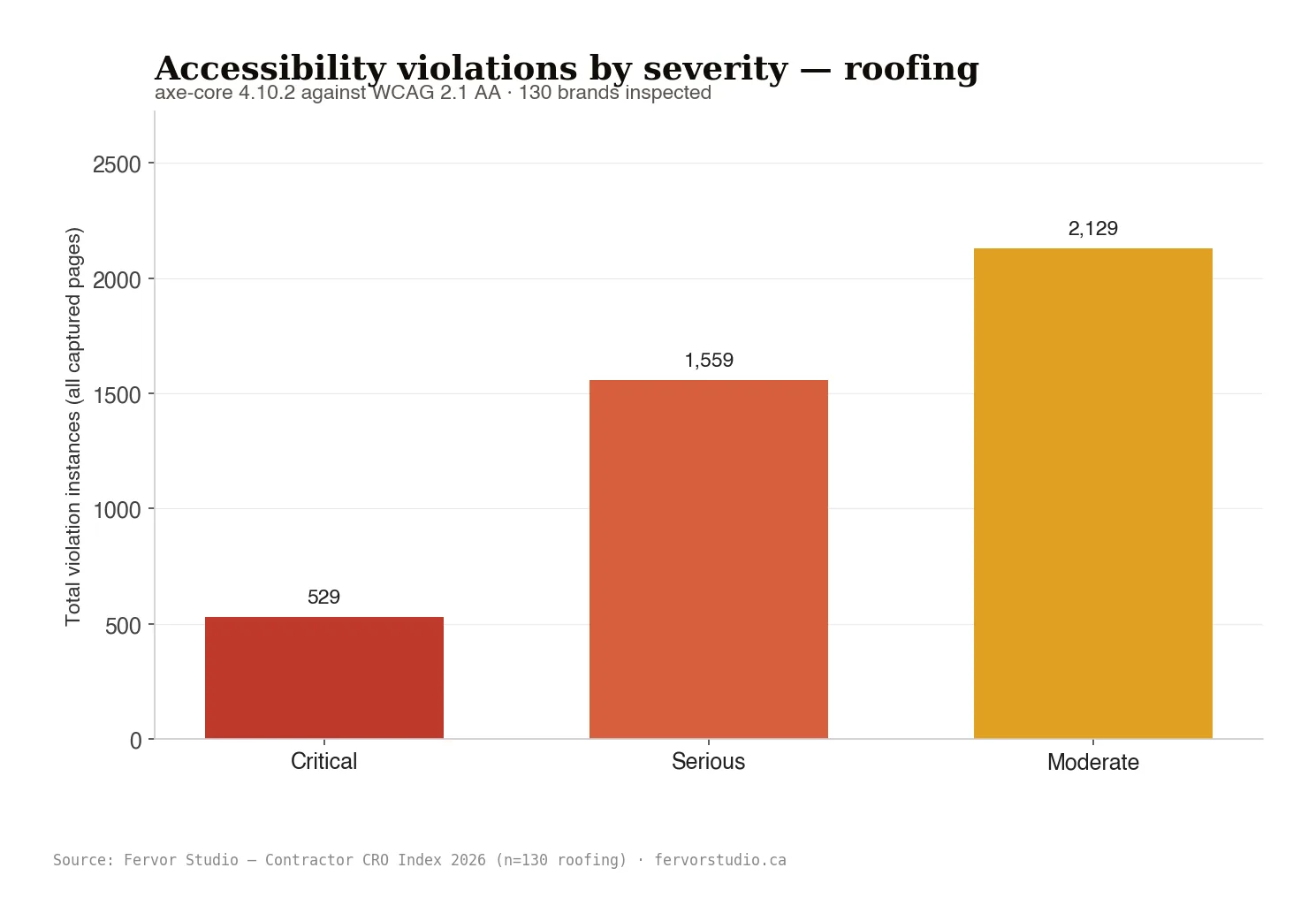
60.8% of roofing sites we tested fail a critical accessibility check
Digital State of the Roofing Industry 2026A grade out of 380 contractor sites
We graded 380 of them against one framework. Exactly one earned an A: Crown Industrial Roofing in Toronto, at 90 out of 100. The rest left money on the table. Here is what separates the top from the bottom.
The local detail
Every angle below comes from how Iqaluit actually searches, buys, and regulates — built into the page, not bolted on.
Your homepage has a job, and it’s a hard one.
Everything that matters has to fit above the fold on a phone, because that’s where 70% of your ad traffic lives.
So you’ve got the click, the headline matched, the homeowner’s interested.
You don’t run one ad, so you shouldn’t have one page.
So the homeowner submitted.
You're paying for clicks. So the only question that matters is what happens in the eight seconds after someone in Apex or Tundra Valley taps your ad. A roofing landing page iqaluit owners trust is a single screen built to take one cold click and turn it into a phone call before the homeowner gets distracted by a snow squall or their kid's hockey practice. And right now, most of that traffic is landing somewhere that asks them to think instead of act.
Here's the part that stings. You spend $1,200 a month on ads, send every click to your homepage, and book maybe four jobs. Two of those would've called anyway. So you're really paying $600 a job for the two that converted, and burning the rest on people who bounced. And that's the math nobody shows you when they sell you the ads. So a proper roofing landing page in Iqaluit is the cheapest lever you've got, because it works the traffic you already bought instead of buying more.
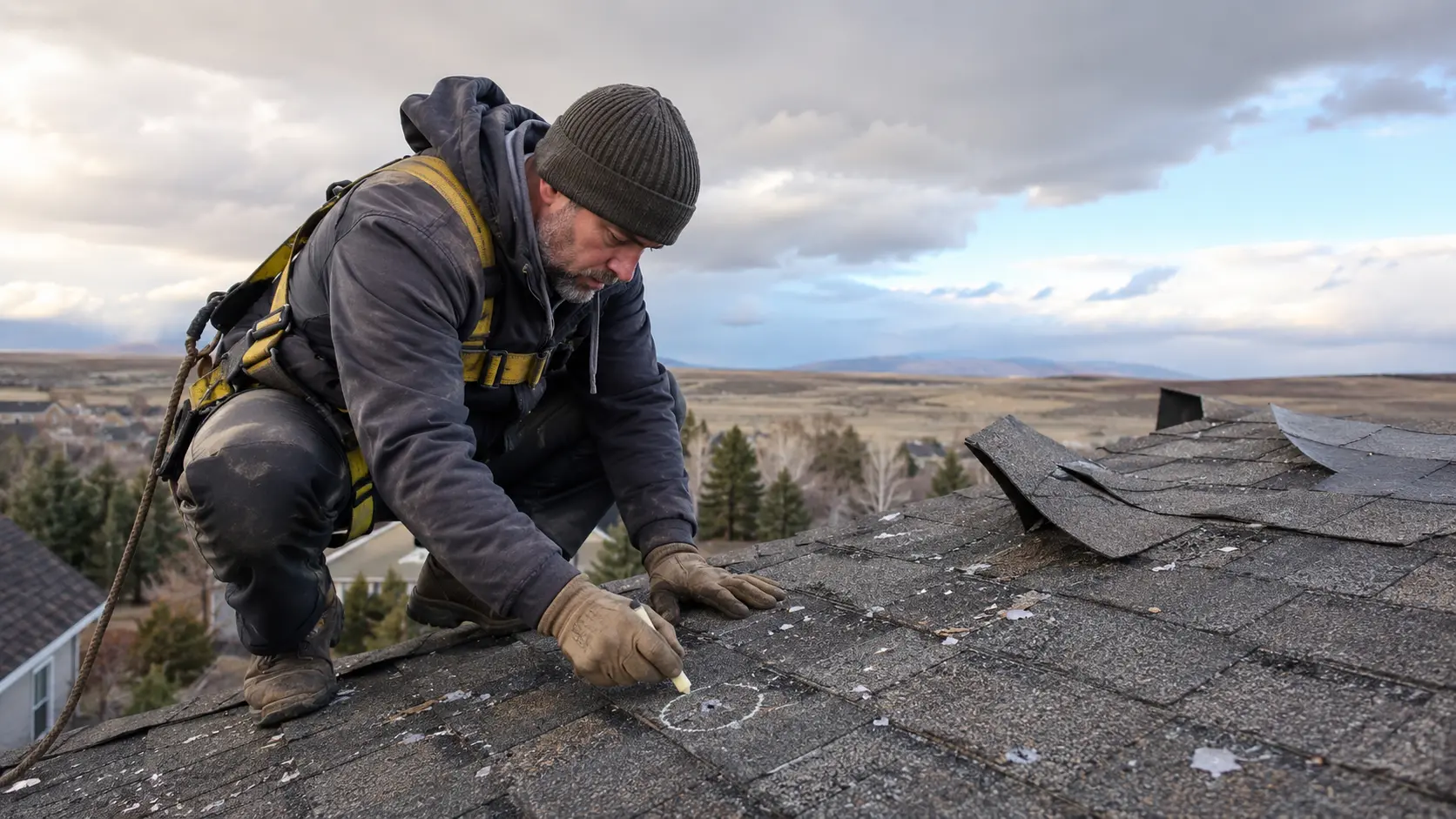
Your homepage has a job, and it's a hard one. It has to introduce your company, list every service, link to your About page, show your service area across Nunavut, and feed your blog. That's five jobs at once. A homeowner who just clicked an ad about a leaking roof in a January cold snap doesn't care about any of that.
So they skim, and then they leave. And roof work is a big enough chunk of what these homeowners are even shopping for that you can't afford to lose them on the wrong page.
"Among renovating homeowners, 44% add or redo a roof as part of their exterior projects." — Houzz Inc. (2024)
A homepage tries to serve everybody. The page that catches an ad click should serve one person with one problem. Somebody in Iqaluit clicked "emergency roof repair." So show them emergency roof repair, a phone number, and proof you've done it before. Nothing else. And every extra link is a door they can walk out of. So a focused roofing landing page in Iqaluit strips the navigation bar off entirely, because the only place you want their thumb to go is the call button.
And here's the bounce you never see. When the click hits a busy homepage, the homeowner doesn't email you to say they left. They just close the tab. You see a $7 charge and no lead. Over a month that's 60 wasted clicks at $7 each, so $420 gone, and you never knew their name. And the worst part is it looks like the ads aren't working, when really it's the destination. So you turn the ads off, the phone goes quieter, and the competitor across town who sent his clicks to a clean screen keeps booking the jobs you paid to attract.
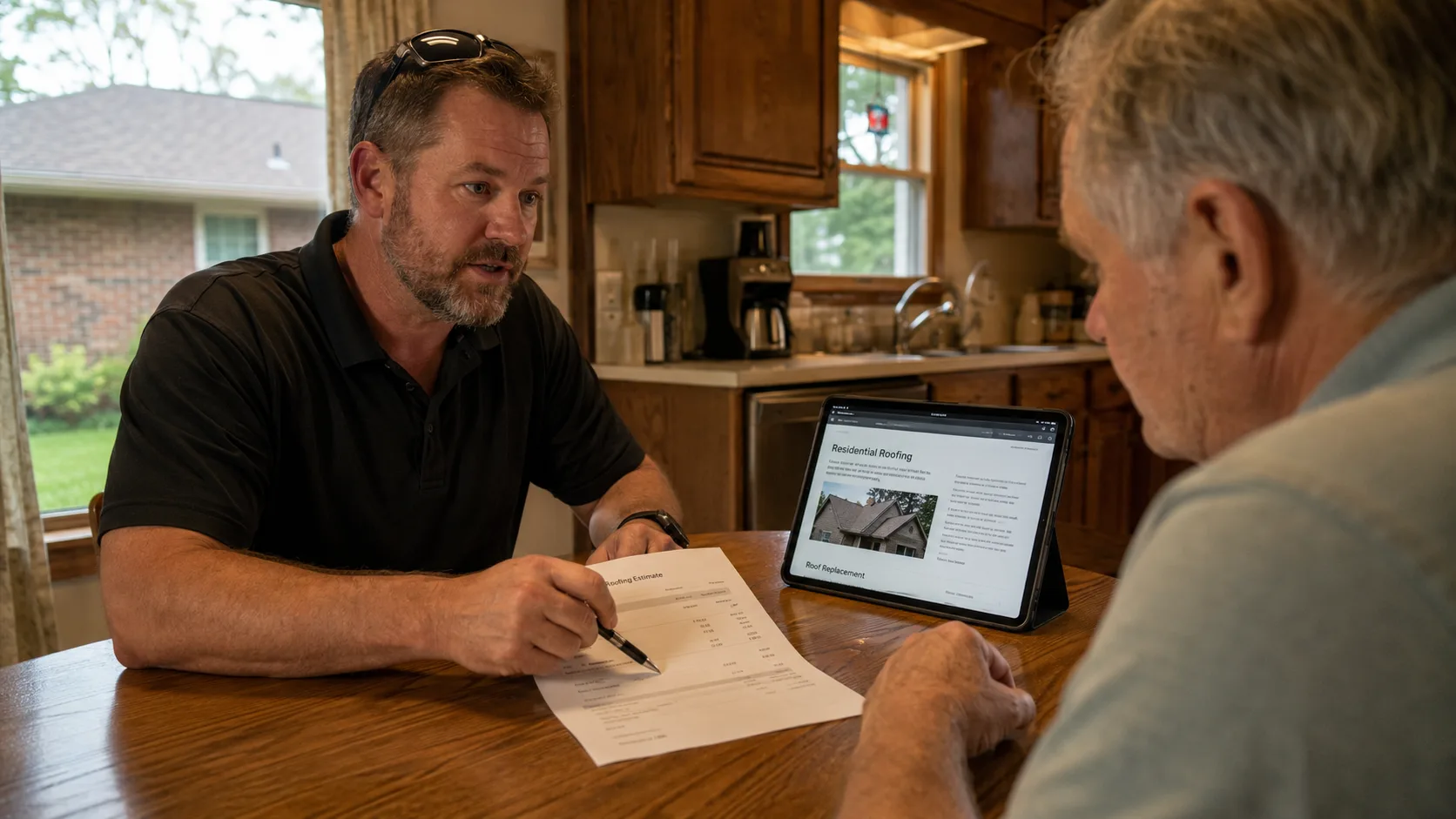
Everything that matters has to fit above the fold on a phone, because that's where 70% of your ad traffic lives. One screen. A headline, a call button, and proof sitting right beside the ask.
If your ad said "Iqaluit roof leak? We're there today," the headline they land on says the same thing back. Same words. When the page echoes the promise that made them click, they relax. When it says something generic like "Welcome to our website," they doubt they're in the right place and leave. That doubt costs you the click you already paid for.
The phone number is a button, it's red, and it follows them down the page on mobile. Not buried in a header. Not a tiny tap target their thumb misses. A homeowner standing under a dripping ceiling in Lower Base wants to call, not fill out a contact form. So make calling the easiest thing on the screen. And the spend behind that one call is real money, because roofing is a market measured in the tens of billions.
"From 2021–2023, homeowners spent $93.5B on roofing across 8.3 million projects (AHS-based estimates)." — U.S. Census Bureau and U.S. Department of Housing and Urban Development (2024)
Reviews, a license number, a photo of your truck in Iqaluit, the manufacturer badge. These don't go on a separate "Testimonials" tab. They sit right next to the call button, because that's the moment doubt creeps in. And the dollar figure they're weighing isn't small, so the proof has to carry weight.
"In 2024, 22% of renovating homeowners undertook roofing upgrades, with a median spend of $13,000." — Houzz Inc. (2025)
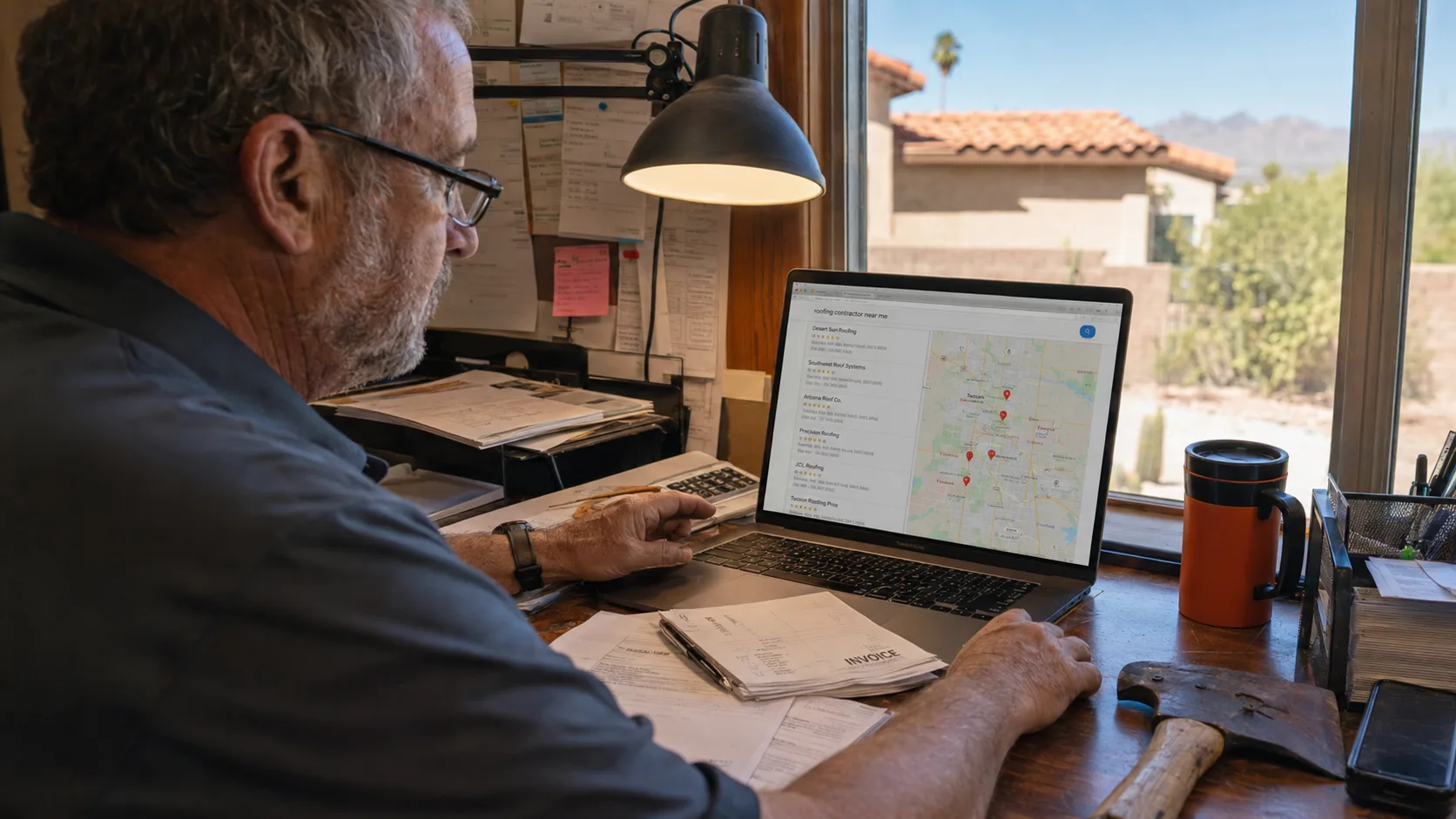
So you've got the click, the headline matched, the homeowner's interested. Then they hit a form with eleven fields and a dropdown for "How did you hear about us?" And they're gone. The form is the single biggest leak point on the whole screen, and almost nobody treats it that way.
Name, phone, address, and what's wrong. That's the whole form. You don't need their email, their preferred contact time, their budget range, or their roof type. So ask all that on the phone instead. And every field you remove lifts your completion rate, so on a page getting 200 clicks a month, going from 6 fields to 4 can take you from 12 leads to 20. That's eight extra estimates a month from the same ad budget, on a roofing landing page in Iqaluit that did nothing but shed four boxes.
And the address field does double duty here. It tells you the job's real, and it tells you whether they're in Iqaluit proper or out past Sylvia Grinnell where access gets tricky in winter. That's worth keeping. The rest of the interrogation isn't.
"97% of roofing customers expect a callback within one week. More than 50% expect a callback within two days." — Roofing Contractor Magazine (2024)
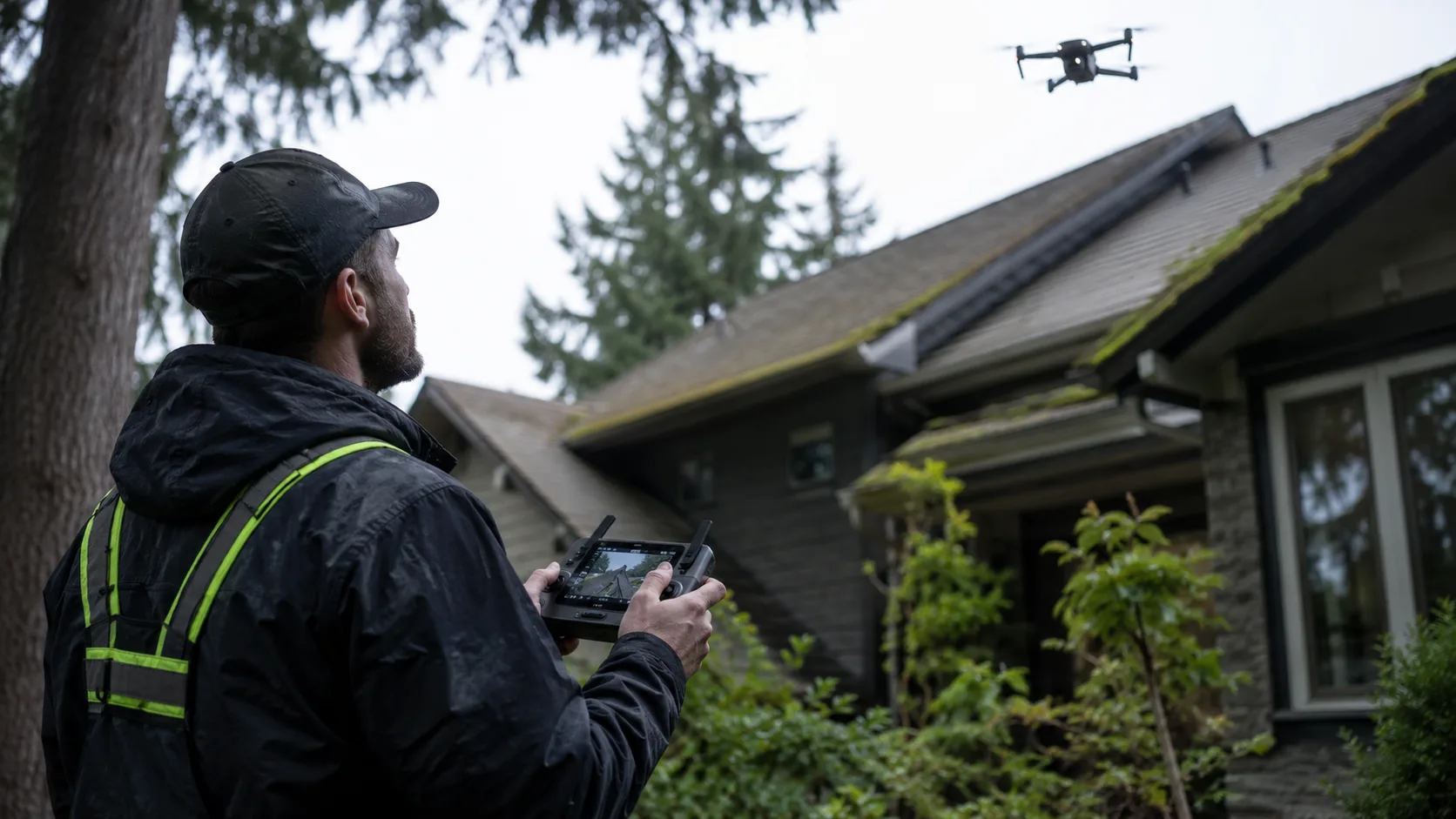
You don't run one ad, so you shouldn't have one page. A storm-damage homeowner and a planned-replacement homeowner are in different worlds, and sending both to the same screen wastes half your spend.
After a high-wind event tears flashing loose across Iqaluit, the homeowner wants speed and reassurance. That page leads with "today," shows a phone button, and names the insurance side plainly. Roof claims aren't small, either.
"In hail-prone states, average roof lifespan is 15 years vs 22 years in milder western states; 38% of U.S. homes have roofs in moderate to poor condition (Roofing Contractor) with 60% higher loss costs" — Verisk Analytics (2025)
Somebody planning a full reroof on a $4,000-and-up project isn't panicking. They're comparing. So that page can show shingle options, a financing note, and a gallery of finished roofs near Federal Road. They want to feel sure before they book a quote. And the money's there for it, because most buyers fund the work straight from savings.
"Among homeowners who renovated in 2024, 84% used cash from savings and 29% used a credit card to fund renovation projects (multiple funding sources allowed)." — Houzz Inc. (2025)
"Among homeowners undertaking a roofing project, 63% choose asphalt roofing material (dimensional shingles 34%, three-tab shingles 19%, luxury shingles 10%), while 14% choose metal and 11% choose synthetic material or rubber." — Houzz Inc. (2024)
And energy-efficiency gets its own angle too. In a place where heating runs most of the year, a roof-and-insulation pitch lands hard. That offer deserves its own screen, one that speaks to the heating bill, not the leak. And the price of that work keeps climbing, so a page that frames the value clearly does real work for you.
"The median spend on roofing upgrades in 2024 was 8% higher than in 2023 (median $13,000 in 2024)." — Houzz Inc. (2025)
So the homeowner submitted. The page did its job. Now the clock starts, and this is where most Iqaluit roofers quietly bleed out the leads they paid for.
A lead that submitted at 2pm and got a call at 2:04 feels seen. The same lead called back at 6pm has already filled out two other forms. Speed is the difference between booking the estimate and being the third voicemail they ignore. And homeowners told the survey what they expect.
So wire the page to text you instantly. The page should fire a text to your phone the second a form clears, with the name, address, and the "what's wrong" line already in it. No checking an inbox. No logging into a dashboard. Your crew lead sees it on the truck and can call from the Road to Nowhere before the homeowner's coffee gets cold. That one wire turns a slow website into a fast shop.
We don't start by redesigning anything. We start by looking. We run a free Site Inspection of your current setup, the same way we built our inspection of roofing websites across the trade, and we hand you exactly where the clicks you're already paying for are leaking out.
So here's the plain math one more time. If you're spending $1,200 a month and booking 4 jobs, and a tightened page takes that to 8 on the same spend, you didn't spend a dollar more. You just stopped lighting half the budget on fire. On $4,000 jobs, that's $16,000 more a month from money you were already spending.
You'll see the inspection before any call. No pitch, no obligation, no sales rep talking over you. Just a clear, plain-English read on what your page is doing with the traffic you already pay for, and what it would take to fix the leak you've bought, and what one screen built right could do instead. And you keep it either way.
The evidence
 Read the full report →
 0
contractor sites graded, one A
Across the whole CRO Index, a single site earned an A. The median landed at a D. The grade gap is a conversion gap.
0 %
of roofing sites fail a critical accessibility check
Scored against WCAG 2.1 AA with axe-core. A page that blocks a screen reader also blocks a paying customer.
Fervor Roofing State of the Industry, 2026
0 %
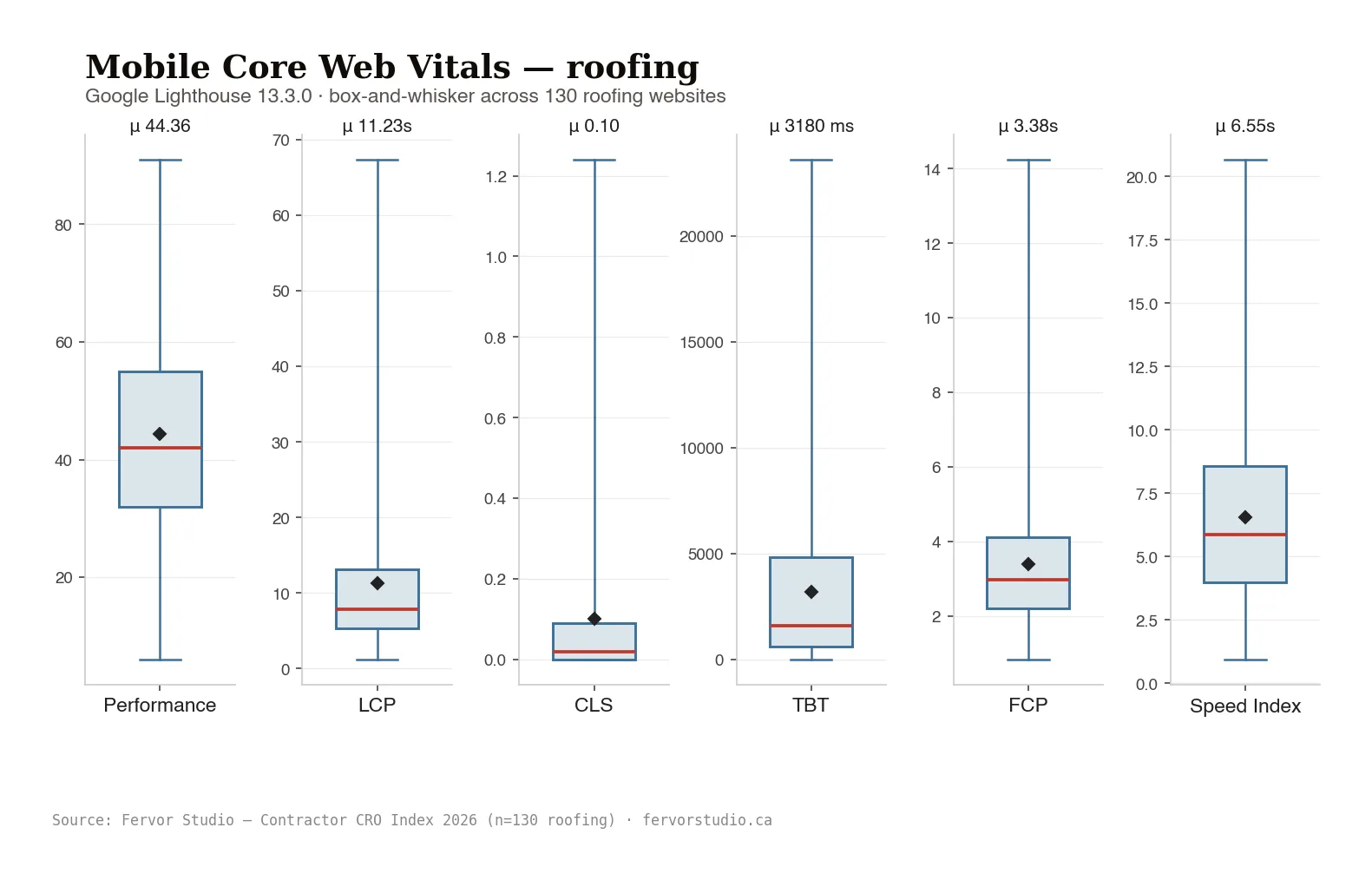
miss Google's mobile load-speed bar
Median mobile load lands at 7.88 seconds. Most of your traffic is on a phone, and most of them are gone before the hero paints.
Fervor Roofing State of the Industry, 2026
0 /100
is the average roofing grade
That is a D. The sites booking the work are not the ones with the biggest crews. They are the ones a few points higher on the things homeowners feel.
Two ways to start
Tell us where you are. We point you at the right next step — no sales call to get there.
Client review
“Nay did an amazing job, you know. He was really patient. He got the work done the way I told him and he was just on point with the website. Pretty straightforward process. No going around the bush. He just did amazing work and I would 100% recommend.”
How Fervor can help
Identify and patch the top conversion killers on your existing site. No full rebuild needed.
Monthly SEO, content, and CRO. Fixed deliverables. No credits, no rollover. The compound growth engine.
Complete website system built to convert storm leads, planned projects, and research-phase homeowners into booked jobs.
GBP optimization, citation building, and review system foundation. The infrastructure that gets you into the Map Pack.
One conversion-built landing page for the referrals, paid clicks, and cold-call leads you send. They land on a page built to book them, not your generic homepage.
Your move
Tell us where you are. We point you at the right next step — no sales call to get there.
Keep going