0
contractor sites graded, one A
Across the whole CRO Index, a single site earned an A. The median landed at a D. The grade gap is a conversion gap.
You're getting clicks in Indianapolis. They're just not calling. We rebuild your site around the one job that matters: turning a visitor into a booked job.
Starts with a Site Inspection, so you see the plan before any build begins.
“Patient, on point, straightforward. Did amazing work. Would 100% recommend.” — Ruben Mederos, HyperTemp HVAC
“Responsive, creative, exceeded expectations. Already seeing greater engagement from our clients.” — George Jeorgy, Jeorgy's Landscape Construction
“Top-tier professionalism, real web design expertise, ideas I hadn't considered. Confidently recommend.” — Aws Nassani, Four Eleven Contracting



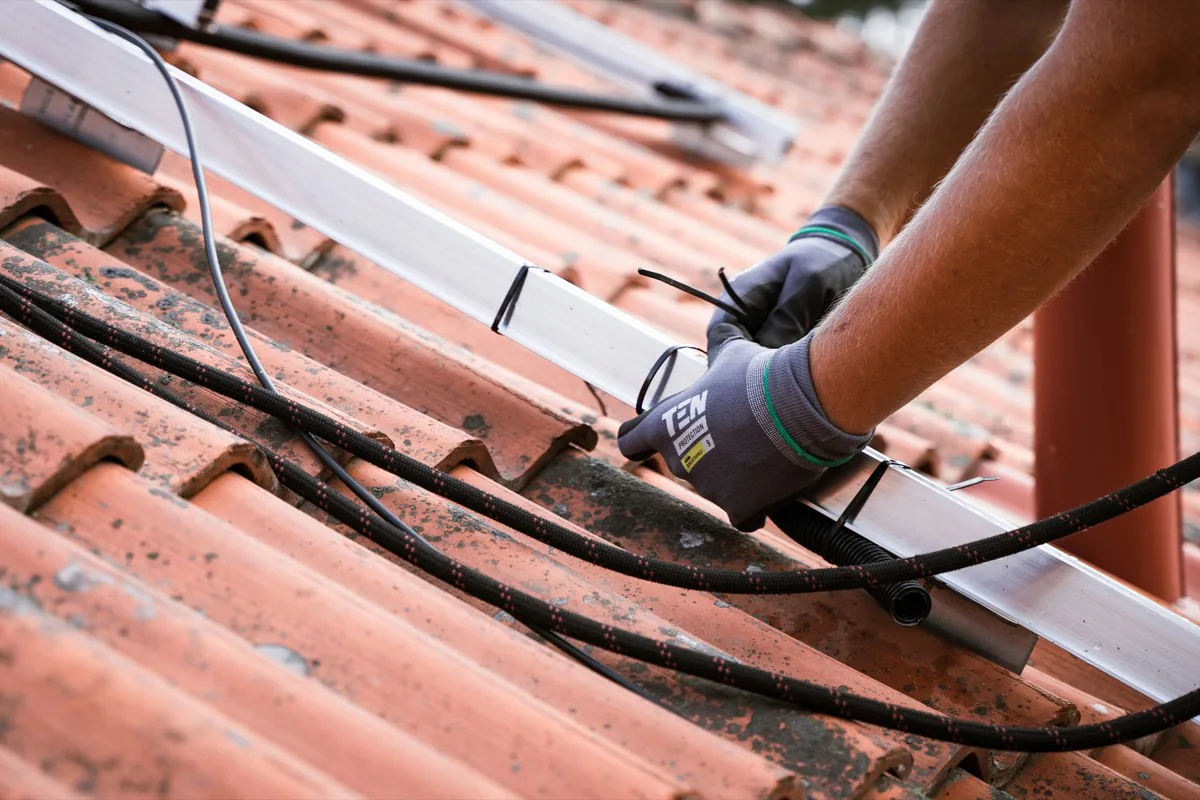
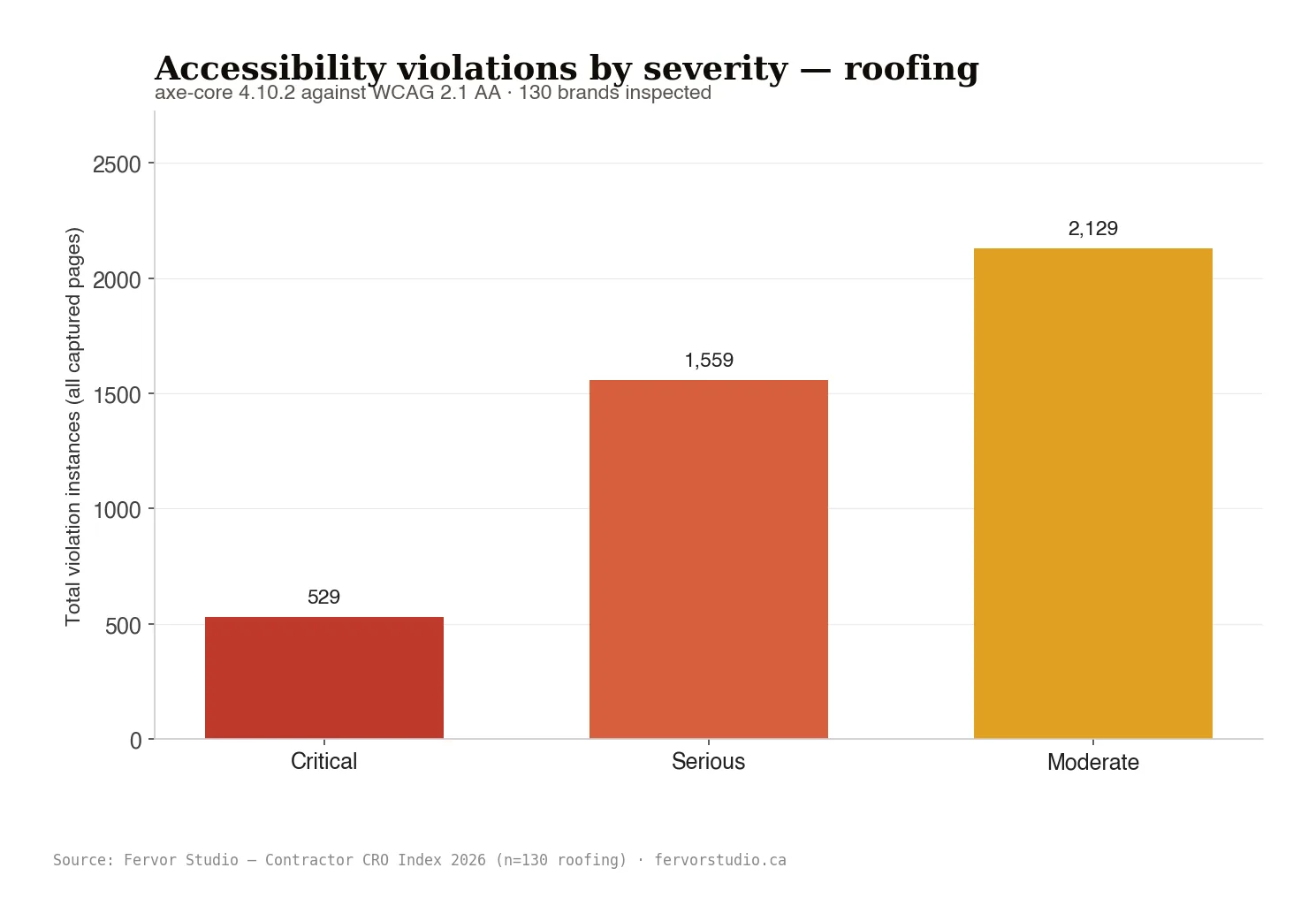
60.8% of roofing sites we tested fail a critical accessibility check
Digital State of the Roofing Industry 2026A grade out of 380 contractor sites
We graded 380 of them against one framework. Exactly one earned an A: Crown Industrial Roofing in Toronto, at 90 out of 100. The rest left money on the table. Here is what separates the top from the bottom.
The local detail
Every angle below comes from how Indianapolis actually searches, buys, and regulates — built into the page, not bolted on.
Indianapolis sits in hail-and-wind country.
She’s not on a laptop.
A stranger in Meridian-Kessler won’t book a roofer she’s never heard of off a promise.
You’ve got two roads.
Here’s where shops waste money.
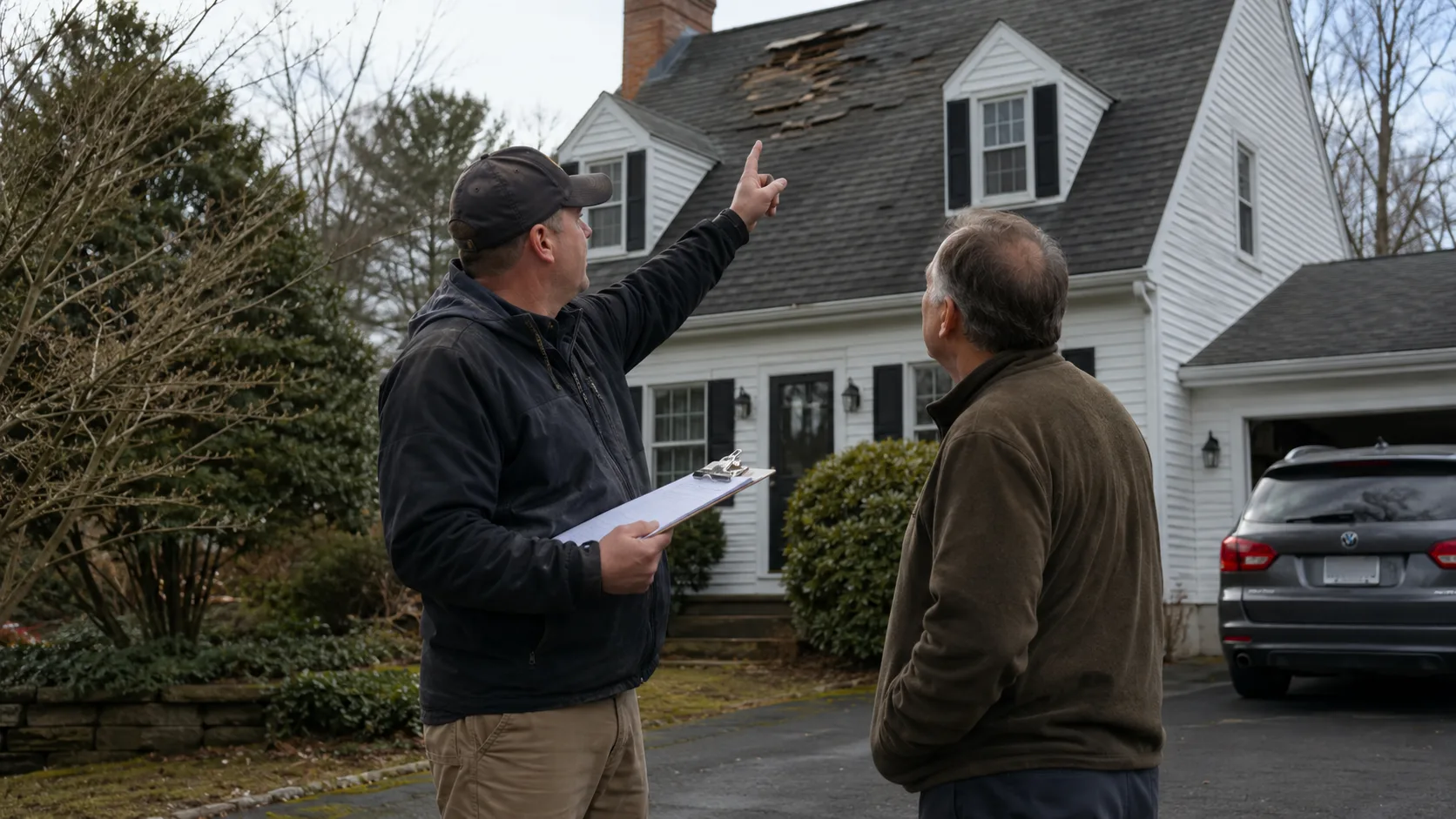
A roofing web design Indianapolis homeowner finds at 8:14pm has one job. She just watched a bundle of shingles peel off her neighbor's roof in a Broad Ripple windstorm, she pulled out her phone, and she typed "roofer near me" with rain still on the window. You've got about four seconds before she taps the next result. So your site either books that estimate or it hands her to the shop three listings down. That's the whole game. Everything below is about not losing her.
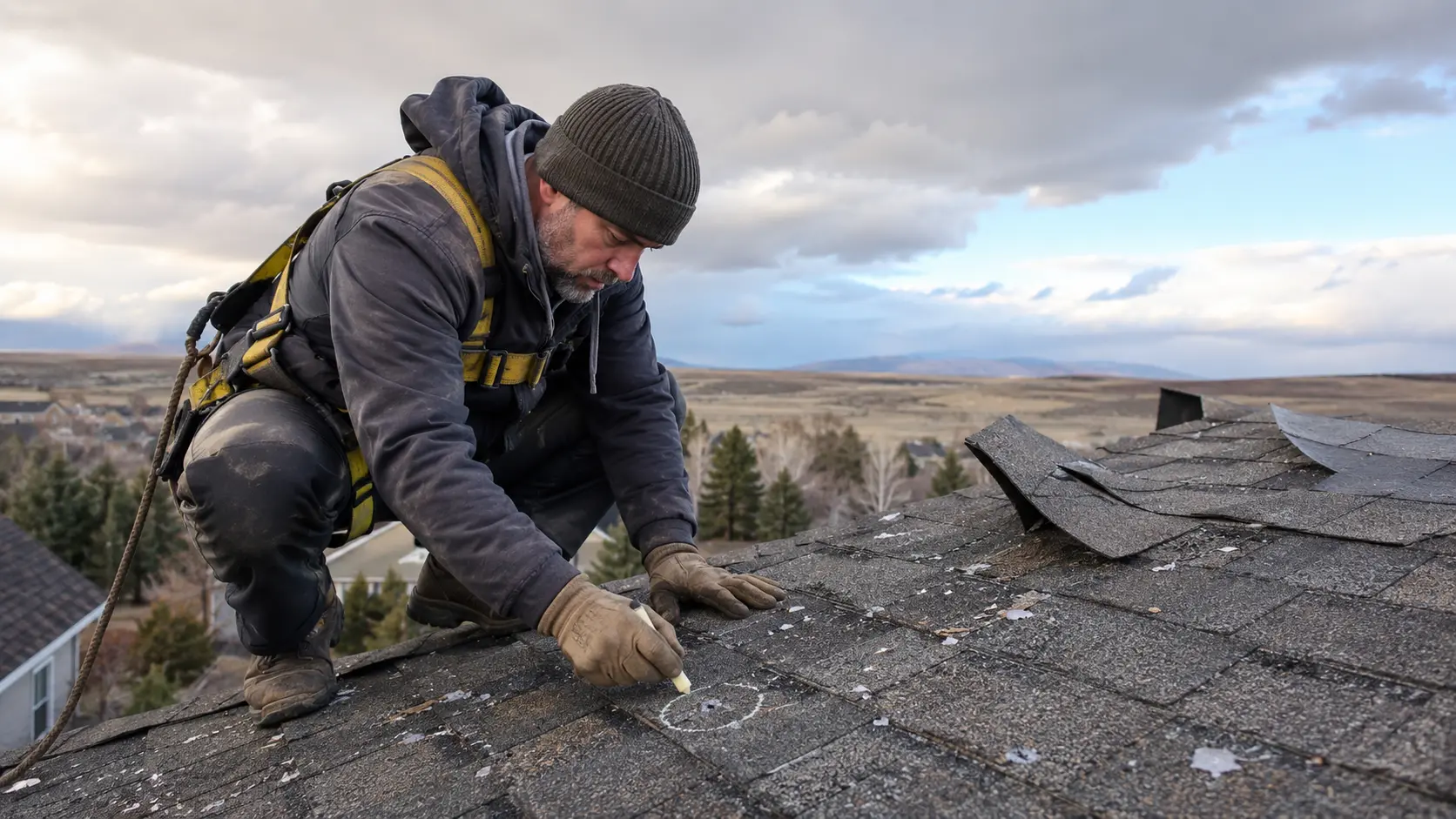
Indianapolis sits in hail-and-wind country. A single derecho line moving through Hamilton County can age ten thousand roofs in twenty minutes, and the searches spike that same night. Here's the part that stings.
"In hail-prone states, average roof lifespan is 15 years vs 22 years in milder western states; 38% of U.S. homes have roofs in moderate to poor condition (Roofing Contractor) with 60% higher loss costs" — Verisk Analytics (2025)
So the demand shows up whether you're ready or not. And the question is whether your phone rings or your competitor's does. You know the type of site that loses her. Five tabs, a stock photo of a roof that isn't yours, a contact form below the fold, and a load time that makes a homeowner in a Geist driveway stare at a white screen. That's a brochure. And a brochure doesn't sell at 8pm on a Tuesday in storm season. It just sits there looking nice while the lead bounces to the shop that answers on the first ring.
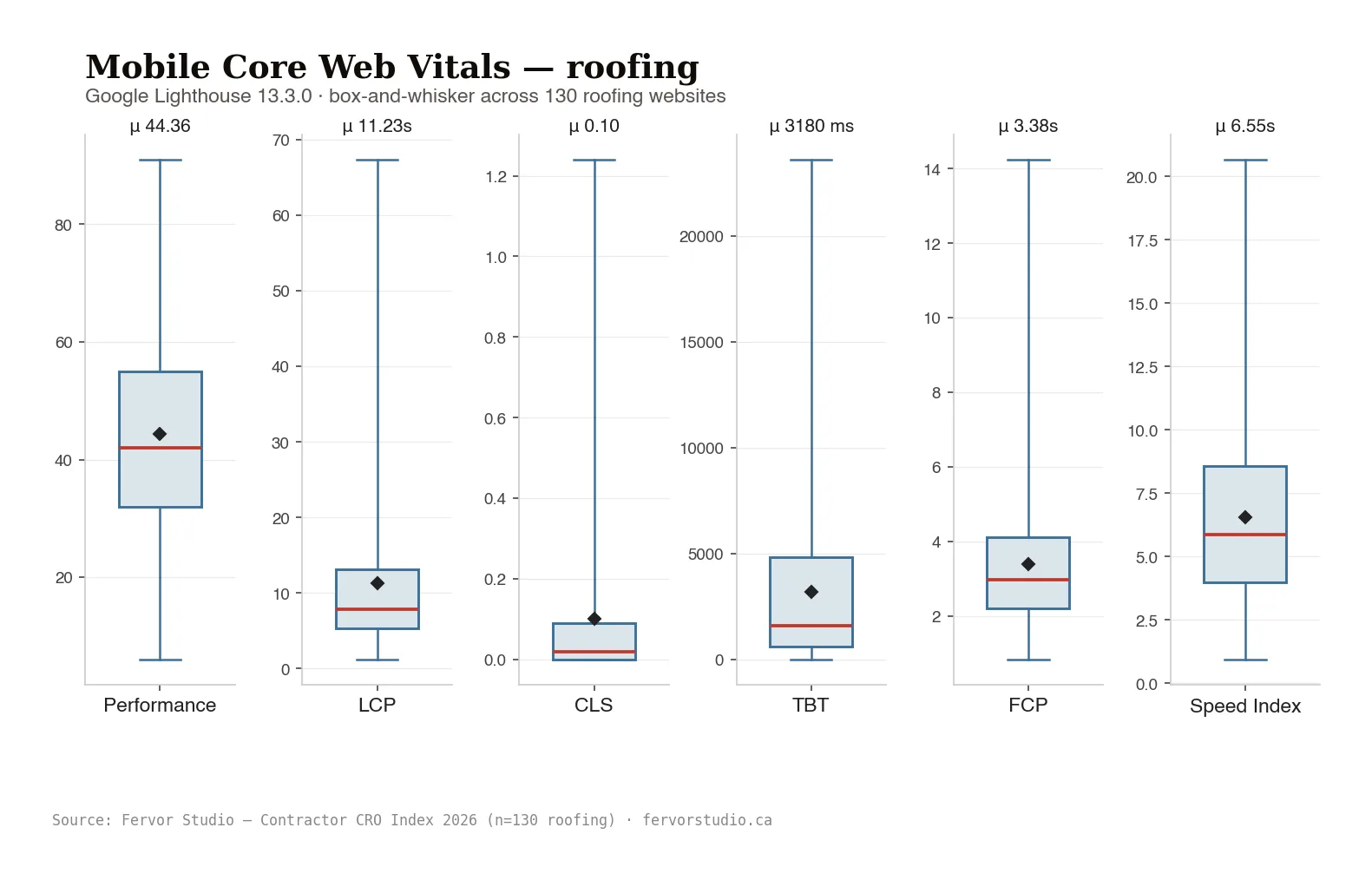
So these searches happen on a phone, on cellular, often outside. If your homepage takes seven seconds to paint on an LTE connection in Fountain Square, you've already lost roughly half of them before they read a word. And roofing web design in Indianapolis that ignores load speed is leaving money on a wet driveway. So picture one $14,000 reroof a month walking away. That's $168,000 a year you never knew you lost. But it doesn't have to be that way, because the fix is the build itself.
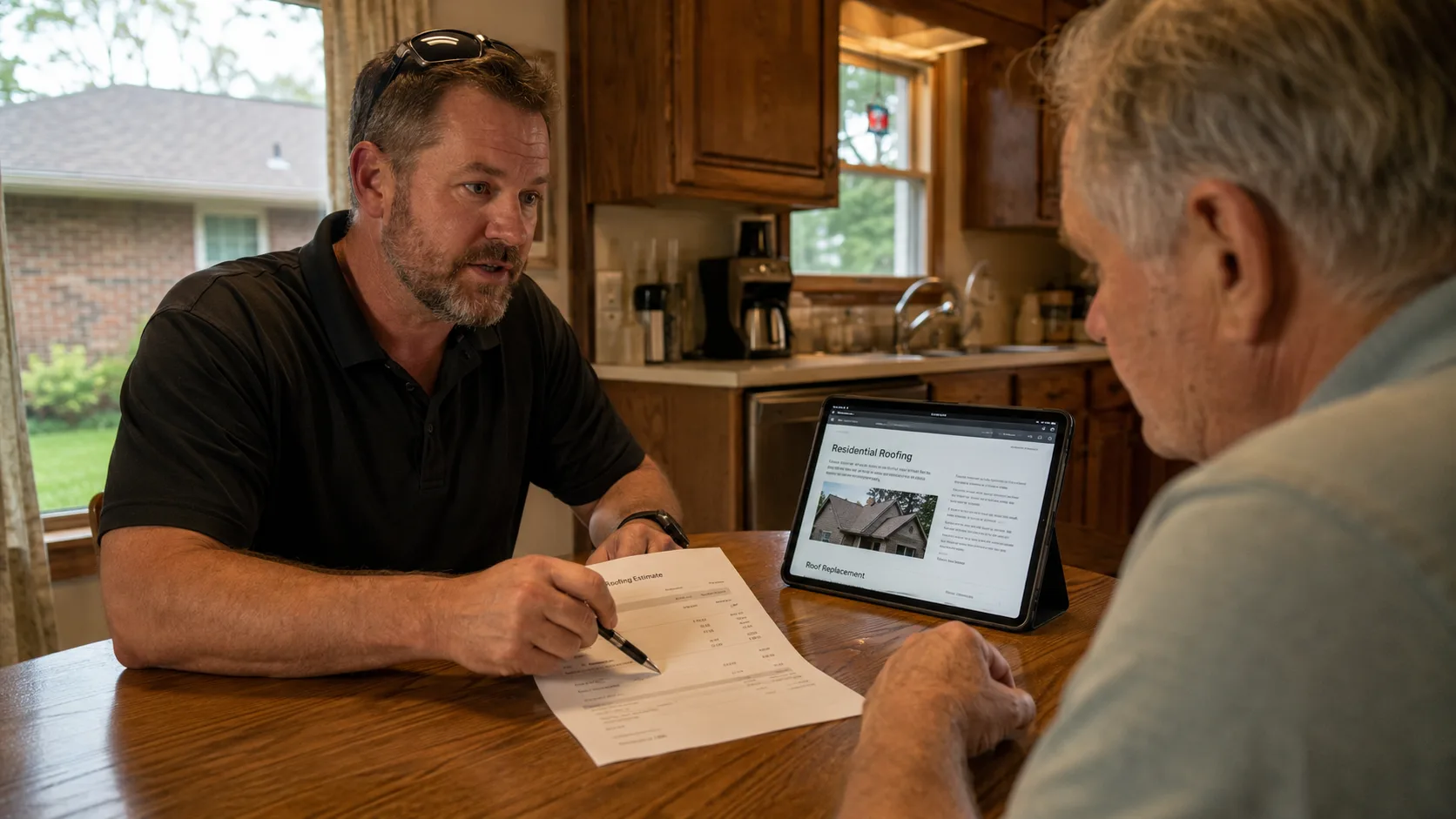
She's not on a laptop. She's standing in the yard pointing her camera at a missing shingle, then thumbing through results. Your site renders for her thumb or it doesn't render at all.
The single highest-value pixel on a roofing site is a phone number she can tap without scrolling. No menu hunt. No "Contact" tab. Just a button her thumb lands on while she's still angry at the roof. And the urgency is real, because the callback clock starts the second she calls.
"97% of roofing customers expect a callback within one week. More than 50% expect a callback within two days." — Roofing Contractor Magazine (2024)
So half your callers are gone if you wait three days. A tap-to-call button plus a fast answer captures the homeowner in Irvington before she calls the next guy.
Nobody standing in a driveway fills out eleven fields. Name, phone, address, and one line about the problem. That's four. Every field you add past four shaves your completion rate, and on mobile the drop-off is steeper. So cut the form down to what your estimator needs to call back, and let the rest come in conversation. And put the form where her thumb already is, near the top, not three scrolls down past a hero video. Because a homeowner in Lawrence with rain on her phone won't scroll to find it. So she'll just leave, and you'll never know she was there.
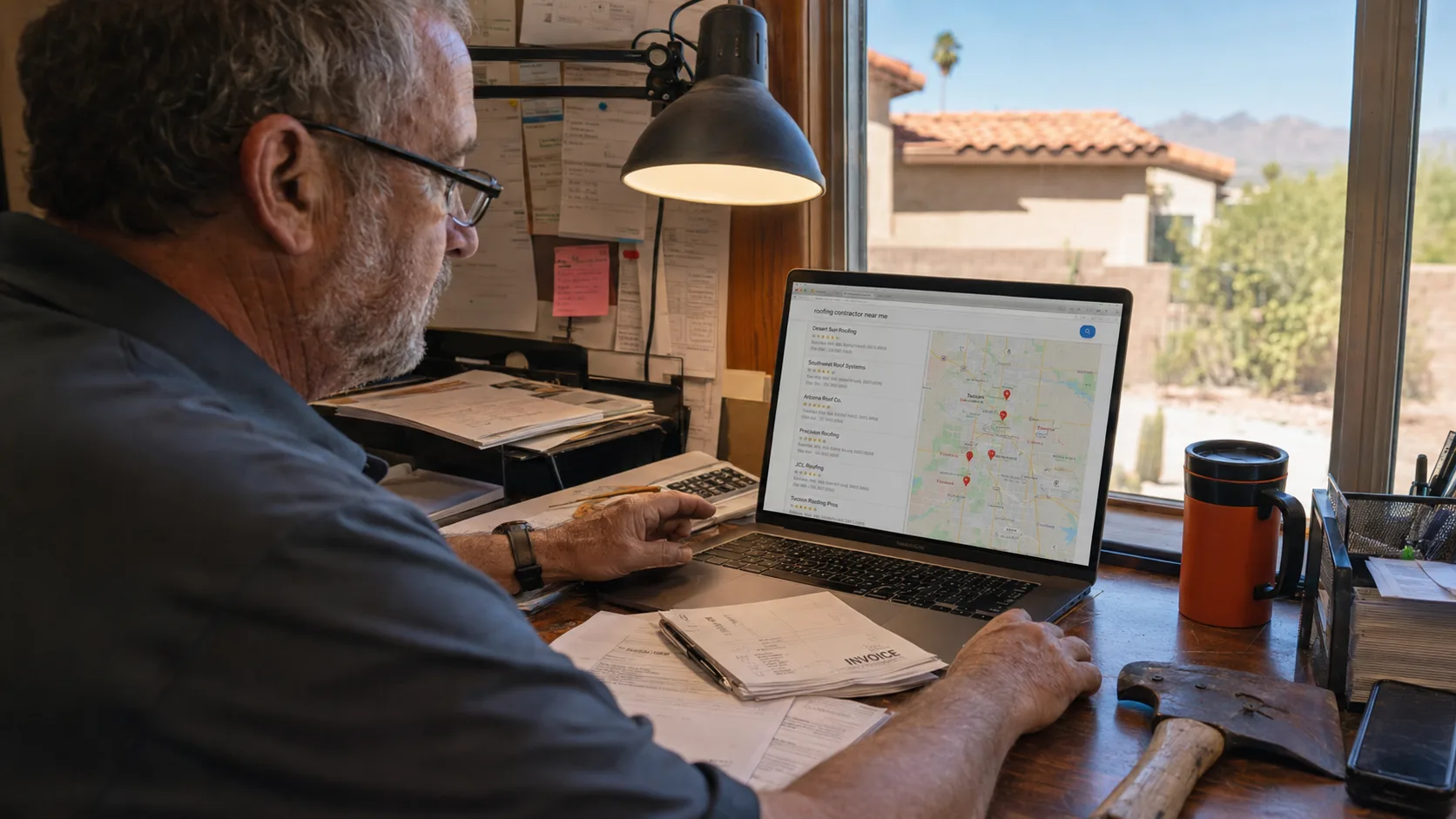
A stranger in Meridian-Kessler won't book a roofer she's never heard of off a promise. She books off proof she can see without leaving the page.
Show the tear-off you did on a 1920s Bungalow in Garfield Park. Show the new ridge line. Stock photos signal you've got nothing real to show, and homeowners read that instantly. Your own jobs, your own crew, your own neighborhood. That's the proof that converts.
"Among homeowners undertaking a roofing project, 63% choose asphalt roofing material (dimensional shingles 34%, three-tab shingles 19%, luxury shingles 10%), while 14% choose metal and 11% choose synthetic material or rubber." — Houzz Inc. (2024)
So most of your Indianapolis jobs are asphalt. Put a few dimensional-shingle finishes front and center, because that's what she's picturing.
Stars do nothing buried on a separate page. Put three real reviews beside the form so the proof and the ask share the same screen. And anchor the value while you're at it.
"In 2024, 22% of renovating homeowners undertook roofing upgrades, with a median spend of $13,000." — Houzz Inc. (2025)
So when a homeowner sees a $13,000 number coming, a five-star review beside the quote button is what tips her from browsing to booking. And a custom roofing website in Indianapolis earns that trust on the page itself. But it only works if the proof is on the same screen as the button. So don't bury the stars on a testimonials tab nobody opens.
The spend isn't trivial, and she knows it. So how people pay tells you how to frame the ask.
"Among homeowners who renovated in 2024, 84% used cash from savings and 29% used a credit card to fund renovation projects (multiple funding sources allowed)." — Houzz Inc. (2025)
So most of your customers are spending their own savings. That means financing options and clear pricing on the page lower the anxiety before she ever picks up the phone.
You've got two roads. A drag-and-drop template you buy for $49 a month, or a build shaped around how Indianapolis homeowners really search and convert. Both put a site online. Only one is built to win the storm week.
A template is fast and cheap, and for a brand-new shop with no leads yet, it beats nothing. But the speed, the form logic, and the local search structure are someone else's defaults. A roofing web designer in Indianapolis can't reshape a locked template around your Carmel and Fishers service map. You get what the theme gives you.
So a build lets you control the four-second load, the tap-to-call placement, the short form, and the photo proof, all tuned to the search you're trying to catch. And you're not fighting a theme. The roofing website builder in Indianapolis you hire shapes the page around the homeowner's panic, not around a generic small-business layout. So for a shop running four to ten crews, that control pays for itself in one extra reroof. But the bigger win is what it does after launch. Because a page built around local search keeps pulling estimates long after the build is done, while a template needs a second vendor to bolt search on top. And that second invoice is the part nobody warns you about.
Here's where shops waste money. They buy a pretty site from one vendor, then pay a second vendor to "do SEO" on top of it. That's two invoices for one job that should never have been split.
A site built without local search baked in is a site you'll pay to rebuild. The page structure, the service-area content, the load speed, the schema for your Indianapolis location, those are the foundation. So when roofing website design Indianapolis work gets handed to an SEO team after launch, half of it gets torn up and redone. You paid twice.
The reason this matters is the size of what you're competing for.
"From 2021–2023, homeowners spent $93.5B on roofing across 8.3 million projects (AHS-based estimates)." — U.S. Census Bureau and U.S. Department of Housing and Urban Development (2024)
So the search volume is enormous, and it's local. A build that ranks in Indianapolis and converts on arrival is one project, one invoice, one system. Not two.
And roof spend keeps climbing, which means the homeowner searching tonight is bringing a bigger ticket than last year's.
"The median spend on roofing upgrades in 2024 was 8% higher than in 2023 (median $13,000 in 2024)." — Houzz Inc. (2025)
And roofing pulls a big share of every exterior job homeowners take on.
"Among renovating homeowners, 44% add or redo a roof as part of their exterior projects." — Houzz Inc. (2024)
So nearly half of exterior renovators touch the roof. And a site that catches them at the search wins a bigger slice every season. But that slice only lands if the design and the search work were one build, not two. So treat them as one project from day one, and you stop paying twice for the same page.
We don't start with a theme. We start by looking at what your current site does to the homeowner in the driveway, and where she drops off. Before we propose anything, we run a free Site Inspection of your site. No sales call to get it. You see the load time, the form friction, the click-to-call gap, and the proof problem, all scored against what really books estimates.
We've done this across the trade. You can read our inspection of roofing websites across the trade to see the patterns we find again and again: the seven-second loads, the buried phone numbers, the eleven-field forms. The same leaks, shop after shop.
So if you run four to ten crews in the Indianapolis metro and you're tired of watching storm-week searches go to the shop down the road, start with the inspection. You'll know exactly what your site costs you before you spend a dollar fixing it. And you'll see what it'd look like built to catch her at 8:14pm on a stormy Tuesday, rain still on the window, thumb on the call button, ready to book.
The evidence
 Read the full report →
 0
contractor sites graded, one A
Across the whole CRO Index, a single site earned an A. The median landed at a D. The grade gap is a conversion gap.
0 %
of roofing sites fail a critical accessibility check
Scored against WCAG 2.1 AA with axe-core. A page that blocks a screen reader also blocks a paying customer.
Fervor Roofing State of the Industry, 2026
0 %
miss Google's mobile load-speed bar
Median mobile load lands at 7.88 seconds. Most of your traffic is on a phone, and most of them are gone before the hero paints.
Fervor Roofing State of the Industry, 2026
0 /100
is the average roofing grade
That is a D. The sites booking the work are not the ones with the biggest crews. They are the ones a few points higher on the things homeowners feel.
Two ways to start
Tell us where you are. We point you at the right next step — no sales call to get there.
Client review
“Nay did an amazing job, you know. He was really patient. He got the work done the way I told him and he was just on point with the website. Pretty straightforward process. No going around the bush. He just did amazing work and I would 100% recommend.”
How Fervor can help
Complete website system built to convert storm leads, planned projects, and research-phase homeowners into booked jobs.
Identify and patch the top conversion killers on your existing site. No full rebuild needed.
Monthly SEO, content, and CRO. Fixed deliverables. No credits, no rollover. The compound growth engine.
GBP optimization, citation building, and review system foundation. The infrastructure that gets you into the Map Pack.
One conversion-built landing page for the referrals, paid clicks, and cold-call leads you send. They land on a page built to book them, not your generic homepage.
Your move
Tell us where you are. We point you at the right next step — no sales call to get there.
Keep going