0
contractor sites graded, one A
Across the whole CRO Index, a single site earned an A. The median landed at a D. The grade gap is a conversion gap.
You're getting clicks in Halifax. They're just not calling. We rebuild your site around the one job that matters: turning a visitor into a booked job.
Starts with a Site Inspection, so you see the plan before any build begins.
“Patient, on point, straightforward. Did amazing work. Would 100% recommend.” — Ruben Mederos, HyperTemp HVAC
“Responsive, creative, exceeded expectations. Already seeing greater engagement from our clients.” — George Jeorgy, Jeorgy's Landscape Construction
“Top-tier professionalism, real web design expertise, ideas I hadn't considered. Confidently recommend.” — Aws Nassani, Four Eleven Contracting



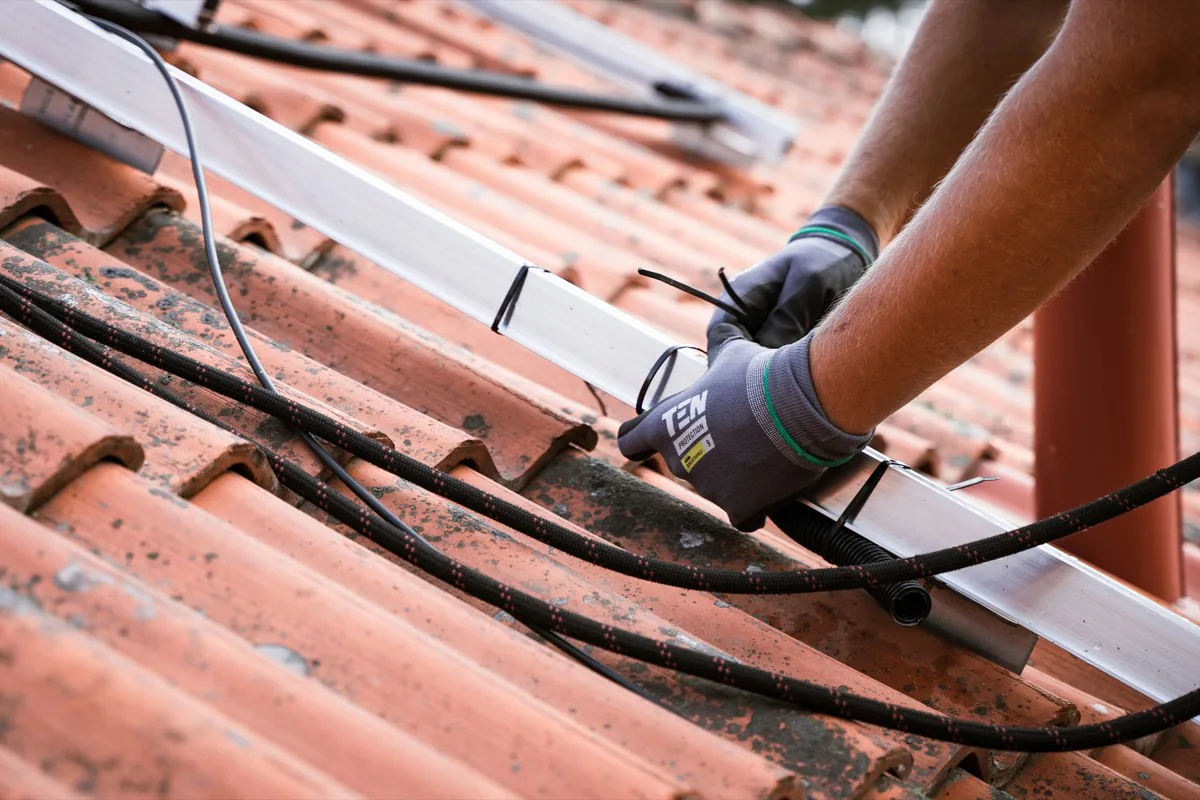
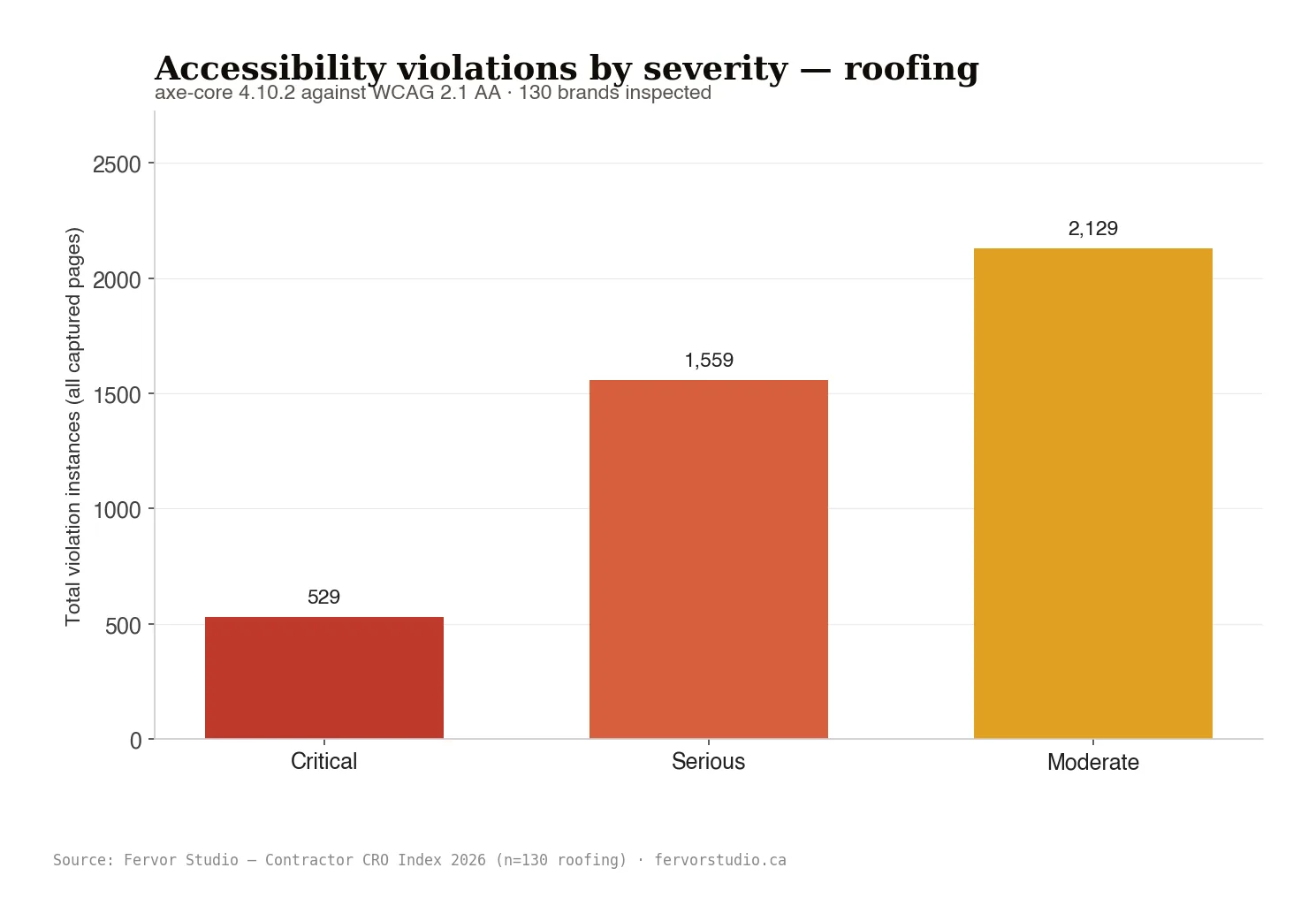
60.8% of roofing sites we tested fail a critical accessibility check
Digital State of the Roofing Industry 2026A grade out of 380 contractor sites
We graded 380 of them against one framework. Exactly one earned an A: Crown Industrial Roofing in Toronto, at 90 out of 100. The rest left money on the table. Here is what separates the top from the bottom.
The local detail
Every angle below comes from how Halifax actually searches, buys, and regulates — built into the page, not bolted on.
So picture the 40 minutes after a nor’easter clears Dartmouth.
But here’s where most owners get the priorities backwards.
So you’ve got her attention for maybe 20 seconds.
But she still doesn’t know you from the three other roofers in her tabs.
Your site has one job. A homeowner in Clayton Park just watched a bundle of shingles peel off her neighbour's roof in a 90 km/h gust, and she's thumbing her phone in the driveway before the wind even drops. So the question that decides your week comes down to whether your page loads, shows a number she can tap, and books the estimate before she bounces. And that's the whole game of roofing web design Halifax owners keep underestimating. The shop that wins her this week is just the one with the faster page, even if you frame the better roof.
You've been roofing in HRM for years. You already know Nova Scotia weather punishes a roof harder than most of the country, between the salt air off the harbour and the freeze-thaw cycles that crack flashing every March. But the storm doesn't send her to the best crew. It sends her to whoever shows up first on her screen.
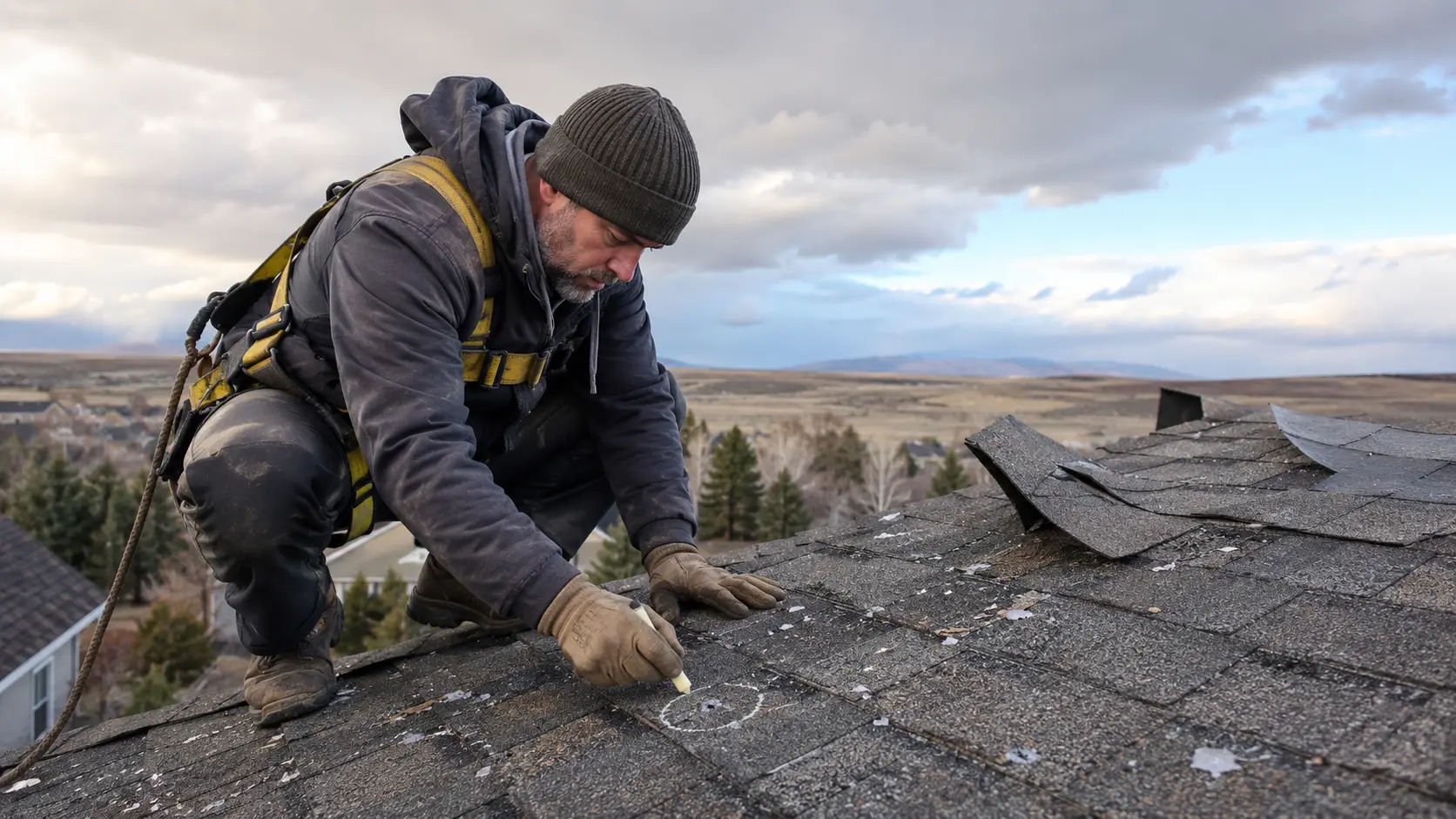
So picture the 40 minutes after a nor'easter clears Dartmouth. Half of Eastern Passage is searching "roof leak near me" at the same time. Your site, the one a cousin built in 2016, takes nine seconds to load on a phone with two bars of signal. She's gone in three.
That's measured human behaviour, not a hypothetical you can wave off.
"79% of test users always skimmed any new page they came across; only 16% read word-by-word. Web pages must employ scannable text with highlighted keywords, meaningful subheadings, one idea per paragraph, and the inverted pyramid style." — Nielsen Norman Group (2024)
She isn't reading your About page. She's skimming for two things: can these people fix my roof, and how fast can I reach them. But a brochure-style site buries both under a slideshow and a paragraph about your family values. So the answer she needed in four seconds is sitting three scrolls down, past a stock photo of a house that isn't anywhere near Halifax.
And that's the trap. A brochure site looks fine on your laptop when you show your wife. But it was designed to sit still and look respectable, not to convert a panicked search at 7 p.m. on a Sunday. The homeowner in Spryfield doesn't care about your hero video. She cares that the call button works.
Roughly $4,000 sits on the table with every reroof estimate she books. Lose four of those a storm season because the page stalled, and you've handed a competitor $16,000 you never saw.
Nova Scotia roofs take a beating, and the claims data shows it.
"In hail-prone states, average roof lifespan is 15 years vs 22 years in milder western states; 38% of U.S. homes have roofs in moderate to poor condition (Roofing Contractor) with 60% higher loss costs" — Verisk Analytics (2025)
So when a system rolls through Bedford, the search volume for your service spikes for maybe 72 hours. Then it flattens. Your page either catches that wave or it doesn't. There's no second chance on a Tuesday storm.
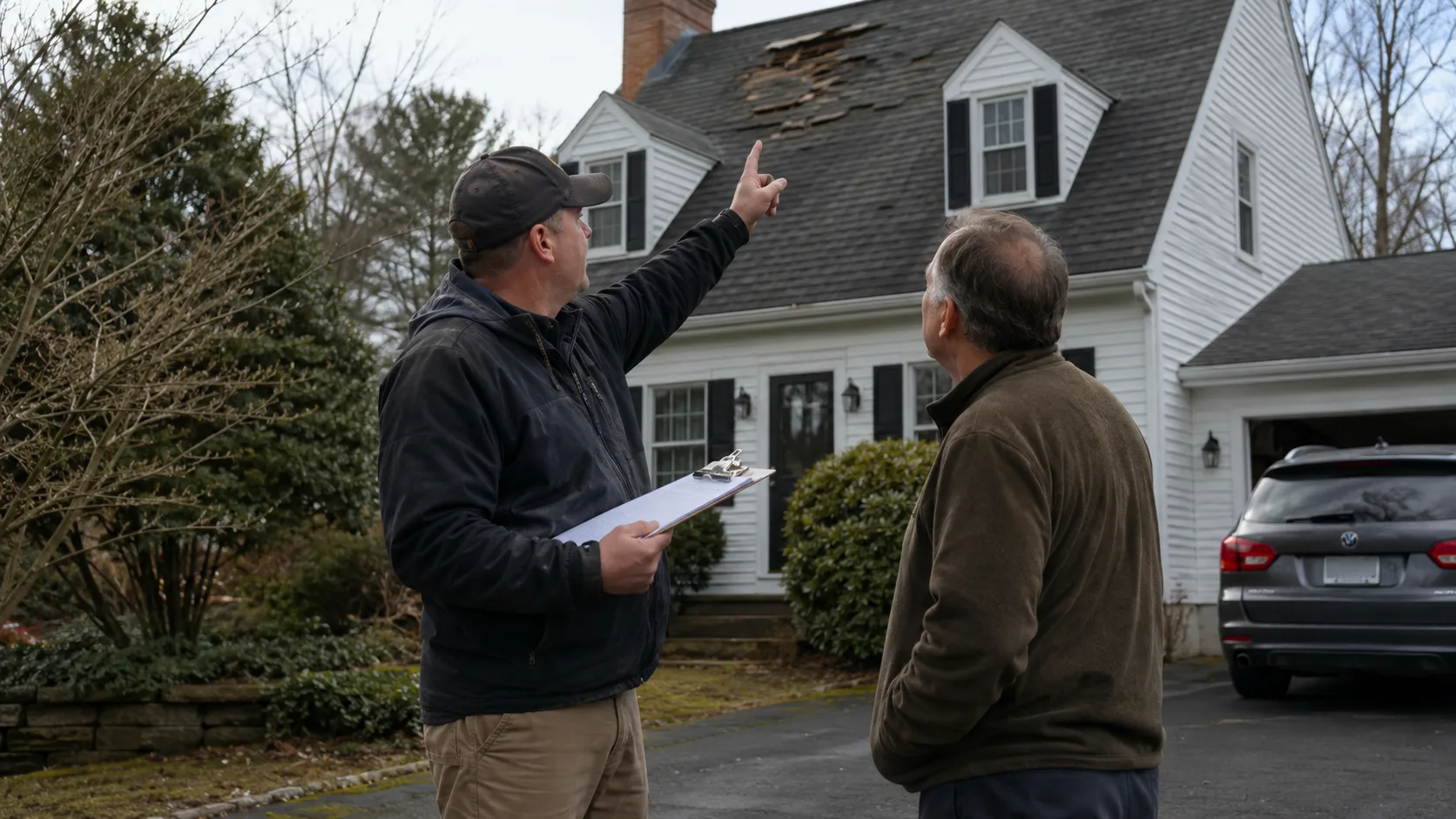
But here's where most owners get the priorities backwards. They obsess over the logo and ignore the thing that loses the lead: speed on a phone, on cellular, in a driveway with bad signal.
She's not at a desk. She's standing on her lawn in Fairview looking up at a missing ridge cap. So if your page takes longer than four seconds to paint something useful on her screen, she's already back in the search results tapping the next listing.
And the math is brutal. If 100 storm-week searchers hit a four-second page versus a nine-second page, you might keep 70 of them instead of 30. At a $4,000 average job and a 1-in-10 close, that's four booked roofs instead of one. You ran the same ads to the same crew. But the page was the difference.
"97% of roofing customers expect a callback within one week. More than 50% expect a callback within two days." — Roofing Contractor Magazine (2024)
So a fast page that captures her number is only half the job. And the other half is you calling back before she's booked someone in Sackville.
She has a cracked phone and one free thumb. So make her hunt for your number and you've lost. The phone number lives at the top, tappable, before she scrolls a pixel. She taps once and you're ringing. And that's the single highest-value element on the entire page, and half the contractor sites in HRM bury it in a footer she'll never reach.
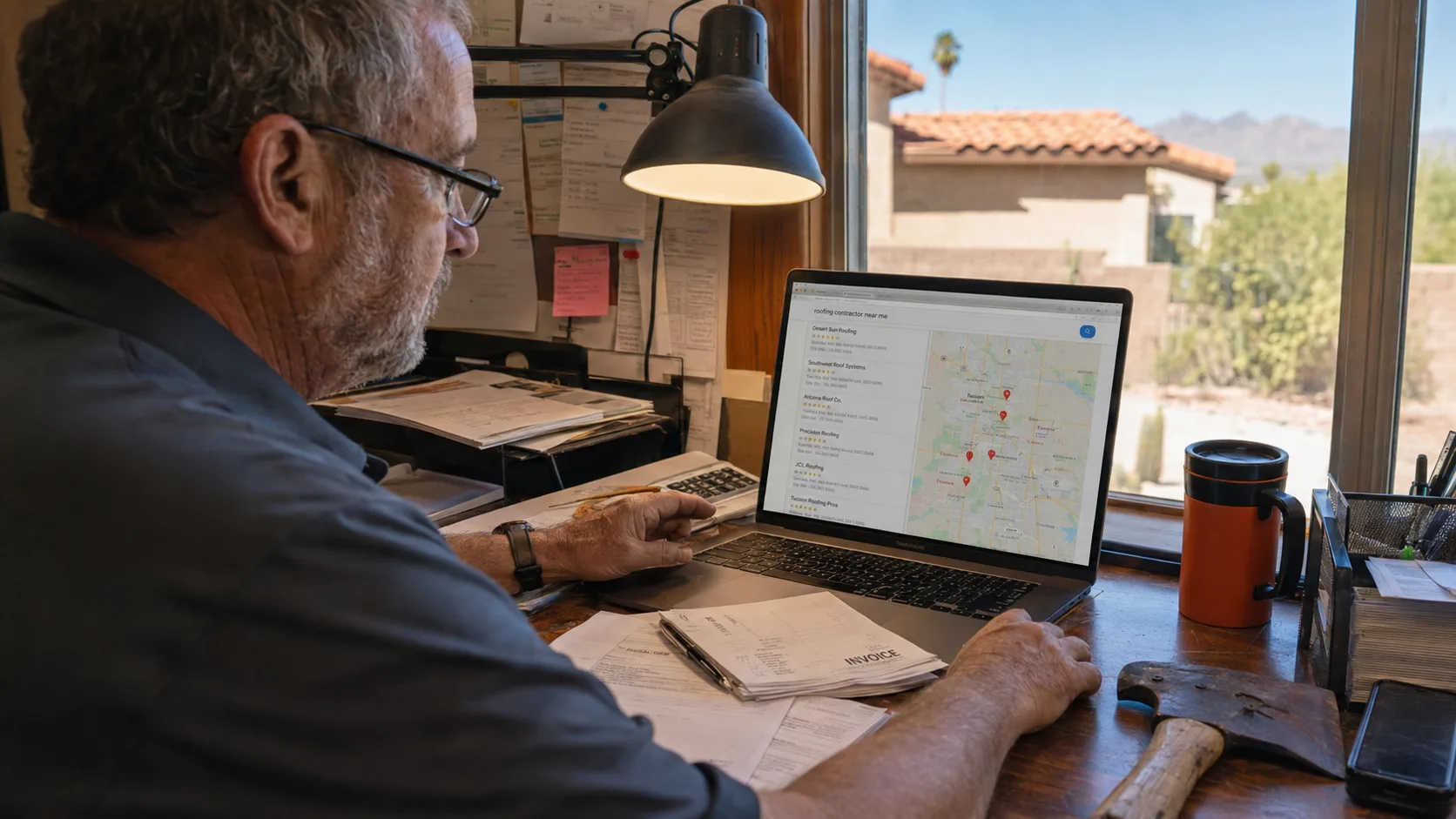
So you've got her attention for maybe 20 seconds. Now you ask her to fill out a form with eleven fields including her postal code, her preferred contact time, and how she heard about you. She quits at field four.
"Promotional language imposes a measurable cognitive burden. Users who read 'internationally recognized attractions' think 'no, it's not' — and that skeptical reaction slows them down and distracts from using the site. Objective language improved measured usability by 27%." — Nielsen Norman Group (2024)
So every field you add is friction, and friction is leads walking out the door. Name, phone, and one line about the problem. That's it. You can get her postal code on the callback. The form's job is to start the conversation, not to interview her.
And the homeowner-side context backs the urgency up. People aren't reroofing on a whim, but when they do, they move fast.
"32% of Canadian homeowners renovating their homes in the past three years did so to address a safety or maintenance issue." — Canada Mortgage and Housing Corporation (CMHC) (2025)
So a roof is a safety issue, not a kitchen upgrade she'll mull for a year. When the leak shows up over the baby's room in Clayton Park, she's deciding this week. And your form needs to take her decision in three taps, not test her patience. So every field past name and number is one more reason for her to close the tab and call the shop in Bedford instead.
But she still doesn't know you from the three other roofers in her tabs. So you show her, right next to the call button, why you're the safe choice. You use real photos of real Halifax roofs your crew finished. You put reviews with names attached. Not a "Testimonials" link she'll never click.
"74% of Canadian first-time homebuyers plan to renovate their home within the next five years." — Canada Mortgage and Housing Corporation (CMHC) (2025)
A lot of those buyers are in the new builds out toward Bedford South and Larry Uteck, and they'll need a roofer inside five years. And the ones who book are the ones who saw proof beside the ask, not buried two clicks deep.
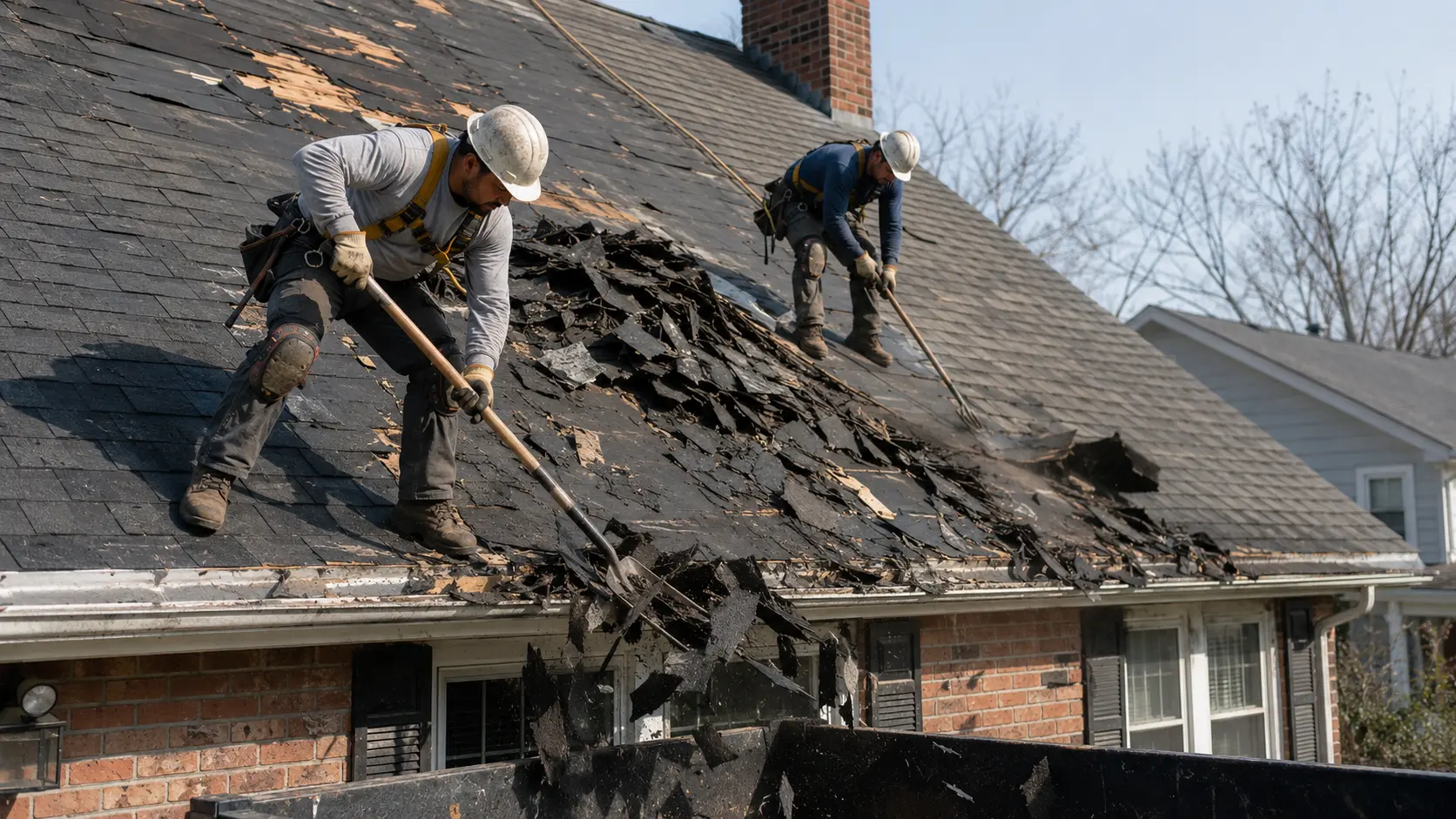
And stock photos read as fake to a homeowner who's been burned. A photo of your crew tearing off a wind-damaged roof in Dartmouth, mid-job, ladder against the truck, says more than any badge. Show eight finished jobs across HRM. Let her recognize a street. So put three reviews right beside the form too, not on a page she has to find. The decision happens at the ask, and that's where the proof has to be, the moment she's deciding whether to type her number.
But should you just grab a $40-a-month template and call it done? Sometimes, honestly, yes. If you're a two-truck shop testing whether you even want to grow, a clean template that loads fast beats a slow custom build every time.
And the trap is the in-between. You end up with a template stuffed with plugins until it crawls, or a custom site a freelancer abandoned half-finished. Speed is the deciding factor, not the label on the builder.
And a template is fine when it's fast, mobile-first, and you control the call button and the form. Don't pay for custom to feel fancy. Pay for it when the template can't do the job.
So custom earns its keep when you're booking enough volume that a half-second of load time moves real money. Or when you need service-area pages for Bedford, Dartmouth, Spryfield, and the Eastern Shore that a template can't structure cleanly.
"Canadian homeowners paid 8.4% more for maintenance and repairs (including roofing) in April 2023 than in April 2022." — Statistics Canada (2023)
So jobs cost more now, which means each lead you catch is worth more than it was two years ago. And a page that converts 10% better becomes the margin between a slow shoulder season and a booked-out crew once jobs cost this much.
So before you spend a dollar, you should see what your current page is doing to your storm-week leads right now. We looked hard at this problem across the trade, and the patterns repeat: slow loads, buried phone numbers, eleven-field forms, proof hidden two clicks deep.
You can read our inspection of roofing websites across the trade to see how the average site stacks up against the few that catch the call instead of dropping it.
"28% of Canadian homeowners cited making their home more energy-efficient as a reason to renovate." — Canada Mortgage and Housing Corporation (CMHC) (2025)
And that's the kind of homeowner intent your page should be built to catch, whether she's chasing a leak or an efficiency upgrade. We start with a free Site Inspection of your existing site. There's no sales call to get it. You see exactly where the leads are leaking and what a faster, mobile-first build would change, in plain numbers, before you commit to anything.
You know roofs. So we know the page that turns the storm search into a booked estimate. And the treatment for Halifax is the same one the trade keeps skipping. It's the difference between catching her thumb and watching it scroll past.
The evidence
 Read the full report →
 0
contractor sites graded, one A
Across the whole CRO Index, a single site earned an A. The median landed at a D. The grade gap is a conversion gap.
0 %
of roofing sites fail a critical accessibility check
Scored against WCAG 2.1 AA with axe-core. A page that blocks a screen reader also blocks a paying customer.
Fervor Roofing State of the Industry, 2026
0 %
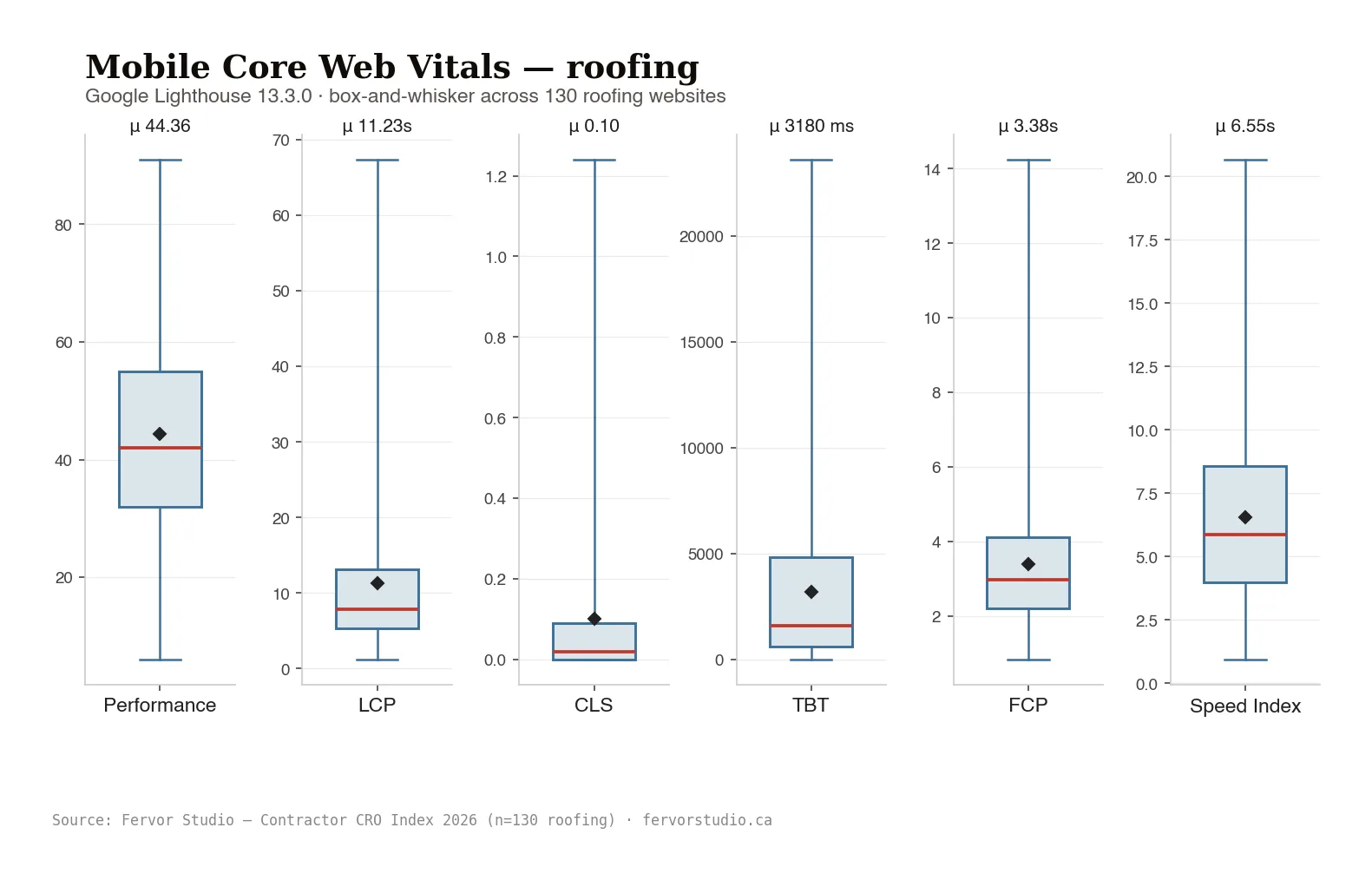
miss Google's mobile load-speed bar
Median mobile load lands at 7.88 seconds. Most of your traffic is on a phone, and most of them are gone before the hero paints.
Fervor Roofing State of the Industry, 2026
0 /100
is the average roofing grade
That is a D. The sites booking the work are not the ones with the biggest crews. They are the ones a few points higher on the things homeowners feel.
Two ways to start
Tell us where you are. We point you at the right next step — no sales call to get there.
Client review
“Nay did an amazing job, you know. He was really patient. He got the work done the way I told him and he was just on point with the website. Pretty straightforward process. No going around the bush. He just did amazing work and I would 100% recommend.”
How Fervor can help
Complete website system built to convert storm leads, planned projects, and research-phase homeowners into booked jobs.
Identify and patch the top conversion killers on your existing site. No full rebuild needed.
Monthly SEO, content, and CRO. Fixed deliverables. No credits, no rollover. The compound growth engine.
GBP optimization, citation building, and review system foundation. The infrastructure that gets you into the Map Pack.
One conversion-built landing page for the referrals, paid clicks, and cold-call leads you send. They land on a page built to book them, not your generic homepage.
Your move
Tell us where you are. We point you at the right next step — no sales call to get there.
Keep going