0
contractor sites graded, one A
Across the whole CRO Index, a single site earned an A. The median landed at a D. The grade gap is a conversion gap.
Right now, someone in Detroit is Googling "roofer near me." We get you showing up first — then turn that click into a booked job.
A written report and a ranked fix list, in about three days.
“Patient, on point, straightforward. Did amazing work. Would 100% recommend.” — Ruben Mederos, HyperTemp HVAC
“Responsive, creative, exceeded expectations. Already seeing greater engagement from our clients.” — George Jeorgy, Jeorgy's Landscape Construction
“Top-tier professionalism, real web design expertise, ideas I hadn't considered. Confidently recommend.” — Aws Nassani, Four Eleven Contracting



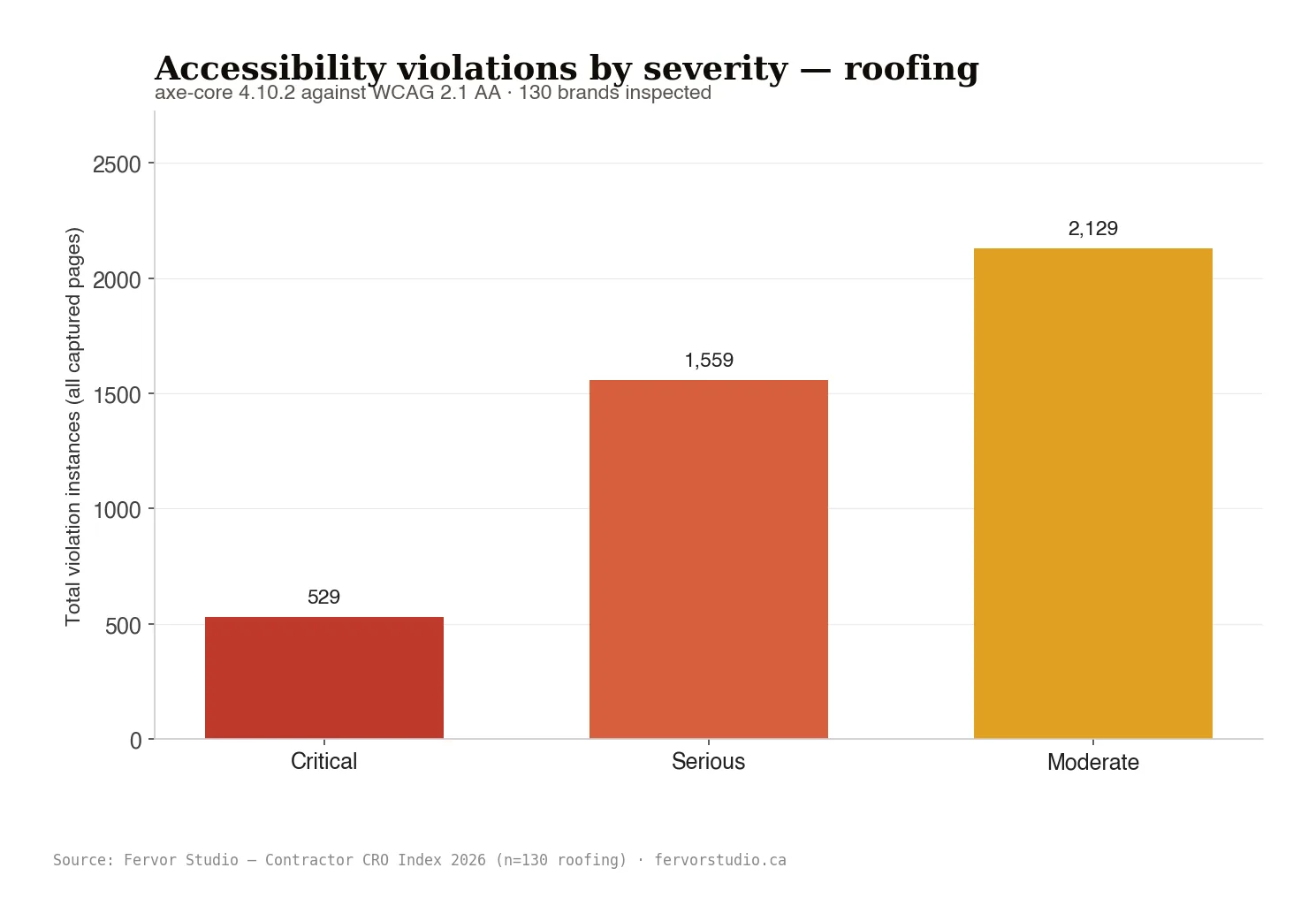
60.8% of roofing sites we tested fail a critical accessibility check
Digital State of the Roofing Industry 2026A grade out of 380 contractor sites
We graded 380 of them against one framework. Exactly one earned an A: Crown Industrial Roofing in Toronto, at 90 out of 100. The rest left money on the table. Here is what separates the top from the bottom.
The local detail
Every angle below comes from how Detroit actually searches, buys, and regulates — built into the page, not bolted on.
Picture a Tuesday in late June.
Let’s get concrete.
Let me show you why this pays for itself, plain arithmetic, no funny business.
This isn’t a thin market.
Here’s the uncomfortable part.
So you run a roofing shop in the Metro. Four to ten people on payroll, trucks that show up, a callback rate your customers brag about. And yet when a homeowner in Corktown opens their phone after a hailstorm and types in what they need, your name sits on page two while a crew half your size grabs the call. That gap is what roofing SEO Detroit work closes, and it has almost nothing to do with how good your shingles are.
But let me back up. Because the problem here is the system that decides who gets seen first.
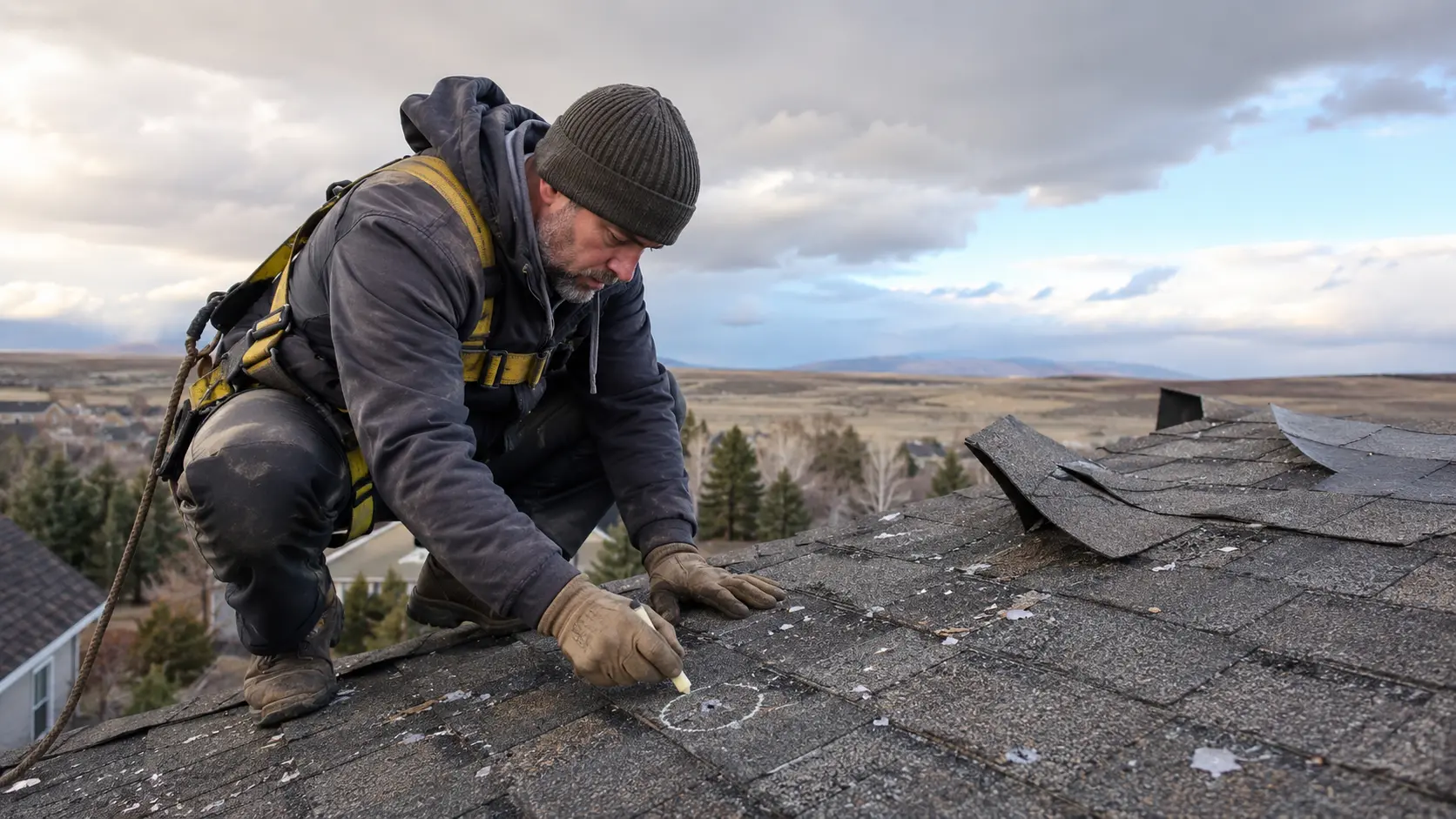
Picture a Tuesday in late June. A line of storms rolls off Lake St. Clair, drops marble-sized hail on Grosse Pointe and Warren, and by Wednesday morning half the neighborhood has a dented ridge cap and a wet ceiling. Demand spikes overnight. Everybody needs a roofer, and they need one yesterday.
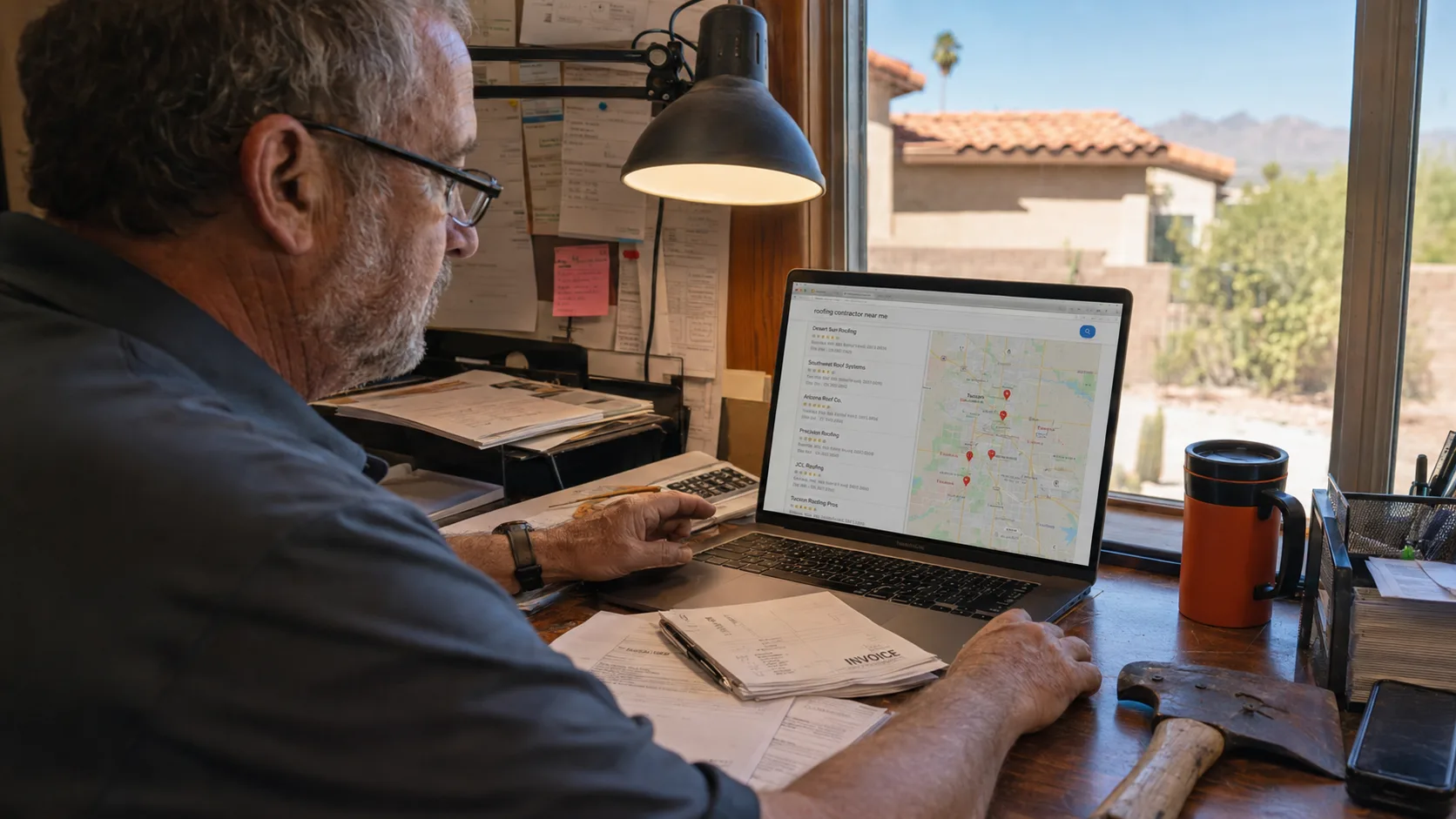
So where do they look? Their phone. They tap the little map, they read three names, and they call one of them before lunch.
And here's the part that stings.
"97% of roofing customers expect a callback within one week. More than 50% expect a callback within two days." — Roofing Contractor Magazine (2024)
That number cuts both ways. If you're not in the three names they see, you never even get the chance to call back fast. The clock starts when they search, not when they reach you. So the shop that shows up first in that little map wins the job before you've finished your coffee.
You've got twenty years of clean tear-offs behind you. The crew down the road has a logo they made in Canva and a site that loads in under two seconds. Guess who books the Warren job?
Let's get concrete. Three things move the needle, and none of them are mysterious.
That map pack you keep losing? It's fed almost entirely by your Business Profile, not your website. Categories, service areas, photos of real jobs in Redford and Dearborn, a steady drip of reviews with the neighborhood named in them. So a profile that lists "roofing contractor" plus your actual service radius, with forty recent five-star reviews, will outrank a stale listing every time.
And reviews are the single loudest ranking signal a local roofer controls. Ask for one on every closeout. Name the street in your reply.
Here's a mistake I see constantly. One page that says "we serve all of Metro and surrounding areas." That tells the algorithm nothing.
So instead you build a real page for the areas you work. Royal Oak. Ferndale. Livonia. Each one talks about the housing stock there, the common roof problems, the permit quirks. A century home in Corktown with a low-slope rear addition has different needs than a 1990s colonial in Novi, and your pages should say so. That specificity is what local search rewards.
You can rank and still lose. If your site takes six seconds to load on a phone with one bar of signal in a basement, the homeowner bounces back to the map and calls the next name. So page speed is the difference between a click and a booked estimate.
A real plan is a checklist your shop runs the same way it runs a tear-off. So a roofing company local SEO services Detroit plan covers your Business Profile claim and category mix, the neighborhood pages you build for Hamtramck and Highland Park, the schema markup on each one so Google reads you as a roofer and not a generic contractor, the review request your crew sends from the driveway at closeout, the citation cleanup on the old Angi and Yellow Pages listings that still spell your address wrong, and the page speed work so the site loads before the homeowner gives up.
And it covers tracking. Most shops never know which neighborhood page paid off and which didn't, so the budget burns blind. A solid roofing company local SEO services Detroit setup tags every form fill and every tap-to-call back to the page that earned it. You learn that Royal Oak brings two calls a week and the Warren page brings none, and you stop pouring money into Warren until you fix it. That feedback loop is what separates a working plan from a Canva logo with a backlink package taped on.
Let me show you why this pays for itself, plain arithmetic, no funny business.
Say your average reroof in this market runs $14,000. A full asphalt tear-off and replace on a standard colonial. You close maybe one in three estimates you get in front of.
"Among homeowners undertaking a roofing project, 63% choose asphalt roofing material (dimensional shingles 34%, three-tab shingles 19%, luxury shingles 10%), while 14% choose metal and 11% choose synthetic material or rubber." — Houzz Inc. (2024)
So most of your local jobs are asphalt, which means most are quotable fast and bookable fast. Now say better visibility brings you three extra estimate calls a month. One closes. That's $14,000 in new revenue from one month of being findable. Run that across a year and you're looking at roughly $168,000 you weren't seeing before.
And the homeowners can pay for it.
"Among homeowners who renovated in 2024, 84% used cash from savings and 29% used a credit card to fund renovation projects (multiple funding sources allowed)." — Houzz Inc. (2025)
So the demand is real, the budgets are real, and the only question is whether you're the name they find when they go looking.
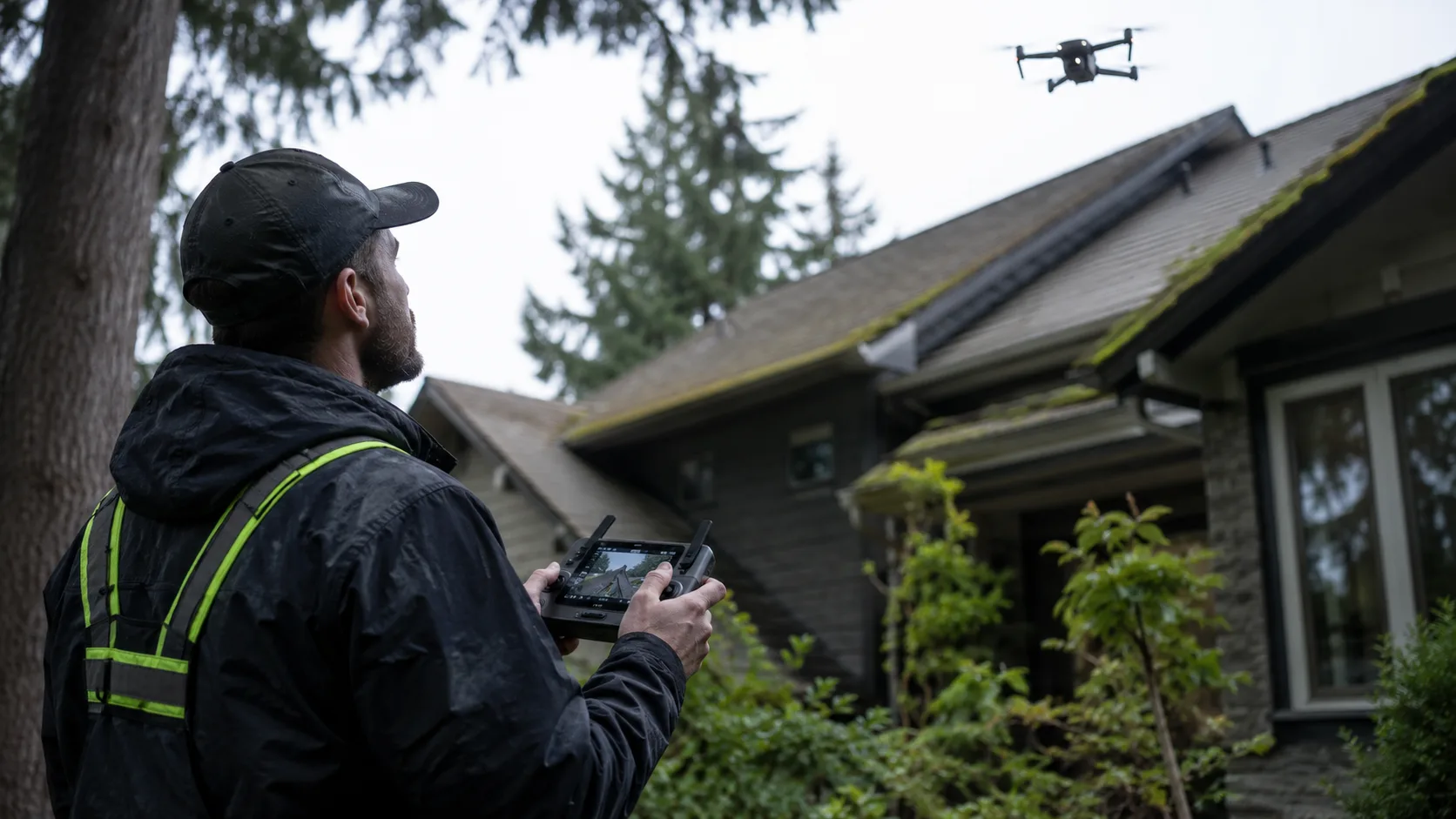
This isn't a thin market. The work is sitting on rooftops all over the metro, waiting for the shop that shows up first.
"From 2021–2023, homeowners spent $93.5B on roofing across 8.3 million projects (AHS-based estimates)." — U.S. Census Bureau and U.S. Department of Housing and Urban Development (2024)
And the aging stock works in your favor too. Michigan's freeze-thaw cycle is brutal on asphalt. Ice dams form along the eaves every January, water backs up under the shingles, and a roof that should last twenty-two years in a mild climate gives out years early here.
"In hail-prone states, average roof lifespan is 15 years vs 22 years in milder western states; 38% of U.S. homes have roofs in moderate to poor condition (Roofing Contractor) with 60% higher loss costs" — Verisk Analytics (2025)
So nearly four in ten roofs near you are already worn enough to need attention. That's your pipeline. The owners just haven't found you yet.
Plenty of your future jobs start as a kitchen remodel that turns into "while we're at it, the roof's shot too."
"Among renovating homeowners, 44% add or redo a roof as part of their exterior projects." — Houzz Inc. (2024)
So almost half of exterior projects include the roof. When that homeowner in Hamtramck starts planning, you want to be the name they already saw ranking for their neighborhood. Visibility now means the call later.
"In 2024, 22% of renovating homeowners undertook roofing upgrades, with a median spend of $13,000." — Houzz Inc. (2025)
"The median spend on roofing upgrades in 2024 was 8% higher than in 2023 (median $13,000 in 2024)." — Houzz Inc. (2025)
So the typical project got more valuable year over year. Every booked job is worth more than it was, which means every missed one costs you more too. Loss compounds quietly. You don't see the jobs you never knew you lost.
Here's the uncomfortable part. The leak usually is the website doing nothing when the visit finally arrives.
A homeowner in Birmingham clicks your listing at 9pm. The page loads slow, the phone number's an image instead of a tappable link, there's no quote form, and the last project photo is from 2019. So they leave. You paid for that visit with twenty years of reputation, and the site spent it for nothing.
That's the gap good local search work fixes. Not louder ads. A site that catches the visit and turns it into a phone call or a form fill while the homeowner's still motivated. The traffic is only half the system. The other half is what happens after the click.
So before you spend another dollar driving people to a page, it's worth knowing exactly where that page is dropping them.
A Detroit homeowner on a phone in their kitchen gives you about ten seconds before they swipe back. So your page has a small list of jobs to do in that window. The phone number sits at the top as a real tappable link, not a screenshot. The hero photo is a roof your crew finished, in a neighborhood the visitor recognizes, with the year on the install. The form is three fields, not nine, and it doesn't ask for the visitor's mother's maiden name before it'll send a quote. The reviews on the page name a street, because "great job" tells nobody anything and "they redid our garage on Stansbury and were done in two days" tells the next homeowner in Brightmoor exactly what to expect.
And the page mentions the cul-de-sac problems your shop already knows. A bungalow in Bagley with old layered cedar under the asphalt is a different bid than a flat-roof storefront on Livernois. So your page should say that. Specifics are what turn a tire-kicking visit into a booked estimate, and they're what the algorithm uses to decide which page to show in the first place.
We started by looking. Not at theory, at real sites. We ran a structured inspection of roofing websites across the trade, scoring how each one handles the things that decide whether a click becomes a call: load speed, tap-to-call, quote forms, neighborhood relevance, review signals.
And the pattern was ugly. Most shops with great crews had sites quietly losing the visit at the door.
So that's where we start with you too. A free Site Inspection of your own setup, no sales call to sit through, no pitch. We look at your profile, your speed, your forms, the streets you rank for and the ones you don't, and we hand you the gaps in plain language. You decide what to do with it.
Because you already do the hard part right. The roofs are clean, the crew's solid, the callbacks are fast. The job now is making sure the homeowner in Royal Oak or Dearborn finds that out before they find the crew down the road. Let's get your name in the map where it belongs.
The evidence
 Read the full report →
 0
contractor sites graded, one A
Across the whole CRO Index, a single site earned an A. The median landed at a D. The grade gap is a conversion gap.
0 %
of roofing sites fail a critical accessibility check
Scored against WCAG 2.1 AA with axe-core. A page that blocks a screen reader also blocks a paying customer.
Fervor Roofing State of the Industry, 2026
0 %
miss Google's mobile load-speed bar
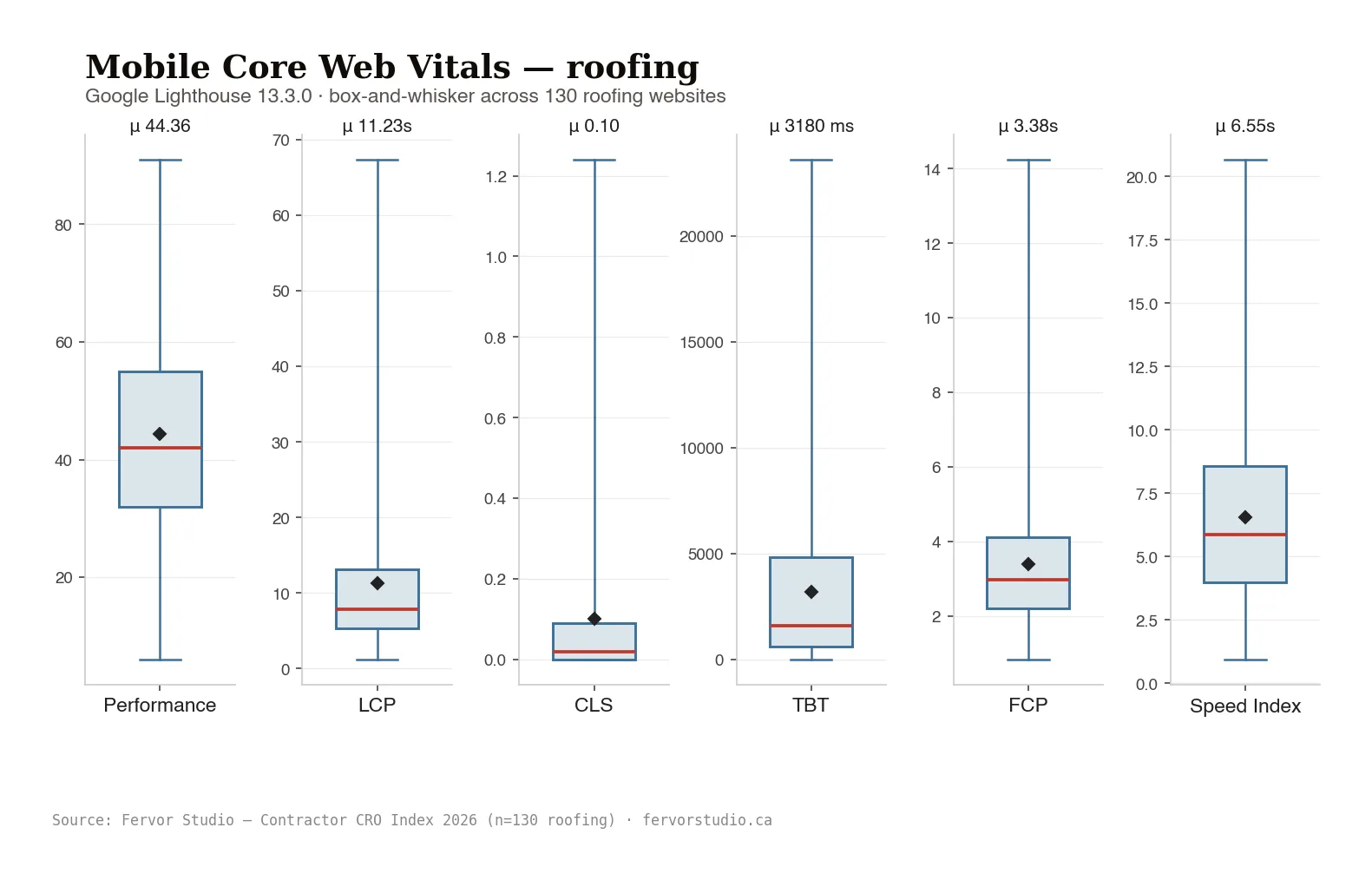
Median mobile load lands at 7.88 seconds. Most of your traffic is on a phone, and most of them are gone before the hero paints.
Fervor Roofing State of the Industry, 2026
0 /100
is the average roofing grade
That is a D. The sites booking the work are not the ones with the biggest crews. They are the ones a few points higher on the things homeowners feel.
Two ways to start
Tell us where you are. We point you at the right next step — no sales call to get there.
Client review
“Nay did an amazing job, you know. He was really patient. He got the work done the way I told him and he was just on point with the website. Pretty straightforward process. No going around the bush. He just did amazing work and I would 100% recommend.”
How Fervor can help
Monthly SEO, content, and CRO. Fixed deliverables. No credits, no rollover. The compound growth engine.
Complete website system built to convert storm leads, planned projects, and research-phase homeowners into booked jobs.
Identify and patch the top conversion killers on your existing site. No full rebuild needed.
GBP optimization, citation building, and review system foundation. The infrastructure that gets you into the Map Pack.
One conversion-built landing page for the referrals, paid clicks, and cold-call leads you send. They land on a page built to book them, not your generic homepage.
Your move
Tell us where you are. We point you at the right next step — no sales call to get there.
Keep going