0
contractor sites graded, one A
Across the whole CRO Index, a single site earned an A. The median landed at a D. The grade gap is a conversion gap.
You're getting clicks in Detroit. They're just not calling. We rebuild your site around the one job that matters: turning a visitor into a booked job.
Starts with a Site Inspection, so you see the plan before any build begins.
“Patient, on point, straightforward. Did amazing work. Would 100% recommend.” — Ruben Mederos, HyperTemp HVAC
“Responsive, creative, exceeded expectations. Already seeing greater engagement from our clients.” — George Jeorgy, Jeorgy's Landscape Construction
“Top-tier professionalism, real web design expertise, ideas I hadn't considered. Confidently recommend.” — Aws Nassani, Four Eleven Contracting



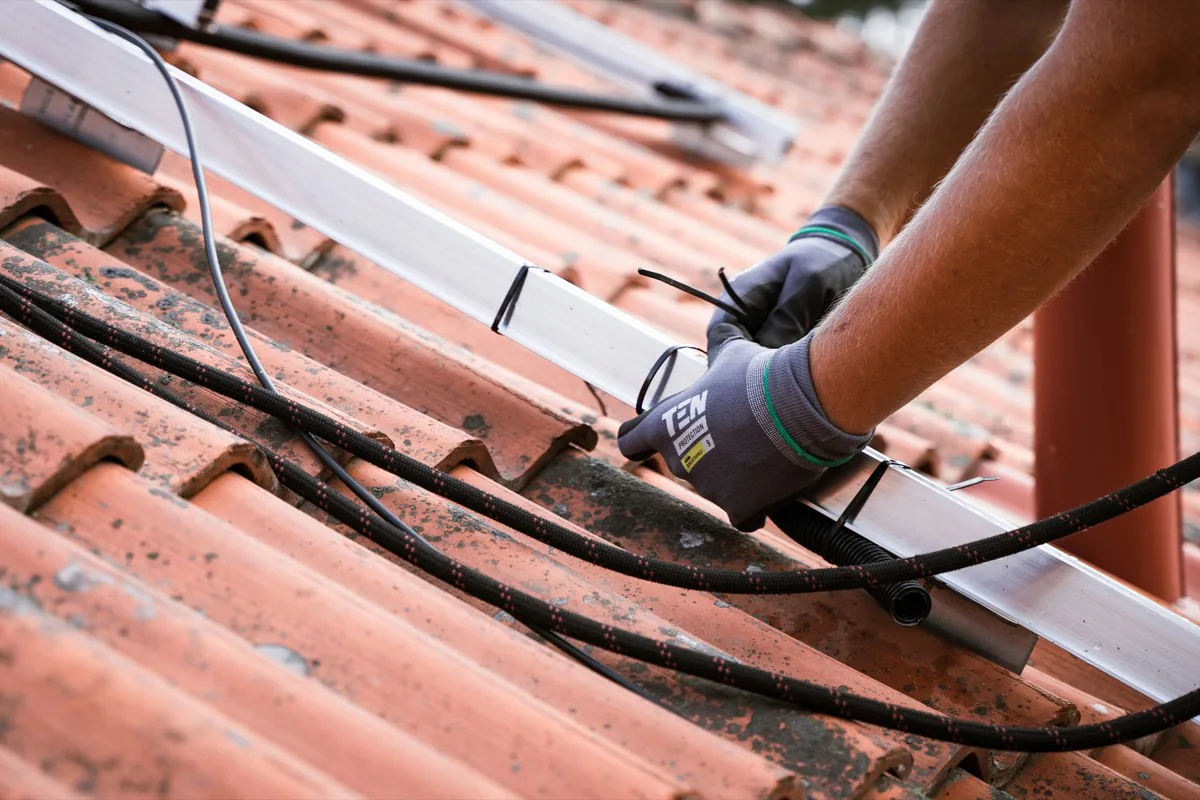
60.8% of roofing sites we tested fail a critical accessibility check
Digital State of the Roofing Industry 2026A grade out of 380 contractor sites
We graded 380 of them against one framework. Exactly one earned an A: Crown Industrial Roofing in Toronto, at 90 out of 100. The rest left money on the table. Here is what separates the top from the bottom.
The local detail
Every angle below comes from how Detroit actually searches, buys, and regulates — built into the page, not bolted on.
Storm weeks are when roofing demand spikes and when the bad sites bleed leads.
So picture where that homeowner really stands.
But not everyone calls.
So she is ready to call, but she pauses.
But you have a real choice about how the site gets built, and it is not as simple as cheap versus expensive.
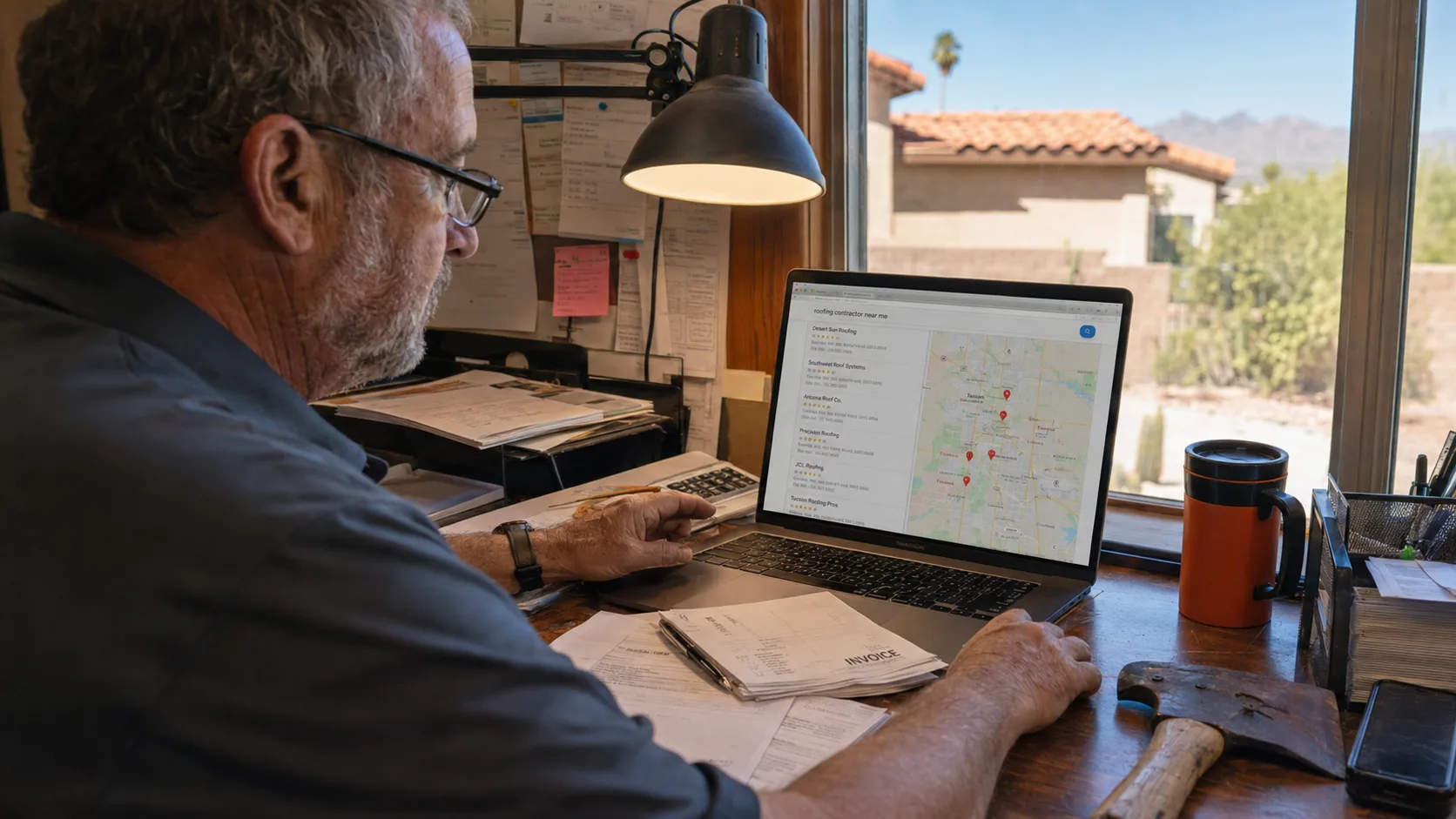
A shingle bundle peels off a roof on a side street in Corktown after a June squall, and the homeowner across the way is already on her phone. So she searches roofing web design Detroit shops would kill to rank for, taps the first result, and waits. Your site has about four seconds on a cellular signal in a driveway before her thumb drifts back to the SERP. And if your homepage is still loading the hero video, she is gone to the next contractor before your phone ever rings. That is the whole game for a Detroit roofer. You are not selling shingles on the page. You are catching a panicked search and turning it into a booked estimate.
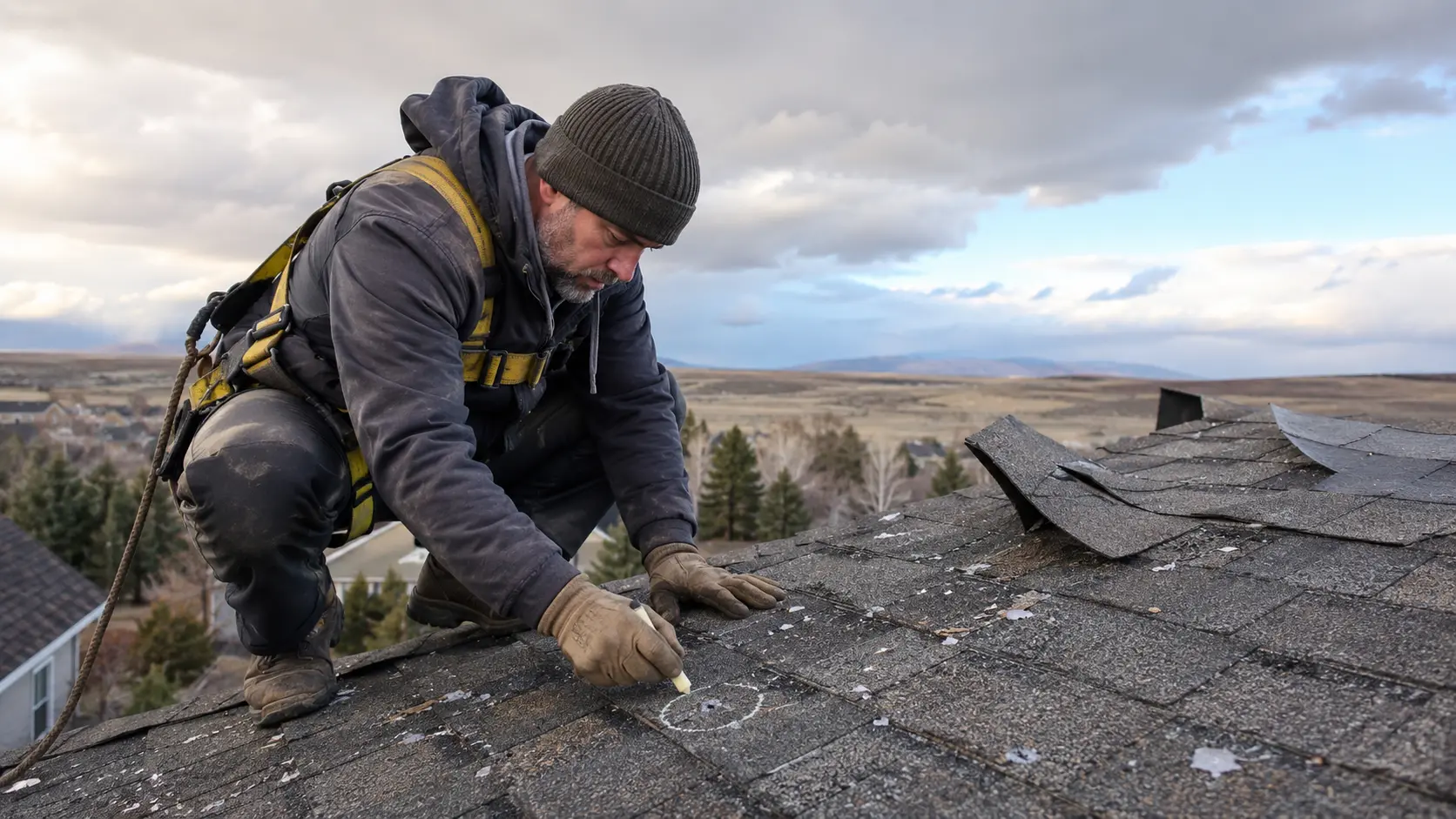
Storm weeks are when roofing demand spikes and when the bad sites bleed leads. So this is where roofing web design Detroit owners ignore quietly costs them jobs. A wind event rolls through Grosse Pointe and Dearborn, twenty roofs lose flashing or shingles in an afternoon, and every one of those homeowners searches within the hour. So the contractor whose page loads fast and asks for the call wins eight of those jobs. The contractor whose brochure site stalls wins one.
"97% of roofing customers expect a callback within one week. More than 50% expect a callback within two days." — Roofing Contractor Magazine (2024)
And here is what a brochure site costs you. Say a storm pushes thirty searches to your page in one week. A slow, text-heavy homepage converts maybe two of them. A fast page built to book converts eight. At a $9,000 average reroof in this market, that gap is roughly $54,000 in one storm week, gone because the page hesitated. Your competitor down Woodward did not write better copy. He just shipped a page that answered the phone.
And the demand is not only storm-driven. Our freeze-thaw cycles, where a January roof swings from twelve degrees to a thaw and back inside a week, crack older asphalt and lift seams across Hamtramck and Redford. So roofs here wear out on a clock the rest of the country does not run on, which means the search traffic never really stops for a busy shop.
"In hail-prone states, average roof lifespan is 15 years vs 22 years in milder western states; 38% of U.S. homes have roofs in moderate to poor condition (Roofing Contractor) with 60% higher loss costs" — Verisk Analytics (2025)
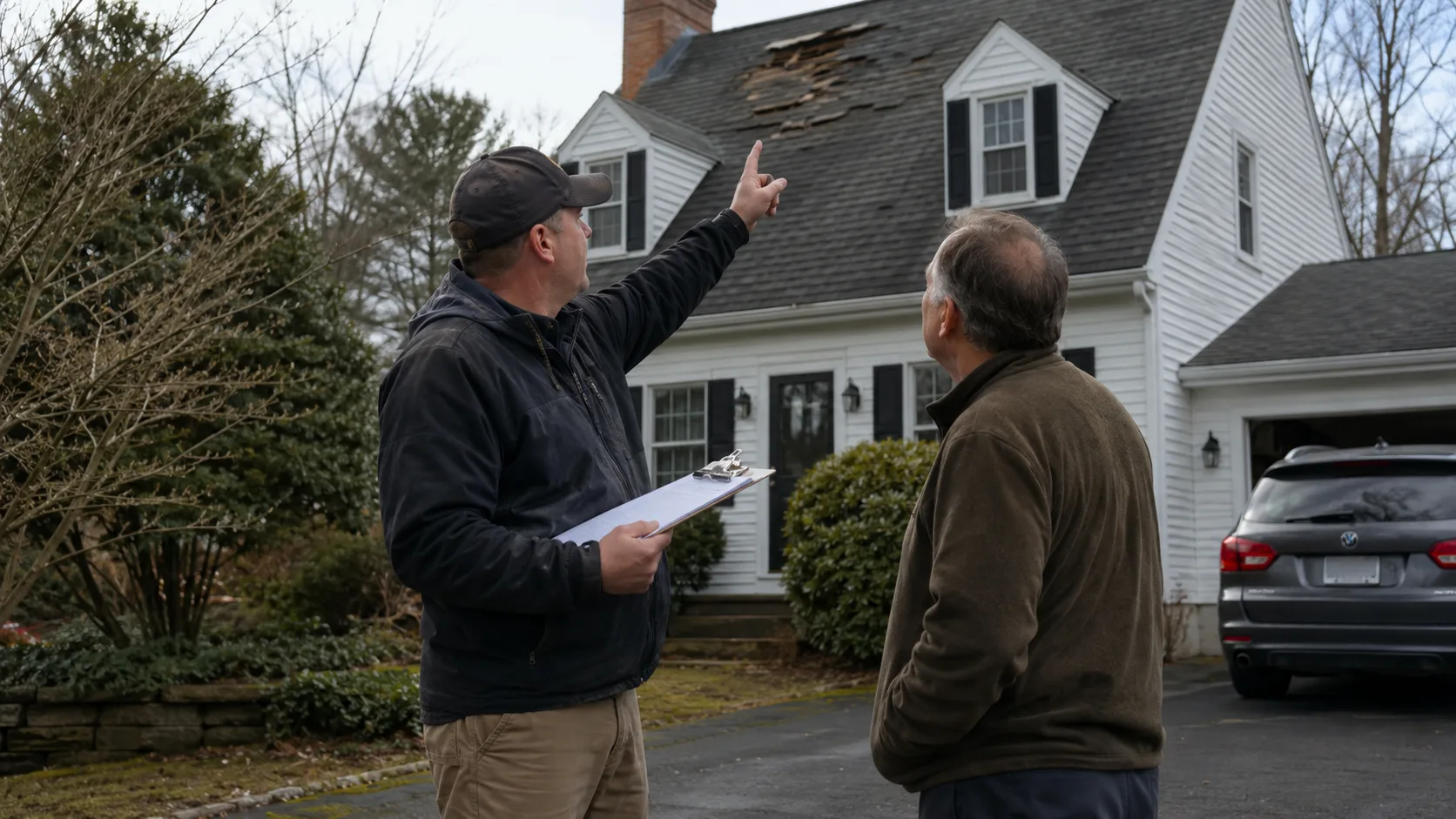
So picture where that homeowner really stands. She is in her driveway in Royal Oak, phone in one hand, looking up at the damage with the other. She is not at a desktop. And your site has to load on a single bar of cellular before she gives up.
Your page should be interactive in under four seconds on a phone, not the eight to twelve a video hero and ten tracking scripts will cost you. So speed is the first job any Detroit roofing web build has to nail before anything else. Every extra second past three drops conversions by a measurable chunk. So a heavy homepage is leads walking to the next guy. Strip the page to what books the call, then add weight back only if it earns its load time. And a fast Detroit roofing page beats a pretty slow one every storm week of the year.
And the single most important element sits above the fold: a tap-to-call button with your number, big enough for a thumb. Half your storm traffic wants to talk to a human right now, not read your About page.
"Among renovating homeowners, 44% add or redo a roof as part of their exterior projects." — Houzz Inc. (2024)
So if a homeowner has to scroll or pinch to find your number, you have already lost the half who would have called. Put it where the thumb already rests.
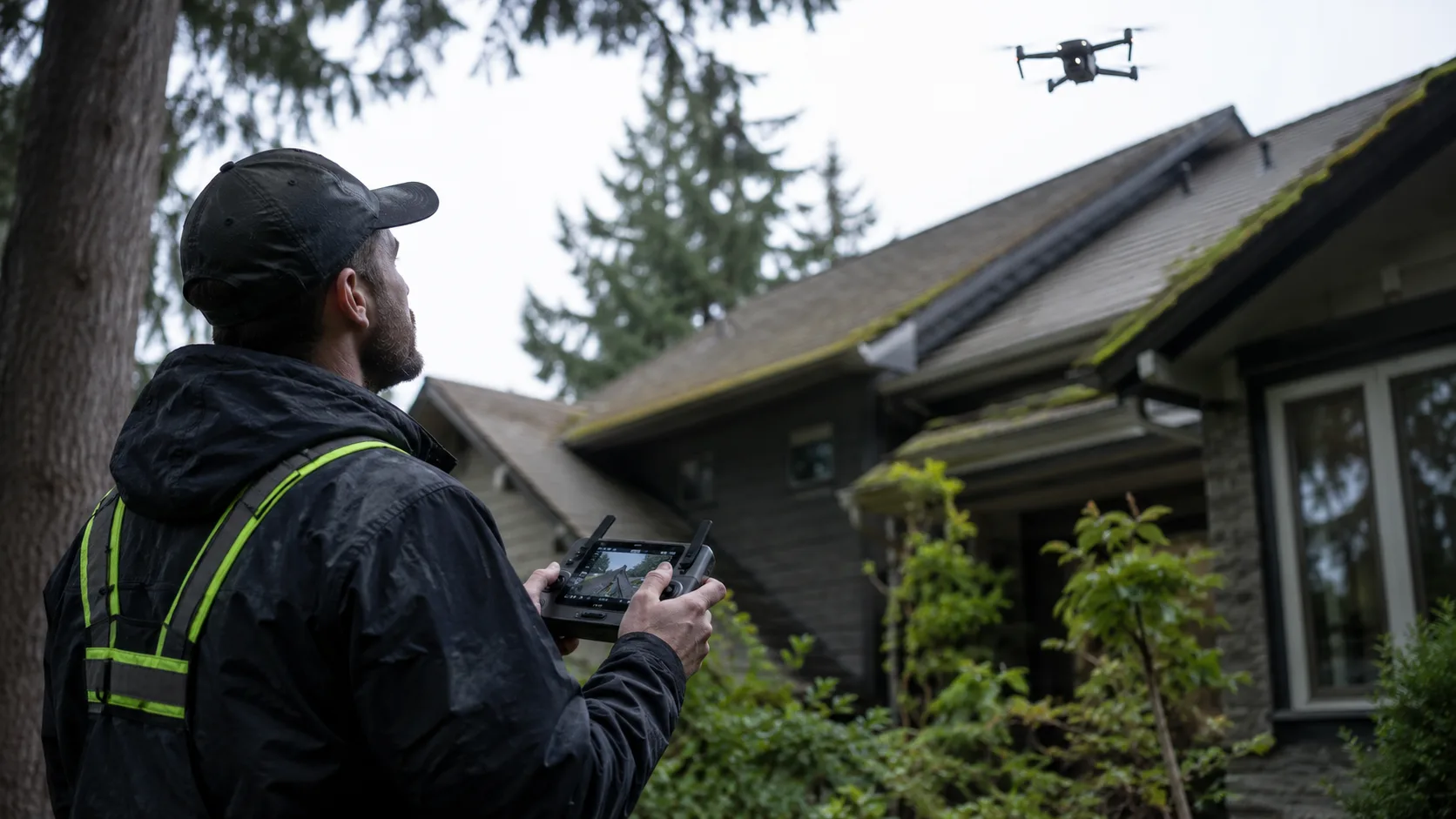
But not everyone calls. The other half want to leave details and get a callback, and your form decides whether they bother. So count your fields. If you are asking for eleven things before she can hit submit, you are filtering out the exact homeowner you wanted.
Ask for name, phone, and address. That is enough to call back and quote a roof in Ferndale or Warren. Every field past the third is a reason to abandon. You can gather roof age, material, and insurance details on the phone, where you are already building trust. The form exists to start a conversation, not to run an intake interview.
"From 2021–2023, homeowners spent $93.5B on roofing across 8.3 million projects (AHS-based estimates)." — U.S. Census Bureau and U.S. Department of Housing and Urban Development (2024)
And tell her when she will hear back, right there on the form. A line that promises a call within two hours during business hours converts better than silence, because it answers the one question on her mind. So if more than half of homeowners expect a reply inside two days, the page that names a tighter window wins the lead before your rival even checks his inbox.
So she is ready to call, but she pauses. Is your crew legit? A $9,000 decision does not get made on a logo. She wants proof, and it has to sit right next to the button, not buried under a Reviews tab she will never open.
Show real roofs your crew finished in Birmingham and Sterling Heights. A photo of an actual tear-off and a clean ridge cap on a recognizable street does more than any stock image of a generic suburban home. So homeowners trust the roofer whose work they can see in their own zip code.
"Among homeowners undertaking a roofing project, 63% choose asphalt roofing material (dimensional shingles 34%, three-tab shingles 19%, luxury shingles 10%), while 14% choose metal and 11% choose synthetic material or rubber." — Houzz Inc. (2024)
And the same goes for reviews. Pull three or four real Google reviews up beside the call button, with names and neighborhoods. So when she reads that you fixed a leak in Livonia last spring, the ask feels safe. Proof and the request belong on the same screen, because that is where she decides.
"Among homeowners who renovated in 2024, 84% used cash from savings and 29% used a credit card to fund renovation projects (multiple funding sources allowed)." — Houzz Inc. (2025)
So when most of your buyers are spending their own savings, the page has to earn that money with visible proof, not promises.
But you have a real choice about how the site gets built, and it is not as simple as cheap versus expensive. A template gets you live in a week for a few hundred dollars. A custom build costs more and takes longer. So which one books more roofs?
A clean template can absolutely work for a small Detroit roofing web project if it loads fast, puts the phone number up top, and keeps the form short. So do not pay for custom code when a well-chosen template hits those three marks. Plenty of one-truck shops in Eastpointe rank fine on a tuned template.
"In 2024, 22% of renovating homeowners undertook roofing upgrades, with a median spend of $13,000." — Houzz Inc. (2025)
But once you are running four to ten crews and chasing storm volume across the metro, the template starts costing you. You need page speed you control, landing pages per neighborhood, and a form wired to your CRM. So at that scale, custom pays for itself in the first month it beats a competitor to thirty storm leads.
"The median spend on roofing upgrades in 2024 was 8% higher than in 2023 (median $13,000 in 2024)." — Houzz Inc. (2025)
So the real question is how many roofs the page books in a year. A custom site that wins you ten extra storm jobs at $9,000 each pays back the whole cost of a custom Detroit roofing web project in its first quarter. And a cheap template that drops those same ten leads is the expensive option, no matter what the invoice says. So run the math on the leads, not the line item, before you pick a builder.
So here is how we think about the build. Good roofing web design and Detroit local search work are one project, not two invoices. A beautiful page nobody finds books zero roofs. A page that ranks but loads slow books almost as few. You need both wired together from day one, so the storm searcher in Pleasant Ridge finds you and converts in the same visit.
And that is the trap most owners fall into. They buy a site from one shop and SEO from another, and the two never talk. So the page gets rebuilt, the rankings reset, and the budget doubles. We build the page and the local ranking as a single system, because that is the only way the storm search pays off.
But you do not have to take our word for it. We ran an inspection of roofing websites across the trade, scoring real contractor sites on speed, mobile, and how fast they ask for the call. So you can see exactly where the bar sits before you spend a dollar.
And if you want your own site checked, we offer a free Site Inspection. No sales call. We look at your page the way a storm-week homeowner does, on a phone in a driveway, and we tell you what is costing you calls. You decide what to do with it from there, and there is no obligation either way once you have seen the gaps for yourself.
The evidence
 Read the full report →
 0
contractor sites graded, one A
Across the whole CRO Index, a single site earned an A. The median landed at a D. The grade gap is a conversion gap.
0 %
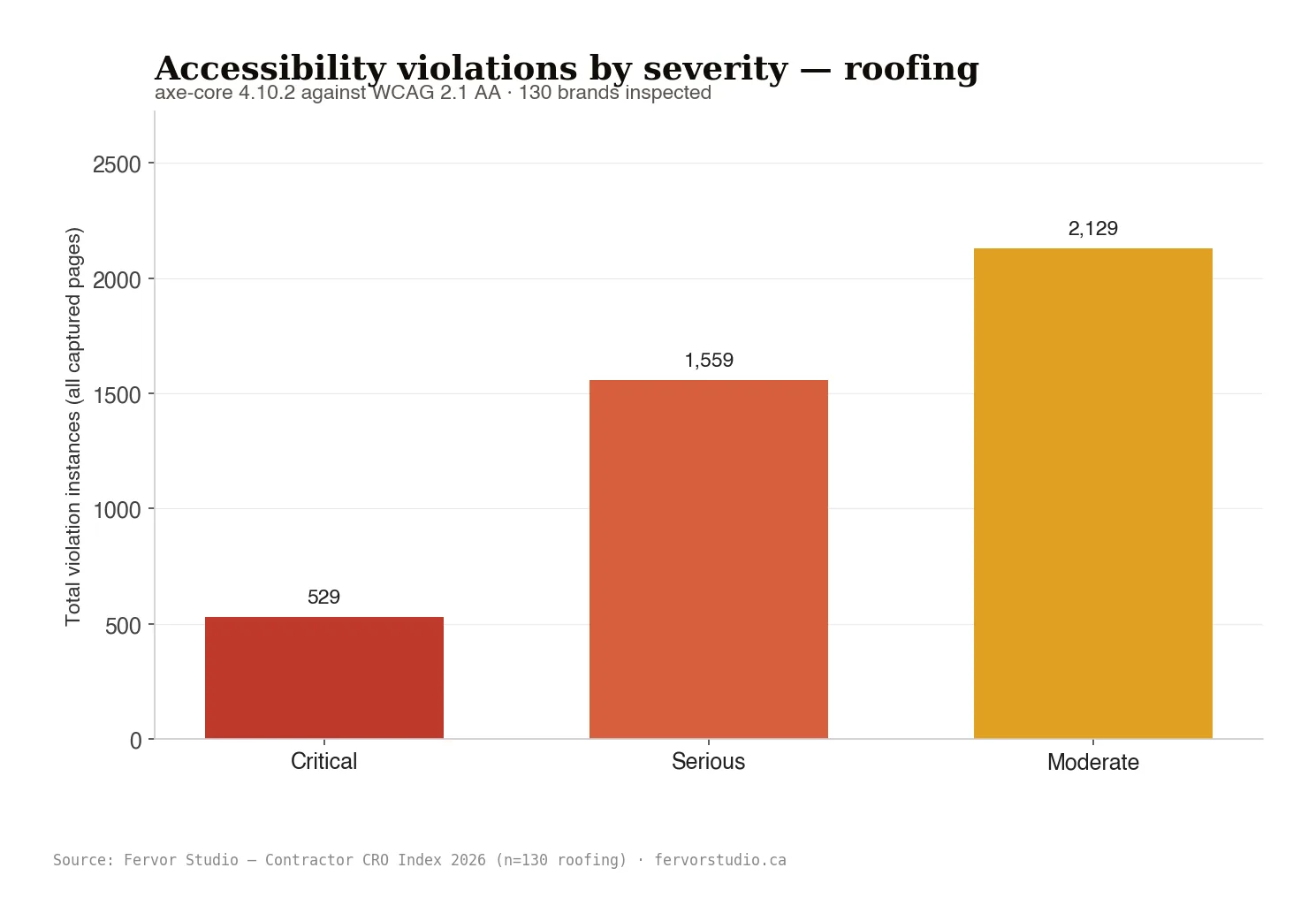
of roofing sites fail a critical accessibility check
Scored against WCAG 2.1 AA with axe-core. A page that blocks a screen reader also blocks a paying customer.
Fervor Roofing State of the Industry, 2026
0 %
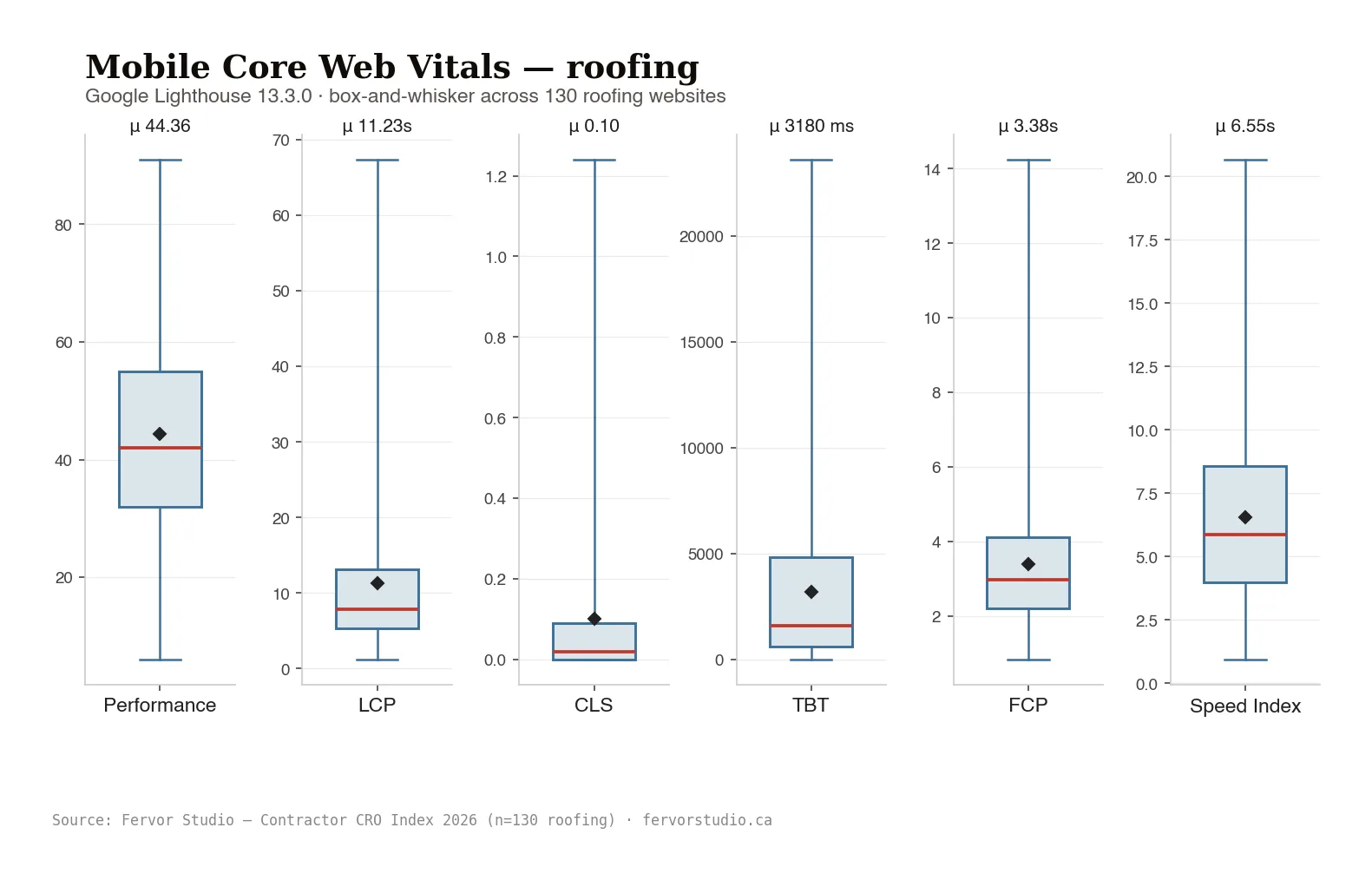
miss Google's mobile load-speed bar
Median mobile load lands at 7.88 seconds. Most of your traffic is on a phone, and most of them are gone before the hero paints.
Fervor Roofing State of the Industry, 2026
0 /100
is the average roofing grade
That is a D. The sites booking the work are not the ones with the biggest crews. They are the ones a few points higher on the things homeowners feel.
Two ways to start
Tell us where you are. We point you at the right next step — no sales call to get there.
Client review
“Nay did an amazing job, you know. He was really patient. He got the work done the way I told him and he was just on point with the website. Pretty straightforward process. No going around the bush. He just did amazing work and I would 100% recommend.”
How Fervor can help
Complete website system built to convert storm leads, planned projects, and research-phase homeowners into booked jobs.
Identify and patch the top conversion killers on your existing site. No full rebuild needed.
Monthly SEO, content, and CRO. Fixed deliverables. No credits, no rollover. The compound growth engine.
GBP optimization, citation building, and review system foundation. The infrastructure that gets you into the Map Pack.
One conversion-built landing page for the referrals, paid clicks, and cold-call leads you send. They land on a page built to book them, not your generic homepage.
Your move
Tell us where you are. We point you at the right next step — no sales call to get there.
Keep going