0
contractor sites graded, one A
Across the whole CRO Index, a single site earned an A. The median landed at a D. The grade gap is a conversion gap.
Right now, someone in Charleston, WV is Googling "roofer near me." We get you showing up first — then turn that click into a booked job.
A written report and a ranked fix list, in about three days.
“Patient, on point, straightforward. Did amazing work. Would 100% recommend.” — Ruben Mederos, HyperTemp HVAC
“Responsive, creative, exceeded expectations. Already seeing greater engagement from our clients.” — George Jeorgy, Jeorgy's Landscape Construction
“Top-tier professionalism, real web design expertise, ideas I hadn't considered. Confidently recommend.” — Aws Nassani, Four Eleven Contracting



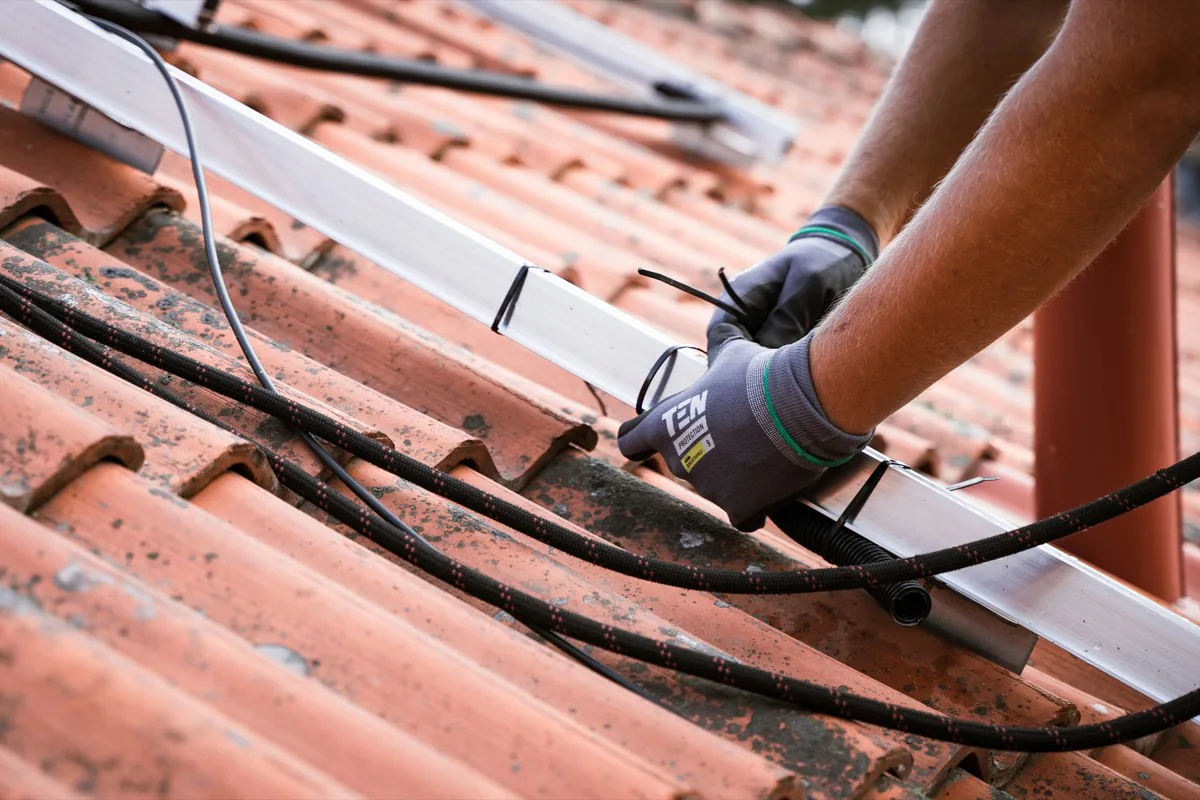
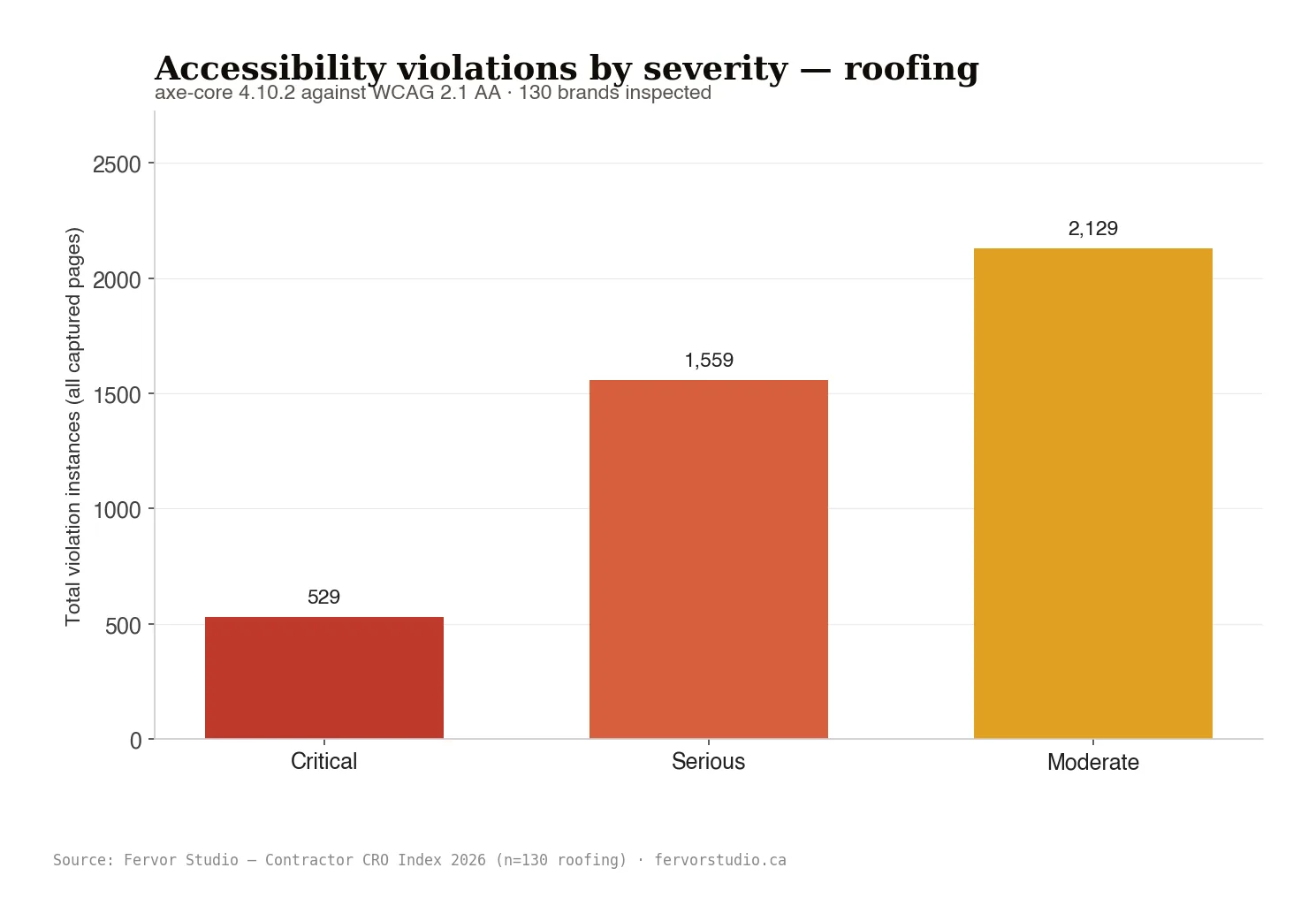
60.8% of roofing sites we tested fail a critical accessibility check
Digital State of the Roofing Industry 2026A grade out of 380 contractor sites
We graded 380 of them against one framework. Exactly one earned an A: Crown Industrial Roofing in Toronto, at 90 out of 100. The rest left money on the table. Here is what separates the top from the bottom.
The local detail
Every angle below comes from how Charleston, WV actually searches, buys, and regulates — built into the page, not bolted on.
Think about what a single job is worth to you.
Google grades signals, not craftsmanship.
Appalachian roofs take a beating that western roofs never see.
I’ve looked at a lot of contractor sites at hours no normal person should be awake.
Let’s keep this simple.
So a hailstorm rolls down the Kanawha Valley on a Tuesday afternoon, and by Wednesday morning every homeowner from South Hills to Kanawha City is typing the same thing into their phone. Roofing SEO in Charleston WV decides who shows up first. And if you're a growing shop with four to ten guys, that ranking is the difference between a booked week and a quiet one. You already do the work. The question is whether the search results say so.
Here's the thing most owners miss. The lead was already there. A neighbor on the East End needed a reroof, pulled out their phone, and called whoever Google put at the top. It wasn't you. Not because your crew is worse. Because the other shop showed up and you didn't.
And that's the part that stings, isn't it. You've got the ladder racks, the manufacturer cert, the crew that shows up when it says it will. None of that helps if a homeowner three miles away never sees your name. The job didn't go to a better roofer. It went to a more findable one. That's a fixable problem, and it's cheaper to fix than you'd guess.
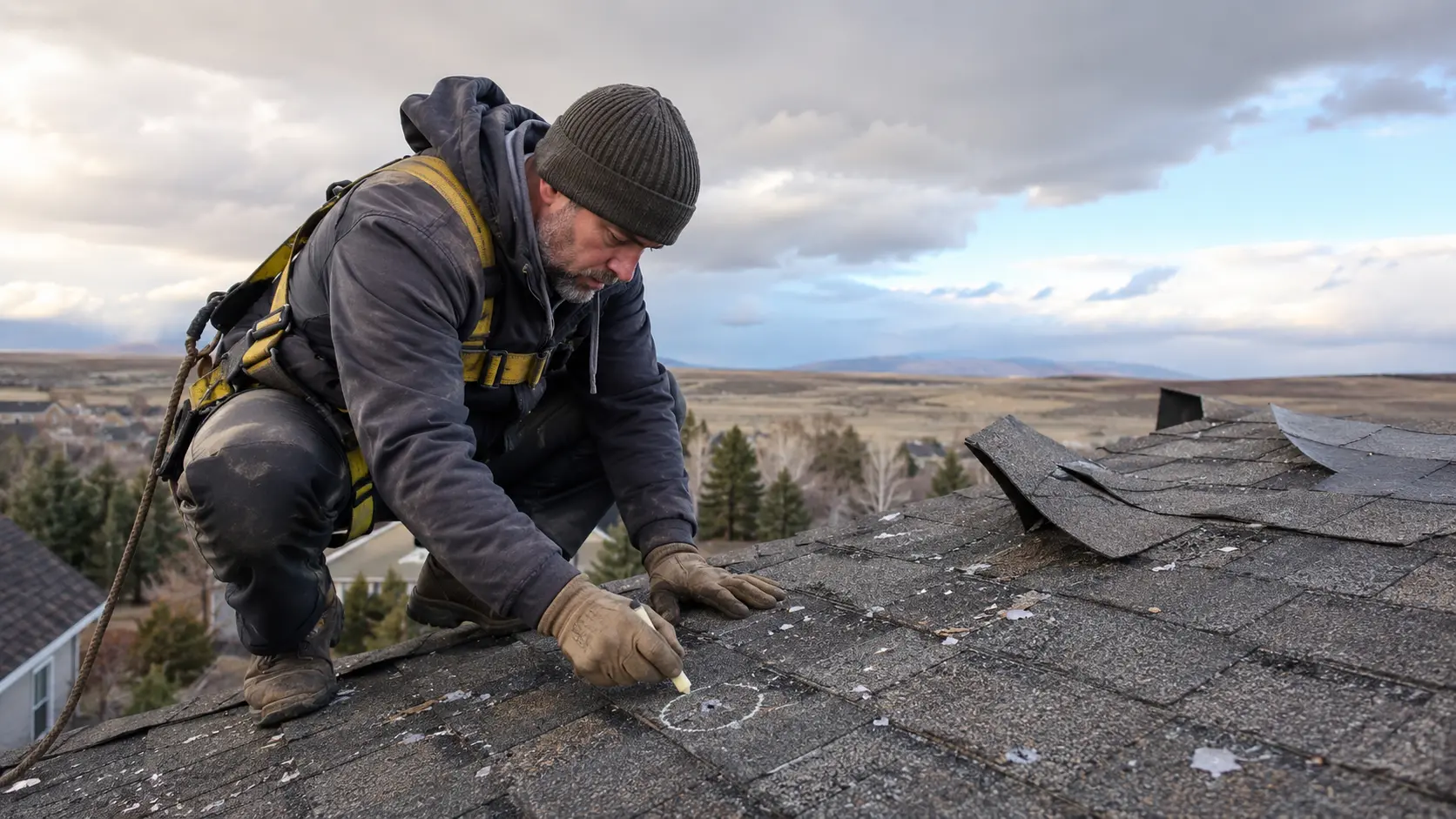
Think about what a single job is worth to you. A standard tear-off and reroof on a two-story in Edgewood runs you somewhere around $14,000 in revenue. So lose three of those a month to the shop ranking above you, and that's $42,000 walking out the door every thirty days. And over a season, the math gets ugly fast.
"In 2024, 22% of renovating homeowners undertook roofing upgrades, with a median spend of $13,000." — Houzz Inc. (2025)
That $13,000 median is real money. It's the check a homeowner near Loudendale is ready to write the week their roof starts leaking. And they're going to write it to whoever's easy to find.
When someone searches for a roofer, Google hands them three local listings before anything else. That's the map pack. Rank in it and the phone rings. But sit on page two and you're invisible, no matter how good your reviews are. And here's the opening: most of your competitors in the valley haven't figured this out yet, which is exactly why the window's wide open right now.
And speed wins the bid. Homeowners don't wait. They call the first shop, and if you don't answer, they call the second.
"97% of roofing customers expect a callback within one week. More than 50% expect a callback within two days." — Roofing Contractor Magazine (2024)
So ranking gets you found. But your site has to convert that visit into a call before the homeowner moves on. Both halves matter, and most shops only fix one.
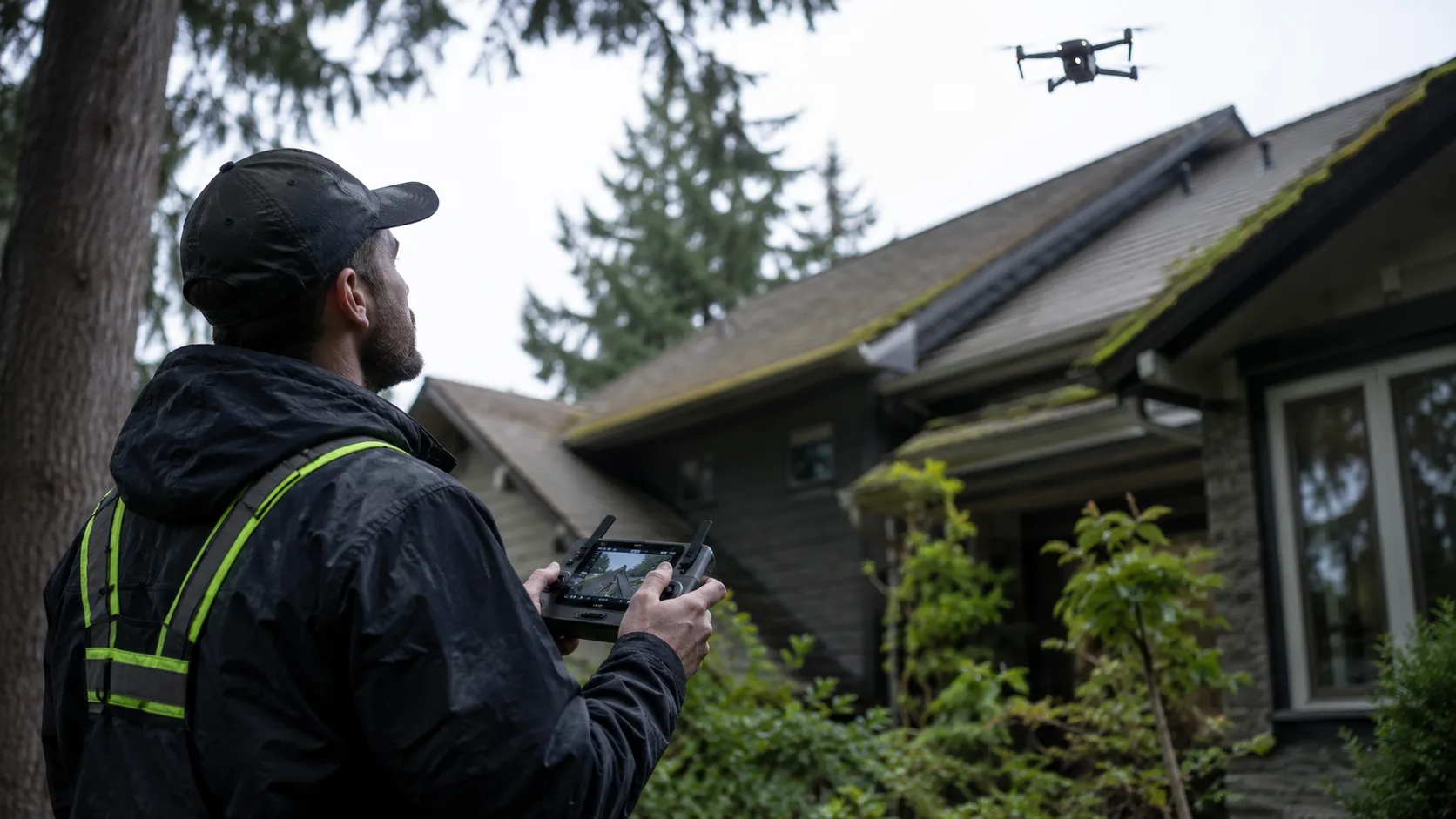
Google grades signals, not craftsmanship. And the signals it cares about for a roofing company are pretty specific once you stop guessing.
Your profile is the single biggest lever you've got. Categories, service areas, photos of real jobs in Cross Lanes and St. Albans, fresh reviews with the neighborhood named in them. So when you're choosing seo for roofing companies charleston wv, this is where the first dollar should go, because it's the cheapest ranking factor you own outright.
A review that says "fixed our roof in South Charleston after the spring hail" tells Google two things at once. You did the work, and you did it there. Generic five-star reviews help. Neighborhood-named ones help more. And they're not hard to get. Just ask the homeowner to mention where they live when you hand them the warranty paperwork.
Someone in Kanawha City isn't searching the way someone in the West End is. They use their own area name. Build pages that match, and you stop competing with the whole city for one fat keyword. You start winning the small, specific searches that turn into booked jobs.
And those specific searches convert better, too. A homeowner who finds a page about their exact neighborhood feels like they found a local, not a faceless company that services "all of West Virginia." That feeling shortens the gap between the click and the call.
"Among renovating homeowners, 44% add or redo a roof as part of their exterior projects." — Houzz Inc. (2024)
That number means roughly half your siding and gutter prospects are roof prospects too. A page that catches them mid-project is a page that earns its keep.
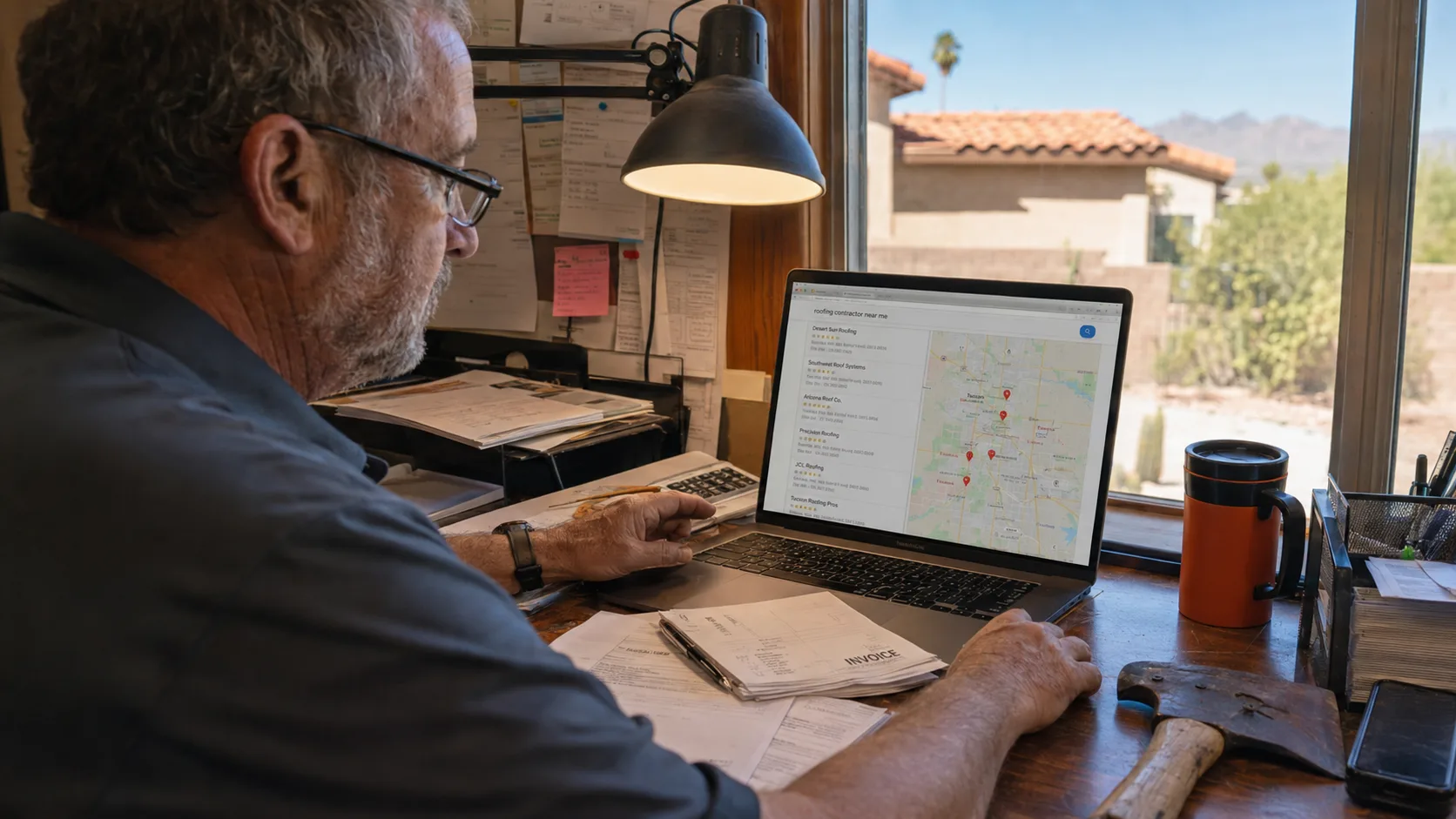
Appalachian roofs take a beating that western roofs never see. Freeze-thaw cycles all winter, ice damming on the north slopes, then hail and wind in spring. Shingles up here age faster, and homeowners know it the hard way.
"In hail-prone states, average roof lifespan is 15 years vs 22 years in milder western states; 38% of U.S. homes have roofs in moderate to poor condition (Roofing Contractor) with 60% higher loss costs" — Verisk Analytics (2025)
You know the surge is coming every March. The shops that win it built their ranking in January, before the first claim got filed. Waiting until the hail hits to think about being found is like ordering shingles the day of the job. Too late.
So the work happens in the slow months. Ranking takes weeks to settle, not days, which is why the owners who plan ahead clean up while everyone else scrambles. By the time your competitor decides to get serious in April, you've already booked the spring out. That head start is the whole game.
And your site has to work at midnight. A homeowner with a leaking ceiling at 11 p.m. isn't waiting for office hours. If your site loads fast, shows a phone number above the fold, and lets them book, you've got the job. If it's slow and buried, the next shop got it.
So the site is doing sales work while you sleep, or it's doing nothing. There's no neutral. Every second of load time and every extra tap to find your number is a homeowner deciding you're too much trouble. They bounce, they hit the next listing, and you never even knew they came by.
"From 2021–2023, homeowners spent $93.5B on roofing across 8.3 million projects (AHS-based estimates)." — U.S. Census Bureau and U.S. Department of Housing and Urban Development (2024)
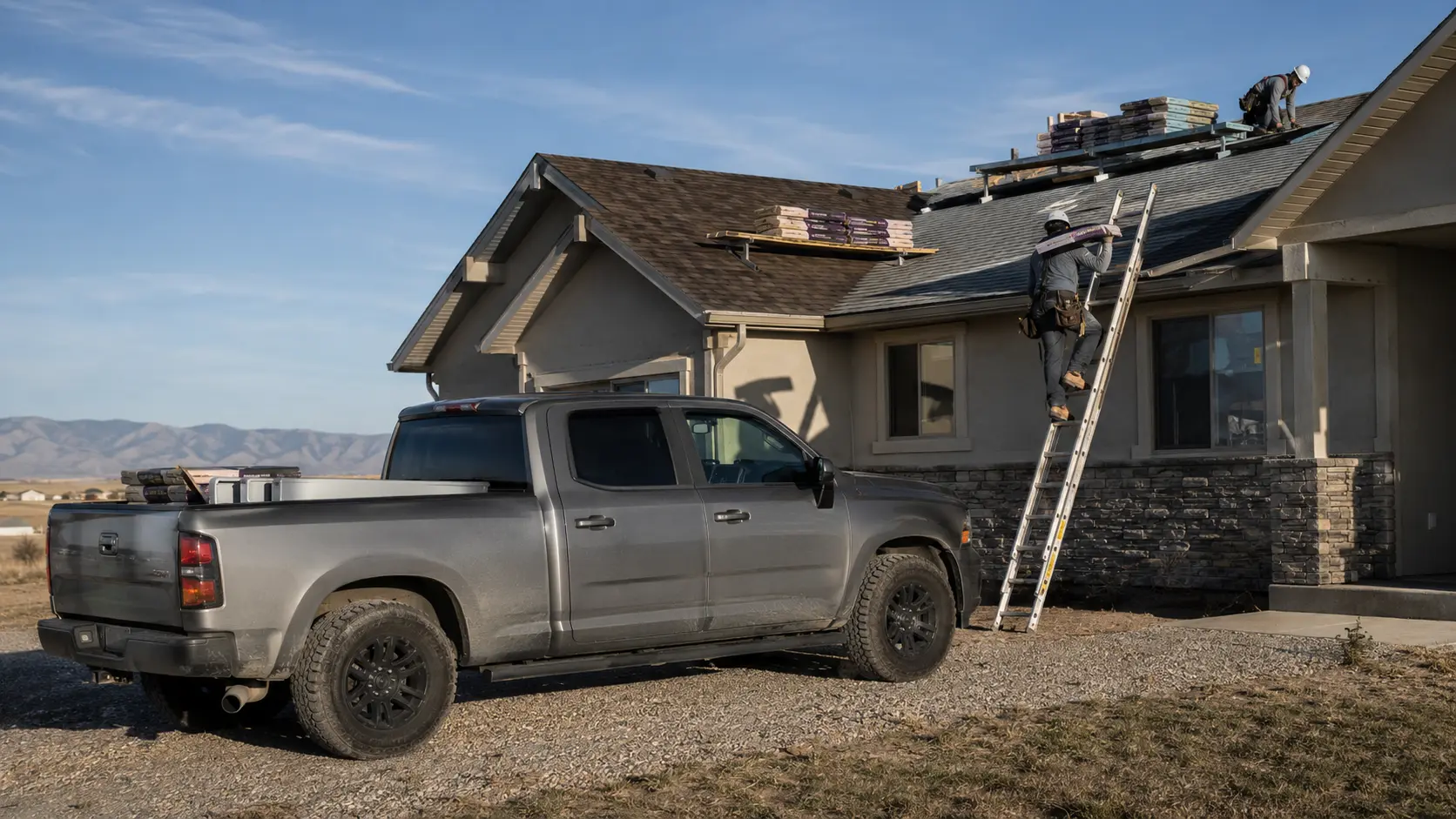
I've looked at a lot of contractor sites at hours no normal person should be awake. And the pattern repeats. The site looks fine. It just doesn't do anything.
A shop will spend $6,000 on a slick redesign and still sit on page three. Looks aren't a ranking factor. But structure, speed, and local signals are. So the money went to the wrong place, and the phone stayed quiet. A beautiful site nobody finds is a billboard in the desert. It cost real money and it does nothing.
A single "service areas" page listing forty towns ranks for none of them. Google wants depth, not a list. The shops winning the West Side built a real page about the West Side, with real photos and real detail. You can't fake depth, and Google's gotten good at telling the difference.
You did fifty roofs last year and have nine reviews. Every one of those happy homeowners would've left one if you'd asked. That's free ranking power you left on the table.
And it compounds. The shop with sixty reviews didn't do sixty times the work you did. They just asked, every single time, with a text that took ten seconds to send. Reviews stack up slow and then matter all at once, right when a homeowner is deciding between you and the listing next to yours.
"Among homeowners undertaking a roofing project, 63% choose asphalt roofing material (dimensional shingles 34%, three-tab shingles 19%, luxury shingles 10%), while 14% choose metal and 11% choose synthetic material or rubber." — Houzz Inc. (2024)
So most of your jobs are asphalt. Your content should speak to the homeowner choosing between dimensional and three-tab, because that's the conversation they're having in their head before they call.
Let's keep this simple. Say better ranking brings you eight extra calls a month. You close three. At $14,000 a job, that's $42,000 in new revenue every month from work that was already searching for you.
"The median spend on roofing upgrades in 2024 was 8% higher than in 2023 (median $13,000 in 2024)." — Houzz Inc. (2025)
And those checks are mostly cash, which means the homeowner's decision comes down to trust and timing, not financing.
"Among homeowners who renovated in 2024, 84% used cash from savings and 29% used a credit card to fund renovation projects (multiple funding sources allowed)." — Houzz Inc. (2025)
And you don't have to babysit any of it. Here's what owners worry about. They picture another vendor that needs weekly calls and produces nothing. But ranking work runs in the background once it's installed. You keep running crews. The system keeps you found.
So we start by looking, not pitching. We did an inspection of roofing websites across the trade, and the gaps repeat from market to market. Slow load times. Buried phone numbers. Thin local pages. The same leaks, over and over.
So before you spend a dollar, we run a free Site Inspection on your site. No sales call to get it. We show you exactly where the leads are leaking, what it's costing you in real numbers, and what a fix looks like. You read it on your own time, and you decide what to do with it.
You already do the work better than the shop ranking above you. Let's make the search results say so, before the next storm rolls through the valley and the calls go somewhere else.
The evidence
 Read the full report →
 0
contractor sites graded, one A
Across the whole CRO Index, a single site earned an A. The median landed at a D. The grade gap is a conversion gap.
0 %
of roofing sites fail a critical accessibility check
Scored against WCAG 2.1 AA with axe-core. A page that blocks a screen reader also blocks a paying customer.
Fervor Roofing State of the Industry, 2026
0 %
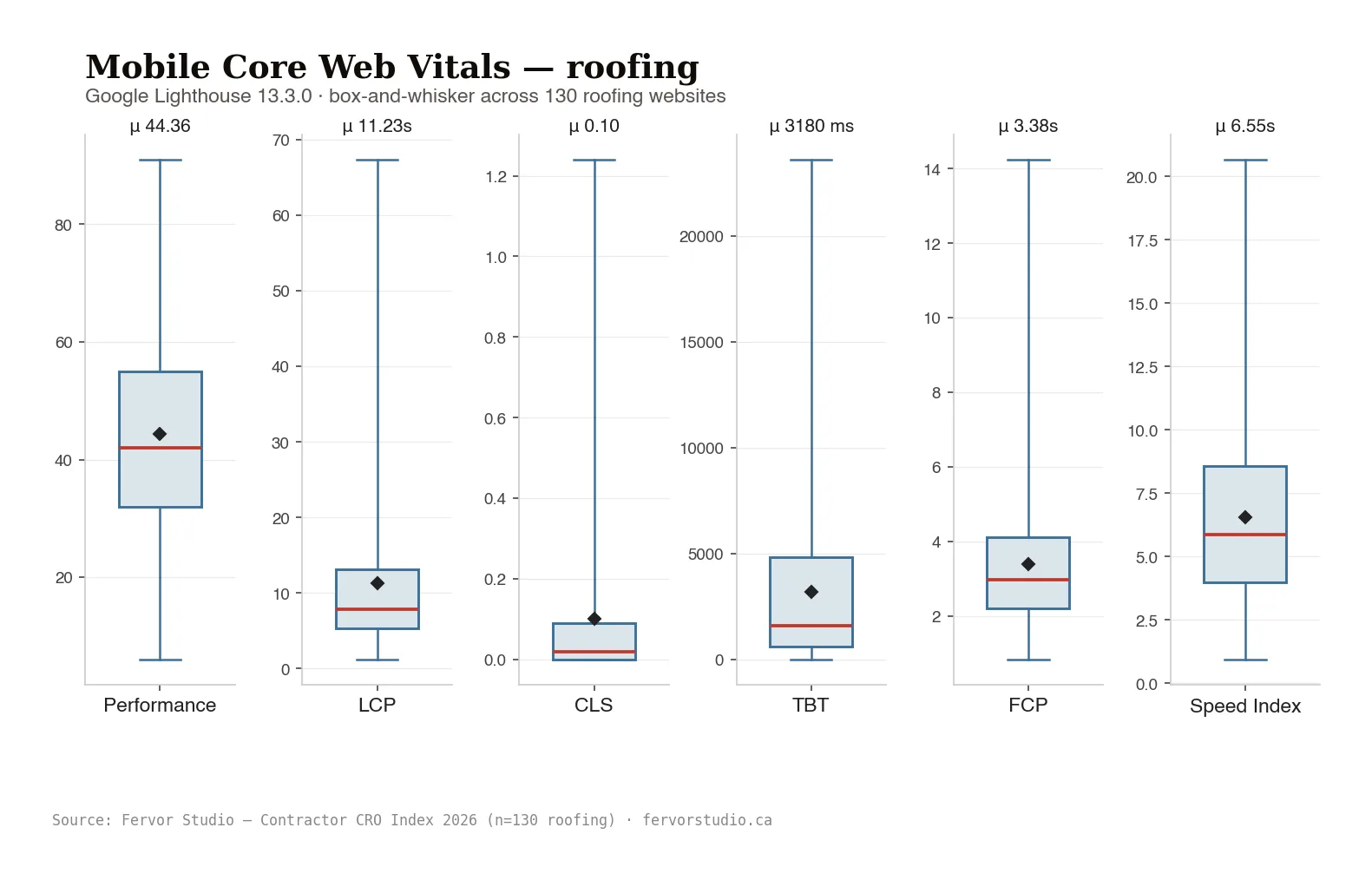
miss Google's mobile load-speed bar
Median mobile load lands at 7.88 seconds. Most of your traffic is on a phone, and most of them are gone before the hero paints.
Fervor Roofing State of the Industry, 2026
0 /100
is the average roofing grade
That is a D. The sites booking the work are not the ones with the biggest crews. They are the ones a few points higher on the things homeowners feel.
Two ways to start
Tell us where you are. We point you at the right next step — no sales call to get there.
Client review
“Nay did an amazing job, you know. He was really patient. He got the work done the way I told him and he was just on point with the website. Pretty straightforward process. No going around the bush. He just did amazing work and I would 100% recommend.”
How Fervor can help
Monthly SEO, content, and CRO. Fixed deliverables. No credits, no rollover. The compound growth engine.
Complete website system built to convert storm leads, planned projects, and research-phase homeowners into booked jobs.
Identify and patch the top conversion killers on your existing site. No full rebuild needed.
GBP optimization, citation building, and review system foundation. The infrastructure that gets you into the Map Pack.
One conversion-built landing page for the referrals, paid clicks, and cold-call leads you send. They land on a page built to book them, not your generic homepage.
Your move
Tell us where you are. We point you at the right next step — no sales call to get there.
Keep going