0
contractor sites graded, one A
Across the whole CRO Index, a single site earned an A. The median landed at a D. The grade gap is a conversion gap.
You already get traffic in Charleston, WV. Most of it leaves without calling. We find the leaks and plug them, so the visitors you've got start booking jobs.
Starts with a Site Inspection, so you see the leaks before any fix begins.
“Attentive, listened to every revision request, delivered on time. Would work with him again.” — Hamza Najam
“Patient, on point, straightforward. Did amazing work. Would 100% recommend.” — Ruben Mederos, HyperTemp HVAC
“Responsive, creative, exceeded expectations. Already seeing greater engagement from our clients.” — George Jeorgy, Jeorgy's Landscape Construction
“Top-tier professionalism, real web design expertise, ideas I hadn't considered. Confidently recommend.” — Aws Nassani, Four Eleven Contracting




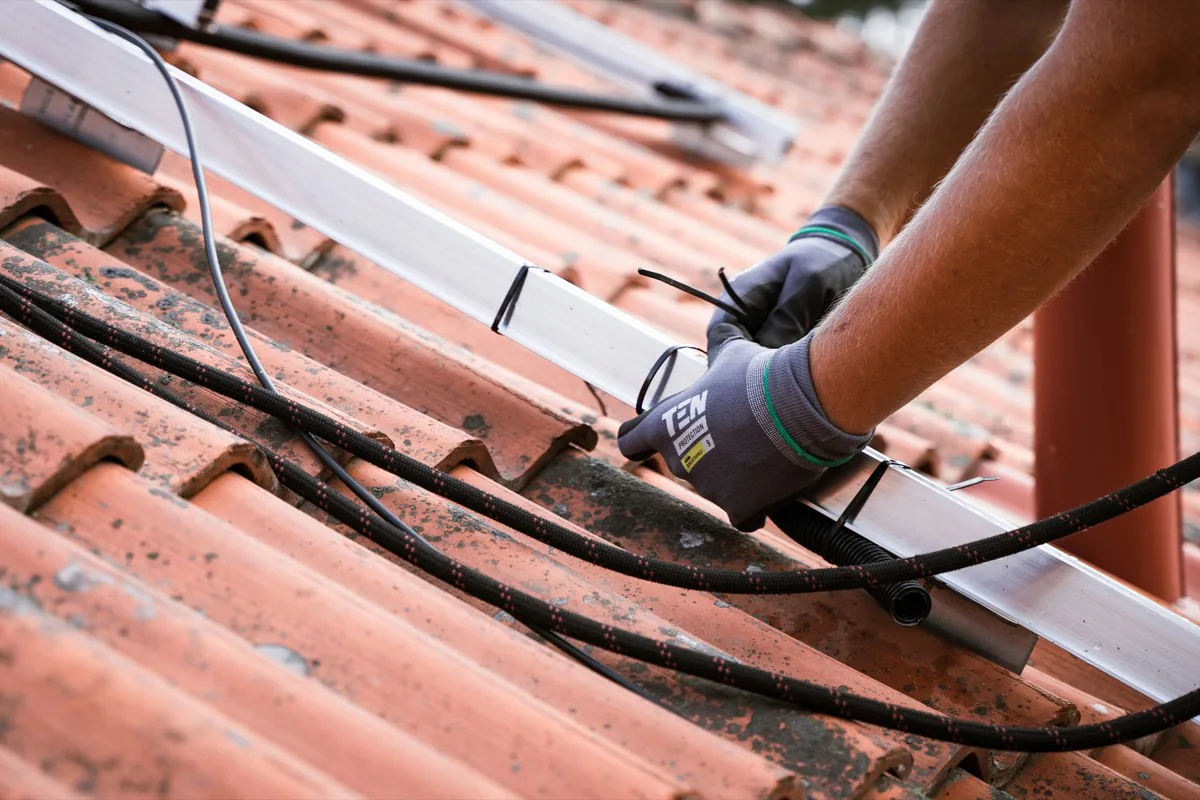
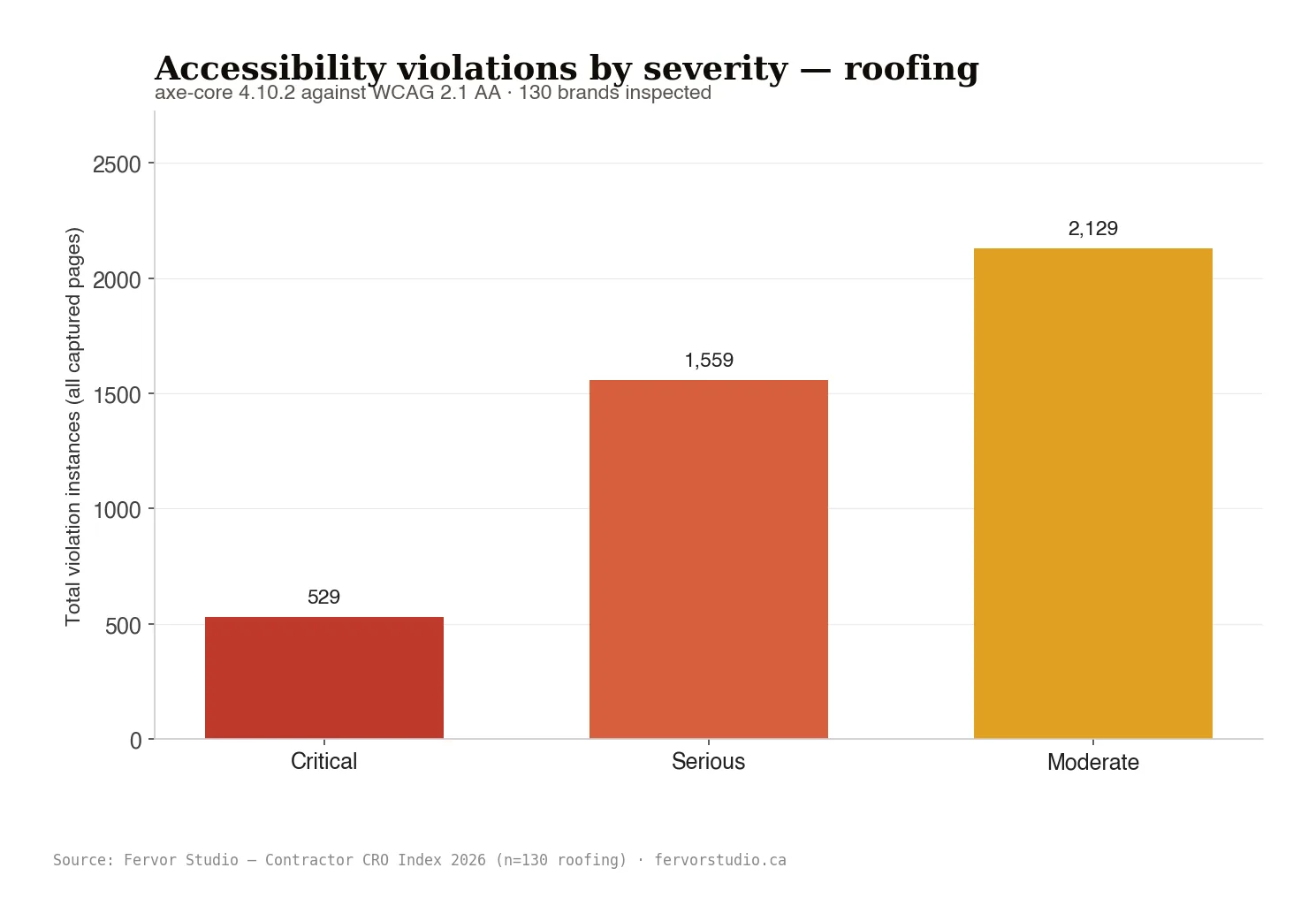
60.8% of roofing sites we tested fail a critical accessibility check
Digital State of the Roofing Industry 2026A grade out of 380 contractor sites
We graded 380 of them against one framework. Exactly one earned an A: Crown Industrial Roofing in Toronto, at 90 out of 100. The rest left money on the table. Here is what separates the top from the bottom.
The local detail
Every angle below comes from how Charleston, WV actually searches, buys, and regulates — built into the page, not bolted on.
Here’s the thing about a homepage.
A good page earns the booking above the fold.
So you’ve got the click, the headline matched, the button’s right there.
One page can’t serve a hailstorm victim and a homeowner planning a metal upgrade for next spring.
Here’s the part most shops never fix.
So let’s lay the whole thing out on a napkin.
You're spending real money on Google and Facebook ads, and the clicks are coming. But your booked estimates aren't moving. So where's the money going? It's leaking out of a roofing landing page in Charleston WV that asks a homeowner to think too hard, scroll too far, and trust too little in the eight seconds before they hit the back button. So picture it. A storm rolls through Kanawha City, a homeowner taps your ad at 9 p.m., and your homepage greets them with a menu of fourteen links. And that's the leak. So it's costing you jobs every single week the page stays that way.
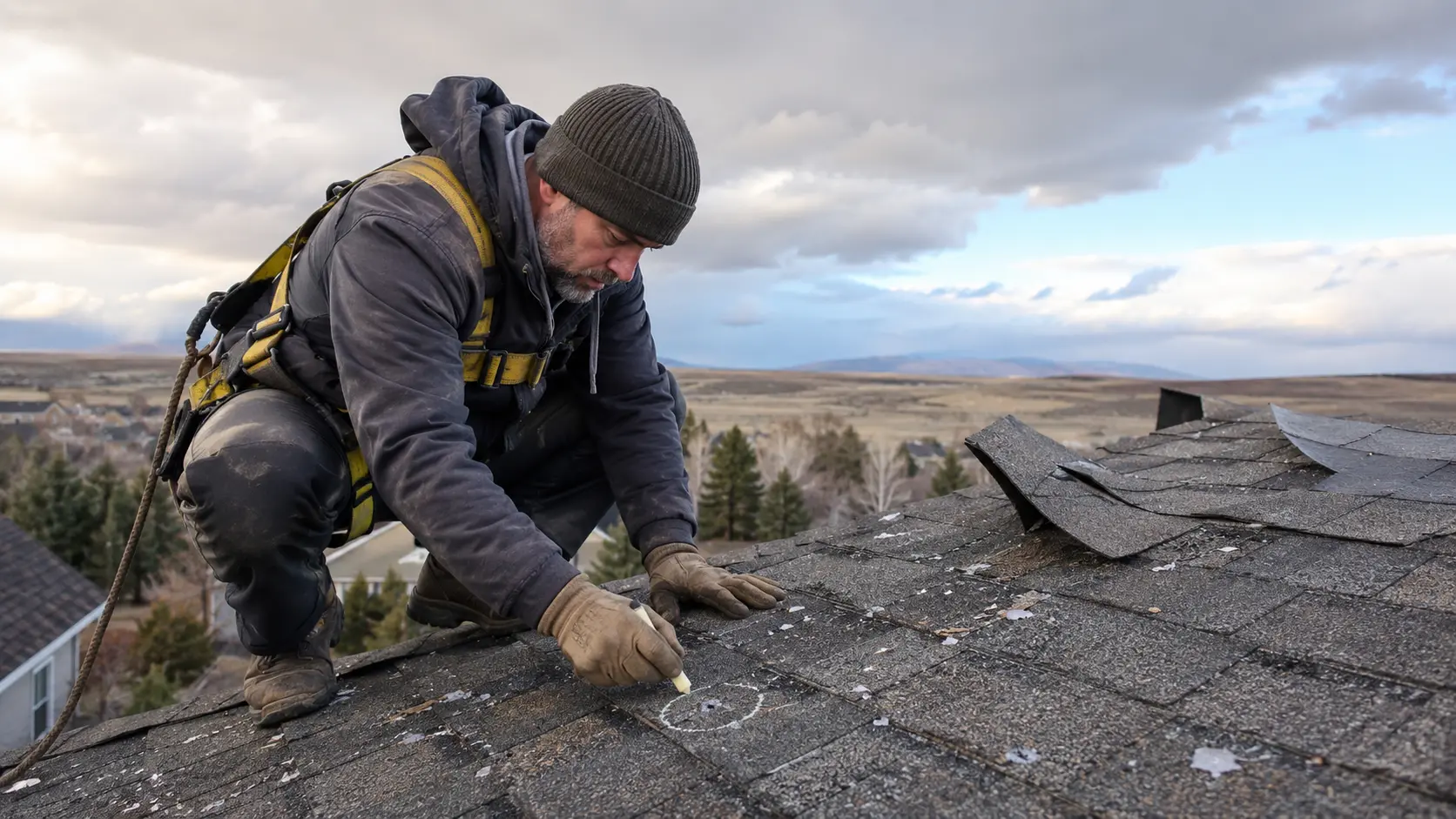
Here's the thing about a homepage. It's built to do everything, which means it converts nobody.
So think about what a homeowner in South Hills is doing when they click your storm-damage ad. They've got water spotting on a bedroom ceiling. And they're a little panicked. So they want one thing, which is to know you can come look at it fast. But your homepage hands them an About page, a careers tab, a blog, a gallery, six service categories, and a phone number buried in a footer they'll never reach on a phone screen.
So they leave. Not because your work is bad. Because you made them hunt.
But a dedicated page does the opposite. It matches the worry in their head to one clear next step, and it removes every door that isn't the one you want them to walk through. So that single change is the difference between a 2% conversion rate and a 6% one on the exact same ad spend.
"97% of roofing customers expect a callback within one week. More than 50% expect a callback within two days." — Roofing Contractor Magazine (2024)
And here's the part that stings. While that homeowner is bouncing off your fourteen-link homepage, the shop across town in Cross Lanes is catching the same click on a page that asks for a name, a phone number, and the problem. Same storm. Same neighborhood. One of you books the estimate.
Pull your current page up on your phone right now. Before you scroll, can you see three things? A headline that matches the ad you ran. A button that calls or books. And one piece of proof, like a review count or a years-in-business number.
If you can't see all three without scrolling, you're losing people in that first screen. That's where most of the leak lives.
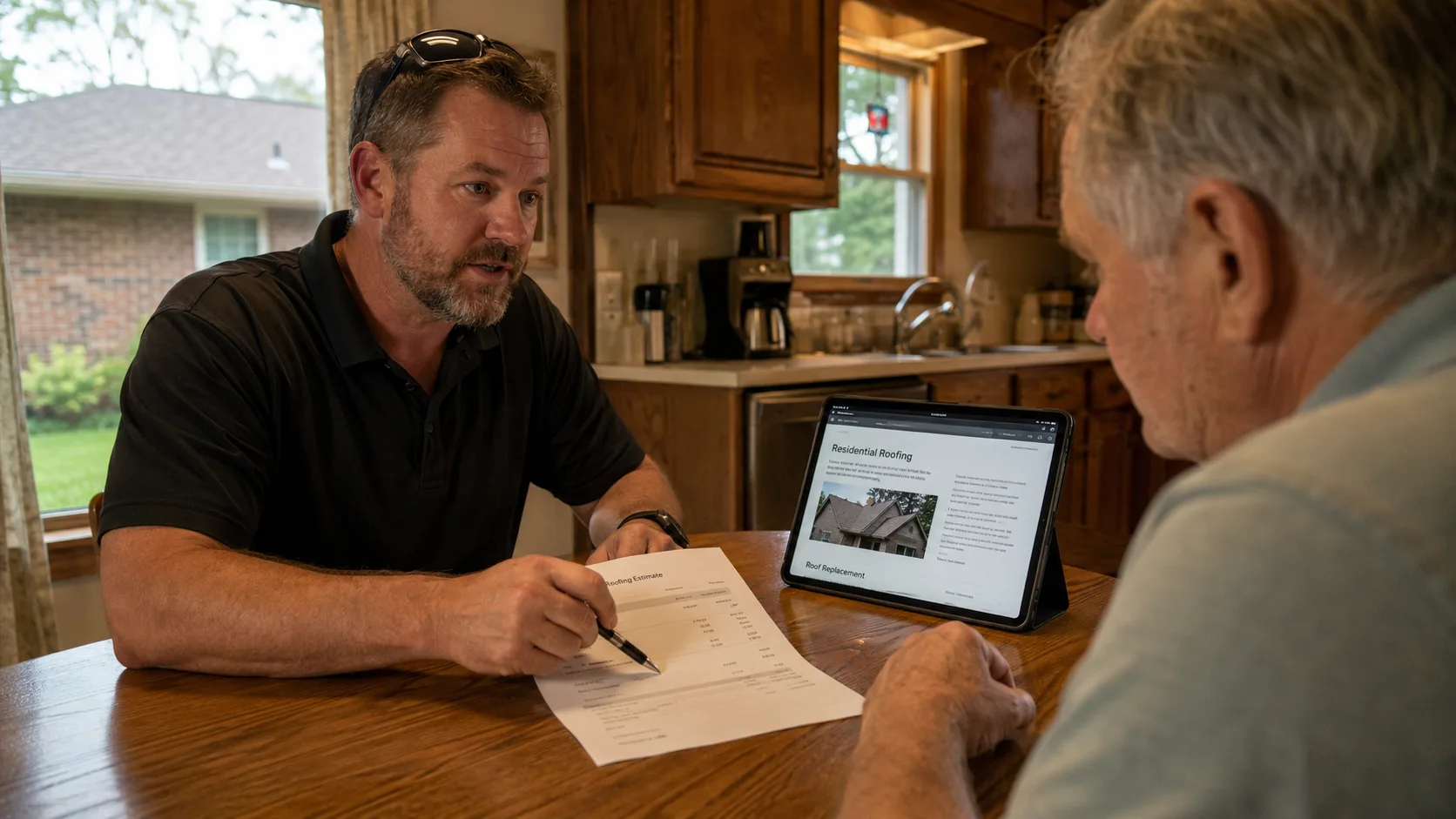
A good page earns the booking above the fold. Everything else is support.
So the headline has to mirror the ad. If your ad said "Storm Damage? Free Roof Inspection in 24 Hours," then the page headline can't say "Welcome to Family-Owned Roofing Since 1998." The homeowner clicked a promise. So pay it off in the first line, or they assume they landed in the wrong place and they're gone.
Then the call button. And it never hides, it never scrolls away, and it sticks to the bottom of the screen on mobile where their thumb already lives. A roofing ppc landing page Charleston WV homeowners convert on keeps that button in view the entire time, because the moment someone has to go looking for how to contact you, you've added friction you can't afford.
"From 2021–2023, homeowners spent $93.5B on roofing across 8.3 million projects (AHS-based estimates)." — U.S. Census Bureau and U.S. Department of Housing and Urban Development (2024)
And proof has to sit right beside the ask, not three sections down. A homeowner in Edgewood deciding whether to hand you their phone number wants to see a five-star count, a Google rating, or a "412 roofs replaced in the Kanawha Valley" line within an inch of the button. Proof next to the ask removes the hesitation in the exact spot it shows up.
So you ran a separate ad for full replacements and another for emergency leaks. Good. Each one needs its own page with its own headline. When the words on the page echo the words in the ad, the homeowner relaxes. When they don't, the homeowner doubts. It's that simple.
But proof only works if they see it while they're deciding. A review carousel at the bottom of the page might as well not exist. Put one strong number, one real photo, and one short quote in the same screen as the button, and watch your bookings climb.
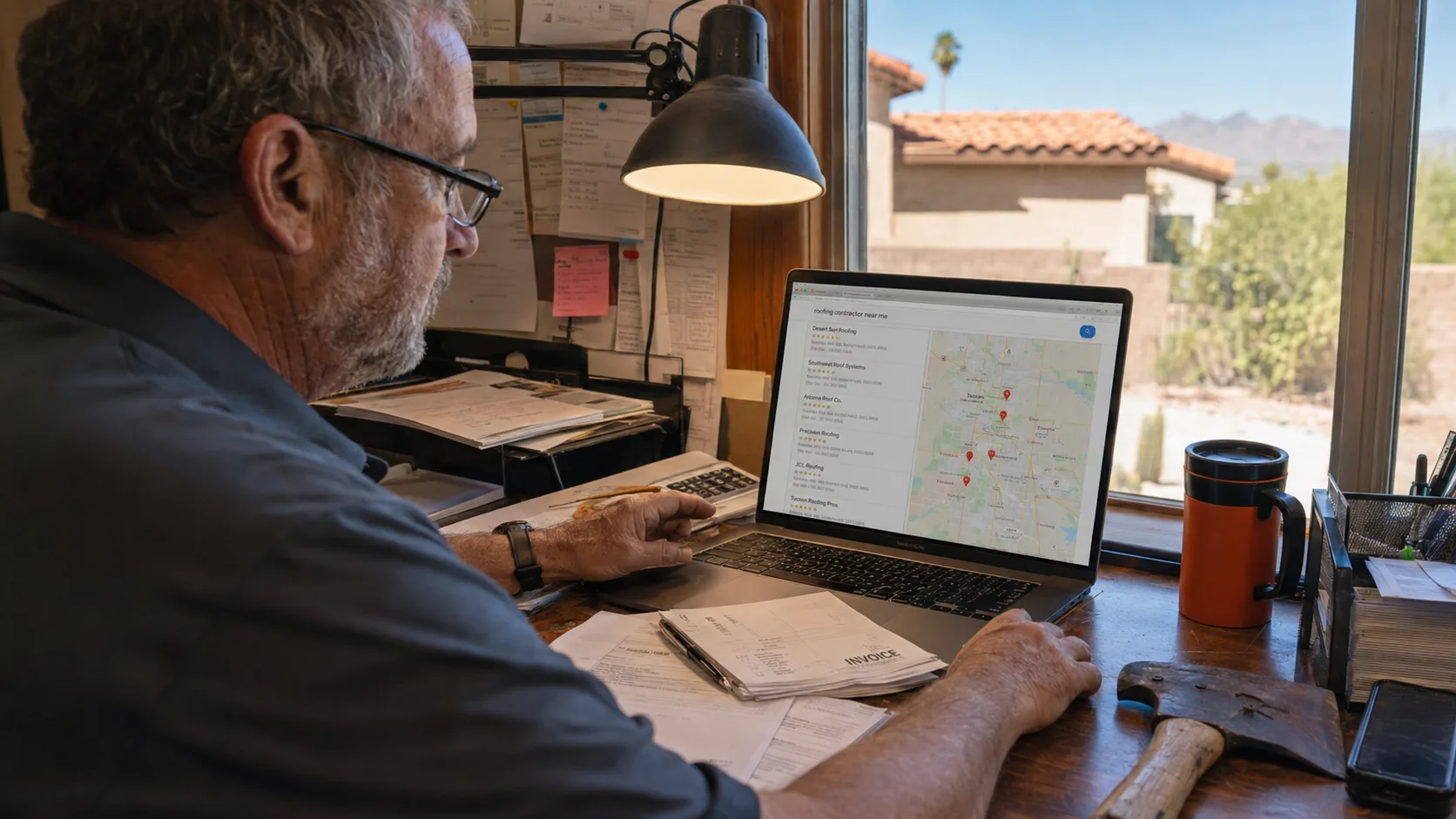
So you've got the click, the headline matched, the button's right there. Then your form asks for eleven fields and a preferred contact time. And you wonder why people quit halfway.
Every field you add is a reason to leave. The math is brutal. A homeowner who'd happily give you a name and a phone number will abandon when they hit "How did you hear about us?" and a dropdown of project types they don't understand yet.
So cut it to four. Name. Phone. Address. What's wrong. And that's it. Because you'll diagnose the rest on the call, which is where you should be diagnosing it anyway.
"Among renovating homeowners, 44% add or redo a roof as part of their exterior projects." — Houzz Inc. (2024)
Run the numbers on this one. Say you're paying $40 a click and getting 100 clicks a month, so that's $4,000 in ad spend. At a 2% form-completion rate, you book 2 estimates. Cut the form to four fields and lift completion to 5%, and now you're booking 5 estimates off the same $4,000. Close two of those at a $13,000 reroof, and the form change just paid for your ad budget three times over.
And here's a tangent that matters more than it looks. The "what's wrong" field shouldn't be a dropdown. Make it a plain text box. A homeowner in Loudendale typing "shingles flew off in the wind last night" tells you more than any dropdown ever could, and it takes them two seconds.
So the address stays for one reason. It lets you confirm you service their part of town before you call, and it lets you pull up their roof on satellite before you pick up the phone. That's a four-field form that still tells you everything you need to route the lead.
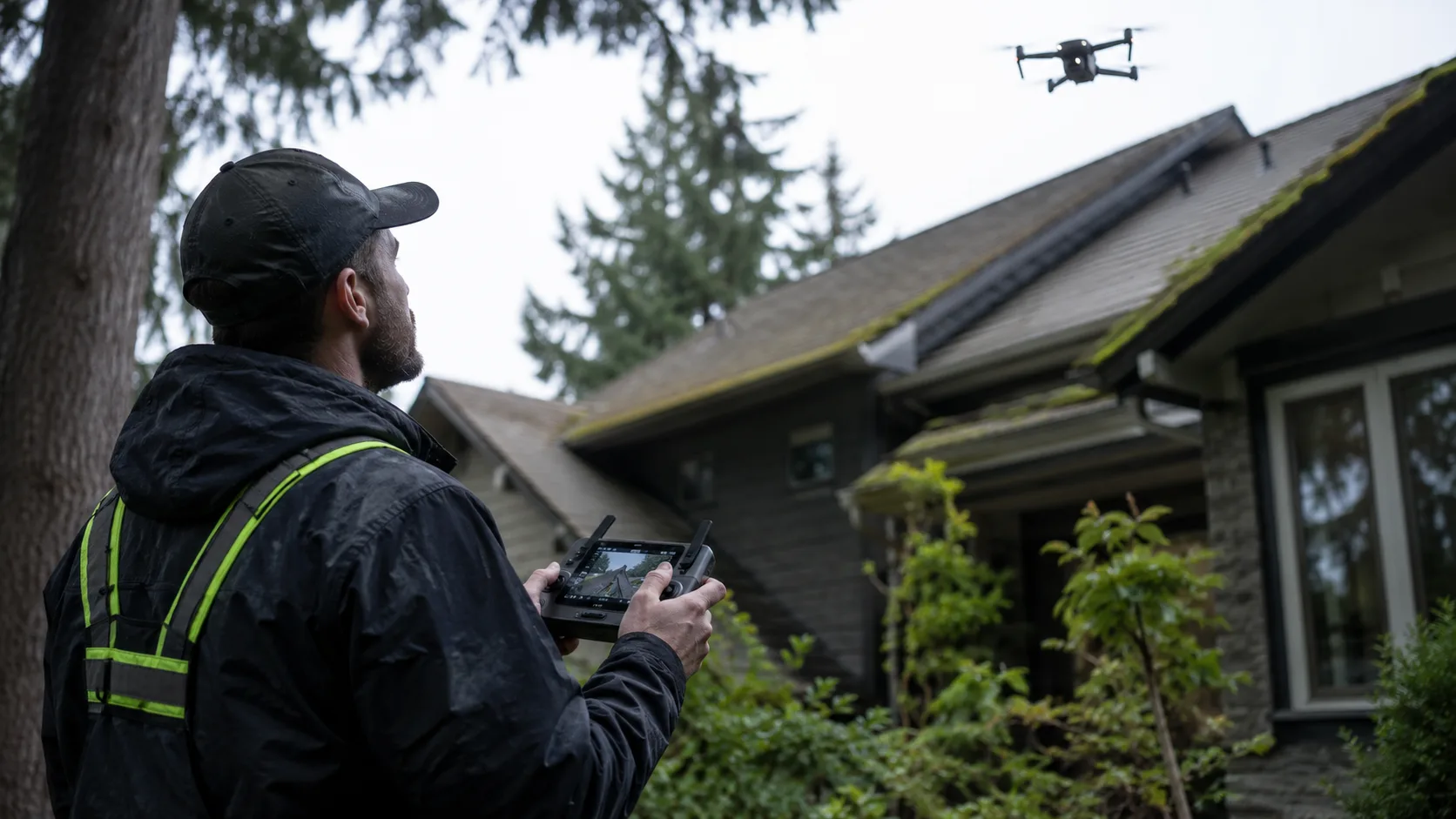
One page can't serve a hailstorm victim and a homeowner planning a metal upgrade for next spring. They're not the same person, and they're not in the same hurry.
So build a page per offer. The storm and emergency page leads with speed, because that homeowner needs you today. The headline names the urgency, the button says "Get Emergency Inspection," and the whole page is built to convert panic into a scheduled visit before they call the next guy.
"In hail-prone states, average roof lifespan is 15 years vs 22 years in milder western states; 38% of U.S. homes have roofs in moderate to poor condition (Roofing Contractor) with 60% higher loss costs" — Verisk Analytics (2025)
The full-replacement page moves slower and proves more. That homeowner in Kanawha City is comparing three bids and reading reviews, so this page leans on your warranty, your crew, your photos, and your years in the Kanawha Valley. And the energy-efficiency page speaks to a different motive entirely, where the homeowner cares about cooling bills and a roof that lasts through West Virginia's freeze-thaw winters and humid summers.
Because the storm shopper isn't browsing. They're scared and they're fast. Strip that page to the urgency, the button, and one proof point, and route every storm ad straight to it.
But the planner has time to weigh options. So a roofing estimate request page Charleston WV homeowners trust for a full replacement should walk through materials, since most of them land on asphalt anyway.
"Among homeowners undertaking a roofing project, 63% choose asphalt roofing material (dimensional shingles 34%, three-tab shingles 19%, luxury shingles 10%), while 14% choose metal and 11% choose synthetic material or rubber." — Houzz Inc. (2024)
Here's the part most shops never fix. The form gets filled, the lead lands in an inbox, and somebody checks it after dinner. By then the homeowner booked the company that called back in five minutes.
Speed-to-lead is the seconds and minutes after submit, and it decides who wins the job. A lead that gets a call in the first five minutes is worth far more than the same lead three hours later, because the homeowner is still on the couch thinking about their roof. Wait until tomorrow and they've moved on.
"The median spend on roofing upgrades in 2024 was 8% higher than in 2023 (median $13,000 in 2024)." — Houzz Inc. (2025)
So set the page to text you the instant a form hits. Better yet, fire an automatic text back to the homeowner that says you got it and you're calling within the hour. That one automated message holds the lead while you finish the job you're already on.
And the math here is plain. If a $13,000 reroof closes 30% of the time when you call in five minutes and 8% when you call the next day, then every batch of 10 leads you let cool is roughly two lost jobs. That's $26,000 walking to the competitor in Elk City who answered first.
But you can't sit by the phone all day, and you shouldn't have to. An auto-text and a notification to your phone the second a lead submits buys you the time to call back fast without chaining you to a desk.
So let's lay the whole thing out on a napkin. No jargon, just the numbers you already know.
You spend $4,000 a month on ads and get 100 clicks. Your current page converts at 2%, so that's 2 booked estimates, and you close one at a $13,000 job. Now you fix the page. Matched headline, sticky button, four-field form, proof beside the ask, and a five-minute callback. Conversion climbs to 5%, which is 5 booked estimates, and you close two or three.
"In 2024, 22% of renovating homeowners undertook roofing upgrades, with a median spend of $13,000." — Houzz Inc. (2025)
Same ad spend. Same neighborhoods. Two or three times the jobs. So that's the entire pitch for a roofing lead generation website Charleston WV shops grow on, and it's why the page matters more than the ad budget. And you don't need more clicks. You need more of the clicks you're already paying for to turn into booked visits.
"Among homeowners who renovated in 2024, 84% used cash from savings and 29% used a credit card to fund renovation projects (multiple funding sources allowed)." — Houzz Inc. (2025)
And because most of these jobs get paid from savings, the homeowner is careful and a little anxious about the spend. So your page has to feel trustworthy in the first screen, or the careful buyer never raises their hand.
We don't start with a redesign pitch. We start by looking.
Before we touch anything, we run a free Site Inspection of your current setup. No sales call required to get it. We map exactly where your traffic leaks, which fields are killing your form, how fast your page loads on a phone in Kanawha City, and what your callback timing looks like against what homeowners expect. Then we hand you the findings, whether you hire us or not.
That habit comes from our inspection of roofing websites across the trade, where we've measured how shops in markets like yours convert or leak. So you get a clear read on your own page first, grounded in what moves estimates, before you spend another dollar on ads pointing at a page that bounces.
So if you're tired of paying for clicks that go nowhere, start with the free Site Inspection. You'll see the leak in plain numbers, and you'll know exactly what to fix.
The evidence
 Read the full report →
 0
contractor sites graded, one A
Across the whole CRO Index, a single site earned an A. The median landed at a D. The grade gap is a conversion gap.
0 %
of roofing sites fail a critical accessibility check
Scored against WCAG 2.1 AA with axe-core. A page that blocks a screen reader also blocks a paying customer.
Fervor Roofing State of the Industry, 2026
0 %
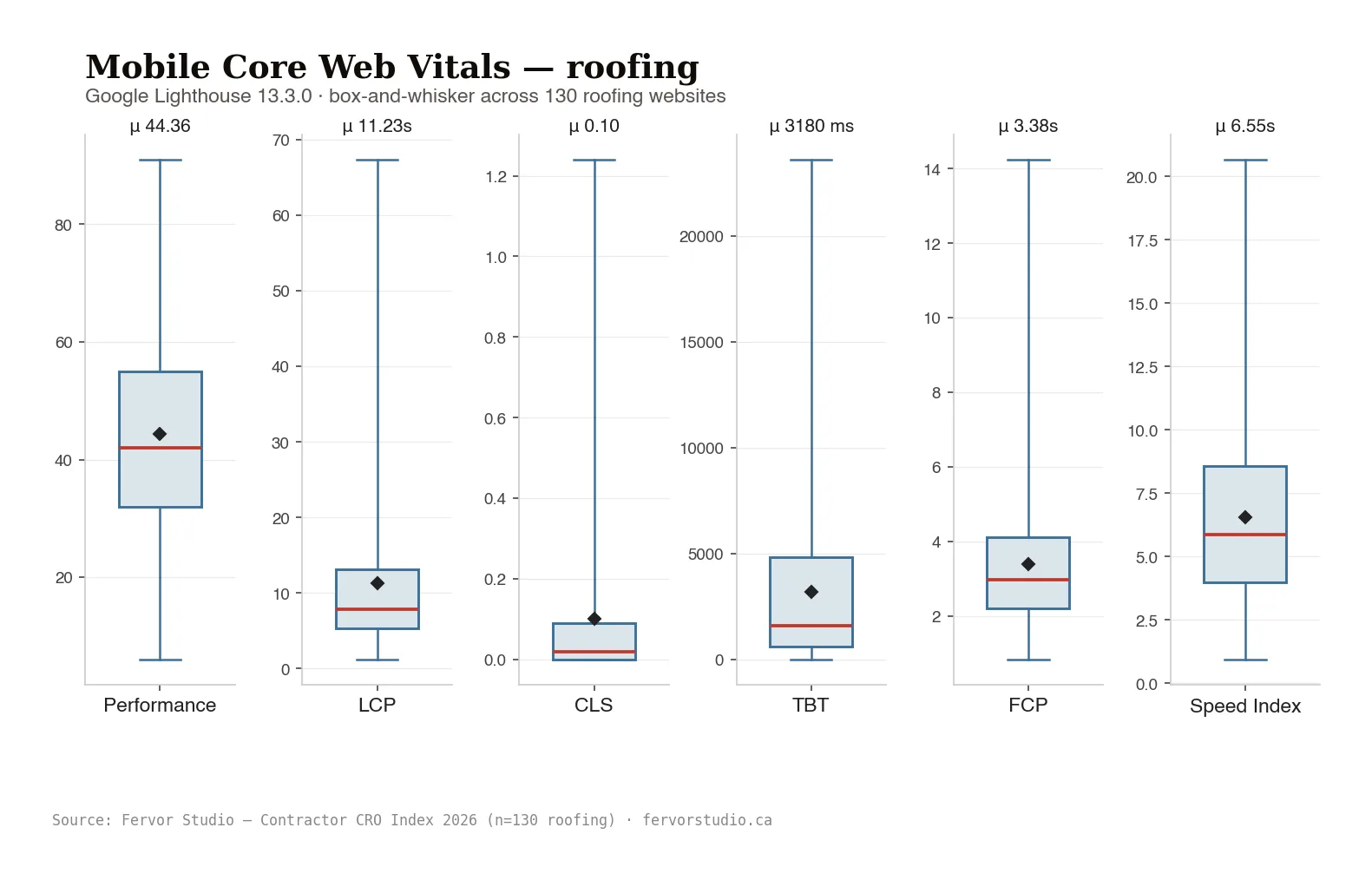
miss Google's mobile load-speed bar
Median mobile load lands at 7.88 seconds. Most of your traffic is on a phone, and most of them are gone before the hero paints.
Fervor Roofing State of the Industry, 2026
0 /100
is the average roofing grade
That is a D. The sites booking the work are not the ones with the biggest crews. They are the ones a few points higher on the things homeowners feel.
Two ways to start
Tell us where you are. We point you at the right next step — no sales call to get there.
Client review
“Nay did an amazing job, you know. He was really patient. He got the work done the way I told him and he was just on point with the website. Pretty straightforward process. No going around the bush. He just did amazing work and I would 100% recommend.”
How Fervor can help
Identify and patch the top conversion killers on your existing site. No full rebuild needed.
Monthly SEO, content, and CRO. Fixed deliverables. No credits, no rollover. The compound growth engine.
Complete website system built to convert storm leads, planned projects, and research-phase homeowners into booked jobs.
GBP optimization, citation building, and review system foundation. The infrastructure that gets you into the Map Pack.
One conversion-built landing page for the referrals, paid clicks, and cold-call leads you send. They land on a page built to book them, not your generic homepage.
Your move
Tell us where you are. We point you at the right next step — no sales call to get there.
Keep going