0
contractor sites graded, one A
Across the whole CRO Index, a single site earned an A. The median landed at a D. The grade gap is a conversion gap.
You already get traffic in Boston. Most of it leaves without calling. We find the leaks and plug them, so the visitors you've got start booking jobs.
Starts with a Site Inspection, so you see the leaks before any fix begins.
“Attentive, listened to every revision request, delivered on time. Would work with him again.” — Hamza Najam
“Patient, on point, straightforward. Did amazing work. Would 100% recommend.” — Ruben Mederos, HyperTemp HVAC
“Responsive, creative, exceeded expectations. Already seeing greater engagement from our clients.” — George Jeorgy, Jeorgy's Landscape Construction
“Top-tier professionalism, real web design expertise, ideas I hadn't considered. Confidently recommend.” — Aws Nassani, Four Eleven Contracting




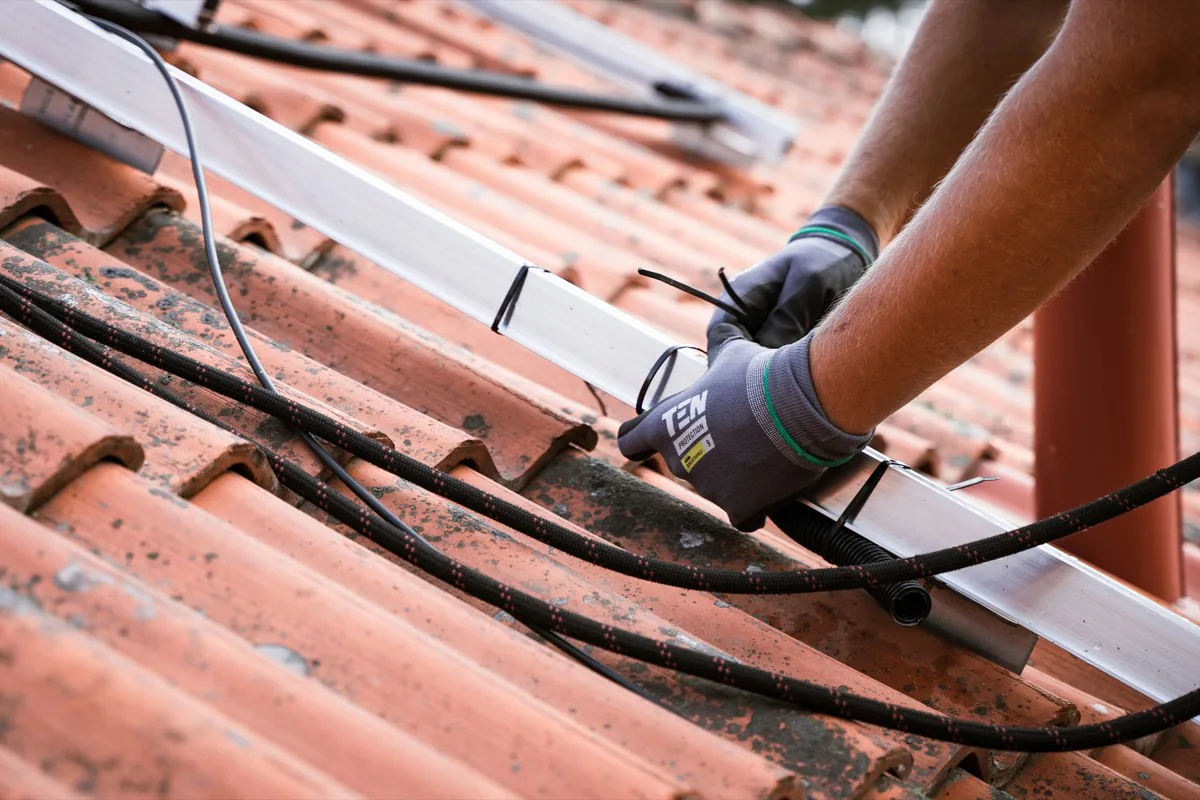
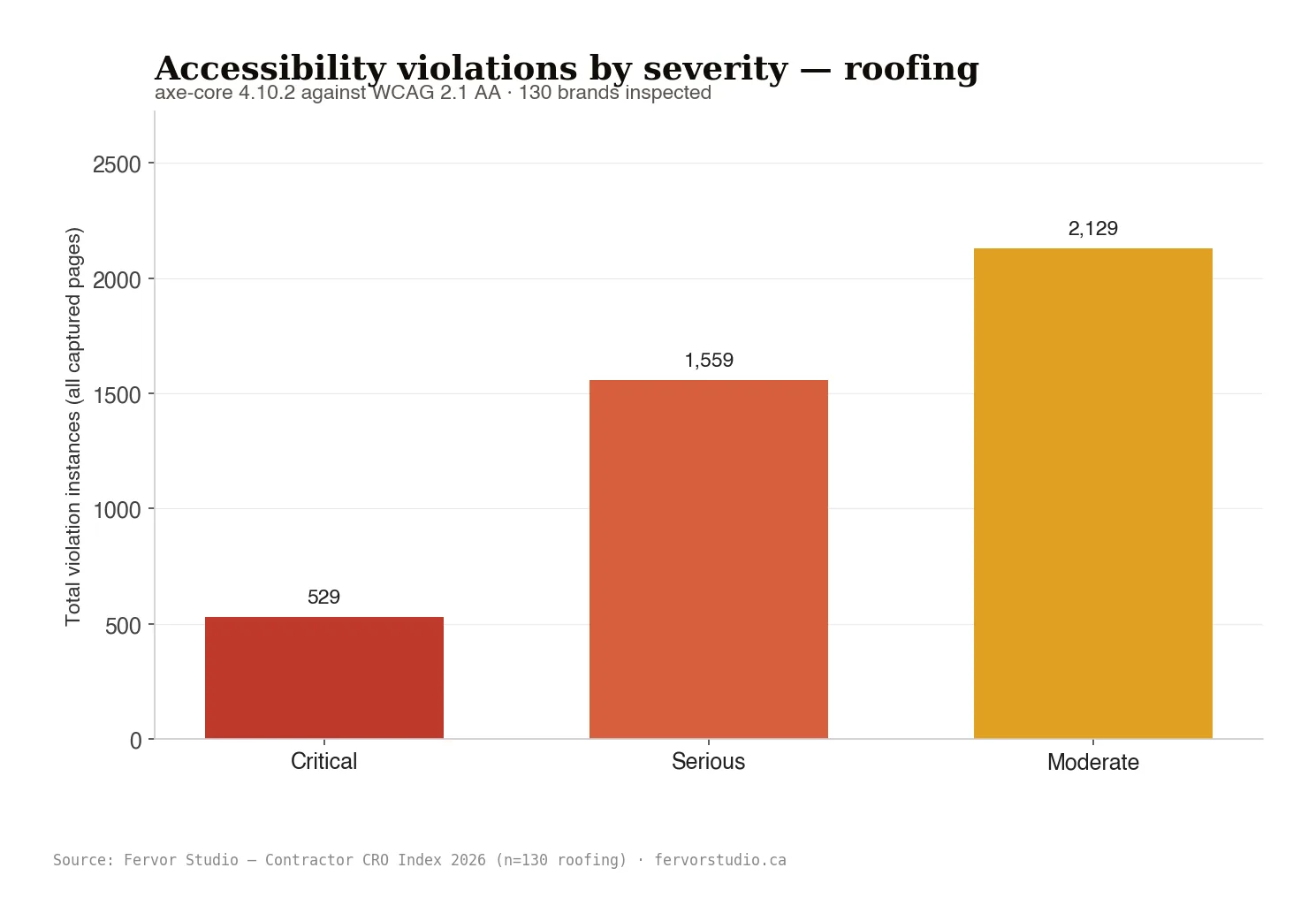
60.8% of roofing sites we tested fail a critical accessibility check
Digital State of the Roofing Industry 2026A grade out of 380 contractor sites
We graded 380 of them against one framework. Exactly one earned an A: Crown Industrial Roofing in Toronto, at 90 out of 100. The rest left money on the table. Here is what separates the top from the bottom.
The local detail
Every angle below comes from how Boston actually searches, buys, and regulates — built into the page, not bolted on.
Your homepage has nine jobs.
Everything that matters has to live above the fold.
Here is where most pages bleed out.
You do not run one ad.
The form is done.
Let me lay it out one more time, because this is the whole argument.
So you turned on Google Ads in Boston, set a $40 click budget for "roof replacement near me," and pointed every one of those clicks at your homepage. And then you watched the spend climb while the booked estimates stayed flat. That gap is exactly what a roofing landing page Boston shops rely on is built to close. Your homepage was designed for somebody who already knows your name. The person clicking a storm-damage ad at 9pm in Dorchester has never heard of you, and they leave in eight seconds if the page makes them hunt.
Here is the plain version. You are paying for the click either way. The only question is whether the page on the other end turns that click into a phone call or wastes it.
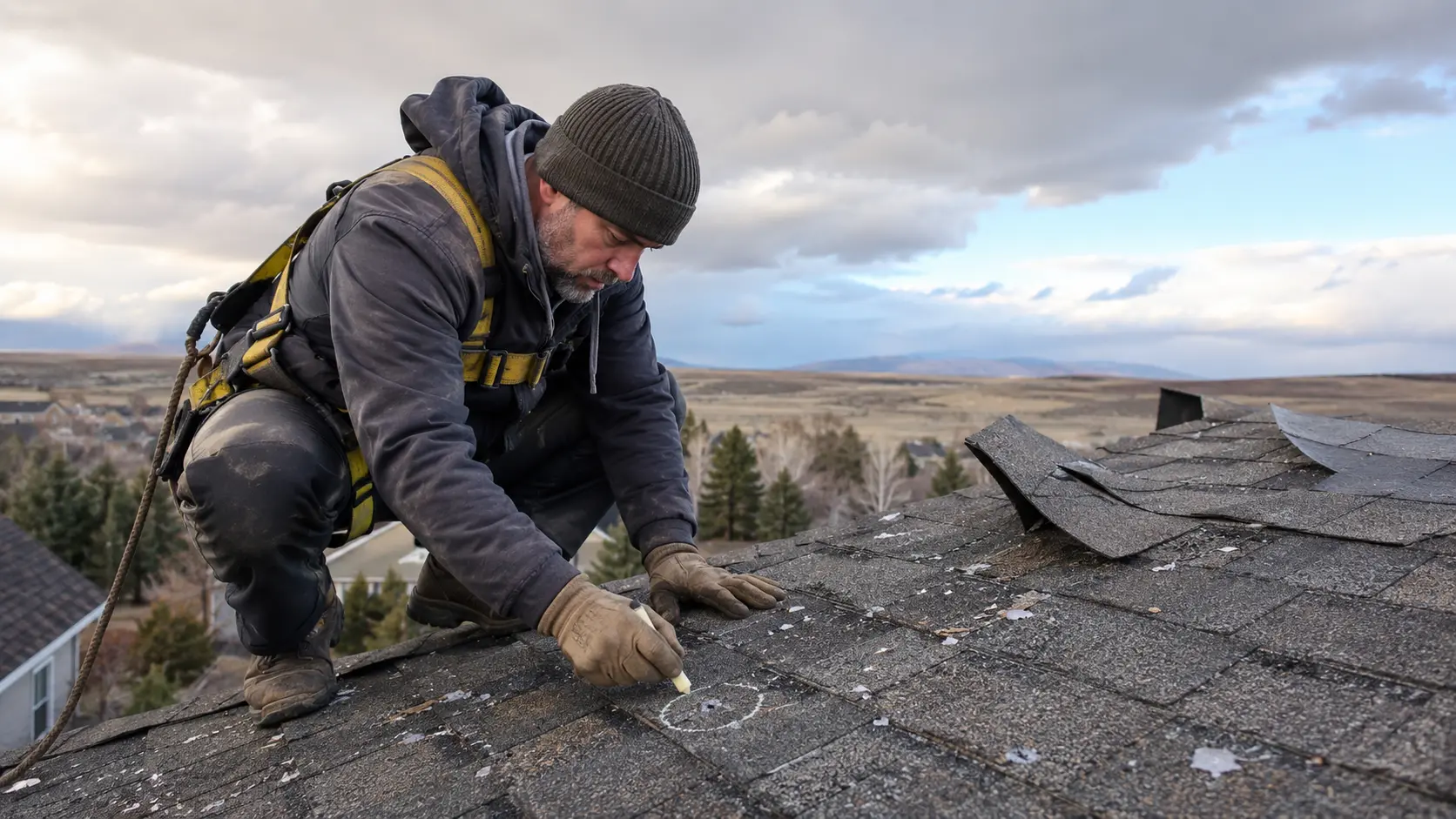
Your homepage has nine jobs. So it introduces the company, lists six services, shows the About story, links the careers page, and somewhere down at the fold it mentions you do roofs. But a landing page has one job. And that job is to book the estimate.
When a homeowner in West Roxbury clicks your ad after a March nor'easter peeled shingles off their dormer, they are scared about water in the attic and they want one thing. So every link that goes somewhere other than "get my estimate" is a door they can walk out of.
"97% of roofing customers expect a callback within one week. More than 50% expect a callback within two days." — Roofing Contractor Magazine (2024)
And your homepage navigation bar is a row of exits. The contact page lives three clicks away. The phone number sits in a header most people scroll right past on mobile. Boston runs near 70% of local searches on a phone, so that header number might as well not exist.
So run the numbers on your own account. Say you spend $3,000 a month on Boston roofing ads at $40 a click. That is 75 clicks. And if your homepage converts 2% of them, you book 1.5 estimates. But point those same 75 clicks at a roofing landing page Boston buyers finish, push it to 5%, and you book 3.75. Same spend. More than double the jobs. So at a $14,000 average reroof, that is the difference between one signed contract and three.
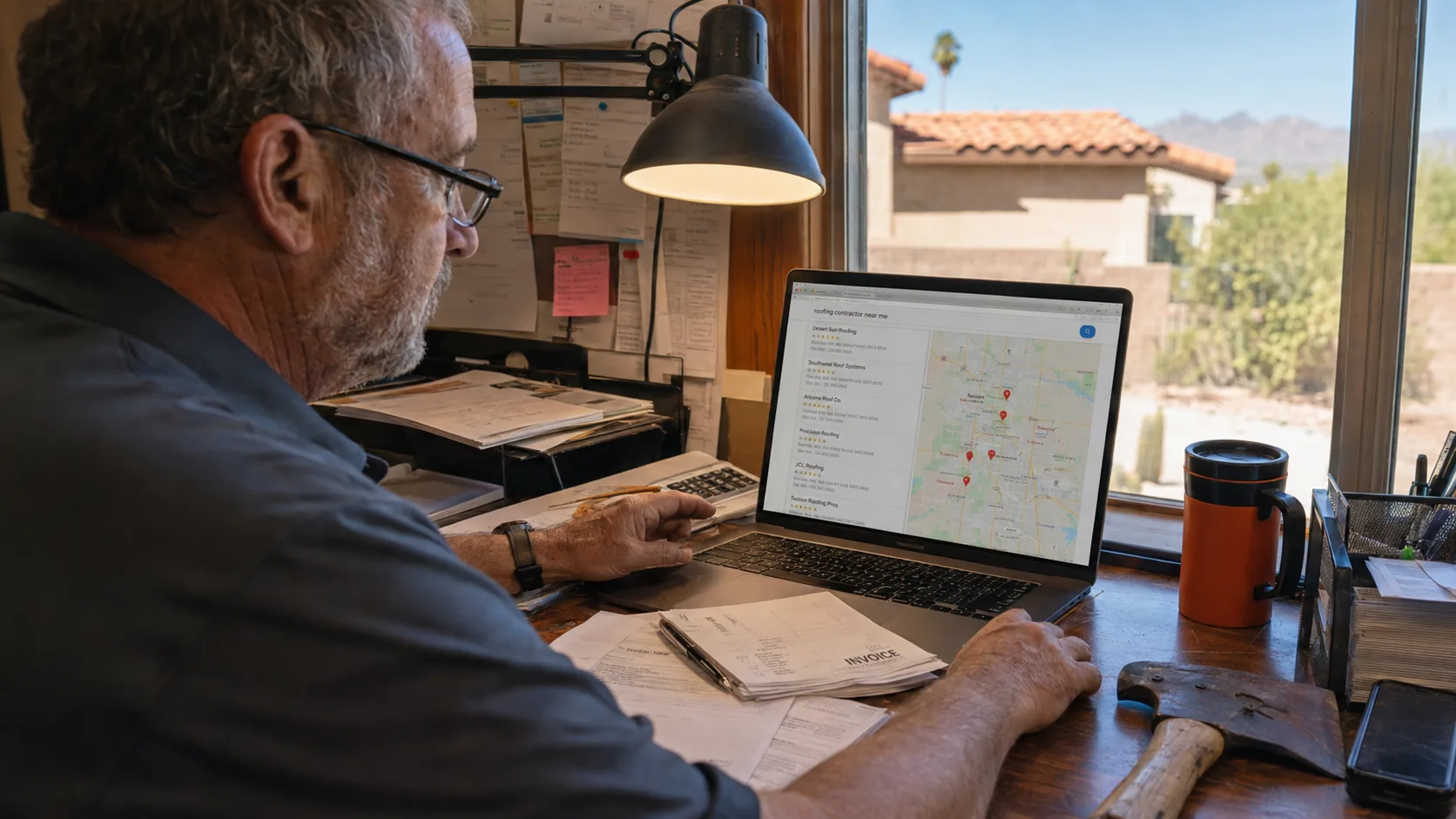
Everything that matters has to live above the fold. So the homeowner should not scroll to understand what you do, who you are, and why they should trust you with a $14,000 job.
If your ad said "Emergency Roof Repair in Boston, Same-Day Inspection," the page headline says the same thing back. When the words match, the homeowner relaxes. They clicked the right thing. But when the ad promised storm repair and the page leads with "Welcome to Our Family-Owned Business," the trust breaks before they read a second line.
"In hail-prone states, average roof lifespan is 15 years vs 22 years in milder western states; 38% of U.S. homes have roofs in moderate to poor condition (Roofing Contractor) with 60% higher loss costs" — Verisk Analytics (2025)
New England winters chew through asphalt faster than the brochure lifespan, and a Boston homeowner with ice-dam streaks on their ceiling knows it. So the headline names that worry out loud. And it uses their words, not yours.
The phone number is a button, not text. And it sits in the top corner, it follows the screen as they scroll, and on mobile it dials with one tap. So no "click to reveal." No contact form standing between the worried homeowner and a human. Because Somerville and Cambridge homeowners calling about a leak want a person, now.
Reviews do not belong on a separate page. So put three Google reviews from Jamaica Plain and Brighton right next to the form, with the star count and the neighborhood named. And a homeowner trusts a five-star review from their own zip code more than a national badge they have never seen.
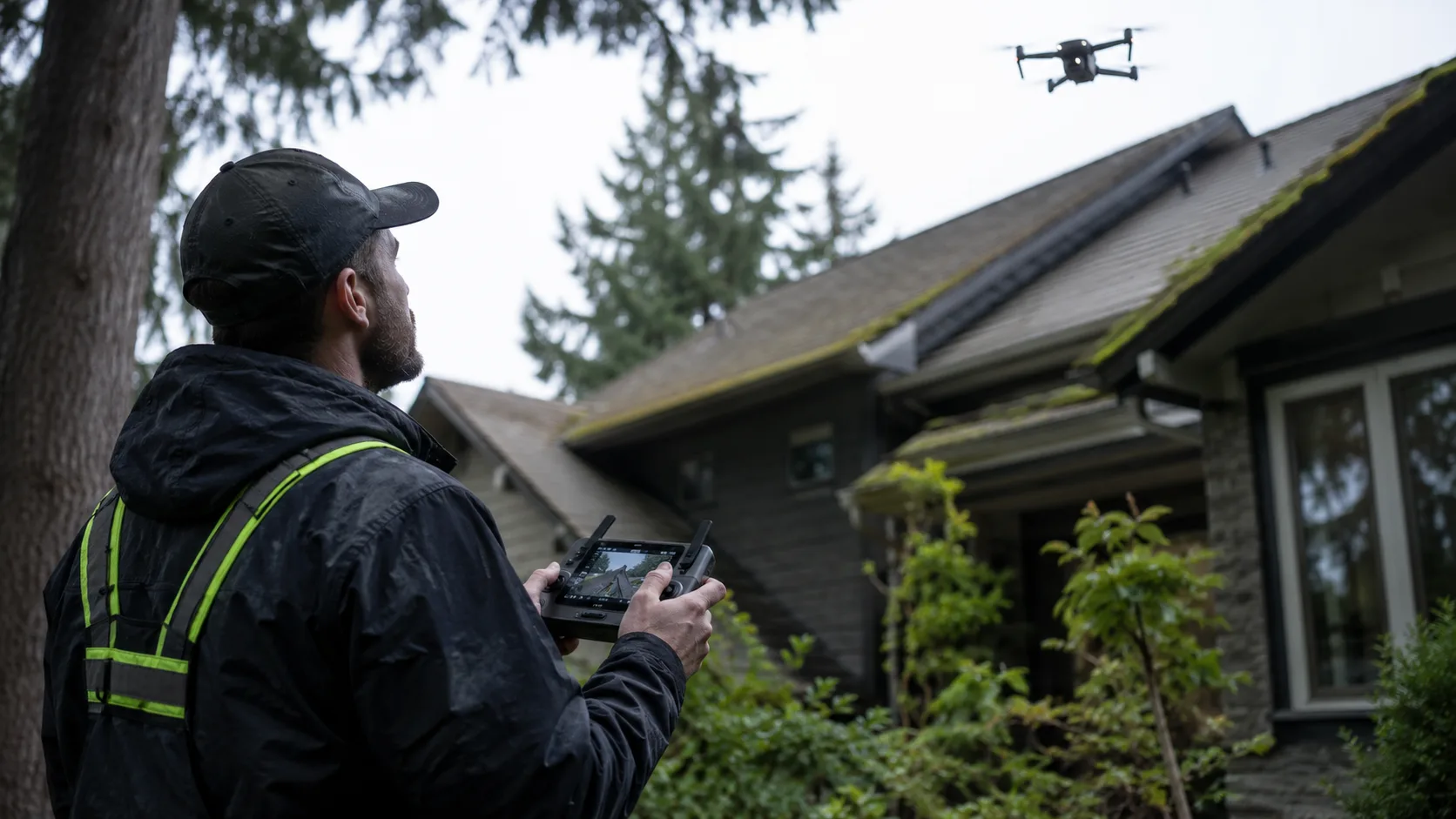
Here is where most pages bleed out. Every field you add to a form drops your completion rate. And roofing contractors love long forms. Name, email, phone, address, roof type, age of roof, preferred contact time, how did you hear about us, square footage, three checkboxes about financing.
Cut it. Name, phone, address, and one line: what is wrong. That is the whole form. You can get the rest on the call.
"Among homeowners who renovated in 2024, 84% used cash from savings and 29% used a credit card to fund renovation projects (multiple funding sources allowed)." — Houzz Inc. (2025)
A homeowner standing in their Roslindale driveway looking up at a sagging gutter will type four fields with one thumb. But they will abandon eleven. And every field past the fourth is a place they put the phone down and go back to the search results, where your competitor's shorter form is waiting.
Address stays because it qualifies the lead and lets you price the trip. But you do not need it spelled into five separate boxes for street, unit, city, state, and zip. So make it one field. And let them paste it. The fight is always between what you want to know and what they will tolerate typing.
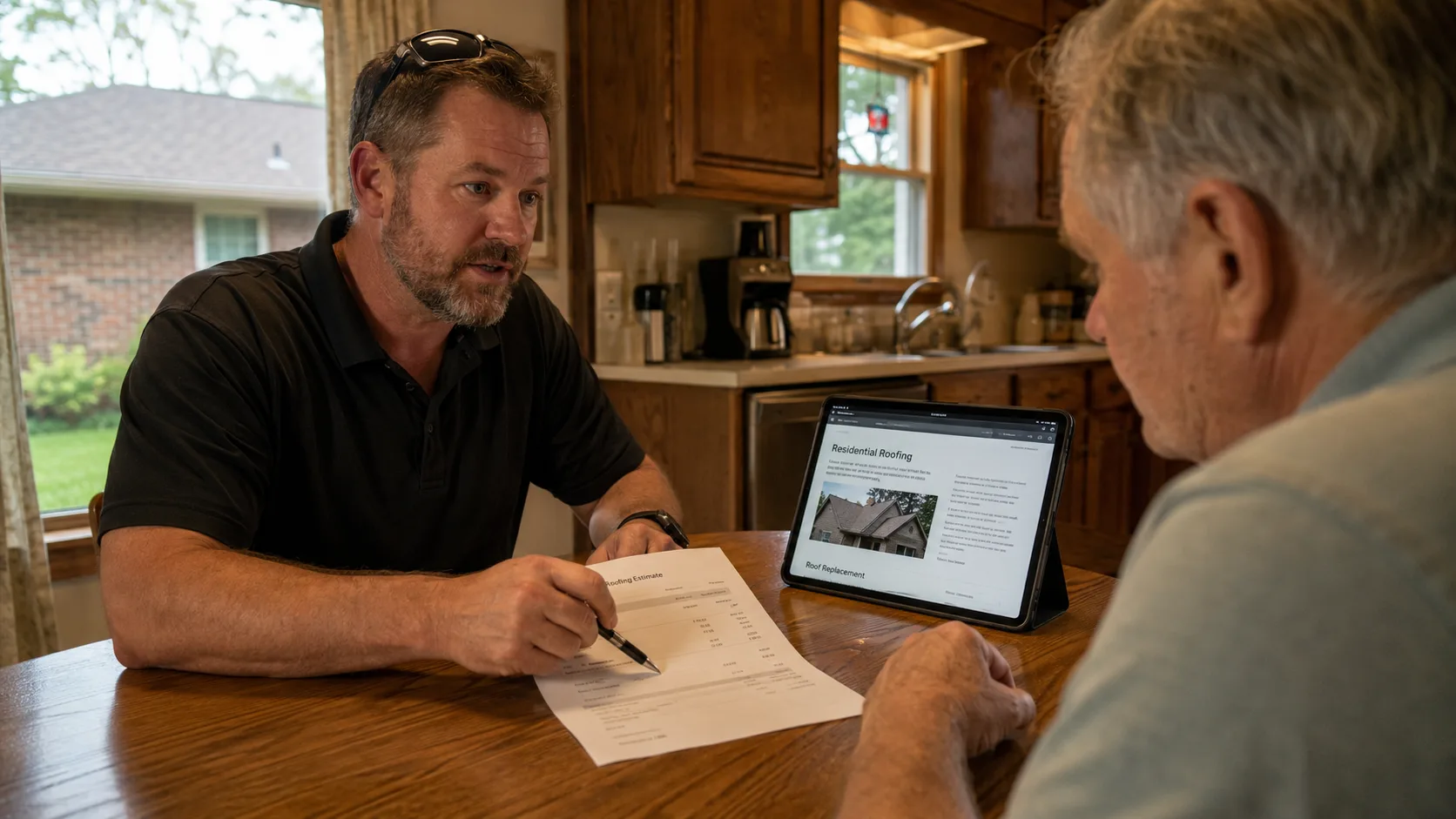
You do not run one ad. You run storm-damage ads, full-replacement ads, and energy-efficiency ads. So you do not send all three to one page.
"Among homeowners undertaking a roofing project, 63% choose asphalt roofing material (dimensional shingles 34%, three-tab shingles 19%, luxury shingles 10%), while 14% choose metal and 11% choose synthetic material or rubber." — Houzz Inc. (2024)
The storm page is urgent. So it leads with same-day inspection, insurance-claim help, the call button huge and red. And after a Charlestown windstorm, this homeowner wants speed, not a gallery of finished jobs.
The replacement shopper is patient. They are comparing, and 44% of renovating homeowners fold a roof into a bigger exterior project, so this page can show material options, the asphalt-versus-metal tradeoff, and a financing line. It can breathe.
"Among renovating homeowners, 44% add or redo a roof as part of their exterior projects." — Houzz Inc. (2024)
And the efficiency shopper in Newton wants lower bills and a cooler attic. So that page leads with insulation, ventilation, and the long-run number, not the storm panic. Three offers, three pages, three matching headlines.
The form is done. Now the clock starts, and most shops lose right here. A lead that gets a call back in five minutes is worth far more than one called the next morning, because by morning that homeowner in Hyde Park has already filled out two more forms.
"In 2024, 22% of renovating homeowners undertook roofing upgrades, with a median spend of $13,000." — Houzz Inc. (2025)
And so you wire the form to text your cell the instant it fires. Not a daily digest. Not an email you check at lunch. But a text, so whoever is closest to a phone calls back inside ten minutes while the homeowner still has your page open. Speed is the whole game here.
"From 2021–2023, homeowners spent $93.5B on roofing across 8.3 million projects (AHS-based estimates)." — U.S. Census Bureau and U.S. Department of Housing and Urban Development (2024)
And think about it. You paid $40 for that click and built the page to win the form. Then the lead sits in an inbox for six hours and signs with the shop that called first. So the slow callback does not just lose a job. It burns the ad money that earned the lead.
Let me lay it out one more time, because this is the whole argument. Your ad spend is fixed. You decided that number. The one lever you control is what happens after the click.
"The median spend on roofing upgrades in 2024 was 8% higher than in 2023 (median $13,000 in 2024)." — Houzz Inc. (2025)
Take that $3,000 Boston budget again. At a 2% homepage conversion you got 1.5 estimates. A page built right, with the matched headline, the four-field form, the sticky call button, and the five-minute callback, lands closer to 5%. That is 3.75 estimates on the identical spend. Close half and you went from under one job to nearly two, every month, off money you were already spending.
And one extra signed reroof at $14,000 covers the build many times over. It keeps paying every month the ad runs. You are not buying a website. You are plugging the hole the homepage left wide open between the click and the call.
We started by looking at what is live right now. We ran an inspection of roofing websites across the trade, counted the form fields, timed the load speeds, and checked how many even had a callback promise. The pattern was brutal and consistent. Strong crews, real reviews, decades of work, all funneled into pages that quietly lose the lead.
So our approach is narrow on purpose. One offer, one page, one ask. The headline mirrors the ad. The call button follows the thumb. The form asks four things. The submit fires a text to your phone in seconds. Nothing decorative survives if it does not move a Boston homeowner closer to booking.
If you want to see where your own page leaks before you spend another dollar on clicks, we will run a free Site Inspection of it. No sales call. We send you the findings, you decide what to do with them, and you keep the report either way.
The evidence
 Read the full report →
 0
contractor sites graded, one A
Across the whole CRO Index, a single site earned an A. The median landed at a D. The grade gap is a conversion gap.
0 %
of roofing sites fail a critical accessibility check
Scored against WCAG 2.1 AA with axe-core. A page that blocks a screen reader also blocks a paying customer.
Fervor Roofing State of the Industry, 2026
0 %
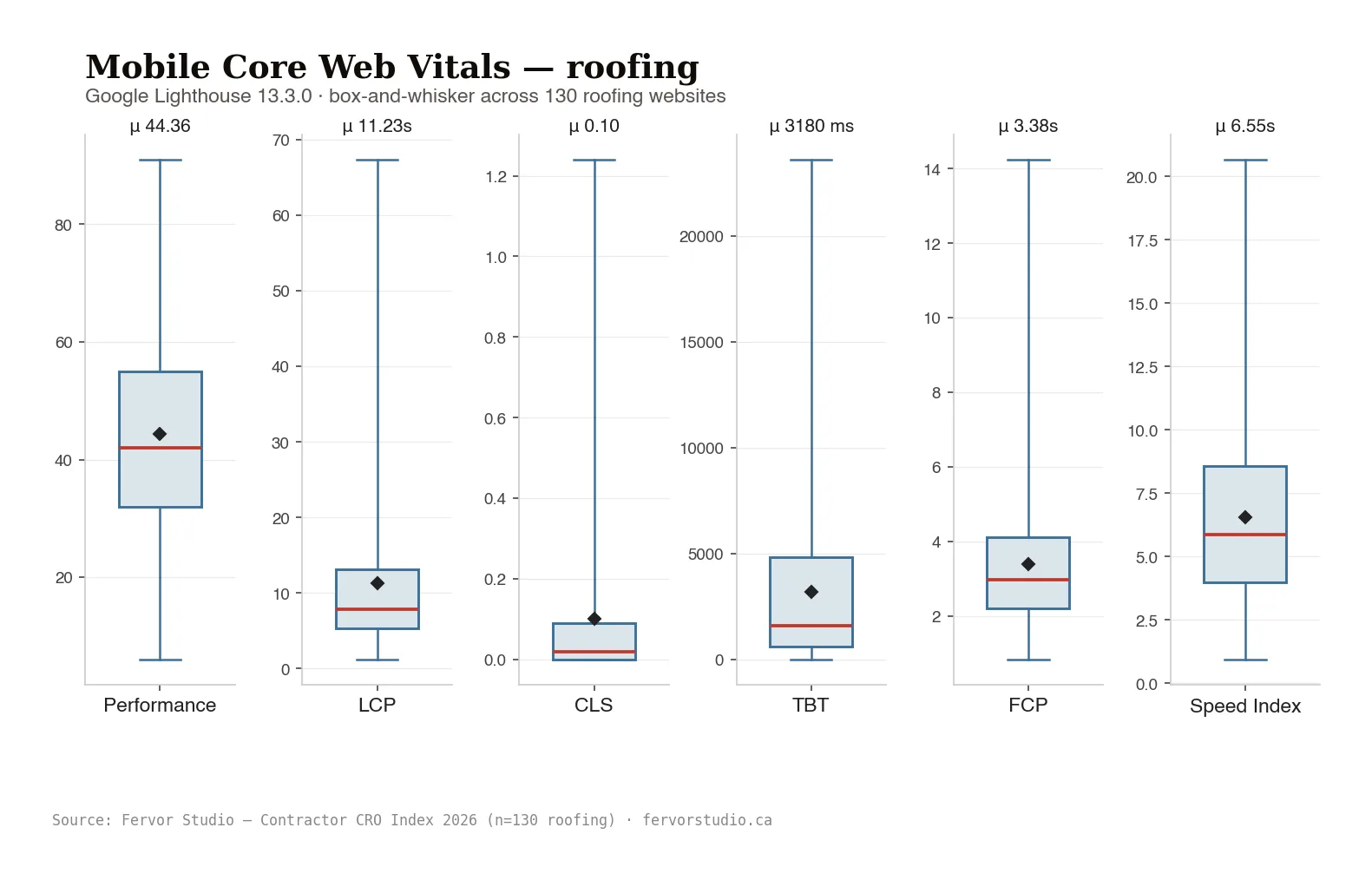
miss Google's mobile load-speed bar
Median mobile load lands at 7.88 seconds. Most of your traffic is on a phone, and most of them are gone before the hero paints.
Fervor Roofing State of the Industry, 2026
0 /100
is the average roofing grade
That is a D. The sites booking the work are not the ones with the biggest crews. They are the ones a few points higher on the things homeowners feel.
Two ways to start
Tell us where you are. We point you at the right next step — no sales call to get there.
Client review
“Nay did an amazing job, you know. He was really patient. He got the work done the way I told him and he was just on point with the website. Pretty straightforward process. No going around the bush. He just did amazing work and I would 100% recommend.”
How Fervor can help
Identify and patch the top conversion killers on your existing site. No full rebuild needed.
Monthly SEO, content, and CRO. Fixed deliverables. No credits, no rollover. The compound growth engine.
Complete website system built to convert storm leads, planned projects, and research-phase homeowners into booked jobs.
GBP optimization, citation building, and review system foundation. The infrastructure that gets you into the Map Pack.
One conversion-built landing page for the referrals, paid clicks, and cold-call leads you send. They land on a page built to book them, not your generic homepage.
Your move
Tell us where you are. We point you at the right next step — no sales call to get there.
Keep going