0
contractor sites graded, one A
Across the whole CRO Index, a single site earned an A. The median landed at a D. The grade gap is a conversion gap.
You're getting clicks in Boston. They're just not calling. We rebuild your site around the one job that matters: turning a visitor into a booked job.
Starts with a Site Inspection, so you see the plan before any build begins.
“Patient, on point, straightforward. Did amazing work. Would 100% recommend.” — Ruben Mederos, HyperTemp HVAC
“Responsive, creative, exceeded expectations. Already seeing greater engagement from our clients.” — George Jeorgy, Jeorgy's Landscape Construction
“Top-tier professionalism, real web design expertise, ideas I hadn't considered. Confidently recommend.” — Aws Nassani, Four Eleven Contracting



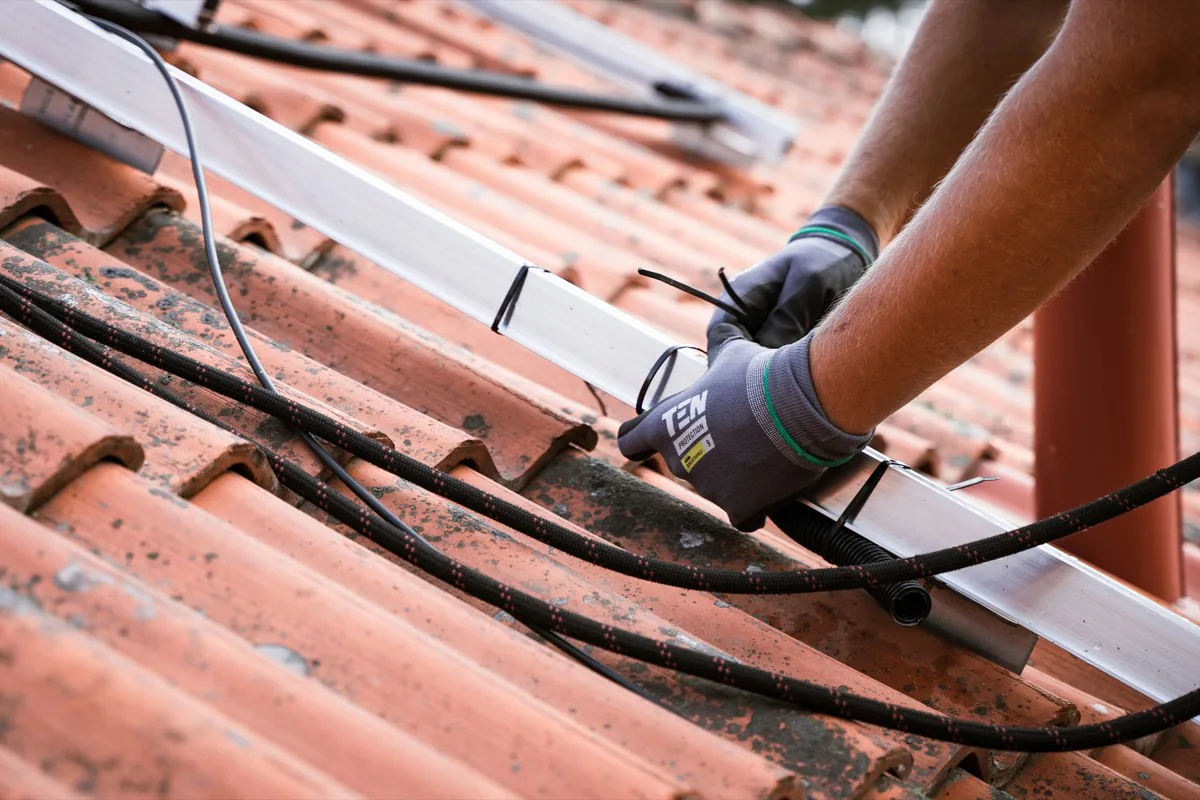
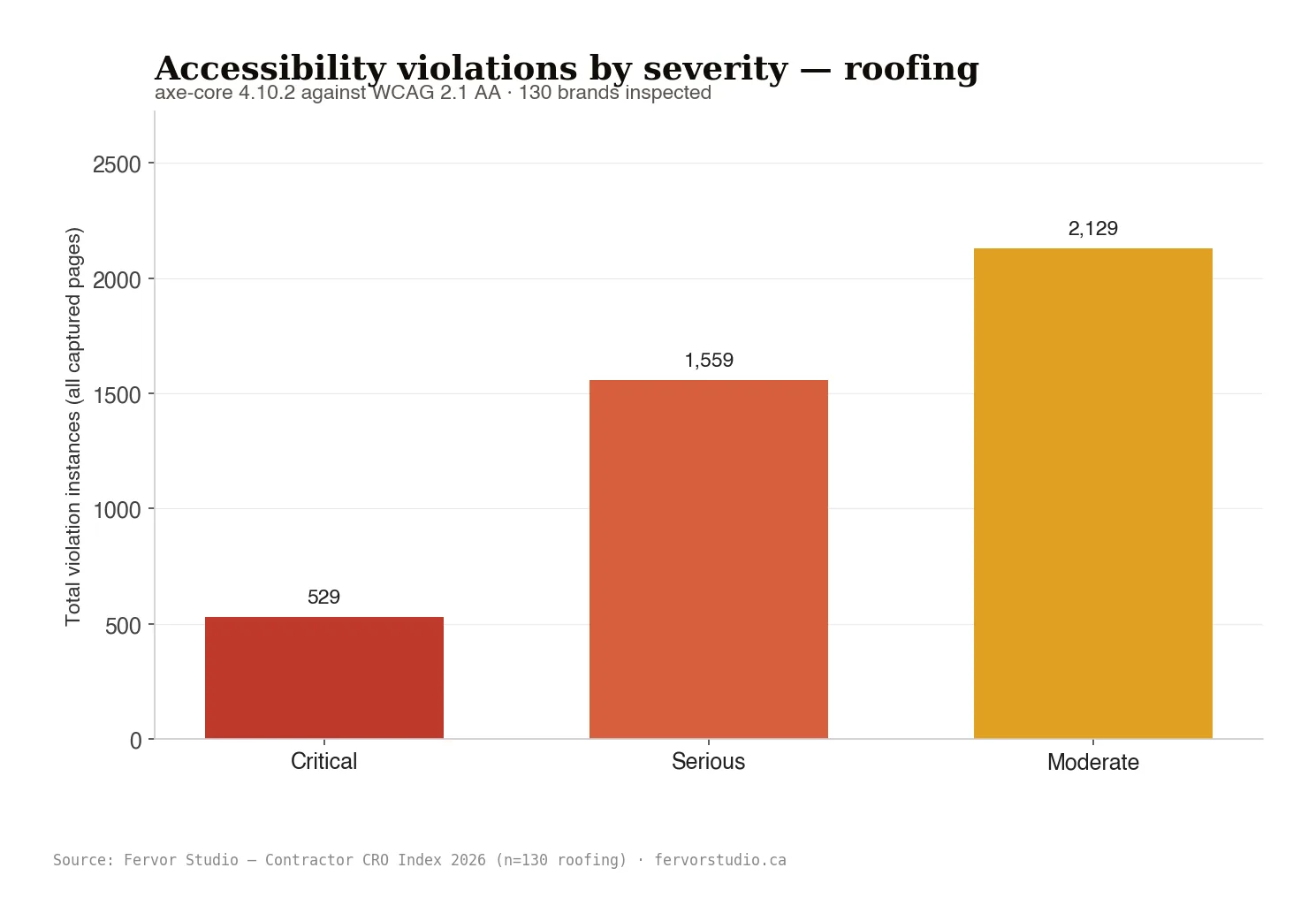
60.8% of roofing sites we tested fail a critical accessibility check
Digital State of the Roofing Industry 2026A grade out of 380 contractor sites
We graded 380 of them against one framework. Exactly one earned an A: Crown Industrial Roofing in Toronto, at 90 out of 100. The rest left money on the table. Here is what separates the top from the bottom.
The local detail
Every angle below comes from how Boston actually searches, buys, and regulates — built into the page, not bolted on.
Storm weeks are when the money moves.
Think about her mental state.
You’re not selling a $40 service call.
Now the real fork.
Here’s the trap a lot of Boston roofers fall into.
A nor'easter rakes Dorchester on a Tuesday afternoon. A homeowner watches a shingle bundle peel off her neighbor's roof and skitter across the driveway. She pulls out her phone right there on the porch, thumbs wet, and types something close to "roof leak near me." She has maybe forty seconds of patience before she taps the next result. Good roofing web design Boston owners can trust decides whether that tap lands on you or on the shop two streets over. So this page is about that forty seconds, and how your site either wins it or loses it.
You already know how to run a crew. Four to ten guys, a couple of trucks, twenty-plus years of asphalt and flashing between you. The roofs are not the problem. The phone is.
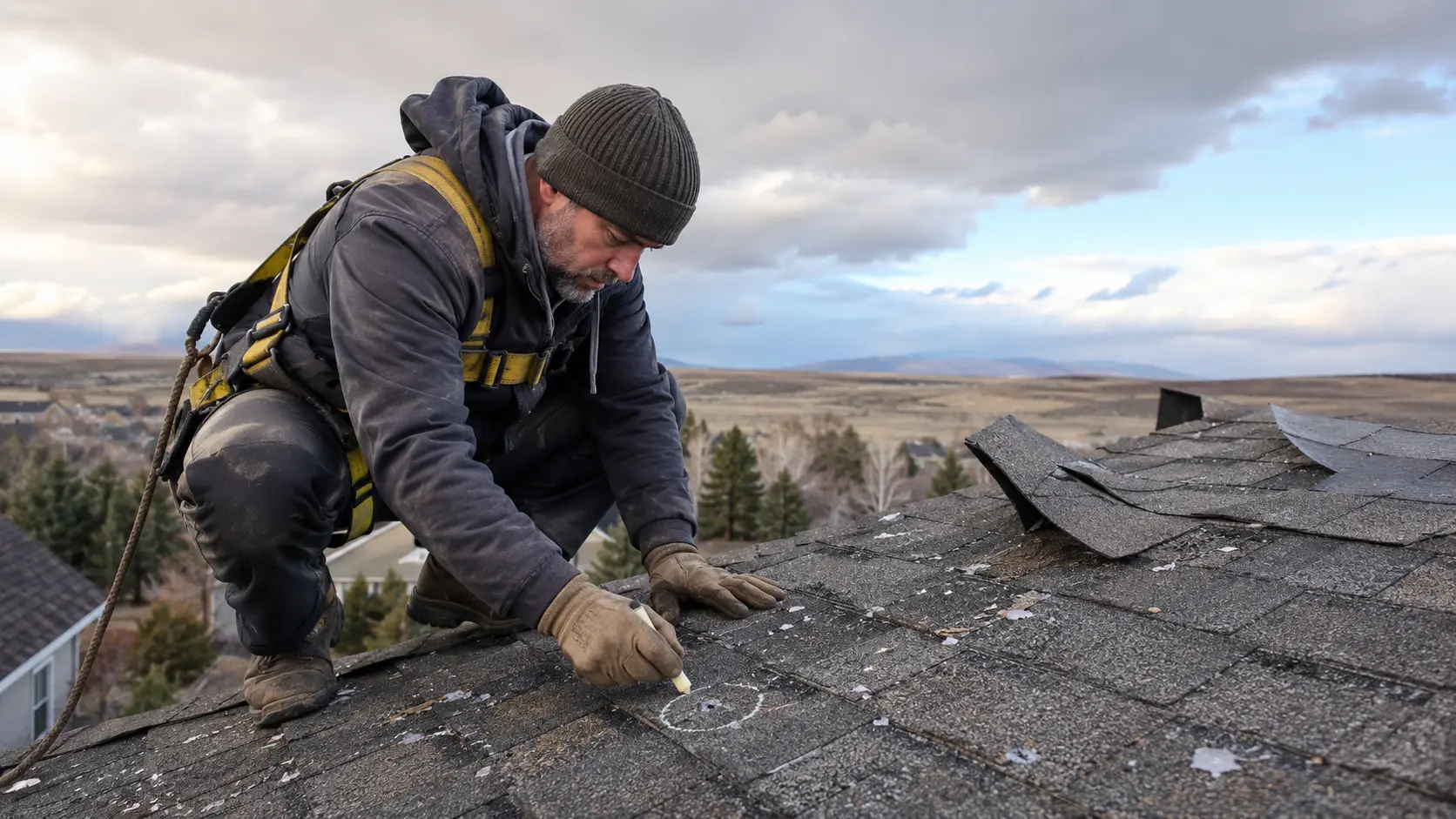
Storm weeks are when the money moves. A single hailstorm or a hard March wind off the harbor can flood the search results for two days, and then it goes quiet again. You don't get to schedule those days. You only get to be ready or not.
"In hail-prone states, average roof lifespan is 15 years vs 22 years in milder western states; 38% of U.S. homes have roofs in moderate to poor condition (Roofing Contractor) with 60% higher loss costs" — Verisk Analytics (2025)
New England roofs take a beating that the milder coast never sees. Freeze-thaw cycles in Jamaica Plain pry up flashing all winter, then the spring wind finishes the job. So the demand is real and it's local. The question is whether the search even reaches you.
Here's the part most shops miss. That homeowner isn't on office wifi. She's standing in her South Boston driveway on a phone with two bars, and your site has to paint a usable screen before her thumb gets restless. If it takes seven seconds, she's gone. And she's not coming back to compare later. She booked the first guy who answered fast.
So the four-second target decides whether she dials you or dials nobody you'll ever hear from. Picture one $9,000 reroof lost every storm week because the homepage hung. That's $36,000 a month of busy season, gone to a loading spinner. And good roofing web design in Boston starts there, with the load clock, before a single color or font gets picked. Because a gorgeous site that paints in seven seconds is a slow site with nice photos.
Roughly seven in ten of those panic searches happen on a phone. But plenty of contractor sites are still built desktop-first and then squished down, so the call button hides under a hamburger menu and the form runs off the edge of the screen. A site built mobile-first puts the thumb-sized actions first. The desktop version is the afterthought, not the other way around.
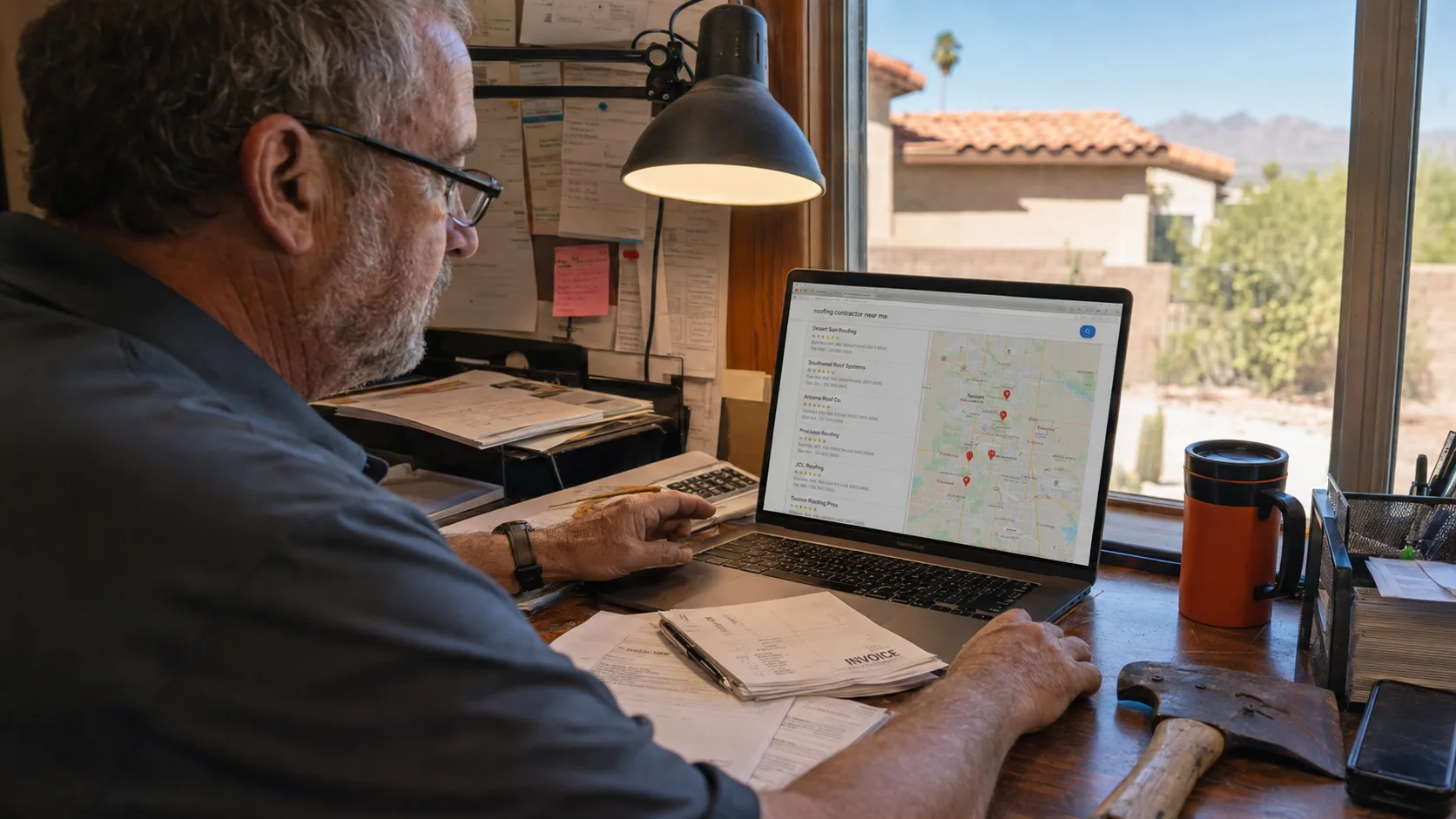
Think about her mental state. Water's coming in, or might be. She's scared of the bill and scared of getting ripped off. Your site has about three seconds to answer two questions: can these people fix this, and can I reach them right now.
"97% of roofing customers expect a callback within one week. More than 50% expect a callback within two days." — Roofing Contractor Magazine (2024)
So speed of contact is the whole ballgame. And half your callers want to hear back inside two days, which means the site that makes calling effortless wins before the callback even happens.
Your phone number should be a giant tappable button in the top inch of the screen, before she scrolls a pixel. Not in the footer. Not behind a menu. A real tel: link her thumb hits without aiming. On a roof emergency, every extra tap loses callers, and a buried number on a Roxbury homeowner's cracked screen might as well not exist.
The other path to reach you is the form. And most are built like a mortgage application. Name, email, phone, address, roof type, square footage, preferred contact time, how-did-you-hear, budget range, two checkboxes, a CAPTCHA. She abandons it at field five. Ask for three things: name, phone, what's wrong. You can get the rest on the call. Every field you cut lifts completion, and on a busy storm Tuesday that's three more booked estimates by dinner.
Trust and the call button have to share the same screen. Put your Google rating, a couple of real-roof photos from a Brighton tear-off, and a line about being local right next to the phone button. Not on a separate "about" page she'll never open. And skip the stock photos of roofs in Arizona sun. She can smell a stock image, and it quietly tells her you might be a call center three states away. Real photos of your crew on a real Boston three-decker do the opposite. The proof and the ask, together, is what flips a nervous scroll into a dial.
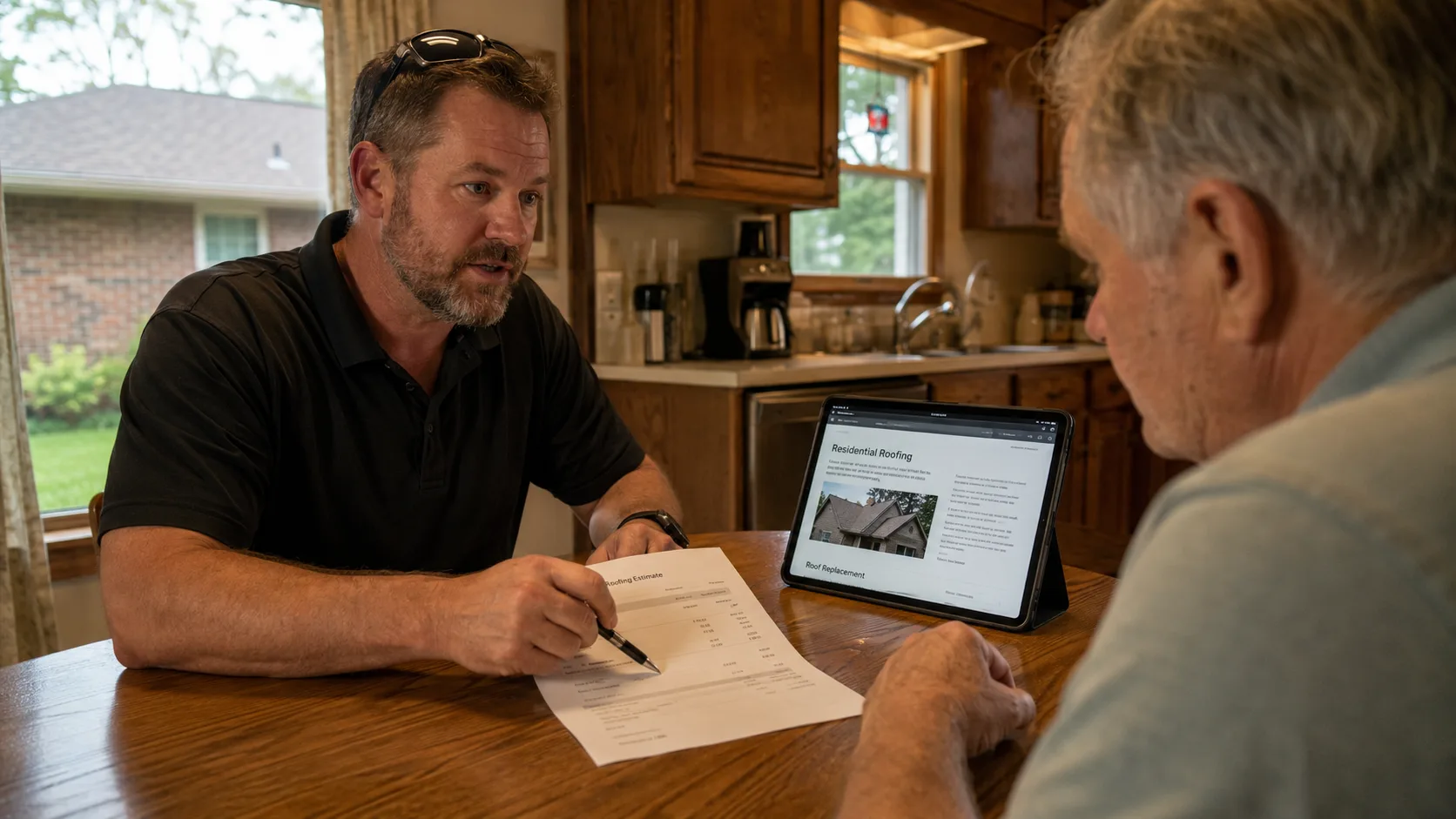
You're not selling a $40 service call. The jobs are big, which is exactly why a site that loses one is so expensive.
"In 2024, 22% of renovating homeowners undertook roofing upgrades, with a median spend of $13,000." — Houzz Inc. (2025)
"From 2021–2023, homeowners spent $93.5B on roofing across 8.3 million projects (AHS-based estimates)." — U.S. Census Bureau and U.S. Department of Housing and Urban Development (2024)
"The median spend on roofing upgrades in 2024 was 8% higher than in 2023 (median $13,000 in 2024)." — Houzz Inc. (2025)
And those numbers keep climbing, so the job you lose today costs more next year. So run the math on a $13,000 median. Lose two of those a month to a site nobody can use, and you're down $26,000 before you've paid a single crew. That dollar figure shows up as missed payroll, not as some marketing abstraction.
"Among homeowners who renovated in 2024, 84% used cash from savings and 29% used a credit card to fund renovation projects (multiple funding sources allowed)." — Houzz Inc. (2025)
When she's spending savings, she wants to feel sure before she calls. So the site has to do the reassuring up front. Clear scope, real photos, an honest range. A site that shows a Cambridge job from tear-off to finish does more selling than any sales pitch you could give on the phone.
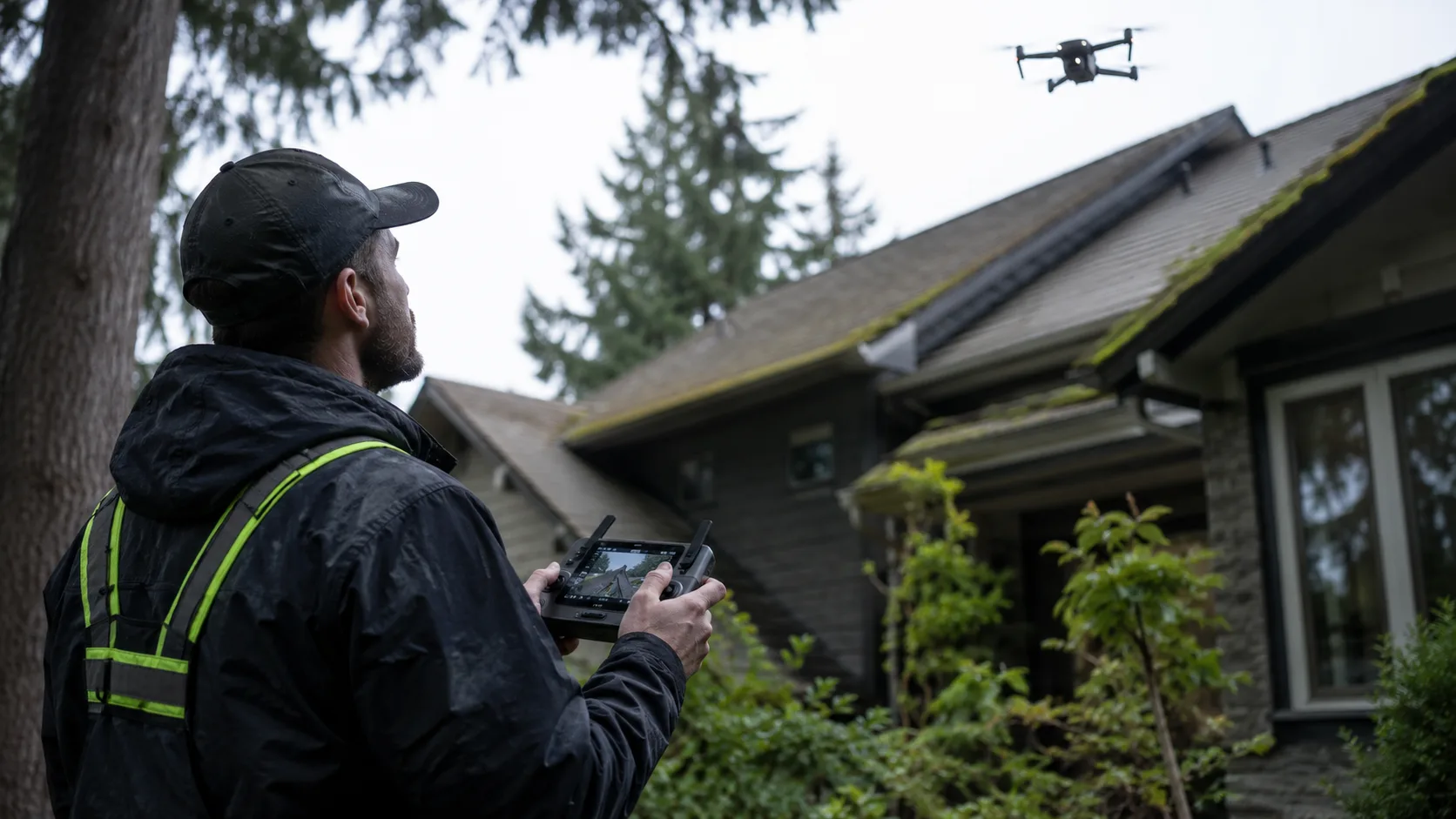
Now the real fork. You can grab a template builder for forty bucks a month, or you can have a site built around how your shop books work. Both can look fine in a screenshot. They don't behave the same on a slow phone in a driveway.
A template loads every block whether you use it or not. So it's heavier, slower, and harder to bend toward click-to-call and a short form. It'll look okay on your office monitor. But on a two-bar phone in Allston during a storm, that extra weight is the three seconds that lose the caller. The forty-dollar plan isn't cheap if it drops one $13,000 job a season.
A site built for your shop strips out what you don't need and makes the call button and the lead form the loudest thing on every page. It's faster because there's less of it. And it's shaped around your booking process, not a generic dentist-or-roofer-or-bakery layout. So the custom path to roofing web design in Boston earns its keep by loading faster and asking for the call sooner, never by looking fancier than the next shop. That's the tradeoff: a little more up front, a site that catches the storm-week caller after. And over one busy season, catching three extra $13,000 jobs pays for the whole build twice.
"Among renovating homeowners, 44% add or redo a roof as part of their exterior projects." — Houzz Inc. (2024)
Here's the trap a lot of Boston roofers fall into. They pay one company to build a pretty site, then a second company to "do SEO" on it six months later. And the SEO company spends half the budget fixing the speed and structure the first build got wrong.
"Among homeowners undertaking a roofing project, 63% choose asphalt roofing material (dimensional shingles 34%, three-tab shingles 19%, luxury shingles 10%), while 14% choose metal and 11% choose synthetic material or rubber." — Houzz Inc. (2024)
So build it as one job. The same decisions that make the page load fast and convert the panic caller are the decisions that make Google rank you in the Somerville map pack. Page speed, clean structure, real local content, mobile-first. They're the same work. Splitting them into two invoices just means you pay twice and wait longer to show up.
When the site and the local search work are the same project, the storm-week homeowner in Medford finds you and reaches you in the same motion. Speed serves both the human and the algorithm. So you stop paying a second vendor to undo the first one's shortcuts.
We start by looking, not pitching. We've run a structured inspection of roofing websites across the trade, measuring load time, mobile behavior, where the call button sits, and how many fields the form demands. Plenty of shops are losing the storm-week caller in ways they can't see from the inside.
So before anyone talks money, we'll run a free Site Inspection of your current site. No sales call. We just show you, screen by screen, where the panic caller drops off and what it's costing you in missed estimates. You'll see the slow load, the buried number, the eleven-field form, all of it, with the lost-dollar math attached.
And if you want us to fix it, you'll already know exactly what we're fixing and why. If you'd rather take the findings to your own developer, that's fine too. The inspection is yours either way. Because the Boston roofer who catches the driveway caller first is the one who books the season.
The evidence
 Read the full report →
 0
contractor sites graded, one A
Across the whole CRO Index, a single site earned an A. The median landed at a D. The grade gap is a conversion gap.
0 %
of roofing sites fail a critical accessibility check
Scored against WCAG 2.1 AA with axe-core. A page that blocks a screen reader also blocks a paying customer.
Fervor Roofing State of the Industry, 2026
0 %
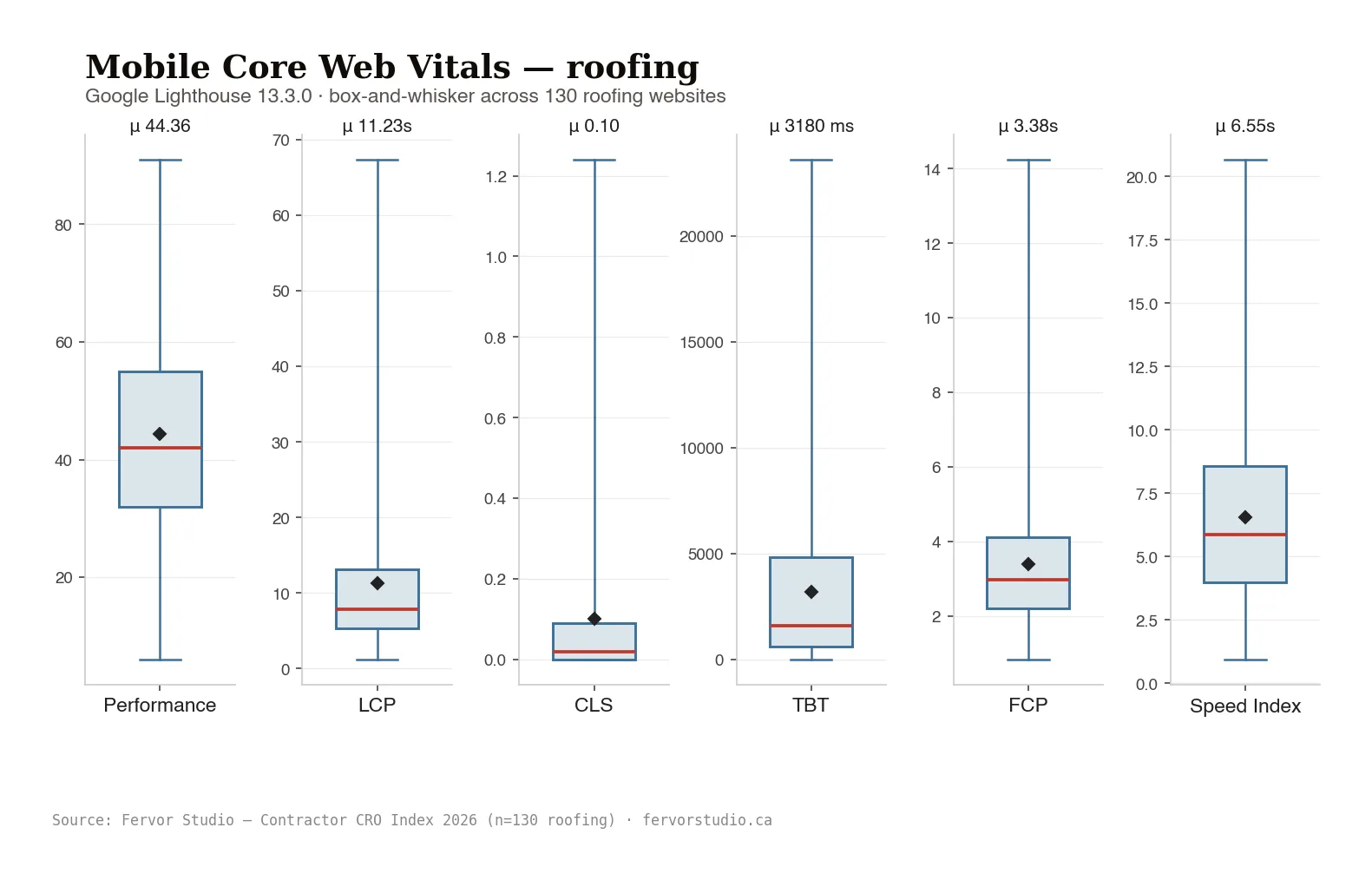
miss Google's mobile load-speed bar
Median mobile load lands at 7.88 seconds. Most of your traffic is on a phone, and most of them are gone before the hero paints.
Fervor Roofing State of the Industry, 2026
0 /100
is the average roofing grade
That is a D. The sites booking the work are not the ones with the biggest crews. They are the ones a few points higher on the things homeowners feel.
Two ways to start
Tell us where you are. We point you at the right next step — no sales call to get there.
Client review
“Nay did an amazing job, you know. He was really patient. He got the work done the way I told him and he was just on point with the website. Pretty straightforward process. No going around the bush. He just did amazing work and I would 100% recommend.”
How Fervor can help
Complete website system built to convert storm leads, planned projects, and research-phase homeowners into booked jobs.
Identify and patch the top conversion killers on your existing site. No full rebuild needed.
Monthly SEO, content, and CRO. Fixed deliverables. No credits, no rollover. The compound growth engine.
GBP optimization, citation building, and review system foundation. The infrastructure that gets you into the Map Pack.
One conversion-built landing page for the referrals, paid clicks, and cold-call leads you send. They land on a page built to book them, not your generic homepage.
Your move
Tell us where you are. We point you at the right next step — no sales call to get there.
Keep going