0
contractor sites graded, one A
Across the whole CRO Index, a single site earned an A. The median landed at a D. The grade gap is a conversion gap.
Right now, someone in Baltimore is Googling "roofer near me." We get you showing up first — then turn that click into a booked job.
A written report and a ranked fix list, in about three days.
“Patient, on point, straightforward. Did amazing work. Would 100% recommend.” — Ruben Mederos, HyperTemp HVAC
“Responsive, creative, exceeded expectations. Already seeing greater engagement from our clients.” — George Jeorgy, Jeorgy's Landscape Construction
“Top-tier professionalism, real web design expertise, ideas I hadn't considered. Confidently recommend.” — Aws Nassani, Four Eleven Contracting



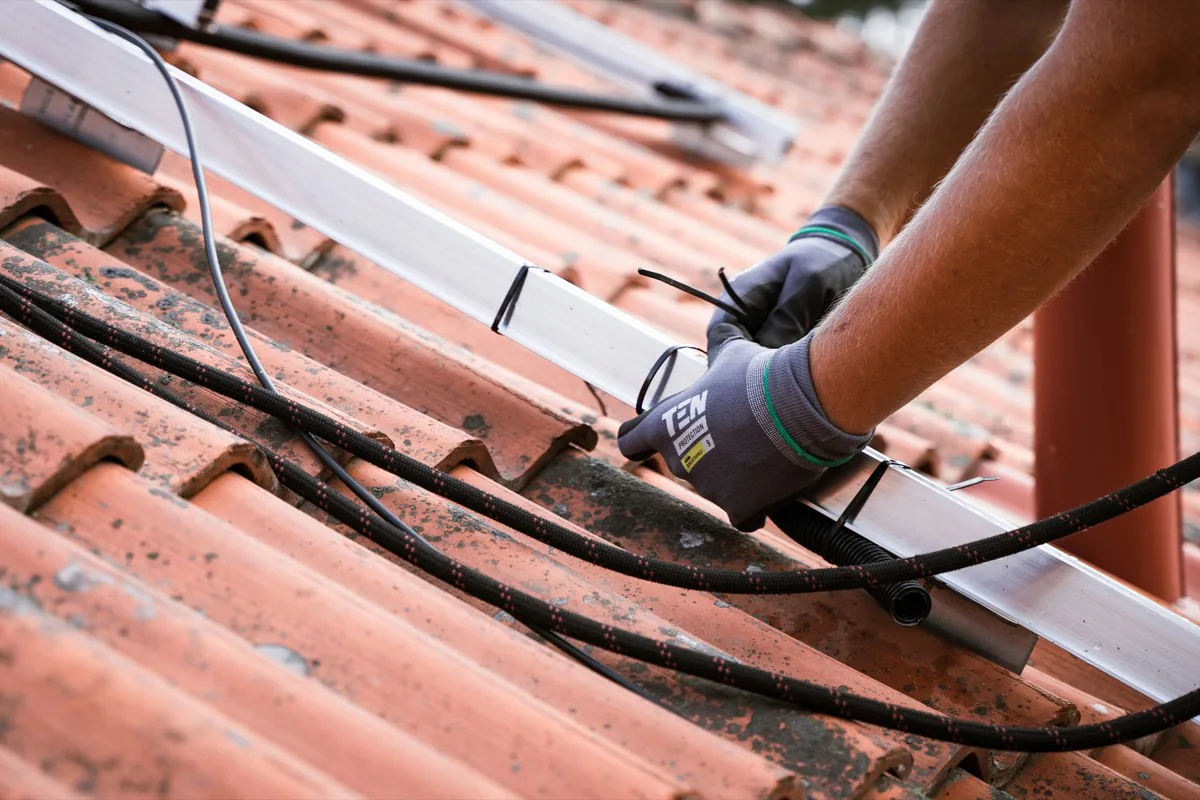
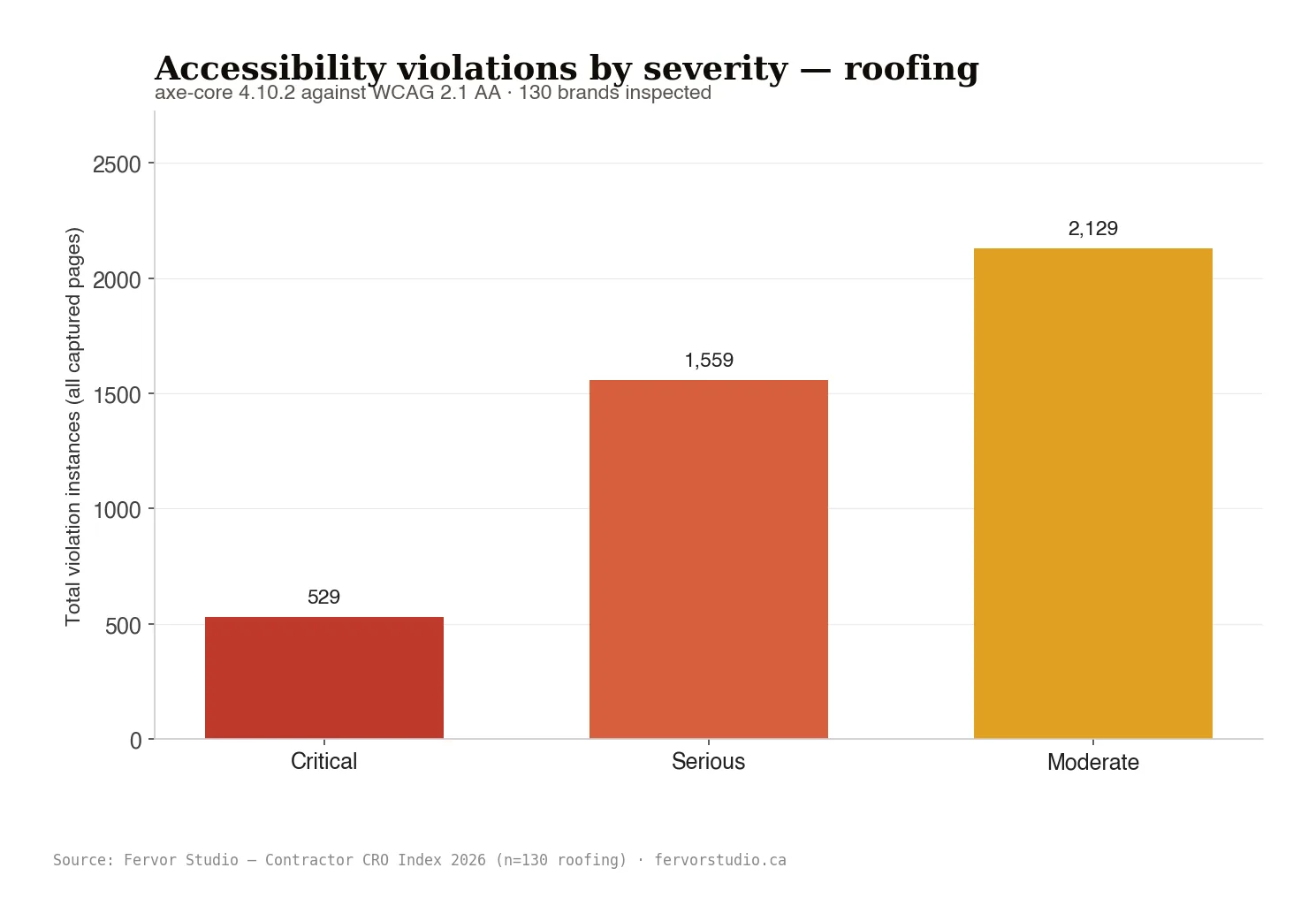
60.8% of roofing sites we tested fail a critical accessibility check
Digital State of the Roofing Industry 2026A grade out of 380 contractor sites
We graded 380 of them against one framework. Exactly one earned an A: Crown Industrial Roofing in Toronto, at 90 out of 100. The rest left money on the table. Here is what separates the top from the bottom.
The local detail
Every angle below comes from how Baltimore actually searches, buys, and regulates — built into the page, not bolted on.
But first, a reality check on the demand.
Here are the two structural anchors the bots watch for.
But geo pages are only half the battle.
"In hail-prone states, average roof lifespan is 15 years vs 22 years in milder western states; 38% of U.S. homes have roofs in moderate to poor condition (Roofing…
"97% of roofing customers expect a callback within one week.
But scale matters too.
So your phone is quieter than it was last spring. And you already tried boosting a Facebook post, paying a guy on Fiverr, and rebuilding the homepage with stock photos of a happy family. None of it moved the needle. You want roofing seo baltimore work that pulls owners in Federal Hill, Canton, and Roland Park into your funnel, not a Bangalore-built dashboard with a green arrow on it.
This is the playbook. It is built for a four-to-ten-truck shop running tear-offs from Dundalk to Towson, with a yard somewhere off I-695 and a foreman who answers the phone before the office does. So we will skip the "what is SEO" intro and get to what books work in this market.
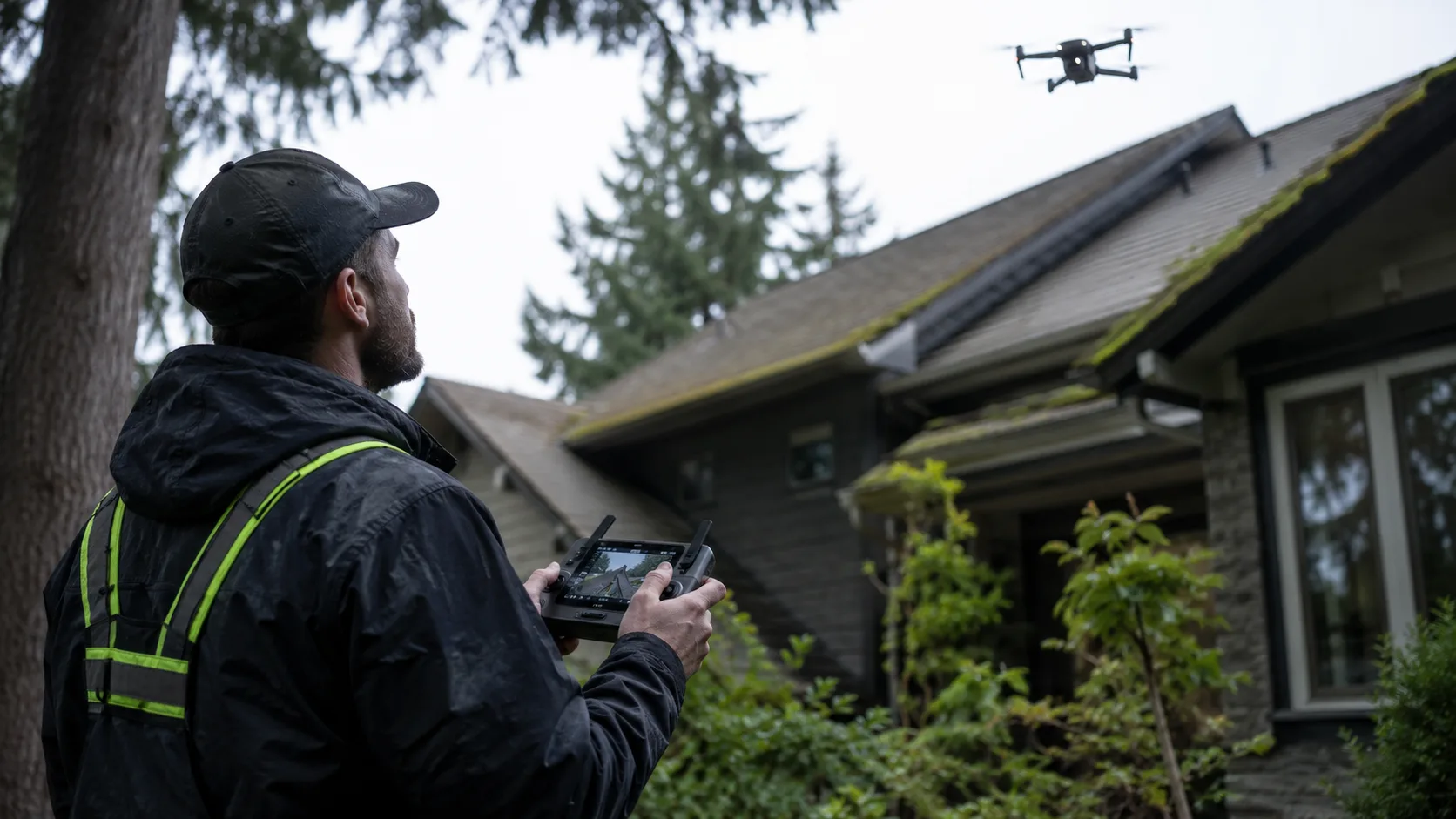
But first, a reality check on the demand. Roofs sell themselves once you get in front of the right homeowner at the right moment, and the moment is bigger than the local press suggests.
"In 2024, 22% of renovating homeowners undertook roofing upgrades, with a median spend of $13,000." — Houzz Inc. (2025)
One in five of every renovating homeowner in your service area is a roof job. And the median ticket is up.
"The median spend on roofing upgrades in 2024 was 8% higher than in 2023 (median $13,000 in 2024)." — Houzz Inc. (2025)
Charm City sits on a corridor where row homes in Hampden butt up against full-tear-offs in Guilford, $14,000 reroofs in Mount Washington, and insurance claims pouring out of Parkville after every June hailstorm. So the demand curve is wider here than in a tidy suburban Sun Belt market. Your problem is not that the work is missing. The problem is that homeowners cannot find you when they are ready to buy.
But buying does not always mean cash in the bank.
"Among homeowners who renovated in 2024, 84% used cash from savings and 29% used a credit card to fund renovation projects (multiple funding sources allowed)." — Houzz Inc. (2025)
So if your site does not mention financing on the asphalt page, you have already lost a third of your inbound. And that is before the homeowner even reaches the contact form. Add a financing line to your service pages and watch the form-fills tick up within two weeks of the change.
"Among homeowners undertaking a roofing project, 63% choose asphalt roofing material (dimensional shingles 34%, three-tab shingles 19%, luxury shingles 10%), while 14% choose metal and 11% choose synthetic material or rubber." — Houzz Inc. (2024)
So your dimensional-shingle page should be the deepest page on your site. Most shops bury it under "Services" with two paragraphs of generic copy. That is one easy win you can ship this week.
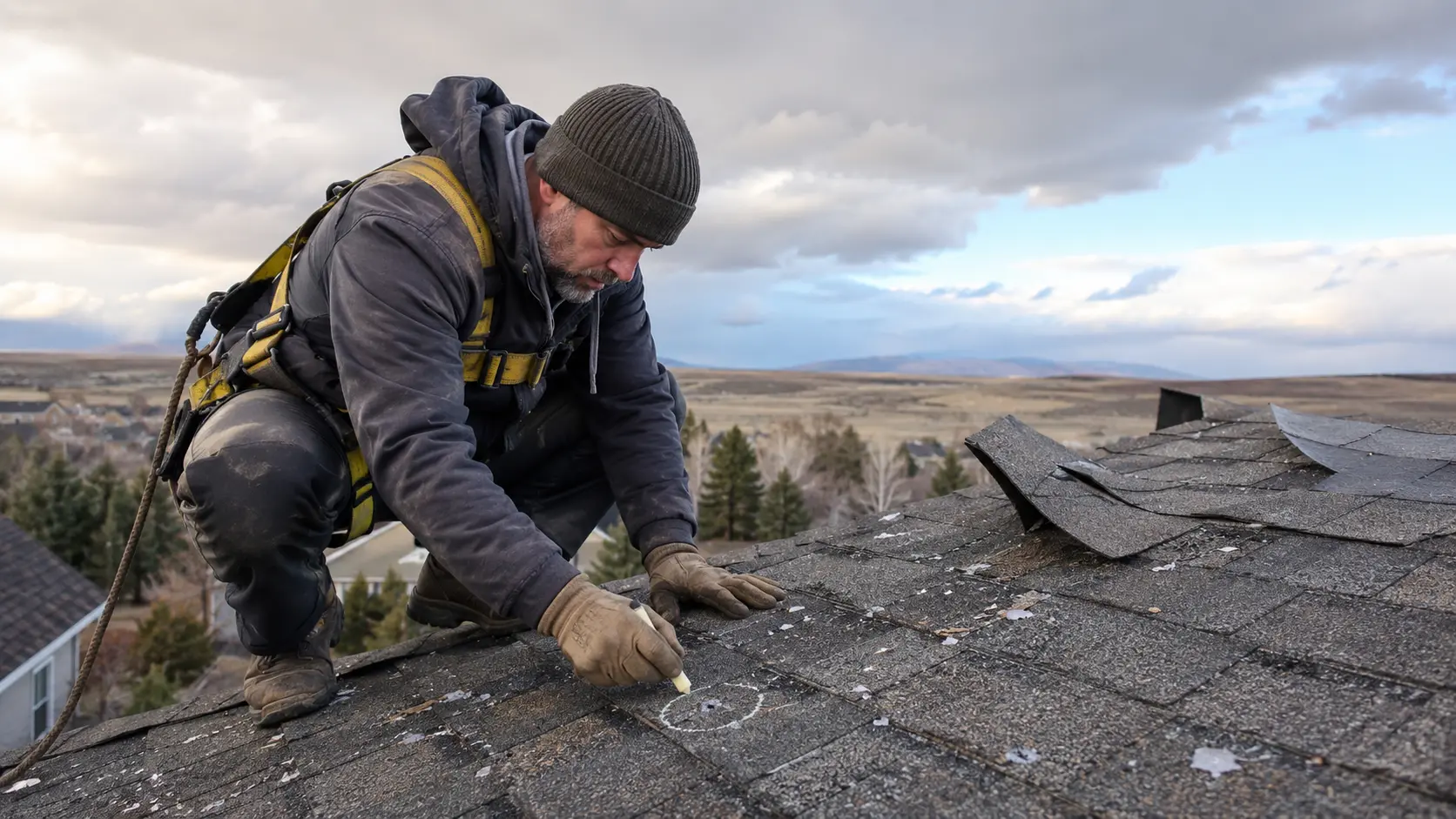
Here are the two structural anchors the bots watch for. The first one is your geo anchor.
You need a page for the neighborhoods you serve every week. Not a list of 217 zip codes auto-generated by a sketchy plugin. So pick the ten where you do the most work, then write a real page for each. Federal Hill row homes ask different questions than the colonials on Bellona Avenue in Ruxton. The page for Hampden should mention the steep gable pitches on Roland Avenue. The Catonsville page should mention the standing-seam metal jobs you have done in the Wilkens Avenue corridor.
Each page gets a real story, the materials you used, and the permit you pulled with Baltimore City or the county. Each gets photos of YOUR crew on a real roof in that neighborhood, not a stock-photo subdivision in Phoenix. So the homeowner in Mount Washington who Googles "roofer in my area" sees a face they trust.
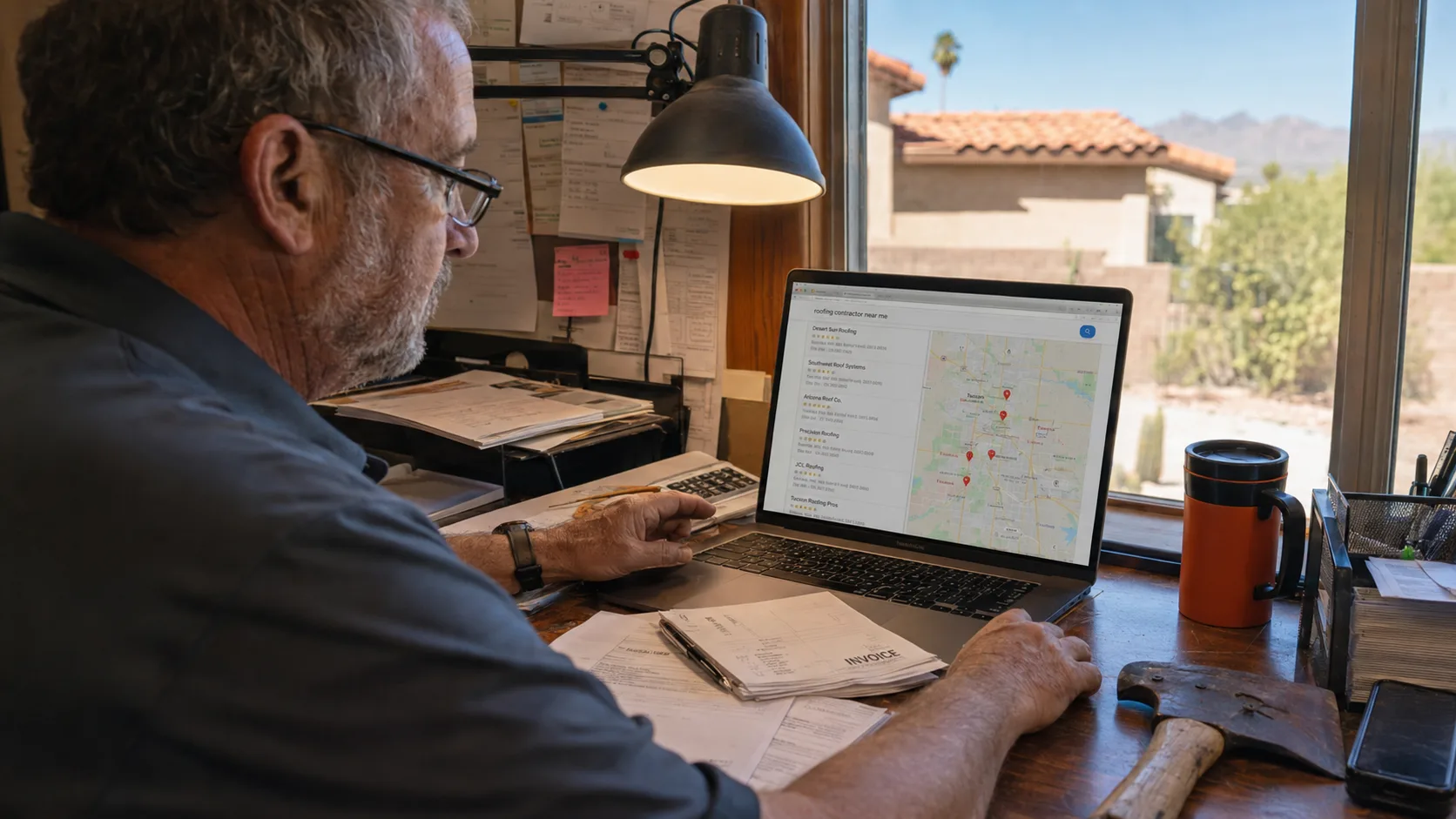
And the map pack matters more than the blue links below it. The three pinned listings at the top of a local search get the lion's share of the clicks. So if you are not in the top three for your service area, you might as well be invisible.
Cracking those three pins is a grind. You need a verified Google Business Profile with the right service-area radius, fresh photos uploaded weekly, and a review velocity that beats the shop in Hamilton that has been at it for eight years. So we will get to the review piece in a minute.
But geo pages are only half the battle. The other half is the service-page structure underneath them. So instead of one fat page titled "Roofing Services," you need a parent page for each material and each problem.
One page for dimensional shingles. One for luxury asphalt. One for standing-seam metal. One for synthetic slate. One for flat-roof TPO, because half the row homes in Federal Hill and Fells Point still have a tar-and-gravel deck up top that leaks every February.
So each material page links down to neighborhood pages where you have done that material. The neighborhood page links back up. Now a homeowner in Canton searching for "flat roof repair near me" lands on a page that mentions Canton, mentions TPO, mentions the row-home parapet wall, and shows your crew on a real one. That is the structure that books appointments.
And then there is the problem tree. Storm damage. Hail. Wind uplift. Ice dam. Ridge-vent failure. Skylight leak. Chimney flashing. Each gets a page. So when a homeowner in Towson searches "roof leaking around chimney," your flashing-repair page is the one Google serves up.
"Among renovating homeowners, 44% add or redo a roof as part of their exterior projects." — Houzz Inc. (2024)
So nearly half of your local exterior-remodel pool will pull the trigger on a roof at the same time. Your siding page should link to your roofing page. Your gutter page should link to your roofing page. Cross-stitching the exterior tree is one of those quiet wins that compounds over six months.
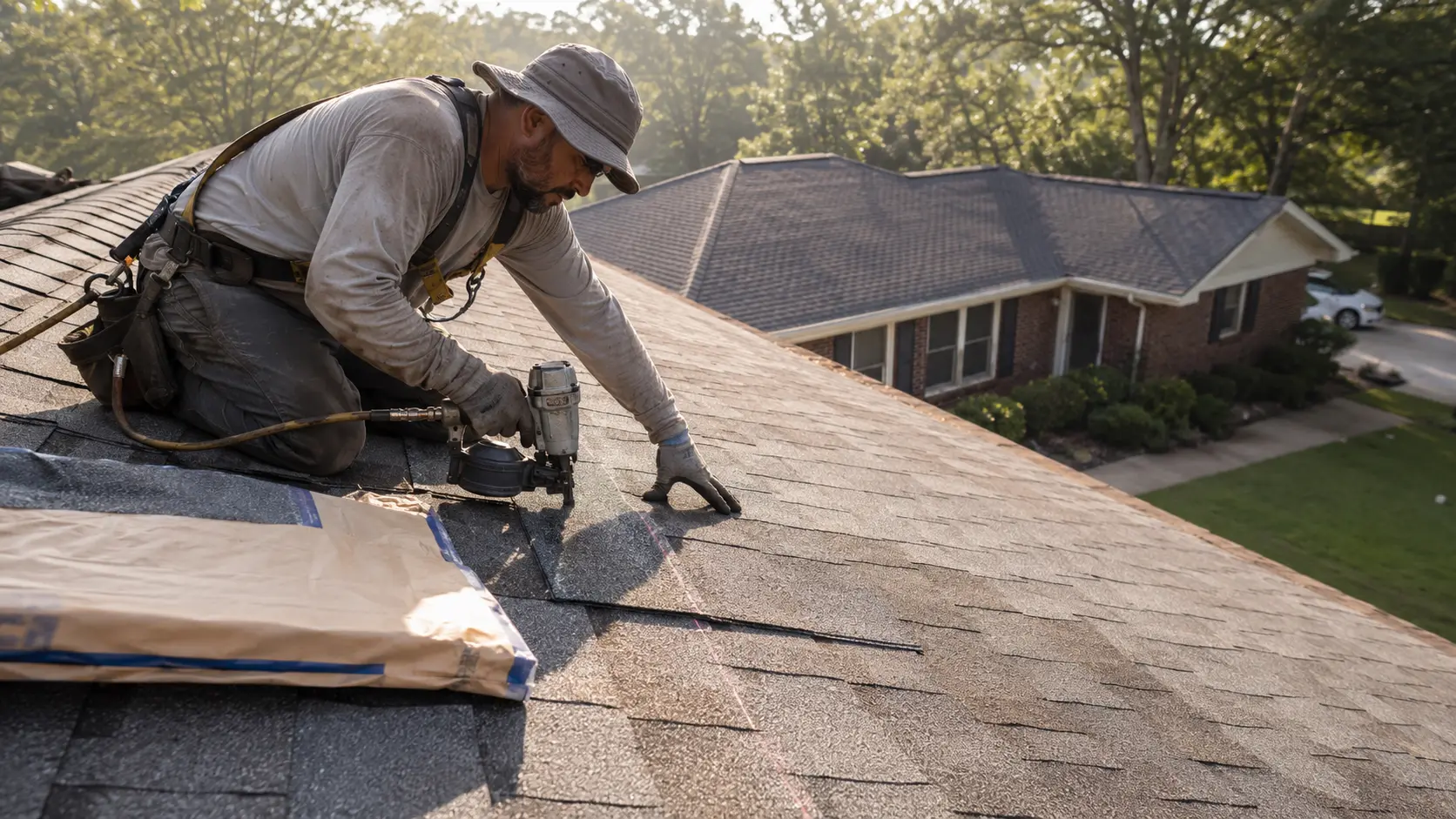
"In hail-prone states, average roof lifespan is 15 years vs 22 years in milder western states; 38% of U.S. homes have roofs in moderate to poor condition (Roofing Contractor) with 60% higher loss costs" — Verisk Analytics (2025)
Maryland is a hail corridor. The June and July storms that roll east off the Catoctin ridge punch holes through asphalt from Westminster to Bel Air every year, and the insurance claims that follow are where your biggest tickets live. So your storm-damage page needs to be a separate page from your reroof page. And it needs to name the storm events, the dates, the zip codes hit.
The shop that ranks for "hail damage roof Parkville" the week after a storm books 30 jobs in a month while everyone else is still arguing with adjusters. So this is where speed-to-publish matters. And if your site is on a CMS where you have to email a vendor to add a page, you will never win the storm cycle.
"97% of roofing customers expect a callback within one week. More than 50% expect a callback within two days." — Roofing Contractor Magazine (2024)
So speed-to-lead is a ranking signal, not only a sales metric. Google watches call-back rates on the GBP listing, watches whether the form submit on the site results in a booked appointment, and quietly demotes the shops that ghost. So if your office manager is also running estimates and only checks the inbox at 6 p.m., you are leaking jobs and rankings at the same time.
So set a rule: every web lead gets a human call within two hours during business days. Use a forwarding service for after-hours so the storm calls at 8 p.m. on a Sunday in July do not roll to voicemail. And track it in a simple spreadsheet for 30 days. You will be shocked at the pattern that emerges.
And once the call-back rule is in place, you can finally ask for reviews without feeling weird. Text the homeowner a single-tap review link the morning after the install, while the smell of the new shingles is still in the air. The shop that pulls eight reviews a month from real Baltimore zip codes will outrank the shop with 400 reviews from out-of-market customers six months in.
But scale matters too. So before you spend on any of this, look at the size of the prize.
"From 2021–2023, homeowners spent $93.5B on roofing across 8.3 million projects (AHS-based estimates)." — U.S. Census Bureau and U.S. Department of Housing and Urban Development (2024)
Roughly $93 billion in three years across the country. So Maryland's slice, conservatively, sits around $1.8 billion of that spend. And the Baltimore-Towson metro pulls roughly half the state's residential roofing volume because the housing stock skews older here than in the I-270 corridor. The pie is enormous. The question is whether a homeowner in Mount Washington with a 22-year-old roof finds you, or finds the shop in Pasadena with the better page structure.
So here is how we look at your site before we touch anything. We do not start with a redesign deck. We start with a free Site Inspection, no sales call required to receive it.
We pull your site into the same scoring framework we used for our inspection of roofing websites across the trade, benchmark you against the median shop in the country and against the top performers in your zip cluster, then send a 24-page PDF that names every leak in the funnel. The map pack gaps. The slow form. The missing financing line. The neighborhood pages you should have built two years ago.
You read it on your phone in the truck between estimates. If it is useful, we talk. If not, you keep the PDF and apply the fixes yourself. So there is no pitch on the other side of it.
The shops who do book a project with us usually start with the Leak Plug Sprint, a 30-day fix-the-bleeding engagement that handles the worst three or four pages, the Business Profile, and the review request flow. Then they decide whether the bigger Booked by Design engagement makes sense.
But the Site Inspection is the front door. And it costs you nothing but the 20 minutes it takes to read.
The evidence
 Read the full report →
 0
contractor sites graded, one A
Across the whole CRO Index, a single site earned an A. The median landed at a D. The grade gap is a conversion gap.
0 %
of roofing sites fail a critical accessibility check
Scored against WCAG 2.1 AA with axe-core. A page that blocks a screen reader also blocks a paying customer.
Fervor Roofing State of the Industry, 2026
0 %
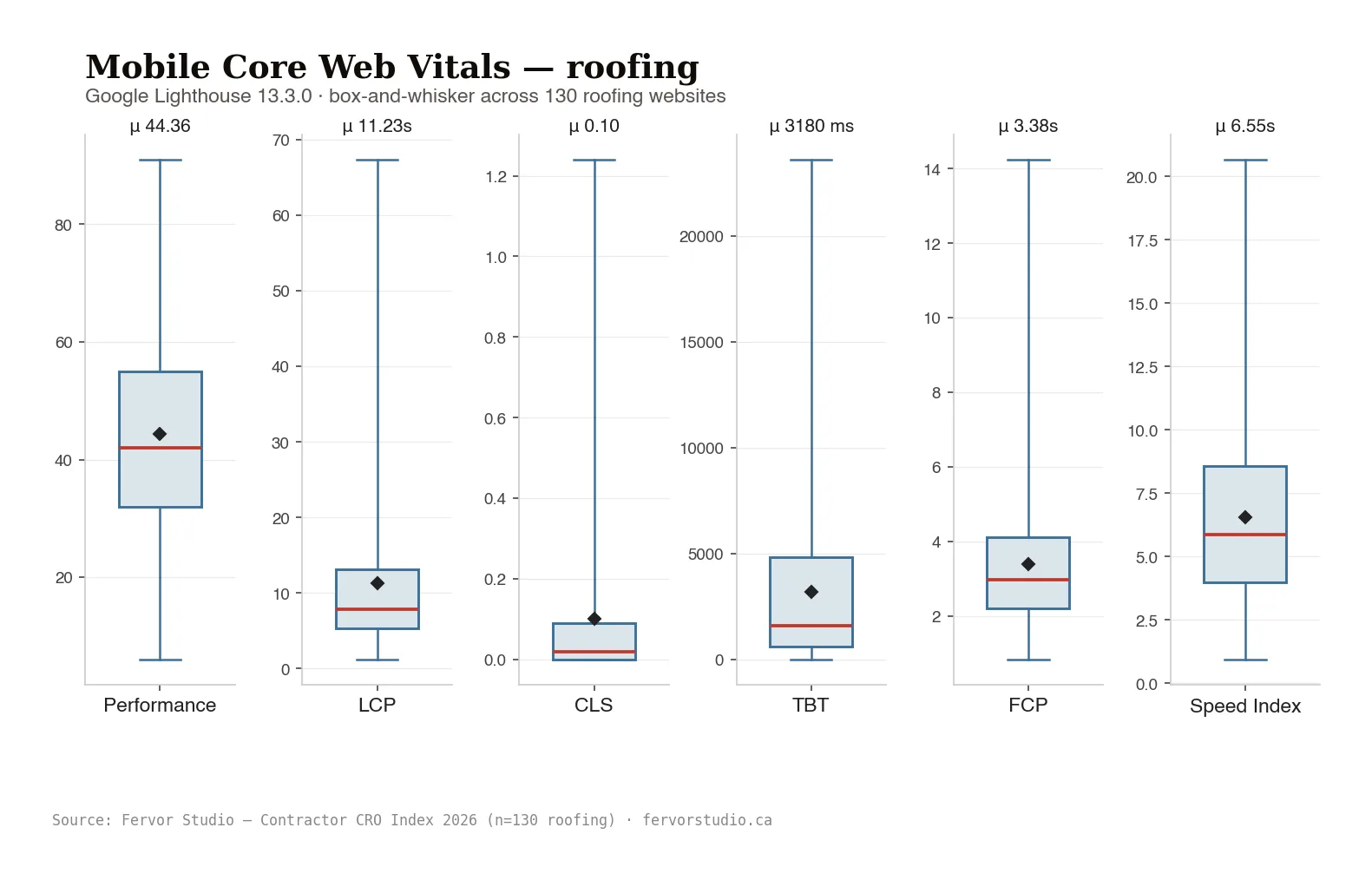
miss Google's mobile load-speed bar
Median mobile load lands at 7.88 seconds. Most of your traffic is on a phone, and most of them are gone before the hero paints.
Fervor Roofing State of the Industry, 2026
0 /100
is the average roofing grade
That is a D. The sites booking the work are not the ones with the biggest crews. They are the ones a few points higher on the things homeowners feel.
Two ways to start
Tell us where you are. We point you at the right next step — no sales call to get there.
Client review
“Nay did an amazing job, you know. He was really patient. He got the work done the way I told him and he was just on point with the website. Pretty straightforward process. No going around the bush. He just did amazing work and I would 100% recommend.”
How Fervor can help
Monthly SEO, content, and CRO. Fixed deliverables. No credits, no rollover. The compound growth engine.
Complete website system built to convert storm leads, planned projects, and research-phase homeowners into booked jobs.
Identify and patch the top conversion killers on your existing site. No full rebuild needed.
GBP optimization, citation building, and review system foundation. The infrastructure that gets you into the Map Pack.
One conversion-built landing page for the referrals, paid clicks, and cold-call leads you send. They land on a page built to book them, not your generic homepage.
Your move
Tell us where you are. We point you at the right next step — no sales call to get there.
Keep going