0
contractor sites graded, one A
Across the whole CRO Index, a single site earned an A. The median landed at a D. The grade gap is a conversion gap.
You're getting clicks in Albuquerque. They're just not calling. We rebuild your site around the one job that matters: turning a visitor into a booked job.
Starts with a Site Inspection, so you see the plan before any build begins.
“Patient, on point, straightforward. Did amazing work. Would 100% recommend.” — Ruben Mederos, HyperTemp HVAC
“Responsive, creative, exceeded expectations. Already seeing greater engagement from our clients.” — George Jeorgy, Jeorgy's Landscape Construction
“Top-tier professionalism, real web design expertise, ideas I hadn't considered. Confidently recommend.” — Aws Nassani, Four Eleven Contracting



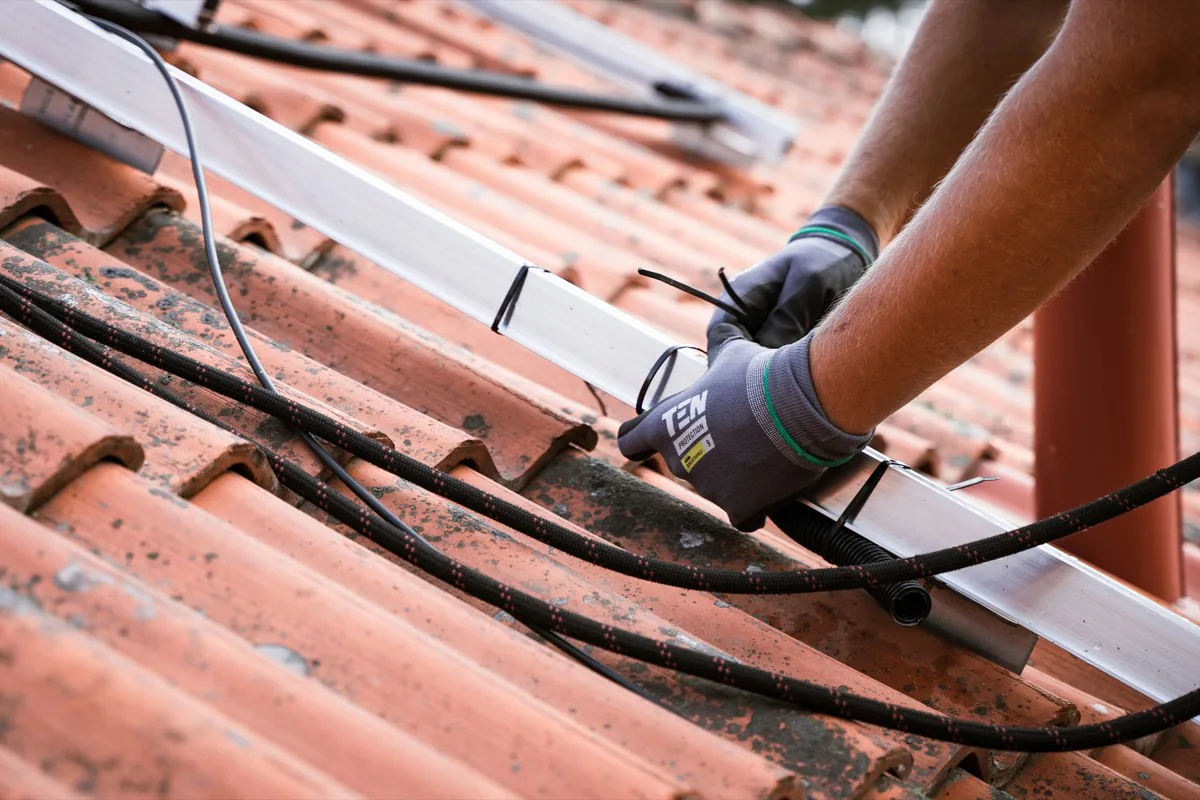
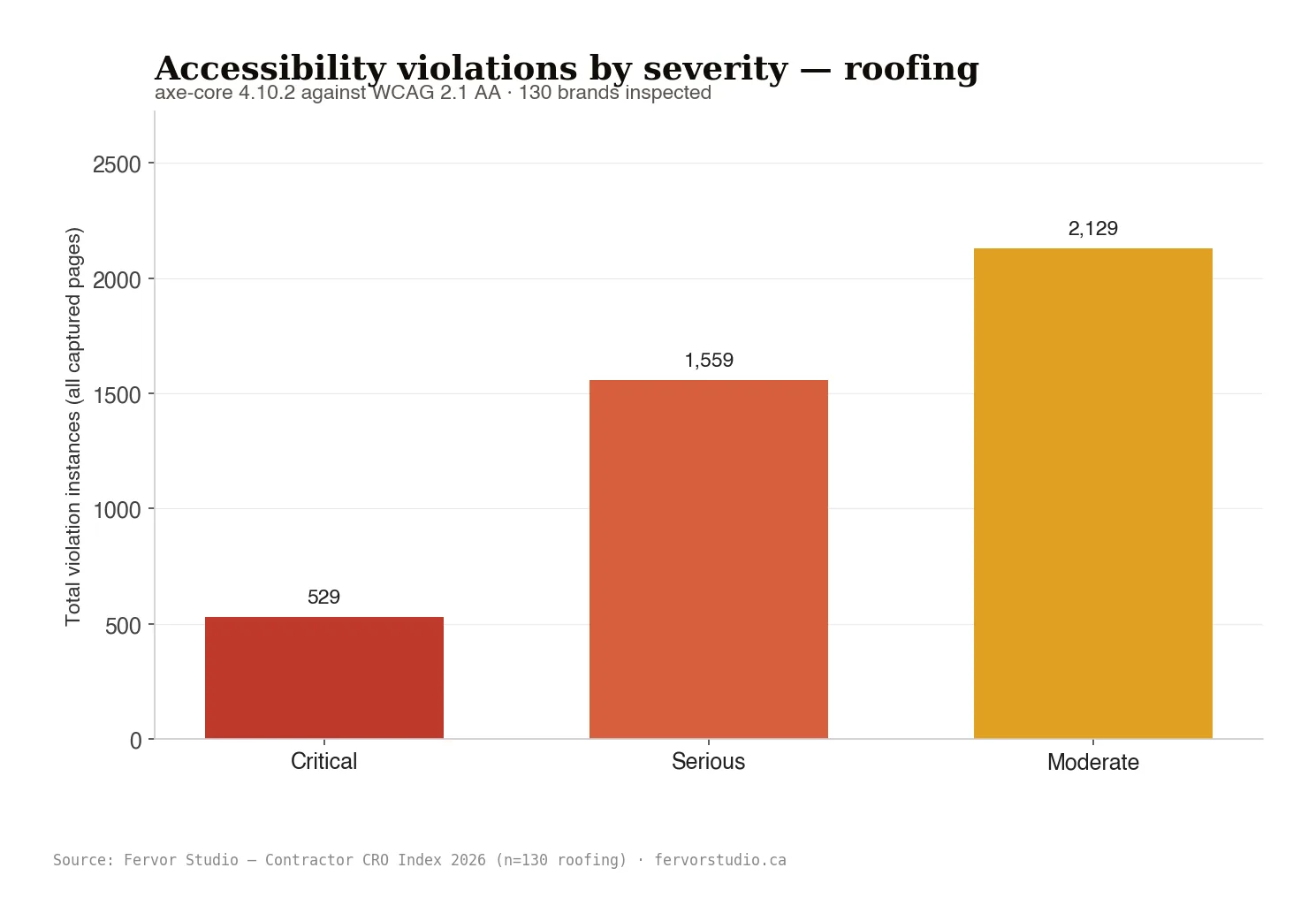
60.8% of roofing sites we tested fail a critical accessibility check
Digital State of the Roofing Industry 2026A grade out of 380 contractor sites
We graded 380 of them against one framework. Exactly one earned an A: Crown Industrial Roofing in Toronto, at 90 out of 100. The rest left money on the table. Here is what separates the top from the bottom.
The local detail
Every angle below comes from how Albuquerque actually searches, buys, and regulates — built into the page, not bolted on.
Albuquerque doesn’t get hammered like Dallas or Oklahoma City.
She’s not at a desk.
But some people won’t call.
So should you grab a template builder or hire someone to build custom?
And here’s where a lot of contractors get sold twice.
Picture the moment your next job starts. A homeowner in Tanoan watches a shingle bundle peel off her neighbor's roof during a spring microburst, grabs her phone in the driveway, and types "roof repair near me." She's got maybe forty seconds of patience before she taps the next result. So your roofing web design in Albuquerque has exactly one job in that window: load fast, show her you're real, and let her call you before she bounces. That's the whole game. Not awards, not a fancy slider.
And most local roofing sites lose her in the first four seconds.
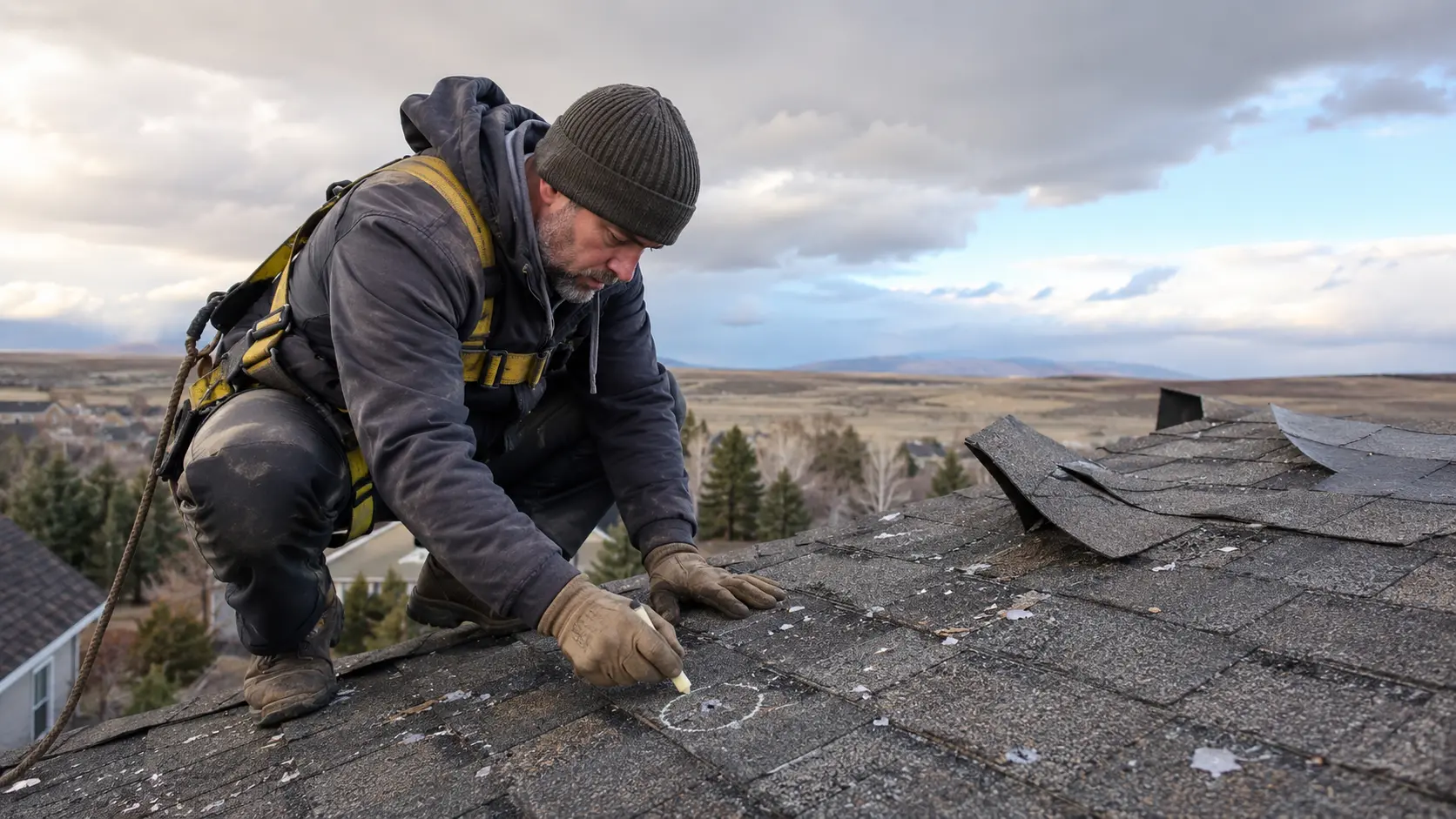
Albuquerque doesn't get hammered like Dallas or Oklahoma City. But when a high-wind event rolls through the Northeast Heights or a hailstorm clips Rio Rancho, the search volume for roofers spikes overnight. Homeowners are reacting. And the contractor whose page answers first usually wins the call.
So here's the loss-framing nobody likes to hear. Say a storm week sends you 80 extra searches. If your site takes seven seconds to load on cellular, more than half of those people are gone before they see your phone number. That's 40-plus homeowners. And at a $4,000 average reroof repair, you just watched real money drive past. So the fix is a page that catches the traffic you already earn.
"97% of roofing customers expect a callback within one week. More than 50% expect a callback within two days." — Roofing Contractor Magazine (2024)
So speed is the front door.
A lot of shops in the South Valley and Ridgecrest still run a brochure site. Pretty homepage, a gallery, an "About Us" paragraph about how the owner started in 1998. But no clear ask. The homeowner reads it, nods, and leaves to find someone who made it obvious how to book.
So your site shouldn't describe your business. It should move the visitor one step closer to a scheduled estimate. And every section earns its place by doing that, or it gets cut. But the brochure site does the opposite. It tells your story and forgets to ask for the call.
You work in a high-desert climate. Intense UV, big temperature swings between a 95-degree afternoon and a 40-degree night, and the occasional monsoon downpour that finds every weak flashing seam. That punishes asphalt shingles faster than people expect.
"In hail-prone states, average roof lifespan is 15 years vs 22 years in milder western states; 38% of U.S. homes have roofs in moderate to poor condition (Roofing Contractor) with 60% higher loss costs" — Verisk Analytics (2025)
So put your local knowledge on the page. A homeowner in Nob Hill skimming your site wants to feel like you've worked on roofs that look like hers, in weather that beats up roofs like hers.
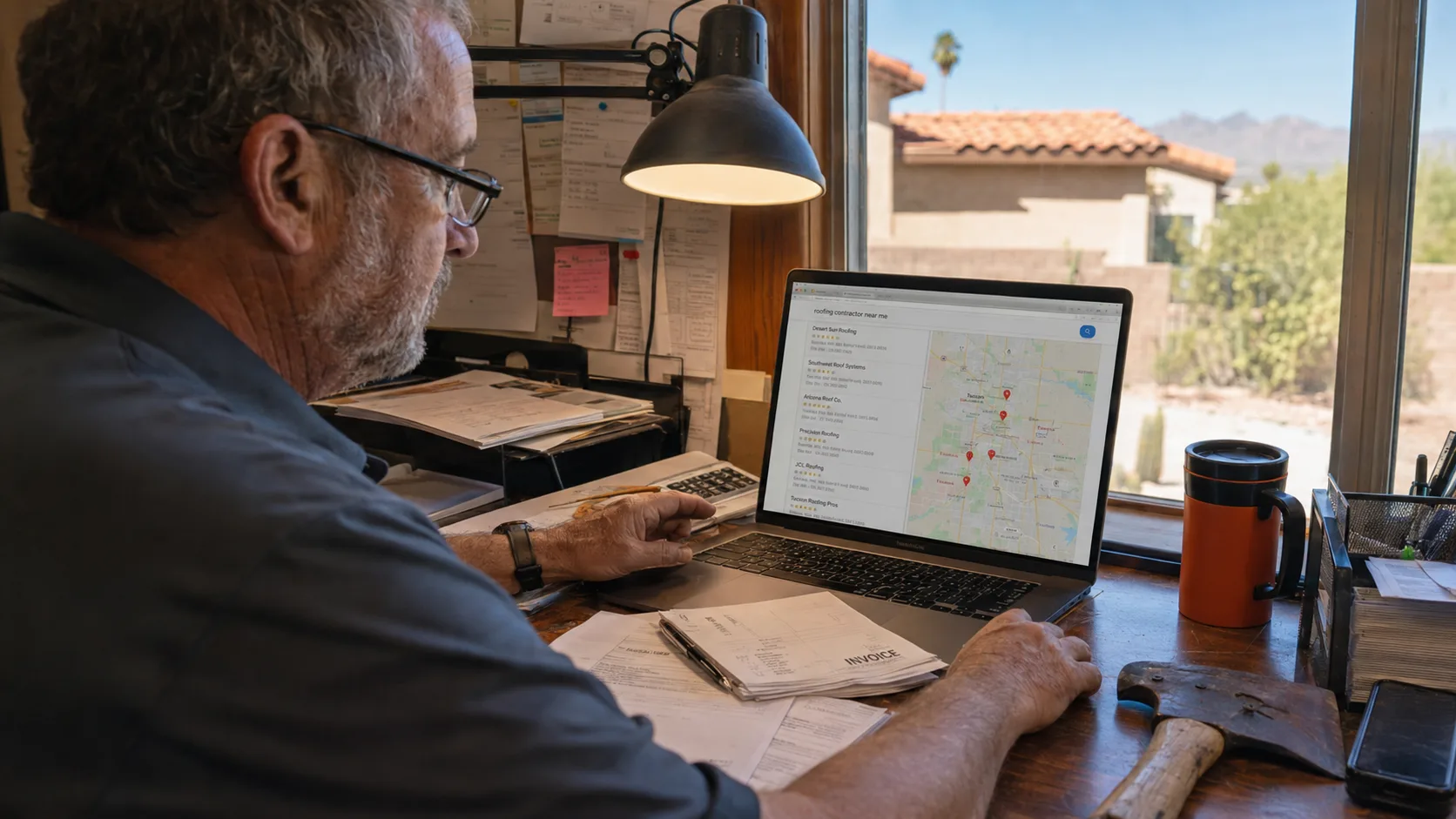
She's not at a desk. She's standing in her driveway in Ventana Ranch on an aging phone with two bars of signal. If your pages aren't built mobile-first, you're designing for a visitor who doesn't exist.
So the build has to assume a small screen, a slow connection, and a thumb. Big tap targets. Compressed images. A four-second load even when the cell tower's choking on storm-week traffic. Get that wrong and the prettiest desktop layout in town still loses.
So fast means under four seconds to interactive on a mid-range Android over cellular. Not under four seconds on your office fiber. And the gap between those two is where most shops fool themselves. So test it on a real phone, off wifi, standing outside. That's the test that matters.
Your phone number should be a tappable button, visible the instant the page loads, before any scrolling. One tap, the call connects. That's it.
Bury it under a hero video and a three-paragraph intro, and you've added friction at the exact moment a panicked homeowner has none to spare. The fastest path from "shingle blew off" to "phone ringing in your truck" is a thumb-sized call button at the top.
But some people won't call. They'll fill out a form instead, especially the ones contacting you at 11pm after the kids are down. So you need a form that respects their time.
Name, phone, address, and a one-line "what's going on" box. Four fields. That's plenty to start the conversation and book the estimate.
"Among renovating homeowners, 44% add or redo a roof as part of their exterior projects." — Houzz Inc. (2024)
Every extra field is another reason to quit. Ask for square footage, roof age, preferred material, budget range, and best time to call, and you've turned a thirty-second favor into homework. The homeowner closes the tab. You can gather all that detail on the phone once she's already a lead.
And a roofing contractor website in Albuquerque that asks less, books more. Count the fields on your current form. If it's more than five, that's leads you're leaking.
"Among homeowners undertaking a roofing project, 63% choose asphalt roofing material (dimensional shingles 34%, three-tab shingles 19%, luxury shingles 10%), while 14% choose metal and 11% choose synthetic material or rubber." — Houzz Inc. (2024)
Put your Google reviews and your real-roof photos next to the form, not on a separate page she'll never visit. A homeowner deciding whether to trust a stranger with a $13,000 job wants two things in the same eyeful: proof you do good work, and the button that starts it.
"In 2024, 22% of renovating homeowners undertook roofing upgrades, with a median spend of $13,000." — Houzz Inc. (2025)
And real photos beat stock every time. A tear-off in Corrales, a flashing detail on a flat roof off Central, a finished metal panel job in the foothills. But stock photos of someone else's house in someone else's state tell her nothing.
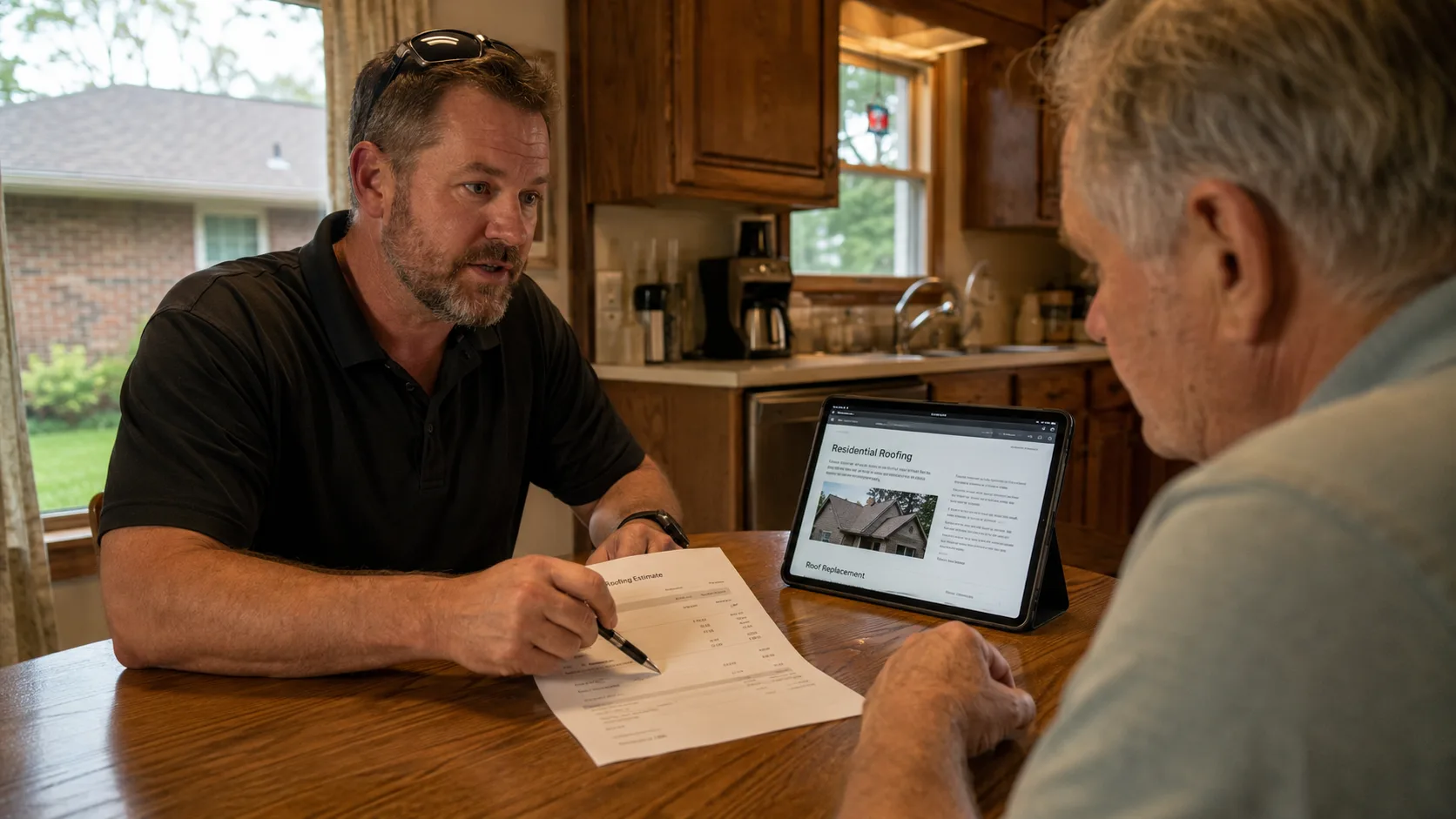
So should you grab a template builder or hire someone to build custom? Honest answer: it depends on your stage. A brand-new shop testing the waters can launch on a template for a few hundred bucks and start collecting calls.
But there's a ceiling. Templates load slow because they ship with code you don't use. They look like every other roofer's site because they are. And they fight you the moment you want a custom estimate flow or a storm-response page that goes live the day the wind hits.
So if you're under your first $250K in revenue and just need a phone number online, a template gets you in the game. And don't overspend on a custom build before you've proven the demand. That's money better spent on a truck wrap.
But once storm weeks are sending you 80 searches and your template can't load fast enough to catch them, the math flips. A custom roofing web designer in Albuquerque builds the page around your actual booking flow, strips the dead weight, and gets you that four-second load. The 40 leads you were leaking pay for the build in a single season.
"From 2021–2023, homeowners spent $93.5B on roofing across 8.3 million projects (AHS-based estimates)." — U.S. Census Bureau and U.S. Department of Housing and Urban Development (2024)
So the spend is catching the storm-week call versus watching it go to the shop down the street.
And here's where a lot of contractors get sold twice. One invoice for the site, another for SEO, as if they're separate jobs. They're not. A roofing website builder in Albuquerque who ignores how Google reads the page hands you a pretty site nobody finds.
So your page structure, your headings, your load speed, your service-area content: those are SEO and design at the same time. When the homeowner in Paradise Hills searches "roof repair Albuquerque," the same fast, well-structured page that converts her is the one Google ranks. But split the work across two vendors and they each blame the other when the phone stays quiet.
So treat the site and its findability as a single project with one owner. The build decisions and the ranking decisions get made by the same hands, looking at the same goal: more booked estimates from your service area.
And the funding reality reinforces it.
"Among homeowners who renovated in 2024, 84% used cash from savings and 29% used a credit card to fund renovation projects (multiple funding sources allowed)." — Houzz Inc. (2025)
Cash from savings means your customers are cautious, and they're comparing. So your site has to close that trust gap fast, because she's looking at two other roofers in the same tab.
"The median spend on roofing upgrades in 2024 was 8% higher than in 2023 (median $13,000 in 2024)." — Houzz Inc. (2025)
So before you spend a dollar, you should know exactly where your current site loses the storm-week call. That's what we built the Site Inspection for.
We ran an inspection of roofing websites across the trade, scoring real contractor sites on load speed, mobile behavior, click-to-call placement, form length, and proof. The pattern was brutal and consistent: the shops winning storm weeks weren't the oldest or the most certified. They were the ones whose pages loaded fast and made the call obvious.
And you can get the same read on your own site. The Site Inspection is free, no sales call to get your grade. We look at your page the way a homeowner in the driveway sees it, then tell you the exact spots where you're leaking the call. Whether you fix it yourself or bring us in, you'll know what's costing you.
So if storm week keeps sending searches to the shop down the street, that's where to start. And the longer the leaky page stays live, the more $4,000 calls it quietly hands to your competitor.
The evidence
 Read the full report →
 0
contractor sites graded, one A
Across the whole CRO Index, a single site earned an A. The median landed at a D. The grade gap is a conversion gap.
0 %
of roofing sites fail a critical accessibility check
Scored against WCAG 2.1 AA with axe-core. A page that blocks a screen reader also blocks a paying customer.
Fervor Roofing State of the Industry, 2026
0 %
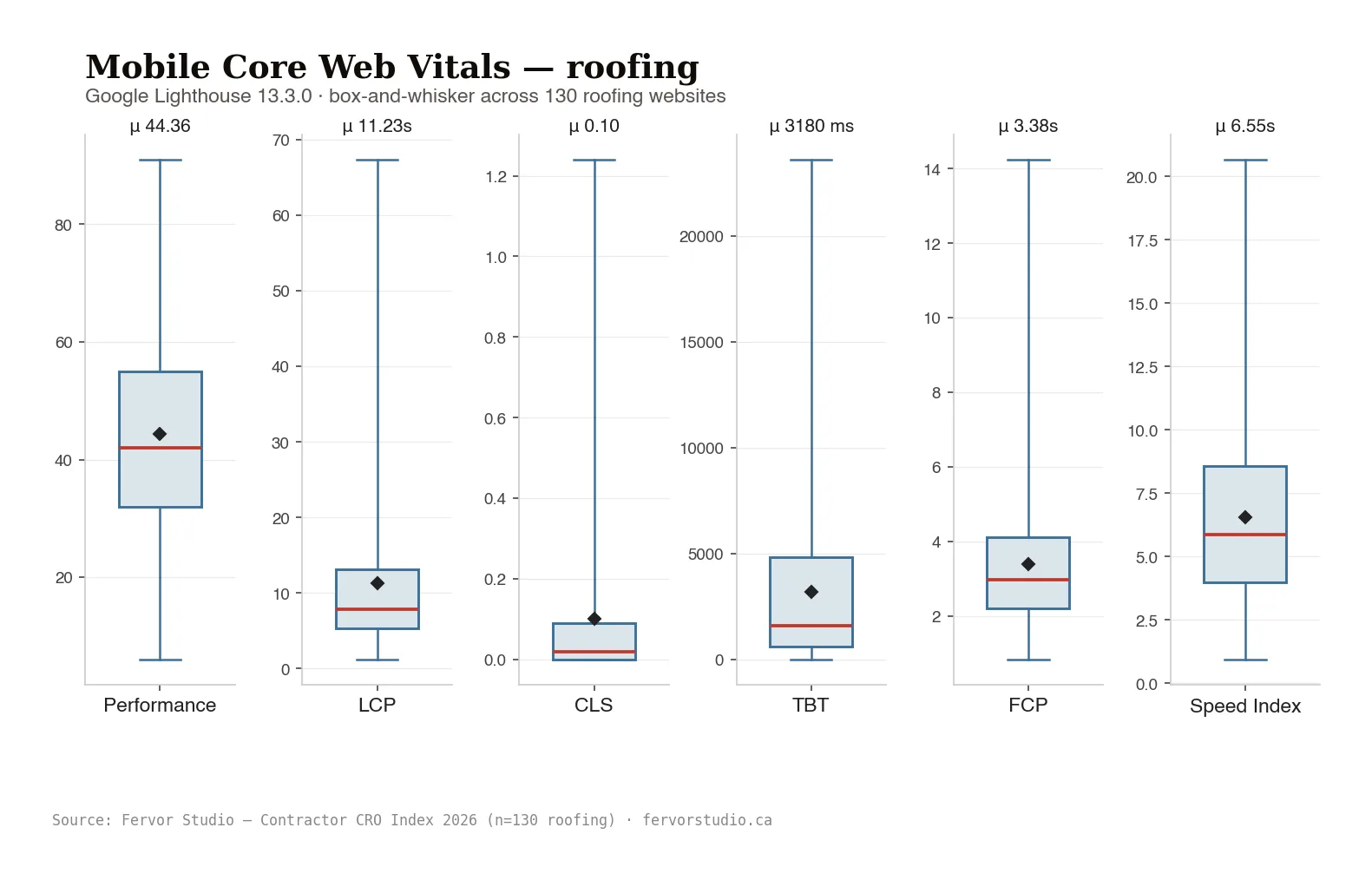
miss Google's mobile load-speed bar
Median mobile load lands at 7.88 seconds. Most of your traffic is on a phone, and most of them are gone before the hero paints.
Fervor Roofing State of the Industry, 2026
0 /100
is the average roofing grade
That is a D. The sites booking the work are not the ones with the biggest crews. They are the ones a few points higher on the things homeowners feel.
Two ways to start
Tell us where you are. We point you at the right next step — no sales call to get there.
Client review
“Nay did an amazing job, you know. He was really patient. He got the work done the way I told him and he was just on point with the website. Pretty straightforward process. No going around the bush. He just did amazing work and I would 100% recommend.”
How Fervor can help
Complete website system built to convert storm leads, planned projects, and research-phase homeowners into booked jobs.
Identify and patch the top conversion killers on your existing site. No full rebuild needed.
Monthly SEO, content, and CRO. Fixed deliverables. No credits, no rollover. The compound growth engine.
GBP optimization, citation building, and review system foundation. The infrastructure that gets you into the Map Pack.
One conversion-built landing page for the referrals, paid clicks, and cold-call leads you send. They land on a page built to book them, not your generic homepage.
Your move
Tell us where you are. We point you at the right next step — no sales call to get there.
Keep going