What we found on trex.com
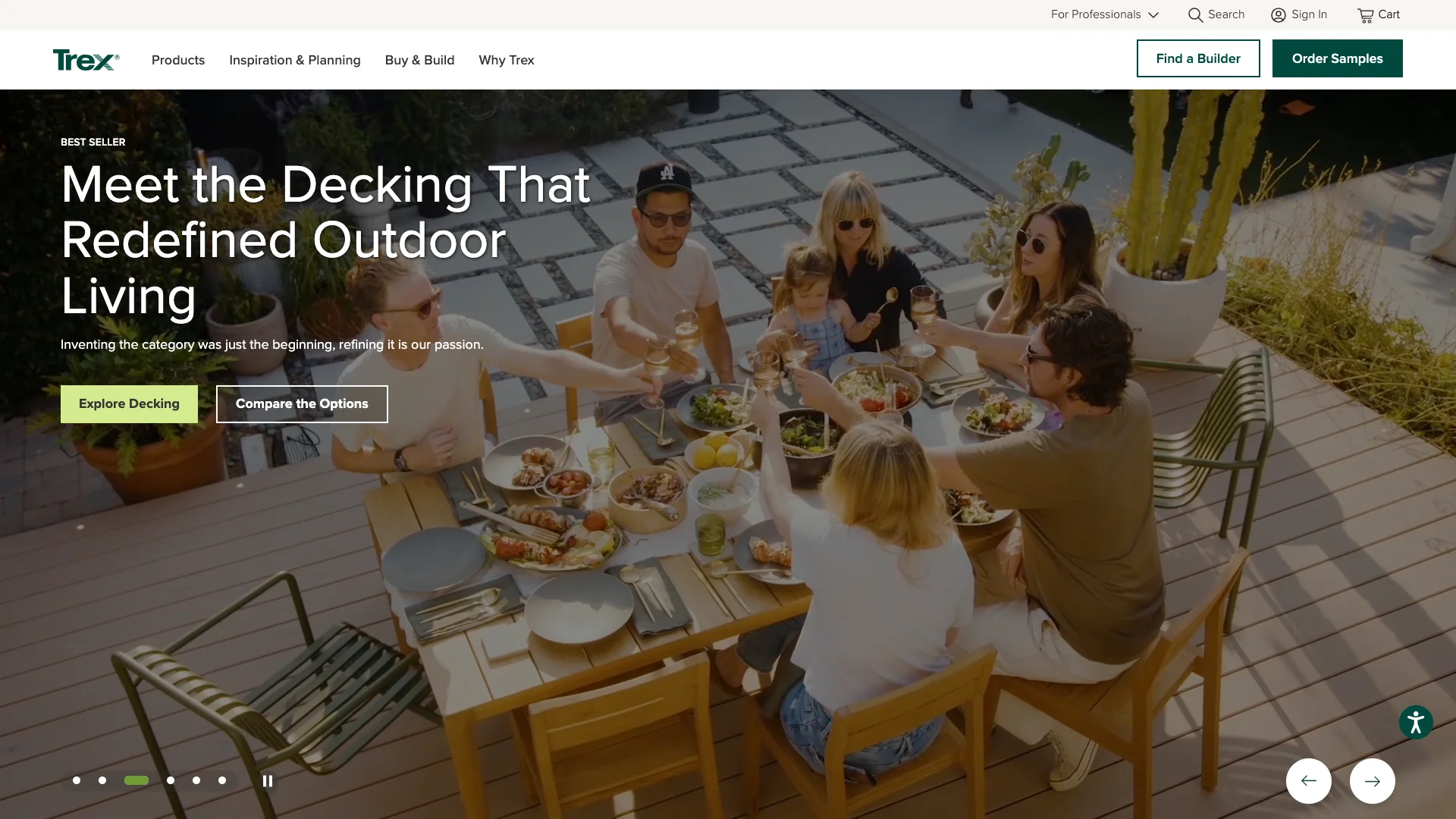
Trex is a publicly traded company (NYSE: TREX) that manufactures composite decking, railing, and outdoor living products. They don't install anything directly. They sell through Home Depot, Lowe's, independent dealers, and a network of TrexPro certified contractors. According to Ahrefs, the domain pulls 436.2K monthly organic visitors with an estimated traffic value of $312.4K. And the homepage leads with lifestyle imagery and two CTAs: "Find a Builder" and "Order Samples."
So we ran their site through our standard teardown protocol. Three pages. PageSpeed Insights API for performance. Manual form-field counts. Trust signal audits. Navigation structure analysis. And one of the numbers that came back was a 5.
Not 50. Not 35. Five. Out of 100. On a page that gets 15,100 monthly organic visitors.
The pages we tore down:
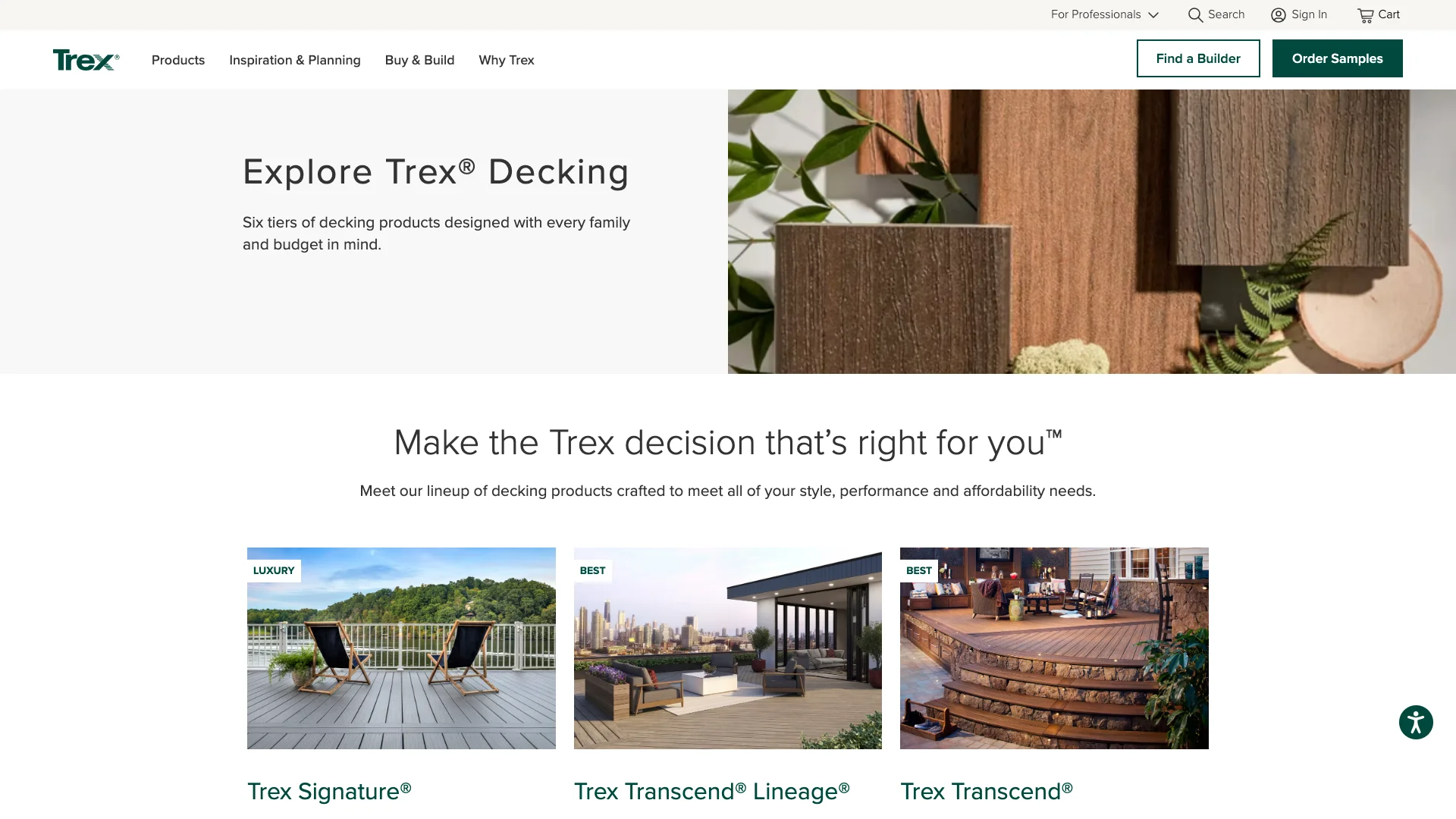
- /products/decking/ — their main product catalog (70.1K monthly organic visitors, 18% traffic share)
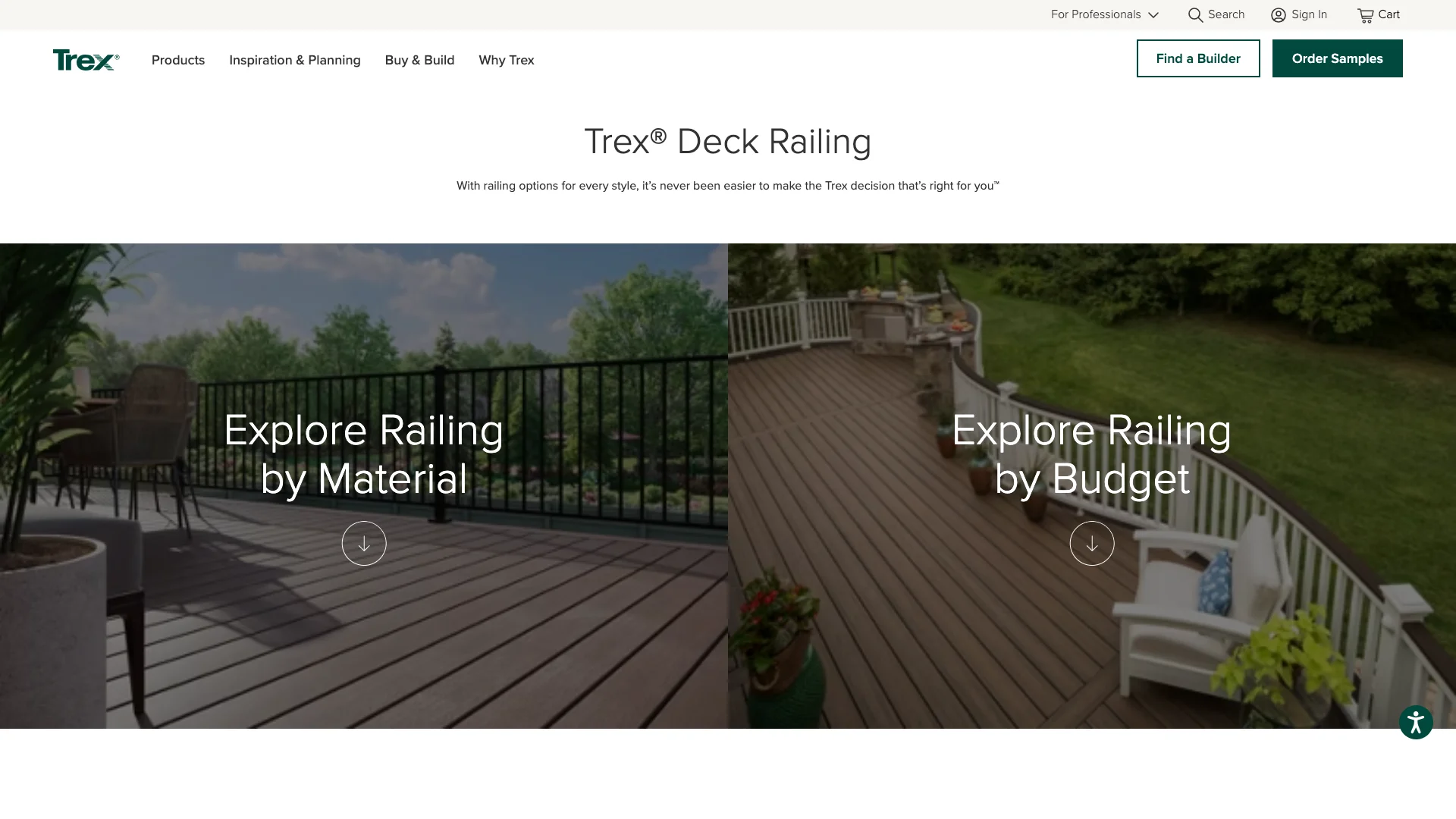
- /products/railing/ — the railing product page (19.9K monthly organic visitors, 5% traffic share)
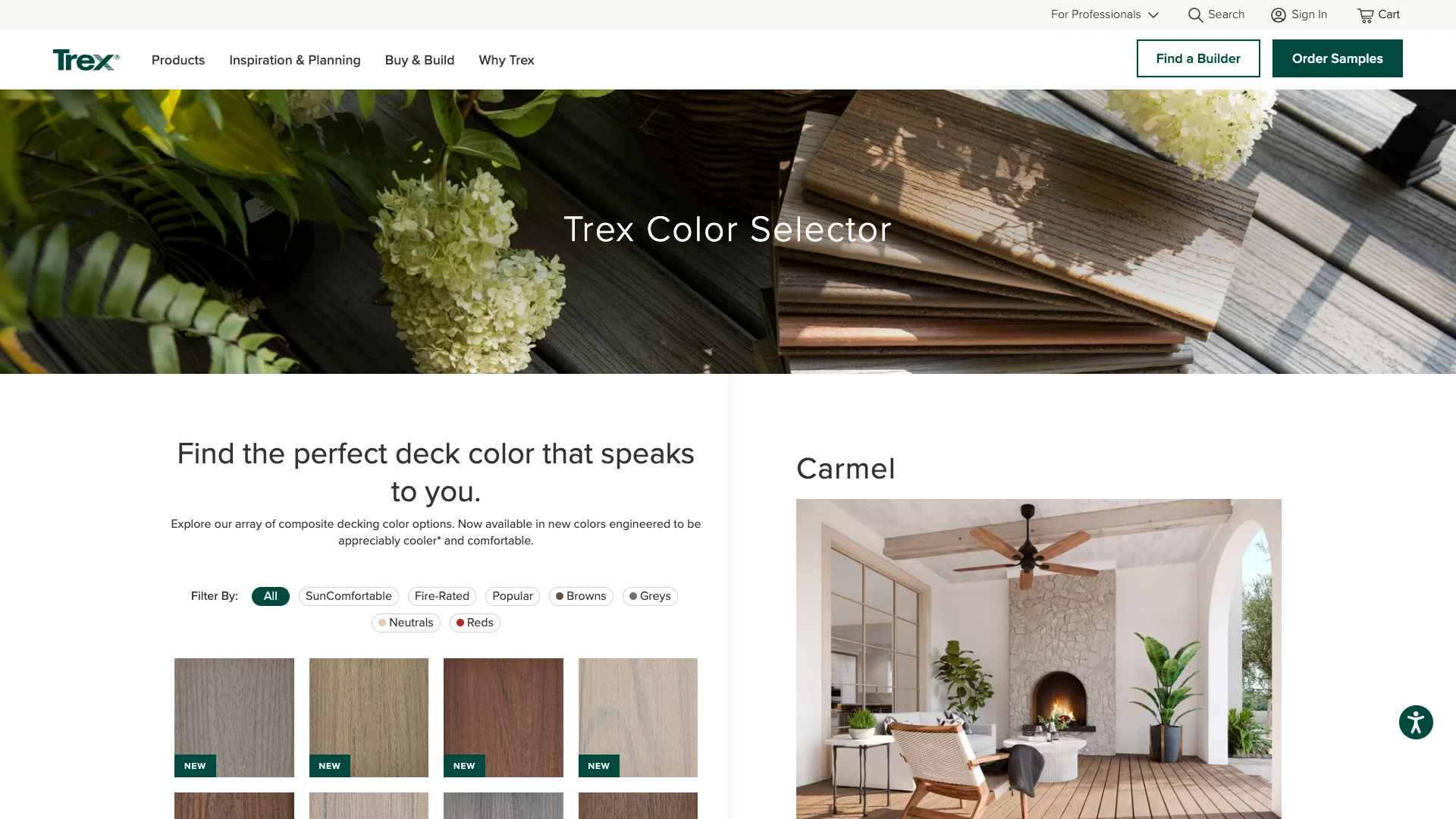
- /deck-ideas/colors/ — the color selector tool (15.1K monthly organic visitors, 4% traffic share)
"Nearly two-thirds of homeowners hire a pro for their outdoor project (65%)."
— Houzz Inc. (2024)
Performance: 5 to 29 out of 100
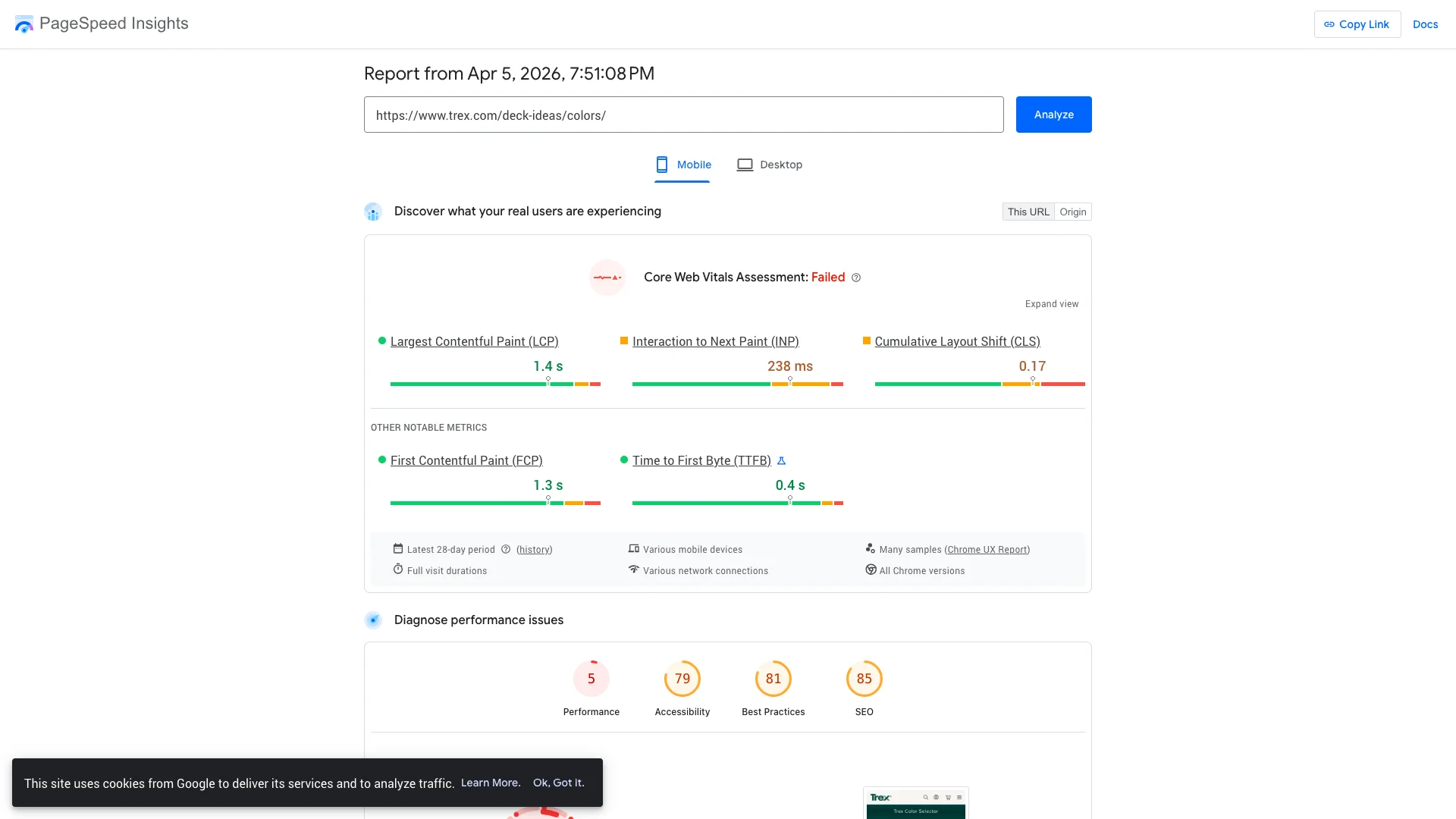
Colors page (/deck-ideas/colors/): Performance score 5/100. LCP of 8.5 seconds. FCP of 6.5 seconds. CLS of 0.600 — that's 24 times the threshold Google considers "good" (0.025). TBT of 3,195ms. Speed Index of 19.8 seconds. This is the page where homeowners pick their deck color. And on a first visit with a mid-range phone, the layout shifts so violently it scores a 0.6 CLS. That's not a subtle shimmy. That's the page rearranging itself while you're trying to tap.
Decking page (/products/decking/): Performance score 28/100. LCP of 36.4 seconds. FCP of 14.3 seconds. TBT of 1,807ms. This is Trex's highest-traffic page — 70,100 monthly organic visitors — and the main content doesn't render for over half a minute on mobile.
Railing page (/products/railing/): Performance score 29/100. LCP of 29.0 seconds. FCP of 6.5 seconds. TBT of 1,507ms. CLS of 0.027.
"53% of mobile users abandon sites that take longer than 3 seconds to load."
— Google / SOASTA (2017)
These are Lighthouse lab scores — simulating a first-time visitor on a throttled mobile connection. Returning visitors benefit from cached assets and CDN proximity. But if you're a homeowner who just searched "composite decking" and clicked through for the first time? You're getting the lab experience. And the lab experience is a 5.
Form design: 9 fields on every product page
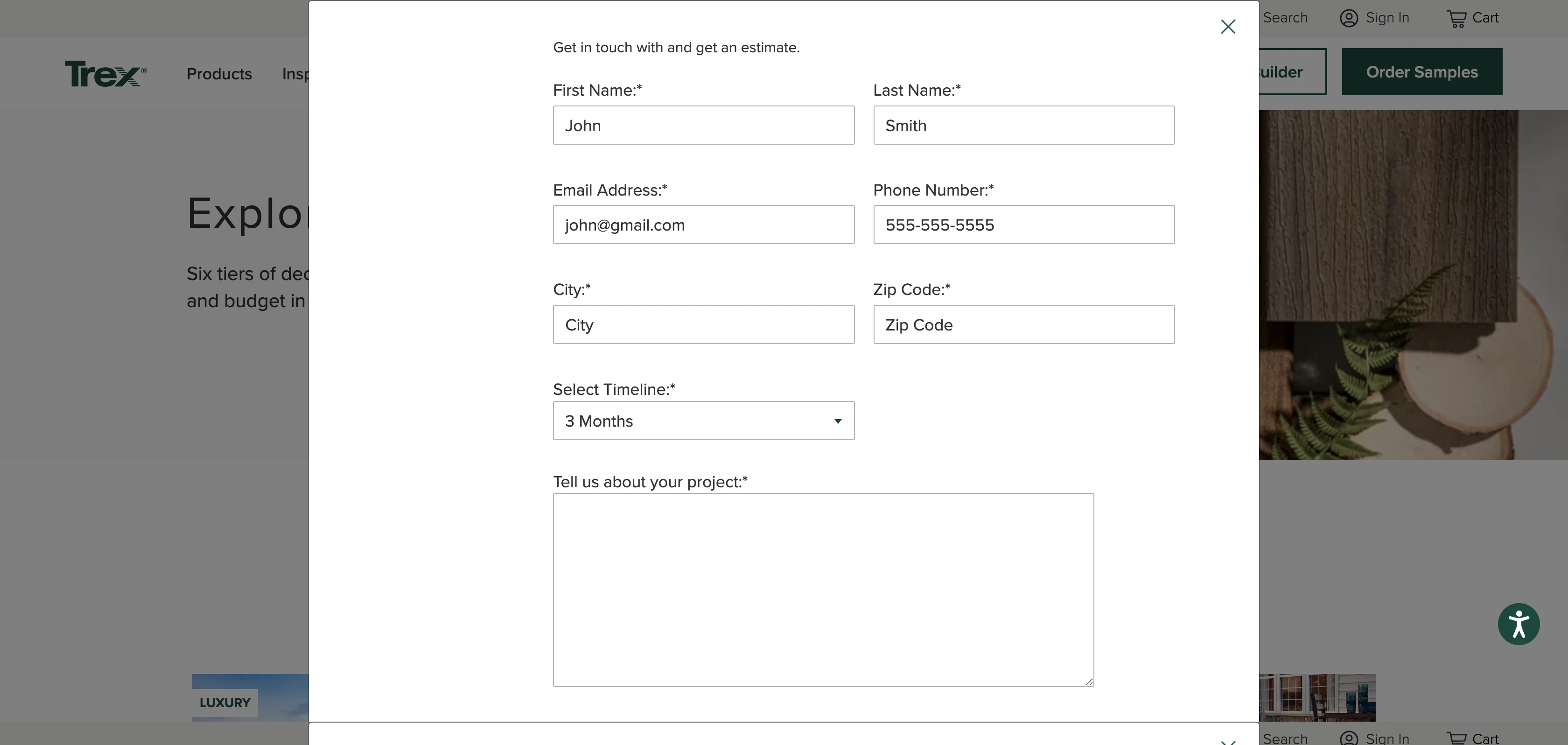
Every product page on trex.com carries the same form: a "Request a Quote" popup with 9 fields. First name, last name, email, phone, city, zip code, a message textarea, and a select dropdown. Plus reCAPTCHA. That's consistent. And it's too many fields for a homeowner who just wants a ballpark price on composite decking.
But here's the thing — Trex doesn't install decks. They're a manufacturer. So the "Request a Quote" form routes to their dealer/contractor network, not to an internal sales team. The homeowner fills out 9 fields, then Trex's system matches them with a local TrexPro contractor. That's a warm lead handoff. And the form sits behind a button click, not above the fold.
"68% of users would not submit a form if it required too much personal information."
— Baymard Institute (2024)
Trust signals: not found
Across all three pages we tore down, the trust signal inventory came back the same. No BBB badge. No Google Reviews widget. No review count displayed. No trust badges. No certifications visible on the product pages.
The review widget field returned "NOT_FOUND" on every product page we checked. No badge element, no widget, no visible indicator of third-party trust on the pages pulling the most traffic.
This matters because Trex doesn't sell direct. They're asking homeowners to trust their product enough to find a local dealer or TrexPro contractor. But the product pages — the ones pulling 70,000+ monthly visitors — don't show a single piece of social proof. No star rating. No "trusted by X homeowners." No warranty badge. Nothing that says "other people bought this and were happy."
Comparison
"97% of consumers read reviews when browsing for businesses online. 41% 'always' read reviews, up from 29% in 2025."
— BrightLocal (2026)
And the accessibility scores add context. The colors page scored 79/100 on accessibility — images missing alt attributes, buttons without accessible names, heading order violations. The decking and railing pages both scored 86/100. For a company that manufactures a physical product that people need to visualize before buying, missing alt text on product images is a missed opportunity for both accessibility and SEO.
What Trex does well
A teardown that only lists problems isn't useful. Trex gets several things right, and if you're a local deck builder, these are worth studying.
Product merchandising. The decking page presents product tiers with clear naming, lifestyle imagery, and descriptions across 3,557 words of content. The color selector tool — despite its 5/100 performance score — gives homeowners a visual browsing experience that most contractor sites don't even attempt.
Dual conversion paths. "Find a Builder" and "Order Samples" appear in the nav on every page. One path serves the research-mode homeowner (samples). The other serves the ready-to-hire homeowner (builder). Most contractor sites offer one CTA. Trex offers two, matched to different intent stages.
Content depth. The decking page has 3,557 words. The colors page has 3,739. The railing page has 2,209. And all three carry FAQ schema markup. That's serious content investment for a manufacturer site. The pages aren't thin product listings. They're reference resources.
Internal linking structure. The decking page has 191 internal links. The railing page has 193. The colors page has 204. That's a dense web of cross-links between products, inspiration content, and conversion tools. Good for SEO. Good for keeping homeowners moving through the site.
Spending
"In 2024, 14% of renovating homeowners undertook deck upgrades, with a median spend of $4,000."
— Houzz Inc. (2025)
What the gaps mean for local deck builders
Trex is a manufacturer. You're an installer. That distinction matters more than you might think — because Trex's website gaps are your structural advantages.
Performance is free differentiation. Trex's product pages score 5-29/100 on mobile performance. Their highest-traffic page takes 36.4 seconds to render. A properly built contractor site should score 85+. If your site loads in under 2 seconds and their product page takes half a minute, every homeowner who clicks from a Trex product page to your contractor profile just experienced the difference.
You own the trust signals. Trex's product pages have zero visible reviews, badges, or certifications. But you — the local installer — can display your Google review count, your BBB rating, your TrexPro certification, your license number, and your insurance details on every single page. The homeowner visits trex.com to pick their decking color. They visit your site to decide if they trust you to install it. And right now, Trex isn't helping with that second decision at all.
Shorter forms, faster path. Trex's "Request a Quote" form has 9 fields. Your lead form should have 3: name, phone, zip code. You're not routing leads through a manufacturer network. You're answering the phone yourself. Cut the friction.
Compounding effect
"Conversion rates drop approximately 12% for each additional second of page load time."
— Google / Deloitte (2020)
And there's a positioning angle here. 65% of homeowners hire a pro for their outdoor project (Houzz 2024). The median deck upgrade costs $4,000 (Houzz 2025). Younger homeowners are overrepresented — 65% of Millennials and 61% of Gen Xers versus 54% of Boomers participate in major outdoor improvements. Those younger homeowners are mobile-first, review-checking, fast-site-expecting buyers. And they're landing on a manufacturer's site that scores 5/100 on the page where they pick their color.
Your site doesn't need to beat Trex's content depth or their internal linking structure. It needs to beat their speed, their trust signals, and their form simplicity. That's a lower bar than you think.
Comparison
"Younger homeowners report higher participation in major structural outdoor improvements: 65% of Millennials and 61% of Gen Xers, compared with 54% of Baby Boomers."
— Houzz Inc. (2024)
Frequently asked questions

What is Trex's website performance score?
The colors page scored 5/100 on Google PageSpeed Insights (mobile) as of March 29, 2026. The decking page scored 28/100, and the railing page scored 29/100. These are Lighthouse lab scores run through the PageSpeed Insights API. LCP ranges from 8.5 seconds (colors) to 36.4 seconds (decking). CLS on the colors page is 0.600 — 24 times Google's "good" threshold.
How many form fields does Trex's website have?
Trex uses a consistent 9-field "Request a Quote" form across all product pages: first name, last name, email, phone, city, zip code, message textarea, and a select dropdown. The form includes reCAPTCHA verification. The nav also includes a "Find a Builder" CTA visible on all three pages we tested.
Can a local deck builder compete with Trex online?
Yes — but you're not competing with Trex. You're competing with other local installers for the homeowners Trex sends your way. Trex is a manufacturer. Their website drives product awareness, not installation bookings. Your site needs to convert the homeowner who already picked Trex decking and now needs someone to build it. A fast site (85+ performance), visible reviews, a 3-field contact form, and your TrexPro certification badge on every page is enough to beat any local competitor who doesn't have those basics in place.
How much organic traffic does trex.com get?
According to Ahrefs data from our March 2026 collection, trex.com receives approximately 436.2K monthly organic visitors with an estimated traffic value of $312.4K. Their decking page accounts for 70.1K of that (18% share), the railing page accounts for 19.9K (5%), and the colors page accounts for 15.1K (4%).