What we found on blueravensolar.com
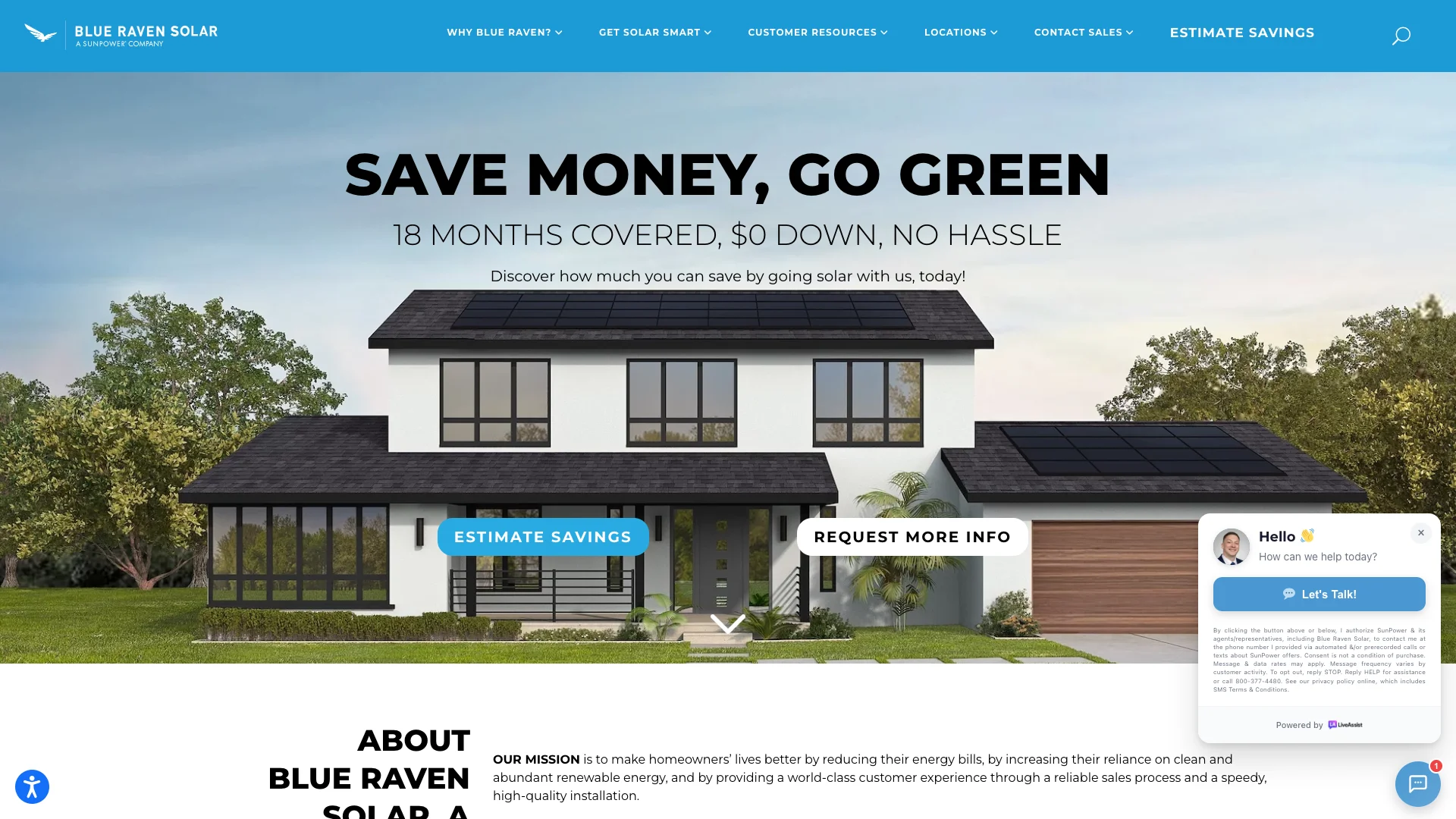
Blue Raven Solar is a residential solar installer operating across multiple states. According to Ahrefs, blueravensolar.com pulls 18.1K monthly organic visitors with an estimated traffic value of $44.9K. That puts them in the mid-tier for solar brands in the CRO Index. Not the biggest. Not the smallest. But the trust signal setup tells a story worth paying attention to.
The pages we tore down:
- Renewable blog, a content page covering solar energy topics (918 monthly organic visitors, 5% traffic share)
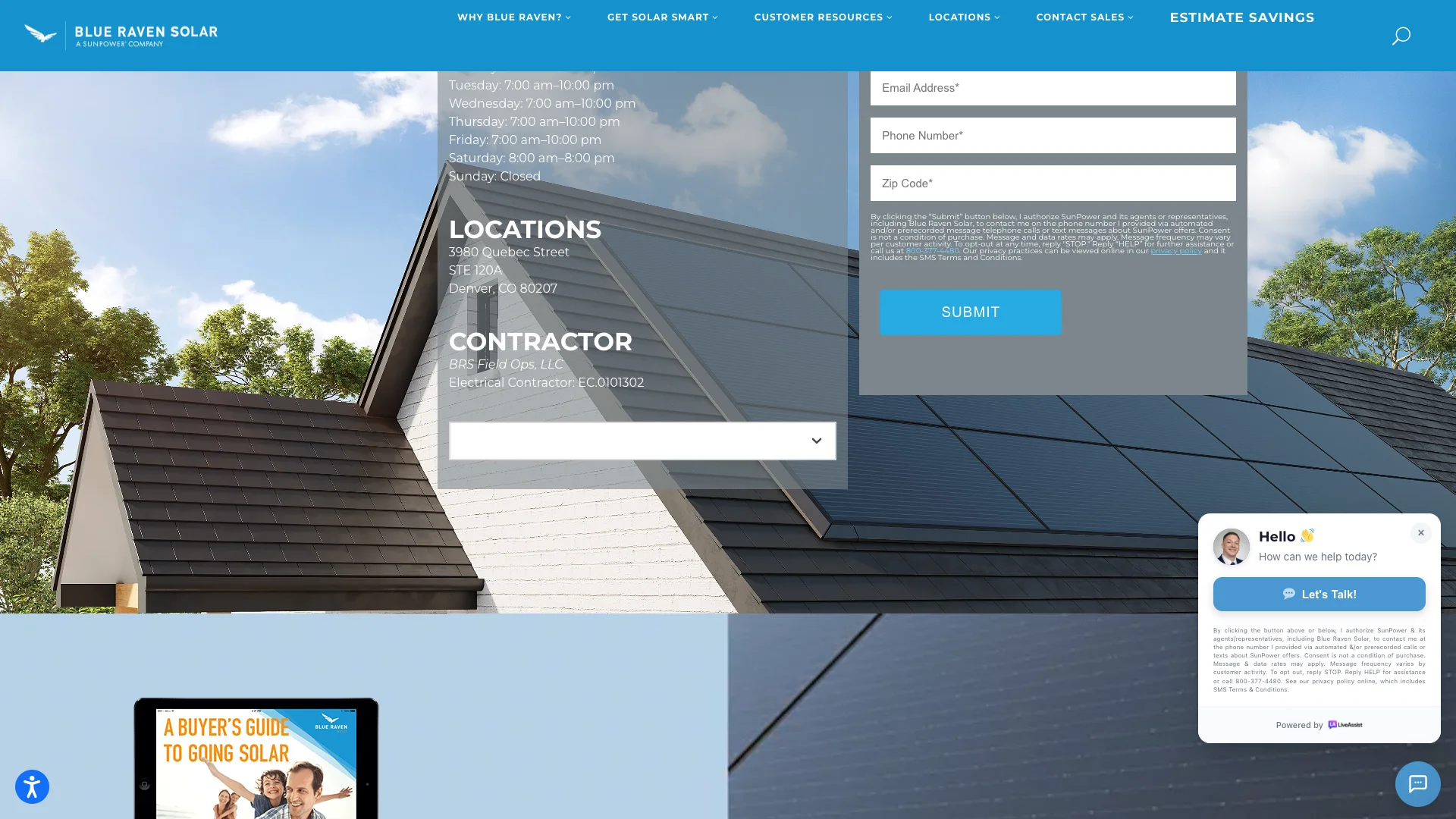
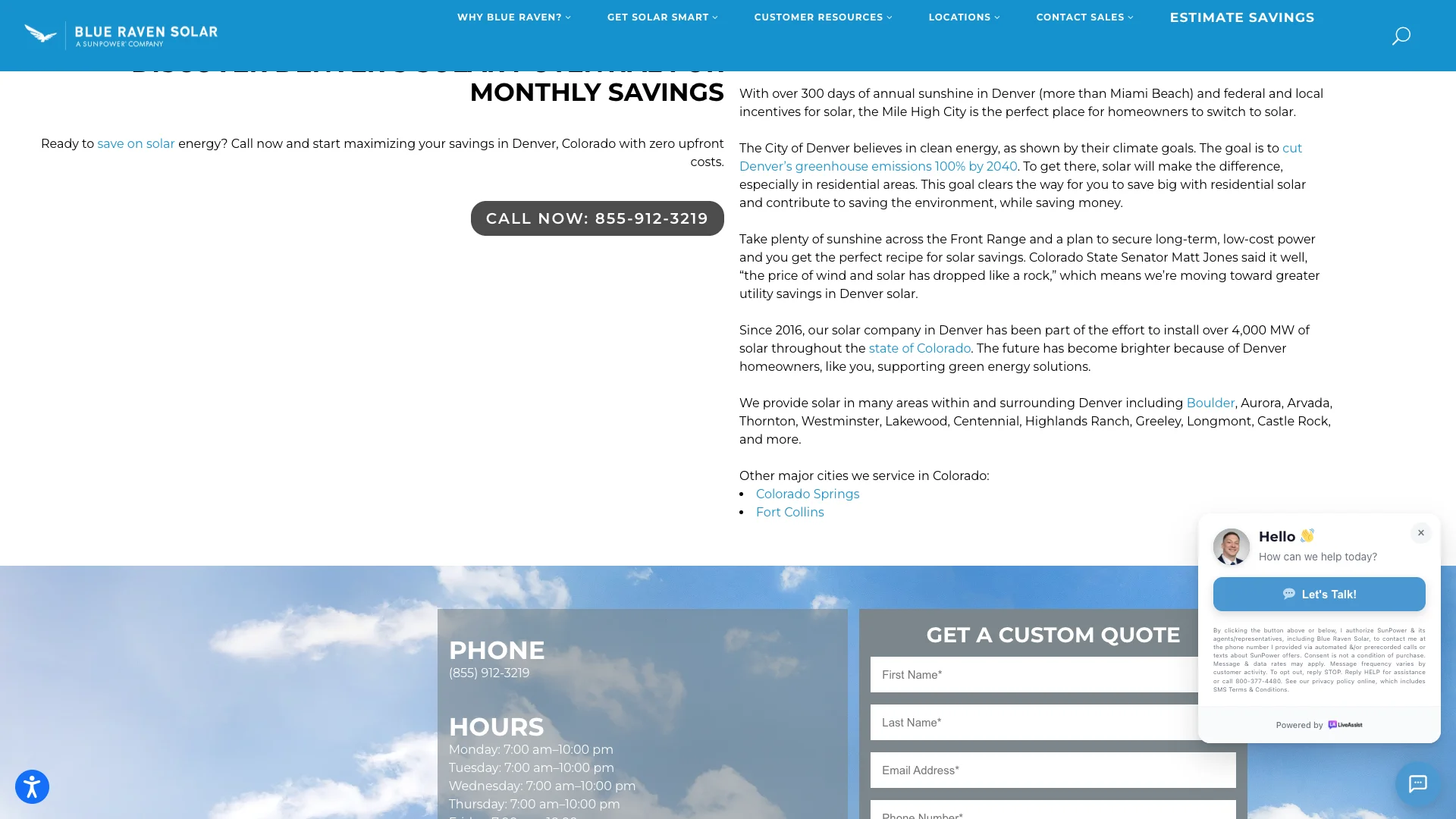
- Denver location page, the Colorado market landing page (399 monthly visitors, 2% share)
- Portland location page, the Oregon market landing page (388 monthly visitors, 2% share)
And the pattern across all three pages is consistent. Google Reviews are present on every page. Trust badges show up on both location pages. Forms are everywhere (2 on the blog, 3 on each location page). Layout stability is essentially perfect. But Google's mobile lab test scores sit between 31 and 38. So the trust side is strong. The speed side is dragging everything down.
"25% of homeowners say trusting contractors is their top challenge when planning home improvement projects."
— Houzz Inc. (2025)
Performance: 31 to 38 on Google's mobile lab test
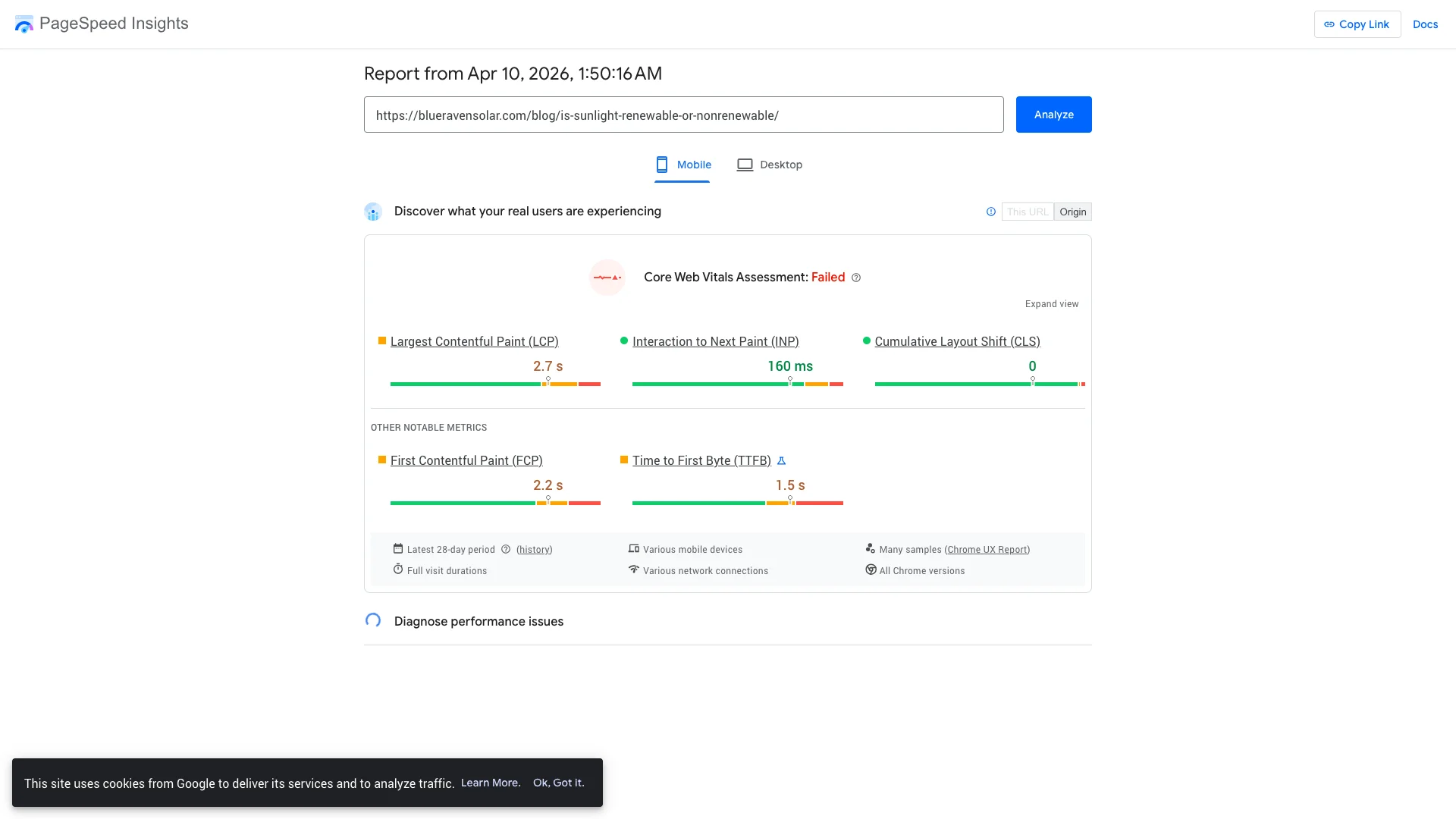
Google PageSpeed Insights runs a simulated slow-phone lab test. The scores are worst-case, not what you see on your phone at home. But Google uses them as a ranking factor in search results, and that makes them matter whether you agree with the methodology or not.
The renewable blog scored 38 out of 100. The Denver location page scored 31. The Portland location page scored 35. All three are deep in the red zone. Every single page is eating a search-ranking penalty because of these scores.
"53% of mobile users abandon sites that take longer than 3 seconds to load."
— Google / SOASTA (2017)
But layout stability is where Blue Raven separates from many larger brands. The renewable blog scores 0.000 on layout shift. The Denver page scores 0.001. The Portland page scores 0.001. Content doesn't jump around at all as these pages load. That's the performance metric homeowners actually feel on their devices, and Blue Raven nails it.
So the speed problem isn't structural. The pages aren't shifting or breaking. They're just heavy. Tracking scripts, widget embeds, image files that could be smaller, fonts that load before the page renders. All of that is fixable. A focused sprint on image compression, script deferral, and font optimization could move these scores from the low 30s into the 70s without touching the layout or the trust signals.
Compounding effect
"Conversion rates drop approximately 12% for each additional second of page load time."
— Google / Deloitte (2020)
Lead capture: 2 to 3 forms per page
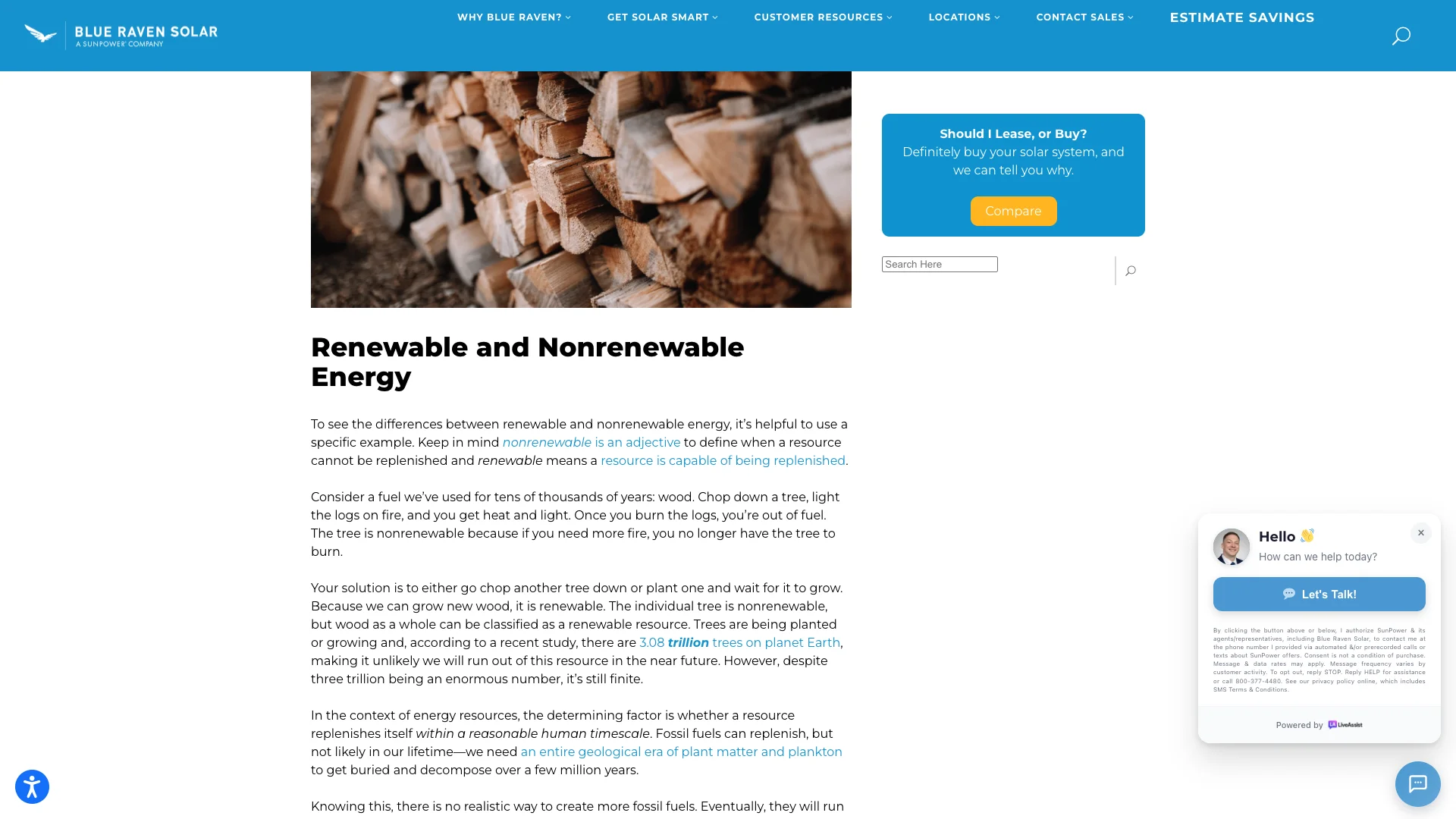
The form inventory on Blue Raven Solar is stronger than most brands in the CRO Index. The renewable blog has 2 forms. The Denver and Portland location pages each have 3 forms. That gives a homeowner multiple chances to leave their information on every page they visit.
And that matters because solar is a high-consideration purchase. A homeowner reading about renewable energy or browsing a local market page isn't ready to call immediately. They want to compare. They want to think about it. A form that captures name, email, and zip code gives them a low-commitment way to start the conversation. Blue Raven provides that path on every tested page.
"68% of users wouldn't submit a form if it required too much personal information."
— Baymard Institute (2024)
The question isn't whether the forms exist. They do. The question is whether the page speed is killing the conversion rate before a homeowner ever reaches the form. With Google mobile scores in the low 30s, a meaningful percentage of visitors are bouncing before the page finishes loading. Those visitors never see the form. They never see the reviews. They leave and try the next result. So the form strategy is solid. The delivery mechanism (a slow page) is undermining it.
Trust signals: reviews everywhere, badges on location pages
The trust signal audit across all three pages:
- Google Reviews: Present on all three pages.
- Trust badges: Present on Denver and Portland location pages. Not on the renewable blog.
- Chat widget: Not found.
- BBB badge: Not found.
- Certifications: Not found.
- Review widgets: Not found beyond Google Reviews.
Google Reviews on every page is the headline. Most solar brands in the CRO Index don't have reviews rendering at all. Sunrun (179K visitors) has zero reviews on its tested pages. Blue Raven, with a fraction of that traffic, puts reviews in front of every visitor. That's a meaningful trust advantage.
Comparison
"83% of consumers use Google to find local business reviews; 74% use two or more review platforms when researching."
— BrightLocal (2025)
Trust badges on the location pages but not the blog is a common pattern. Location pages are closer to the conversion point (a homeowner looking at "solar in Denver" is further along than one reading a general renewable energy article). So placing badges where buying intent is highest makes sense. But adding them to the blog wouldn't hurt. A homeowner who finds the blog through search and sees badges right away is more likely to keep reading and eventually reach a form.
What Blue Raven Solar does well
Blue Raven gets a few things right that bigger solar brands in this series miss entirely.
Google Reviews on every page. Not just the homepage. Not just one location page. Every tested page renders Google Reviews for homeowners to see. In a category where trust is the top challenge homeowners report, putting social proof on every page is the right move. And most solar brands aren't doing it.
Multiple forms per page. Two on the blog, three on each location page. That means a homeowner doesn't have to scroll back to the top or hunt for a "contact us" link. The form meets them where they are on the page. It's a small thing that adds up across thousands of visitors.
Clean layout stability. 0.000 to 0.001 across all three pages. Content doesn't jump around as the pages load. The homeowner experience feels stable and predictable even before the page fully finishes rendering. Compare that to brands with layout shift scores above 0.1 (content jumping around enough to be visible and annoying) and Blue Raven looks polished.
"64% of homeowners say having recommendations or references is a top-three factor in choosing a contractor."
— Houzz Inc. (2025)
What the gaps mean for solar contractors
Blue Raven has the trust side figured out. If you're a solar contractor, the lessons from this teardown are about what happens when you build trust signals correctly but let page speed fall behind.
Fix the speed before adding more content. Blue Raven's pages have reviews, badges, and forms. But they're loading slowly enough to eat a ranking penalty on every page. For any solar contractor in the same situation (trust signals done, scores in the 30s), the highest-leverage move is speed optimization. Compress images. Defer scripts that don't need to load immediately. Cut tracking pixels you aren't checking. Getting from 31 to 75+ on Google's mobile lab test is the fastest way to unlock more organic traffic from the rankings you've already earned.
Add trust badges to your blog pages too. Blue Raven has badges on location pages but not the blog. If a homeowner finds your blog through a Google search, that's their first impression of your company. Badges on that page tell them immediately that you're legitimate. It doesn't require a redesign. Just add the badge row to your blog template.
"48% of customers say that if a site does not work well on mobile, it signals the company does not care about their business."
— Google Consumer Insights (2018)
Consider adding a chat widget. Blue Raven has forms and a phone number, but no chat widget on the tested pages. Some homeowners don't want to fill out a form. They don't want to call. They want to type a quick question and get a fast answer. A chat widget gives you a third conversion path that catches the visitors the forms and phone number miss.
Copy the reviews-on-every-page approach. If you're a solar contractor and your reviews only show on the homepage, you're missing the majority of your traffic. Blog posts, location pages, and service pages all benefit from showing Google Reviews. Blue Raven does this. You should too.
Frequently asked questions
How does Blue Raven Solar score on Google's mobile test?
The renewable blog scored 38 out of 100 on Google PageSpeed Insights mobile. The Denver location page scored 31. The Portland location page scored 35. All three are in the red zone and eating a search-ranking penalty. But layout stability is essentially perfect (0.000 to 0.001), so the pages don't jump around as they load.
Does Blue Raven Solar display Google Reviews?
Yes. All three tested pages returned Google Reviews as present. Trust badges are also present on the Denver and Portland location pages. The renewable blog has reviews but not badges. That puts Blue Raven ahead of most solar brands in the CRO Index for trust signal coverage.
How many forms does Blue Raven Solar have per page?
The renewable blog has 2 forms. The Denver and Portland location pages each have 3 forms. That gives homeowners multiple ways to leave their information on every page, which is stronger than most contractor sites in the CRO Index where you'll often find zero or one form.
How much organic traffic does blueravensolar.com get?
According to Ahrefs data from March 2026, blueravensolar.com receives approximately 18.1K monthly organic visitors with an estimated traffic value of $44.9K. The renewable blog accounts for 918 visitors (5% share). The Denver location page accounts for 399 (2%). The Portland location page accounts for 388 (2%).