Plumbing PPC: Pay-Per-Click Advertising for Plumbers

What plumbing PPC actually costs, which keywords book jobs, and where most plumbers' ad spend goes to waste. Real campaign math, not a sales pitch.

Page at a Glance

The actual math behind plumbing PPC — what clicks cost, which keywords convert to phone calls, and how to stop burning ad spend on searches that don't book jobs. Covers Google Ads structure, bid strategy, negative keywords, and landing page conversion for plumbing companies running $500K to $5M. Every number comes from live competitor campaigns, not a textbook.

Plumbing PPC: Pay-Per-Click Advertising That Actually Fills Your Schedule

Your phone should be ringing right now. Someone within 15 miles of your shop just typed "emergency plumber near me" into Google, saw three ads at the top of the page, and called the first one. If that ad wasn't yours, you just lost a $400 to $1,200 job to a competitor who understood plumbing PPC better than you do.

And that's the thing about pay-per-click advertising for plumbers — it's not complicated in theory. You bid on keywords. Google shows your ad. Someone clicks. You pay. But the gap between "running Google Ads" and "running Google Ads profitably" is where most plumbing companies hemorrhage money. We've audited plumber PPC accounts spending $3,000 to $15,000 a month with nothing to show for it except a vague sense that "digital marketing doesn't work." It does work. It just doesn't work the way most plumbing companies set it up.

This page breaks down how plumbing pay per click actually functions when it's built correctly — from keyword architecture to bid strategy to the landing page mechanics that turn clicks into booked calls. Not theory. Not hype. The operational reality of what separates a plumbing PPC campaign that prints money from one that burns it.

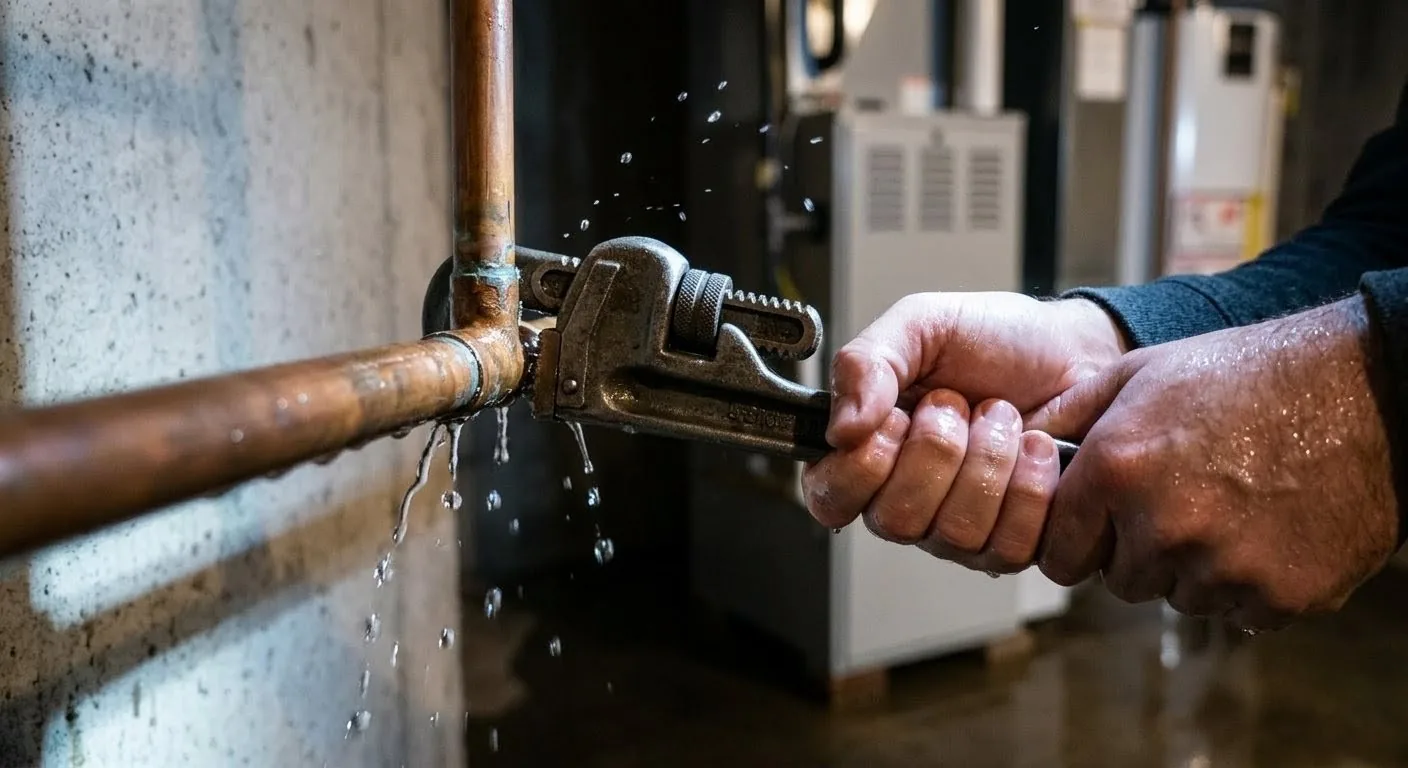
Plumber using pipe wrench on leaking copper pipe in basement

Why Plumbing PPC Demands a Different Approach Than Other Industries

Plumbing isn't e-commerce. You're not selling a product someone can compare across twelve tabs and buy next Tuesday. You're selling an emergency response or a scheduled service to a homeowner who needs the problem fixed — ideally today, definitely this week. That urgency changes everything about how PPC for plumbers should work.

The buying cycle is compressed. Someone searching "water heater replacement near me" isn't browsing. They're standing in a cold shower or staring at a puddle in their basement. They want to call someone, confirm availability, and get it scheduled. Which means your ad, your landing page, and your phone answering process all need to operate on that same timeline. A 48-hour follow-up email sequence is worthless when the homeowner already booked with the plumber who answered on the second ring.

Revenue multiplier


"Phone calls convert to 10-15x more revenue than web leads for home services businesses."

BIA/Kelsey + Forrester (2025)

That stat isn't an exaggeration — it's the core mechanic of plumber PPC. Your entire campaign architecture should be designed to generate phone calls, not form fills. Not email sign-ups. Phone calls. Every dollar of ad spend that doesn't produce a phone call is a dollar that needs to be redirected or eliminated.

The Real Cost Structure of Plumber PPC Campaigns

Let's do some napkin math, because most plumbing companies have never actually calculated what a click is worth to them.

If your average job is $800 and you close 1 in 4 calls, each click that leads to a call is worth $200. But not every click leads to a call. If your landing page converts at 10% (which is realistic for a well-built plumbing page), then 1 in 10 clicks produces a call. That means each click is worth $20 in expected revenue. So if you're paying $15 per click on "plumber near me," you're profitable. If you're paying $35 per click on a poorly targeted keyword with a 4% conversion rate, you're underwater.

Cost per click in plumbing varies wildly by market. In a mid-size city, you might pay $8 to $25 per click on core plumbing terms. In major metros — Phoenix, Houston, Atlanta — competitive emergency keywords can get expensive fast. But cost per click is the wrong number to obsess over. Cost per booked job is the only metric that matters. A $40 click that books a $2,500 sewer line replacement is a bargain. A $6 click that goes to a generic homepage and bounces is just waste.

Keyword Architecture for Plumbing PPC Campaigns

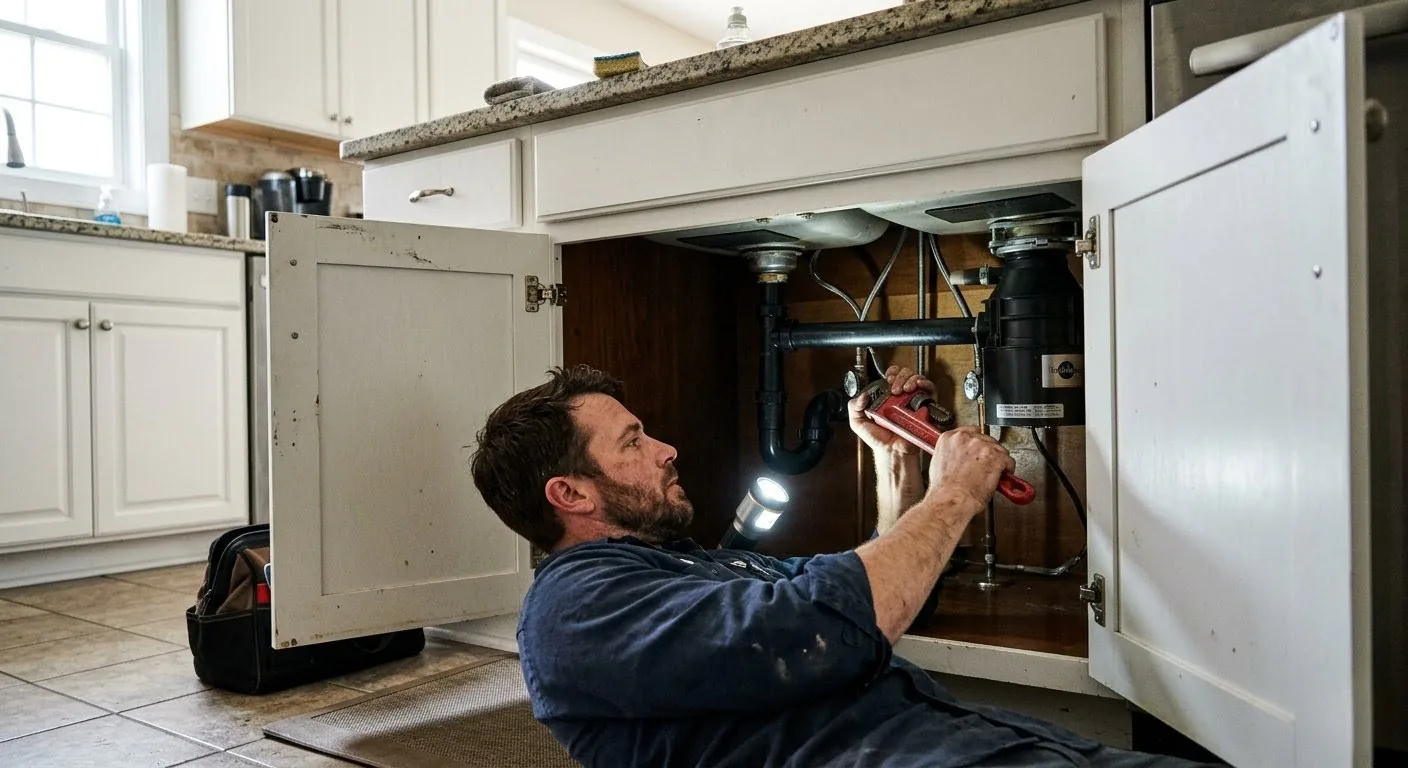
Plumber working under kitchen sink with headlamp and tools

Most plumber PPC accounts we audit have the same structural problem: everything is dumped into one or two campaigns with broad match keywords and a prayer. That's not a strategy. It's a donation to Google.

Effective plumbing PPC keyword architecture starts with intent segmentation. Not all searches are equal, and your bids shouldn't treat them like they are.

Emergency Keywords (Highest Intent, Highest Value)

"Emergency plumber," "burst pipe repair," "24 hour plumber near me," "flooding basement plumber." These searchers have an active crisis. They'll call the first credible ad they see. You bid aggressively here because the close rate is enormous. But you also need to answer the phone — which sounds obvious until you realize how many plumbing companies run emergency PPC ads and send callers to voicemail after 5 PM.

Comparison


"18% of home services calls go unanswered on weekdays, while 41% go unanswered on weekends."

Invoca (2025)

So 4 out of 10 weekend calls . when emergency plumbing demand spikes . just ring into nothing. That's not a PPC problem. That's an operations problem that makes your PPC investment worthless.

Service-Specific Keywords (High Intent, Targeted Value)

"Water heater installation," "sewer line repair," "tankless water heater cost," "sump pump replacement." These searchers know what they need. They're comparing options. Your ad copy and landing page need to speak directly to that specific service with pricing signals, timeframe expectations, and a clear call to action. One generic "we do all plumbing" page for these keywords is leaving money on the table.

Research Keywords (Lower Intent, Lower Bid)

"How much does a plumber cost," "signs of a slab leak," "when to replace water heater." These are informational queries. The searcher isn't ready to book today. You can bid on them at lower rates for brand awareness, but don't expect the same conversion rate. And don't blow your budget here when emergency and service-specific keywords are available.

Negative Keywords: The Most Ignored Lever in Plumber PPC

Here's a tangent that'll save you real money: negative keywords might be the single most impactful optimization in any plumbing PPC account, and almost nobody maintains them properly.

Without negative keywords, your "plumber" ads show up for "plumber salary," "plumber apprenticeship," "plumber jobs hiring," "plumbing school near me," and "DIY plumbing repair." None of those people are going to hire you. But you're paying for every click. We've seen plumber PPC accounts where a significant chunk of total clicks were on irrelevant searches because the negative keyword list hadn't been updated in months.

Build your negative keyword list before launch, then review your search terms report weekly for the first 60 days, and at least twice a month after that. Common negative keywords for plumbing campaigns include: jobs, hiring, salary, school, apprentice, DIY, free, how to, license, exam, training, and wholesale.

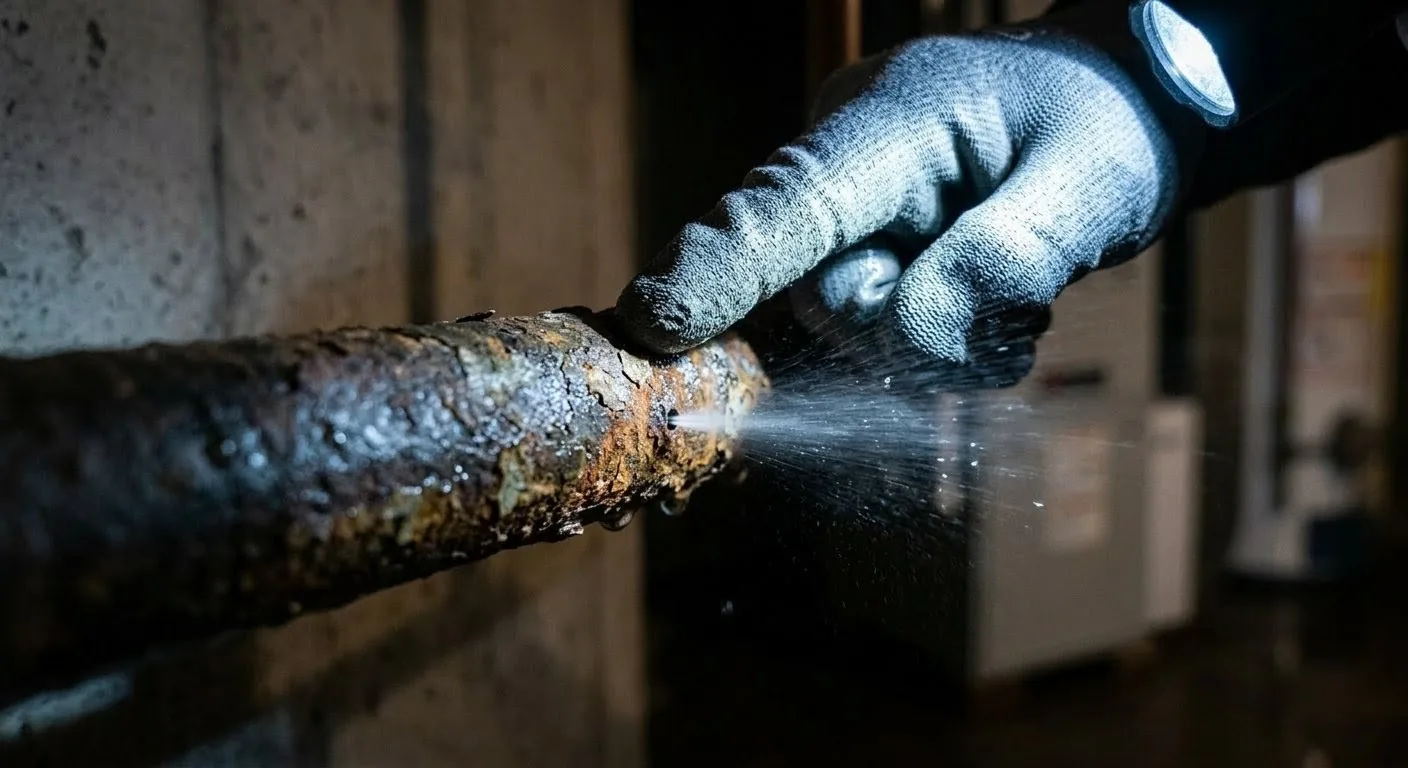
Plumber inspecting corroded pipe with flashlight in basement

A plumbing PPC campaign structure that performs looks nothing like the default setup Google Ads suggests. Google's "smart" recommendations are optimized to get you spending more, not spending better. Here's what a well-built structure looks like:

Campaign Level: Separate by Service Category

Run separate campaigns for emergency services, water heater work, drain and sewer, general plumbing repairs, and new construction or remodels. Each campaign gets its own budget, its own bid strategy, and its own performance benchmarks. This prevents your $2,500-average sewer jobs from being starved of budget because your $150-average faucet repair campaign ate it all.

Ad Group Level: Tight Keyword Themes

Within each campaign, create ad groups around tight keyword clusters. "Tankless water heater installation" and "tank water heater replacement" should not be in the same ad group. They need different ad copy, different landing pages, and often different bid amounts. The tighter your ad groups, the higher your quality score, and the less you pay per click.

Quality score isn't just a vanity metric. A higher quality score on the same keyword means paying less per click. Over hundreds of clicks, the savings add up fast . or wasted . based entirely on how well your ad copy and landing page match the search intent.

Writing Ad Copy That Gets Plumbing Calls


Ad copy for plumber PPC follows a simple formula: match the search intent, signal credibility, and remove friction from calling. That's it. You don't need to be clever. You need to be clear and fast.

For emergency keywords, your headlines should include: the service they searched for, your response time ("Same-Day Service" or "Available Now"), and your phone number via call extensions. The description should mention licensing, years in business, and any guarantee. Don't waste character count on "We're a family-owned business that cares about your home." That's noise. The searcher wants to know if you can fix their problem today.

For service-specific keywords, include the specific service in Headline 1, pricing context in Headline 2 ("Free Estimates" or "Upfront Pricing"), and social proof in the description ("4.8 Stars, 600+ Reviews"). Every ad should have call extensions, location extensions, and sitelink extensions pointing to specific service pages.


Landing Pages: Where Most Plumbing PPC Money Dies

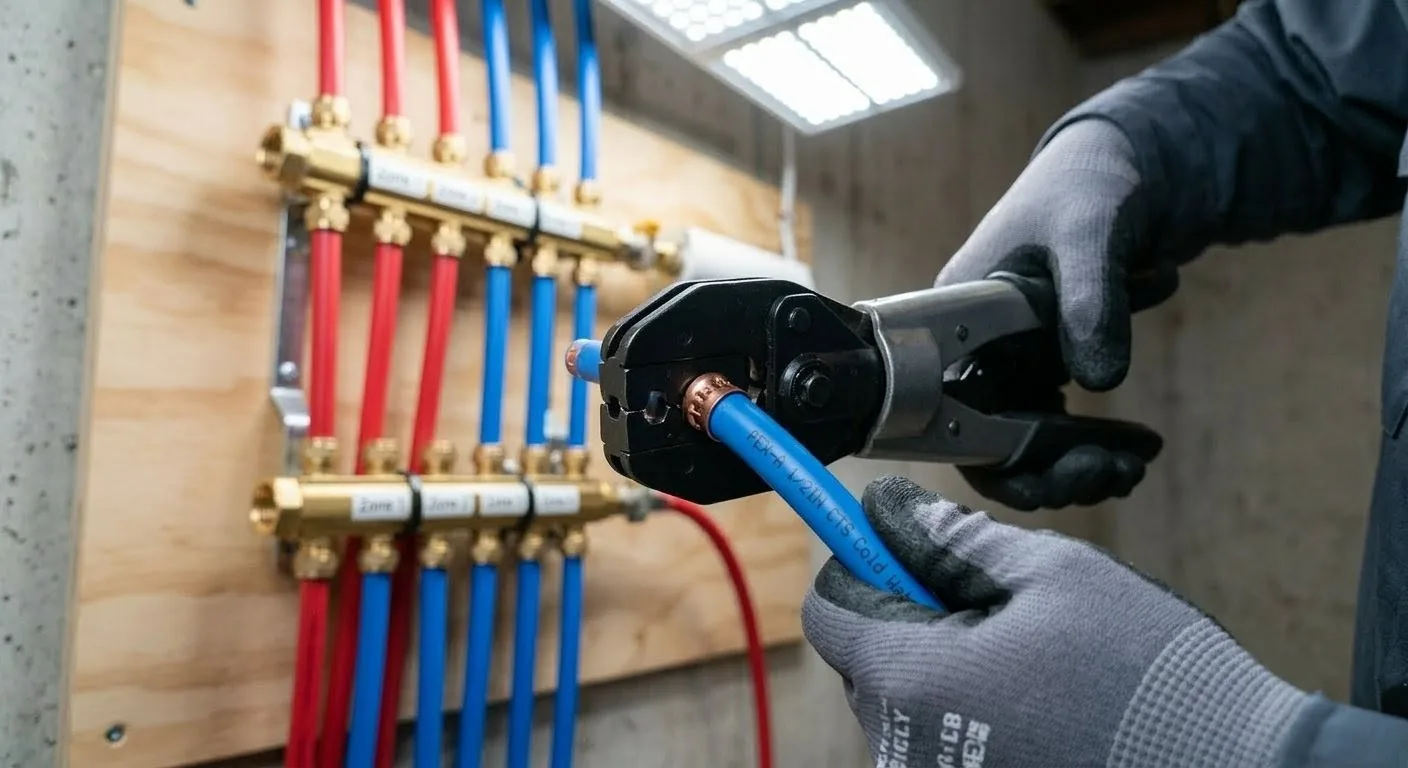
Plumber crimping PEX fitting on zoned manifold system

You can build the perfect keyword strategy, write compelling ad copy, bid optimally . and still lose money if your landing page doesn't convert. And for most plumbing companies, the landing page is the weakest link.

Sending PPC traffic to your homepage is the most common and most expensive mistake. Your homepage serves fifteen audiences. A landing page serves one. When someone clicks an ad for "water heater replacement," they should land on a page about water heater replacement . with pricing context, your process, a phone number above the fold, and nothing else competing for attention.

"40% of home services consumers who call from search make a purchase. Consumers searching for plumbing are most likely to call after making a search."

Google via Invoca (2025)

That 40% close rate only materializes when the landing page experience is smooth. If the searcher has to hunt for a phone number, Move through a confusing menu, or wonder whether you actually offer the service they searched for . they'll hit the back button and click your competitor's ad instead.

The Conversion Rate Mechanics of Plumbing Landing Pages

A landing page that converts well versus one that converts at 5% doubles your effective lead volume without spending a single additional dollar on ads. For a plumber spending $5,000 per month on PPC, that's the difference between 25 calls and 60 calls. Same budget. Different landing page.

Elements that move the needle on plumbing landing page conversion rate:

Phone number in the header, sticky on mobile. Not buried in a footer. Not hidden behind a "Contact Us" page. Visible within one second of landing. Clickable on mobile. This alone can swing conversion rate by 3 to 5 percentage points.

Service-specific headline matching the ad. If the ad said "Tankless Water Heater Installation . Same Day," the landing page headline should say "Tankless Water Heater Installation" . not "Welcome to ABC Plumbing." Message match signals relevance and reduces bounce rate.

Social proof above the fold. Star rating, review count, and one short testimonial. Not a link to a reviews page. The proof itself, visible without scrolling.

Clear pricing signals. You don't need exact prices. "Free estimates," "upfront pricing before work begins," or a starting-at price range all reduce the anxiety that makes people hesitate before calling.

No navigation menu. Seriously. Remove it. The only action you want on a PPC landing page is a phone call or form submission. Every other link is an exit ramp.

Call Tracking: The Infrastructure That Makes Plumbing PPC Measurable

If you're running plumber PPC without call tracking, you're flying blind. You know how much you spent. You know how many clicks you got. But you have no idea which keywords, which ads, or which landing pages actually generated phone calls. And since phone calls are the entire point of plumbing pay per click, that's a fatal gap.

Call tracking assigns unique phone numbers to each traffic source . or even each keyword . so you can trace every call back to the ad that generated it. This isn't optional infrastructure. It's the difference between optimizing your campaigns based on data and optimizing them based on gut feeling.

"84% of marketers report phone calls having higher conversion rates with larger average order value."

Invoca + Salesforce (2025)

Without call tracking, you can't calculate your actual cost per lead, your cost per booked job, or your return on ad spend. You also can't identify which keywords are producing $2,000 jobs versus which ones are producing tire-kickers asking for free quotes they'll never follow up on. The data from call tracking feeds back into every optimization decision . what to bid more on, what to cut, and what to A/B test next.

Bid Strategy: Manual vs. Automated Bidding for Plumbing Campaigns

Service technician checking dispatch notification between calls

Google wants you to use automated bidding. And for mature campaigns with strong conversion data, it can work. But for new or underperforming plumber PPC campaigns, automated bidding often makes things worse before it makes them better.

This is why: automated strategies like Maximize Conversions or Target CPA need data to learn. Google recommends at least 30 conversions per month for automated bidding to function reliably. If your plumbing campaign generates 15 conversions per month, the algorithm doesn't have enough signal to optimize effectively. It'll overspend on low-quality clicks while underbidding on high-value keywords.

The Practical Path Forward

Start with manual CPC or Enhanced CPC for the first 60 to 90 days. Build up conversion data. Get your call tracking dialed in. Once you're consistently generating 30-plus tracked conversions per month, test switching one campaign at a time to Target CPA. Compare cost per lead over a 30-day period. If it improves, expand. If it doesn't, revert. No automated strategy is set-and-forget . it's a tool, not a replacement for campaign management.

Local Service Ads vs. Traditional PPC for Plumbers

Google Local Service Ads (LSAs) sit above traditional PPC ads in search results. They show your business name, review rating, and a "Google Guaranteed" badge. And you pay per lead, not per click. So why would any plumber run traditional PPC?

Because LSAs have limitations. You can't control which searches trigger your ad. You can't write custom ad copy. You can't send traffic to a specific landing page. And in competitive markets, LSA lead costs can climb to $50 to $80 per lead with no way to optimize the cost down other than disputing bad leads.

The smart approach isn't either-or. Run both. LSAs capture the top-of-page real estate with a trust badge. Traditional plumbing PPC gives you control over messaging, targeting, and landing page experience. Together, you're occupying two positions on the same search results page . which means a competitor isn't.

Budget Allocation: How Much Should a Plumber Spend on PPC?

The "right" budget depends on your market, your average job value, and your capacity. But this is a system that works for most plumbing companies in the $500K to $5M revenue range:

Starting budget: $2,000 to $4,000 per month on Google Ads, focused exclusively on high-intent emergency and service-specific keywords in your service area. This is enough to generate 80 to 200 clicks per month in most markets, which should produce 8 to 25 phone calls if your landing page is converting at 10% or better.

Scaling signal: When your cost per booked job is below your target (usually $80 to $250 for most plumbing services), increase budget in 20% increments. Don't double overnight. Gradual increases let you monitor whether cost per lead stays stable as volume grows.

Danger signal: If your cost per booked job exceeds the profit margin on that job type, something is broken. It might be the keywords, the landing page, the ad copy, or the phone answering process. Don't throw more budget at a broken campaign. Fix the mechanics first.

Remarketing for Plumbing Companies: When It Works and When It Doesn't

Plumbing service van with equipment ready for emergency call at night

Remarketing . showing display ads to people who visited your site but didn't call . gets a lot of attention in plumbing PPC discussions. But this is the honest assessment: for emergency plumbing, remarketing has minimal value. Someone with a burst pipe isn't going to see your display ad three days later and think "oh right, I should call about that." They already called someone.

Where remarketing does work for plumbers is on considered-purchase services. Water heater replacement. Bathroom remodels. Whole-house repiping. These are services where the homeowner is comparing options over days or weeks. A well-designed remarketing campaign keeps your company visible during that decision window. Budget allocation for remarketing should be modest . typically 10% to 15% of your total ad spend . and focused exclusively on non-emergency service pages.

Measuring What Matters: PPC Metrics for Plumbing Companies

Most plumber PPC reports are filled with metrics that sound impressive but don't connect to revenue. Impressions, click-through rate, average position . these are diagnostic metrics. They tell you about the health of your campaign mechanics. But they don't tell you if you're making money.

"Businesses that evaluate marketing performance weekly achieve an average 6x ROI, while those reviewing quarterly average 4.8x ROI."

Scorpion (2025)

The metrics that actually matter for plumbing PPC, reviewed weekly:

Cost per call. Total ad spend divided by total tracked phone calls. This is your baseline efficiency metric. For most plumbing markets, a healthy cost per call ranges from $30 to $80.

Cost per booked job. Total ad spend divided by jobs actually booked from PPC calls. This accounts for your close rate and is the truest measure of campaign profitability. If your cost per booked job exceeds the profit on that job, the math doesn't work.

Revenue per click. Total revenue from PPC-sourced jobs divided by total clicks. This single number tells you whether your campaign is a profit center or a cost center.

Phone answer rate. The percentage of PPC-generated calls that get answered by a human. Every unanswered call is a paid click with zero return. Track this. Fix it before you touch anything else in the campaign.

A/B Testing That Moves the Needle in Plumbing PPC

A/B testing in plumber PPC isn't about testing button colors. It's about testing the elements that swing conversion rate by whole percentage points.

Test Your Headlines First

Run two ad variations per ad group with different Headline 1 copy. One might lead with urgency ("Same-Day Plumber . Call Now"), the other with credibility ("Licensed Plumber . 4.8 Stars, 500+ Reviews"). Let them run for two weeks with even rotation, then pause the loser. This is the fastest path to improving your click-through rate, which directly affects quality score and cost per click.

Test Landing Page Elements Second

Once your ad copy is optimized, test landing page variations. Start with the biggest levers: headline, phone number placement, and form versus call-only. Don't test five things at once. Change one element, run traffic for 200 to 300 visits per variation, and measure conversion rate. Systematic A/B testing on landing pages can move meaningful conversion rate improvements over three to four months of iteration.

The Paid Campaigns Agency Question: Build In-House or Outsource?

Plumbing contractor reviewing PPC campaign data on laptop in shop

At $2,000 to $4,000 per month in ad spend, hiring a dedicated in-house PPC specialist doesn't make financial sense. You'd be paying $50,000-plus in salary for someone to manage a relatively small account. At $15,000-plus per month in ad spend, the math starts to shift . but even then, a plumber PPC agency brings cross-account learning that a single in-house person can't replicate.

The real question isn't build versus buy. It's: does whoever is managing your account understand plumbing PPC specifically? A generalist digital marketing agency that also runs ads for dentists, restaurants, and SaaS companies doesn't understand the urgency mechanics, seasonal patterns, or service-area dynamics that make plumbing campaigns different. Your campaign manager should know that "water heater" search volume spikes in October, that emergency keywords convert better on weekends, and that your service area radius probably needs to tighten during peak demand.

(Side note . this is why we built The Site Inspection as a starting point. Before you can optimize plumbing PPC, you need to know whether your website and landing pages are ready to convert that traffic. Sending paid clicks to a site that doesn't convert is like pouring water into a bucket with holes.)

Seasonal Patterns in Paid Search and How to Use Them

Plumbing search volume isn't flat. It follows predictable seasonal curves that should directly inform your budget allocation and bid strategy:

October through February: Water heater search volume peaks as temperatures drop. Furnace-adjacent plumbing (boiler repair, radiant heat) spikes. Frozen pipe emergencies surge in cold-weather markets. This is when you increase budget on water heater and emergency campaigns.

March through May: Sewer and drain cleaning volume climbs as spring rains expose drainage problems. New construction and remodel inquiries increase. Shift budget toward drain and sewer campaigns and whole-home plumbing services.

June through August: Overall plumbing search volume typically dips, but bathroom remodel and outdoor plumbing (sprinklers, hose bibs) searches increase. Consider reducing emergency budgets slightly and redirecting to remodel and installation campaigns.

September: Transition month. Start ramping water heater budgets back up. Prepare emergency campaign messaging for fall and winter. Review your entire account structure before the high-demand season.

These patterns aren't rigid . they shift by geography . but ignoring seasonality means you're either overspending during low-demand periods or underinvesting when the highest-value searches are happening.

Common Paid Search Mistakes That Burn Budget

Service van arriving at residential home for scheduled plumbing work

Running Ads Without Call Tracking

Already covered, but it bears repeating: without call tracking, you cannot optimize. Period. Every plumber running Google Ads without call tracking is optimizing based on clicks, which is like judging your sales team by how many doors they knock on instead of how many deals they close.

Using Broad Match Keywords Without Negative Keywords

Broad match "plumber" will trigger your ad for "plumber salary," "plumber school," "plumber costume," and hundreds of other irrelevant searches. If you're going to use broad match (and tthese are legitimate reasons to), your negative keyword list needs to be extensive and updated regularly.

Sending All Traffic to the Homepage

Your homepage isn't a landing page. It's a directory. PPC traffic needs dedicated landing pages that match the search intent, remove distractions, and drive a single action: the phone call.

Ignoring Mobile Experience

most plumbing searches happen on mobile. If your landing page loads slowly on a phone, if the phone number isn't tap-to-call, if the form fields are tiny . you're losing the majority of your paid traffic. Mobile experience isn't a nice-to-have. It's the primary experience for most of your prospects.

PPC doesn't exist in isolation. It's one channel in a broader lead generation system that should include plumbing SEO for organic visibility, a Google Business Profile that ranks in the local map pack, a reviews strategy that maintains a 4.5-plus rating, and a website that converts traffic from all sources . not just paid.

The plumbing companies we see getting the best results from PPC are the ones who treat it as a channel within a system, not the system itself. PPC gives you immediate visibility and predictable lead flow. SEO builds compounding organic traffic over time. Together, they create a marketing operation that doesn't collapse if you pause ad spend for a month . but accelerates when both channels are running.

And the foundation under all of it is conversion rate optimization. Every percentage point you add to your landing page conversion rate multiplies the return on every dollar of ad spend. It multiplies the value of every organic visitor. It turns your website from a brochure into a booking engine.

That's the difference between a plumbing company that's "doing PPC" and one that's built a lead generation machine. The campaigns matter. The keywords matter. The bids matter. But the system they feed into matters more.

If you're spending money on plumbing PPC and aren't sure whether your website can actually convert that traffic, start with The Site Inspection. We'll show you exactly where clicks are going to waste . and what to fix first so your ad spend actually turns into booked jobs.

Related Guides

Plumbing Topics

Back to Plumbing


Nenyi Keborku
Nenyi Keborku Founder, Fervor Studio

Want to know your site's score?

We'll grade it in 48 hours — no charge, no call.

Get My Site Inspection