Foundation Repair Marketing That Generates Leads

You fix foundations. But your marketing is held together with referrals and hope. SEO, PPC, and lead gen systems built for structural contractors.

Page at a Glance

The marketing systems that separate foundation repair companies booking $6K+ jobs consistently from the ones relying on word-of-mouth and hoping the phone rings. Covers SEO, PPC, content strategy, and lead generation infrastructure specific to structural contractors. Every recommendation is grounded in real competitor data and trade-specific conversion patterns — not generic agency advice repackaged for your vertical.


Your foundation repair company does good work. You know that. Your crew knows that. And every homeowner who's watched you stabilize a sinking slab or install 14 helical piers under a load-bearing wall knows it too. But here's the uncomfortable math: if your foundation repair marketing isn't generating a predictable flow of foundation repair leads every single month, the quality of your work is irrelevant to the 93% of homeowners who will never hear about you.

That's not a guess. That's what happens when your digital presence doesn't match your field expertise. And it's fixable, but only if you stop treating marketing like a side project and start treating it like the system it actually is.

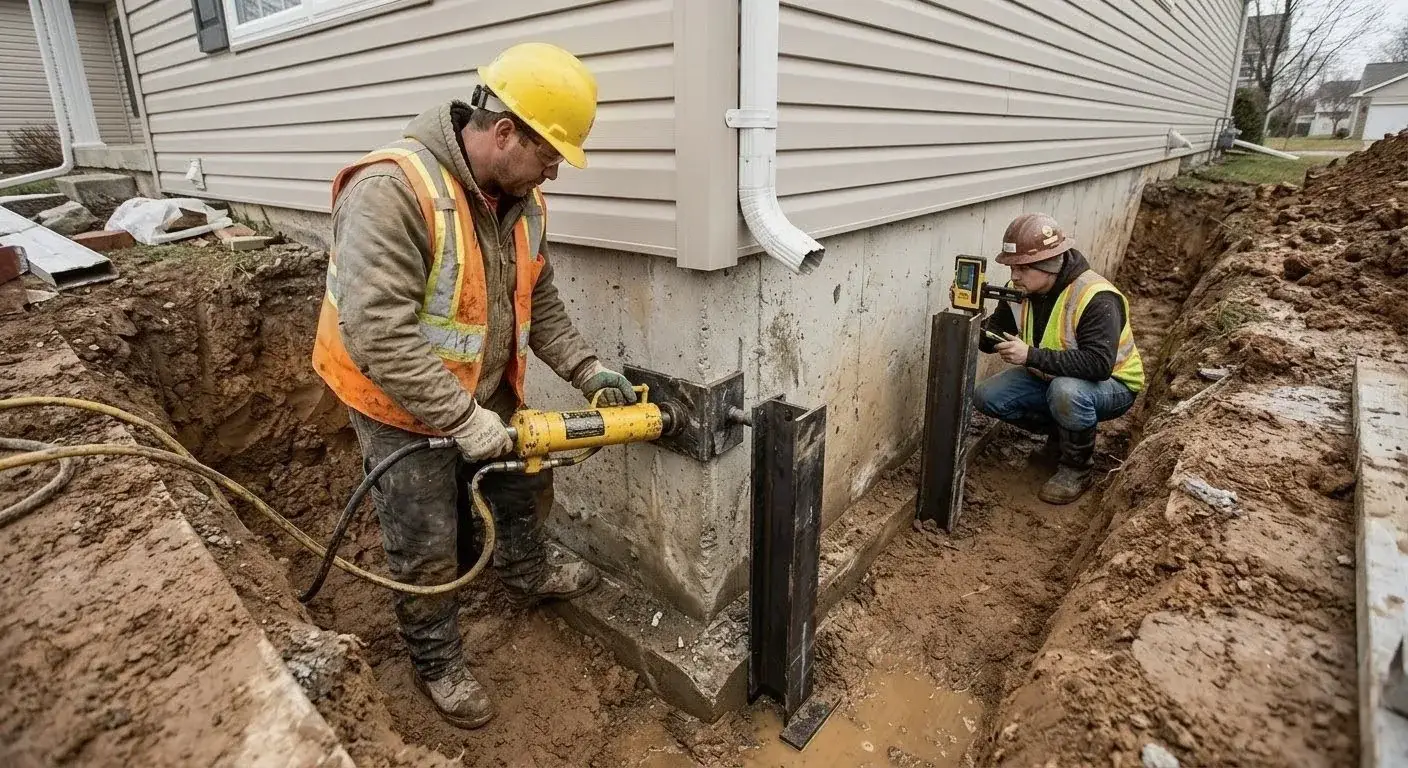
Foundation repair crew installing steel push piers along residential foundation

The Gap Between Reputation and Revenue

Dale is fifty-three. He has been running a foundation repair company in the suburbs east of Dallas for nineteen years. Started with a pickup truck and a laser level. Now he's got 11 employees, three crew trucks, and a warehouse full of steel piers he buys direct from the manufacturer because the volume discount finally kicked in around year twelve.

Licensed structural repair contractor? Yes. Certified by the Foundation Repair Association? Since 2009. His foreman, Marco, has been with him for fifteen years and can read a floor-level survey faster than most engineers Dale has worked with. The crews show up on time, wear booties inside the house, and leave the crawl space cleaner than they found it. (Marco's rule, not Dale's. Dale would've let it slide in the early days.)

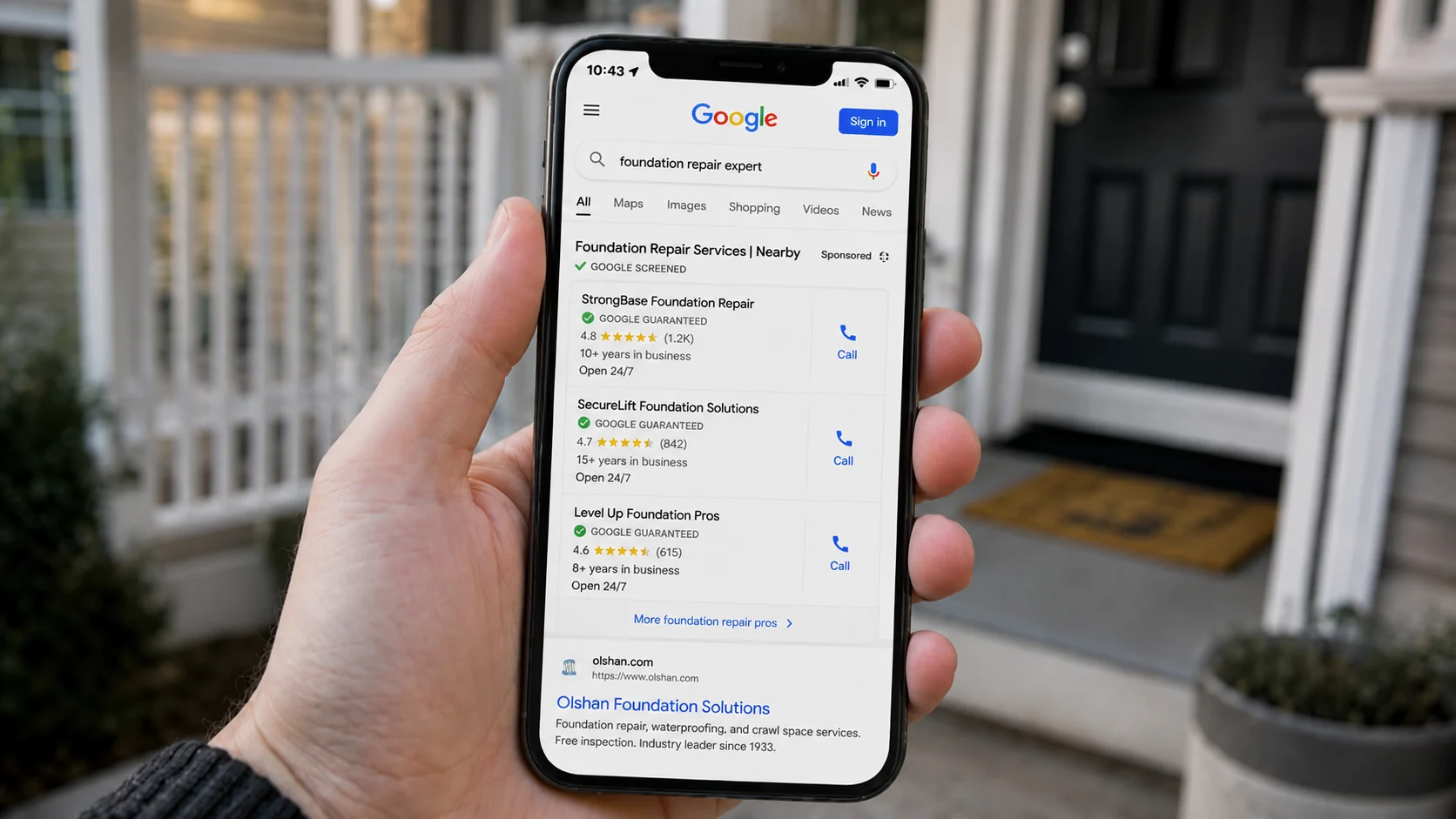
Then a wet spring hits. Seven straight weeks of saturated clay soil across the Metroplex. Foundations that had been quietly settling for years suddenly crack. Brick veneer separates. Doors stop latching. Homeowners start Googling at 11 p.m. with flashlights aimed at their baseboards, looking for the crack they swore wasn't there last month.

Four hundred and twelve foundation repair searches in Dale's service area in a single week. The phone should be buried.

Dale gets three calls.

Forty minutes south, a company called LevelRight has been operating for six years. No FRA certification. Smaller crew. Their owner, a former general contractor who pivoted into foundation work after a hail-damage season dried up, couldn't tell you the difference between a pressed pile and a bell-bottom pier if you put a diagram in front of him. But LevelRight's website? It loads in 1.9 seconds, has 47 five-star Google reviews with owner responses on every single one, and a landing page targeting "foundation repair [city name]" that ranks third in the Map Pack. They signed $187,000 in new work during that same wet spring.

Dale's experience didn't shrink. His certifications didn't expire. His reputation in the neighborhoods where he's worked hasn't changed.

His visibility did. Or rather, it never existed in the first place.

Dale's website loads in 6.4 seconds. It lists services in a single paragraph. The last Google review is from fourteen months ago. His homepage says "Serving the DFW area since 2007" in a font that renders differently on every phone that tries to display it. Tthis is no booking form. No live chat. No before-and-after gallery. A homeowner searching "foundation repair near me" at 2 a.m. during a rainstorm will never find Dale. LevelRight's site, meanwhile, is answering that homeowner's question, showing the repair process in a 90-second video, and capturing the lead with a form that takes 18 seconds to complete.

The gap between Dale and LevelRight isn't craftsmanship. It isn't even ambition. It's infrastructure. The kind you build once and maintain, not the kind you pour.

Why Foundation Repair Marketing Demands a Different Approach

You're not selling a recurring service. You're not a lawn care company that bills monthly or an HVAC outfit that collects maintenance contracts every fall. Foundation repair is a high-ticket, low-frequency purchase that most homeowners make exactly once. And that changes everything about how your marketing for foundation repair needs to work.

The buying cycle is compressed and emotional. A homeowner notices a crack on Tuesday, panics on Wednesday, Googles on Thursday, and wants three estimates by Saturday. Your window to appear, build trust, and earn the call is measured in hours, not weeks. If your website doesn't show up in that window, you don't exist for that buyer. Period.

The Trust Problem Unique to Foundation Work

Here's something most marketing agencies miss entirely when they pitch foundation repair companies. Your prospects are scared. Not mildly concerned. Genuinely anxious. A cracked foundation triggers the same emotional response as a medical diagnosis. And just like a patient Googling symptoms at midnight, a homeowner Googling "foundation crack in basement wall" isn't looking for a sales pitch. They're looking for someone who sounds like they know what's happening and can explain what to do about it.

"55% of home services businesses see themselves as 'one of many established providers' in their market."

Scorpion (2025)

So if you're "one of many," the question isn't whether your work is good. It's whether your digital presence communicates that before the homeowner picks up the phone. And for most foundation repair contractors, the answer is no. Your site reads like a brochure from 2014 while your competitor's site reads like a consultation that's already in progress.

The Math That Should Keep You Up at Night

Let's do some napkin math. If your average foundation repair job is $6,000 and you close 1 in 3 estimates, every qualified lead is worth $2,000 in expected revenue. Ten leads a month? That's $20,000 in pipeline value. Now, how many of those 10 leads are currently going to the contractor who ranks above you in Google's Map Pack? Because that's not hypothetical revenue you're "missing out on." That's real money leaving your market every month and landing in someone else's CRM.

Comparison


"The construction industry spends approximately 1% of revenue on marketing — dramatically below the cross-industry average of 7.7%."

CMO Survey / Gartner (2025)

One percent. That's the industry average. And it shows. Most foundation repair companies are running on referrals and hope, which works right up until the referrals slow down and hope doesn't pay the insurance premium.

Foundation Repair SEO: The Long Game That Pays Compounding Returns

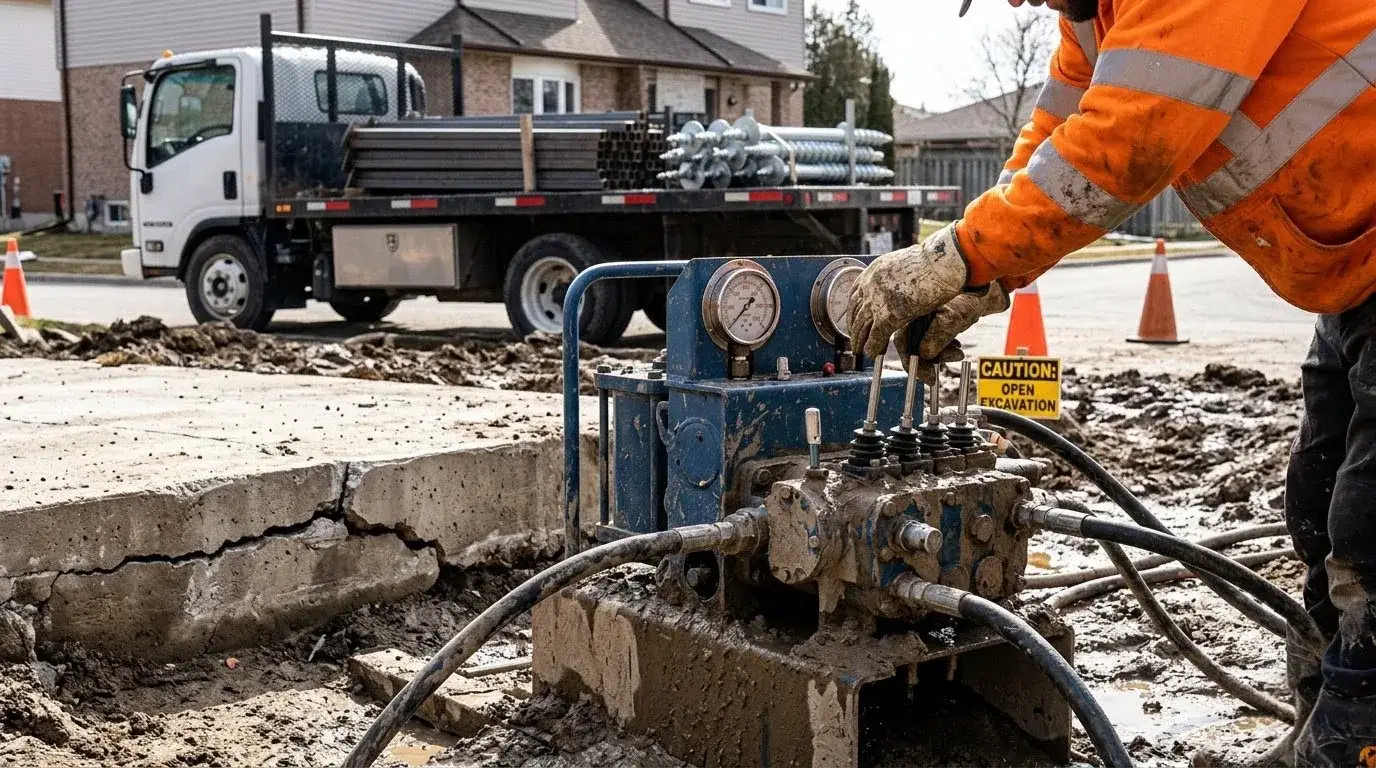
Foundation repair technician operating hydraulic pier equipment

Organic search is where foundation repair SEO either builds you a moat or leaves you exposed. When a homeowner types "foundation repair [your city]" into Google, the results page is a battlefield. And right now, you're either on it or you're invisible.

Local SEO for Foundation Repair Companies

Your Google Business Profile is the single most important asset in your foundation repair digital marketing stack. Not your website. Not your social media. Your GBP. Because when someone searches with local intent, Google serves the Map Pack before anything else. And the Map Pack pulls from your Business Profile, not your homepage.

What that means in practice: your GBP needs complete service categories (foundation repair, pier installation, crawl space encapsulation, concrete leveling), photos uploaded within the last 90 days, and a review velocity that doesn't look abandoned. If your last review is from 8 months ago and your competitor posted one yesterday, Google sees one active business and one that might be closed.

But local SEO isn't just your GBP. It's citations. It's your NAP consistency across 40+ directories. It's the schema markup on your site that tells Google you serve specific zip codes. And it's the content on your service pages that matches the exact queries homeowners actually type. Not "foundation services" (nobody searches that), but "foundation crack repair cost in [city]" and "signs your foundation is settling."

Content Marketing That Builds Authority and Captures Intent

You need pages that answer the questions homeowners are asking before they're ready to call. That's content marketing. And in foundation repair, the content gap is enormous because most of your competitors aren't writing anything at all.

Think about it. A homeowner notices their door sticking. They Google "why won't my door close properly." That query has nothing to do with foundation repair on its surface. But you and I both know that a sticking door in a 15-year-old house on expansive clay soil is a foundation symptom. If you have a page that answers that question, explains the connection, and offers a free inspection, you've just captured a lead that your competitor's "Services" page never could.

Foundation repair SEO at scale means building a library of these pages. Symptom pages. Cost pages. Process pages. Comparison pages (piers vs. mudjacking, for instance). Each one targets a different search query, and each one builds your authority with Google over time. This is compound interest for your online visibility. The page you publish this month will still be generating traffic 18 months from now.

PPC and Google Ads for Foundation Repair Leads

SEO is the long game. PPC is the short game. And you probably need both, at least initially, because foundation repair leads from paid advertising can fill your pipeline while your organic rankings are still climbing.

Why Google Ads Works (and Where It Bleeds Money)

Google Ads for foundation repair is expensive. Cost-per-click in competitive metro markets can get steep for high-intent terms. That's not a typo. And if your landing page isn't converting those clicks into form fills at 8-12%, you're burning cash at a rate that would make your accountant physically uncomfortable.

The contractors who make Google Ads profitable in this trade do three things the rest don't. To begin with, they run dedicated landing pages, not their homepage. A landing page for "foundation repair in [city]" with a single CTA, a trust bar (reviews, certifications, years in business), and a form above the fold converts at 2-3x the rate of a generic homepage. Then they use negative keywords aggressively. You don't want clicks from "DIY foundation repair" or "foundation repair jobs hiring." Those are real searches that will eat your budget if you're not filtering them. And they track calls. Not just form fills. Actual phone calls tied back to the ad that triggered them. Without call tracking, you're flying blind on half your conversions.

Budget Allocation That Doesn't Waste Money

This is a system that works for most foundation repair companies in markets with 50,000+ households. Allocate 60% of your paid budget to Google Search campaigns targeting high-intent keywords. Allocate 25% to Local Services Ads (the "Google Guaranteed" listings that appear above even the regular ads). And keep 15% for remarketing, which targets people who visited your site but didn't convert. That last bucket is cheap and effective because these are people who already expressed interest. They just need another nudge.

But this is the thing nobody tells you about PPC. (And this is the part that matters most.) It's a rental. You stop paying, the leads stop. Every dollar you spend on paid foundation repair advertising is a dollar that doesn't build equity. It buys you leads today. That's it. Which is why the smart play is always to run PPC while you're building your organic presence, then gradually shift budget from paid to owned as your SEO takes hold. The contractors who only run ads are on a treadmill. The ones who pair ads with SEO are building a machine.

Your Website Is Either a Conversion Machine or an Expensive Business Card

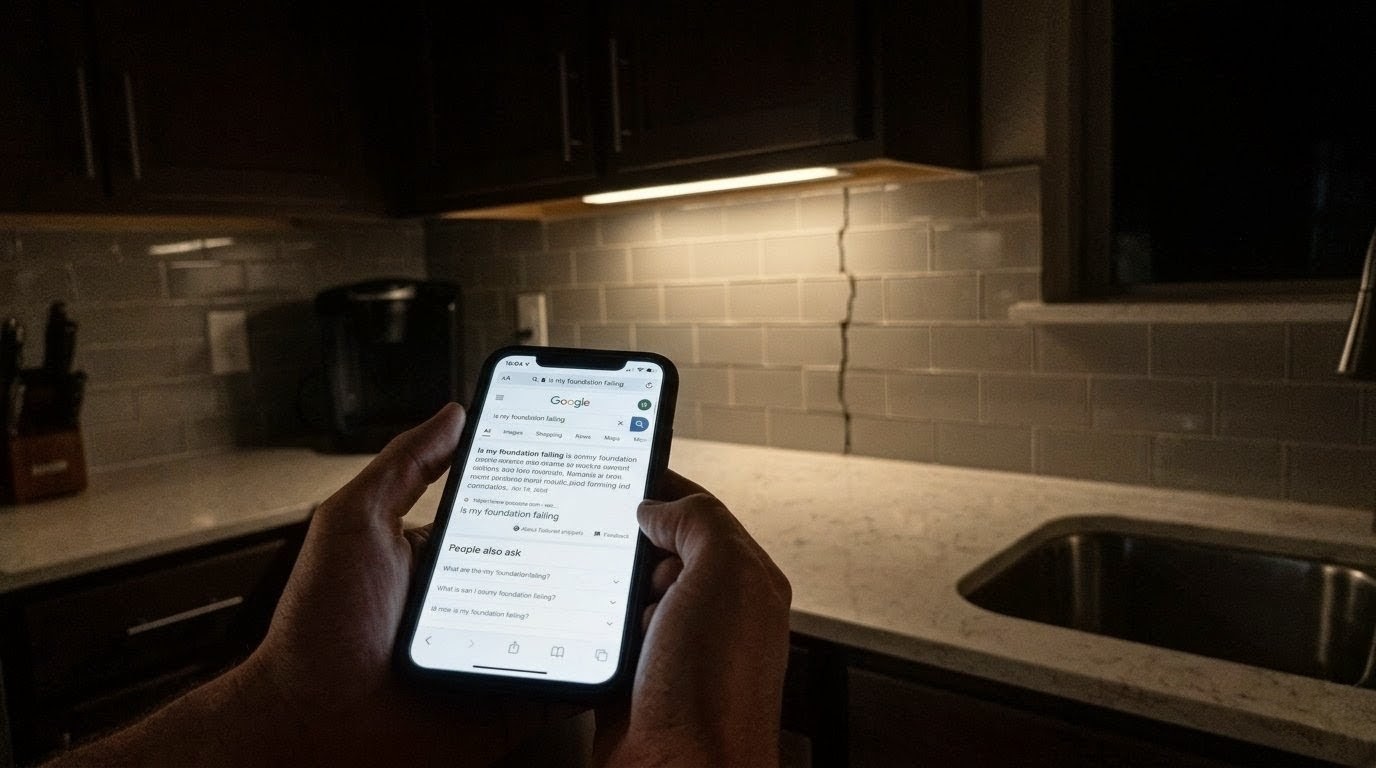
Homeowner searching Google for foundation repair with visible wall crack behind them

Let's be direct. Your website isn't a brochure. Or it shouldn't be. For a foundation repair marketing system to actually work, your site needs to function as a 24/7 sales rep that qualifies leads, builds trust, and captures contact information without you lifting a finger.

Comparison


"79% of test users always scanned any new page they came across; only 16% read word-by-word."

Nielsen Norman Group (2024)

That stat should change how you think about every page on your site. Your visitors aren't reading. They're scanning. They're looking for signals: Do these people know what they're doing? Can I trust them? How fast can I get an estimate? And if those signals aren't visible within 3 seconds of landing on your page, they're gone. Back to Google. Clicking on your competitor.

What a High-Converting Foundation Repair Website Actually Looks Like

Above the fold: a headline that includes your service and location ("Foundation Repair in [City] — Free Inspections, Same-Week Scheduling"). A trust bar with your review count, years in business, and one certification badge. A form or click-to-call button. That's it. No slider. No stock photo of a handshake. No "Welcome to our website" paragraph that nobody will read.

Below the fold: your process explained in 3-4 steps with icons. Before-and-after photos of real jobs (not stock images — homeowners can tell). A video testimonial or two. An FAQ section targeting the exact questions homeowners ask on the phone. And a sticky CTA that follows the user down the page because the decision to call can happen at any scroll depth.

Comparison


"On the average web page, users have time to read at most 28% of the words during an average visit; 20% is more likely."

Nielsen Norman Group (2024)

If only 20% of your words get read, every word on that page has to earn its spot. Cut the filler. Kill the "we pride ourselves on quality workmanship" sentence that lives on every contractor website in America. Replace it with something a homeowner actually needs to know. Like the fact that you carry a $2 million liability policy, or that your pier warranty transfers to the next owner if the house sells.

Speed, Mobile, and the Technical Basics

If your site takes more than 3 seconds to load on a phone, you're losing roughly half your visitors before they see a single word. That's not an opinion. Google's own data shows the bounce rate increase at that threshold. And since most foundation repair searches happen on mobile (people standing in their kitchen staring at a crack while Googling), your mobile experience is your primary experience.

Core Web Vitals matter. Page speed matters. But this is what matters more than any technical metric: does the site feel fast and trustworthy on a phone screen? Can you tap a phone number and call? Can you fill out a form without zooming? Does the text render at a readable size without pinching? These aren't nice-to-haves. They're the baseline.

Foundation Repair Leads: Owned Channels vs. Rented Channels

Tthis is a distinction that separates foundation repair leads strategies that build long-term value from ones that keep you dependent on a vendor forever. And that distinction is owned vs. rented.

Rented Channels

Google Ads, Angi, HomeAdvisor, Thumbtack. You pay per lead or per click. The moment you stop paying, the leads vanish. These channels have their place. They're useful for filling gaps, testing new markets, or maintaining volume while your organic presence is still developing. But if 80% of your leads come from rented channels, you don't have a marketing system. You have a marketing dependency. And that dependency gives the platform use over your cost-per-lead that you can't negotiate away.

Owned Channels

Your website. Your Google Business Profile. Your email list. Your review portfolio. Your content library. These are assets you control. Nobody can raise your cost to use them. Nobody can change the algorithm and cut your leads in half overnight. (Well, Google can and does change algorithms, but a well-built organic presence is resilient to most updates because it's built on relevance, not tricks.)

The goal of any serious foundation repair digital marketing strategy is to shift the ratio from rented to owned over time. Start with 70% rented, 30% owned. Within 12 months, you should be at 50/50. Within 24 months, 30% rented, 70% owned. That's when the economics of marketing for foundation repair actually start to feel like an investment instead of an expense.

Reviews, Reputation, and the Trust Infrastructure

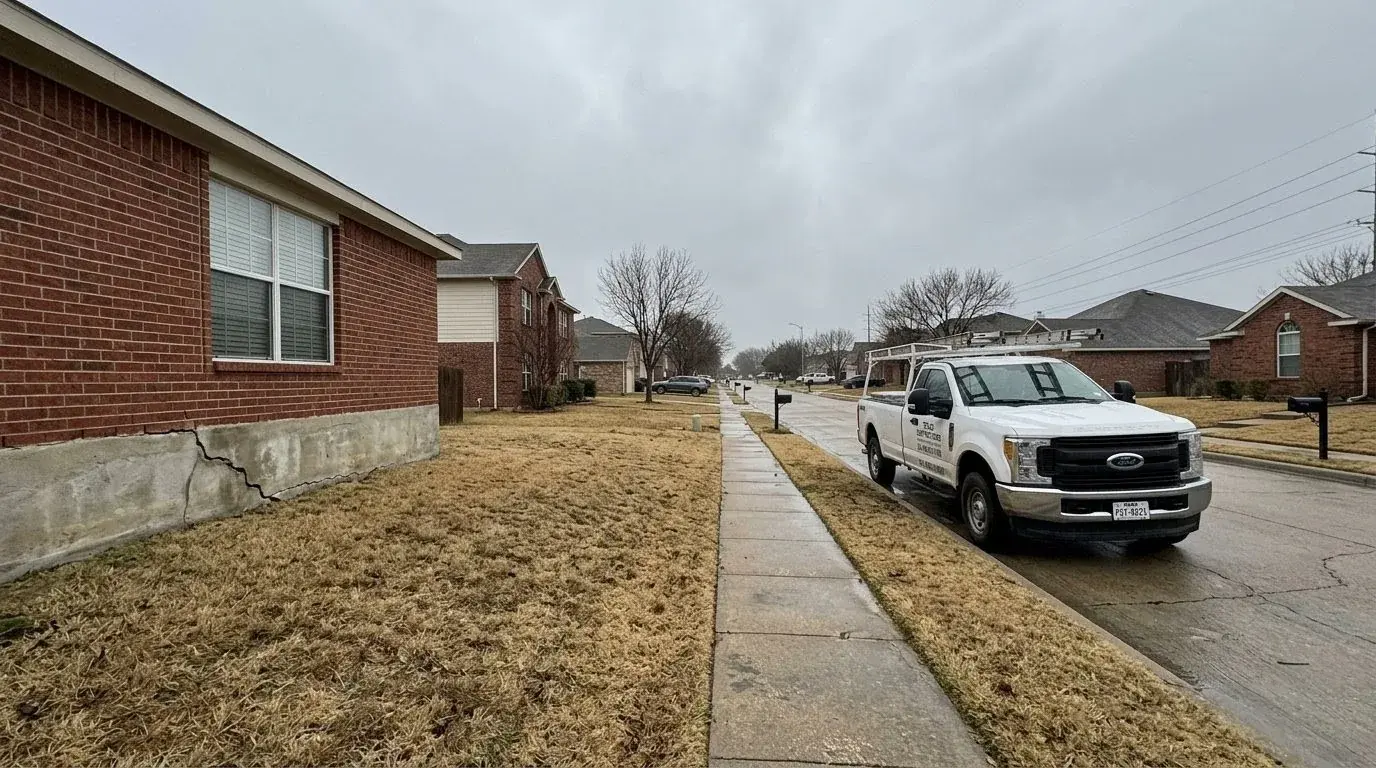
Foundation repair truck parked on suburban street near residential jobsite

A homeowner will not call a foundation repair company with fewer than 15 Google reviews. That's the threshold where trust begins, based on local search behavior data. Below 15, you look like either a brand-new company or one that doesn't care enough to ask. Neither is a good look when someone's about to spend $4,000-$12,000 on structural work.

But volume alone isn't enough. Recency matters. A company with 85 reviews where the most recent is from last week looks active and trusted. A company with 85 reviews where the most recent is from nine months ago looks like it peaked and declined. Google's algorithm weighs recency too. Your review velocity (how frequently new reviews come in) is a ranking factor for local search.

How to Build a Review System That Runs Without You

The contractors who consistently generate reviews don't do it by "asking for reviews." They build a system. This is what that looks like in practice. After every completed job, your office manager (or your CRM, if you have one) sends a text message within 2 hours of the final walkthrough. The text includes a direct link to your Google review page. Not your website. Not a survey. The Google review page. One tap and they're writing.

That 2-hour window matters. Right after the job is finished, the homeowner is relieved, grateful, and still thinking about the work. Two days later, they've moved on. Two weeks later, they've forgotten your company name. The system is the timing.

And respond to every review. Every single one. Not with a copy-paste template. With something specific that references the actual job. "Thanks for the kind words about the pier installation on Elm Street — glad we could get that settled before the next rain cycle." That response isn't just for the reviewer. It's for every future prospect who reads it and thinks, "These people actually pay attention."

Email Marketing and CRM: The Channels Nobody in Foundation Repair Uses

Foundation repair contractor reviewing marketing data on laptop

This is a tangent that's going to sound unrelated, but stay with me. Most foundation repair companies don't have an email list. Or if they do, it's a spreadsheet of past customer names that nobody's touched in two years. And that's a missed opportunity worth more than you think.

Foundation repair isn't recurring, right? So why would you email past customers? Two reasons. To begin with, referrals. A past customer who had a great experience is the single highest-converting lead source in this trade. An email every quarter (seasonal foundation tips, maintenance reminders, a simple "know anyone who needs help?") keeps you top-of-mind when their neighbor mentions a crack. Then related services. If you also offer crawl space encapsulation, concrete leveling, or drainage answers, your past customer base is a warm audience that already trusts you.

"Businesses that evaluate marketing performance weekly achieve an average 6x ROI, while those reviewing quarterly average 4.8x ROI."

Scorpion (2025)

That data point isn't about email specifically. But it tells you something important about cadence. The companies that check their numbers weekly outperform the ones that check quarterly. And an email system connected to a CRM gives you numbers to check. Open rates. Click rates. Reply rates. Referral conversions. Without those numbers, you're guessing. With them, you're steering.

What a Simple CRM Does for a Foundation Repair Company

You don't need Salesforce. You don't need HubSpot Enterprise. You need a CRM that does four things: captures leads from your website automatically, sends a follow-up text or email within 5 minutes of a form fill, tracks which leads became estimates and which estimates became jobs, and reminds you to follow up with estimates that went cold. That's it. A tool like Jobber, ServiceTitan, or even a well-configured Go High Level instance handles all four. The point isn't the software. The point is that leads stop falling through the cracks when a system catches them instead of a sticky note on your dashboard.

Video, Social Media, and Brand Awareness for Foundation Repair

Contractor documenting jobsite conditions on tablet for project record

Let's talk about video. Because in foundation repair marketing, video does something no other content format can do. It shows the work. A written description of pier installation doesn't build trust the way a 60-second time-lapse of your crew actually doing it does. The homeowner sees the process, sees the professionalism, sees the equipment, and forms an opinion before they ever call. That's what brand awareness looks like in this trade. Not a logo on a billboard. A video on YouTube that shows up when someone searches "how does foundation repair work."

Social Media: Set Realistic Expectations

Social media for foundation repair is not going to generate direct leads. I'll say it again because every social media agency you've talked to probably promised the opposite. Social media will not generate direct foundation repair leads at any meaningful volume. What it does is support your other channels. A homeowner who finds you on Google, then checks your Facebook page and sees regular posts with job photos, is more likely to call than one who finds a Facebook page that hasn't been updated since November.

So the strategy is simple. Post 2-3 times per week. Before-and-after photos. Short job videos. The occasional educational post about foundation maintenance. Don't overthink it. Don't hire a social media manager who costs $2,000 a month to post content that generates 12 likes. Give your office admin 20 minutes three times a week and a template. Consistency beats production quality in this channel, every time.

Video Content That Actually Moves the Needle

Three types of video content work for foundation repair marketing. To begin with, process videos. Show a pier installation start to finish. Show a crawl space encapsulation. Show a polyurethane injection. These rank on YouTube and embed well on your service pages. Then testimonial videos. A homeowner standing in their repaired basement talking about the experience for 90 seconds is worth more than 50 written reviews. And educational videos. "5 Signs Your Foundation Needs Repair" or "Foundation Repair Cost: What to Expect" target search queries with video intent and position you as the expert.

None of these need to be cinematic. A smartphone, a $30 lavalier mic, and decent natural lighting are sufficient. The homeowner doesn't care about your B-roll. They care about whether you sound like you know what you're talking about.

Measuring What Matters: ROI, Attribution, and the Numbers You Should Track

This is where most foundation repair marketing efforts quietly fail. Not in the execution. In the measurement. You run ads, you post content, you ask for reviews, but you don't actually know which of those activities is generating revenue. And without that knowledge, you can't make informed decisions about where to invest more and where to cut.

The 5 Metrics That Matter for Foundation Repair

Cost per lead. By channel. Not blended. You need to know that Google Ads is generating leads at $85 each while your organic search leads cost $12 each (factoring in the monthly cost of your SEO investment). That delta is how you make budget decisions.

Lead-to-estimate rate. What percentage of leads actually schedule an estimate? If it's below 40%, your follow-up process is broken. The leads aren't bad. Your response time is.

Estimate-to-close rate. What percentage of estimates become signed contracts? Close rates in foundation repair vary, but healthy companies track theirs obsessively. If you're below that, the problem is either your pricing, your estimator's presentation, or the quality of leads you're attracting.

Customer acquisition cost. Total marketing spend divided by total new customers. This is the number you compare against your average job value to determine whether your marketing is profitable. If your CAC is $600 and your average job is $7,200, you're in good shape. If your CAC is $1,800 and your average job is $5,000, something needs to change.

Revenue per marketing dollar. For every $1 you spend on foundation repair marketing, how much revenue comes back? Healthy companies in this trade see $8-$15 return per dollar spent when all channels are working together. If you're below $5, your system has a leak.

Attribution: Knowing Where the Lead Actually Came From

This is the hard part. A homeowner sees your Google Ad on Monday. Clicks it but doesn't call. Sees your company again in the Map Pack on Wednesday when they search a different term. Finally calls on Friday after reading a review on your Google Business Profile. Which channel gets credit for that lead?

The answer is: all of them. But your tracking system needs to be sophisticated enough to capture that journey. At minimum, you need call tracking numbers (different numbers for different channels), UTM parameters on all your URLs, and a CRM that logs the source of every lead. Without those three things, you're crediting the last touch and ignoring everything that led up to it.

Comparison


"85% of home services companies outsource at least some aspect of their marketing. Among those, 78% use two or more external vendors."

Scorpion (2025)

When you're working with multiple vendors, attribution gets even messier. Your SEO company claims the lead. Your PPC agency claims the lead. Your web designer says the new site is why conversions are up. And nobody can actually prove it because the tracking wasn't set up to answer the question. This is why a unified analytics dashboard (even a simple one in Google Looker Studio) is worth the 4 hours it takes to build. You need one source of truth, not three vendors each telling a different story.

The Competitive Market: What You're Up Against

Contractor presenting inspection report to homeowner at door

Foundation repair is getting more competitive online, not less. Private equity has entered the trade. National brands like Ram Jack, Groundworks, and Foundation Supportworks are spending six figures per month on digital marketing in markets where independent operators are spending $500. You're not going to outspend them. But you can out-local them.

National brands rank for broad terms. They struggle with hyper-local ones. "Foundation repair in [your specific suburb]" is a keyword a national brand's centralized marketing team probably isn't targeting with a dedicated page. But you can. And when a homeowner in that suburb searches that exact phrase, they'll find you, not the national chain. That's your competitive advantage. Not budget. Geography, specificity, and the ability to move faster than a corporate marketing department that needs three approvals to change a headline.

What the Best Foundation Repair Companies Do Differently

The independent foundation repair companies winning online share a few traits. They publish content consistently, even if it's just two pages a month. They respond to reviews within 24 hours. They have landing pages for every city and service combination they offer. They track their numbers weekly, not quarterly. And they treat their website like a tool, not a trophy. It doesn't need to win a design award. It needs to convert visitors into phone calls.

None of those things require a massive budget. They require a system. And a willingness to treat foundation repair SEO, your review profile, your content, and your paid ads as interconnected parts of one machine rather than disconnected tactics you try one at a time and abandon when they don't produce instant results.

Building Your Foundation Repair Marketing System: Where to Start

Foundation repair service vehicle at residential property

If you've read this far and you're feeling overwhelmed, that's normal. Marketing for foundation repair companies involves a lot of moving parts. But you don't have to do everything at once. You need to do things in the right order.

Month 1-3: Fix the Foundation (of Your Marketing)

Claim and optimize your Google Business Profile. Fix your website's speed, mobile experience, and conversion elements. Set up call tracking. Install a basic CRM. Start asking for reviews systematically. These are the fundamentals. Nothing else works if these are broken. It's like installing piers on a house before you've done the soil test. Sequence matters.

Month 4-6: Build the Engine

Launch Google Ads targeting your top 5 service + city keywords. Publish your first 8-10 SEO content pages (symptom pages, cost pages, service area pages). Set up your email system with a post-job review request and a quarterly past-customer touchpoint. Start posting on social media using job photos from the previous week. This is where the system starts producing measurable results.

Month 7-12: Scale and Optimize

Expand your content library. Add video. Build landing pages for secondary service areas. Start shifting budget from PPC to SEO as organic rankings improve. Review your metrics weekly and kill what isn't working. Double down on what is. By month 12, your cost per lead should be declining, your organic traffic should be climbing, and your dependency on paid channels should be shrinking.

And look, you don't have to build this alone. Most foundation repair companies don't have an in-house marketing team, and they shouldn't.

Comparison


"85% of home services companies outsource at least some aspect of their marketing. Among those, 78% use two or more external vendors."

Scorpion (2025)

The question isn't whether to outsource. It's whether the partner you choose actually understands your trade, your buyer, and your numbers. A generalist agency that also handles dentists and law firms is going to give you generalist results. You need someone who knows what a helical pier is, understands why your close rate drops in dry months, and can tell you your cost-per-lead by channel without looking it up.

The Next Step

If you want to see exactly where your current digital presence stands, how your site performs against competitors in your market, and where the highest-ROI opportunities are hiding, that's what the Site Inspection is built for. It's a detailed, trade-specific audit of your website, your local SEO, your review profile, and your conversion infrastructure. Not a generic score. Not an automated report. An actual analysis built for foundation repair companies by people who've looked at hundreds of them.

Your foundation work is solid. Your marketing should be too.

Related: if you're interested in how other trades in the remodelers and builders space are approaching digital marketing, or want to see how kitchen and bath SEO strategies compare, those pages walk through the same framework adapted to different buyer psychology and search behavior.

Related Guides

Foundation Repair Topics

Back to Foundation Repair


Nenyi Keborku
Nenyi Keborku Founder, Fervor Studio
Get My Site Inspection