
What we found on windowworld.com
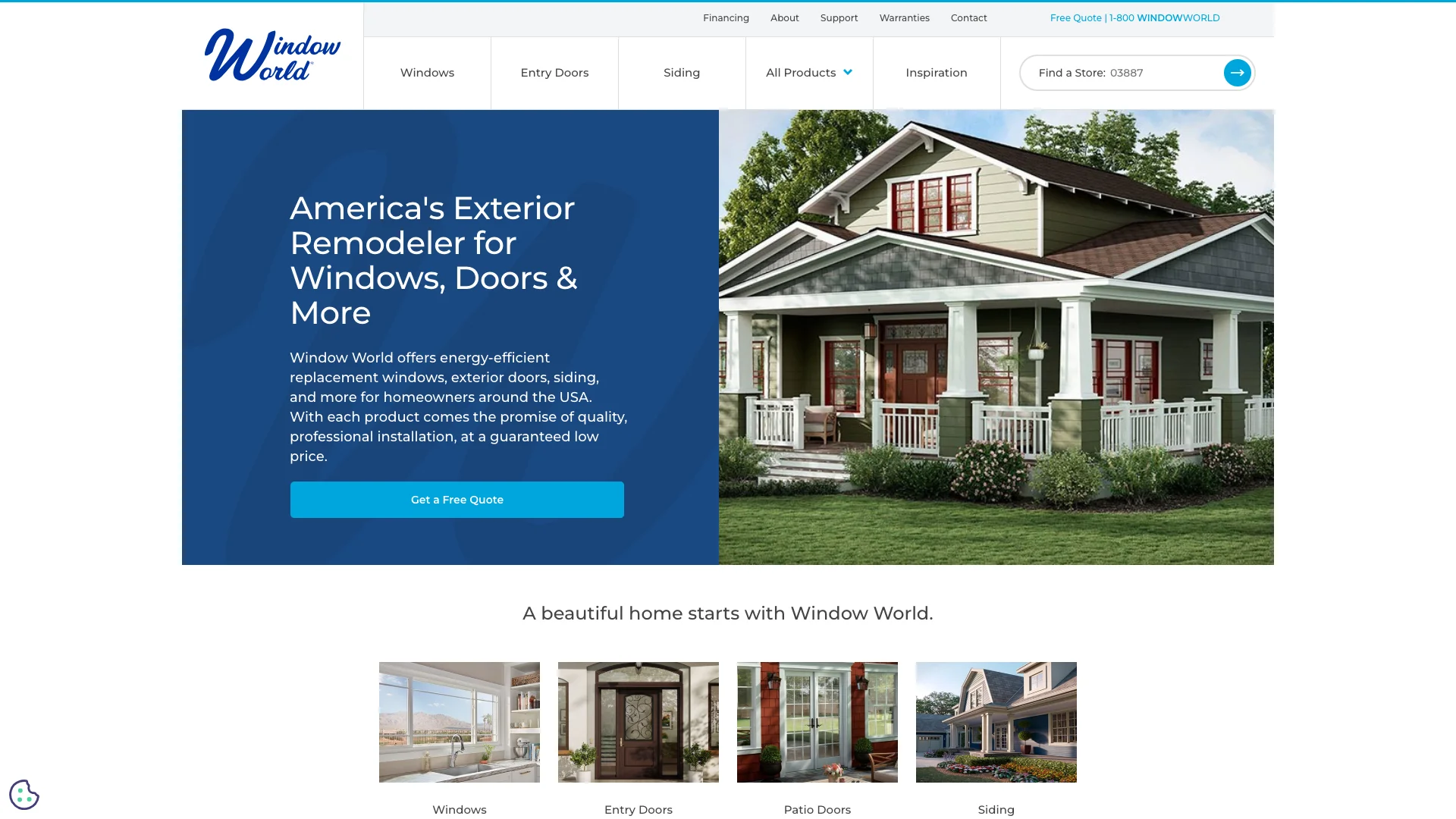
Window World is a national franchise brand selling windows, siding, and doors. According to Ahrefs, windowworld.com pulls 100.8K monthly organic visitors with an estimated traffic value of $265.5K. That's one of the biggest brands in the CRO Index by both traffic and traffic value. But big traffic doesn't guarantee big trust.
The pages we tore down:
- Windows product page, the main product page for replacement windows (9.4K monthly organic visitors, 9% traffic share, scored 52 on Google's mobile lab test)
- Entry doors product page, covering entry door replacement options (5.3K monthly visitors, 5% share, scored 59)
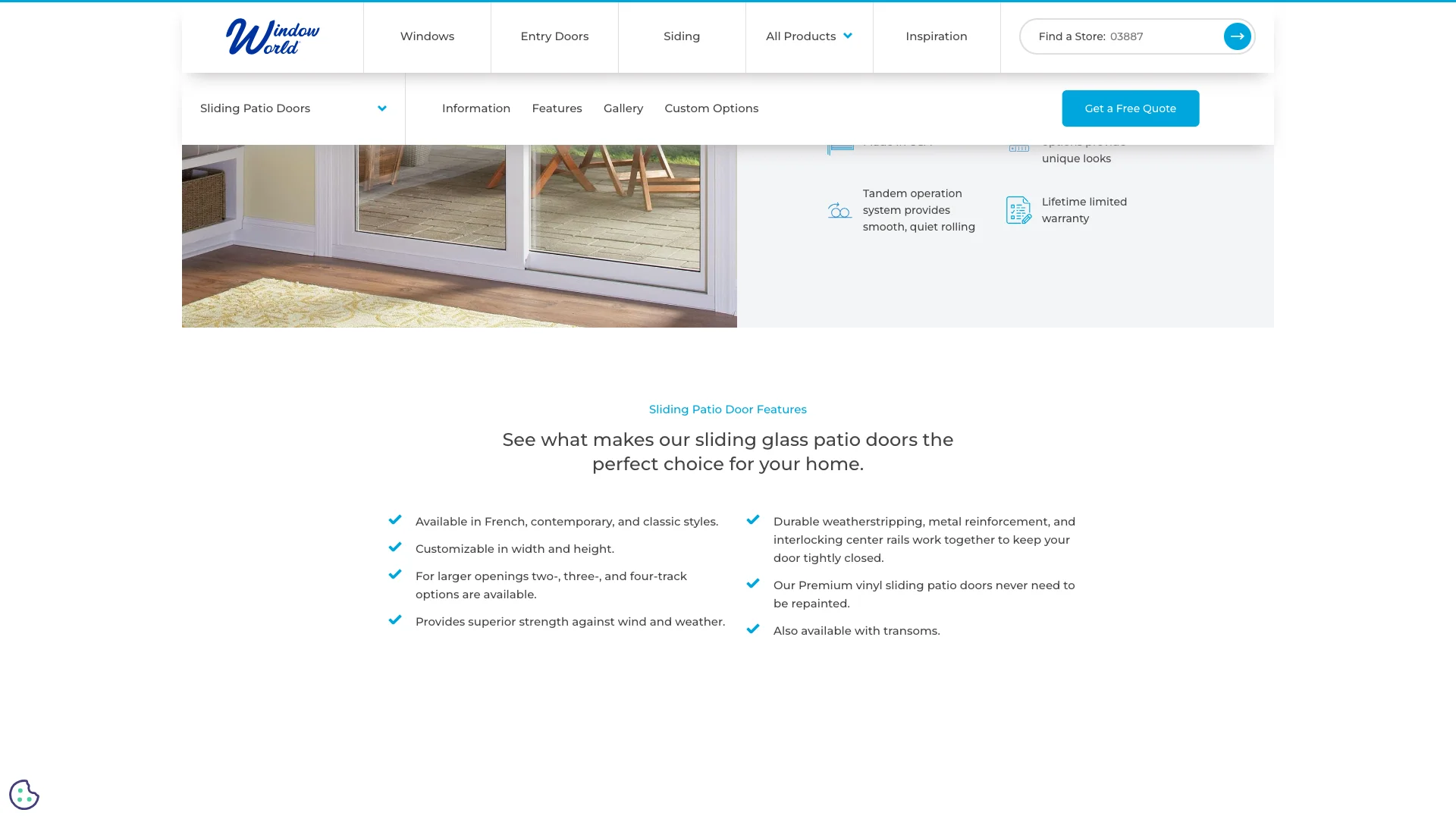
- Sliding patio door page, covering patio door products (2.9K monthly visitors, 3% share, scored 53)
And the trust signal audit came back empty. Zero Google Reviews on any page. Zero trust badges. Zero review widgets. Zero chat widgets. No hidden code labels that tell Google what the business does. The pages have forms (3 per page), and the layout stability is perfect (0.000 across the board). But a homeowner landing on any of these pages sees product information and a form with no social proof around it. No reviews. No badges. No certification seals. Nothing that says "other homeowners have used this company and were happy with the results."
That absence is striking because Window World is a well-known franchise brand. They run TV commercials. They have thousands of customer reviews on Google. But none of that social proof makes it onto the product pages where homeowners are making decisions. The brand recognition gets them to the page. The missing trust signals make it harder to get them to fill out the form.
"25% of homeowners say trusting contractors is their top challenge when planning home improvement projects."
— Houzz Inc. (2025)
Performance: 52 to 59 on Google's mobile lab test
Google PageSpeed Insights runs a simulated slow-phone lab test. The scores are worst-case, not what you see on your phone with WiFi. But Google uses them as a ranking factor in search results.
The windows product page scored 52. The sliding patio door page scored 53. The entry doors page scored 59. All three are above 50, which means Google isn't applying the heaviest search-ranking penalties. But none are in the green zone (90+), and none are even in the comfortable range (70+). For a brand spending real money on marketing, these scores represent a ranking ceiling that a performance sprint could lift.
"53% of mobile users abandon sites that take longer than 3 seconds to load."
— Google / SOASTA (2017)
Layout stability is the bright spot. Every page scored 0.000 on cumulative layout shift. Content doesn't move at all as the pages load. No images shoving text down. No sticky elements recalculating positions. No form fields jumping around. That's the one performance metric homeowners can actually feel on their device, and Window World nails it.
So the pages are stable and load predictably, but they're not fast. For a national brand with 100K+ monthly visitors, the difference between a 52 and an 85 on Google's mobile lab test translates to thousands of additional organic visitors per month. Every ranking position gained on high-volume product keywords moves the needle more for Window World than it would for a small local installer. The math is simple: if the windows page ranks one position higher for its target keywords, the traffic share increases from 9% to potentially 12-15%. On 100K total visitors, that's measurable revenue.
The entry doors page at 59 is the closest to acceptable. That page is lighter than the windows page, which suggests it has fewer images, fewer scripts, or a simpler layout. If Window World figured out what makes the entry doors page faster and applied those same principles to the windows and patio door pages, all three could land in the 60s or higher. That's a template-level fix, not a page-by-page rewrite.
Compounding effect
"Conversion rates drop approximately 12% for each additional second of page load time."
— Google / Deloitte (2020)
Lead capture: 3 forms per page with thin content around them
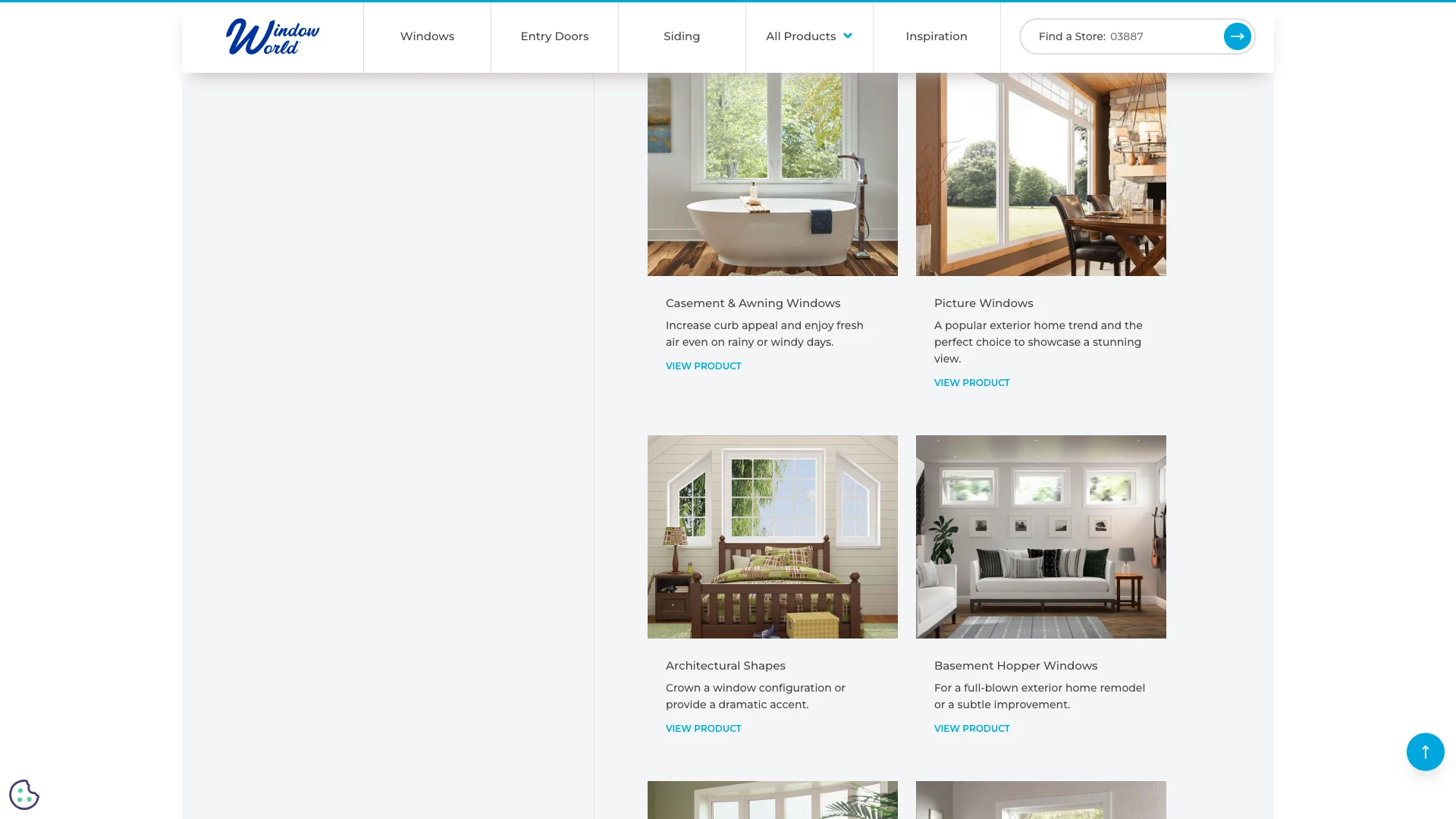
Every tested page has 3 forms. That's consistent, intentional form placement across the product section of the site. A homeowner doesn't have to hunt for a way to request a quote. The forms are there in the hero, mid-page, and at the bottom (or close to it). Three touchpoints for three different stages of decision-making.
But the content surrounding those forms is thin. The windows page has 1,116 words. The entry doors page has 592 words. The patio door page has 765 words. For product pages on a national brand competing against Andersen, Pella, and Marvin, that's not enough content to win the search game. Those competitors run 2,000 to 5,000 words on their product pages. They cover product specifications, installation processes, energy efficiency ratings, warranty details, comparison guides, and customer story sections. Window World's pages cover the basics and stop.
"68% of users wouldn't submit a form if it required too much personal information."
— Baymard Institute (2024)
And thin content creates a conversion problem too. A homeowner comparing window brands is going to read each brand's product page. If Andersen's page answers 15 questions and Window World's page answers 5, the homeowner feels more informed after reading Andersen's page. That information gap reduces the likelihood of submitting Window World's form, because the homeowner doesn't feel confident enough in the product yet. So more content doesn't just help with search rankings. It helps with form conversions.
The 3-form structure is solid. But those forms need more content around them to give homeowners the confidence to actually fill them out. Right now, the forms are sitting in what feels like a product brochure. They should be sitting in a comprehensive resource that answers every question a homeowner has about replacement windows before they ever pick up the phone.
And for context on what "thin" means in this category: Renewal by Andersen's entry ensemble door page runs 4,915 words. Ideal Siding's location pages run 2,571 to 2,984 words. Window World's entry doors page, covering a similar product category, runs 592 words. That's roughly 1/8th the content depth of its direct competitor. Google notices that difference. Homeowners notice it too.
Trust signals: completely absent
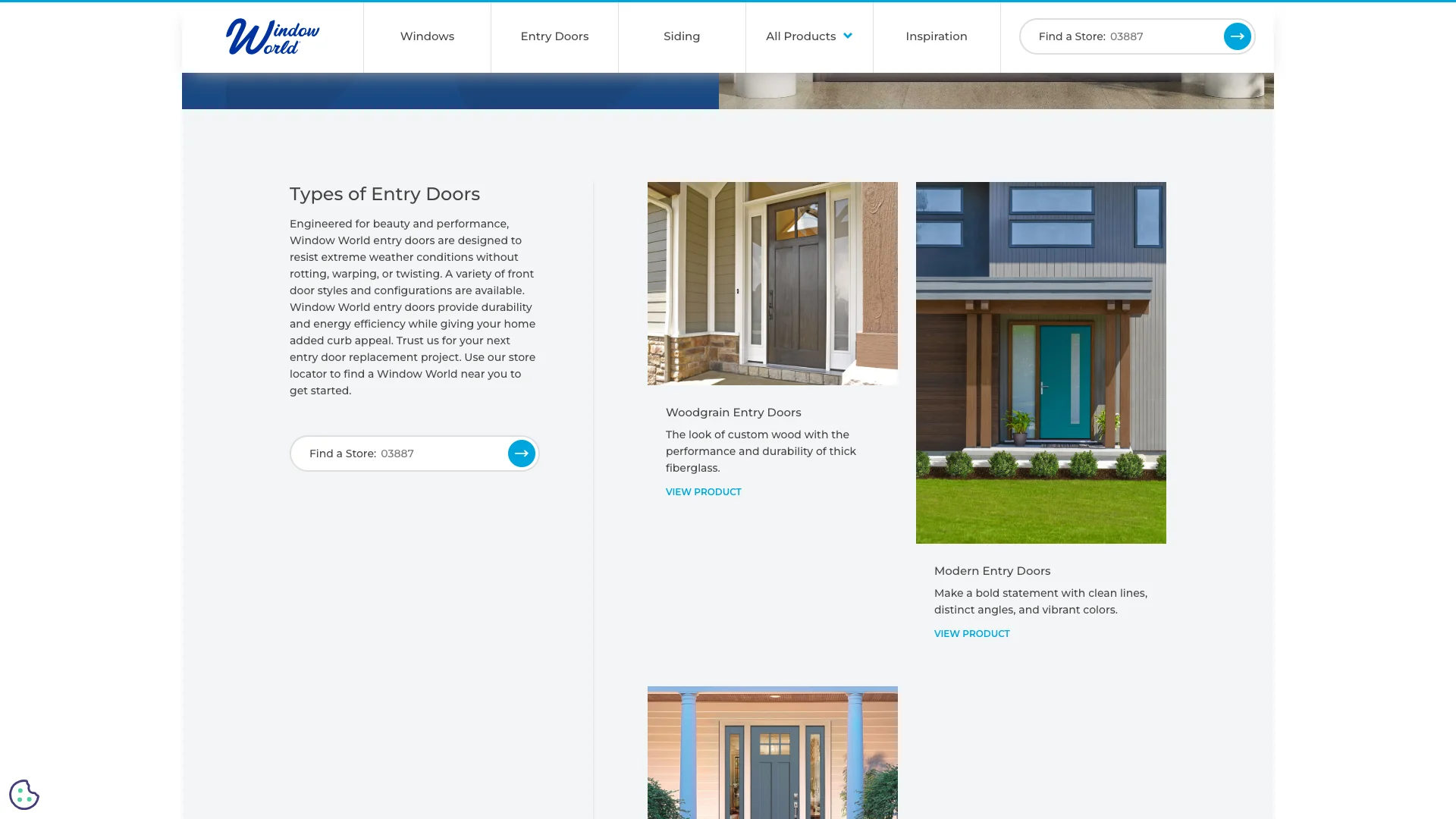
The trust signal audit across all three pages came back with nothing:
- Google Reviews: Not found on any page.
- Trust badges: Not found on any page.
- Review widgets: Not found on any page.
- Chat widget: Not found on any page.
- BBB badge: Not found.
- Certifications: Not found.
Zero out of six trust signal types. On a brand with 100.8K monthly visitors and a $265.5K traffic value. That's the gap. Window World has the traffic. Window World has the forms. But there's nothing between the traffic and the forms that tells a homeowner "other people used this company and it went well."
Comparison
"83% of consumers use Google to find local business reviews; 74% use two or more review platforms when researching."
— BrightLocal (2025)
The hidden code labels are empty too. No "local business" label. No "product" label. No "organization" label. Google is reading these pages as generic web pages with some text and some forms. It doesn't know that Window World is a home improvement business, that these pages are product pages, or that the forms are for requesting in-home consultations. Adding hidden code labels that Google reads would help these pages appear in richer search result formats (star ratings, business information panels, product carousels).
For context: Ideal Siding, a brand with 1.2K monthly visitors, has Google Reviews on every page. TrueDecks, a brand with 321 monthly visitors, has Google Reviews, trust badges, review widgets, and a chat widget on every page. Window World, with 100x their traffic, has none of it. Brand size and trust signal completeness are not correlated in the CRO Index. In fact, the pattern so far suggests the opposite: the smaller brands are investing more in trust signals because they can't afford to waste the traffic they do get.
"48% of customers say that if a site does not work well on mobile, it signals the company does not care about their business."
— Google Consumer Insights (2018)
What Window World does well
Window World gets two things right that most contractors miss entirely, and those two things are worth crediting before discussing the gaps.
Consistent form placement. Three forms per page, on every tested page. That's not accidental. Somebody made a decision to put a form in three positions on every product page, and they stuck with it. A homeowner never has to scroll more than a few hundred pixels to find a way to request information. Most contractor sites bury the form at the bottom or put it on a separate "Contact Us" page. Window World puts it where the homeowner is. And the consistency across pages matters. A homeowner who visits the windows page and then clicks over to the patio door page finds the same form structure. That predictability reduces friction.
Perfect layout stability. 0.000 across all three pages. Content doesn't jump around at all as the pages load. For a national brand with complex page templates, tracking scripts, and ad pixels, maintaining zero layout shift takes discipline. It means the development team sized their image containers, loaded their fonts correctly, and didn't allow any element to inject itself after the initial render. That's the one performance metric homeowners can feel on their own device, and Window World nails it.
"64% of homeowners say having recommendations or references is a top-three factor in choosing a contractor."
— Houzz Inc. (2025)
These two things (form placement and layout stability) create a functional baseline. The pages load predictably, and the conversion paths are accessible. The problem is everything that should sit between those two things: reviews, badges, content depth, and hidden code labels. The structure is solid. The trust layer is missing. And for a brand with 100K+ visitors a month, fixing the trust layer is the single highest-leverage investment they could make.
What the gaps mean for window and siding contractors
Window World is the proof that traffic alone doesn't convert. If you're a window or siding contractor reading this, the lessons are about what happens after a homeowner lands on your page.
Add Google Reviews to every product page. Window World has 100K+ monthly visitors and zero reviews visible on any product page. If you're a small window installer with 50 Google Reviews, you can beat Window World's trust signal setup by embedding a review widget. That's it. One widget, installed on every page, and you're ahead of a national franchise. The reviews don't need to be perfect. They need to be present. A 4.5-star rating from 50 reviews does more for conversions than no rating from zero visible reviews.
Add trust badges. Manufacturer certifications (Andersen Certified, Pella Certified, ENERGY STAR Partner), industry association memberships (AAMA, WDDA), warranty badges, and your state contractor license. These visual signals reduce the friction between "I'm interested" and "I'll fill out this form." Window World has none of them. A local installer with three badges is outperforming a $265K-traffic-value brand on trust.
Write deeper content. Window World's product pages run 592 to 1,116 words. If you're writing a replacement windows page, aim for 2,500+ words. Cover the product types (double-hung, casement, sliding, bay, picture). Cover the materials (vinyl, fiberglass, wood, composite). Cover the installation process. Cover the warranty. Cover energy efficiency ratings and what they mean for utility bills. That content doesn't just help you rank higher. It gives the homeowner enough information to feel confident submitting the form.
Add hidden code labels. A "product" label on product pages. A "local business" label with your business name, address, and service area. A "FAQ" label on FAQ sections. These hidden code labels help Google understand what your pages are and show them in richer search result formats. Window World has none. If you add them, you're giving Google more information about your pages than a brand with 100x your traffic. And those richer search results (star ratings in search, business info panels, product carousels) drive higher click-through rates from search results to your site.
Add a chat widget. Three forms per page is good for the homeowner who's ready to commit. But some homeowners have a quick question first. "What brands of windows do you carry?" "Do you offer financing?" "How long does installation take?" A chat widget catches that visitor and starts a conversation. Without one, Window World (and most contractor sites) are binary: fill out the form or leave. A chat widget adds a third option that keeps the homeowner engaged even when they're not ready for a form.
"48% of customers say that if a site does not work well on mobile, it signals the company does not care about their business."
— Google Consumer Insights (2018)
Frequently asked questions
Does Window World display Google Reviews on its website?
No. All three tested pages returned Google Reviews as not present. Zero review widgets, zero star ratings, zero customer testimonials pulled from Google. For a brand with 100.8K monthly visitors, that's a significant trust gap. Homeowners landing on these product pages see no social proof from other customers.
How does Window World score on Google's mobile lab test?
The windows product page scored 52. The entry doors page scored 59. The sliding patio door page scored 53. All three are above 50, which means Google isn't applying the heaviest ranking penalties. But none are in the green zone (90+). Layout stability is perfect at 0.000 on all three pages, so content doesn't jump around.
How much content does Window World have on its product pages?
Content is thin. The windows product page has 1,116 words. The entry doors page has 592 words. The sliding patio door page has 765 words. For product pages competing against national brands with 2,000 to 5,000 words, that's a ranking disadvantage.
How much organic traffic does windowworld.com get?
According to Ahrefs data from March 2026, windowworld.com receives approximately 100.8K monthly organic visitors with an estimated traffic value of $265.5K. The windows product page accounts for 9.4K visitors (9% share). Entry doors accounts for 5.3K (5%). The sliding patio door page accounts for 2.9K (3%).