What we found on truedecks.com
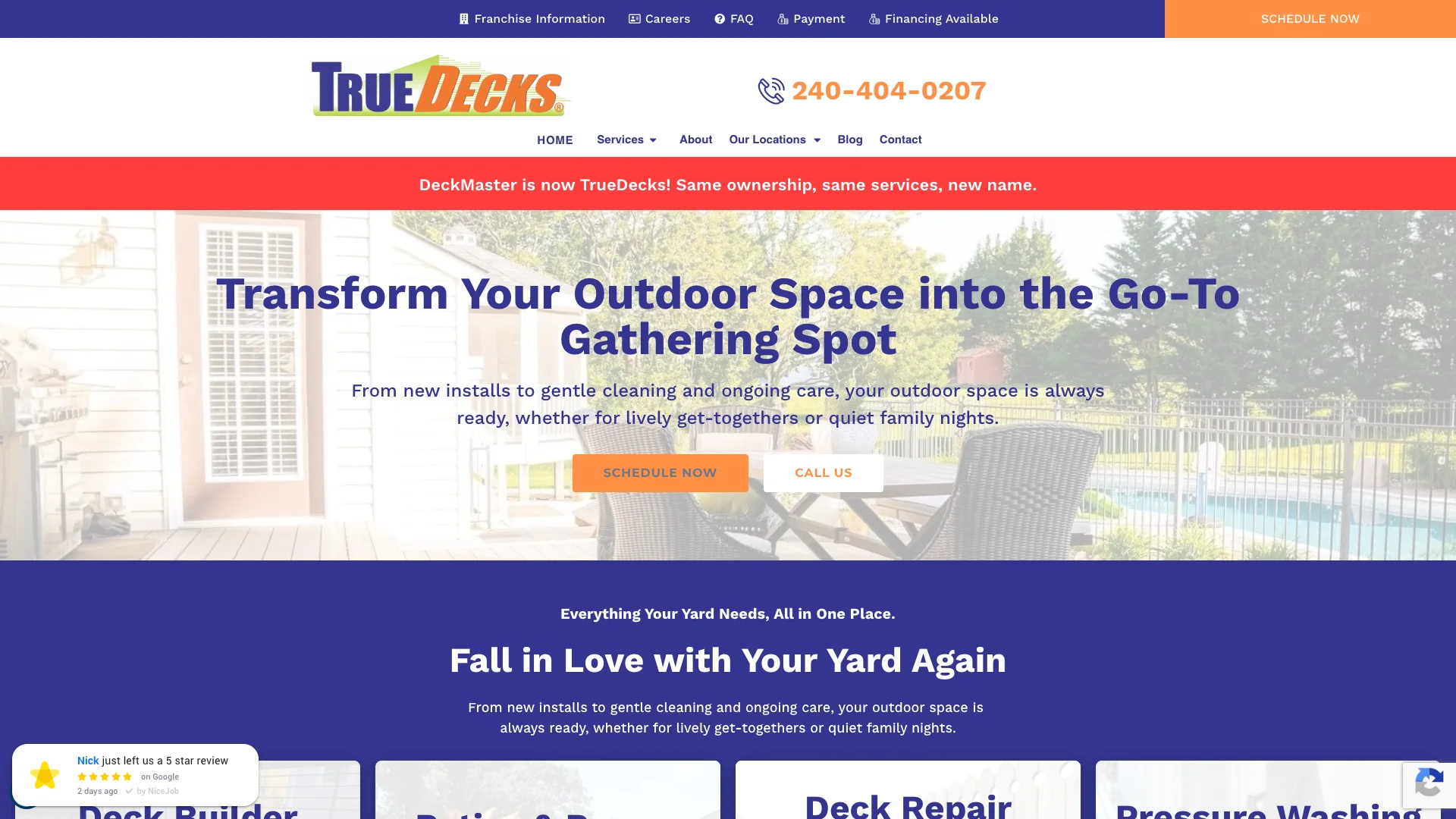
TrueDecks is a local deck builder based in Maryland, serving the Arlington, Virginia and greater DC area. According to Ahrefs, truedecks.com pulls 321 monthly organic visitors with an estimated traffic value of $933. And yes, that makes it the smallest brand in the entire CRO Index by both traffic and traffic value. But size isn't the story on this one.
The pages we tore down:
- /stain-seal-understanding-difference/, a blog post comparing deck staining versus sealing (94 monthly organic visitors, 30% traffic share, the highest-traffic page on the site)
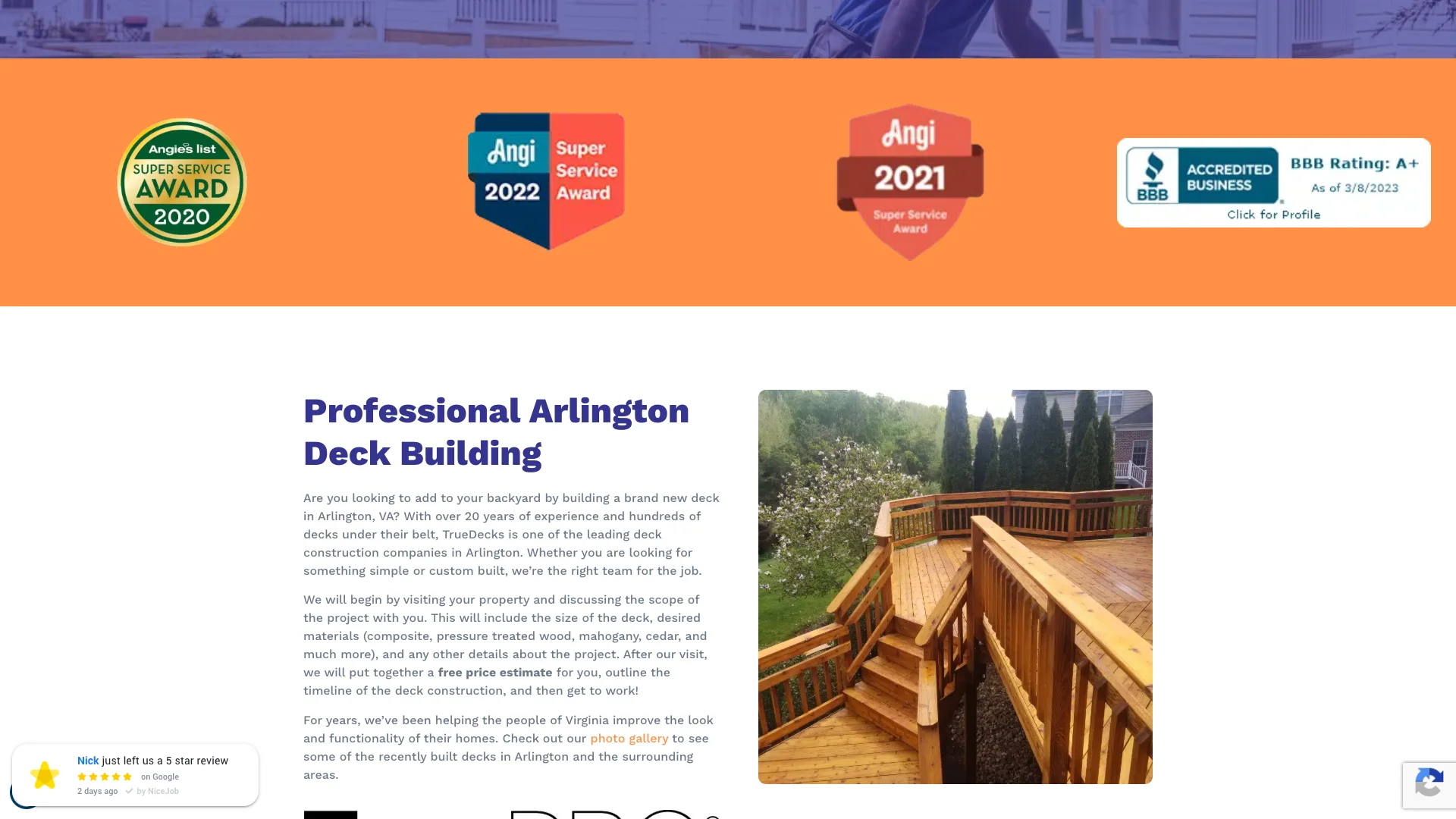
- /deck-construction-arlington-va/, the Arlington, Virginia deck construction service page (48 monthly visitors, 15% share)
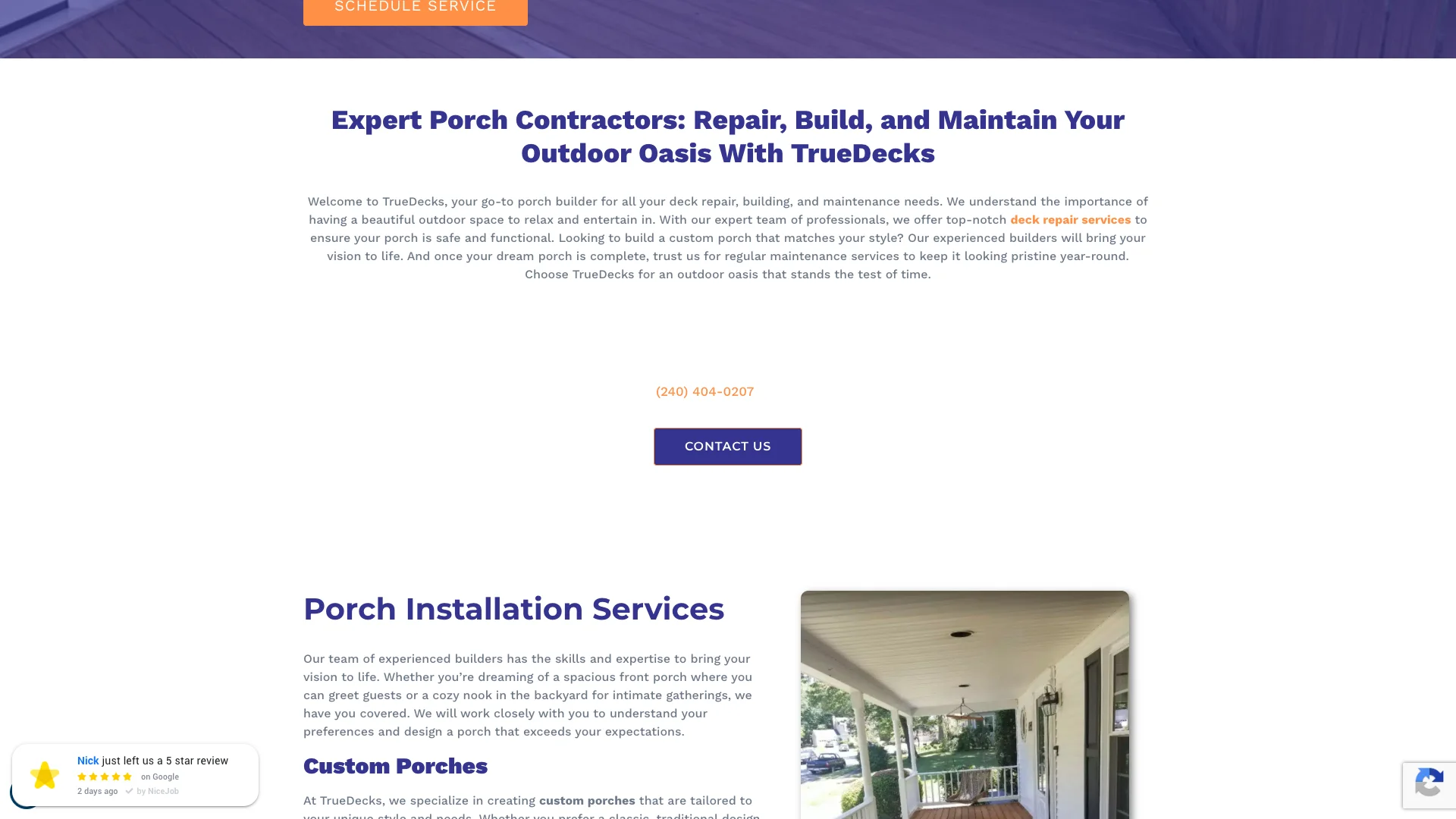
- /porch-contractors/, a porch contractor service page (32 monthly visitors, 10% share)
And the trust signal audit came back with something we don't see on most of the national franchises in this series. Google Reviews present on every page. Review widgets present on every page. Trust badges present on every page. Chat widget present on every page. A blog post with a "blog posting" code label telling Google it's a blog article. Perfect layout stability (content doesn't jump around at all as the pages load). Content depth between 1,655 and 2,623 words per page. So a 321-visitor-a-month deck builder in Maryland is running a more trust-complete website than Archadeck (33K visitors), Aire Serv (114K visitors), and Mr. Rooter (165K visitors).
"25% of homeowners say trusting contractors is their top challenge when planning home improvement projects."
— Houzz Inc. (2025)
Performance: 31 to 35 on Google's mobile test
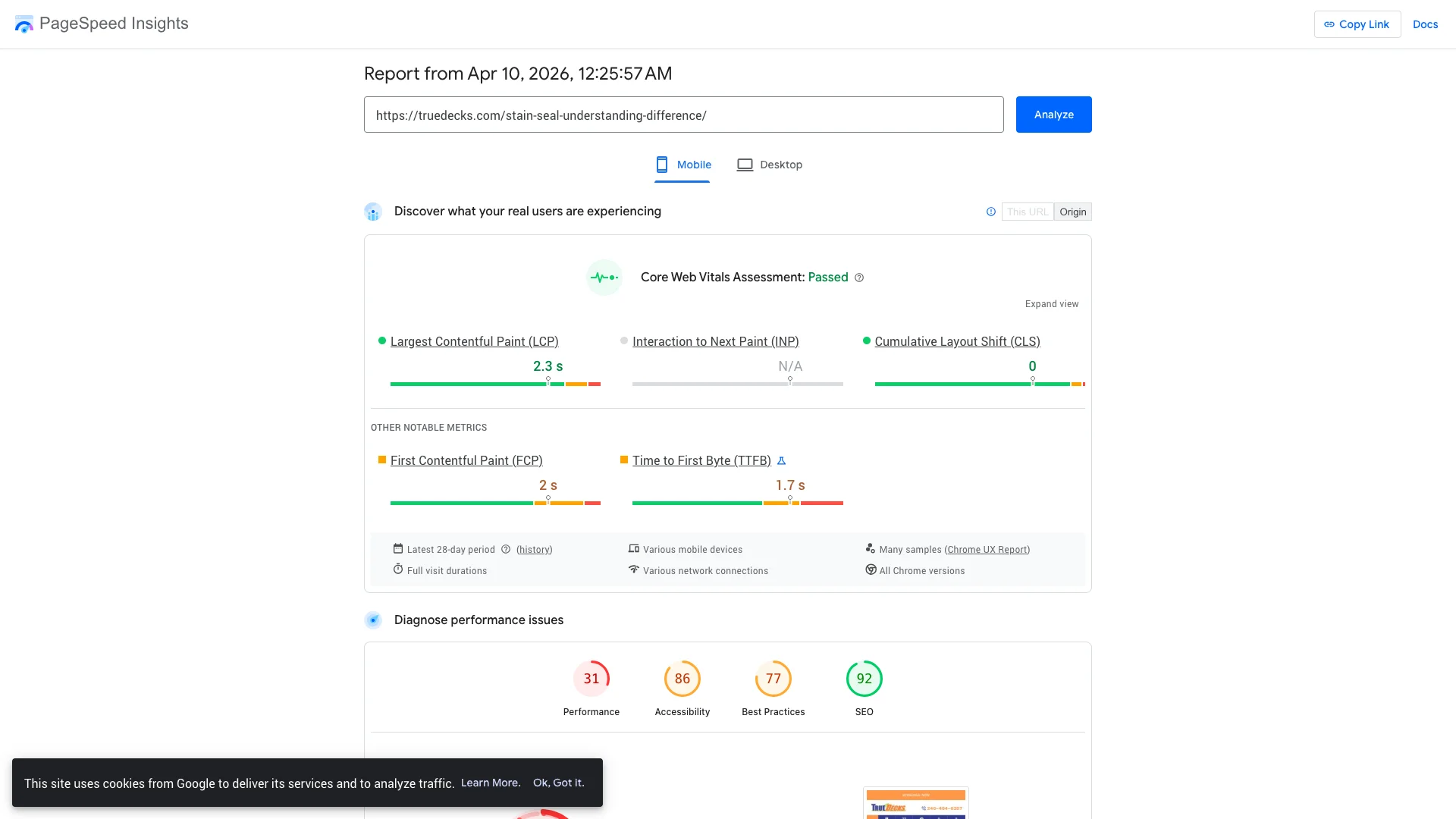
Google PageSpeed Insights runs a simulated slow-phone lab test. The scores are worst-case, not what you see on your phone with WiFi. But Google uses them as a ranking factor in search results.
The stain vs. seal blog scored 31 out of 100. The Arlington deck construction page scored 35. The porch contractors page scored 34. All three are in the red zone, and all three are eating a search-ranking penalty because of it.
"53% of mobile users abandon sites that take longer than 3 seconds to load."
— Google / SOASTA (2017)
But layout stability is where TrueDecks separates from the rest of the deck builder batch. The stain/seal blog scores 0.000 on layout shift. The Arlington page scores 0.003. The porch page scores 0.000. Content doesn't jump around at all as these pages load. That's the one performance metric homeowners can actually feel on their own device, and TrueDecks nails it. Compare that to Archadeck's porches page (layout shift of 0.294, content jumping around nearly 3x the acceptable limit) and the contrast is striking.
So the problem isn't the page structure or the images shifting around. The problem is raw page weight. The pages are loading a lot of stuff (tracking scripts, widget embeds, custom fonts, image galleries) that Google's lab test penalizes. That's a fixable problem. Shrink the images, defer the scripts, cut the trackers you aren't using. A developer who cares could get these pages from the low 30s to the mid-70s in a week of focused work. And for a small brand where every Google ranking position matters, that improvement is worth more per dollar than almost any other marketing investment.
Compounding effect
"Conversion rates drop approximately 12% for each additional second of page load time."
— Google / Deloitte (2020)
Lead capture: a search bar, a phone number, and a leftover CTA label
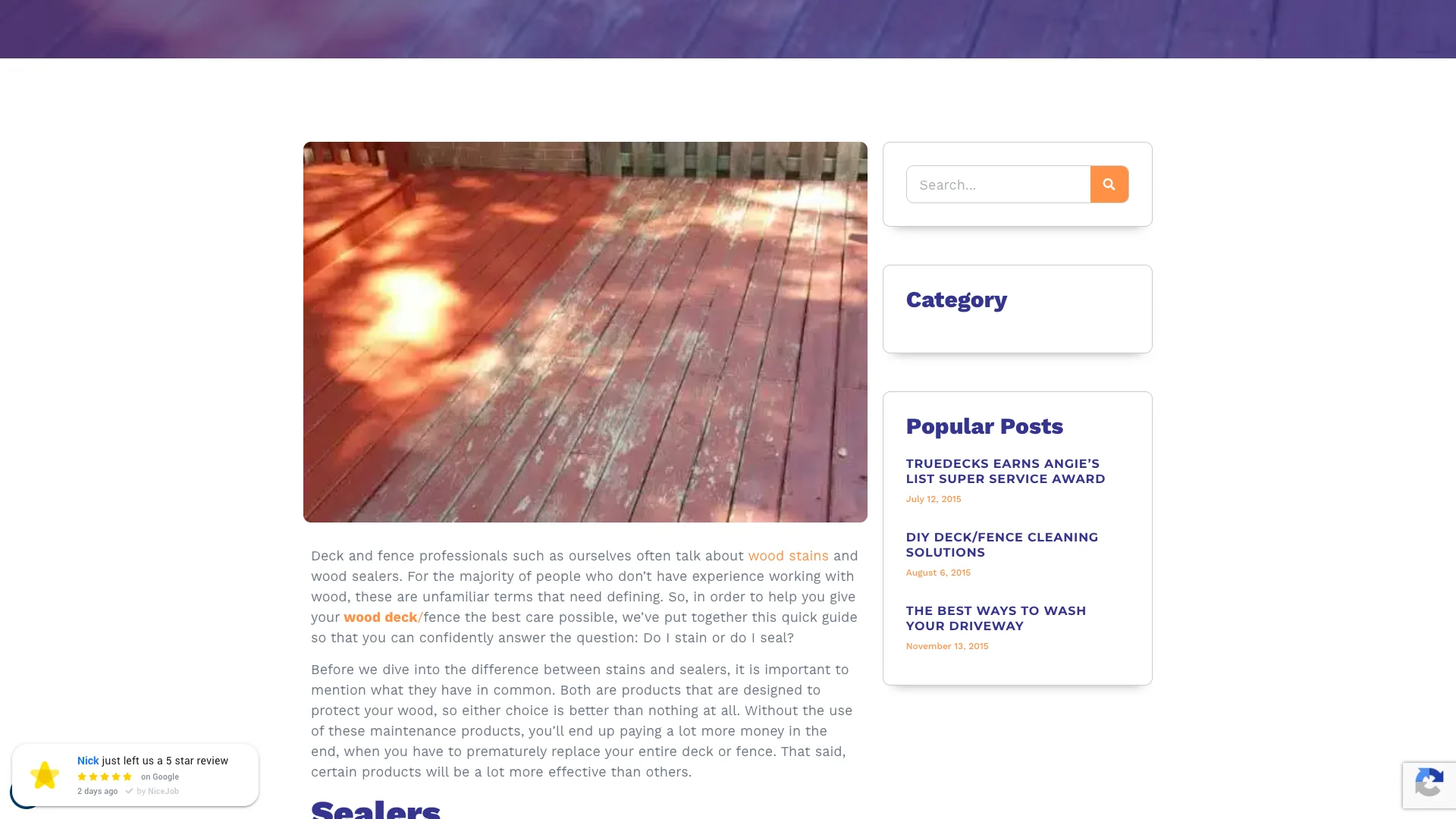
The form inventory on TrueDecks is minimal. The stain/seal blog has one form: a search bar (field name "s", the default site search input). The Arlington and porch pages have zero forms. So the only way a homeowner can leave their information is by calling (240) 404-0207 or using the chat widget.
And the CTA inventory has one interesting detail. Across the three pages, the CTAs are: "Contact," "Contact TrueDecks!," "Get In Touch," and... "Contact old." That last one is a leftover button label that somebody forgot to remove. It's sitting in the CTA list alongside the real buttons. Whether it's visible to homeowners or hidden in the markup, it's the kind of small thing that signals "nobody is checking the live site on a regular basis."
"68% of users wouldn't submit a form if it required too much personal information."
— Baymard Institute (2024)
The phone number (240) 404-0207 is visible on every page (Maryland area code, consistent with their service area). And the chat widget is on every page, which gives the homeowner who doesn't want to call a second conversion path. So there are two ways to reach TrueDecks from any page: phone or chat. That's more than Archadeck offers (zero conversion paths on the tested pages). But a 3-field contact form embedded in the blog would capture the homeowner who isn't ready to call or chat but would leave their info for a callback.
Trust signals: the best in the deck builder batch
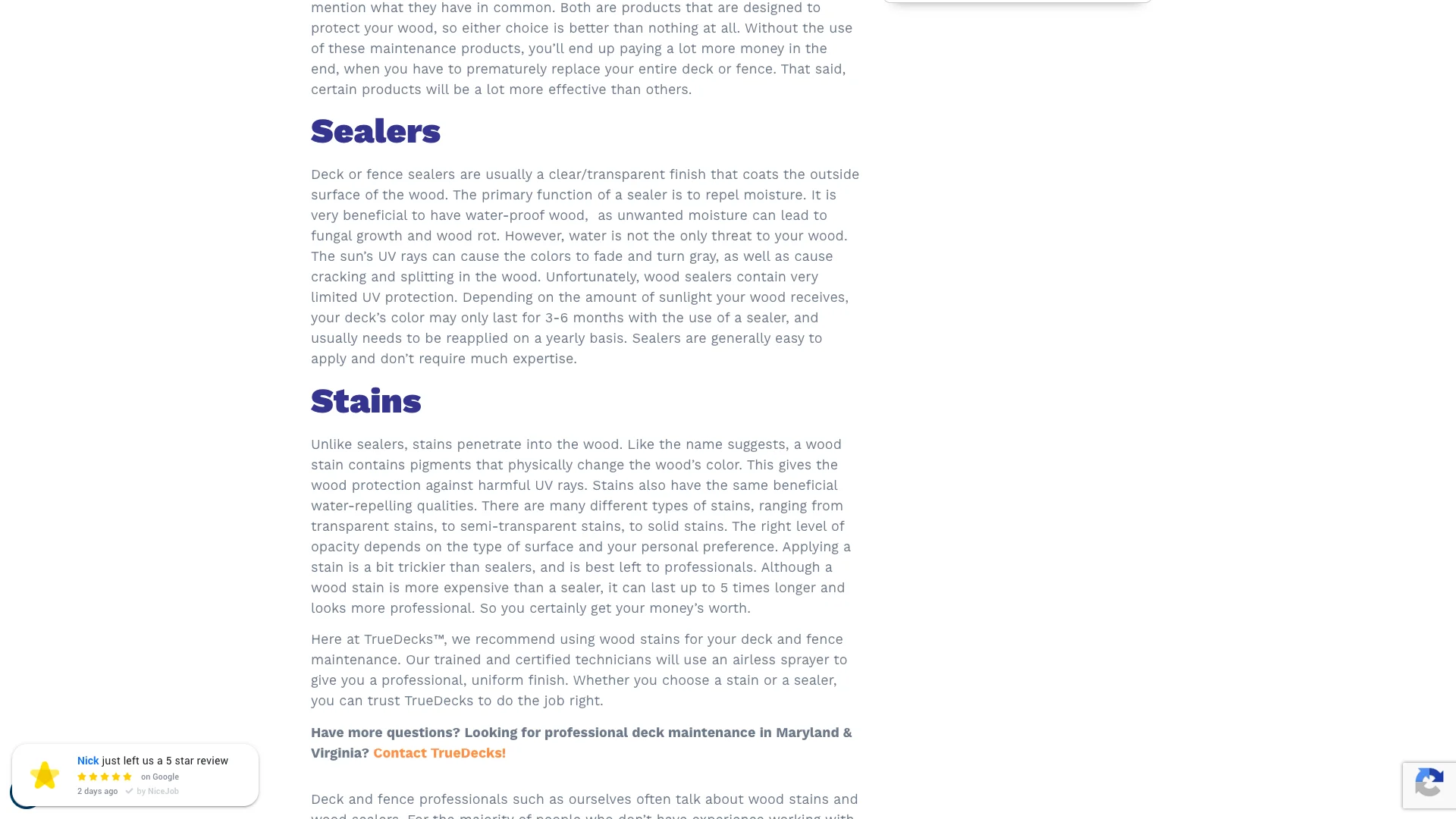
This is the section where TrueDecks earns its headline. The trust signal audit across all three pages:
- Google Reviews: Present on all three pages.
- Review widgets: Present on all three pages.
- Trust badges: Present on all three pages.
- Chat widget: Present on all three pages.
- BBB badge: Not found.
- Certifications: Not found.
Four out of six trust signal types are present on every page. Compare that to Archadeck (zero out of six), Aire Serv (zero on two of three), Mr. Rooter (trust badges only), and ARS (trust badges only, 134K reviews hidden). TrueDecks, with 321 monthly visitors, has a more complete trust signal stack than franchises with 100x their traffic.
Comparison
"83% of consumers use Google to find local business reviews; 74% use two or more review platforms when researching."
— BrightLocal (2025)
The hidden code labels are decent too. The stain/seal blog carries a "blog posting" label, which tells Google the page is a blog article (useful for showing up in blog-style search results). The Arlington and porch pages carry navigation and hierarchy labels but nothing trade-specific. So Google knows TrueDecks publishes blog content, but Google doesn't know TrueDecks is specifically a deck building business. Adding a "construction business" label to the service pages would close that gap.
What TrueDecks does well
TrueDecks is the smallest brand in this series, and it gets more things right than most of the big ones. That's worth acknowledging explicitly.
Trust signals on every page. Google Reviews, review widgets, trust badges, and a chat widget. On every tested page. That's a four-for-four trust stack that none of the Neighborly franchise brands in this series (Aire Serv, Mr. Rooter, Mr. Electric) managed to achieve. And TrueDecks did it on a 321-visitor-a-month site.
Perfect layout stability. 0.000 to 0.003 across all three pages. Content doesn't move at all as the pages load. That's the gold standard, and TrueDecks hits it while brands like Archadeck (0.294) and Bath Tune-Up (0.342) can't get close.
Real content depth. 1,655 words on the stain/seal blog. 1,862 on the Arlington page. 2,623 on the porch contractors page. Not the 3,000-4,000 word depth of the bigger franchises, but substantive enough to earn rankings for the long-tail queries they target. The stain/seal blog accounts for 30% of TrueDecks' total organic traffic, which means a single well-written blog post is driving almost a third of all visitors.
"Blog posting" code label on the blog. Google knows the stain/seal blog is a blog article, which means it's eligible for blog-style search results and article rich results. Most small contractor sites don't have this label. TrueDecks does.
"64% of homeowners say having recommendations or references is a top-three factor in choosing a contractor."
— Houzz Inc. (2025)
What the gaps mean for local deck builders
TrueDecks is a peer, not a competitor to beat. If you're a small deck builder reading this, TrueDecks is closer to your situation than Archadeck or Trex. So the lessons are different.
Copy their trust signal stack. Google Reviews, review widgets, trust badges, and a chat widget on every page. If you don't have this setup yet, TrueDecks is the proof that a small brand can do it. You don't need national-franchise resources. You need a Google Reviews embed widget, whatever trust badges you've earned (industry associations, manufacturer certifications, warranty badges), and a free chat widget. All of that can be installed in an afternoon.
Fix the page speed before scaling traffic. TrueDecks has the trust side locked. But the Google mobile scores in the low 30s mean Google isn't pushing their pages as high in search results as it could. Shrink the images, defer the tracking scripts, cut any widgets you aren't using. Getting from 31 to 75+ on Google's test is the single highest-leverage thing TrueDecks could do to turn 321 monthly visitors into 1,000+. And for a small brand, that traffic growth is the difference between a hobby blog and a lead generation engine.
Add a contact form to the blog. The stain/seal blog drives 30% of all traffic to the site. A homeowner reading about staining versus sealing who decides they need professional help should be able to leave their info right there on the article. Three fields: name, phone, zip. "Not sure which one your deck needs? Tell us about your project." That form captures the research-stage visitor who isn't ready to call but would return a callback.
Remove the "Contact old" leftover CTA. Small detail, but it matters. If there's a button label with "old" in it sitting somewhere on the site, it signals to any visitor who notices it that the site isn't being maintained. Check every button, every link, every CTA on your site once a month. If something says "old" or "test" or "placeholder," fix it.
"48% of customers say that if a site does not work well on mobile, it signals the company does not care about their business."
— Google Consumer Insights (2018)
Frequently asked questions
How does TrueDecks score on Google's mobile test?
The stain vs. seal blog scored 31 out of 100 on Google PageSpeed Insights mobile. The Arlington VA deck construction page scored 35. The porch contractors page scored 34. All three are in the red zone and eating a search-ranking penalty. But layout stability is perfect (0.000 to 0.003), so the pages don't jump around as they load.
Does TrueDecks display Google Reviews?
Yes. All three tested pages returned Google Reviews as present, with review widgets rendering on every page. Trust badges are also present on all three. That combination makes TrueDecks the most trust-complete small brand in the entire CRO Index series.
Is TrueDecks the smallest brand in the CRO Index?
Yes. With 321 monthly organic visitors and a traffic value of $933, TrueDecks is the smallest brand by both metrics. But small traffic doesn't mean bad execution. TrueDecks has Google Reviews, review widgets, trust badges, a chat widget, clean layout stability, and decent content depth on every tested page. The only gap is page speed.
How much organic traffic does truedecks.com get?
According to Ahrefs data from March 2026, truedecks.com receives approximately 321 monthly organic visitors with an estimated traffic value of $933. The stain vs. seal blog accounts for 94 visitors (30% share). The Arlington deck construction page accounts for 48 (15%). The porch contractors page accounts for 32 (10%). One blog post drives almost a third of all traffic.