What we found on groundsguys.com
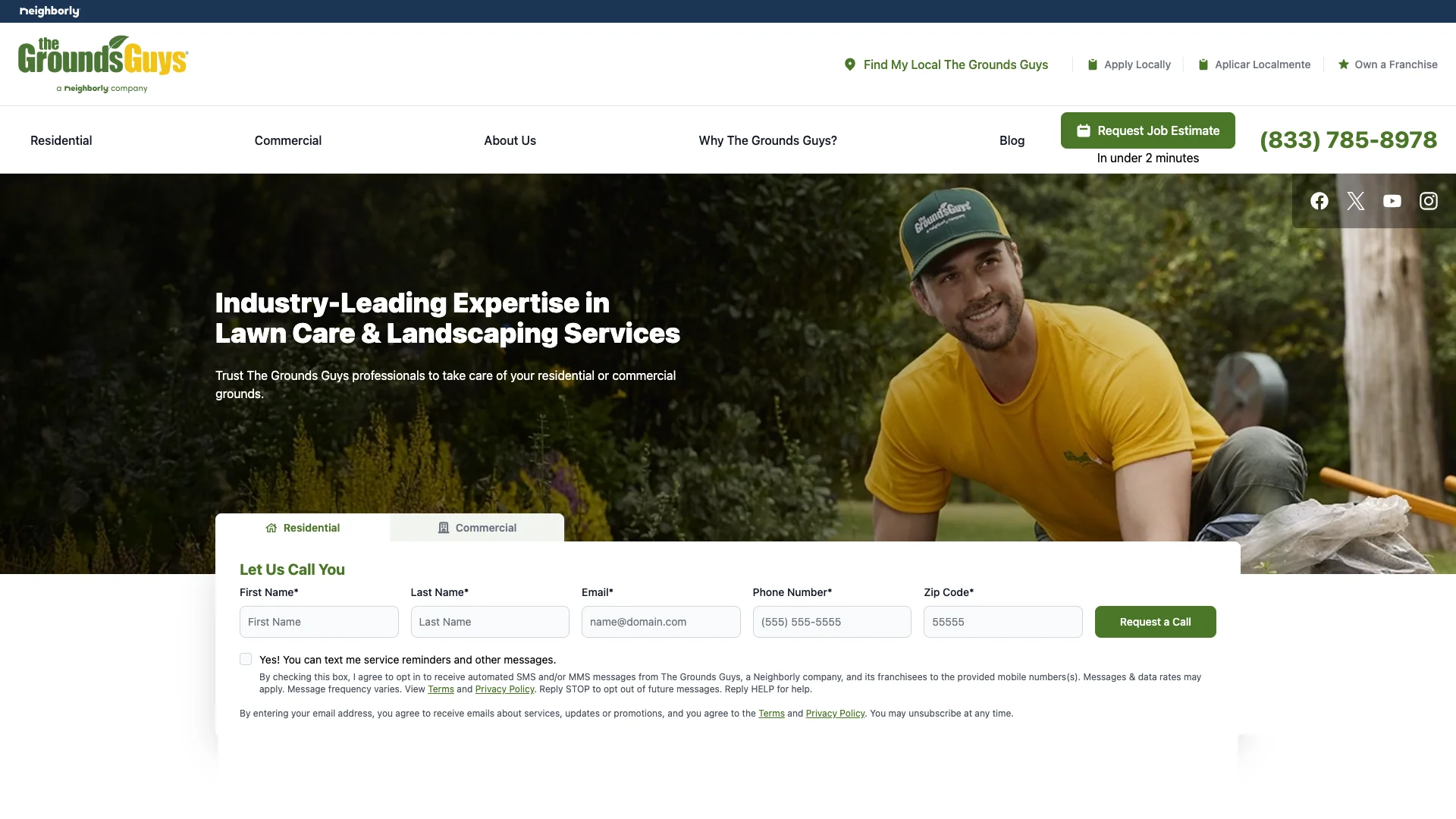
The Grounds Guys is a Neighborly-owned landscaping franchise. If you've read our Aire Serv or Mr. Rooter teardowns, the template will look familiar. Same franchise network, same web infrastructure, same trust signal gaps. According to Ahrefs, groundsguys.com pulls 37.4K monthly organic visitors with an estimated traffic value of $78K.
The pages we tore down:
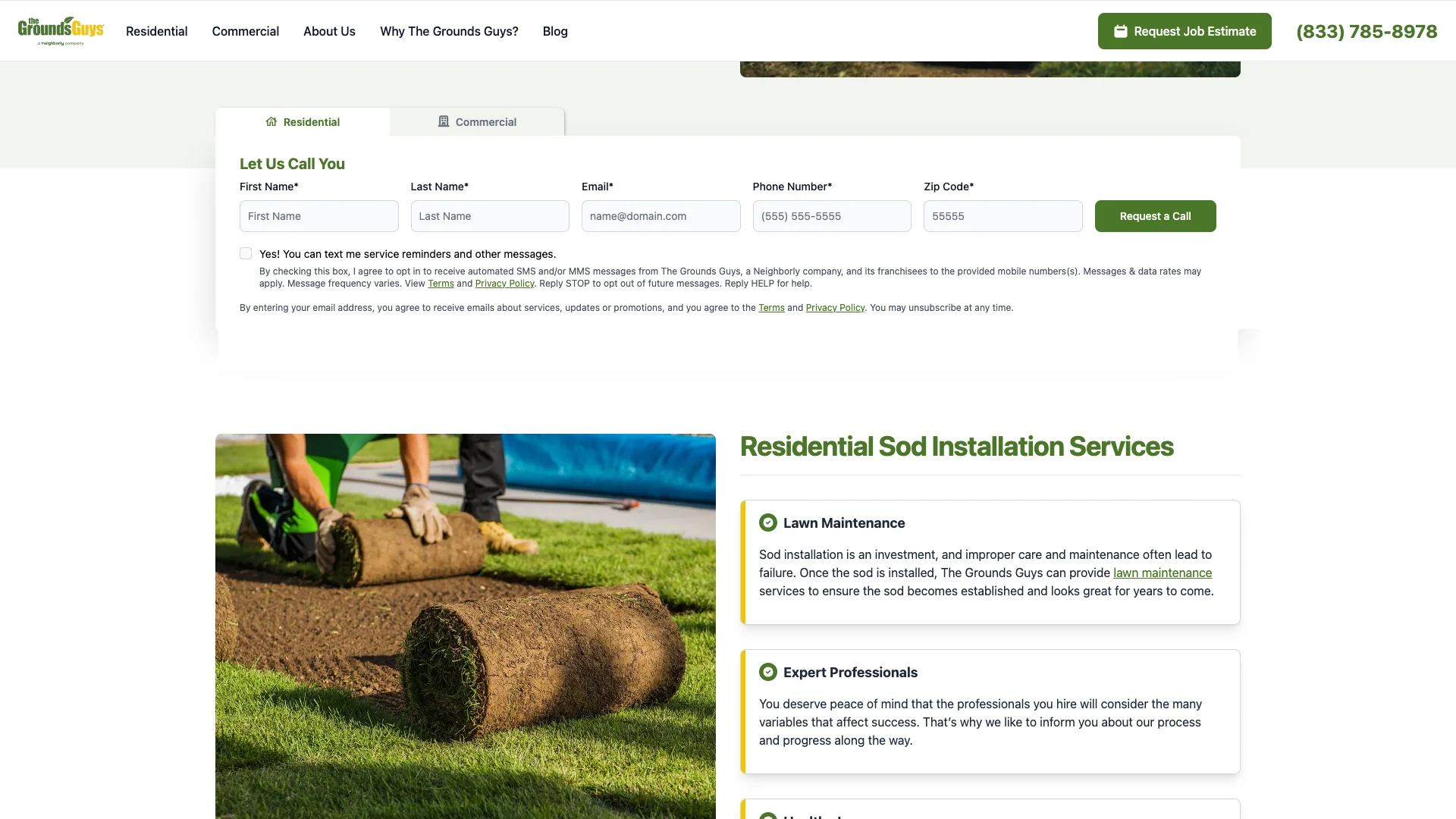
- /irrigation/, the irrigation service page (2.8K monthly organic visitors, scored 43 on Google's mobile lab test, layout shift 0.000, 3 forms, 3,953 words)
- /sod-installation/, the sod installation service page (1.9K monthly visitors, scored 36, layout shift 0.000, 3 forms, 3,823 words)
- /spring-cleanup/, the spring cleanup service page (1.8K monthly visitors, scored 40, layout shift 0.000, 3 forms, 3,967 words)
And the standout detail isn't the scores or the forms. It's the content depth. These pages are running 3,800 to 3,970 words each. That's the deepest content in the entire landscaping batch. The Grounds Guys is publishing genuine long-form service pages that cover the topic thoroughly. But just like every other Neighborly brand in this series, all that content sits next to zero social proof.
So a homeowner researching irrigation systems lands on a 3,953-word page that covers everything they could possibly want to know. They read about drip irrigation, sprinkler heads, seasonal maintenance, water efficiency, soil types, and zone planning. They're educated. They're informed. And then they look for a reason to trust this specific company with their project. And the page gives them nothing. No reviews. No ratings. No customer names. Just a form.
"25% of homeowners say trusting contractors is their top challenge when planning home improvement projects."
— Houzz Inc. (2025)
Performance: 36 to 43 on Google's mobile lab test
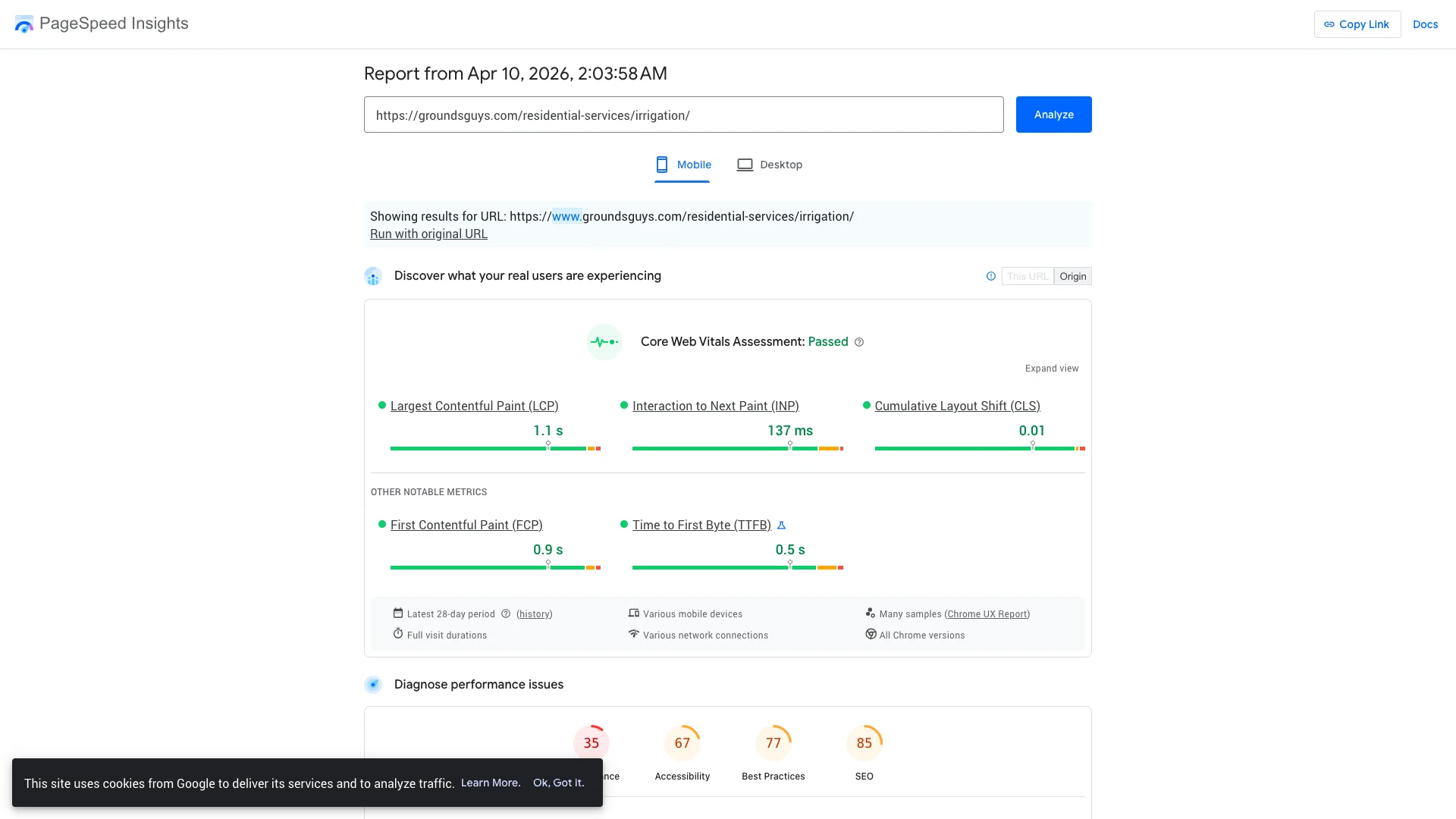
Google PageSpeed Insights runs a simulated slow-phone lab test. The scores are worst-case, not what you see on your phone with WiFi. But Google uses them as a ranking factor in search results.
The irrigation page scored 43. The spring cleanup page scored 40. The sod installation page scored 36. All three land in the red zone. But compared to Lawn Doctor's 27-28 range, The Grounds Guys is performing roughly 10 points higher. Still not good enough to avoid the ranking penalty, but a shorter climb to get into the green.
To put those scores in context: a score of 43 means the page is slow to become interactive, but not catastrophically so. The largest content element takes longer than Google wants to see. The main thread is blocked while scripts execute. But the gap between 43 and 70 is smaller than the gap between 27 and 70. So the performance fix is achievable with moderate effort rather than a full rebuild.
"53% of mobile users abandon sites that take longer than 3 seconds to load."
— Google / SOASTA (2017)
Layout stability is perfect across the board. All three pages score 0.000 on layout shift. Content doesn't jump around at all as the pages load. That's consistent with the Neighborly template pattern we've seen on other franchise brands. The template is structurally sound. The pages are stable. The performance issue is load time, not layout chaos.
Part of the load time problem is likely connected to the content depth itself. Nearly 4,000 words per page means more rendering work for the browser. More paragraphs, more headings, more images embedded in the content. But that's a solvable problem. Lazy-load the images below the fold, defer the non-critical scripts, compress what you can. The content depth is an asset worth keeping. The slow rendering of that content is the liability worth fixing.
Lead capture: 3 forms per page, Neighborly standard
Three forms on every tested page. Same count as Lawn Doctor, same count as the other Neighborly brands. The franchise template includes multiple conversion points throughout the content, which means a homeowner scrolling through nearly 4,000 words of irrigation or sod installation content hits a form at regular intervals.
That's the right approach for long-form pages. When your content runs nearly 4,000 words, a single form at the bottom means most visitors will never scroll far enough to see it. Three forms spread across the content catch the homeowner at different stages of their reading. The one who's convinced after the first section. The one who needs more detail. And the one who reads the whole thing before deciding.
But the same trust gap applies. Three forms with zero reviews, zero badges, and zero testimonials nearby. The forms are asking for trust that the page hasn't built. A homeowner who just read 2,000 words about irrigation systems and knows this company is an expert still has no evidence that previous customers were happy with the actual work. Expertise and trustworthiness aren't the same thing, and these pages only demonstrate one of them.
"68% of users wouldn't submit a form if it required too much personal information."
— Baymard Institute (2024)
And a homeowner comparing this page to a local landscaper with a Google Reviews widget next to their contact form will choose the local option, even if The Grounds Guys has better content and more locations. The content educates. The reviews convince. You need both to convert.
Trust signals: the Neighborly pattern repeats
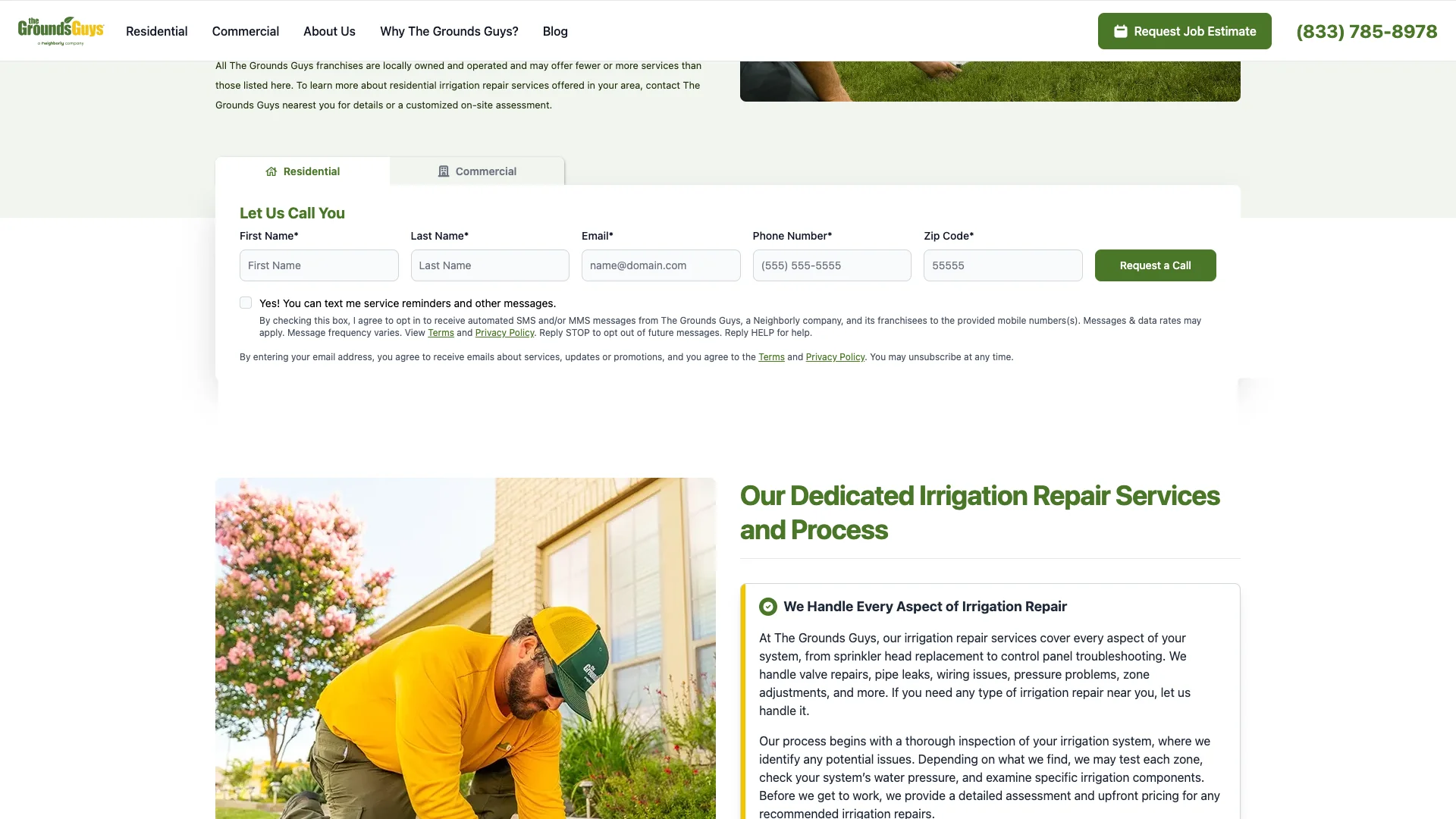
If you've read our other Neighborly teardowns, you already know what's coming. The trust signal audit across all three pages:
- Google Reviews: Not present on any page.
- Customer Reviews section: Present, with star ratings and customer review carousel (Neighborly template, missed by our initial scraper).
- Trust badges: Not present on any page.
- Chat widget: Not present on any page.
- BBB badge: Not found.
- Certifications: Not found.
Zero out of six. Again. This is the third Neighborly brand in the CRO Index with this exact same result. The franchise template doesn't include trust signals on service pages, and individual franchisees aren't adding them on their own. It's a system-level decision that affects every location in the network.
And here's what makes the Neighborly trust gap especially costly for The Grounds Guys: the content is genuinely good. Nearly 4,000 words of substantive, well-organized service content. A homeowner reading that content is getting educated. They're learning about irrigation zones and sod types and spring cleanup timelines. They're building confidence in the topic. But they're not building confidence in the company. And when it's time to fill out the form, confidence in the company is what matters.
Comparison
"83% of consumers use Google to find local business reviews; 74% use two or more review platforms when researching."
— BrightLocal (2025)
The hidden code labels follow the standard Neighborly pattern too. Navigation and site hierarchy labels are present, but nothing trade-specific. Google can read the text and figure out it's a landscaping page, but explicit hidden code labels saying "landscaping service" or "lawn care provider" would give Google the direct signal rather than making it infer from context.
What The Grounds Guys does well
The Grounds Guys has the deepest content in the landscaping batch, and that deserves recognition. Most franchise templates produce thin, 500-word service pages. The Grounds Guys is publishing nearly 4,000 words per page.
Content depth that earns rankings. 3,953 words on irrigation. 3,823 on sod installation. 3,967 on spring cleanup. These aren't padded word counts. These are substantive service pages covering the topic in detail. That kind of content depth is what Google rewards with long-tail keyword rankings, and it's likely a major factor in The Grounds Guys pulling 37.4K monthly visitors despite having relatively low page-level traffic on individual service pages.
Perfect layout stability. 0.000 across all three pages. Content doesn't jump around. The pages are structurally sound and predictable for the visitor. That's table stakes, but most brands in this series still can't hit it consistently. The Grounds Guys hits it on every tested page.
Three forms embedded in long content. For pages running nearly 4,000 words, having three forms spread throughout the content is the right approach. The franchise template is doing the form placement correctly, even if it's missing the trust layer. The homeowner who's ready to convert at word 1,000 doesn't have to scroll to word 3,900 to find a form.
"64% of homeowners say having recommendations or references is a top-three factor in choosing a contractor."
— Houzz Inc. (2025)
What the gaps mean for landscaping contractors
The Grounds Guys gives landscaping contractors two lessons that pull in opposite directions.
Copy the content depth. Nearly 4,000 words per service page is earning The Grounds Guys traffic that thinner pages can't touch. If your irrigation page is 400 words, you're not competing for the same long-tail keywords. Write detailed, substantive service pages that answer every question a homeowner might have about the topic. Use specific examples. Cover the process. Explain the pricing factors. That depth is what earns rankings.
Don't copy the trust gap. All that content is wasted effort if the homeowner reads 4,000 words and then sees a bare form with no social proof. Put Google Reviews on every service page. Add a trust badge section near the top and near the form. Install a chat widget for the homeowner who wants to ask a quick question before committing. These additions take an afternoon to implement and they change the conversion math immediately.
Fix the scores before scaling content. Writing 4,000-word pages that score 36 on Google's mobile lab test means you're investing in content that Google is penalizing in rankings. Fix the performance first. Get your pages into the green zone. Then scale the content production. That order matters because every page you publish with a red-zone score is a page that's underperforming its potential from day one.
"48% of customers say that if a site does not work well on mobile, it signals the company does not care about their business."
— Google Consumer Insights (2018)
Add trade-specific hidden code labels. Google's hidden code labels take 15 minutes to implement and they tell search engines exactly what your business does. "Landscaping service," "lawn care provider," "irrigation contractor." These explicit labels help Google categorize your pages correctly instead of guessing from context. Every service page should carry them.
Install a chat widget. For a landscaping business, the homeowner's first question is often about timing, pricing, or whether you service their specific area. A chat widget answers that in real time instead of sending them to a form and making them wait for a callback. The Grounds Guys' nearly 4,000 words of content creates educated, interested visitors. A chat widget catches them at the moment of peak interest.
Frequently asked questions
How does The Grounds Guys score on Google's mobile test?
The irrigation page scored 43 out of 100 on Google PageSpeed Insights mobile. The spring cleanup page scored 40. The sod installation page scored 36. All three are in the red zone and taking a search-ranking penalty. But layout stability is perfect (0.000 across the board), so the pages don't jump around as they load.
Does The Grounds Guys display Google Reviews?
No. All three tested pages returned zero trust signals. No Google Reviews, no review widgets, no trust badges, no chat widget. This follows the same Neighborly franchise template pattern we've documented on Aire Serv and Mr. Rooter. It's a system-level gap that affects every location in the network.
How much content does The Grounds Guys put on each page?
The tested pages range from 3,823 to 3,967 words per page. That's the deepest content in the entire landscaping batch. The irrigation page runs 3,953 words. Sod installation runs 3,823. Spring cleanup runs 3,967. These are genuine long-form service pages, not thin content. And that depth is likely a significant factor in The Grounds Guys pulling 37.4K monthly visitors.
How much organic traffic does groundsguys.com get?
According to Ahrefs data from March 2026, groundsguys.com receives approximately 37.4K monthly organic visitors with an estimated traffic value of $78K. The irrigation page accounts for 2.8K visitors, sod installation for 1.9K, and spring cleanup for 1.8K. The bulk of the traffic comes from other pages across the site.