What we found on casedesign.com
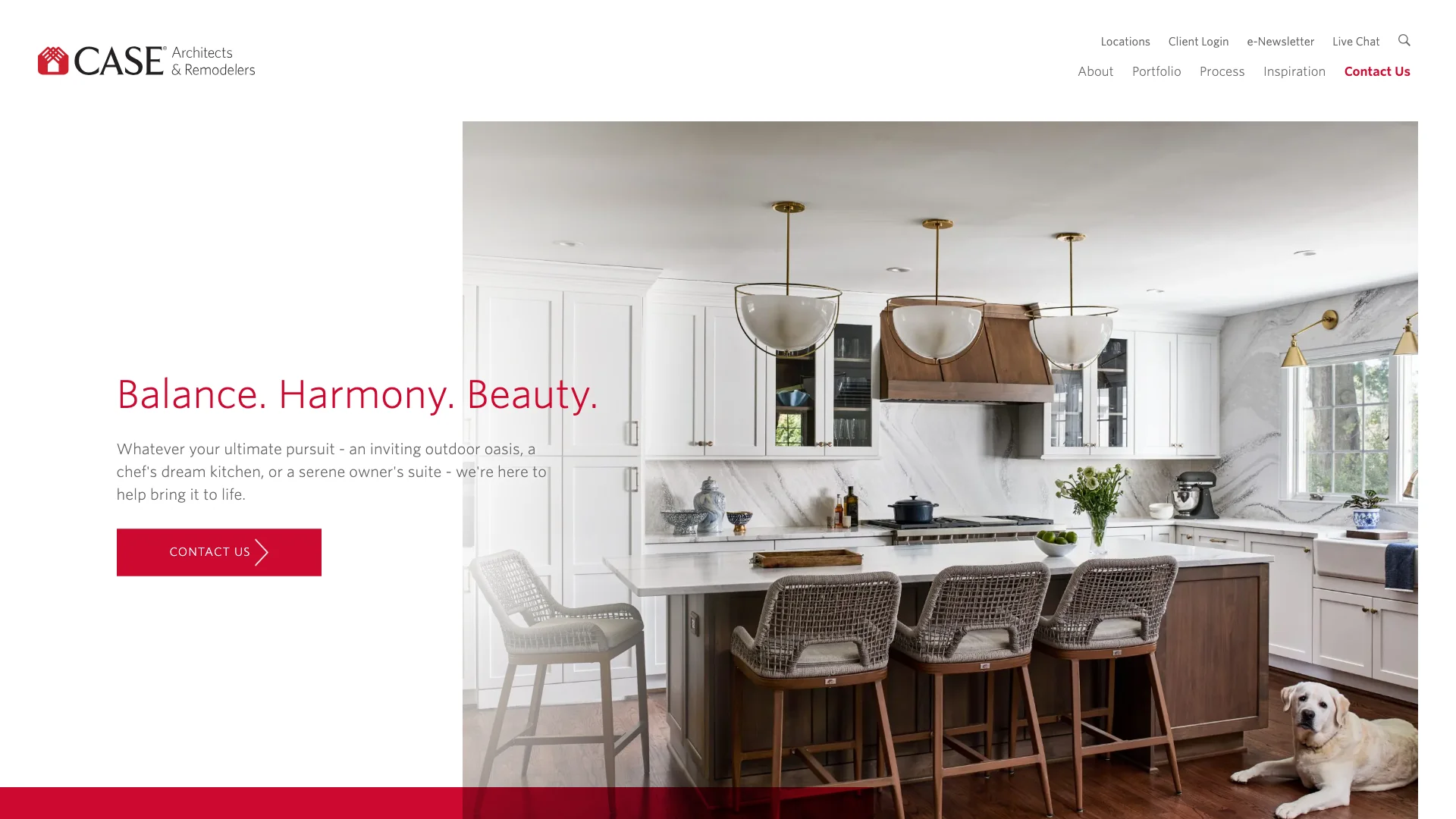
Case Design/Remodeling is a DC-area remodeling company focused on kitchens, bathrooms, and whole-home renovations. According to Ahrefs, casedesign.com pulls 1,100 monthly organic visitors with an estimated traffic value of $1,200. That puts them on the smaller end of the CRO Index for remodelers. But small traffic doesn't mean bad architecture. And that's the story on this one.
The pages we tore down:
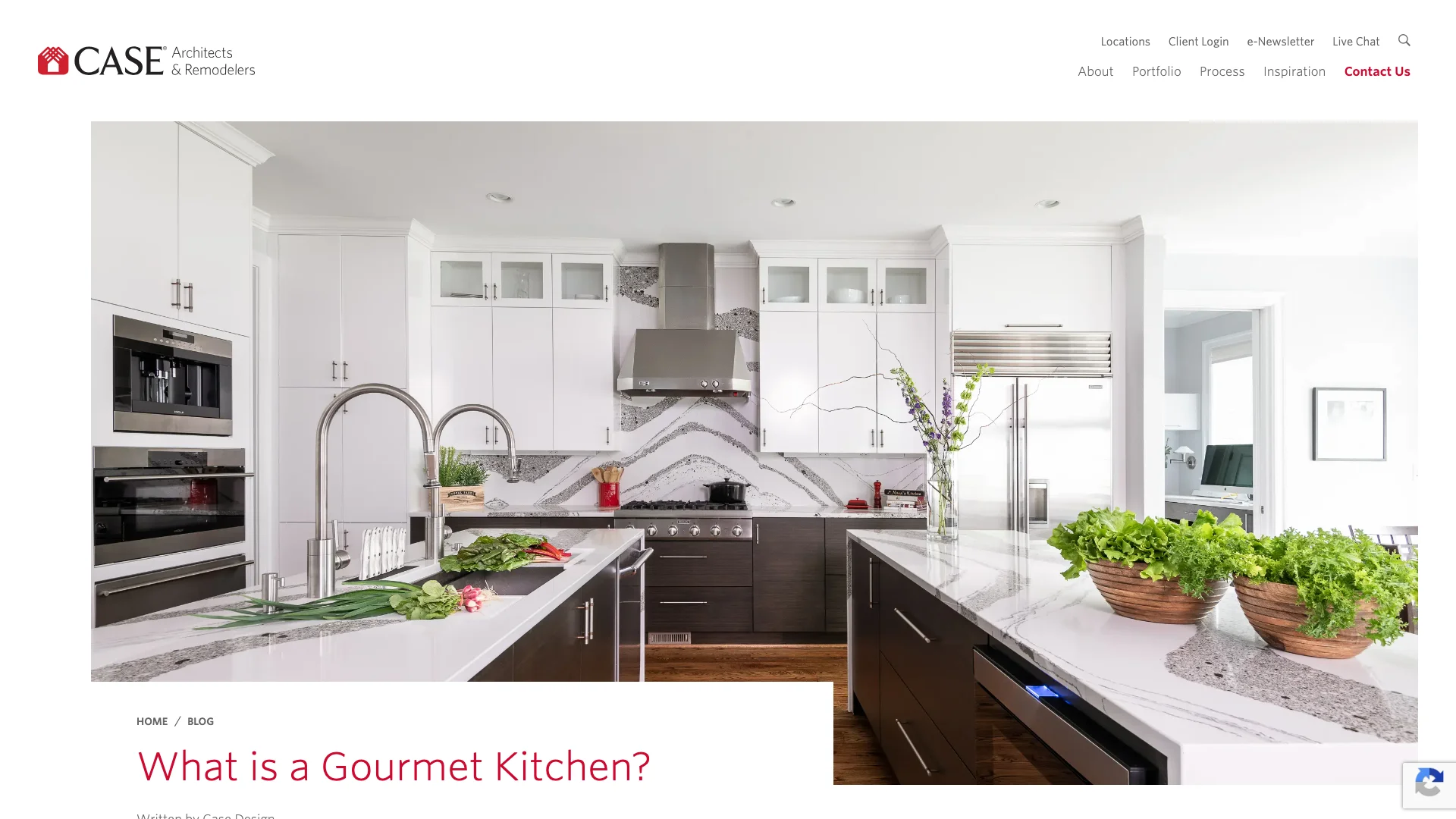
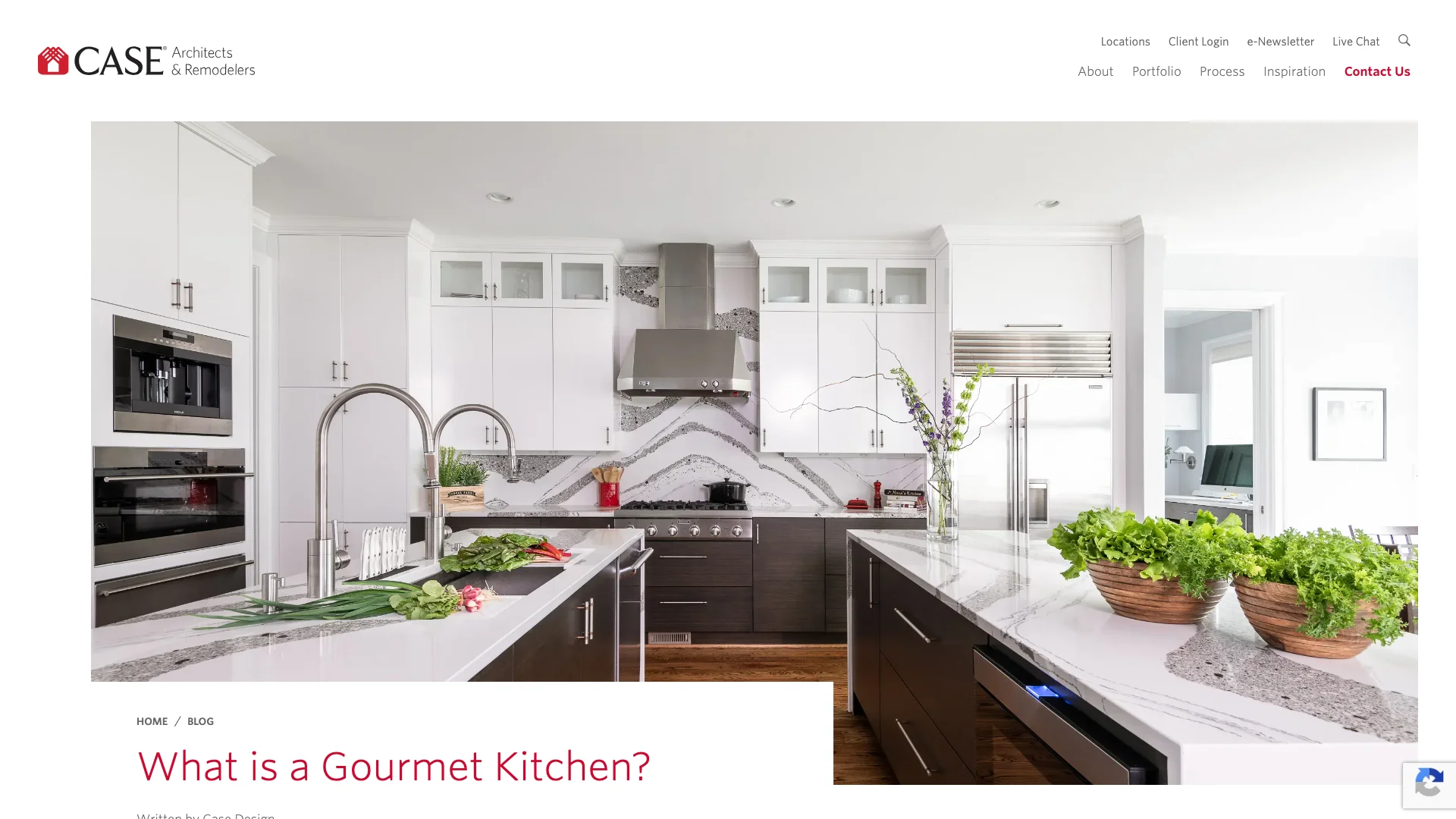
- Gourmet kitchen article, a content piece about gourmet kitchen design (137 monthly organic visitors, scored 30 on Google's mobile lab test, CLS 0.000, 2 forms, 1,672 words)
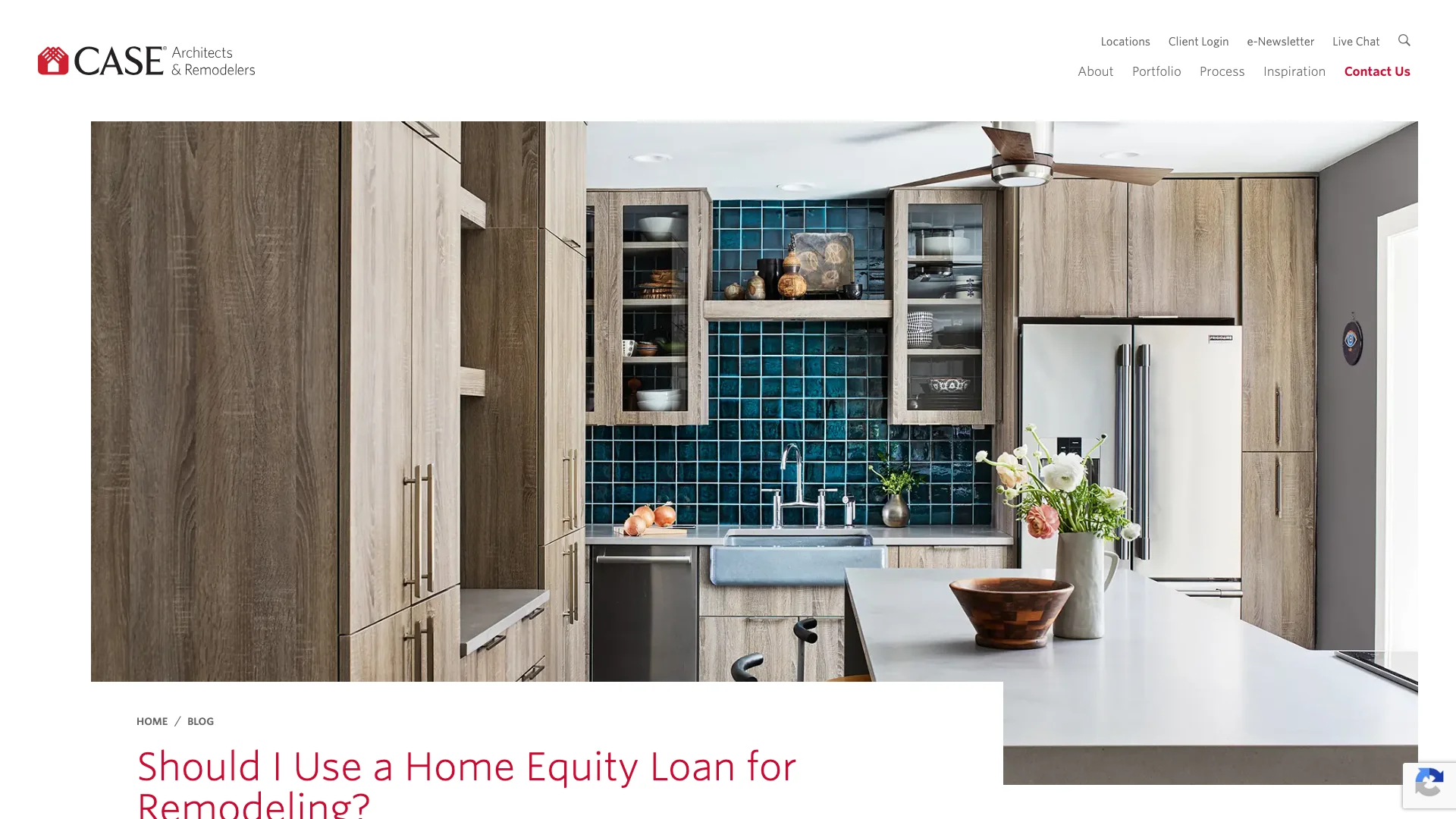
- Home equity loan article, a guide about using home equity loans for remodeling (86 monthly visitors, scored 36, CLS 0.000, 2 forms, 2,224 words)
- Banquettes article, a design piece about kitchen banquette seating (55 monthly visitors, scored 28, CLS 0.000, 2 forms, 1,894 words)
And the pattern is immediately clear: clean pages, consistent forms, solid content depth, perfect layout stability. But zero trust signals of any kind. No reviews. No badges. No chat. No third-party validation anywhere on the site.
A homeowner reading about gourmet kitchens who decides they want Case Design to handle their renovation has to take a leap of faith, because the site doesn't give them any evidence that other homeowners have done it successfully. The content builds credibility through expertise. But expertise alone doesn't close a $75,000 kitchen remodel. You need proof that the expertise translates into results.
"25% of homeowners say trusting contractors is their top challenge when planning home improvement projects."
— Houzz Inc. (2025)
Performance: 28 to 36 on Google's mobile lab test
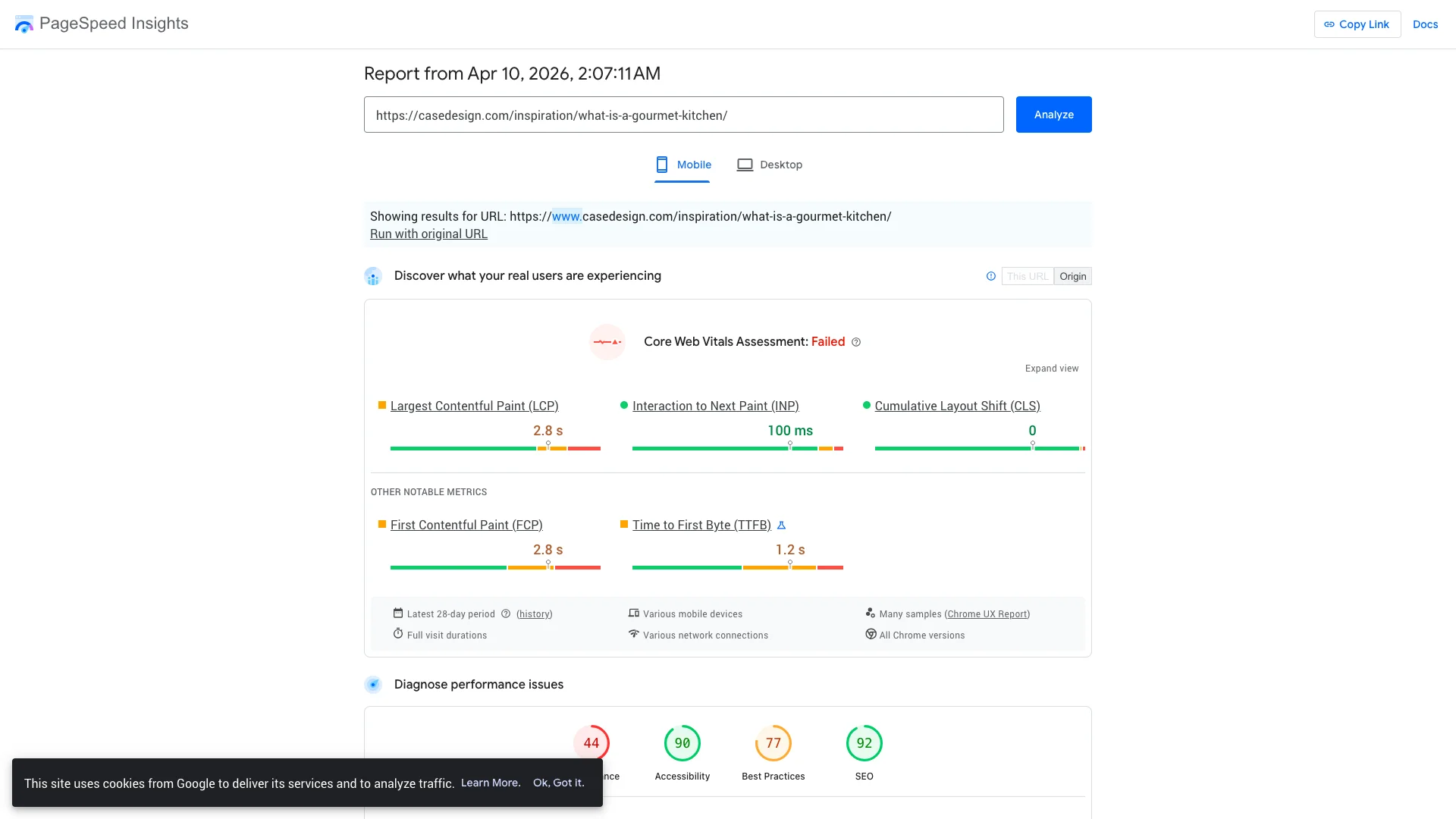
Google PageSpeed Insights runs a simulated slow-phone lab test. The scores are worst-case, not what you see on your phone with WiFi. But Google uses them as a ranking factor in search results.
The gourmet kitchen article scored 30. The home equity loan article scored 36. The banquettes article scored 28. All three are in the red zone, and all three are eating a search-ranking penalty because of it. For a small remodeler where every visitor matters, those penalties hit harder than they would for a brand with 100K monthly visitors.
"53% of mobile users abandon sites that take longer than 3 seconds to load."
— Google / SOASTA (2017)
But layout stability is where Case Design stands out. All three pages score 0.000 on layout shift. Perfect. Content doesn't jump around at all as the pages load. That's not just good. That's the best possible score. And it tells you something important about how the site was built: the page structure is solid. The images are sized correctly. The fonts aren't causing content to shift around as they load in.
So the problem isn't the page structure or the layout. The problem is raw page weight. Tracking scripts, uncompressed images, custom fonts loading synchronously, third-party embeds. All of that adds load time without affecting how the page feels once it's loaded. Strip the weight. Keep the structure.
And the home equity loan article at 36 shows the ceiling. It's 8 points higher than the banquettes article at 28, which means something about that specific page is leaner. Fewer images, shorter scripts, lighter embeds. Whatever the home equity loan article is doing differently, apply it to the other two pages. That alone could lift the floor from 28 to the mid-30s across the board. From there, image compression and script deferral could push all three into the 60s or higher.
Compounding effect
"Conversion rates drop approximately 12% for each additional second of page load time."
— Google / Deloitte (2020)
Lead capture: 2 forms per page, consistent and clean
Every tested page has exactly two forms. That consistency is a strength. A homeowner on any article page gets two chances to leave their information. And for a small remodeler, two forms per page is the right number. It's enough to capture interest without overwhelming the visitor.
The content on these pages is doing real work, too. The gourmet kitchen article runs 1,672 words. The home equity loan article runs 2,224 words. The banquettes article runs 1,894 words. That's not thin content. That's substantive writing that earns time on page and gives Google something meaningful to index. Most small remodelers publish 300 to 500 word pages. Case Design is writing 4x that.
"68% of users wouldn't submit a form if it required too much personal information."
— Baymard Institute (2024)
But the forms themselves could work harder with some context. A homeowner reading about gourmet kitchen design who reaches a generic "contact us" form has to make the mental connection between the article and the service. A contextual CTA would do that work for them: "Thinking about a gourmet kitchen? Tell us about your space." Three fields. Name, phone, zip. Tied directly to the content they just read. That bridges the gap between reading and reaching out.
And the home equity loan article is an especially interesting case. A homeowner reading about financing their remodel is further along in the decision process than someone browsing design ideas. They've already decided they want to remodel. They're figuring out how to pay for it. That visitor is warm. A form that says "Ready to talk about your remodeling budget? We can help" would convert better than a generic form on that specific page.
The banquettes article is different again. Someone reading about banquette seating is in the early inspiration stage. They might not even have a project timeline yet. For that visitor, a softer CTA works better: "Love this idea? Save it and tell us what you're imagining for your kitchen." The point is that each article attracts a different type of visitor at a different stage, and the form language should reflect that. Same form structure, different copy.
Trust signals: zero across all three pages
The trust signal audit across all three pages:
- Google Reviews: Not found on any page.
- Trust badges: Not found on any page.
- Review widgets: Not found on any page.
- Chat widget: Not found on any page.
- BBB badge: Not found.
- Certifications: Not found.
Zero out of six trust signal types across all three pages. For a remodeler serving the DC area, where the average kitchen remodel runs $50,000 to $150,000 or more, that gap is costly. A homeowner doesn't hand over that kind of money without some evidence that other homeowners have done it and been happy. And right now, the only evidence on casedesign.com is the content itself.
Comparison
"83% of consumers use Google to find local business reviews; 74% use two or more review platforms when researching."
— BrightLocal (2025)
The hidden code labels Google reads are minimal too. None of the three pages carry trade-specific labels that would tell Google "this is a remodeling company." Basic navigation and hierarchy labels are present, but nothing that signals the business category to search engines. Adding a "home improvement" or "remodeling contractor" label to the content pages would help Google understand what Case Design does, which affects how those pages show up in search results.
And there's a compounding effect. When you write 2,000+ words of expert content about gourmet kitchens but don't show a single review from a homeowner who got a gourmet kitchen built, you're leaving credibility on the table. The content says "we know what we're talking about." Reviews say "and we delivered on that knowledge for real people." You need both. The content is already there. The reviews just need to be added.
What Case Design does well
Case Design gets the fundamentals right in ways that most small remodelers don't. That's worth recognizing.
Perfect layout stability. 0.000 across all three pages. Content doesn't jump around at all. That's the gold standard, and Case Design hits it consistently. Most brands in the CRO Index, including ones 10x their size, can't claim that. The site was built by someone who understood that content shifting around as a page loads is one of the most frustrating things a homeowner can experience on mobile.
Real content depth. 1,672 to 2,224 words per article. Not thin placeholder content. Not 300-word blurbs. Substantive articles that answer real homeowner questions about gourmet kitchens, financing, and design choices. That content depth earns time on page, builds topical authority with Google, and positions Case Design as a knowledgeable remodeler rather than just another contractor with a website.
Consistent form presence. Two forms on every page. No dead ends. Every article visitor gets two chances to convert. That consistency is something even larger remodelers in the CRO Index fail to achieve. Some brands have three forms on one page and zero on the next. Case Design keeps it uniform.
Diverse content topics. A gourmet kitchen article. A home equity loan guide. A banquette design piece. Case Design isn't writing the same "why hire a remodeler" article three times. They're covering different stages of the homeowner journey, from design inspiration (banquettes) to financial planning (home equity loans) to premium upgrades (gourmet kitchens). That diversity captures visitors at multiple points in the decision process.
What the gaps mean for remodelers
Case Design is a peer for any small remodeler pulling 500 to 2,000 monthly visitors. The pages are well-built. The content is solid. The gaps are all in the trust layer, and they're all fixable in a week.
Add Google Reviews to every page. If Case Design has Google Reviews (and most established DC-area remodelers do), they need to be visible on every page. An embed widget takes 30 minutes to install. It shows up on every page automatically. And it immediately gives the homeowner reading about gourmet kitchens a reason to believe that Case Design can actually deliver one. No code changes needed beyond the initial install.
Add trust badges. Industry association memberships, manufacturer certifications, warranty badges, NARI certification, EPA Lead-Safe certification. Whatever Case Design has earned, it needs to be visible. A kitchen remodel is a $50,000+ decision. Badges reduce the anxiety that comes with that number. And for a DC-area remodeler competing against dozens of other local firms, badges are a visual differentiator that most competitors aren't using either.
Add a chat widget. A free chat widget gives homeowners who don't want to fill out a form or call a third conversion path. For a small remodeler, every additional conversion path increases the chances that a visitor becomes a lead. And chat is especially effective for the homeowner who has a quick question ("Do you serve my zip code?" or "How long does a kitchen remodel take?") that doesn't warrant a full form submission.
Fix page speed. Scores of 28 to 36 mean Google is penalizing every page in search results. For a brand with only 1,100 monthly visitors, even a small ranking improvement could mean 20-30% more traffic. That's 220 to 330 additional visitors per month. Compress images, defer scripts, lazy-load below-the-fold content. The layout stability is already perfect, so the speed work won't break anything. You're just shedding weight from a structure that's already solid.
"48% of customers say that if a site does not work well on mobile, it signals the company does not care about their business."
— Google Consumer Insights (2018)
Frequently asked questions
How does Case Design/Remodeling score on Google's mobile test?
The gourmet kitchen article scored 30 out of 100 on Google PageSpeed Insights mobile. The home equity loan article scored 36. The banquettes article scored 28. All three are in the red zone and eating a search-ranking penalty. But layout stability is perfect at 0.000 across all three pages, meaning content doesn't jump around at all.
Does Case Design/Remodeling display Google Reviews?
No. None of the three tested pages display Google Reviews. Zero review widgets, zero trust badges, and zero chat widgets are present. The trust signal audit returned empty across all six categories. The content builds expertise-based credibility, but there's no third-party social proof anywhere on the tested pages.
How long is the content on casedesign.com?
Content depth ranges from 1,672 to 2,224 words across the three tested pages. The gourmet kitchen article runs 1,672 words. The home equity loan article runs 2,224 words. The banquettes article runs 1,894 words. That's 4x the depth of most small remodeler websites and shows real investment in content quality.
How much organic traffic does casedesign.com get?
According to Ahrefs data from March 2026, casedesign.com receives approximately 1,100 monthly organic visitors with an estimated traffic value of $1,200. The gourmet kitchen article accounts for 137 visitors. The home equity loan article accounts for 86. The banquettes article accounts for 55. Those three pages represent about 25% of total site traffic.