0
contractor sites graded, one A
Across the whole CRO Index, a single site earned an A. The median landed at a D. The grade gap is a conversion gap.
You're getting clicks in Philadelphia. They're just not calling. We rebuild your site around the one job that matters: turning a visitor into a booked job.
Starts with a Site Inspection, so you see the plan before any build begins.
“Patient, on point, straightforward. Did amazing work. Would 100% recommend.” — Ruben Mederos, HyperTemp HVAC
“Responsive, creative, exceeded expectations. Already seeing greater engagement from our clients.” — George Jeorgy, Jeorgy's Landscape Construction
“Top-tier professionalism, real web design expertise, ideas I hadn't considered. Confidently recommend.” — Aws Nassani, Four Eleven Contracting



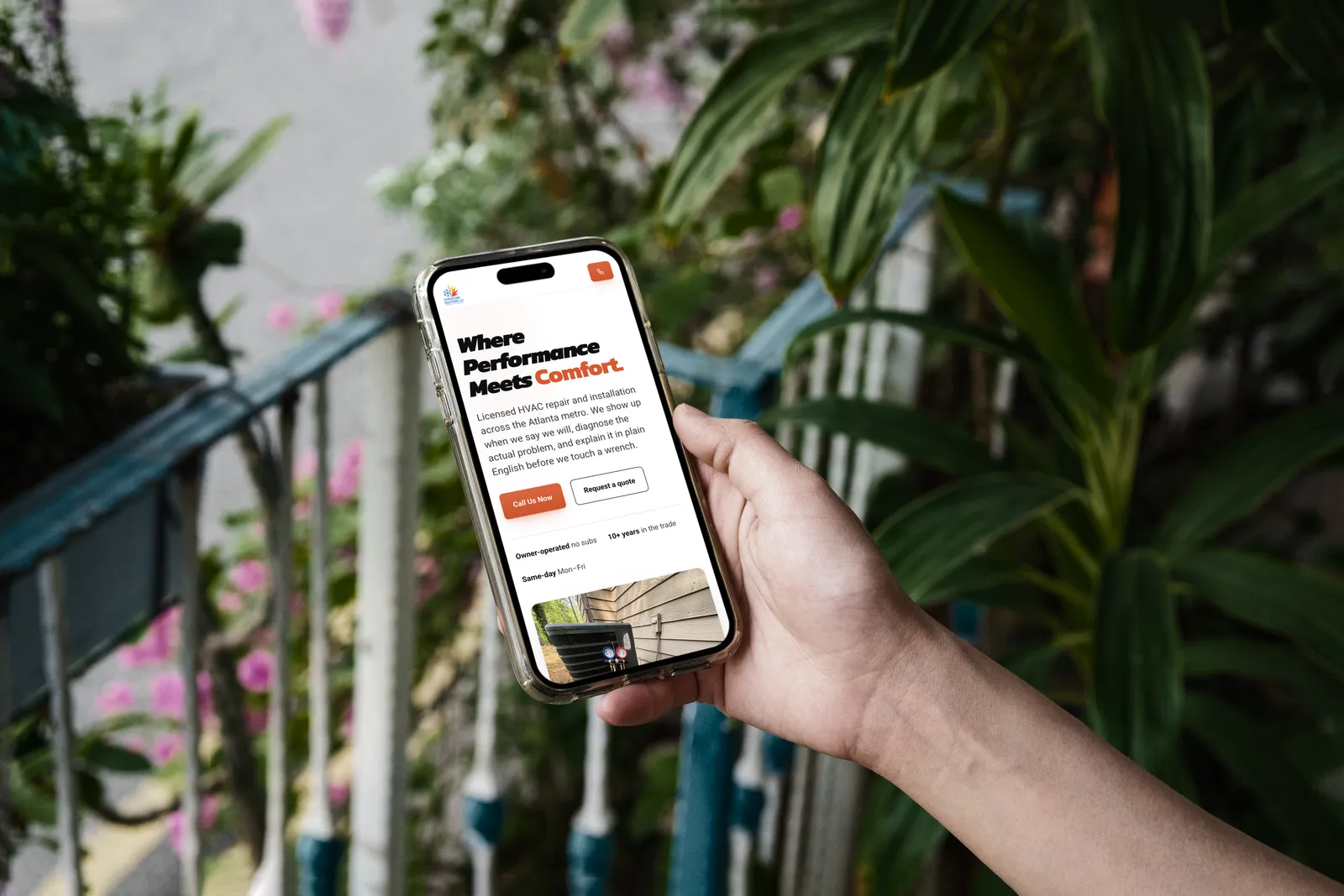
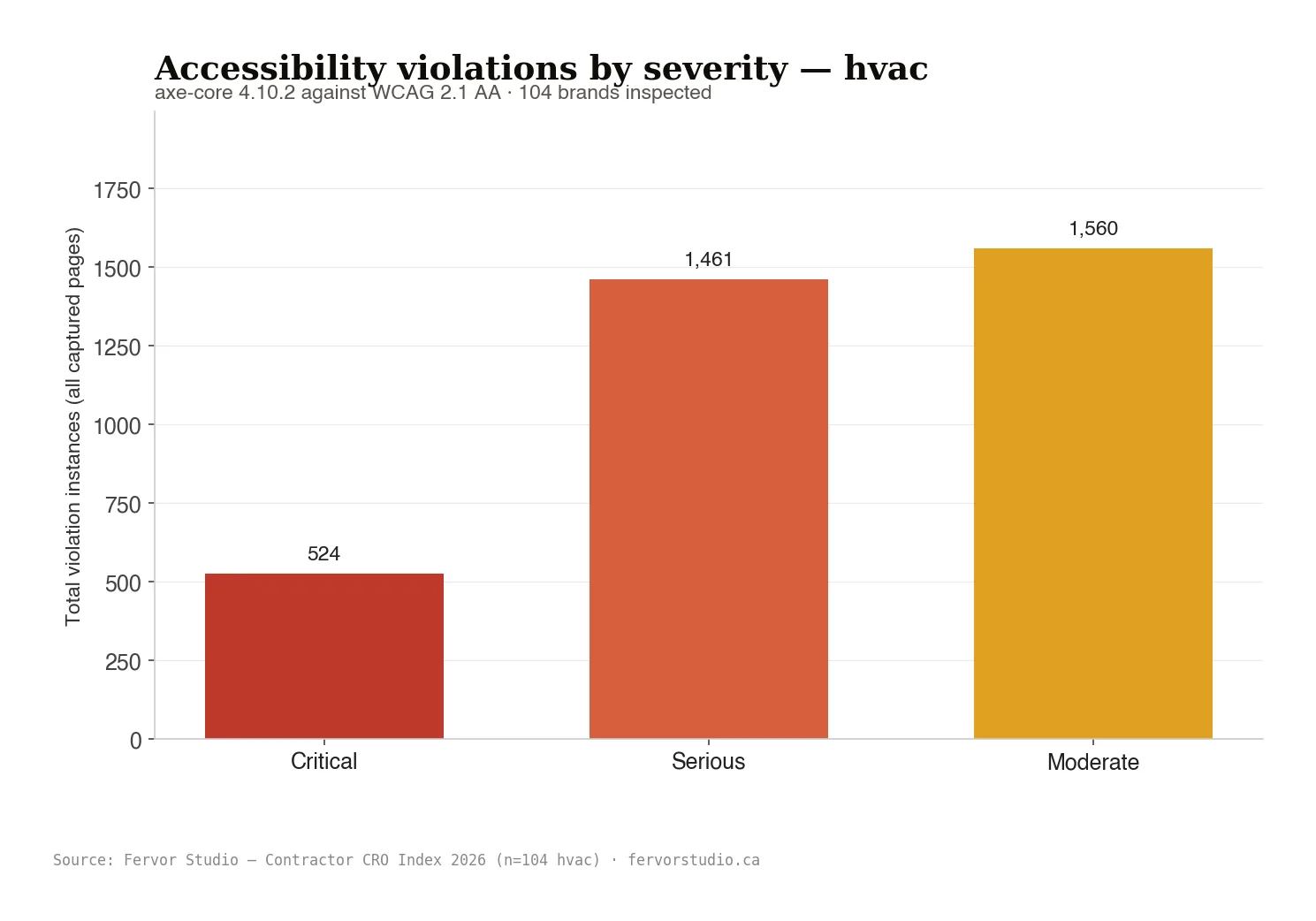
64.4% of HVAC sites we tested fail a critical accessibility check
Digital State of the HVAC Industry 2026A grade out of 380 contractor sites
We graded 380 of them against one framework. Exactly one earned an A: Crown Industrial Roofing in Toronto, at 90 out of 100. The rest left money on the table. Here is what separates the top from the bottom.
The local detail
Every angle below comes from how Philadelphia actually searches, buys, and regulates — built into the page, not bolted on.
Philadelphia doesn't have one busy season — it has several: humid summer (June-September) → AC repair, rowhouse heat; real winter (December-February) → no-heat, boiler + furnace service, oil conversions; shoulder/allergy (April-May, October) → tune-ups, IAQ. The pages are built so each one is already ranking when it hits.
Homeowners search rebates before they call: PECO heat pump + EAP stack (live-verify-windows), Pennsylvania HEAR (Penn Energy Savers) (pending) and Federal 25C (expired). We surface only what's actually live and link the source, instead of quoting numbers that expired.
Philadelphia L&I trade licensing + PA HIC registration. The site states it plainly — the trust signal local buyers look for before they book.
I-76/I-95/Blue Route; city + Main Line + South Jersey behave as separate Local Pack markets; PA/NJ line splits utility programs (PECO vs PSE&G) — Chestnut Hill, Society Hill and Rittenhouse Square and the rest of the metro. Service-area pages mirror how the city is actually laid out.
rowhouse mini-split retrofits + flat-roof condenser placement, oil-to-HP conversions in older stock and PA/NJ utility split content. The build speaks to the systems Philadelphia homeowners actually buy, not a generic catalogue.
Philadelphia HVAC websites lose the click in three predictable ways.
The Philadelphia HVAC website design problem isn’t aesthetics.
"Natural gas was the main heating fuel in 47% of U.S. homes in 2024, while electricity served as the main heating fuel in 42% — a shift from 2010 when natural gas…
You've already paid an HVAC web design agency or two. And if you run a HVAC shop in Philadelphia, the second one promised "modern, mobile-first" and delivered a stock template with a hero image of a contractor who isn't you, testimonials quoting another company's customers, and a contact map that doesn't even pin to your shop. So you're back to losing the click. Your phone rings less, your emergency-AC bookings convert at a rate that doesn't justify the build cost, and the site you paid $4,000 for last year already feels three years old. This page covers what HVAC website design Philadelphia actually requires when it's built for the Greater Philadelphia market: mobile-first emergency booking flow tested on real phones during real heat waves, page speed targeted at sub-2-second load on the worst rowhome basement signal, rowhome-specific service architecture, and the trust signals that work where Pennsylvania has no statewide HVAC license to lean on.
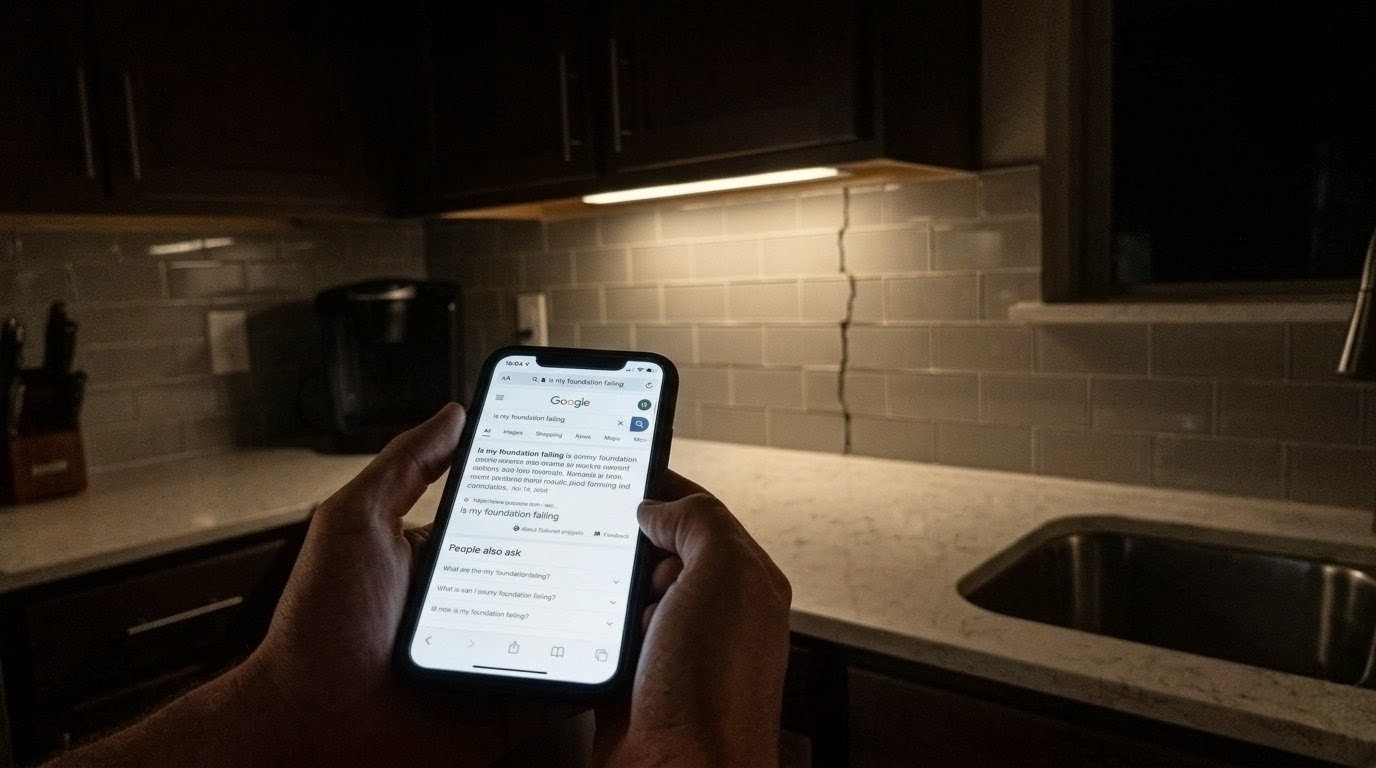
Philadelphia HVAC websites lose the click in three predictable ways. A 92°F July afternoon visitor in Fishtown lands on a homepage hero with a stock photo, a generic "Quality Service Since 1987" tagline, no phone number above the fold, and a "Request a Quote" form that demands their full name, email, address, and the make and model of their existing equipment before it'll let them book. So they bounce. They go back to Google. They tap the next listing. Your hvac website Philadelphia just paid Google for the click and gave it back. (Well over 60% of contractor searches happen on mobile, and the share spikes higher during emergency conditions because the homeowner is standing in a hot kitchen, not at a desktop.)
"25% of homeowners say trusting contractors is their top challenge when planning home improvement projects." — Houzz Inc. (2025)
So one in four Philadelphia prospects is scoring you on something other than skill. They're scoring trust. And the trust signals that close a Center City buyer aren't the ones a generic agency template includes. They're a clear L&I license number on every page, real photos of crews on real Philadelphia jobs in real neighborhoods, recent reviews with neighborhood-specific detail, financing terms that aren't buried in a footer, and an above-the-fold phone number on every screen size. Your Philadelphia HVAC web design either does that work or it doesn't. And on a mobile screen at 95°F with a dead AC, the difference shows up in seconds.
The Philadelphia HVAC website design problem isn't aesthetics. It's whether the site holds up when the buyer is desperate. So our first design constraint isn't "what looks modern in 2026." It's "what does this look like at 4:47pm on a 96°F Saturday in July, tapped on a five-year-old phone, in a rowhome kitchen with two bars of LTE, by a homeowner who's been on hold with two other contractors and has nine minutes of battery left?"
That single user story rewrites the layout. The phone number sits above the fold on every screen size, anchored to a sticky bar that doesn't move when the viewport changes. The emergency-booking CTA opens a one-field form: phone number, hit send, the dispatcher calls back in three minutes. (No address. No equipment make. No appliance age. The dispatcher gets that on the call.) The hero image is a real photo of your crew in front of a real Philadelphia rowhome, not stock. The headline names the city, the trade, and the closest emergency response window in plain language: "Emergency AC repair across Philadelphia. 24/7 dispatch. Under-90-minute response inside the I-76, I-95, and I-476 loop." Three lines. No marketing speak. (And no "We've Been Cooling Philadelphia Since 1987" tagline. That's an agency reflex, not a buyer-facing signal.)
Page speed is where most Philadelphia HVAC sites lose the back-button race. Google's Core Web Vitals (Largest Contentful Paint, Interaction to Next Paint, Cumulative Layout Shift) directly affect both Local Pack ranking and click-through. Our target on every Fervor-built HVAC website design Philadelphia: LCP under 2.0 seconds on a mid-tier mobile device, INP under 200 milliseconds, CLS under 0.1. Achieved by serving images at the right size and format (AVIF or WebP, properly responsive), deferring non-critical scripts, eliminating render-blocking CSS, and not loading 38 third-party tracking pixels by default. The typical agency-built Philadelphia HVAC site we audit lands at 4.5-7.0 seconds LCP on mobile, which means a meaningful share of visitors leaves before the page even paints.
And the dispatch form has to know what a Philadelphia rowhome is. The address autocomplete needs to handle "trinity" addresses (rear-court properties without true street frontage), Center City alley addresses, and the 19103 / 19147 / 19125 / 19130 ZIP cluster that any decent geocoder should already know. Your service-area dropdown lists neighborhoods (Center City, Fishtown, Northern Liberties, Manayunk, Chestnut Hill, Mount Airy, South Philly, Northeast, West Philly, plus Bala Cynwyd, Bryn Mawr, Cherry Hill, Wilmington), not just "Philadelphia, PA" the way most agency templates do. Because the dispatcher reading the form needs to know whether the truck is going to Manayunk or to the Italian Market. Different access, different time-on-job, different price quote.
"Natural gas was the main heating fuel in 47% of U.S. homes in 2024, while electricity served as the main heating fuel in 42% — a shift from 2010 when natural gas led at 49% and electricity served 36%." — U.S. Energy Information Administration (EIA) (2025)
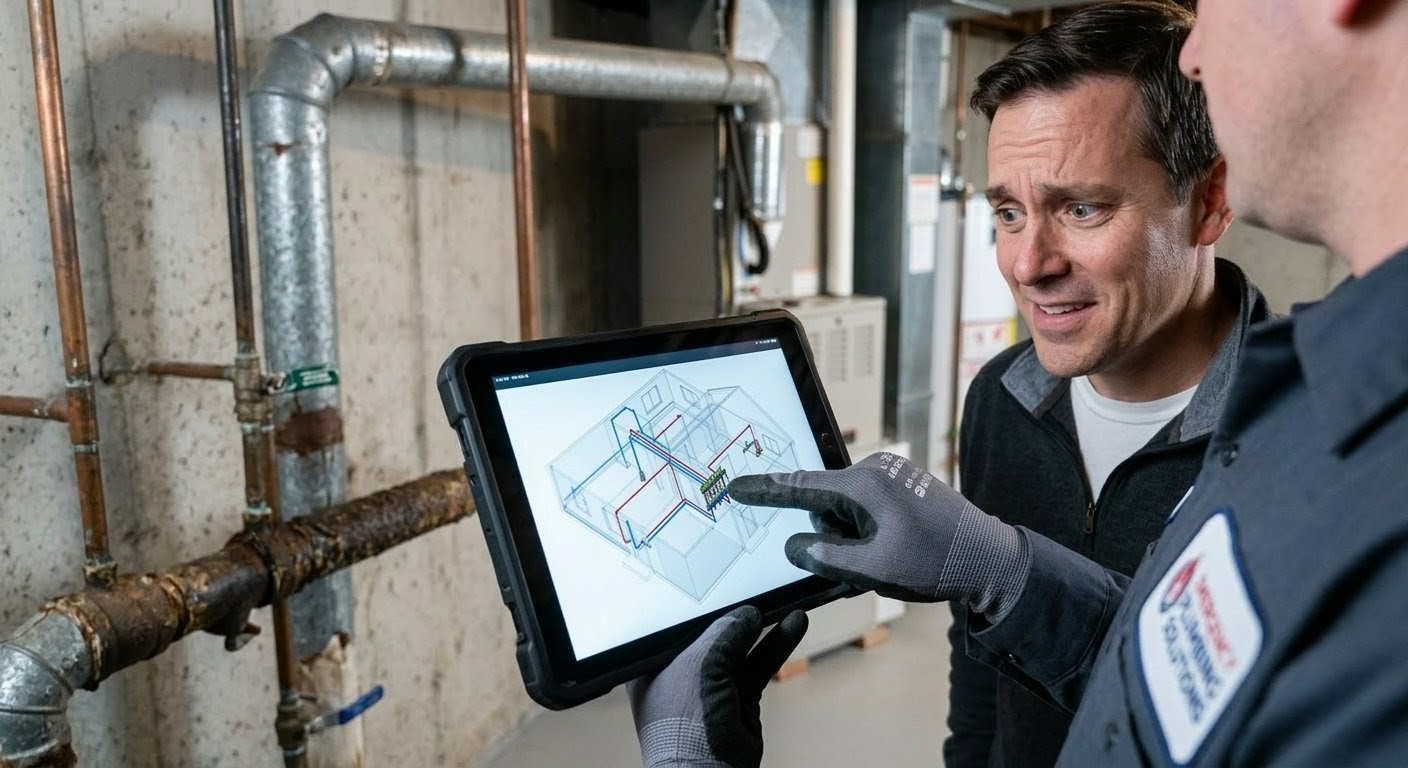
The national fuel mix understates how much equipment diversity sits inside a Philadelphia HVAC contractor's job mix. Oil-to-gas conversions in Brewerytown. Heat pump retrofits in Mount Airy. Mini-split installs in Center City trinities. Steam-radiator boiler service in Society Hill. So your Philadelphia HVAC website can't be a one-page Heating & Cooling brochure. It has to be a small site of small sites, each equipment type with its own page, its own intent match, its own conversion path.
What that means in the layout: a top-level Services section that lands on a hub. Each child page covers one equipment type. Each child page has its own H1, its own meta description, its own schema markup (Service plus Product plus FAQPage where applicable), and its own emergency-booking CTA tuned to that equipment's typical urgency. (A failed steam boiler in February is different urgency from a planned mini-split install in October. Your page should know that.)
"U.S. heat pump shipments grew at an annual rate of 20.5% through May 2025, reaching 4.2 million units annually; heat pumps outsold gas furnaces in 2025." — Air-Conditioning, Heating, and Refrigeration Institute (AHRI) (2025)
Heat pumps now outsell gas furnaces nationally, and Philadelphia (with PECO and PPL energy efficiency programs alongside federal IRA 25C credits) sits in the upper half of the conversion curve. So your heat pump page does the heaviest visual lifting on the site: a comparison table of cold-climate-rated equipment (Mitsubishi Hyper-Heat, Bosch IDS Premium, Carrier Infinity Greenspeed) with their Heating Seasonal Performance Factor numbers, an embedded payback calculator that takes the buyer's last PGW or PECO bill and shows the dollar-figure delta, and a real photo of one of your crews installing a unit in a real Philadelphia rowhome. (Not a stock photo of a heat pump on a manicured suburban lawn. That property doesn't exist between Spring Garden and Passyunk.)
"An ENERGY STAR-certified air-source heat pump can deliver up to three times more heat energy than the electrical energy it consumes." — U.S. Department of Energy / ENERGY STAR (2026)
And the three-to-one efficiency math is the line that closes a Chestnut Hill homeowner staring at last winter's $400 PGW bill. The same compressor running in reverse during a July Heat Health Emergency carries the cooling load. So your hvac website Philadelphia doesn't just list services. It walks the buyer through the conversion math on the page that matches their actual question.
Same architecture for the rest of the equipment universe. Oil-to-gas conversion (the active Philadelphia retrofit category, where the residual oil-fired stock from Brewerytown to Mount Airy is decades into replacement cycles). Furnace replacement (the January-search-volume monster, with high-efficiency 95% AFUE models leading conversions). AC install (the May-September rush, where the 2024 Heat Health Emergencies taught Philadelphia buyers that AC is now non-negotiable). Boiler service (older inner-city housing stock in Society Hill, Old City, Bella Vista, and the Italian Market runs steam and hot water systems that need specialists, not generalists). Ductless mini-splits (the dominant fit in Center City trinities, Fishtown row conversions, Northern Liberties infill condos, and any rowhome where adding ductwork means $1,200-$4,500 in dropped ceilings and tear-out alone). Tankless water heaters. Hot water tanks. Light commercial rooftop units (Northeast Philadelphia industrial, Bridesburg, parts of Port Richmond). IAQ products like UV sterilizers and HEPA filtration for old housing stock with mold concerns. Each one is its own search universe with its own seasonality and conversion content. Each page gets its own meta, its own schema, its own internal links to neighborhood pages, and its own review embed.
The trust signal most Philadelphia HVAC websites bury or skip entirely: Pennsylvania has no statewide HVAC license. Regulation is local. Philadelphia handles it through L&I (the Department of Licenses and Inspections) with three separate trade licenses you need on file before pulling a single mechanical permit:
And the insurance bar Philadelphia sets is real: $500,000 general liability, $300,000 auto liability, workers' comp at $100K / $100K. So your About page should display every L&I license number, link to the L&I license lookup so buyers can verify before booking, and explain plainly what each license covers. (Most lay homeowners don't know that an unlicensed handyman doing AC swaps is operating outside both city law and state combustion-safety practice. They won't ask. Your site has to volunteer it.) The hvac website design Philadelphia work that doesn't display licensing on every page is leaving the trust differentiator on the table. In a market without a uniform state license, the city license is the proof signal that closes the visit.
And the same trust stack runs sideways into trade-association proof: Philadelphia Suburban PHCC apprentice-school graduates, Philadelphia ASHRAE chapter certifications, ACCA credentials, NATE-certified technicians. Each one is a sentence on your About page, a logo in the trust strip below your hero, and a structured-data signal Google's Knowledge Graph can pick up.
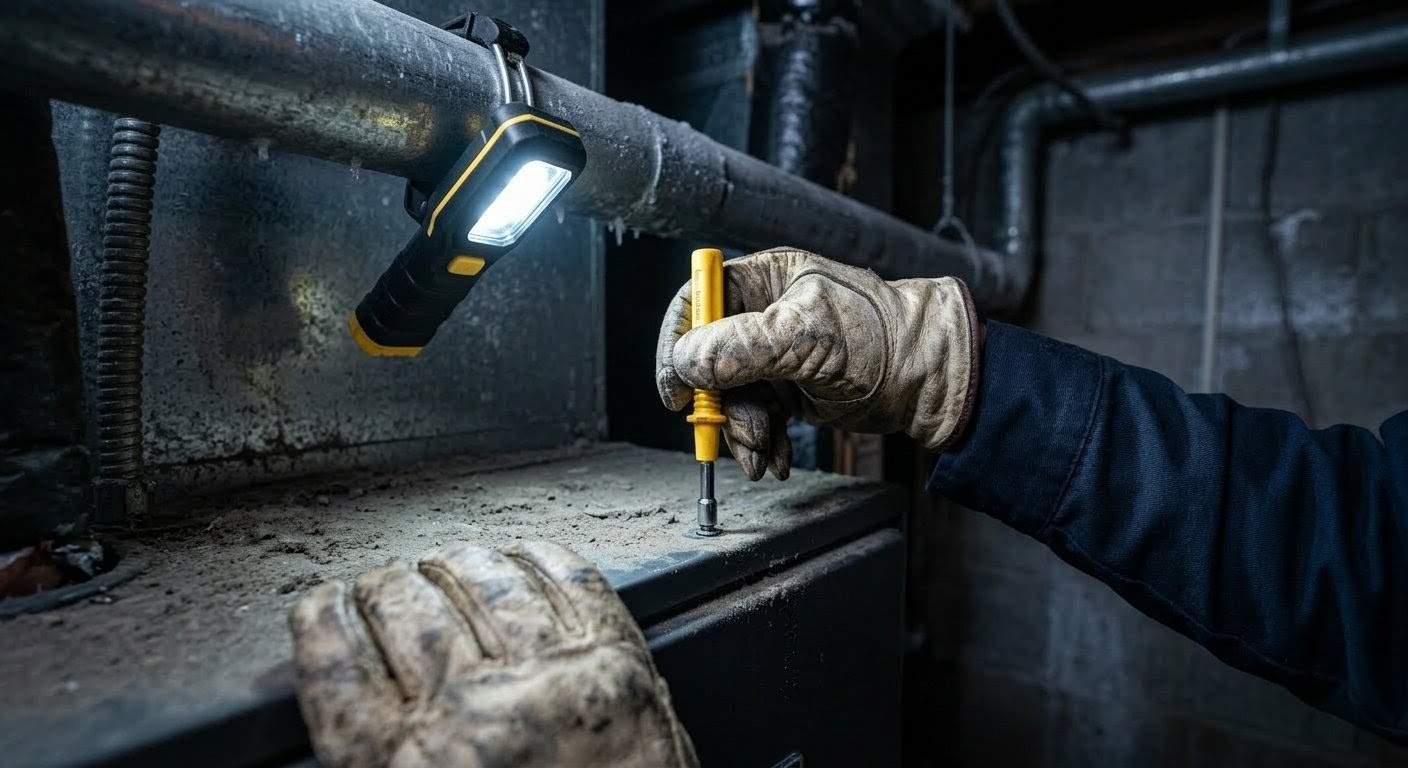
Most Philadelphia HVAC contractor websites have a Contact Us form. That's not an emergency booking flow. That's a customer-relationship-management lead form. The difference matters when the buyer is standing in a 96°F rowhouse kitchen with a dead AC and a baby who can't sleep.
So the booking flow we build is two paths, and the homepage hero asks one question: "Is this an emergency or planning ahead?" Path one: emergency. One field, phone number, tap submit. The form fires an SMS to your dispatcher's pager, posts to your ServiceTitan or Housecall Pro queue with an URGENT tag, and shows the buyer a confirmation screen with a real ETA pulled from your dispatch software's open slots. Three taps from landing to dispatched. Path two: planning ahead. The longer form (name, address, equipment type, preferred consultation date, financing-interest checkbox) routes to the sales pipeline, not the dispatch pipeline. Different urgency, different copy, different CTA.
And every page on the site links to both paths, never just one. Because the same buyer who lands on your heat pump page during October planning research might land on your AC repair page in July with a dead condenser. Your hvac website Philadelphia design has to handle both intents simultaneously without forcing the buyer to find the right form.
CallRail tracks every call from every page so you know which neighborhood-specific service-area page actually books emergency work versus which one just collects clicks. Without that data, you can't tell whether your Manayunk landing page is doing the work or just sitting pretty.
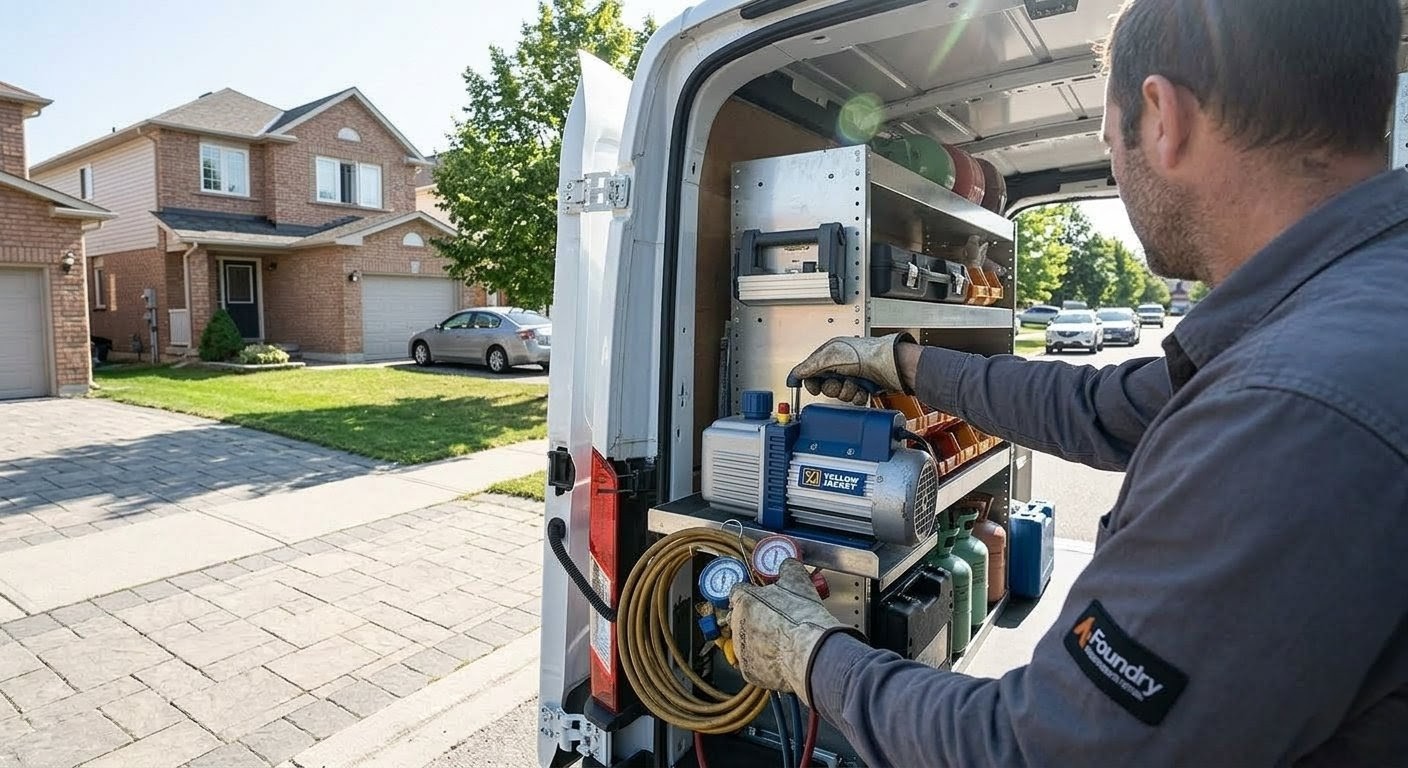
Calgary has chinooks. Houston has hurricanes. Philadelphia has Heat Health Emergencies, deep cold snaps, and the long shoulder-season retrofit window. And your hvac website design Philadelphia has to flex through all three.
Heat-emergency cooling rush (June-August). The 2024 Heat Health Emergency season set the bar. The City of Philadelphia declared multiple emergencies, June became the longest June heat wave on record going back to the 1870s, and the city activated 150-plus cooling sites. So during that window, your homepage hero should swap to a heat-emergency banner ("AC down? Same-day Philadelphia dispatch.") with a prominent emergency CTA. We build this with a content-management toggle so the website's seasonal mode flips at the dispatcher's discretion (not a fixed code change requiring a developer).
Cold-snap heating mode (December-February). Search intent shifts to emergency furnace, boiler, and heat-pump-short-cycling repair. The seasonal banner swaps to "No heat? 24/7 Philadelphia response." The featured service tiles reorder. Emergency furnace repair, boiler service, and oil-to-gas conversion lead. AC moves into a secondary slot.
Shoulder-season retrofit window (April-May, October-November). The biggest planned-replacement window. Your site reorders again. Heat pump retrofit, oil-to-gas conversion, ductless mini-split install, and IAQ lead. The booking form's planning-ahead path now leads. Emergency tiles move below the fold. (And this is where most Philadelphia HVAC sites lose ground. They treat the homepage as a static brochure, ignoring that buyer intent shifts twice a year.)
Your CMS controls the seasonal swap. No agency dependency. Your dispatcher flips the switch. The site adapts to the season the city is actually in, not the season your last site relaunch happened to land on.
Real Philadelphia HVAC web design builds individual neighborhood pages, and most contractor websites either skip them entirely or stuff one Service Areas page with 40 city names and call it done. That doesn't rank. And it doesn't convert, because the buyer searching "AC repair Fishtown" reads "Service Areas: Fishtown, Manayunk, Mount Airy, Chestnut Hill..." and bounces back to Google to find a site that's actually about Fishtown.
So the page stack: each neighborhood cluster gets its own page, with its own H1, its own meta description, its own real photos of jobs in that cluster, its own neighborhood-specific copy explaining what the housing stock means for HVAC work there, and its own embedded reviews from customers who live there.
Center City Core: Rittenhouse, Logan Square, Society Hill, Old City, Bella Vista, Washington Square West. Pre-1960 trinity homes, brick rowhouses, party walls, narrow stairs, no attic. Ductless mini-split heavy. Boiler service for steam-radiator stock. Tight install logistics.
River Wards: Fishtown, Northern Liberties, Olde Kensington, Port Richmond, Brewerytown. Mixed renovation activity, gentrifying rowhouse stock, new infill condos with rooftop equipment, conversion-heavy oil-to-gas demand.
South Philly: Passyunk, Pennsport, Point Breeze, Bella Vista south, Italian Market corridor. Tight rowhouse density, high boiler-service demand, mini-split retrofits, narrow streets that make outdoor staging genuinely hard.
Northwest Philadelphia: Manayunk, Roxborough, Chestnut Hill, Mount Airy, East Falls, Germantown. Older twin and detached stock with attics and crawlspaces (so ducted central is feasible), premium tier in Chestnut Hill and parts of Mount Airy, heat pump retrofit interest from energy-conscious buyers.
Northeast Philadelphia: Mayfair, Rhawnhurst, Bustleton, Somerton, Holmesburg. Mid-century split-levels and ranchers, more standard ducted-central installs, family-replacement-on-failure behavior, light commercial along Roosevelt Boulevard.
West and Southwest Philadelphia: University City, Spruce Hill, Cedar Park, Cobbs Creek, Kingsessing. Mix of Victorian twins, rowhouses, and student rentals; landlord-driven boiler service alongside owner-occupant retrofits.
Surrounding markets: Bala Cynwyd, Ardmore, Bryn Mawr (Main Line); Cherry Hill, Voorhees, Marlton (South Jersey); Wilmington and the Brandywine corridor; Doylestown, Newtown, Bensalem (Bucks County); King of Prussia and Conshohocken (Schuylkill corridor). Commute-distance demand the city-only Philadelphia HVAC web design company misses entirely.
Each page links back to the trade hub, names specific landmarks (the Schuylkill, the Delaware, I-76, I-95, Reading Terminal, Independence Mall, the Art Museum steps), and uses photos of real jobs in that quadrant. Generic stock-photo location pages don't move the Local Pack and don't convert. So the marketing agency for HVAC contractors Philadelphia hires that ships rebadged Pittsburgh or Cleveland location pages with "Philadelphia" find-and-replaced is leaving signal entirely on the table.
Five steps. No mystery. No "creative discovery process" that's really just a sales call with mood boards.
We score your current HVAC site across six conversion categories. You'll see where your emergency booking path fails, which pages aren't converting, how your site compares to the Philadelphia HVAC competition that's winning the click, and exactly how many calls you're losing to contractors with better setup. Free. About three days. You own the report regardless of what happens next.
We study your Philadelphia market. What's your average ticket? Your job mix between emergency and planned? Your seasonal pattern across the three demand modes? We pull from your ServiceTitan, Housecall Pro, or Jobber data so the site we design fits your actual business, not a stock contractor archetype.
Site structure, page hierarchy, every word of copy, every CTA, every form field. Designed before any visual mockup. Each service page, each neighborhood page, each demand-mode toggle mapped to the buyer journey for that intent. HVAC website design Philadelphia isn't bolted on after the design looks pretty. The architecture is the design.
Mobile-first. Sub-2-second load times. Emergency booking flow tested on actual phones in real Philadelphia conditions: Center City basement signal, Manayunk hill cell-tower coverage, the LTE dead zones along the Schuylkill. ServiceTitan-compatible call tracking installed. Every CTA tested with the thumb-zone rule: if a homeowner can't tap your phone number with one hand while standing in a Fishtown trinity at 11pm during a heat dome with the AC dead, the CTA fails.
Your site launches with CallRail tracking, NiceJob review automation wired to your dispatch, all logins transferred, and documentation for routine updates. You own the domain, content, hosting. Everything. And if you want compound growth from ongoing seasonal content and HVAC SEO Philadelphia maintenance, Performance Partner picks up where the build leaves off.
Three engagement options for HVAC website design Philadelphia, all built on website ownership and no long-term contracts. Booked by Design is the lead (the full website rebuild). The Local Pick and Performance Partner cover the SEO infrastructure that compounds after launch.
Booked by Design™ — $9,997-$12,997 for HVAC. 30-60 days. Full Philadelphia HVAC website rebuild including: mobile-first design tested on real phones, sub-2-second load times, two-path emergency booking flow, neighborhood-cluster service-area pages (Center City, River Wards, South Philly, Northwest, Northeast, West Philly, plus Bala Cynwyd, Cherry Hill, and Wilmington), per-equipment service pages, oil-to-gas conversion content, ductless mini-split retrofit content, L&I license trust signals on every page, schema markup stack, ServiceTitan / Housecall Pro / Jobber integration, NiceJob review automation, and CallRail call tracking. You own everything on day one.
The Local Pick — $2,497 one-time, ~14 days. If your site is solid but your Philadelphia local presence is invisible: GBP optimized for the right neighborhood service areas, citations built and corrected across YellowPages.com, BBB Greater Philadelphia, Yelp, Angi, Thumbtack, the Philadelphia Suburban PHCC member directory, and the Greater Philadelphia Chamber of Commerce, NiceJob review automation configured, schema markup installed.
Performance Partner™ — $1,497-$3,997/month, ongoing. Quarterly content additions targeting Philadelphia-specific search volume (regional service-area pages, Heat Health Emergency content cycles, oil-to-gas conversion sequences, ductless mini-split content for trinity-style rowhomes), GBP photo and post management, NiceJob review automation, citation maintenance, and monthly call-volume reporting tied to revenue. Compounds month over month.
"The NAHB/Westlake Royal Remodeling Market Index posted a reading of 64 in the fourth quarter of 2025, up four points compared to the previous quarter, with rising costs and customer hesitation flagged as key challenges." — National Association of Home Builders (NAHB) (2026)
Remodeling sentiment is up but customer hesitation is real. So the Philadelphia HVAC contractors with a website that closes the trust gap on a 90-second visit win the buyers who hesitated last year. The ones still running an agency-built template from 2021 watch their cost-per-lead climb while their conversion rate stays flat. Philadelphia HVAC web design built this way pays back inside the first quarter on a typical shop's job-mix economics.
Booked by Design runs 30-60 days from kickoff to launch. The Local Pick runs about 14 days. Performance Partner is ongoing. The longest stretch is Step 3, Content Architecture, because writing the copy correctly the first time is faster than redesigning the site twice.
Booked by Design rebuild is $9,997-$12,997 for a Philadelphia HVAC contractor. The Local Pick is $2,497 one-time if your site already works. Performance Partner is $1,497-$3,997/month ongoing. Both initial builds include website ownership transferred on day one. No long-term contract on any tier.
Yes. Domain, content, Google Business Profile, citation directory logins, hosting credentials. All transferred on day one. If you ever leave Fervor, you take everything. That's how Philadelphia HVAC web design should always operate. Most agencies don't.
Pennsylvania has no statewide HVAC license, so Philadelphia regulates locally through L&I (Warm Air Installer, Sheet Metal Technician, Mechanical Permit). That trust stack has to show up on every page or the trust differentiator is gone. Add the rowhome reality (no attic, no crawlspace, party walls, the install constraints that drive ductless mini-split dominance from Fishtown to Bella Vista), the active oil-to-gas conversion category most other metros finished a decade ago, and the 2024 Heat Health Emergency baseline that reset emergency-AC search volume permanently. Generic templates miss most of it. So HVAC website design Philadelphia has to speak to those specifics: neighborhoods, climate, licensing, rowhome retrofit, local press. Or it reads like a Pittsburgh page rebadged.
The evidence
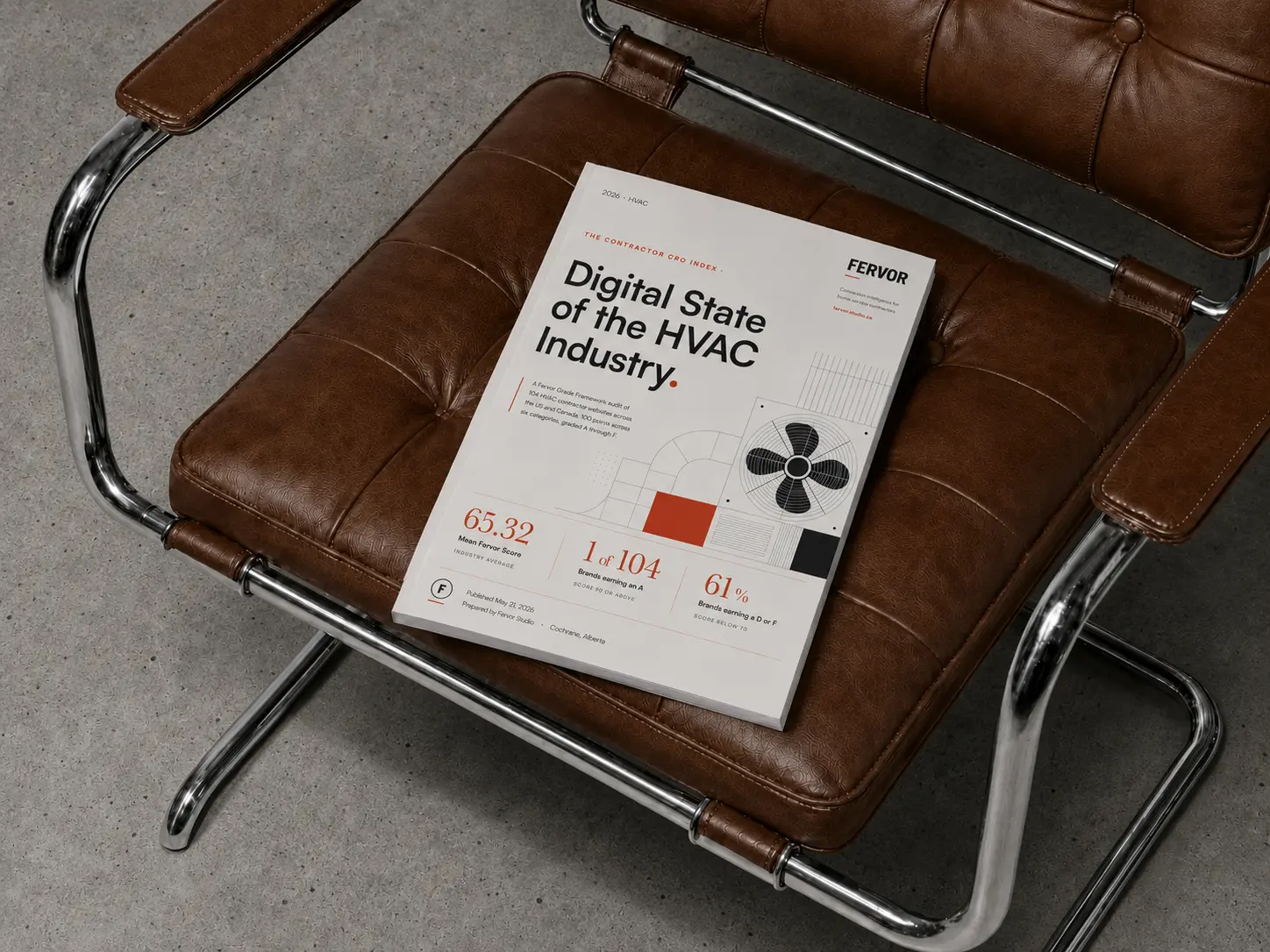 Read the full report →
 0
contractor sites graded, one A
Across the whole CRO Index, a single site earned an A. The median landed at a D. The grade gap is a conversion gap.
0 %
of HVAC sites fail a critical accessibility check
Scored against WCAG 2.1 AA with axe-core. A page that blocks a screen reader also blocks a paying customer.
Fervor HVAC State of the Industry, 2026
0 %
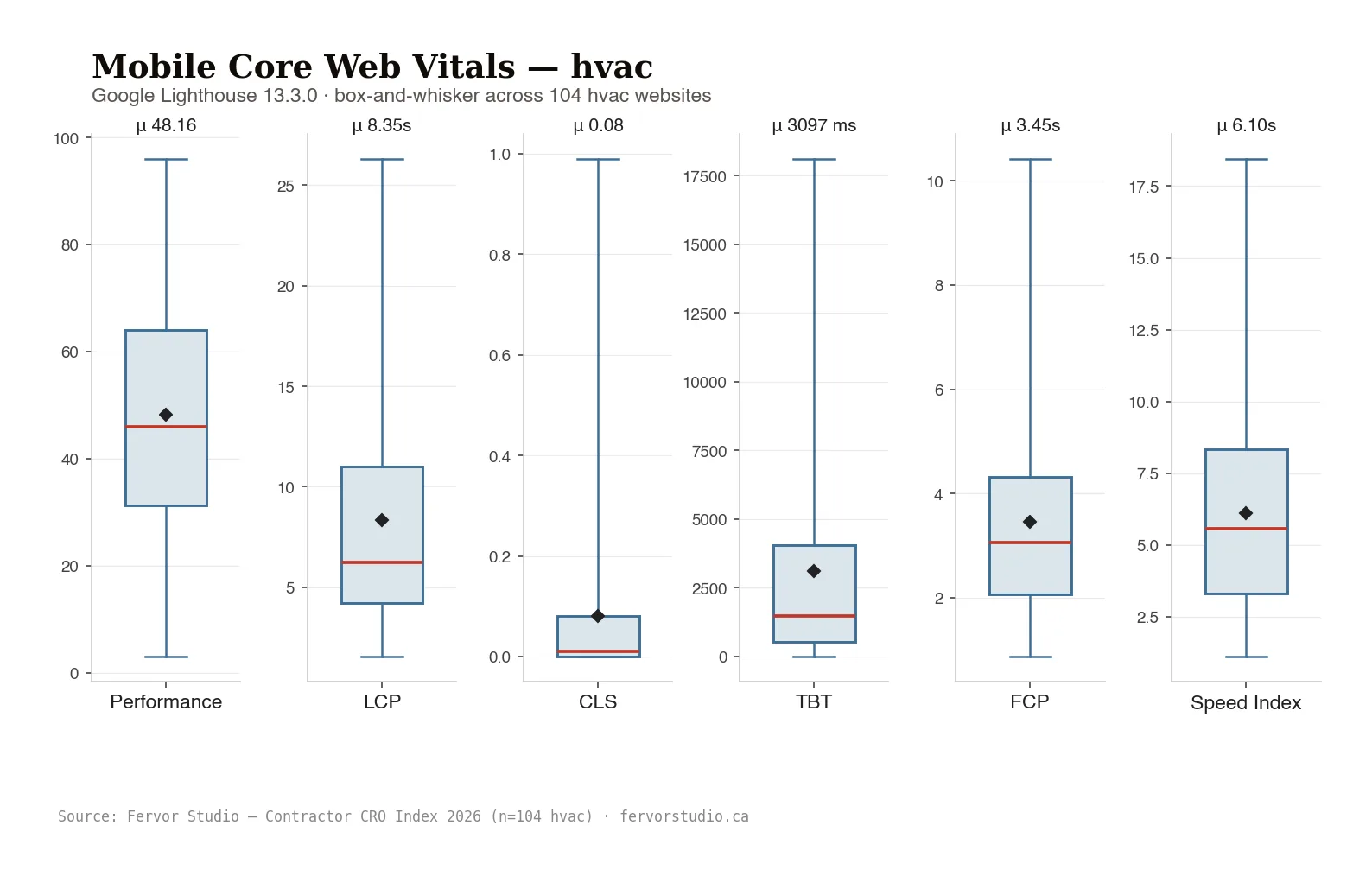
miss Google's mobile load-speed bar
Median mobile load lands at 6.24 seconds. Most of your traffic is on a phone, and most of them are gone before the hero paints.
Fervor HVAC State of the Industry, 2026
0 /100
is the average HVAC grade
That is a D. The sites booking the work are not the ones with the biggest crews. They are the ones a few points higher on the things homeowners feel.
Two ways to start
Tell us where you are. We point you at the right next step — no sales call to get there.
Client review
“Nay did an amazing job, you know. He was really patient. He got the work done the way I told him and he was just on point with the website. Pretty straightforward process. No going around the bush. He just did amazing work and I would 100% recommend.”
How Fervor can help
Complete website system built to convert storm leads, planned projects, and research-phase homeowners into booked jobs.
Identify and patch the top conversion killers on your existing site. No full rebuild needed.
Monthly SEO, content, and CRO. Fixed deliverables. No credits, no rollover. The compound growth engine.
GBP optimization, citation building, and review system foundation. The infrastructure that gets you into the Map Pack.
One conversion-built landing page for the referrals, paid clicks, and cold-call leads you send. They land on a page built to book them, not your generic homepage.
Your move
Tell us where you are. We point you at the right next step — no sales call to get there.
Keep going