0
contractor sites graded, one A
Across the whole CRO Index, a single site earned an A. The median landed at a D. The grade gap is a conversion gap.
You're getting clicks in Houston. They're just not calling. We rebuild your site around the one job that matters: turning a visitor into a booked job.
Starts with a Site Inspection, so you see the plan before any build begins.
“Patient, on point, straightforward. Did amazing work. Would 100% recommend.” — Ruben Mederos, HyperTemp HVAC
“Responsive, creative, exceeded expectations. Already seeing greater engagement from our clients.” — George Jeorgy, Jeorgy's Landscape Construction
“Top-tier professionalism, real web design expertise, ideas I hadn't considered. Confidently recommend.” — Aws Nassani, Four Eleven Contracting



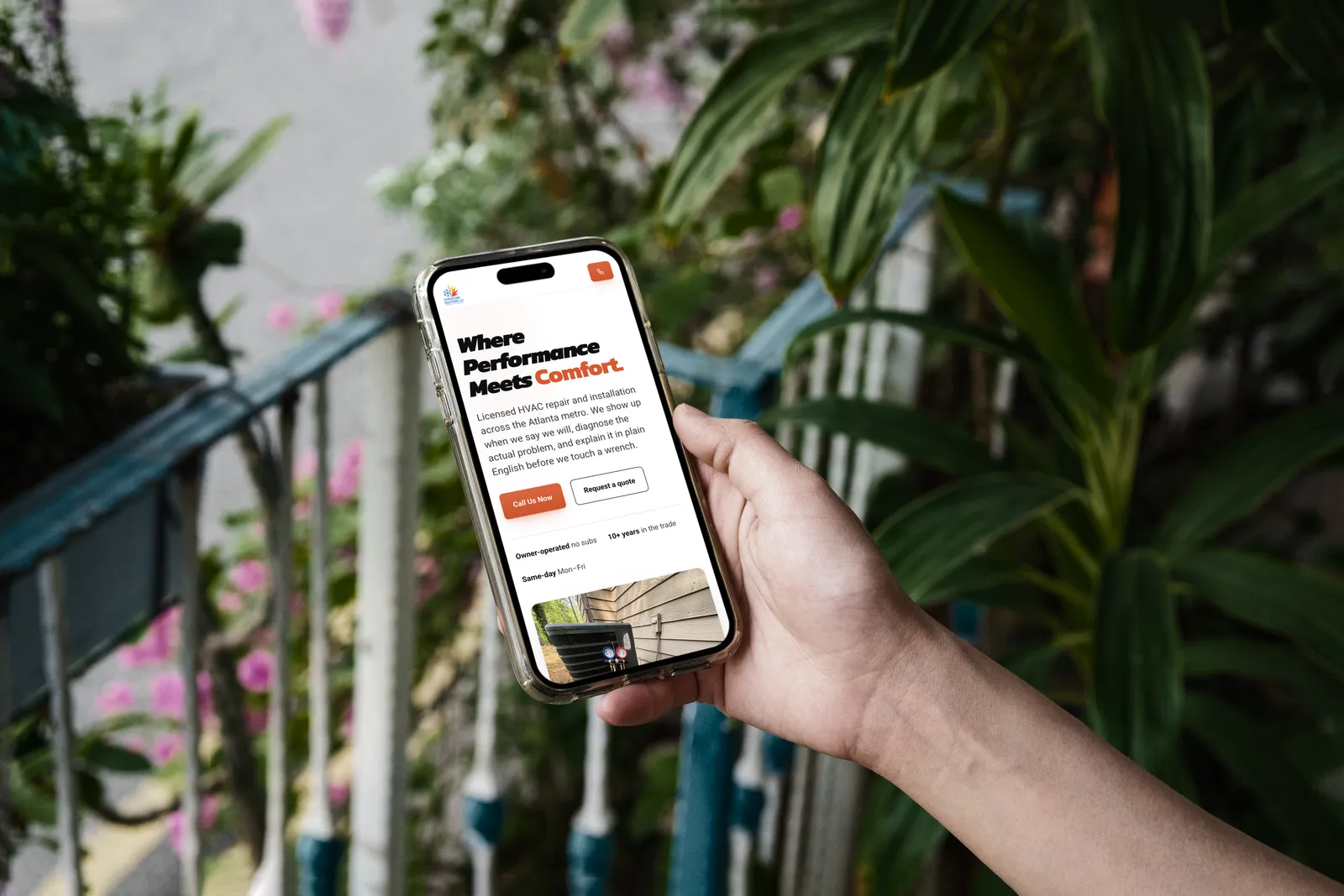
64.4% of HVAC sites we tested fail a critical accessibility check
Digital State of the HVAC Industry 2026A grade out of 380 contractor sites
We graded 380 of them against one framework. Exactly one earned an A: Crown Industrial Roofing in Toronto, at 90 out of 100. The rest left money on the table. Here is what separates the top from the bottom.
The local detail
Every angle below comes from how Houston actually searches, buys, and regulates — built into the page, not bolted on.
Houston HVAC contractors lose calls in three predictable scenarios on broken websites.
"Users form a visual judgment about a website’s design within 50 milliseconds (0.05 seconds)." — Lindgaard et al. / Behaviour & Information Technology (2006)
"53% of mobile users abandon sites that take longer than 3 seconds to load." — Google / Think with Google (2017)
"40% of home services consumers who call from search make a purchase.
"U.S. heat pump shipments grew at an annual rate of 20.5% through May 2025, reaching 4.2 million units annually; heat pumps outsold gas furnaces in 2025." —…
"Three critical response time thresholds: 0.1 seconds feels instantaneous (direct manipulation).
Hurricane Beryl made landfall on July 8, 2024.
The Houston HVAC site that converts at the highest rate stacks every trust signal above the fold and proves them deeper.
You've already paid a web designer or two. And if you run a HVAC shop in Houston, the second one probably promised better than the first. Maybe a "modern responsive rebuild" off a $1,500 template, maybe a national agency template kit with your logo on top. So you ended up with a site that looks fine on a desktop monitor in their portfolio screenshot, then loads in seven seconds on a Cypress homeowner's LTE connection during a Beryl-style outage week and tanks every emergency call you should have booked. This page covers what HVAC website design Houston actually requires when it's built for the Gulf Coast: sub-2-second mobile load times, sticky click-to-call in the thumb zone, service pages mapped to Houston's AC-dominant search demand, hurricane-recovery and flood-zone content, and the trust stack that closes the gap between a 95°F Memorial homeowner Googling "AC repair" at 11pm and the contractor who books the call.
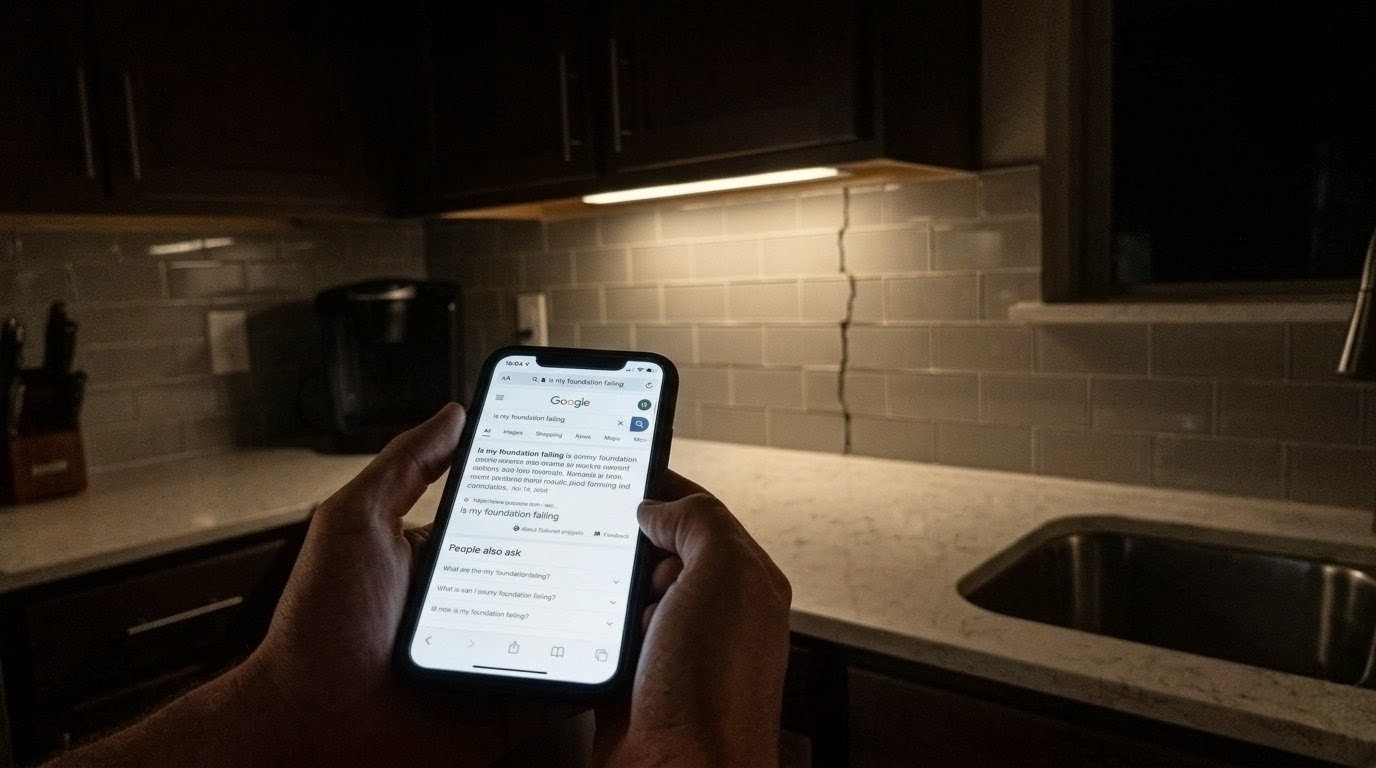
Houston HVAC contractors lose calls in three predictable scenarios on broken websites. A homeowner's AC dies on a 95°F July Saturday in West University Place and they Google "AC repair Houston" on their phone, your site loads in nine seconds, the phone number sits below the fold, and they tap the second result instead. Hurricane Beryl knocks out power for ten days during a 90°F heat dome and a Cypress family hunts for "emergency AC after hurricane Houston" on degraded LTE; your homepage carousel script never finishes loading and the page renders as a blank white box. A Meyerland homeowner whose flood-damaged condenser quits searches "raised-pad AC install Houston" and lands on a single generic Services page with no flood-zone content anywhere. Each failure is the website costing you a job. So the first question for any HVAC website design Houston engagement is whether your site renders fast on a phone, makes calling effortless in one tap, and answers the specific Houston-flavored question the homeowner just typed into Google.
"Phone calls convert to 10-15x more revenue than web leads for home services businesses. Callers convert 30% faster than web leads. Caller retention rate is 28% higher than web lead retention rate." — Invoca / BIA Kelsey + Forrester (2025)
Ten to fifteen times more revenue per call than per form-fill. So the design choice that buries the phone number behind a "Get a Quote" CTA is costing you a multiple of every form lead you celebrate. And in Houston specifically, a 7.9-million-person metro with hundreds of HVAC shops chasing the same searches, the site that makes the phone tap effortless beats the site that looks prettier in a portfolio shot.
"18% of home services calls go unanswered on weekdays, while 41% go unanswered on weekends. Each unanswered call is revenue left on the table and a lead handed to a competitor." — Invoca (2025)
41% on weekends. So your weekend-call funnel, the one most active during AC-emergency windows, has to either ring a real human or capture the lead with so little friction the homeowner doesn't bounce while waiting for someone to call them back. Most Houston HVAC websites do neither.
"Users form a visual judgment about a website's design within 50 milliseconds (0.05 seconds)." — Lindgaard et al. / Behaviour & Information Technology (2006)
Fifty milliseconds. Faster than a blink. That's how long a Houston homeowner takes to decide whether your site looks like a real HVAC business or a 2014 template with stock photos. And the judgment locks in before they read a single line of copy. So if your homepage opens with a slow-loading carousel of three smiling families pointing at thermostats, you've already lost the visual-trust round before your page-speed problems even kick in.
"91% of U.S. adults own a smartphone; overall U.S. internet traffic: desktop 55.93%, mobile 41.95%, tablet 2.04% (January 2026)." — Pew Research Center (2025)
So 91% of adults carry a smartphone. And for emergency-intent home services queries (broken AC at 9pm, no heat at 6am, water leak on a Sunday) the mobile share runs much higher than the 42% all-traffic baseline. Most homeowners aren't on a desktop when they need you. They're in the driveway or already in the garage staring at the dead unit.
"48% of customers say that if a site does not work well on mobile, it signals the company does not care about their business." — Google / Think with Google (2018)
Nearly half of the people who land on a broken mobile site decide on the spot that you don't care about them as a customer. Not that you're "less professional." That you don't care. And in a market like Houston where the post-Beryl trust gap with utilities and contractors is already real, "this company doesn't care" is the worst possible first impression. The HVAC web design Houston work that ships a desktop-first site with a "responsive" mobile afterthought is leaving exactly that impression on roughly half its mobile traffic.
"53% of mobile users abandon sites that take longer than 3 seconds to load." — Google / Think with Google (2017)
53% gone if you cross three seconds. So roughly half your mobile emergency traffic, the people most likely to convert into a same-day service call, bounces before your homepage finishes loading. Pull up your Houston competitors in PageSpeed Insights right now. You'll see seven, ten, fifteen-second mobile load times across the local pack.
"Conversion rates drop approximately 12% for each additional second of page load time." — Deloitte (2020)
12% per second compounds fast. Your site at six seconds versus a competitor's at two seconds is mathematically losing nearly half your conversion potential. Not because their copy is better. Not because their reviews are higher. But because their site shows up faster on a phone in Memorial.
"A 10-second delay will often make users leave a site immediately. You can easily lose half your sales simply because your site is a few seconds too slow." — Nielsen Norman Group (2020)
Ten seconds is the absolute ceiling. Past that, the bounce is automatic. And ten seconds is what most "modern" HVAC contractor templates hit on a 4G connection in a thunderstorm, the exact conditions a Houston AC failure typically lives in.
"Renault: A 1-second improvement in LCP led to a 13% rise in conversions." — Google / Web.dev (2021)
Renault is not a home services business. But the math holds: a one-second LCP improvement lifted conversions 13%. So if your Houston HVAC site moves from a six-second LCP to a two-second LCP, the lift compounds across every emergency search. And that's before counting the SEO bump from Google's Core Web Vitals weighting.
Speed in Houston also has to survive degraded conditions: June lightning storms throttling LTE, post-Beryl outages forcing homeowners onto satellite hot-spots, the inside-a-Cypress-garage signal-loss reality. Web design built for fair-weather desktop browsing dies in the field. Real HVAC website design Houston gets tested on a drained iPhone with one bar of LTE in a 95°F garage. That's where the call gets booked or lost.
"40% of home services consumers who call from search make a purchase. Consumers searching for plumbing, appliance repair, and fencing services are most likely to call after making a search." — Google / Invoca (2025)
40% of search-call homeowners buy. So when your site moves a Houston visitor to pick up the phone, you've already cleared the highest-converting funnel in the trade. Compare that to typical web-form conversion (single-digit percentages, with most leads going cold within an hour) and the math is brutal.
"84% of marketers report phone calls having higher conversion rates with larger average order value compared to other forms of engagement." — Invoca (2025)
Higher conversion AND bigger ticket. Because phone callers tend to be the homeowners with active emergencies (broken AC, no heat, water in the basement), the same homeowners willing to authorize same-day service at full ticket without three quotes. And web form leads tend to be the price-shoppers who'll get back to you Monday. If they remember.
But most Houston HVAC websites design around the form, not the call. Phone numbers buried in headers. CTAs that say "Get a Quote" instead of "Call Now." Forms with twelve fields when six would do. And no thought given to the click-to-call experience on a phone. Most sites still display the number as plain text instead of a tel: link, which means a Memorial homeowner has to memorize the number and dial it manually. (Or copy-paste from a tab they've already lost focus of. Forget it. They're calling someone else.)
The fix is mechanical, not creative. Your phone number lives in the top-right above the fold, sticky on mobile, formatted as a clickable tel: link, with the area code visible because Houston homeowners check whether you're local before they dial. The button that says "Call (713) 555-XXXX" beats the button that says "Get In Touch" every time. And the form is a backup for the after-hours visitor or planned-service shopper. Three or four fields: name, phone, what's broken, neighborhood. Anything more is the form costing you the lead.
Yelp matters more in Houston than most agencies realize, especially inside the Loop. Yelp users tap the call button more than the website link, so the click-to-call discipline changes the conversion rate of every Yelp listing, BBB Greater Houston listing, and Google Business Profile preview Google serves alongside your organic result.
"U.S. heat pump shipments grew at an annual rate of 20.5% through May 2025, reaching 4.2 million units annually; heat pumps outsold gas furnaces in 2025." — Air-Conditioning, Heating, and Refrigeration Institute (AHRI) (2025)
Heat pumps outsold gas furnaces nationally in 2025 for the first time. And in Houston, where electric heat strips and reverse-cycle heat pumps already carry more of the heating load than gas, the AC + heat pump market shapes the entire service-page architecture. So Houston HVAC website design starts with a serious AC install page covering high-SEER2 split-systems, then adds dedicated pages for heat pump retrofit, hurricane-rated condenser install, salt-air-resistant coastal install for League City, AC repair, whole-home dehumidification, IAQ products (UV, HEPA), ductless mini-splits for Heights bungalow ADUs, and tankless water heater install. Each one its own search universe.
"Natural gas was the main heating fuel in 47% of U.S. homes in 2024, while electricity served as the main heating fuel in 42%, a shift from 2010 when natural gas led at 49% and electricity served 36%." — U.S. Energy Information Administration (2025)
That national fuel mix doesn't describe Houston. Texas runs hard the other direction. Electricity is the dominant heating fuel because the heating season is short and AC carries the year-round load. So a Houston-built HVAC website opens with cooling-first architecture and only mentions furnace replacement deeper in the navigation. The Chicago-template site that leads with "Furnace Repair Specialists" loses every Houston AC search before the homeowner reaches the second fold.
"25% of homeowners say trusting contractors is their top challenge when planning home improvement projects." — Houzz Inc. (2025)
One in four homeowners isn't scoring you on technical skill. They're scoring trust. So every service page needs the trust scaffolding visible above the fold: TDLR license number, review aggregate, photos of crews on real Houston jobs, and (this is the part most HVAC websites skip) at least one paragraph that names the specific equipment brands you stock and install. Trane, Carrier, Lennox, Daikin, Goodman, Mitsubishi, American Standard. Brand-conscious Memorial and West U homeowners filter out generic "we install all major brands" copy fast. Naming the brand you actually carry is a trust signal templated sites can't replicate.
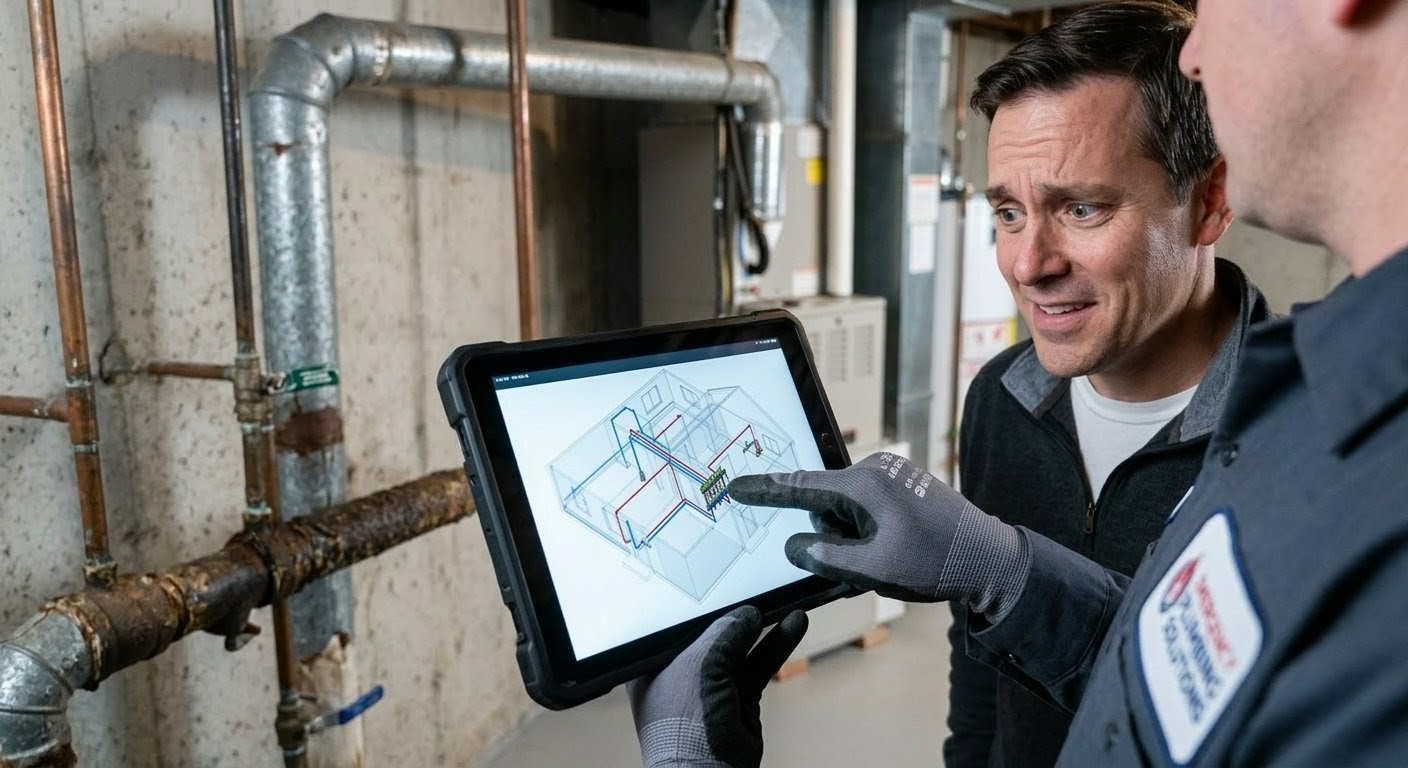
"Three critical response time thresholds: 0.1 seconds feels instantaneous (direct manipulation). 1.0 second keeps user's flow of thought uninterrupted. 10 seconds is the limit for keeping attention." — Nielsen Norman Group (2024)
So three time budgets. Anything past one second creates a cognitive break. And on a phone, where the homeowner is already stressed, holding a flashlight in one hand and the device in the other, the cognitive break compounds. Every additional second is one more chance for them to switch tabs back to Google and tap the next contractor.
The fix is the thumb zone. Steven Hoober's mobile-touch research mapped which screen regions an average right-handed thumb can tap without shifting grip. Bottom-center and bottom-right is the natural-thumb zone. Top corners are the stretch zone. So a click-to-call button living in the top-right header looks great on a desktop mockup but forces a one-handed homeowner to two-hand the phone or stretch their thumb to a corner they can't reach. (Try it. Pull out your phone and pretend you're a homeowner whose AC just died at 11pm. Where does your thumb naturally land?)
Real mobile design pins a sticky call-now bar across the bottom of every page. Full-width, finger-tall, contrasting color, the phone number prefixed with the local area code (713, 281, 832, 346 are all Houston metro). Tap once, the dialer opens with the number pre-filled, one more tap and the call connects. Three taps from search-result to phone-ringing.
The 2 AM bandwidth test is the other half. Most HVAC websites are built and approved on agency-office Wi-Fi at gigabit speeds. The same site behaves differently on a Cypress homeowner's degraded post-storm LTE: heavy hero videos hang, third-party tracking scripts time out, web fonts never finish and the page renders unstyled for 8 seconds before snapping into place. So the mobile build has to assume worst-case bandwidth, lazy-load images below the fold, defer non-critical JavaScript, and serve the phone number even if every other resource fails. The work that doesn't run a degraded-bandwidth test is shipping a build that breaks in the exact moment the homeowner needs it.
Hurricane Beryl made landfall on July 8, 2024. Within 24 hours, CenterPoint reported over two million Texas customers without power. Some pockets of Houston stayed dark for ten-plus days during a 90°F heat dome. Harris County logged over two hundred carbon-monoxide poisoning calls in a single twenty-four-hour window as homeowners ran generators inside garages and used charcoal grills indoors. So the Houston HVAC website pattern most agencies miss: a resilience layer baked into the site that turns out to be the single biggest trust signal for Houston buyers in 2026.
What that looks like in practice. A storm-status banner that goes live at the top of the homepage when the forecast cone touches the metro. Manually toggled, plain HTML, no third-party widget that could fail when bandwidth degrades. Pre-written hurricane prep content covering raised-pad install, condenser tie-downs, and what to do with a flooded outdoor unit (CenterPoint's own guidance: leave submerged equipment de-energized for at least one week before re-energizing). A dry-out-then-energize protocol page with the exact steps for inspection. A carbon monoxide safety page that links the EPA, the CDC, and the Texas Department of State Health Services, because a contractor whose site teaches CO safety during a generator-heavy outage week earns a different kind of trust than the one whose site is dark.
"An ENERGY STAR-certified air-source heat pump can deliver up to three times more heat energy to a home than the electrical energy it consumes." — U.S. Department of Energy / ENERGY STAR (2026)
Three-to-one efficiency matters more in Houston after a storm because the same compressor that cools all summer reverses for the rare January cold snap, and Memorial homeowners staring at $400 August bills want the math. So your service architecture should include a cooling-and-heating-on-one-system page (heat pump retrofit) with the dollar math attached.
The Texas Department of Licensing and Regulation requires Class A or Class B ACR Contractor licensing for HVAC work statewide, with a $300,000 minimum general liability requirement for Class A. So your About page displays the TDLR license number prominently, links to the TDLR ACR license lookup, and explains the difference between Class A and Class B in plain language. Most lay homeowners don't know unlicensed handyman AC swaps are illegal in Texas. The site that surfaces this education positions itself against every backyard handyman undercutting the trade without saying a negative word about the competition.
The Houston HVAC site that converts at the highest rate stacks every trust signal above the fold and proves them deeper. Reviews are first. NiceJob automates review acquisition off your ServiceTitan, Housecall Pro, or Jobber dispatch, routed Google primary, Yelp secondary, BBB Greater Houston tertiary. So the homepage shows the live aggregate score (4.7+ is the table-stakes minimum in Houston) and individual reviews surface on each service page, filtered by neighborhood when possible. A West University Place review on the Inner Loop page beats a generic "great service!" review every time.
License is second. TDLR ACR license number visible in the footer, on the About page, and ideally on each service page. The link to the TDLR license lookup lets the skeptical homeowner verify in real time. And Houston buyers verify, especially since Beryl when consumer trust in unlicensed contractors took a documented hit.
Local press is third. Backlinks from the Houston Chronicle, Houstonia Magazine, Click2Houston (KPRC), the Houston Business Journal, and Texas Monthly all carry outsized local-authority weight. Most Houston HVAC contractors never appear in any Tier 3 publication. So the site with even one Houston Chronicle or Click2Houston feature gets to display the publication logo above the fold. The "As Featured In" badge is one of the highest-converting trust elements on a contractor site, and most agencies forget it exists.
Trade-association membership is fourth. The TACCA Greater Houston chapter membership badge belongs on the About page; TACCA is the Texas-specific HVAC association most national web design agencies don't know exists. ACCA member status is national. BBB Greater Houston accreditation is fifth. And the Greater Houston Partnership directory is a high-authority local backlink that takes ten minutes to claim.
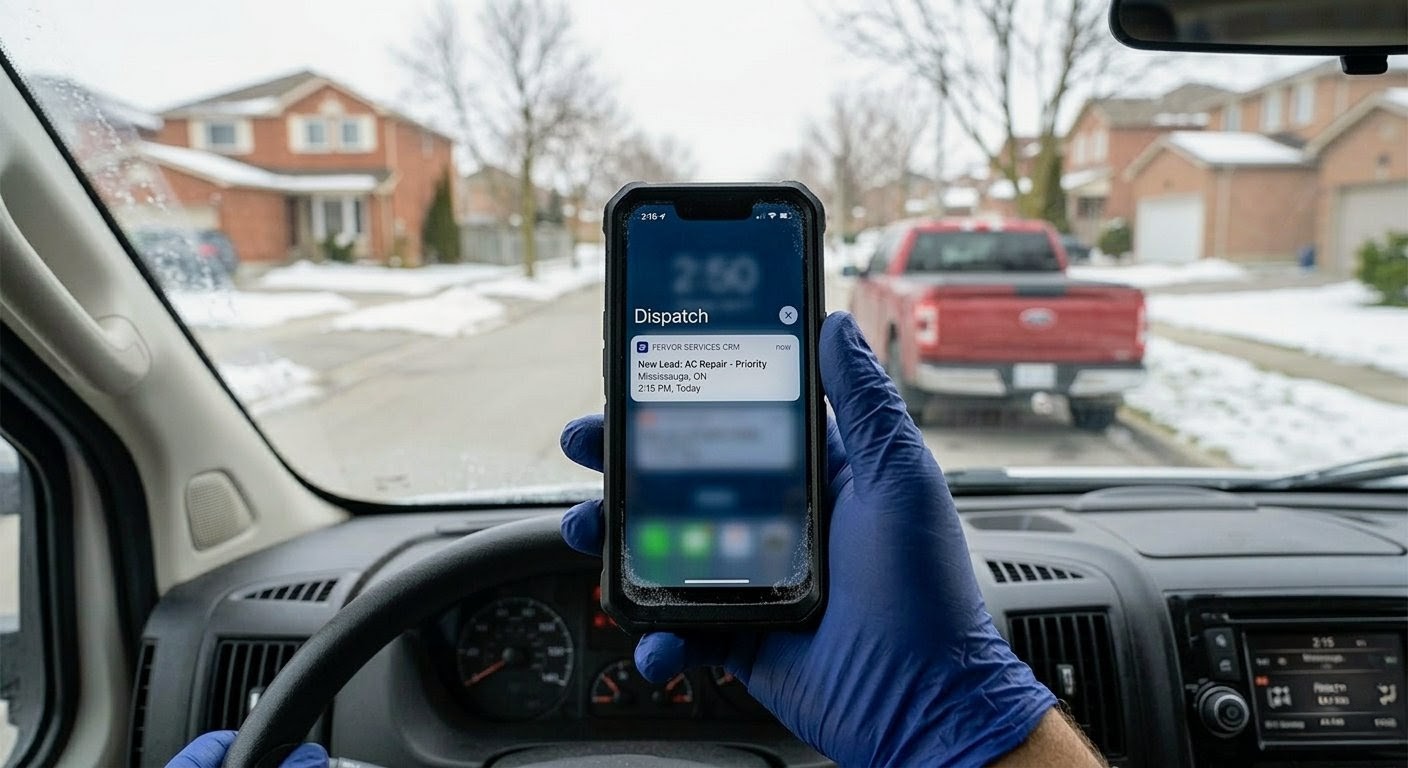
Five steps. No mystery. No "creative discovery session" that's really a sales call with mood boards.
We score your current Houston HVAC site across six conversion categories: speed, mobile, click-to-call, trust signals, service-page architecture, and post-launch ownership. You'll see where your site is bleeding emergency calls, how it compares to the contractors actually showing in the Houston Local Pack, and what the rebuild needs to fix. About three days. You own the report regardless of what happens next.
We study your Houston market and your business. We pull your ServiceTitan data (or Housecall Pro, or Jobber) to understand your job mix, average ticket, and seasonal patterns. We map your Inner Loop premium clients (River Oaks, Memorial, West U) against your Cypress and Katy production-replacement work, because a site built for one segment looks different from one built for the other. And the AC-vs-heat-pump-vs-IAQ revenue split shapes which service pages get top-nav placement.
Site structure, page hierarchy, every word of copy. Written before any design work begins. Every service page, neighborhood service-area page, and storm-resilience content cluster mapped to actual Houston search demand. HVAC website design Houston isn't bolted onto a pretty mockup. It's the foundation the entire site gets built on.
Mobile-first. Sub-2-second load times. Sticky click-to-call in the bottom-thumb-zone. ServiceTitan-compatible call tracking installed. Every CTA tested with the thumb-zone rule: if a Memorial homeowner can't tap your phone number with one hand while holding a flashlight in the other at 11pm during a brownout, the CTA fails. Static Astro output plus Cloudflare edge delivery means a Cypress LTE connection serves your site nearly as fast as a desktop fiber connection.
Your site launches with CallRail tracking installed, all logins transferred, and documentation for routine updates. You own the domain, content, hosting, GBP, citation directory logins. Everything. And if you want compound growth from ongoing storm-season content cycles and neighborhood service-area expansion, Performance Partner picks up where the build leaves off.
Three engagement options for HVAC website design Houston, all built on website ownership and no long-term contracts. Booked by Design is the lead because this is a web-design intent project. The other two pair with it for ongoing local SEO and review work.
Booked by Design™ — $9,997-$12,997 for HVAC. 30-60 days. Full site rebuild including service pages for every equipment type, Houston quadrant location pages (Inner Loop premium, Inner-City older stock, master-planned suburbs, coastal Bay Area, North Houston, surrounding markets), GBP setup, schema stack, NiceJob review system installation, hurricane-prep and flood-zone content, and the click-to-call mobile UX baked in from day one. The lead pricing for a web-design rebuild.
The Local Pick — $2,497 one-time, ~14 days. If your existing site already converts well on phone but your Houston local presence is invisible: GBP optimized for the right neighborhood service areas, citations built and corrected across Yelp.com, BBB Greater Houston, YellowPages.com, Angi, Thumbtack, and the TACCA Greater Houston + ACCA member directories, review velocity configured with NiceJob, schema markup installed. No retainer attached. Pairs with a working site that just needs the local layer added.
Performance Partner™ — $1,497-$3,997/month, ongoing. Quarterly content additions for storm-season content cycles, neighborhood service-area expansion, salt-air install clusters, and dual-fuel cold-snap content. Plus GBP photo and post management, NiceJob review automation, citation maintenance, and monthly call-volume reporting tied to revenue. Your owned Houston HVAC web assets pay more every quarter, while paid lead-aggregator costs keep climbing.
"The NAHB/Westlake Royal Remodeling Market Index posted a reading of 64 in the fourth quarter of 2025, up four points compared to the previous quarter, with rising costs and customer hesitation flagged as key challenges." — National Association of Home Builders (NAHB) (2026)
Remodeling sentiment is up. So the Houston HVAC contractors who built proper website foundations now keep eating share as the market normalizes. The ones still buying Angi credit and HomeAdvisor leads feel the squeeze first: their cost-per-lead climbs while owned digital assets keep paying. Houston HVAC web design done this way compounds. Done cheap, it evaporates the moment the retainer stops.
A properly built Houston HVAC website typically shows phone-volume lift within 30-60 days as the mobile UX changes start converting existing organic traffic at higher rates. Full SEO movement on the rebuilt site (Local Pack positioning, rankings for "HVAC repair Houston" and neighborhood-level queries) takes 4-9 months. Reviews and GBP photos compound monthly. So the work is best measured in calls per quarter and conversion rate per visitor, not rankings on day 30.
Booked by Design™ is $9,997-$12,997 for a full HVAC rebuild including all the Houston-specific architecture (storm-resilience content, neighborhood pages, hurricane-prep cluster, salt-air install). The Local Pick is $2,497 if your site already converts well and you just need the local layer added. Performance Partner is $1,497-$3,997/month for ongoing content and review work. Both initial builds include website ownership transferred on day one. No long-term contract on any tier.
Yes. Domain, content, hosting credentials, Google Business Profile, citation directory logins, all transferred on day one. If you ever leave Fervor, you take everything. That's how it should always operate. Most agencies don't.
Houston's humid subtropical climate with year-round AC dominance, the hurricane-prep and salt-air corrosion clusters, the post-Beryl resilience expectations buyers now carry, the TDLR Class A/B licensing requirement, and the master-planned-community boom across Cypress, Katy, and Sugar Land all make Houston a different web-design problem. Generic U.S. templates miss most of it. So your HVAC website design Houston has to speak to Houston's specifics: neighborhoods, climate, hurricanes, license display, mobile-first storm-day UX. Otherwise it reads like an Atlanta page rebadged.
The evidence
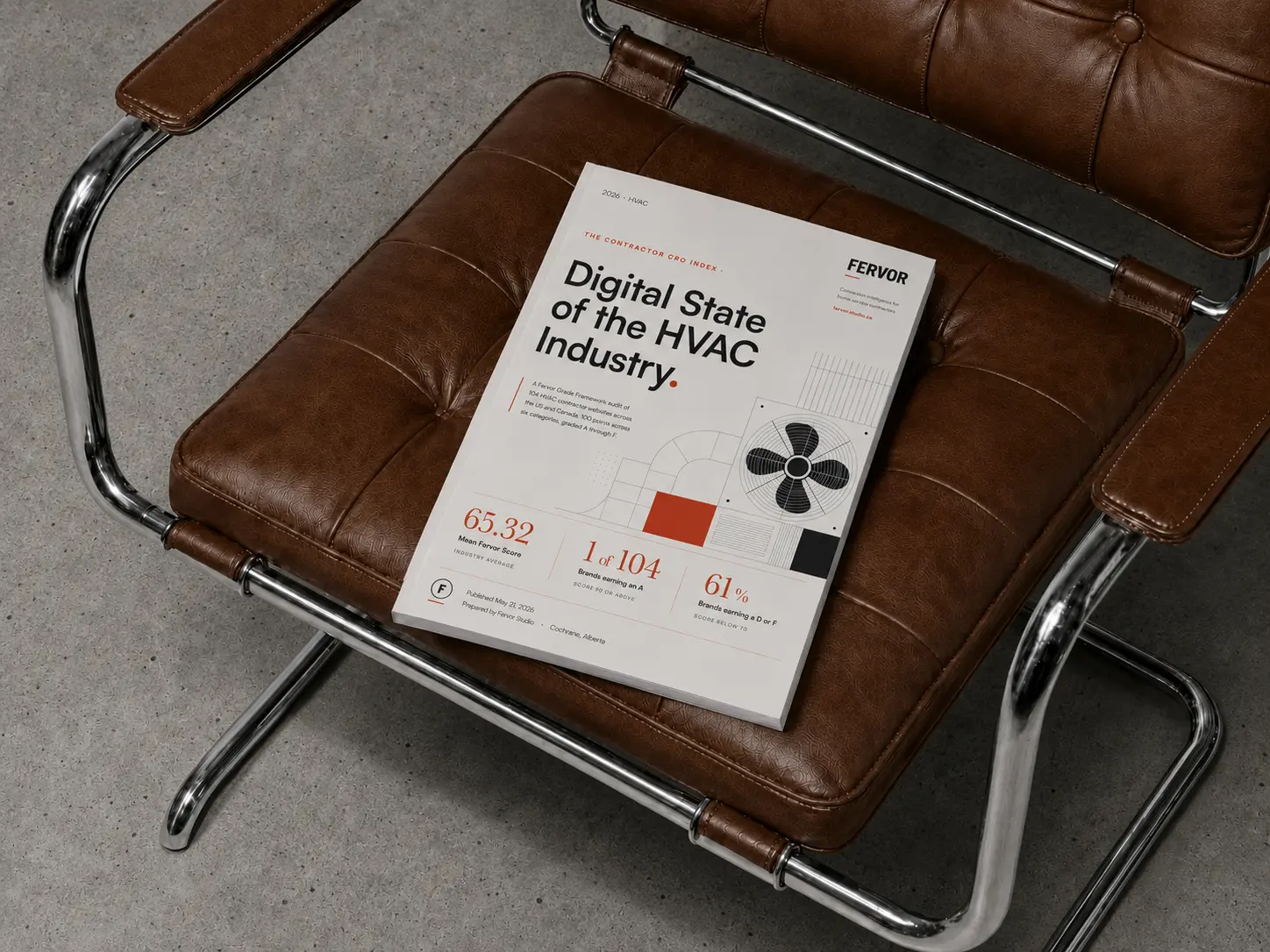 Read the full report →
 0
contractor sites graded, one A
Across the whole CRO Index, a single site earned an A. The median landed at a D. The grade gap is a conversion gap.
0 %
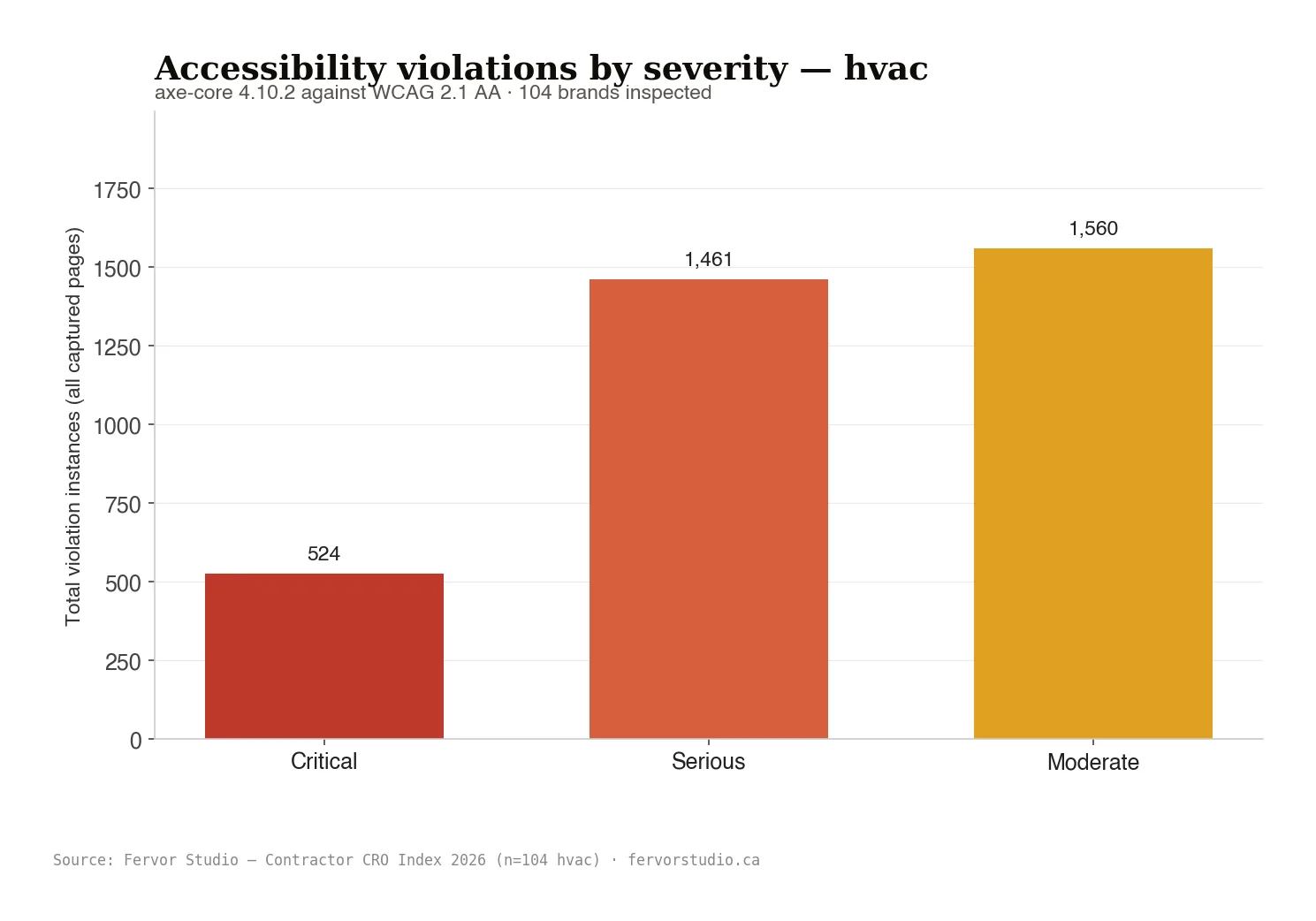
of HVAC sites fail a critical accessibility check
Scored against WCAG 2.1 AA with axe-core. A page that blocks a screen reader also blocks a paying customer.
Fervor HVAC State of the Industry, 2026
0 %
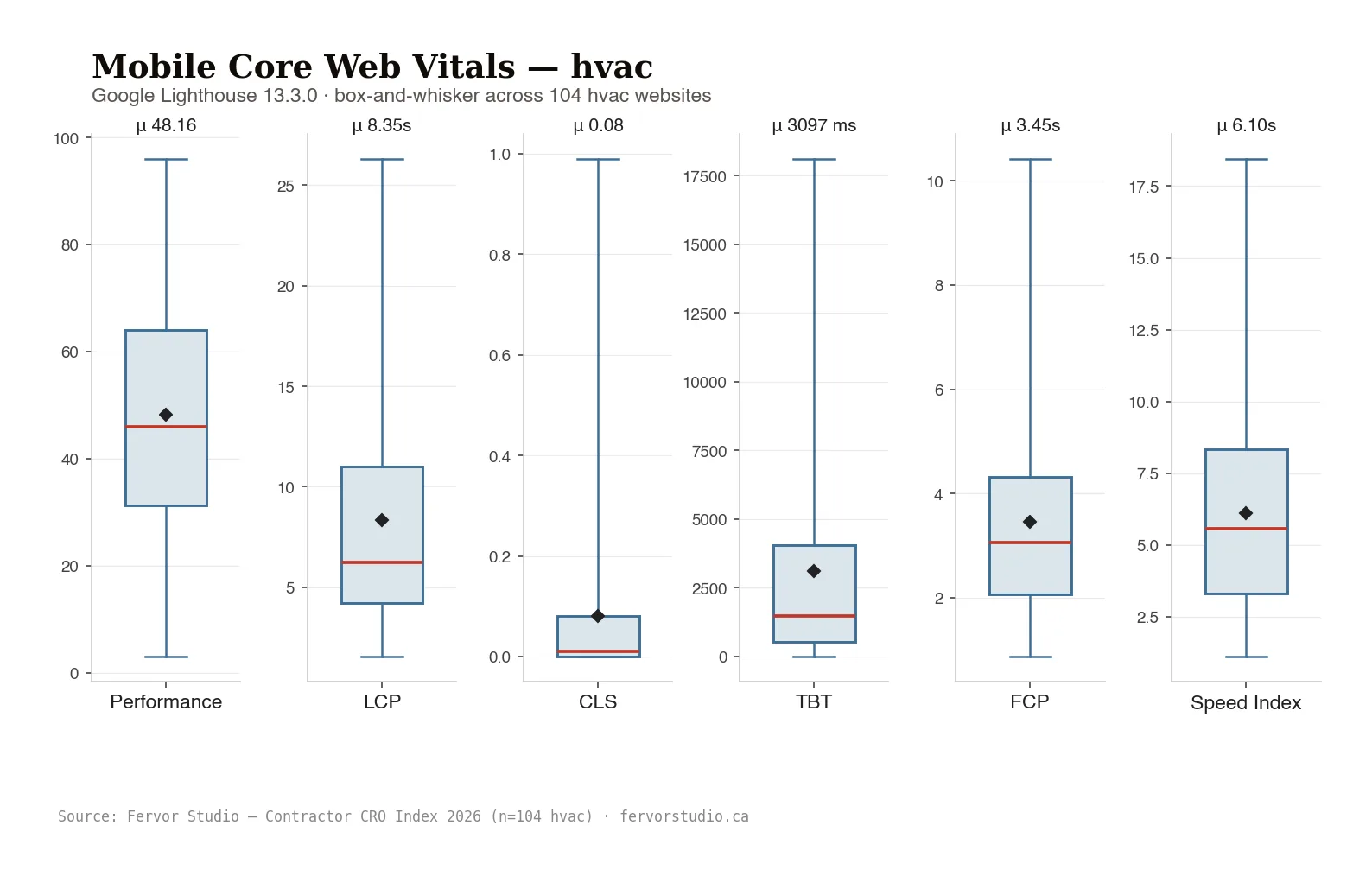
miss Google's mobile load-speed bar
Median mobile load lands at 6.24 seconds. Most of your traffic is on a phone, and most of them are gone before the hero paints.
Fervor HVAC State of the Industry, 2026
0 /100
is the average HVAC grade
That is a D. The sites booking the work are not the ones with the biggest crews. They are the ones a few points higher on the things homeowners feel.
Two ways to start
Tell us where you are. We point you at the right next step — no sales call to get there.
Client review
“Nay did an amazing job, you know. He was really patient. He got the work done the way I told him and he was just on point with the website. Pretty straightforward process. No going around the bush. He just did amazing work and I would 100% recommend.”
How Fervor can help
Complete website system built to convert storm leads, planned projects, and research-phase homeowners into booked jobs.
Identify and patch the top conversion killers on your existing site. No full rebuild needed.
Monthly SEO, content, and CRO. Fixed deliverables. No credits, no rollover. The compound growth engine.
GBP optimization, citation building, and review system foundation. The infrastructure that gets you into the Map Pack.
One conversion-built landing page for the referrals, paid clicks, and cold-call leads you send. They land on a page built to book them, not your generic homepage.
Your move
Tell us where you are. We point you at the right next step — no sales call to get there.
Keep going