

If you're looking for a solar marketing agency, here's a story that explains why we exist. Marcus is forty-eight. He's been installing residential solar across the Phoenix metro since 2012. Started as a crew lead for a national chain, went independent in 2016, built SunRidge Energy into a team of eleven running two crews six days a week. His guys can mount, wire, and commission a 10kW rooftop system in a single day. NABCEP-certified since 2015. Tesla Powerwall authorized. ROC license clean for thirteen years. And the referral network he's built across Scottsdale, Tempe, and Mesa means half the homeowners in his zip code heard his name from a neighbour who already went solar.
August 2025. The Inflation Reduction Act's residential solar tax credit gets extended through 2035. The 30% federal incentive stays intact. Arizona Power raises residential rates 14% in a single quarter. Every local news station runs the same segment about surging demand. Within two weeks, Google Trends shows "solar panel installation Phoenix" jumping 340%. Homeowners who'd been thinking about panels for three years suddenly have a deadline and a reason. Every experienced installer in Maricopa County should be buried in consultation requests.
Marcus books two consultations that month.
A company called BrightPath Solar, three years in business, no NABCEP certification, crew of six, Google reviews sitting at 4.2 compared to Marcus's 4.9. But in the ten weeks after that rate hike? BrightPath books $520,000 in signed contracts. Forty-four consultations converting at 62%. Three years of operation pulling more revenue per quarter than Marcus managed in his best full year.

Lead generation infrastructure decides who captures the demand when a policy shift floods the market with interest. Marcus has the certifications and the track record. BrightPath has a website that loads in 1.6 seconds, runs a savings calculator on the homepage estimating monthly bill reduction by zip code, and pushes a "Get Your Free Solar Quote" button above the fold on mobile. Their Google Business Profile has 180+ photos of completed installs, weekly posts about Arizona incentives, and response times under two hours. They rank in the local map pack for every variation of "solar installation" plus the city name. And they had landing pages targeting "solar panels cost Phoenix" and "solar tax credit Arizona 2025" indexed and ranking before the extension even hit the news.
Marcus's site is a five-page template his daughter set up in 2018. It loads in 7.2 seconds on mobile. No savings calculator. No instant quote tool. The phone number sits in the footer in 12-point font. When a homeowner in Mesa searches "solar panel installation near me" on a Tuesday afternoon after opening their electric bill, BrightPath shows up first on the map and second in organic results. Marcus appears on page three, below two national chains and a lead aggregator that'll sell his potential customer's info to four other companies.
Solar marketing builds the system that captures the 3-to-6-month research window. The panels on the roof don't sell themselves. The website that intercepts the research does.
Why the 3-to-6-month research window decides which solar company wins
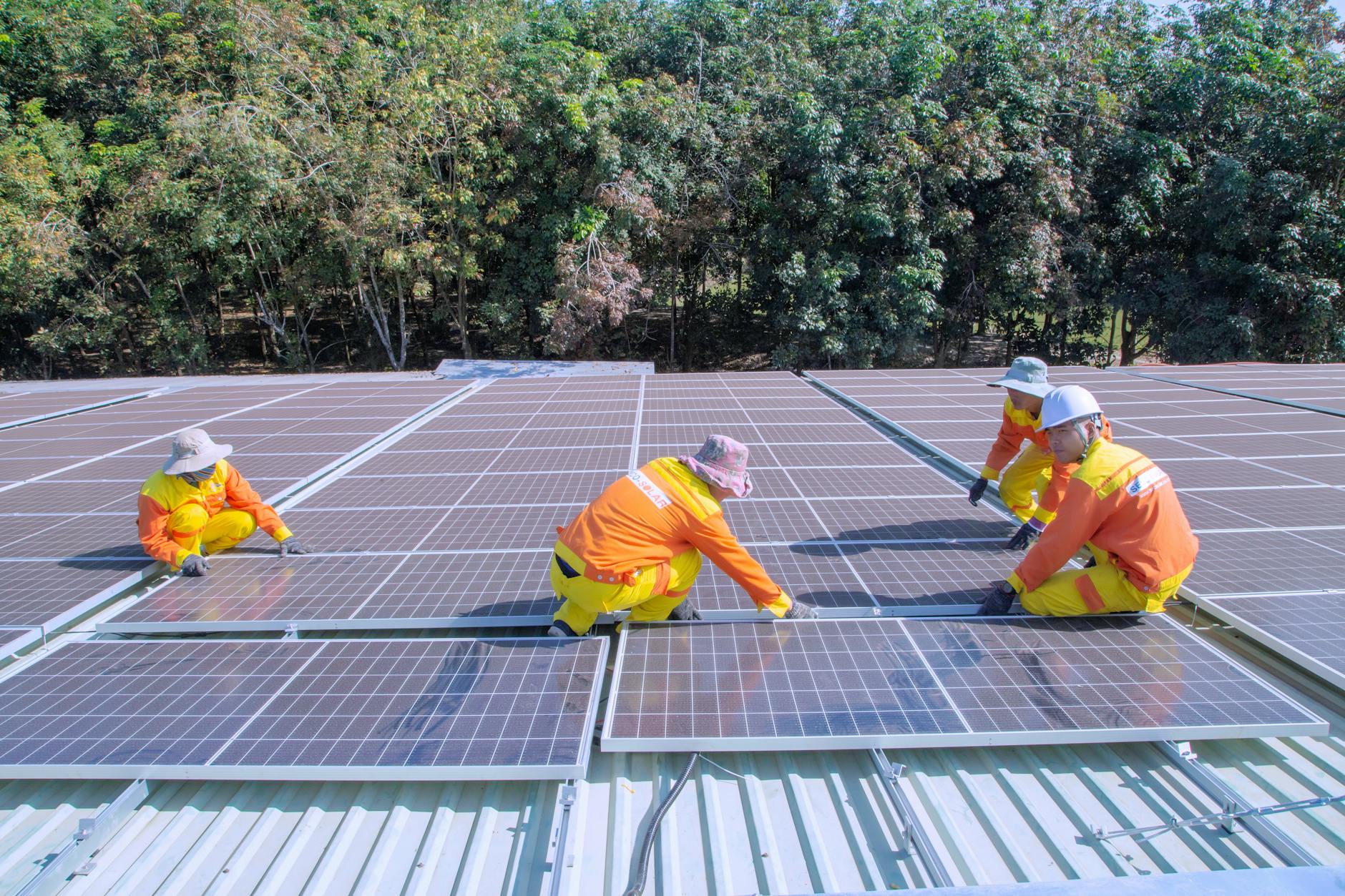
Solar is the longest buyer journey in home services. Not the most expensive one, necessarily. A custom home build or full kitchen remodel can cost more. But solar has a research phase that stretches months because the decision involves electricity production estimates, financing terms, tax incentives, equipment comparisons, and roof suitability assessments that most homeowners have never encountered before. And a solar marketing agency that understands this timeline builds content systems around it instead of running the same playbook they'd use for a plumber.
"92% of Americans who have installed or seriously considered solar cite saving money on electricity bills as a major reason."
— Pew Research Center (2022)
That 92% figure tells you the motivation. Saving money. But "saving money" requires understanding current usage, projected rate increases, system size, panel efficiency, battery storage options, financing versus cash purchase, the federal tax credit, and net metering policies. So the homeowner who opens their electric bill in July and thinks "I should look into solar" doesn't call anyone that afternoon. They start searching. And they keep searching for three to six months before requesting a consultation.
Your content and search visibility need to own that window. Not with ads that interrupt. With pages that answer the questions homeowners are already typing. Every query during those months is a hand raised. "How much do solar panels cost in Arizona." "Is solar worth it with my electric bill." "Best solar companies near me." The solar company whose website answers those questions with specificity and local data books the consultation when the homeowner is finally ready to commit.
Where solar leads actually come from (and which ones close)
Solar leads arrive through five channels: organic search, the Google map pack, referrals, paid ads, and lead aggregators. But they don't all convert at the same rate, and that matters when you're planning where to invest.

"7% of U.S. homeowners report having solar panels installed on their home, and an additional 34% say they have given it serious thought."
— Pew Research Center (2024)
Seven percent installed, 34% seriously considering it. That's roughly a third of the homeowner market sitting in the research window right now. But here's the part nobody talks about. Leads from organic search close at 2-3x the rate of purchased leads from aggregator sites. Why? Because the homeowner searched for you specifically, read your content, reviewed your work, and chose to reach out. They self-selected. A purchased lead from a lead gen platform went to four installers simultaneously. You're bidding against three competitors for a homeowner who didn't pick any of you.
So when we talk about generating solar leads, we're talking about building the search visibility that makes homeowners find you during their research. Not buying names from a database. Organic leads cost more to generate upfront (because SEO takes months to compound) but they close faster, churn less, and refer more. The math favours patience.
Want to know where your solar installer website stands? We grade it in 48 hours — no charge, no call required.
And referral leads, for what it's worth, close at the highest rate of all. But you can't scale referrals. You can scale organic search visibility. That's the difference between a business that grows when it's lucky and one that grows because the system is designed to produce solar leads month after month.
What solar SEO looks like when it's built for the buyer journey
Not all keywords are equal. This is where most agencies get sideways. A generalist will chase volume. They'll target "solar energy" (high volume, zero purchase intent) and "how do solar panels work" (informational, won't produce a consultation request) and show you an impressions report that looks great on paper.
Keywords that actually produce consultations fall into three tiers. Tier one is high-intent local: "solar installation [city]," "best solar company [city]," "solar panel cost [state]." These are homeowners with a timeline. Tier two is comparison and evaluation: "solar panels cost vs savings," "is solar worth it in [state]," "[brand A] vs [brand B] panels." These are homeowners in months two through four, actively building their shortlist. Tier three is incentive and financing: "solar tax credit 2026," "solar financing options," "solar lease vs buy." Homeowners in this tier have already decided they want panels. They're figuring out how to pay.
One more thing about solar keywords. Seasonality matters, but not the way it does for roofers or HVAC companies. Solar search volume tracks utility rate announcements, policy changes, and regional electricity price spikes. When Arizona Power announces a rate increase in August, "solar panels Phoenix" spikes within 48 hours. When the federal tax credit gets extended, "solar tax credit" doubles nationally overnight. Solar marketing that pays attention adjusts content and landing pages before these events. Not after.
What solar marketing should actually include (beyond SEO and ads)
If someone tells you solar marketing is "just SEO and some ads," they're selling you half a system. Here's what a complete approach covers when you're trying to capture the full research window.
Technical site speed and mobile performance
Your site needs to load in under 2 seconds on mobile. Buyers research on their phones during lunch breaks, on the couch after dinner, in bed at 11 PM after opening their electric bill. Every second of load time costs roughly 7% of conversions. We've audited installer websites running bloated WordPress themes with uncompressed hero images of panel arrays that take 9 seconds to load. That's a loading screen homeowners close before it finishes.
Savings calculators and instant quote tools
The single highest-converting element on any installer's website is a savings calculator. It doesn't need to be perfectly accurate. It needs to give the homeowner a rough estimate of monthly savings based on their zip code, average bill, and roof orientation. That interaction increases time on site by 300% and converts at 4-8x the rate of a standard contact form. If your website doesn't have one, you're losing to every competitor who does.
"44% of U.S. solar adopters have household incomes under $100K."
— Lawrence Berkeley National Laboratory (2024)
And notice that income distribution. Nearly half of solar adopters earn under $100K. These aren't wealthy homeowners indifferent to cost. These are middle-income families making a financial decision. Your marketing needs to address financing, payment plans, and total cost of ownership. Not "go green" messaging. The savings calculator speaks directly to this audience because it translates panels into dollars saved.
Local search and Google Business Profile management
Your GBP listing needs weekly updates, photos of completed installations (not stock images), responses to every review within 24 hours, and accurate service area information. Installers serving metro areas with multiple cities need individual landing pages and GBP posts for each city. "Solar installation Tempe" and "solar installation Scottsdale" are different queries with different results. Treat them that way.
Content targeting every stage of the research window
Blog posts, guides, comparison pages, FAQ content, and location-specific landing pages covering the full keyword spectrum from awareness to decision. Each piece links back to your core service pages. An agency that only produces "5 Benefits of Going Solar" listicles is leaving money on the table. You need content answering the specific questions your local market is asking. What does solar cost in [your city]? How does net metering work in [your state]? What's the difference between monocrystalline and polycrystalline panels?
"96% of U.S. residential solar PV systems installed in 2023 were on owner-occupied homes, with marked growth in lower-to-middle-income adoption."
— Lawrence Berkeley National Laboratory (2024)
That owner-occupied stat matters for targeting. You're not marketing to investors or landlords. You're marketing to the person who lives in the house, pays the electric bill, and will walk past those panels every day for 25 years. Content that speaks to that person's specific concerns about cost, aesthetics, and long-term reliability will always outperform generic messaging.
Review generation timed to the first reduced bill
Solar is a trust-heavy purchase. A $25,000-$40,000 system mounted on someone's roof for 25 years. Homeowners read reviews throughout the research window. You need an automated system that requests reviews 30 days after installation, once that first reduced electric bill arrives. Don't ask the day after install. The homeowner hasn't seen savings yet. Wait for the bill. The review will be three times more specific about real dollar amounts.
"25% of homeowners say trusting contractors is their top challenge when hiring."
— Houzz Inc. (2025)
A quarter of homeowners say trust is their number-one challenge when hiring any contractor. For solar, where the price tag is five to ten times higher than most home services, that trust barrier is even steeper. Reviews, certifications, project photos, and transparent pricing aren't optional. They're the foundation of marketing that actually converts browsers into booked consultations.
Paid media that complements organic instead of replacing it
Google Ads can work for installers. But only as a supplement to organic visibility, not a replacement. Paid leads cost $40-$120 each depending on metro area competition. Organic leads, once the system is built, cost a fraction of that. Run ads to capture demand during rate hike spikes and tax credit announcements. Build organic to capture the steady baseline of homeowners researching every month regardless of news cycles.
Measuring solar marketing ROI (the four numbers that actually matter)
Solar has one of the highest customer acquisition costs in home services because of the long research window and heavy competition from national brands. So measuring ROI isn't optional. It's the difference between knowing your marketing works and hoping it does.
The four numbers that matter:
Consultations booked from organic search -- tracked via call tracking and form analytics tied to organic landing pages
Cost per consultation from organic -- total monthly investment divided by total organic consultations
Close rate on organic leads versus purchased leads -- organic typically closes at 2-3x the rate because the homeowner self-selected your company
Revenue attributed to organic leads -- requires CRM tracking from consultation through signed contract
If your current agency sends reports about keyword rankings and impressions but can't show you these four numbers, you're paying for dashboards. Rankings are a means. Revenue is the metric.
"64% of Canadians surveyed prefer homes with high-efficiency heating and cooling systems."
— Abacus Data (2023)
That preference data points to something broader than Canada. Homeowners across North America increasingly view energy efficiency as a home value issue, not just a savings issue. Your content should frame panels in terms of home equity and resale value alongside monthly bill reduction. Both motivations drive consultations.
How Fervor builds solar marketing systems that compound
We run one process for every solar company. It starts with a free site inspection where we audit your current site against the top-ranking competitors in your specific market. Not national averages. Your actual local competitors in your metro area.
Here's what that looks like. We pull the top 10 organic results for your primary keywords, count exact term frequency across 10 ranking zones, calculate the edge target for each zone, and build a content brief that tells us exactly how many times each keyword needs to appear and where. No guessing. No "best practices." Data.
Then we build the content, integrate the savings calculator, set up conversion architecture, and launch. But launching isn't the finish line. Solar marketing compounds. Month one builds the foundation. Month three, pages start ranking. Month six, organic consultations become a predictable pipeline. Month twelve, your cost per consultation from organic is a fraction of what you'd pay for purchased leads. The whole system gets stronger each month because that's the design.
Your competitors aren't waiting. Book a free site inspection and we'll show you exactly where your solar company's site is losing leads on searches like "solar panel installation near me" — with numbers, not opinions.
So that's the diagnostic. Your website either captures the 3-to-6-month research window or it doesn't. And the solar companies growing at 20-30% year over year aren't the ones with the best panels on the truck. They're the ones whose solar marketing agency built a system that intercepts the research before anyone else does.
What a Fervor solar marketing engagement includes
Booked by Design™ — $10,000–$15,000+ · 30–60 days
Your solar website rebuilt from the ground up with conversion architecture, savings calculator integration, keyword-targeted service pages for every city in your service area, Google Business Profile optimization, local SEO foundation, and a content system that builds topical authority month over month.
Performance Partner™ — $997–$2,497/month · ongoing
Monthly solar marketing services including content creation, local landing page expansion, GBP management, review generation automation, incentive and policy content updates, and monthly reporting tied to actual consultations and revenue. This is where solar leads compound into a predictable pipeline.
The Site Inspection — Free · ~3 days
We audit your current site, score it against your local competitors, and show you exactly where you're losing consultations. No pitch. Just the data.
Tools we recommend for this trade
Solar installers managing consultation pipelines and multi-week sales cycles need a CRM that tracks the full journey from lead to signed contract. Jobber handles the scheduling, quoting, and invoicing side. For solar companies doing 50+ installs per year, ServiceTitan's pipeline management and automated follow-ups prevent the 3-to-6-month research leads from going cold.
And if you're running a savings calculator on your site that generates consultation requests, you need to know which page produced each lead. CallRail tags every form submission and phone call with the traffic source, so you can see whether your net metering page or your cost calculator is producing the signed contracts.
Frequently asked questions about solar marketing
How is solar marketing different from other contractor marketing?
The biggest difference is the sales cycle. A homeowner searching for a plumber needs someone today. A homeowner researching solar panels might take three to nine months to decide. That means your marketing has to nurture leads across multiple touchpoints — educational content, savings calculators, retargeting ads, and email sequences. You're also competing with national brands like SunPower and Tesla who spend millions on awareness. So your local marketing strategy has to be sharper and more specific to your service area than in any other trade.
What marketing budget should a solar company allocate?
Solar companies typically need to spend 8% to 12% of target revenue on marketing, which is higher than most trades. If you're aiming for $2M in annual installs, budget $13,000 to $20,000 per month. And yes, that's more than a roofer or plumber would spend — because your cost per acquisition is higher and your sales cycle is longer. The average cost to acquire a signed solar contract through digital marketing runs between $1,200 and $2,800 depending on your market. But when your average install is $28,000, the math still works.
How do solar leads differ from other home service leads?
Solar leads require more qualification than any other home service. A roofing lead usually converts in one or two touchpoints. A solar lead might need a site assessment, a utility bill analysis, a financing discussion, and a design review before they sign. About 38% of solar leads are still in the research phase when they first reach out — they're comparing options, not ready to buy. So your follow-up system matters just as much as your lead generation. The companies that close at 20%+ have automated nurture sequences that keep them top of mind through that entire decision window.
Should solar companies invest in a savings calculator on their website?
Yes, and it should be one of your highest priorities. A savings calculator does two things no other page element can: it gives the homeowner a personalized number they care about, and it captures their utility data so your sales team has real information to work with. Solar companies have increased their form completion rate by 67% after adding a calculator that estimates monthly savings by zip code. The key is making it simple — three to four inputs max. If you ask for their full utility bill upload on the first interaction, you'll lose them.
How long is the typical solar buyer’s research period?
Most residential solar buyers spend three to nine months researching before they sign a contract. And during that window, they visit an average of six to eight websites, request two to four quotes, and read 15+ reviews. That's why content marketing matters so much in solar — you need to be present at every stage of that research journey. The companies that produce comparison guides, incentive explainers, and financing breakdowns capture leads earlier in the funnel and build trust before the homeowner ever talks to a salesperson. Starting your relationship at the quote stage means you've already lost ground.
The Site Inspection: How The Biggest Solar Websites Score on Lead Conversion
We audited these home service brands on 100 points of conversion infrastructure. See what the national players get right, where they leak leads, and what independent contractors can exploit.