

If you run an electrical company and your phone is not ringing the way it should, the problem probably is not your work. It is your visibility. An electrician marketing agency exists to solve one problem: making sure the contractors who deserve the work actually get found when homeowners search. This page breaks down how that works, what it costs when it does not work, and what you should expect from an agency that claims to understand your trade. Everything here is built on competitive data from the pages currently ranking for this keyword. Not theory. Not assumptions. The actual numbers from the search results.
Glen is fifty-two. He has been pulling wire in Hamilton, Ontario for twenty-six years. Started as an apprentice at nineteen, got his master electrician licence at twenty-seven, opened his own shop at thirty-one. ESA-registered. CSA-certified. His guys can rewire a 1950s bungalow in three days flat. He has done knob-and-tube remediation in houses that still had fuse panels from the Eisenhower era. The general contractors in the east end know his number by heart. Half the residential electricians in the region have worked under him at some point. Ask any property manager between Stoney Creek and Dundas who they would call for a panel swap, and they will say Glen before they finish the sentence.
January 2026. Ontario announces expanded rebates for Level 2 EV charger installations in single-family homes. The federal government layers on a separate incentive for electrical panel upgrades tied to heat pump adoption. Suddenly every homeowner who bought a Tesla, a Hyundai Ioniq, or a Ford Lightning in the last three years is searching for someone to install a 240V circuit in their garage. And every homeowner whose 1970s split-level still runs on a 100-amp panel is finding out they need an upgrade before any of it can happen. Search volume for "EV charger installation" triples in six weeks. "Panel upgrade cost" doubles. The demand wave is real, and it is moving fast.

Glen books four panel upgrade leads that quarter. Four.
Across town, a company called VoltEdge Electrical has been operating for five years. No master electrician on staff until they hired one last spring. Crew of six. Their Google reviews sit at 4.2, compared to Glen's 4.9. But in the first ninety days after those rebate announcements, VoltEdge books $280,000 in panel upgrades and EV charger installs. Thirty-seven jobs. The owner is twenty-nine years old and has been in business for less than half the time Glen has.
The difference between Glen and VoltEdge was not skill or reputation. It was search infrastructure. VoltEdge had a site that loaded in 1.6 seconds, ran dedicated landing pages for EV charger installation, panel upgrades, generator installs, and whole-home surge protection. Their Google Business Profile had 180+ photos, weekly posts showing completed charger installs, and a click-to-call button above the fold on every page. They appeared in the local map pack for every variation of "electrician near me" plus "EV charger installation Hamilton" and "panel upgrade cost Ontario." Glen's site listed "residential and commercial electrical services" on a single page. The phone number lived in the footer. There was no EV charger page. No panel upgrade page. No generator page. No way for Google to understand what specific services Glen actually offered.
When a homeowner in Hamilton searched "EV charger installation near me" at 8 PM on a Wednesday, VoltEdge was the first result on the map and the second organic listing. Glen's company appeared on page five. His site was a business card from 2020 sitting in a filing cabinet nobody opens.
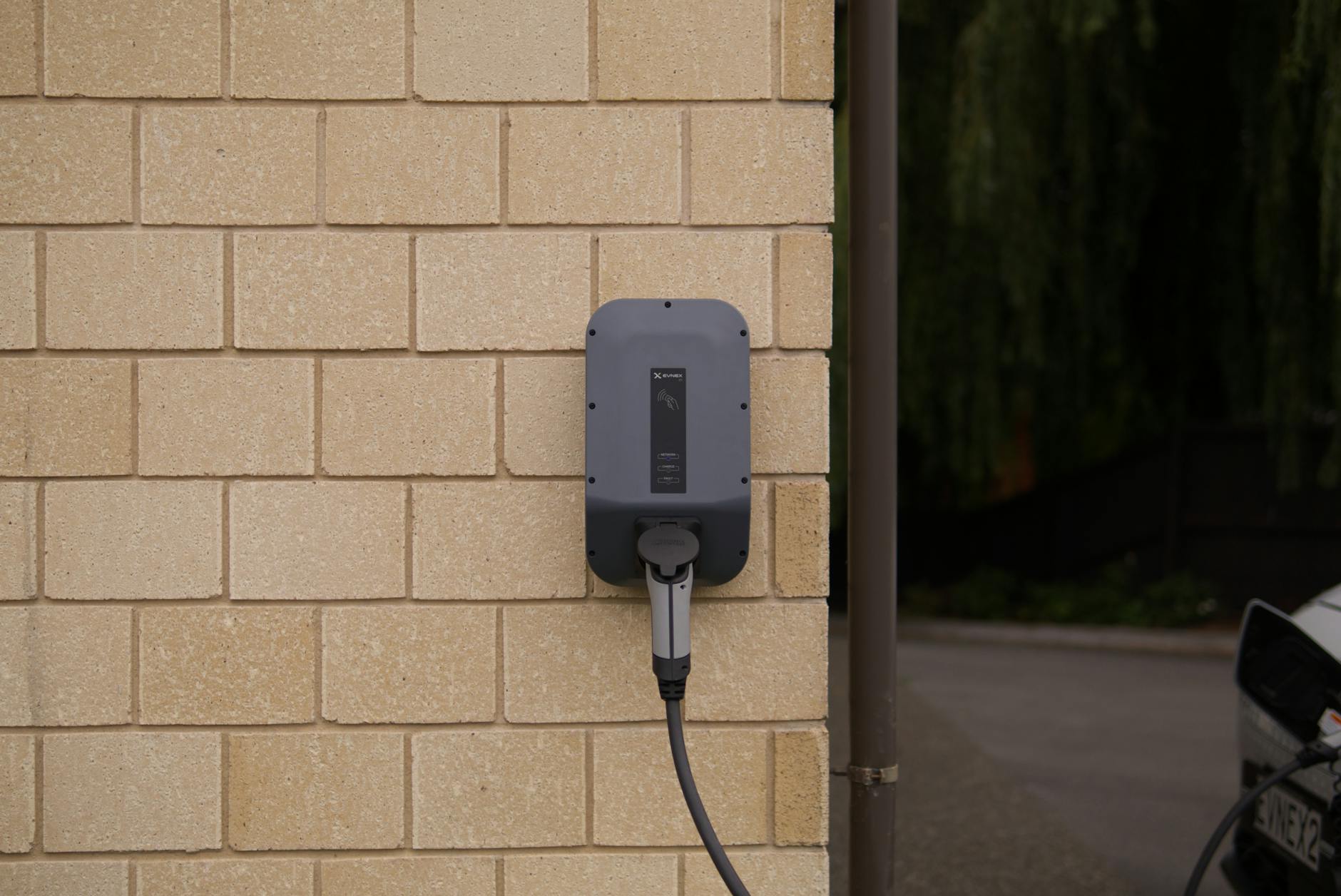
Competence does not rank on Google. Infrastructure does. And the gap between Glen and VoltEdge is not about talent or work ethic. It is about whether your electrician website is built to capture demand or just sit there looking professional while the phone stays quiet.
Why electrician marketing is different from other trades
Every trade has its own search behaviour. Roofers deal with storm spikes. HVAC companies deal with seasonal flips between heating and cooling. But the marketing side for electricians operates across a wider spread of job types than almost any other contractor category, and that is what makes it hard to get right.
An electrician handles emergency work (panel failures, outages, burning smells), planned upgrades (EV chargers, panel swaps, whole-home rewires), new construction rough-ins, commercial tenant improvements, and specialty installs like generators and solar panel wiring. Each of those service categories has its own keyword universe, its own buyer intent, and its own conversion timeline. A homeowner who smells burning plastic behind an outlet is making a decision in minutes. A homeowner researching EV charger options is browsing for weeks. A commercial property manager requesting bids for a tenant improvement is on a completely different timeline still, often measured in months.
"Over 20% of surveyed U.S. single-family homeowners have service panels rated 100A or less."
— American Council for an Energy-Efficient Economy (ACEEE) (2024)
That means roughly one in five homes cannot support a Level 2 charger, a heat pump, or an induction range without a panel upgrade first. Each of those upgrade conversations starts with a search. And when a generalist agency builds you a five-page site with an "Electrical Services" page that lists everything you do in bullet points, they have already lost. That page cannot rank for "EV charger installation" and "emergency electrician near me" and "panel upgrade cost" at the same time. Google needs dedicated pages for each service cluster, with keyword density mapped to specific zones. Title tags, H1s, first 100 words, H2s, body copy, image alt text. The math matters more than the poetry.

The service diversity problem nobody tells you about
There is a reason your competitor with half your experience is outranking you. They built a page for every service. You built one page for everything. A single "Services" page competing against a site with dedicated pages for panel upgrades, EV charger installs, generator wiring, knob-and-tube removal, and emergency repair is like bringing a pamphlet to a library. Google's algorithm rewards topical depth. One page covering twelve services sends weak relevance signals for all twelve. Twelve pages, each built around one service cluster with supporting content, send twelve strong signals. And the compound effect of those twelve pages linking to each other, referencing each other, and building context around your expertise is what pushes a site from page three to page one over six to twelve months.
This is not about having more pages for the sake of having more pages. It is about giving Google enough context to understand what you do, who you serve, and where you serve them. Every page you add that covers a specific service in a specific geography with real detail is a new entry point for a homeowner to find you. And every one of those entry points is a potential phone call.
This is the same structural principle we apply across every trade in our contractor marketing program. Specificity wins.
The EV charger and panel upgrade wave most agencies miss

Here is what changed in the last eighteen months. EV adoption hit a tipping point. Heat pump installations surged. And the electrical infrastructure in tens of millions of North American homes cannot support either one without a panel upgrade first. This created an entirely new category of demand that did not exist at meaningful scale even three years ago.
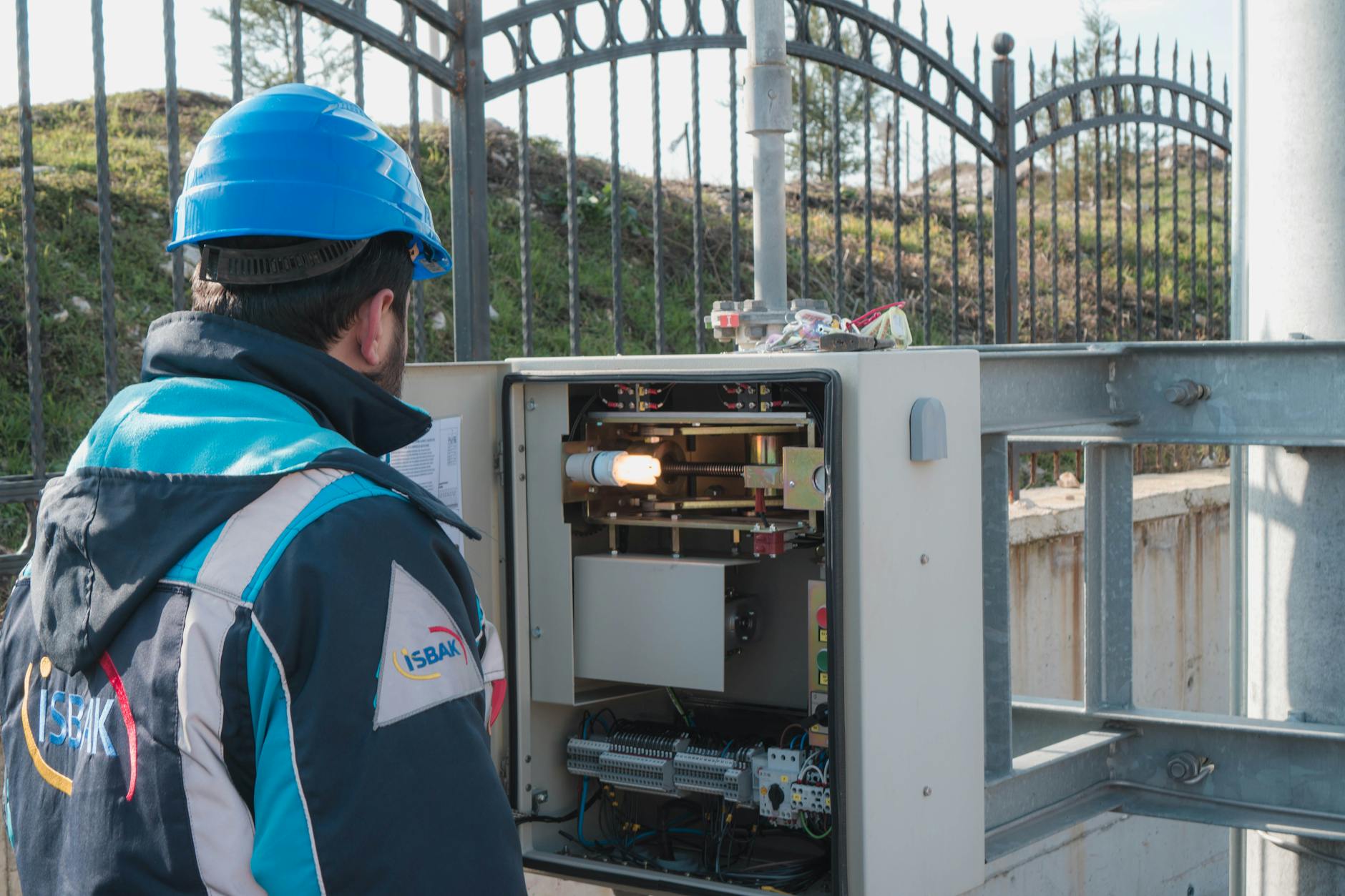
"24% of homeowners surveyed would trigger an electrical service upgrade under a full home electrification scenario (with backup strip heating)."
— American Council for an Energy-Efficient Economy (ACEEE) (2024)
That is roughly one in four homeowners who will need panel work before they can electrify. And the keyword landscape shifted with it. Two years ago, "electrician near me" and the usual city-specific queries covered most of the search volume. Now you have got entirely new categories gaining traction: "EV charger installation cost," "200 amp panel upgrade," "whole home electrification electrician," "Level 2 charger installer near me." These are not low-volume queries hiding in the long tail. Some of them are pulling 2,000+ monthly searches in major metros. And the competition for these terms is still relatively thin compared to the generic queries, which means there is a window of opportunity for the companies that move first.
The electricians who are growing fastest right now are the ones ranking for the electrification keywords. Panel upgrades. EV chargers. Generator installs tied to grid instability. Whole-home surge protection for homes adding high-draw appliances. If your agency is still optimizing only for the old keyword set, they are leaving the fastest-growing segment of your market on the table. And someone else is picking it up.
The home charging gap and what it means for your pipeline

Want to know where your electrical contractor website stands? We grade it in 48 hours — no charge, no call required.
"86% of surveyed U.S. EV owners have access to a home charger, yet 59.6% still rely on public chargers weekly."
— ChargeLab (2024)
Nearly 60% of EV owners who have a home charger still use public charging regularly. That tells you the home charging experience is not fully solved for most people. There is a massive services tail behind every charger install: dedicated circuits, sub-panel additions, load management systems, garage wiring upgrades. Each of those is a keyword cluster your site should own. And each one represents a job that typically ranges from $800 to $3,500 depending on the complexity of the existing wiring. Those numbers add up fast when you are booking fifteen to twenty of them per month.

If you are an electrician who is not listing EV charger brands you are certified to install (Tesla Wall Connector, ChargePoint, Grizzl-E, Emporia) you are leaving brand-name search traffic on the table. Homeowners search by brand. They type "Tesla Wall Connector installer near me" and "ChargePoint home charger installation cost" because they have already decided what they want. They just need someone to install it. Your competitors know this. That is why they have dedicated pages for each charger brand, each with its own keyword targets and its own conversion path.
Beyond chargers, the panel upgrade itself is becoming a standalone revenue category. Homes built before 1980 typically have 100-amp or even 60-amp panels. None of those can support a Level 2 charger, a heat pump, and a modern kitchen without an upgrade. The homeowner who just bought an EV is about to discover they need a $2,500 to $4,500 panel swap before the charger can even go in. Your site should be the one explaining that to them, not your competitor's.
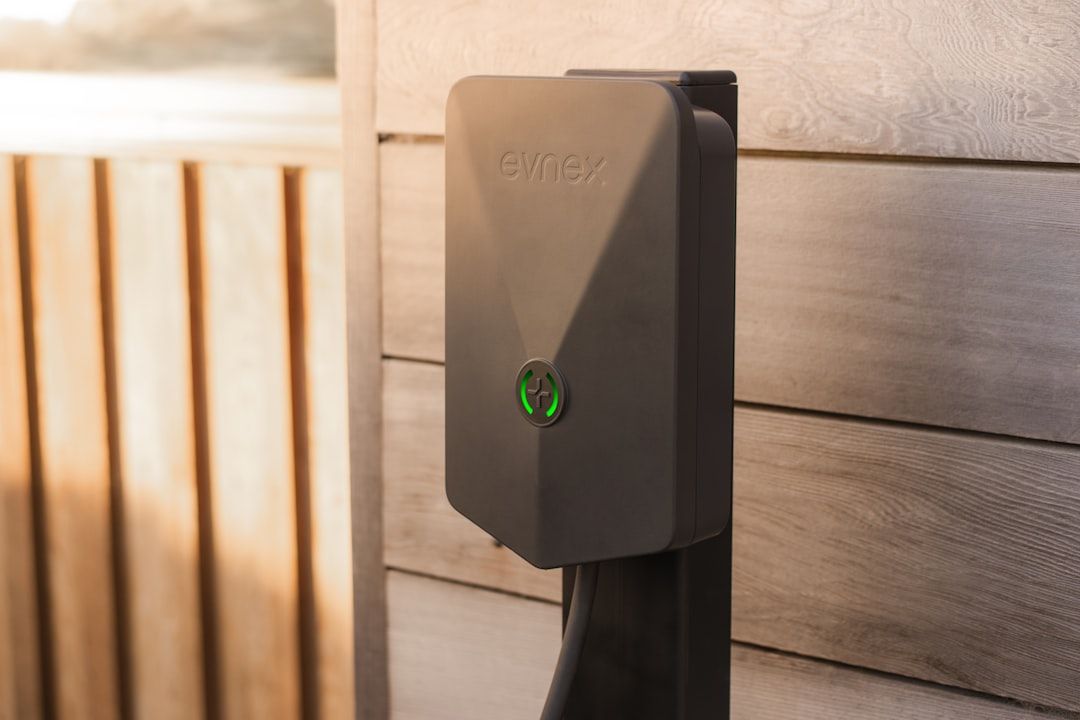
The same brand-specificity principle applies across mechanical trades. Generic service descriptions lose to specific ones every time.
How local SEO captures emergency and planned work
Local SEO for electrical companies splits into two modes, and your site needs to serve both simultaneously. Emergency work and planned work behave like completely different businesses from a search perspective, even though the same crew handles both.
Emergency searches happen fast. Someone's breaker keeps tripping. There is a burning smell. Half the house lost power. They are on their phone, probably standing in their kitchen in the dark, and they are going to call the first company that shows up in the map pack with decent reviews and a phone number they can tap. Your Google Business Profile does 80% of the heavy lifting in these moments. Updated hours. Recent photos. A response to every review. And "Open Now" showing on the listing. If your GBP says you close at 5 PM and the emergency happens at 7 PM, you are invisible.
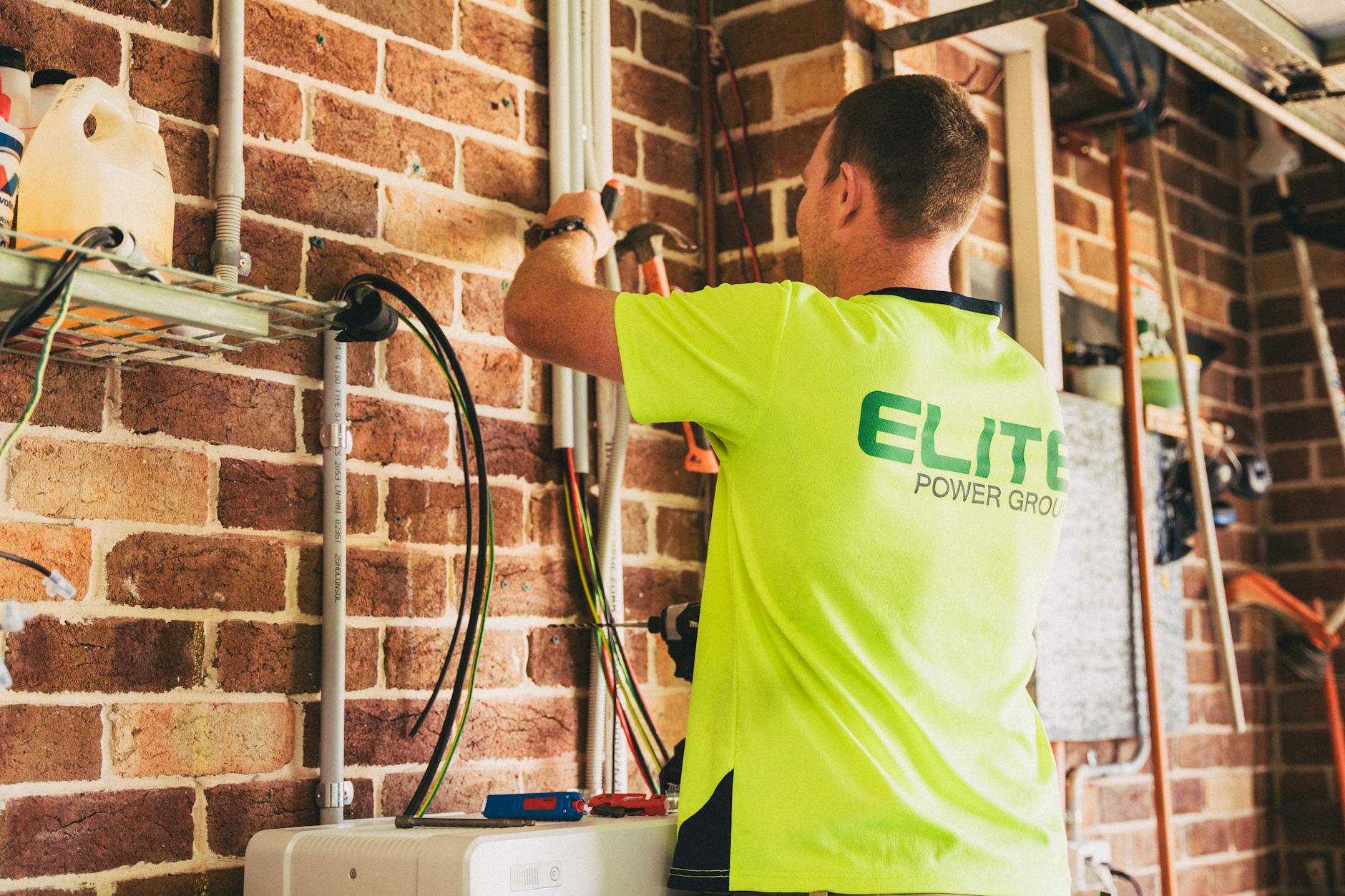
Planned work searches are slower. Someone just bought an EV and needs a charger installed. Or they got a quote on a heat pump and the HVAC company told them they need a panel upgrade first. Or they are finishing a basement and need circuits added. These people browse. They compare. They read your service pages. They check your reviews. They might visit three or four sites before they call anyone. They are looking at your work photos, reading your service descriptions, and comparing your pricing transparency against the next company in their browser tabs.
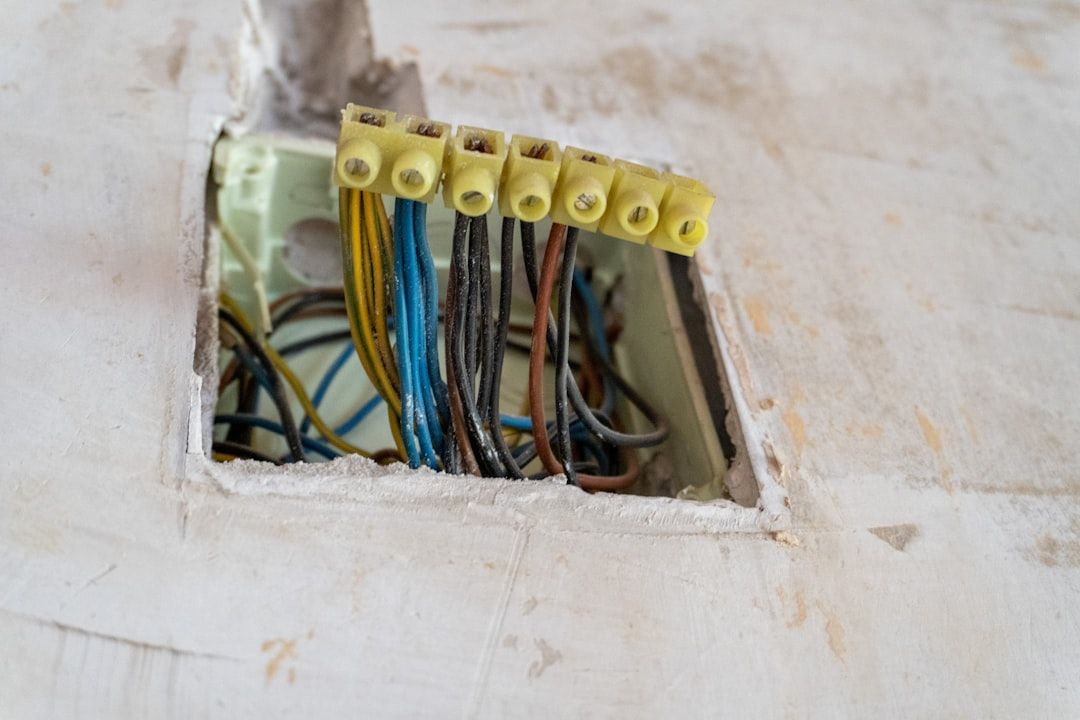
The conversion path for planned work is longer and more research-heavy. A homeowner comparing three electricians for a panel upgrade is going to spend time on each site. They will read your "About" page. They will look at project photos. They will check whether you mention the specific service they need by name, not just as part of a generic list. The site that answers their questions most completely is the one that gets the call. This means your service pages need to cover not just what you do, but what the process looks like, what the typical timeline is, what permits are involved, and what the homeowner should expect during the work. Specificity builds trust. Vagueness creates doubt. And doubt sends them to the next tab.
Your Google Business Profile is a free landing page you probably neglect
Your GBP listing is free, but it requires maintenance the way a panel requires maintenance. Ignore it long enough and it stops working. The companies winning the map pack post weekly, add photos of completed jobs (not stock images), respond to reviews within hours, and keep their hours accurate. For emergency pages, your site needs to load in under two seconds, show a click-to-call button above the fold, and list your service area with specific city names. For planned work pages, you need deeper content covering what the job involves, what it costs, how long it takes, and what certifications you hold. Different intent, different page structure, different conversion path.

One pattern we see constantly is electricians who rely on a single "Service Area" page with a list of cities. That is better than nothing, but it is not competitive. The companies dominating local search have individual pages for each city they serve, with content specific to that location: local permit requirements, common housing types and the electrical issues associated with them, utility company specifics, and real job photos from that area. A homeowner searching "electrician in Dundas" is more likely to click on a result that mentions Dundas in the title, the description, and the body copy than one that buries it in a bulleted list of thirty cities.

"64% of homeowners say having recommendations or references is a top-three factor in choosing a contractor."
— Houzz Inc. (2025)
That 64% number is not just about word-of-mouth. It is about what happens after the word-of-mouth. Someone gets your name from a neighbour, and the first thing they do is Google you. If your GBP has 40 reviews and a 4.8 rating with photos of actual completed work, that recommendation converts. If your GBP has 11 reviews and the last one is from 2023, the referral bounces. The listing itself is the landing page for half your leads.
What marketing services for electricians should actually include
If an agency pitches you an electrician marketing package and their deliverable list is "SEO, PPC, and social media," that is a brochure, not a strategy. The services need to be built around how homeowners actually search for, evaluate, and hire electricians. And that process is different from how they hire a painter or a landscaper.
Electrical work carries a trust premium. People know bad electrical work can burn their house down. They are not hiring on price alone. They want licences, insurance, reviews, and evidence that you have done the specific type of work they need. Your marketing has to prove all of that before the phone rings. A site that looks generic or outdated signals risk, even if your actual work is flawless.
When a quarter of homeowners cite trust as their biggest challenge in hiring contractors, your site cannot just list services. It needs to resolve doubt. Licence numbers visible on every page. Insurance documentation available. Photos of completed jobs with captions explaining what was done and why. Review snippets embedded on service pages, not buried on a separate "Testimonials" page nobody visits. Certifications displayed prominently. Response time guarantees stated clearly. Everything that reduces the perceived risk of hiring you should be visible within the first scroll on every page.
Technical foundation and keyword architecture
Technical foundation comes first. Your site needs to load fast, render properly on mobile, and pass Core Web Vitals. Electrical company sites are often running 7-second load times on bloated templates with stock photos of hands holding lightbulbs. Every second of load time costs you roughly 7% of conversions. That is not a metaphor. It is measured. A site that takes 5 seconds to load on mobile has already lost 35% of its potential conversions before a single visitor reads a word.
Keyword architecture comes second. Your target keywords split across service clusters: emergency (tripped breaker, electrical fire smell, power outage), installations (EV charger, generator, hot tub wiring, ceiling fan), upgrades (panel upgrade, knob-and-tube replacement, whole-home rewire), and commercial (tenant improvement, office wiring, industrial electrical). Each cluster gets its own landing page with its own keyword targets. And each landing page needs supporting content: a blog post about panel upgrade costs, a guide to EV charger installation timelines, an FAQ about generator sizing. That supporting content builds the topical depth Google rewards.
Content that builds topical authority comes third. Google rewards depth. Your electrician SEO strategy needs supporting content: guides on panel upgrade costs, comparisons of EV charger models, explanations of what happens during a home electrical inspection, seasonal content about generator installation before winter. Each piece links back to your core service pages and strengthens the topical ecosystem Google rewards with higher rankings. The companies ranking on page one for competitive keywords are not there because they published one page and got lucky. They are there because they built a web of interconnected content that demonstrates expertise across the entire category.
And then the ongoing work. Monthly content. GBP management. Review generation automation that texts customers 48 hours after job completion with a direct link to your Google review page. Seasonal keyword adjustments, because "generator installation" spikes in October and "pool wiring electrician" spikes in April, and your content calendar should reflect that. This is not set-it-and-forget-it. The algorithm changes. Your competitors publish new content. New service categories emerge. The work is continuous because the competitive landscape is continuous.
One thing we see constantly is electricians who have dozens of five-star reviews on their personal Facebook page but zero on Google. Facebook reviews do not help your local search visibility. At all. If your best social proof lives on a platform that Google cannot crawl, it is invisible to the people searching for you. Move those reviews to Google. Ask every happy customer to post there first. A systematic review generation process can add 10 to 15 new Google reviews per month for a busy electrical company, and the cumulative effect on your map pack rankings is substantial. Beyond reviews, your online reputation includes how you appear in directory listings. Your NAP (name, address, phone number) needs to be identical across every directory: Google, Yelp, BBB, HomeAdvisor, Angi, and the industry-specific ones like the ESA contractor directory or your state licensing board. Inconsistencies confuse Google and hurt your local rankings. This is the boring foundational work that most agencies skip because it is tedious. It matters anyway.
We cover the same seasonal approach for HVAC marketing, where the heating-to-cooling keyword shift is even more pronounced.
Where leads come from and how to capture more of them
Electrician leads arrive through four channels: organic search (someone types a query and finds your site), map pack (someone searches locally and sees your GBP listing), referrals (someone hears your name and Googles you to verify), and paid ads (someone clicks your Google Ads placement). The mix matters because the economics are completely different for each channel.
Organic search and map pack visibility compound over time. The content you publish this month still generates leads eighteen months from now. Paid ads stop the moment you stop paying. Referrals are valuable but unpredictable. Lead aggregators send you shared leads with three other companies attached and take 15% or more off the top. The companies consistently growing at 15-25% year over year are the ones treating search visibility as permanent infrastructure rather than a monthly expense they evaluate in isolation.
The math is straightforward. If your average job value is $1,800 (a typical residential service call including a panel inspection, a circuit addition, or a charger install), and your site converts at 3% (which is achievable with a well-built conversion architecture), then every 100 organic visitors represent $5,400 in potential revenue. At a 40% close rate, that is 1.2 booked jobs from 100 visitors. If your SEO investment brings you 500 additional organic visitors per month, that is 6 additional jobs and $10,800 in monthly revenue. Over a year, that is $129,600 from a system that gets stronger each month. Compare that to the cost of buying leads at $45 to $85 per lead from an aggregator, where you share the lead with two or three competitors and close maybe 15% of them.
"Half of home service companies struggle to find skilled workers. The projected need is 340,000 new workers in 2024 alone due to acute shortages in electricians, plumbers, and carpenters."
— HBI / Amenify (2025)
That labour shortage stat should sharpen the urgency. Acute shortages in electricians mean the contractors who stay in the game need to capture more market share per person, not less. You cannot hire your way out of a labour shortage. But you can build a lead generation system that makes every crew member more productive by keeping the schedule full with jobs that came through your own pipeline instead of through a third party. The companies that invest in their own search visibility now are building a moat. As competitors retire and fewer new electricians enter the trade, the ones with established organic rankings will capture an increasingly large share of the available demand. And unlike paid advertising, which gets more expensive as competition increases, organic search visibility gets more defensible over time. The content you build today is still working for you in 2028.
Four numbers that tell you if your marketing is working
Your current agency sends you a report every month. It shows keyword rankings, impressions, clicks, and maybe some traffic charts. You glance at it, see some numbers going up, and assume things are working. But here is the question that matters: how many jobs did organic search generate last month? If you cannot answer that, your reporting is broken. Rankings are a leading indicator, not a business outcome. You can rank number one for "electrician tips and tricks" and it will not generate a single phone call, because the intent behind that search is informational, not commercial. The four numbers that actually matter for electrician SEO performance:
Calls from organic search -- tracked via call tracking numbers tied to your website, not your GBP or ads
Form submissions from organic landing pages -- tracked via form analytics with source attribution
Cost per lead from organic -- your total monthly investment divided by total organic leads generated
Revenue attributed to organic leads -- this requires CRM tracking from first touch to closed job
If your current agency cannot produce those four numbers, you are paying for activity reports. Not results. And there is no amount of keyword ranking charts that substitute for knowing exactly how many dollars your search investment returned last month.
The generator and backup power opportunity hiding in your service area
Most electricians list generator installation somewhere on their site. Few of them treat it as the standalone revenue category it actually is. Grid instability is increasing. Homeowners are paying attention. And the search volume for generator-related keywords has been climbing steadily for three years.
We track these category-level trends across every trade in the CRO index, and generator-related searches are among the fastest-growing clusters in the electrical vertical.
Recent data shows roughly a quarter of American households experienced at least one power outage in a single year. That is the demand signal driving generator search volume. And as grid instability becomes a recurring headline rather than a once-in-a-decade event, the homeowners paying attention are searching proactively. They are not waiting for the next outage. They are Googling "whole home generator cost" and "automatic transfer switch installation" right now. A proper generator page covers whole-home standby systems, portable-to-permanent upgrade paths, automatic transfer switch installation, load calculation methodology, and maintenance contracts. Each of those sub-topics is a keyword target. Each one is a page that can rank independently and funnel traffic to your main generator service page. That is how topical authority works. You do not build it with one page. You build it with a cluster of interconnected content that tells Google you are not just mentioning generators, you actually know the subject deeply.
The economics are compelling. A whole-home standby generator installation typically runs $8,000 to $15,000 depending on the unit size and the complexity of the electrical work. Transfer switch installations alone are $1,500 to $3,000. Maintenance contracts add recurring revenue. And the homeowner who buys a generator today is the same homeowner who needs a panel upgrade, whole-home surge protection, and potentially a sub-panel addition to support the new load. One generator lead can cascade into $15,000 to $25,000 in total electrical work.
The same logic applies to EV charger installation, panel upgrades, and every other high-value service line. One page per service is the minimum. Supporting content around that service is what separates the companies on page one from the companies on page four. If your site treats generators as a single bullet point on your services page, you are losing that revenue to the company that built a dedicated landing page, a cost guide, a brand comparison, and a FAQ. The opportunity cost is not just the generator job itself. It is the panel upgrade that comes with it, the surge protection add-on, the maintenance contract, and the referral that follows when the homeowner tells their neighbour about the company that handled everything. One search query can become five jobs if your content captures it and your conversion architecture moves the homeowner from browsing to booking.
How Fervor builds electrician marketing agency systems
We run one process for every electrical contractor, and it starts with a free site inspection where we audit your current site against the top-ranking competitors in your specific market. Not national competitors. Your actual local competitors, the ones showing up in the map pack when someone in your city searches for electrical services.
Here is what that audit looks like. We pull the top 10 organic results for your primary keywords. We count the exact term frequency in 10 ranking zones: title tag, H1, URL, first 100 words, H2s, body copy, H3s, image alt text, anchor text, and meta description. We calculate the edge target for each zone, which is the average of the top 3 performers. Then we build a mathematical content brief that tells us exactly how many times each keyword needs to appear and where. No guessing. No "best practices." Just the data from the pages that are actually winning in your market right now. This is the same methodology we use for every trade page on this site, including the page you are reading right now.
Your competitors aren't waiting. Book a free site inspection and we'll show you exactly where your electrician website is losing leads on searches like "electrician near me" — with numbers, not opinions.
Then we write the content. And it is not the kind of content you have seen from other agencies. We write pages built around specific services (EV charger installation, 200-amp panel upgrade, whole-home generator install, knob-and-tube remediation) with the keyword architecture baked into every heading, every paragraph, every image tag. The pages are built to rank and built to convert. Every section has a purpose. Every paragraph moves the reader toward a decision. And every trust signal (reviews, certifications, project photos, licence numbers) is placed where it has the most impact on conversion.
After launch, we monitor rankings weekly and adjust monthly. Content gets refreshed. New pages get added as search trends shift. Your GBP gets managed with weekly posts, photo uploads, and review response. The search visibility compounds over 6 to 12 months because the system gets stronger each month instead of resetting to zero when a campaign budget runs out. A properly built system can take a company from 15 organic leads per month to 60 in under a year with this approach. Not because of any single tactic, but because every piece of the system reinforces every other piece.
That is the difference between an agency that sells you services and one that builds you infrastructure. Services end. Infrastructure compounds.
One more thing worth noting about how we approach the work. We do not treat content as filler. Every paragraph on every page has a job to do. Either it moves the reader closer to a decision, or it builds the topical signal Google needs to rank the page, or it does both. The agencies that produce generic content about "the importance of quality electrical work" are writing for nobody. The homeowner already knows they want quality. What they want to know is whether you can install their specific charger model, whether your crew is available this week, and whether the cost is going to be $1,200 or $4,500. Our content answers those questions because those are the questions that convert browsers into callers.
We also build with the long game in mind. A page published in March is still generating leads in September. A blog post about panel upgrade costs published before rebate season is still relevant when the next incentive program launches. The compounding nature of organic search is the entire point. Paid ads give you traffic today and nothing tomorrow. The content we build gives you traffic today, more traffic next month, and progressively more traffic for years, assuming you keep the site maintained and the content fresh. That is why we pair the Booked by Design buildout with the ongoing Performance Partner engagement. The buildout creates the foundation. The ongoing work makes it compound.
What a Fervor engagement includes
Service tiers built for electrical companies
Booked by Design™ — $10,000–$14,000 · 30–60 days
Your site rebuilt from the ground up with conversion architecture, keyword-targeted service pages for every revenue-generating service line (EV chargers, panel upgrades, generators, rewires, emergency), Google Business Profile optimization, local SEO foundation across 40+ directories, and a content system that builds topical authority month over month. This is the full buildout that takes your company from invisible to competitive in your local market.
See how Booked by Design works across all trades.
Performance Partner™ — $997–$2,497/month · ongoing
Monthly electrician marketing services including content creation, link building, GBP management, review generation automation, seasonal keyword rotation, and monthly reporting tied to actual leads and revenue. Not impressions and rankings. This is where organic leads compound and the real growth happens. Electrical contractors with properly built systems see measurable lead increases within the first 90 days, with substantial growth by month six.
The Site Inspection — Free · ~3 days
We audit your current site, score it against your local competitors using our 10-zone keyword frequency model, and show you exactly where you are losing leads. No pitch. Just the data. If the numbers make sense, we talk next steps. If they do not, you walk away with a free competitive analysis most agencies would charge $2,000 for. Either way, you will know exactly where you stand and what it would take to close the gap.
Book your free site inspection and see where you stand against the electricians already winning in your market.
Tools we recommend for this trade
The electrical contractors booking the most panel upgrade and EV charger work are running their operations through ServiceTitan. It handles dispatch, flat-rate pricing, financing integration, and marketing attribution in one platform. For smaller shops, Jobber covers scheduling and invoicing without the enterprise price tag.
When you're running SEO and Google Ads simultaneously, CallRail tells you which channel produced each call so you can stop guessing and start shifting budget toward whatever's booking the $3,500 panel upgrades.
Housecall Pro is another strong option for electrical contractors — automated dispatching, online booking, and a built-in review request that fires after every completed job. The referred customer discount makes the pitch to your team easy.
Frequently asked questions about electrician marketing
How much should an electrician spend on marketing?
The standard benchmark is 5% to 10% of gross revenue. So if you're doing $800,000 a year, you should be spending $3,300 to $6,700 a month on marketing. And that includes everything — your website, SEO, ads, and Google Business Profile management. Most electrical contractors start closer to 5% and scale up once they see which channels are producing the best cost-per-lead. The ones who try to run everything on $500 a month usually end up frustrated because that budget doesn't move the needle in any single channel.
What marketing channels work best for electrical contractors?
Google Business Profile and local SEO drive the most consistent leads for electricians. About 72% of the qualified leads we track for electrical clients come from map pack results and organic search combined. Google Ads works well for emergency services like panel replacements and electrical troubleshooting. Social media is better for brand awareness than lead generation in this trade. And if you're doing EV charger installations, you should absolutely be running dedicated landing pages for that service — it's the fastest-growing search category in residential electrical right now.
How long before electrician SEO generates leads?
Plan for 90 to 150 days before you see consistent organic leads. The timeline depends on your starting point — if your site has decent domain authority and your Google Business Profile is already optimized, you'll see movement faster. If you're starting from scratch with a new website, it's closer to five months. But here's what makes electrical SEO worth the wait: once you're ranking for "electrician near me" and "panel upgrade [city]," those positions tend to hold. Electricians commonly maintain top-three rankings for 18+ months with basic monthly maintenance after the initial push.
Do electricians need separate pages for EV charger and panel upgrade services?
Absolutely. These are two completely different search intents and two different buyer profiles. The homeowner searching "EV charger installation cost" is usually a recent EV buyer who needs a 240V circuit in their garage. The person searching "electrical panel upgrade 200 amp" often has an older home that can't handle modern loads. Lumping them on one page means you rank for neither. Electrical contractors have doubled their EV charger leads within 60 days just by splitting that content onto a dedicated page with its own pricing section and FAQ.
What should I look for in an electrician marketing agency?
Three things matter most. First, do they have actual case studies from electrical contractors — not just generic "home services" results? Second, can they show you the specific keywords they'll target and what those terms are worth in your market? And third, do they understand the difference between a service call lead and a project lead? An agency that treats a $150 outlet repair the same as a $4,500 panel upgrade in their reporting doesn't understand your business. Ask for call recordings from their existing electrical clients. That tells you everything about lead quality.