

Ray is fifty-three. He has been running a crew out of Barrie, Ontario for twenty-seven years. Started as a labourer for his uncle's company, bought the business at thirty-one, built it into a team of fourteen. His guys can strip and reshingle a 2,400-square-foot home in a day and a half. GAF Master Elite certified. CertainTeed ShingleMaster. Safety record clean since 2004. And the referral network he built over almost three decades means half the residential roofers in the region know his name. Roofing SEO services never crossed his mind because the phone always rang. Until it stopped.
July 14th, 2025. A derecho tears through Simcoe County at 140 km/h. Trees snap across power lines. Siding peels off two-storey homes. And roofs take the kind of damage that insurance adjusters photograph from the street because they can see it from that far away. Shingles scattered across lawns. Flashing ripped from valleys. Ridge vents gone. By 9 PM that evening, every contractor within 80 kilometres has a phone that should be ringing nonstop.
Ray's rings four times that week.
Four calls. After a storm that left hundreds of homes with missing shingles, torn flashing, and exposed decking. Four calls for a company that has spent twenty-seven years becoming one of the best in the county. Ray's wife asks him what happened. He does not have an answer. He just knows that something changed and he missed it.
Across town, a company called StormShield has been operating for six years. No GAF certification. Crew of eight. Their reviews hover around 4.1. But in the 72 hours after that derecho, StormShield books $340,000 in emergency roof work. Forty-one jobs in three days.
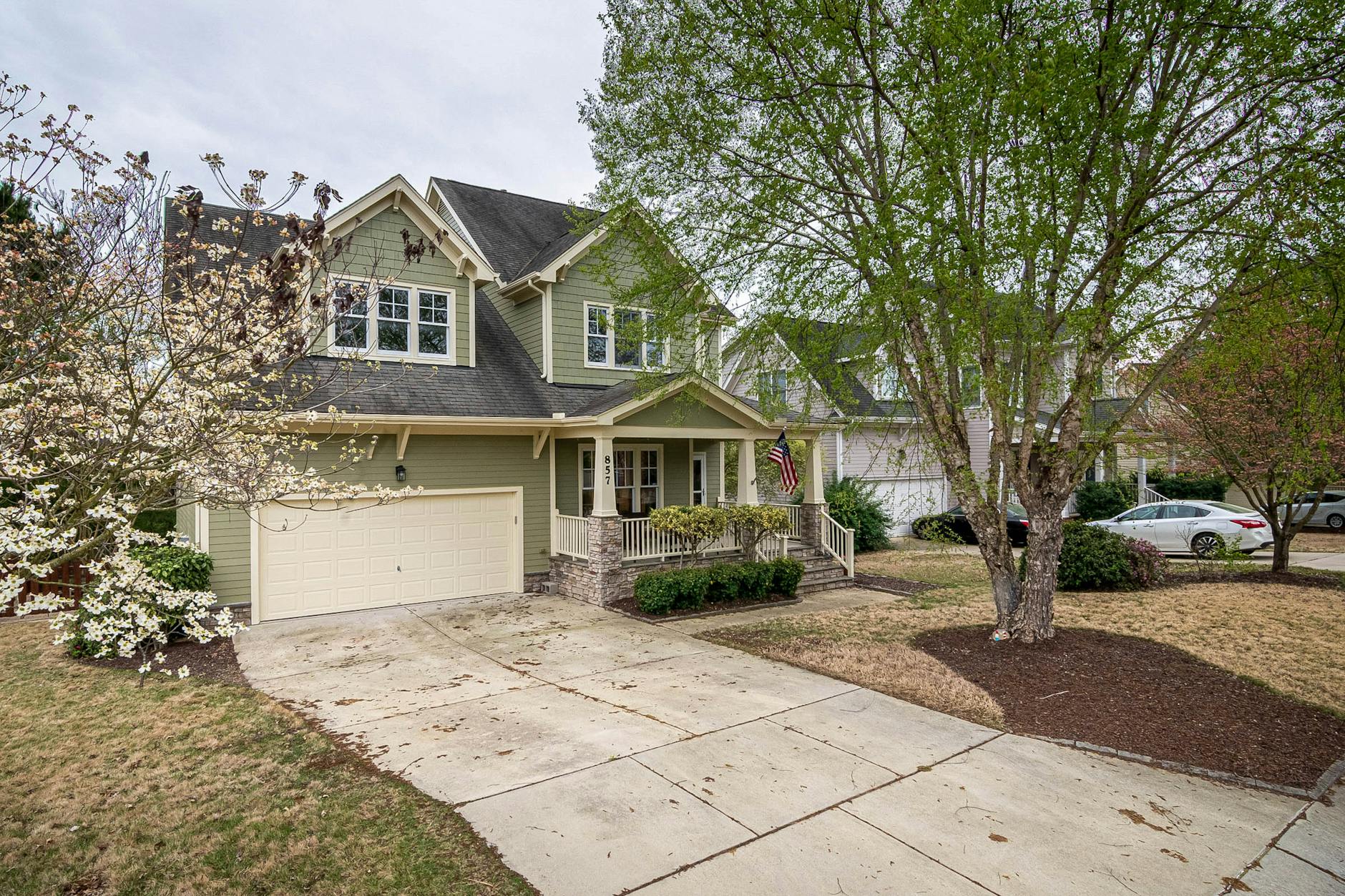
The difference is lead generation infrastructure. Ray's crew has the experience, the certifications, the trust built over decades. StormShield has a roofing website that loads in 1.4 seconds, runs geo-targeted landing pages for every township in the county, and pushes a click-to-call button above the fold on mobile. Their Google Business Profile has 200 photos, weekly posts, and shows "Open 24 hours" during storm season. They appear in the map pack for every variation of "emergency roof repair" plus the town name. Ray's site is a five-page template his nephew set up in 2019. It loads in 6.8 seconds on mobile. The phone number is buried in the footer. When someone in Barrie searches "roof repair near me" at 11 PM after a storm, StormShield is the first result. Ray is on page four.
Ray's site is a business card from 2019 sitting in a filing cabinet nobody opens. Roofing SEO determines which companies appear when $13,000 decisions happen in a browser window. And those decisions happen fast.
How roofing SEO works (and why generic optimization falls short for roofers)
Every roofer in 2026 knows they need to show up on Google. That part is obvious. But roofing SEO requires a different approach than what a generalist agency runs for a dentist or a law firm. The difference comes down to two things: seasonality and urgency.
"From 2021–2023, homeowners spent $93.5B on roofing across 8.3 million projects (AHS-based estimates)."
— U.S. Census Bureau and U.S. Department of Housing and Urban Development (2024)
That $93.5 billion is not distributed evenly across the calendar. It spikes after hail events, hurricane seasons, and the first hard freeze that exposes aging shingles. A roofing SEO strategy cannot treat January the same as July. The keywords people type during storm season look completely different from what they search in November when planning a spring replacement.

Urgency matters because roofing leads decay faster than almost any other home service. A homeowner with water coming through their ceiling at 2 AM is not browsing. They click the first company that answers. If your site does not load fast, does not show emergency availability, and does not appear in the map pack for their specific search, that lead goes to whoever does. The window between search and phone call can be under 90 seconds. That is the timeframe your entire online presence needs to operate within.
The seasonal keyword problem that undermines most roofing SEO campaigns
Generic agencies optimize for one keyword set and leave it. This trade is cyclical. You need content targeting "emergency roof repair" and "storm damage roof inspection" ready to rank before storm season begins. You also need year-round content for "roof replacement cost" and "best materials for a new roof" to capture the planning-phase homeowner who compares options in February for a May install. And you need a third layer of content targeting the insurance-related queries that spike after every major weather event: "how to file a roof damage claim," "will insurance cover my roof replacement," "storm damage adjuster checklist." These search patterns are predictable by region, and the agencies that ignore them leave an entire category of high-intent traffic on the table.
A proper roofing SEO strategy builds content for both cycles and adjusts internal linking, Google Business Profile posts, and landing pages as the season shifts. Without seasonal keyword mapping, your roofing website sits idle during the exact months when demand peaks and homeowners search with the highest purchase intent.

The intent layer behind every search that reaches a roofer
Search intent in this trade falls into four distinct categories. Emergency intent includes queries like "roof leak repair near me" and "emergency roofer." These searchers need same-day service and will call the first company they find. Planned replacement intent includes "roof replacement cost," "how long does a roof last," and "best materials." These homeowners are weeks away from a decision and need information that builds trust. Commercial intent targets property managers searching "commercial flat roof repair" or "TPO installation." And geographic intent captures city-specific variations like "roofer near me." Roofing SEO needs separate pages and separate conversion paths for each intent type to capture all four categories effectively. Mapping every target keyword to one of these four intent buckets before writing a single word of content is the step most agencies skip, and it is the step that determines whether your pages rank for queries that produce phone calls or queries that produce bounce rates.
What SEO for roofing companies actually costs you when it fails
This is where most roofers get burned. You paid an agency $1,500 a month for optimization work. They wrote four blog posts nobody read, built some directory citations, and sent you a report full of impressions and keyword rankings that never translated to a phone call.
"In 2024, 22% of renovating homeowners undertook roofing upgrades, with a median spend of $13,000."
— Houzz Inc. (2025)
The median job is worth $13,000. If your roofing website converts at even 3 percent, which is typical for a well-built site in this trade, every 100 visitors should produce 3 booked estimates. At a 40 percent close rate, that is 1.2 jobs. At $13,000 per job, 100 qualified visitors are worth $15,600 in revenue. When your site underperforms, every hundred visitors who land on a competitor instead represent $15,600 you will never see.

That math changes your perspective on what "affordable" optimization actually costs. The cheap agency is not saving you money. It is costing you the leads you cannot see because they went to the roofing contractor who invested in doing this properly. Every month of underperformance compounds the gap between your pipeline and the competitor who built their system six months before you started. Over a full calendar year, the difference between a high-performing site and a mediocre one can exceed $180,000 in lost revenue. That is not a marketing line. That is what the conversion math produces when you run it across 12 months of steady search volume in a mid-sized metro.
Why local SEO determines which roofer gets the storm calls
When a homeowner searches "roof repair near me," Google serves three things: ads, the local map pack, and organic results. The map pack gets roughly 42 percent of clicks in local service searches. Organic results get another 30 percent. Ads get the rest. Local SEO is the discipline that controls whether your business appears in that map pack, which is where the highest-intent searchers make their decision.
"In hail-prone states, average roof lifespan is 15 years vs 22 years in milder western states; 38% of U.S. homes have roofs older than 20 years."
— Verisk Analytics (2025)
With 38 percent of homes carrying roofs past the 20-year mark, the demand pipeline is not going anywhere. But where that demand flows depends on local SEO execution. Your Google Business Profile needs weekly updates, fresh photos from recent jobs, and responses to every review within 24 hours. Your NAP (name, address, phone) needs to be identical across every directory. And your service area pages need to target the specific cities and townships where you work because "[city name] roof repair" is the most common search pattern in this industry.

Want to know where your roofing website stands? We grade it in 48 hours — no charge, no call required.
Google Business Profile: the free asset that most companies neglect
Your GBP listing is free. But it requires maintenance the way a roof requires maintenance. Ignore it long enough and it stops working. The companies winning the map pack post weekly, add photos of completed jobs, respond to reviews within hours, and keep their hours accurate. During storm season, "Open 24 hours" can be the difference between getting the call and losing it. GBP activity is one of the strongest local SEO signals Google measures, and the majority of roofers barely touch their profile after the initial setup.
Local SEO also means building citations across 40 or more directories: Google, Yelp, BBB, HomeAdvisor, Angi, and industry-specific directories. Inconsistencies in your name, address, or phone number confuse Google and hurt your map pack ranking. This is foundational work that most agencies skip because it is tedious. It matters whether the work is exciting or not.
NAP consistency and local SEO ranking signals
Google cross-references your business information across every source it can find. If your roofing website says "123 Main St" but Yelp says "123 Main Street" and HomeAdvisor says "123 Main St, Suite A," those discrepancies erode trust in your listing. A proper strategy audits every directory, fixes every inconsistency, and monitors for drift quarterly. The business that treats this as a one-time task will slowly lose ground to the one that treats it as ongoing maintenance, because search algorithms re-evaluate these signals continuously.
Review generation as a local SEO multiplier

Roofing leads trust reviews more than any other signal. A company with 200 reviews and a 4.7 rating will outperform one with 15 reviews and a 5.0 rating. Review velocity matters because Google uses it as a freshness signal. An automated review request system that texts customers 48 hours after job completion with a direct link to your Google review page turns every finished job into a ranking asset. The businesses dominating their local map packs generate 8 to 12 new reviews per month consistently, and that cadence feeds directly into local search visibility.
The roofing SEO services checklist: what a real engagement looks like
If an agency offers roofing SEO and cannot explain these components, they are selling you a template. Here is what a thorough engagement covers from kickoff through month six and beyond.
Technical site audit and speed optimization
Your site needs to load in under 2 seconds on mobile. A homeowner searching during a storm is on their phone, probably on LTE, and they will bounce if the page takes longer than the back button. Roofing contractor sites are often running on bloated WordPress themes with 4MB hero images that take 8 seconds to render. Every second over 2 costs roughly 7 percent of conversions. The technical audit also covers crawlability, indexation issues, broken links, redirect chains, and schema markup that helps Google understand your service areas and availability. Core Web Vitals scores directly influence your organic ranking, and most trade sites fail all three metrics out of the box.

The audit should also examine your mobile experience end to end. Tap targets need to be large enough to hit with a thumb. Forms need to autofill on mobile browsers. The phone number needs to be a clickable link, not plain text. Lazy loading should be configured so images below the fold do not block the initial render. These details sound minor in isolation, but stacked together they determine whether a visitor converts or bounces. A technical audit that skips the mobile experience is incomplete, and incomplete audits produce incomplete results.
Keyword research by season and intent for roofing SEO
Your target keywords split into four buckets. Emergency keywords include storm damage, leak repair, and emergency service queries. Planned replacement keywords include roof replacement cost, best materials for a new roof, and lifespan comparisons. Commercial keywords include commercial flat roof repair, TPO installation, and industrial maintenance contracts. Geographic keywords include city-specific terms and "near me" variations. Each bucket gets its own content calendar, its own landing pages, and its own conversion path. The keyword research phase should also identify long-tail opportunities that competitors have overlooked, because those low-competition terms often convert at higher rates than broad head terms that every agency targets by default.
Site design built for conversion
Roofing SEO traffic that lands on a page without a clear call-to-action is wasted traffic. Every service page needs a click-to-call button visible without scrolling on mobile, a form that asks for four fields maximum (name, phone, address, brief description), and social proof within the first scroll. Certifications, project photos, and review counts belong above the fold. Pages designed around these principles convert at 2 to 3 times the rate of template sites that bury the phone number in the footer. Design decisions are ranking decisions, because bounce rate and time-on-page feed back into how Google evaluates your content.
"Among renovating homeowners, 44% add or redo a roof as part of their exterior projects."
— Houzz Inc. (2024)
Content creation that builds topical authority in roofing SEO
Google ranks sites that demonstrate expertise across a topic. Supporting content matters: guides on materials, comparisons of shingle types, explanations of the insurance claim process, and seasonal maintenance checklists. Each piece links back to your main service pages and builds the topical depth Google rewards. The roofing contractor who publishes 2 to 4 pieces of quality content per month builds a compounding advantage that generalist competitors cannot replicate. After 12 months, a site with 30 to 50 targeted pages has a keyword footprint that a brand-new competitor would need years to match.
Link building for roofing contractor authority
Backlinks remain one of the strongest ranking signals in roofing SEO. But the links that move the needle come from specific sources: local business associations, supplier directories (GAF, CertainTeed, Owens Corning), chamber of commerce listings, local news coverage of storm response work, and industry publications. A company with 40 links from locally relevant sources will outrank one with 200 links from generic directories. Quality and relevance outweigh raw volume every time, and link building in this industry means building actual relationships with local organizations, not buying placements from a broker. Sponsoring a little league team, volunteering for Habitat for Humanity builds, or contributing expert quotes to local news stories after a storm all produce backlinks that carry real authority in your geographic market.
How roofing SEO differs for residential and commercial work
Most agencies treat residential and commercial as the same keyword universe. They are completely different buying cycles with different decision timelines, different objections, and different conversion mechanics. Trying to serve both from a single set of pages is like trying to sell a $2,000 repair and a $200,000 re-roof from the same landing page. The messaging that works for one alienates the other.

A residential homeowner with a leak makes a decision in hours. They search, click, call, book. The entire funnel collapses into a single session. Residential roofing SEO services need to optimize for that compressed timeline: fast page loads, immediate trust signals, click-to-call on every page. If you lose the homeowner in the first 3 seconds, you do not get a second chance.
A commercial property manager with a flat roof issue takes weeks. They search, compare, request multiple quotes, check insurance compatibility, get board approval. Commercial pages need longer content, case studies, specification sheets, and a lead form that captures enough information for a proper estimate. The content depth required for commercial work is roughly double what residential pages need, and the trust signals are different: commercial buyers want to see project portfolios, insurance certificates, and multi-year warranty documentation before they even pick up the phone.
If your agency runs the same strategy for both, neither audience gets what they need and your conversion rates will reflect it across both segments.
Residential vs. commercial keyword mapping for roofing SEO
Residential keywords skew toward urgency and cost: "emergency roof repair," "roof replacement cost," "near me" searches. Commercial keywords skew toward specificity and capability: "commercial flat roof repair," "TPO installation," "industrial maintenance contract." You need separate landing pages, separate content strategies, and separate conversion paths for each segment. The companies that blend these together lose conversions from both audiences because the messaging never feels specific enough to prompt action. A property manager reading about "quick fixes" for a 40,000-square-foot warehouse roof will close the tab. A homeowner reading about "multi-phase commercial membrane systems" will feel overwhelmed. Segmentation is not optional.
Roofing leads: where they come from and how search captures them

Leads in this trade arrive through four channels. Organic search brings someone who types a query and finds your site. The map pack brings someone who searches locally and sees your GBP listing. Referrals bring someone who hears your name and Googles you to verify credibility. And paid ads bring someone who clicks your Google Ads placement. Of these four, organic search and the map pack are the only channels that compound over time without increasing your monthly spend. Paid ads have a linear relationship with budget: spend more, get more. Stop spending, get nothing. Organic visibility has a logarithmic relationship: the investment required to maintain rankings drops over time as your authority grows, and the returns per dollar invested increase each quarter.
"Roofing backlog index reached 58 in the fourth quarter of 2025."
— National Association of Home Builders (2026)
A backlog index of 58 means demand is healthy. But a healthy backlog does not help the roofer who is not capturing new leads alongside the work already scheduled. Organic search and map pack visibility compound over time. Paid ads stop the day you stop paying. Referrals are valuable but unpredictable. The companies consistently growing at 15 to 25 percent year over year are the ones investing in roofing SEO as a permanent lead generation system, not a campaign that resets to zero every quarter.
"Year-over-year exterior spending projected to rise 2.4% in Q1 2026."
— Harvard Joint Center for Housing Studies (2025)
With exterior spending trending upward, the business that builds a durable roofing SEO system now captures more of that rising demand each quarter. The one waiting for "the right time" keeps losing opportunities to competitors who started six months earlier and have already compounded their organic visibility.
How to measure whether your roofing SEO is working
Forget vanity metrics. The four numbers that matter:
Calls from organic search — tracked via call tracking numbers specific to your site
Form submissions from organic landing pages — tracked via form analytics
Cost per lead from organic — total monthly investment divided by total organic leads
Revenue attributed to organic leads — requires CRM tracking from lead to closed job
If your current agency cannot show you these four numbers tied to actual calls and booked estimates, you are paying for activity reports instead of results. The gap between "we ranked for 47 keywords" and "we generated 31 leads that produced $187,000 in revenue" is the gap between reporting and accountability. Rankings are an input metric. Revenue is the output metric. Any reporting framework that focuses exclusively on inputs without connecting them to outputs is designed to obscure underperformance, not measure it.
Lead attribution: connecting roofing SEO to revenue
Most businesses in this trade lose track of leads somewhere between the phone call and the signed contract. Without proper attribution, you cannot tell whether your investment is generating a 3x return or a 10x return. The fix is straightforward: dedicated tracking numbers for organic traffic, UTM parameters on every campaign link, and a CRM that tags the lead source at intake. When a roofing contractor can see that organic search generated 47 leads last month and 12 of those closed at an average of $14,200, the conversation shifts from "is this working" to "how do we scale it." Attribution turns guesswork into a growth model.
What most roofing SEO agencies get wrong
The marketing-for-roofers space is crowded with agencies that run the same playbook for every trade. They build a decent site, write blogs about "5 signs you need a new roof," submit your business to directories, and call it search engine optimization. The playbook is not wrong in isolation. It is incomplete. And incomplete is expensive when every missed lead represents $13,000 in potential revenue. The agencies running this approach measure success by deliverables produced (blog posts written, citations submitted, reports sent) rather than outcomes generated (calls received, estimates booked, contracts signed). Deliverable-based reporting lets an underperforming agency look busy for twelve months without ever moving the needle on your pipeline.
"The median spend on roofing upgrades in 2024 was 8% higher than in 2023 (median $13,000 in 2024)."
— Houzz Inc. (2025)
Homeowners spending $13,000 on a new roof are not making that decision because of a blog post. They are making it because their roof is leaking, their insurance adjuster told them to, or they are planning a home sale and the inspector flagged it. Roofing SEO needs to intercept those specific moments with the right pages, the right calls-to-action, and enough trust on the page that the homeowner picks up the phone instead of hitting the back button. Timing and relevance beat volume every time.
That is what a specialist does differently than a generalist. They know the trade. They know the buyer's timeline. They know which keywords convert and which ones generate traffic that never calls. The roofing contractor who hires a generalist gets generic results. The one who hires a specialist gets a system built around how buyers in this industry actually behave, from the first search to the signed contract.
Local SEO for roofers in storm-prone markets
Storm markets require a different approach. In hail-prone states like Texas, Colorado, and Minnesota, demand spikes unpredictably. A single storm event can generate 6 months of work in 72 hours. The companies that capture that demand have pre-built assets ready to rank before the storm hits, not pages thrown together after the wind stops.
What does that preparation look like? Service area pages for every city and township in your coverage zone, already indexed and ranking for "[city] roof repair" and "[city] storm damage." GBP posts scheduled weekly with seasonal relevance. A review generation machine that keeps your profile fresh. And a site with emergency service pages that load fast on mobile and put a phone number front and center. Pre-storm local SEO preparation is the difference between answering 4 calls during a weather event and answering 40.
The business that builds this infrastructure during the slow months captures demand during the busy ones. SEO for roofing companies in storm markets is fundamentally about preparation: building the ranking assets before they are needed, so that when the weather turns, your phone rings instead of your competitor's.
Pre-storm content preparation
Roofing SEO in storm markets means publishing storm preparation content 60 to 90 days before your region's typical storm season. Blog posts on "what to do after hail damage," "how to file an insurance claim for roof damage," and "emergency tarp services" should already be indexed and ranking when the weather turns. Pair that content with city-specific landing pages and GBP posts that mention your service areas by name. The companies that treat their search strategy as seasonal preparation consistently outperform those who treat it as a year-round average. Timing the content calendar to regional weather patterns is one of the highest-leverage activities in this entire discipline.
The ROI of roofing SEO: what the numbers actually look like
"Disaster repairs (roofing-intensive) reached $24 billion annual volume in 2025."
— Harvard Joint Center for Housing Studies (2025)
Your competitors aren't waiting. Book a free site inspection and we'll show you exactly where your roofing site is losing leads on searches like "roof replacement near me" — with numbers, not opinions.
With $24 billion in disaster-related repairs happening annually, the market opportunity is substantial. But ROI depends on execution. A company investing $2,500 per month in roofing SEO services that generates 30 organic leads per month, closes 8 of them at an average ticket of $13,000, produces $104,000 in monthly revenue from a $2,500 investment. That is a 41x return. Even at half those numbers, the math works. And unlike paid ads, the cost per lead drops over time as organic rankings strengthen and content compounds.
The key is patience. This is not paid advertising. You do not get leads on day one. The typical timeline is 3 to 4 months before organic traffic starts moving meaningfully, and 6 to 12 months before the system reaches full velocity. But once it does, your cost per lead drops every month while lead volume grows. The business that sticks with it builds an asset that appreciates. The one that quits at month three buys the most expensive leads possible: the ones that almost worked.
Consider the timeline in concrete terms. Month one is audit, strategy, and technical fixes. Month two is content production, on-page optimization, and GBP overhaul. Month three is indexation, initial ranking movement, and the first trickle of organic traffic. Months four through six are where rankings stabilize and lead volume begins to climb. Months seven through twelve are where compounding takes hold: each new page strengthens the authority of every existing page, cost per lead drops below paid channels, and the pipeline becomes self-reinforcing. By month twelve, the investment you made in month one is still producing returns. Try getting that from a Google Ads campaign you turned off in January.
The compounding economics of organic search visibility
Paid ads are a faucet. Turn them on, leads flow. Turn them off, they stop. Roofing SEO services work more like a well. It takes time to dig. But once the water flows, it flows without a monthly ad spend attached to every lead. After 12 months of consistent investment, the typical company in this trade has 40 to 60 indexed pages ranking for hundreds of keyword variations, a GBP profile generating 15 to 20 calls per month on its own, and a cost per organic lead that is one-third to one-fifth what they pay for a Google Ads click. That is the compounding effect. Each month of work makes the previous months more valuable, and the gap between you and your competitors widens as long as you keep building.
How Fervor builds roofing SEO services differently
We run one process for every company in this trade, and it starts with a free site inspection where we audit your current site against the top-ranking competitors in your specific market. Not national averages. Your actual local competitors in the cities where you want to win.
Here is what that looks like: we pull the top 10 organic results for your primary keywords, count the exact term frequency in 10 ranking zones (title, H1, URL, first 100 words, H2s, body, H3s, alt text, anchor text, meta description), calculate the edge target for each zone as the average of the top 3 competitors, and build a mathematical content brief that tells us exactly how many times each keyword needs to appear and where. No guessing. No "best practices" pulled from a 2019 blog post. Just the math of what is actually ranking in your market right now. This approach means your content is calibrated to the competitive landscape you are actually operating in, not a national average that has nothing to do with the companies you are trying to outrank in your county.
Then we write the content, apply it to a site built for conversion, and monitor rankings weekly with adjustments every month. Organic lead volume compounds over 6 to 12 months because the whole point is building a permanent system. A system that gets stronger each month instead of resetting to zero when a campaign ends. You see the data, you see the keyword targets, you see the ranking progress, and you see the leads. Every month. In plain numbers tied to revenue.
What is included in a Fervor engagement
Booked by Design™ — $8,500–$12,000 · 30–60 days
Your site rebuilt from the ground up with conversion architecture, keyword-targeted service pages, Google Business Profile optimization, a local search foundation, and a content system that builds topical authority month over month. This is the full buildout for companies in this trade that need a site generating leads from day one.
Performance Partner™ — $997–$2,497/month · ongoing
Monthly services including content creation, link building, GBP management, review generation automation, seasonal keyword adjustments, and monthly reporting tied to actual leads and revenue. This is where lead volume compounds month over month and cost per acquisition drops.
The Site Inspection — Free · ~3 days
We audit your current site, score it against your local competitors using our POP Edge method, and show you exactly where you are losing leads. No pitch. Just the data and a clear picture of what building a proper search visibility system would look like for your specific market. Most owners who go through this process tell us it is the first time anyone showed them why their site underperforms instead of just telling them it needs work. The inspection takes about three business days and the deliverable is a scored comparison with specific, actionable gaps identified by zone.
Tools we recommend for this trade
Most roofing contractors run their scheduling and dispatch through Jobber or ServiceTitan. Jobber handles the basics well for crews under 15 people — estimates, invoicing, route optimization. For larger operations running multiple crews across storm markets, ServiceTitan gives you the dispatch board and automated follow-ups that keep jobs from falling through the cracks.
If you're running Google Ads alongside your roofing SEO, you need call tracking to know which channel produced which lead. CallRail integrates with both Jobber and ServiceTitan, tags every inbound call with the marketing source, and gives you the data to shift budget toward what's actually producing $13,000 roof replacements instead of tire-kicker clicks.
And for a dedicated business line that routes emergency calls to the right person after hours, Unitel Voice gives you local and toll-free numbers with call routing and voicemail transcription. Costs less than a missed emergency call.
Frequently asked questions about roofing SEO services
How long does it take for roofing SEO to start working?
You'll typically see measurable movement in 90 to 120 days. And that's not a vague promise — it means your target pages climbing from page three to page one for terms like "roof replacement" plus your city name. But here's the thing most agencies won't tell you: the first leads usually show up around month four, and the compounding effect kicks in around month six. Roofing companies commonly go from 12 organic leads per month to 47 within eight months. So it's not instant, but it builds faster than most contractors expect.
How much should a roofing company spend on SEO?
Most roofing companies doing $1M to $3M in annual revenue should budget between $2,500 and $5,000 per month for SEO. That covers technical fixes, content, local optimization, and link building. And if someone quotes you $500 a month for roofing SEO, they're either outsourcing everything to a content mill or doing so little that you won't see results. The math is straightforward: if your average job is $8,500 and SEO brings in five extra jobs a month, that's a 10x return on a $4,000 monthly spend.
What's the difference between roofing SEO and Google Ads for roofers?
Google Ads puts you at the top of the page immediately, but you're paying $35 to $85 per click in most roofing markets. SEO takes longer to build, but once you're ranking, those clicks cost you nothing. Think of it this way: Ads are renting visibility, SEO is owning it. We usually recommend running both during the first six months so you've got leads coming in while your organic rankings build. After that, a lot of roofing clients scale back ad spend by 40% because the organic traffic carries the load.
Do roofing companies really need a blog for SEO?
Yes, but not the kind you're probably imagining. You don't need 800-word fluff pieces about "5 signs you need a new roof." What actually moves the needle is service-area content and technical guides that match what homeowners search for. A post covering "cost to replace a roof on a 1,500 sq ft ranch in [your city]" with real pricing ranges will outperform generic advice every time. A single well-targeted blog post can generate 15 to 20 leads per month for roofing companies in mid-size markets.
How do I know if my roofing SEO agency is actually delivering results?
Track three numbers: organic sessions to your site, phone calls from organic search, and keyword rankings for your core terms. If your agency sends you a report full of impressions and "domain authority" but can't show you how many calls came from organic traffic last month, that's a red flag. You should be seeing month-over-month growth in at least two of those three metrics by month four. And ask for call recordings — you need to hear whether those leads are actually homeowners asking about roof work or just spam.
The Site Inspection: How The Biggest Roofing Websites Score on Lead Conversion
We audited these home service brands on 100 points of conversion infrastructure. See what the national players get right, where they leak leads, and what independent contractors can exploit.