

Most fence company owners we talk to have the same story. Great reputation. Solid crew. And a website that hasn't been touched since 2018. Meanwhile, the operation down the road — half the experience, fewer certifications — books three times the volume every spring. The gap isn't craftsmanship. It's visibility. And fence company SEO is what closes it.
If you're not sure where your site stands right now, start with a free site inspection. Takes about three days. No cost, no pitch — just the data.
Tom is forty-six. Fourteen years building fences south of Nashville. Crew of nine. Cedar privacy, vinyl, chain-link, ornamental aluminum — his guys cap 200 linear feet in two days. Licensed, insured, 4.9 stars on Google. The neighbourhood Facebook groups love him.
April 2025. Tom books 11 residential installs through word of mouth. Good month. But meanwhile, ProLine — five years old, crew of six, 4.2 stars — books 34. And they've never built a single ornamental iron job.
The difference? ProLine's site loads in 1.6 seconds. Landing pages for every suburb. GBP updated weekly with job photos. 180+ reviews because they text every customer a link three days after the last post goes in. Tom's site is four pages his nephew built in 2018. Loads in 7 seconds. Phone number buried on the contact page. When a homeowner in Brentwood searches on their lunch break, ProLine shows up first. Tom lands on page three.
Fence company SEO decides who gets the spring rush and who watches it from the supplier parking lot. That's not dramatic. It's just how this trade works now.
How the right online presence changes a fencing business

You probably know you need to rank on Google. Every fence contractor in 2026 has heard that much. But the approach for this trade is its own animal — the buying cycle is compressed, demand swings violently by season, and the keywords split across materials in ways a generalist agency won't bother to untangle.
"Year-over-year exterior spending projected to rise 2.4% in Q1 2026."
— Harvard Joint Center for Housing Studies (2025)
That 2.4% bump (source: JCHS LIRA forecast) sounds small until you remember fencing is one of the first exterior projects homeowners tackle when spring arrives. And it's not a browsing decision. Someone who searches in April has already decided they're building. They want a number this week. If your site doesn't load fast, doesn't show your service area, and doesn't make it dead simple to call — that prospect goes to whoever does.
The material keyword split nobody talks about
Homeowners don't just search generically. They search by material. "Cedar privacy installation." "Vinyl cost." "Chain-link repair near me." Each material query carries different volume, different competition, and different buyer intent. Chain-link repair is an $800 job. Cedar privacy is $5,500. You need separate pages for each because lumping them on one "Our Services" page means you rank for none of them.
Why you build content in November for leads in March
Google doesn't rank pages overnight. A new service page needs 8-16 weeks of indexing before it competes. Launch in March, rank by June — half the season gone. The businesses winning the spring rush built those pages in October. Let Google digest the content all winter. By March, already in the top five.

Plan your content calendar on the opposite schedule from your install calendar. Build in the off-season. Rank during the off-season. Harvest when the phones start ringing. It's the same principle behind every trade in our exterior contractor marketing vertical.
Where leads actually come from for this trade
Leads break into four channels. Organic search — someone types a query and your site appears. Map pack — your Google Business Profile shows up. Referrals — someone hears your name and Googles you to check reviews. And paid ads.
"97% of consumers read reviews when browsing for businesses online (2026). 41% "always" read reviews, up from 29% in 2025."
— BrightLocal (2026)
With 97% of consumers reading reviews, your reputation is the funnel, whether you designed it that way or not. A homeowner who gets a referral still checks your Google Business Profile before dialing. If your listing looks thin — few reviews, stale photos, no recent activity — they move on. Even warm referrals cool fast when the online presence doesn't match.
Why paid channels alone can't sustain the operation
Paid leads from HomeAdvisor, Angi, or Google Ads cost somewhere between $40 and $120 per lead. Those leads get shared — you're competing with three or four other companies who got the same notification. Close rates hover around 15-20%. At $80 per lead and one-in-five closing, that's $400 in acquisition cost per closed $4,500 job. Roughly 9% of revenue on lead acquisition alone.
Want to know where your fence company website stands? We grade it in 48 hours — no charge, no call required.
Organic leads cost the monthly investment in fence company marketing. No per-lead fee. No sharing. The homeowner found your fence company, liked what they saw, and called. Close rates on organic sit around 35-40%. That changes everything — and our Local Dominance Setup is where most contractors start building that organic foundation.
The spring timing mistake most contractors make

This is probably the most seasonal trade in the exterior category. And that creates a timing problem most owners don't see coming until it's too late.
"64% of homeowners received solicitation from contractors after a severe weather event; 45% hired a contractor after damage; 34% filed an insurance claim."
— International Remodeling Council (2025)
When storms roll through and flatten panels across a neighbourhood — and they do, every spring — the homeowners filing insurance claims for their roof are also staring at the wrecked boundary in the backyard. Exterior damage clusters. The operations with local search visibility capture that overflow demand without additional advertising. Same dynamics we cover in roofing SEO and siding.
Leads during peak season have a shelf life of about 48 hours. A homeowner who calls three businesses Monday afternoon signs a contract by Wednesday. If you're not one of those three calls, you don't get the job. Which means the system has to run passively — your site ranks, your profile shows up, reviews convince them, they call. Works whether you're setting posts or sleeping.
Owning the map pack in your service area
When someone searches "fence company near me," Google shows ads, the local map pack, and organic results. The map pack gets the bulk of clicks for local service searches. And for this trade — where every job is local — the map pack is the ballgame.
"88% of consumers say they would use a business that responds to both positive and negative reviews. Only 47% would consider using a business that does not respond to reviews at all."
— BrightLocal (2024)
Google Business Profile maintenance that actually moves rankings
Your GBP listing is free. But it needs upkeep the way a cedar fence needs upkeep — ignore it long enough and it stops working. The fence companies dominating the map pack post job photos weekly, respond to every review within 24 hours, keep NAP consistent across Google, Yelp, BBB and every directory, update hours seasonally, and build city-specific landing pages on their website.

That last one is where search optimisation and local visibility intersect. Google connects your profile to your website. If your fence company site has a page about installation in Franklin, TN — with that phrase in the title, body, and meta — Google ranks your listing higher for Franklin searches. Without those pages, you're relying on your address radius alone. Not enough in competitive suburbs.
Review generation and reputation management
Homeowners choosing between two options — one with 45 reviews and a 4.8, another with 12 reviews and a 5.0 — pick the one with 45 almost every time. Volume signals trust. And recency matters. Reviews from 2023 feel stale to someone searching in 2026. Your engagement should include an automated review request system. Text the customer a direct Google review link 48 hours after the install goes up. While they're still looking at it from the kitchen window.
What a real engagement looks like (not what most agencies sell)
Let's be blunt. Most agencies selling to fence contractors run a template. They'll build a WordPress site with stock photos, write four blog posts, submit your fence company to directories like Yelp and the BBB, and charge $1,200 a month. Then they send a report full of impressions that never translate to a single phone call.
"Conversion rates drop approximately 12% for each additional second of page load time."
— Google / Deloitte (2020)
Technical foundation: speed, mobile, crawlability
Under 2 seconds on mobile. Not optional. A homeowner searching on their lunch break is on LTE, and they'll bounce before the page renders. And we see fence company websites running bloated themes with 3MB hero images that take 7 seconds. Because conversion rates drop 12% per additional second, that slow load is costing you jobs.

Content architecture: pages for every material, every city, every intent
Separate pages for each type (cedar privacy, vinyl, chain-link, aluminum, composite). Separate pages for each city. Separate pages for each intent (new installation, replacement, repair, commercial). A single "Services" page ranks for none of it. We break down the logic in our contractor marketing hub. Each page is another entry point — another chance for someone to find you through the exact search they typed.
"Annual homeowner remodeling spending record of $524 billion forecast for early 2026."
— Harvard Joint Center for Housing Studies (2025)
Half a trillion flowing through remodeling. But a bigger pie doesn't help your fence company if you're invisible online. Content architecture keeps leads flowing even when you're booked out — those pages keep ranking and attracting prospects who'll wait three weeks for a fence contractor they trust.
How to measure whether your investment is actually working
The four metrics that actually matter
Forget vanity metrics. Here's what to track:
Calls from organic search — tracked via call tracking numbers on your website
Form submissions from organic landing pages — tracked via form analytics
Cost per lead from organic — total monthly investment divided by total organic leads
Revenue attributed to organic leads — requires CRM tracking from lead to closed job
If your current agency can't show you these four numbers, you're paying for activity reports. Our lead leak calculator can show you what that gap looks like in dollars.
Residential vs. commercial: two different buying cycles
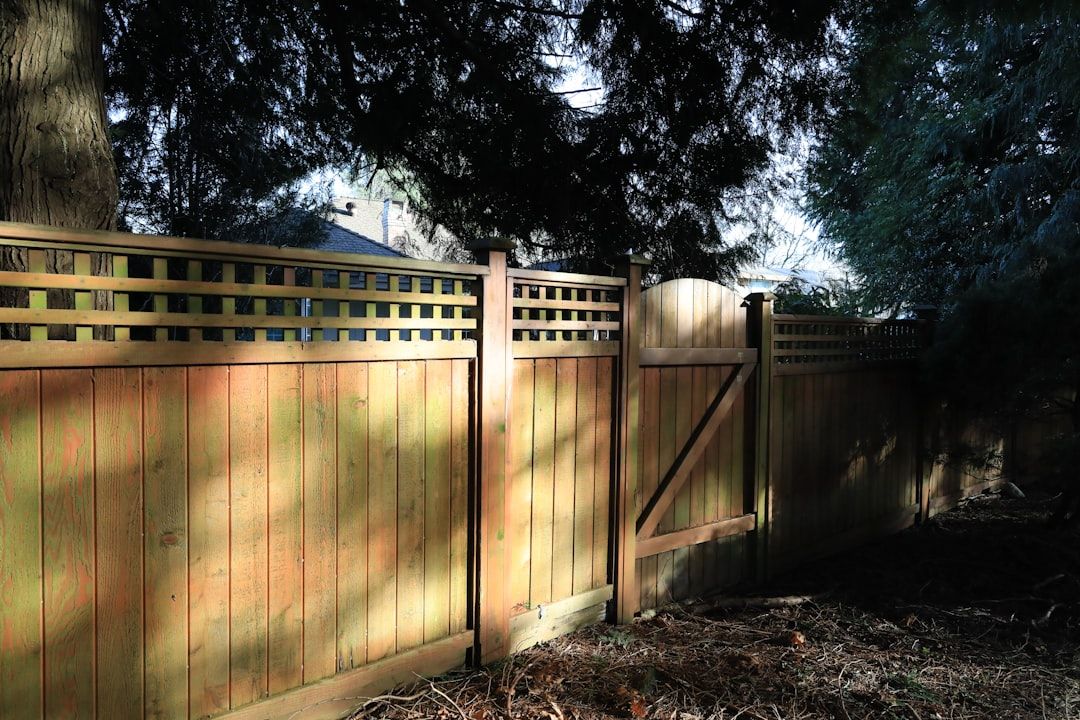
A residential homeowner with a blown-over panel makes a decision in hours. Search, click, call, book. The entire funnel collapses into a single session. Your residential pages need fast load times, immediate trust signals, and click-to-call on every page. We cover what that looks like in our Leak Plug Sprint — the fast-turnaround option for contractors who need conversions fixed this month.
A property manager with a perimeter project takes weeks. Multiple quotes. Board approval. Insurance coordination. Your commercial pages need longer content, project case studies, spec information, and a form that captures enough detail for a proper estimate — the same conversion architecture we apply for siding contractors. If your agency runs the same strategy for both audiences, neither one gets what they need.
Advertising vs. organic: where to put your dollars
Paid advertising has a role. It's the fast lever. Turn it on, get leads. Turn it off, they stop. And that simplicity is appealing when spring is approaching and your schedule has gaps.
But cost per lead climbs every year. More businesses enter the auction. Your $60 lead in 2024 becomes $85 in 2026. Still sharing with competitors on the same platform.
Organic visibility is the compounding play. The investment stays relatively flat, but results grow. A page at position three in month four might climb to first by month eight. Traffic increases. Leads increase. Cost per lead decreases. By month twelve, your organic channel produces leads at a fraction of what paid ads cost. We see the same compounding effect across every trade — from fencing to landscaping to HVAC.

The smartest fence company owners run both. Paid for immediate spring demand. Organic as the long-term system. But if budget forced you into one channel, the organic approach still generates leads in year three without additional per-lead spend.
Frequently asked questions about fence company SEO
How much should a fence company spend on SEO?
Your competitors aren't waiting. Book a free site inspection and we'll show you exactly where your fencing site is losing leads on searches like "fence installer near me" — with numbers, not opinions.
The initial website buildout runs $8,500 to $12,000 for a fence company, and ongoing SEO costs $997 to $2,497 per month. Your market size and competition level determine where you fall in that range. A fence company in a metro area with 15 competitors ranking on page one needs a bigger content investment than one in a smaller market with 4-5 competitors. The math works out fast — one $6,000 fence installation covers 3-6 months of SEO spend.
What keywords do homeowners use to find fence contractors?
The highest-volume searches are "fence company near me," "fence installation [city]," and "fence contractor [city]." But the material-specific terms convert better: "vinyl fence installer," "wood privacy fence contractor," "chain link fence company," and "aluminum fence installation." Homeowners who search by material have already decided what they want. They're comparing contractors, not fence types. Build separate pages for each material, each city, and each fence purpose like privacy, security, and pool enclosure.
How important are service area pages for fence companies?
They're essential. "Fence company [city name]" is the most common search pattern in this trade, and each city in your service area needs its own page with unique content. Not duplicated copy with the city name swapped — Google catches that. Each page should reference local HOA requirements, soil conditions that affect post installation, and the specific fence styles popular in that area. Fence companies with 15-20 well-built service area pages consistently outrank competitors with a single "areas we serve" list.
When is the best time to invest in fencing SEO?
Start in November. Fence searches spike between March and June in most U.S. markets, and it takes 90-120 days for new content to gain traction in Google. If you wait until February to start, your pages won't rank until summer is half over. The fence companies that invest in SEO during the off-season enter spring with pages already indexed and climbing. By the time your competitors start their spring ad campaigns, your organic pages are already capturing the early planners.
Tools we recommend for this trade
Fence companies managing multiple estimates per day across different neighborhoods need quoting that's fast and professional. Jobber builds fence estimates with per-linear-foot pricing, sends them digitally for electronic signature, and tracks the pipeline so you know which quotes are still outstanding. The automated follow-up on unsigned estimates recovers 15-20% of jobs that would otherwise go cold.
And CallRail connects each inbound call to the marketing source that produced it — critical when spring hits and you need to know whether to scale your SEO content budget or your Google Ads spend.
How Fervor approaches this differently
We run one process. Starts with a free site inspection where we audit your current site against the actual top-ranking competitors in your specific market. Not national competitors. Your local ones. The operations outranking you right now.
We pull the top 10 organic results for your primary keywords using Google Search Console data and competitor analysis. Count exact term frequency across 10 ranking zones. Calculate the edge target for each. And build a mathematical content brief that tells us exactly what needs to appear and where.
Then we write the content. Not AI-generated template copy. Actual pages built around how buyers search and what they need to see before calling. Applied to a site built for conversion — click-to-call above the fold, forms with four fields max, job photos and reviews front and centre. We track everything through Google Analytics and call tracking. Rankings monitored weekly. Adjustments monthly.
Organic lead volume compounds over 6-12 months. That's the whole point. You're not buying a campaign that expires. You're building a permanent system. Want to see where you stand? Start with the revenue loss calculator and find out what your current site is actually costing you.
What's included in a Fervor engagement
Booked by Design™ — $8,500–$12,000 · 30–60 days
Website rebuilt from the ground up. Conversion architecture for how buyers actually behave. Pages for every material, city, and intent type. GBP optimisation. Local foundation across 40+ directories. And a content system that builds authority month over month. Similar to what we build for painting contractors — adapted to fencing demand patterns.
Performance Partner™ — $997–$2,497/month · ongoing
Monthly services including fresh content, link building, GBP management, review generation automation, seasonal keyword adjustments, and reporting tied to actual leads and revenue. See how we approach the same system for garage door companies — similar seasonal dynamics, different keywords.
The Site Inspection — Free · ~3 days
We audit your current site, score it against your local competitors using our Contractor CRO Index methodology, and show you exactly where you're losing estimates. No pitch deck. No pressure. Just data and a clear picture of what's costing you money.
The Site Inspection: How The Biggest Fencing Websites Score on Lead Conversion
We audited these home service brands on 100 points of conversion infrastructure. See what the national players get right, where they leak leads, and what independent contractors can exploit.